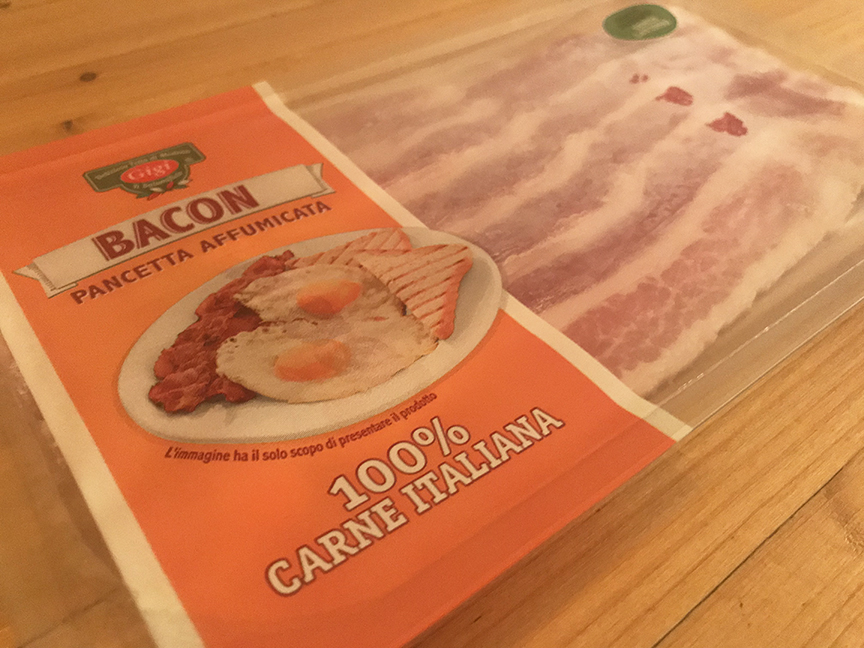
 Above: when I first started coming to Italy 30 years ago, bacon was still called pancetta. Now it’s called “bacon” in Italian.
Tracie and I landed in Italy yesterday with our daughters, ages 4 and 6. It’s their first real trip to Europe (since our oldest doesn’t have any recollection of our visits here when she was just one year old; and our youngest only made it here previously in utero).
When we told them about our summer trip this spring, they were concerned — gastronomically speaking.
“Daddy, daddy, we can’t go to Italy!” they protested vehemently. “They won’t have the things we like to eat there!”
“They have LOTS of good things to eat in Italy!” Tracie and I laughed and smiled.
“Do they have pizza in Italy?”
“Yes, of course they do,” I told them. “In fact, the Italians invented pizza! They have the best pizza in the world.”
They seemed genuinely impressed by this historical tidbit but then came the culinary litmus test that would determine their willingness to join their parents in the Garden of Europe:
“But daddy, do they have bacon in Italy?”
 Above: bacon and eggs is now commonly found on menus in northern Italy.
It must have been seven or so years ago when my Italian bromance Giovanni took me out for (truly excellent) hamburgers and I noticed that the cured pork belly was cut and smoked not like traditional Italian pancetta but like American bacon.
In the time since, “bacon” — as it is now called in Italian — has become ubiquitous in northern Italy.
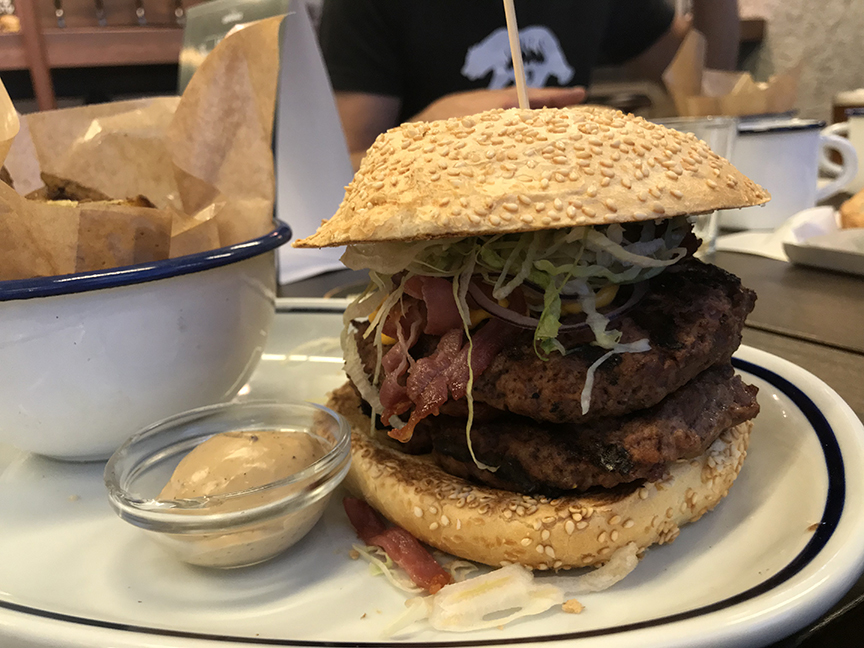 Above: a hamburger I ate last month in Franciacorta. Note the bacon.
Italians love LOVE hamburgers. They love them so much that they don’t use butcher scraps to form the patties. They use the highest quality beef they can find. And beyond the myriad fast food restaurants that now sadly dot the northern Italian countryside, the omni-present amburgheria (hamburger house) never uses the hydrogenated-oil buns that we adore in America. Instead, they use artisanal buns.
I’ve had some of the best hamburgers of my life in Italy in recent years. And that’s coming from an all-American, huge bacon-cheeseburger fan.
Bacon and scrambled eggs are also immensely popular now in northern Italy. Two years ago, I snapped the above photo of the dish in a run-of-the-mill trattoria in downtown Milan, ordered at lunch à la carte.
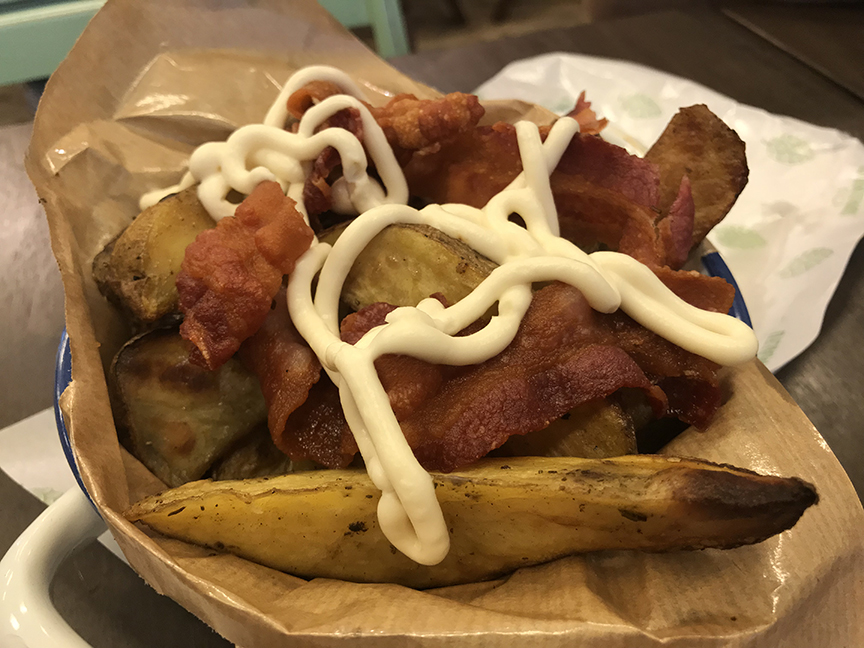 Above: bacon fries with Pecorino sauce (no joke) at the same amburgheria in Franciacorta.
Giovanni is graciously hosting our family this month at his place in Franciacorta. And being the generous and thoughtful friend that he is, he went grocery shopping for us before we arrived. The bacon in the top photo is awaiting our girls in his fridge as they slumber.
Back at home, we spend SO MUCH money on high-quality, wholesome bacon. Here in Italy, even when they cut the bacon from top hogs, the price is still very reasonable.
Leave it to the Italians to “misunderstand” American cuisine and make it all the better along the way. My only worry is: will our children ever want American bacon again?
We arrived safely and soundly yesterday afternoon in Milan and made our way to Franciacorta before the heavy rain began to fall. The girls have already spotted their first bunnies outside of Giovanni’s apartment and they loved the fresh fruit that Giovanni’s mom had prepared for them. Aside from a lost bag (mine, thank goodness, not Tracie’s with all the girls’ things), we’re already having a great time. Thanks for reading and buon weekend a tutti!