Slow Wine California now online, prizes and producer profiles coming soon…

The following is a preview of one of my posts this week for the new Slow Wine Guide to the Wines of California. Our site came online this morning. The Slow Wine prizes will be announced shortly. Producer profiles will follow.

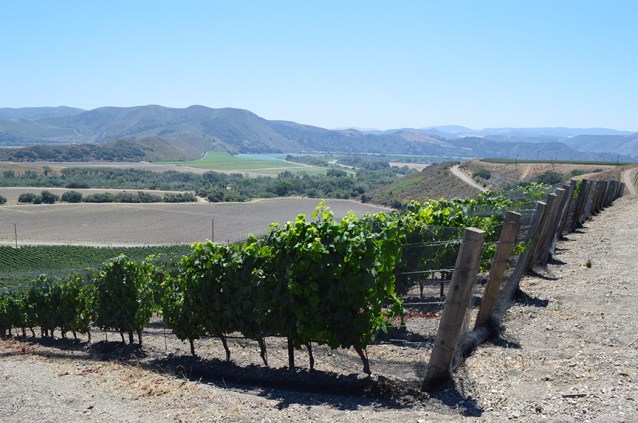
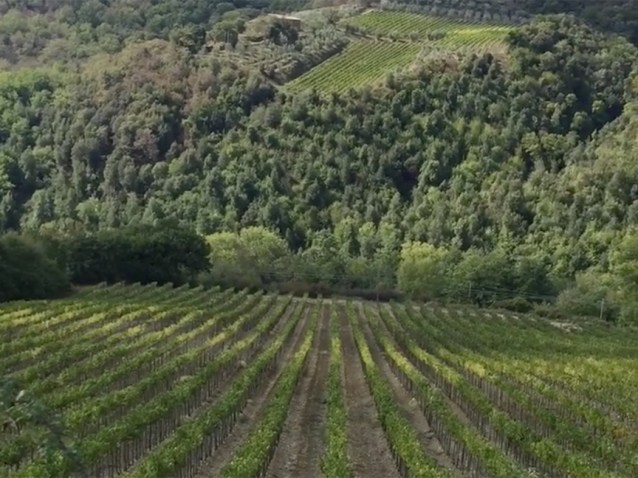
Above: The western edge of the Santa Ynez American Viticultural Area. The Pacific coast lies just a stone’s throw away.
The time is right for the Slow Wine California.

Perceptions of gastronomy’s cultural value have changed radically since the Slow Food international movement was founded in the late 1980s in Piedmont, Italy as a champion of traditional foodways threatened by Italy’s growing appetite for fast-food. As a wide-eyed undergraduate student in Italy on my junior year abroad in 1987, I was keenly aware of the controversy sparked by the newly opened McDonald’s at the foot of Rome’s Spanish Steps. It was that year that I first heard the name Carlo Petrini, the essayist and political activist who had founded Slow Food the previous year. In 1989 he would publish the Slow Food Manifesto, a battle cry for an emerging generation of Europeans who saw their culinary traditions being eclipsed by the march of industrialism and the growing popularity of Coca Cola and assembly-line pseudo-sustenance.

“Speed became our shackles,” he wrote. “We fell prey to the same virus: ‘The fast life’ that fractures our customs and assails us even in our own homes, forcing us to ingest ‘fast-food’… In the name of productivity, the ‘fast life’ has changed our lifestyle and now threatens our environment and our land (and city) scapes [sic]. Slow Food is the alternative, the avant-garde’s riposte.

(Click here for the complete manifesto and click here for a Slow Food timeline.)

Borrowing from the fencer’s lexicon (with his “riposte,” the sport’s return thrust, made after parrying a lunge), he underlined the urgency of his cause and mission.

Click here to continue reading my post today for the Slow Wine California blog…

Italy’s Blade Runner vintage 2017: “I’ve seen things you people wouldn’t believe.”

That’s an image captured this week in Montalcino where the grower completed harvest last Friday.

To the layperson, it may just seem like a picturesque Tuscan vineyard. But to the trained eye, it’s a truly bizarre image, the type that belongs to the “never seen anything like it” category, as one Montalcino farmer put it. The vines should be beginning to shut down now, the natural progression of the vines’ yearly rhythm. Instead, the vines are actually producing more vegetation (the opposite of what typically happens after harvest, wrote the author of the image).

Many Italian growers have remained silent on social media about the immense challenges they face with the 2017 harvest. But privately, I’ve been receiving emails from across the Italic peninsula recounting the pervasive effects of one of the strangest vegetative cycles in recent memory.

“It’s been a Blade Runner vintage,” wrote my friend and client Stefano Cinelli Colombini, who runs his family’s historic farm in Montalcino. “I’ve seen things you people wouldn’t believe.” (He’s referring to the legendary “Tears in Rain” monologue from the movie.)

Stefano’s been one of the few winemakers I know who has openly chronicled this unparalleled and uniquely odd vintage (and I’ve been translating his notes regularly for the winery’s blog).

There’s a famous adage in Italian viticultural apocrypha: there are no bad vintages, there are just vintages where we make less wine. Stefano’s still optimistic about the Brunello his vineyards will deliver this year, even though the yields are extremely low.

Between the early onset of spring and then the disastrous late spring frosts, between the crushing heat of the summer and the late end-of-days rainfall (not to mention that hailstorms that plagued many parts of Italy), one thing is for certain: no one will forget the otherwise unimaginable 2017 vintage.

Slow Wine Guide to the Wines of California: prizes to be announced next week

As strange as it seems, it was on a chilly November night in Piedmont — as voting in the 2016 U.S. presidential election was already well under way — that Slow Wine editor-in-chief Giancarlo Gariglio first suggested we create a Slow Wine guide to the wine of California. We sipped sustainably farmed Timorasso, dipped organic torilla chips into organic salsa (just to add a layer of surreality), and by the time we said goodbye, we knew we were on the verge of having a new U.S. president and a new vade-mecum to California viticulture.

That’s San Diego winegrower Chris Broomell, above, in June of this year. Together with his wife Alysha Stehly, also a winemaker, he produces some of the most compelling wines that I’ve tasted in 2017. Not just delicious but also thrilling (at least to my palate) for the new direction that he’s driving grape farming and vinification practices in an often overlooked and undervalued American Viticultural Area, San Pasqual Valley.

Next week, Giancarlo (our editor-in-chief) and I will begin posting the winery and wine prizes, winery profiles, and tasting notes on a new blog we are launching for the guide, which will be released as print media early next year. We’ll also be posting about our methodology, the rationale behind the guide and the prizes, and the overarching ethos of Slow Food and Slow Wine and why we felt the time was right for a Slow Wine Guide to the Wines of California.

Thanks to everyone who’s been so supportive of this new adventure and challenge. And special thanks to my daughters and wife Tracie who have seen a little less of me in recent weeks as I’ve been holed up in my office editing, writing, editing, writing, editing, and writing and editing some more.

It’s a very exciting project and I can’t wait to begin sharing it with you next week. Stay tuned!

Want to help Houston restaurant workers displaced by Harvey? Please come and see us! (Thank you Michael Madrigale and Planet Bordeaux.)

“Everyone’s been affected by the hurricane… everyone,” said Master Sommelier Guy Stout, a wine educator for Southern Glazer’s, when I saw him last night at a Bordeaux event at LeNôtre Culinary Institute in Houston’s Northline neighborhood.
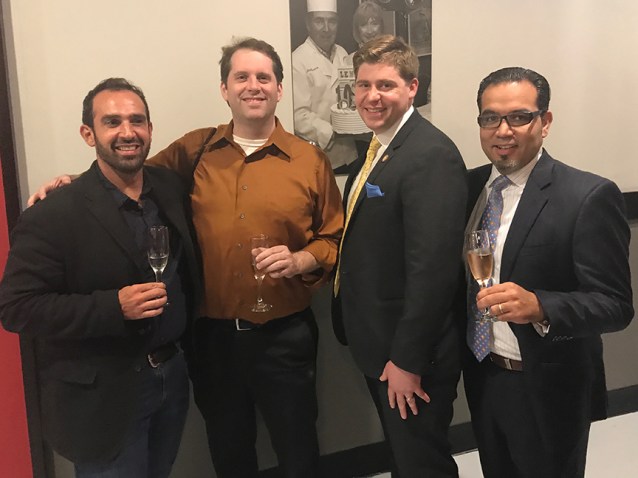
After I attended the Bordeaux tasting, which included a guided tasting with celebrity sommelier Michale Madrigale from New York (below), I spent yesterday evening bouncing around wine bars in my adoptive city, talking to sommeliers about the status of the Houston wine community.

That’s the sign outside Underbelly (above) in our Montrose neighborhood, one of Houston’s most popular restaurants and wine destinations and a regular draw for out-of-town guests. Its owners have partnered with a local wine collector to present Wine Above Water, a wine-focused benefit for Houston-area wine trade members who have been displaced or otherwise affected by Harvey. As Guy rightly pointed out, we’ve all been affected — in one way or another.

Please read about the event and click through to the organizers’ website here (my post today for the Houston Press).

“No hesitation at all,” said Michael when I asked him if he had any reluctance in coming to our city so soon after the storm. “I was just glad when I found out we could get in.”

That’s Michael (above, left) with leading Houston sommeliers (from left) Sean Beck, Jack Mason, and Christian Varas.

Colleagues and peers from across the world have been writing me asking me how they can help with recovery efforts. Every dollar donated counts, I tell them, and donating to Wine Above Water will directly aid wine professionals who are facing mounting challenges as the restaurant industry and its patrons get back online.

But more than anything else, we need you to come here and see (and share the news) that we are open for business. Nearly everyone I talked to last night told me that their wine bars and wine-focused restaurants were up and running the day after the hurricane. In some cases, they unshuttered while the storm was still dropping up to 50 inches of rain across the greater Houston metro area.

My recommended foundations for donating are the Hurricane Harvey Relief Fund
(established by Mayor Sylvester Turner)
and the Houston Food Bank.

Please add Wine Above Water to that list.

But if you really want to help our community — and not just the wine and food community — please come here and spend money in our restaurants and shops. Please post a photo from Houston on your social media to let the world know that we are back on our feet. Come shake someone’s hand and share a glass of wine with one of the many displaced wine and restaurant professionals who are struggling to get by as our city rebuilds.

Thank you, Planet Bordeaux (organizer of last night’s event at LeNôtre), and thank you Michael Madrigale for not by-passing our city. That’s the type of spirit that will make #HoustonStrong even stronger.

Please check out my Houston Press post on Wine Above Water here.

From Puglia to Burgundy to Piedmont: taste with me in October in Texas, Colorado, and California

Above: I will be presenting winemaker Cesare Barbero of Pertinace (Barbaresco) and a vertical of his wines October 18 at Rossoblu in Los Angeles where I author the wine list. It’s just one of the events where I’ll be pouring and presenting this fall.

Please join me for one of the many events where I’ll be presenting, pouring, or blogging next month in Texas, Colorado, and California.

I’m particularly excited about my event with my friend and client Paolo Cantele in Houston at Mascalzone (Oct. 11) where I’m now writing my first wine list in Texas.

Another highlight will be the vertical tasting of one of my favorite Barbaresco producers Pertinace at Rossoblu (Oct. 18), where I’ve been having so much with the list, which we launched in the spring.

And of course, the Boulder Burgundy Festival (Oct. 13-15), where I’ve served as the official blogger for the last three years, is always an unforgettable experience. This year, we’ll be joined by Eric Asimov and Raj Parr.

Thanks for your support… hoping to see (and taste with) you next month!

MASCALZONE (Houston)
Wednesday, October 11
7:00 p.m.

featuring Paolo Cantele
and 3 classic Italian dishes
paired with Cantele wines

$50 per person
12126 Westheimer Rd.
Houston TX 77077
Google map
CALL (832) 328-5151 TO RESERVE.

PIATTELLO ITALIAN KITCHEN (Ft. Worth)
Thursday, October 12
7:00 p.m.

family-style dinner
featuring Paolo Cantele
and Cantele family wines

price TBD
5924 Convair Dr.
Fort Worth TX 76109
Google map
CALL (817) 349-0484 TO RESERVE.

BOULDER BURGUNDY FESTIVAL
Fri.-Sun., October 13-15

with keynote speaker Eric Asimov
and sommelier and winemaker Raj Parr

Boulder CO
CLICK HERE FOR EVENT DETAILS AND REGISTRATION INFO.

SOTTO (Los Angeles)
Tuesday, October 17
7:00 p.m.

“Native Sons of Puglia”
dinner featuring Paolo Cantele,
Cantele family wines
& artisanal pastas by Pugliese
pasta-maker Francesco Allegro

$90 per person
9575 W Pico Blvd.
Los Angeles CA 90035
Google map
CALL (310) 277-0210 TO RESERVE.

ROSSOBLU (Los Angeles)
Wednesday, October 18
7:00 p.m.

Pertinace Barbaresco vertical
dinner with Cesare Barbero

$350 per person
1124 San Julian St.
Los Angeles CA 90015
Google map
CALL (213) 749-1099 TO RESERVE.

Kobrand, shame on you for by-passing Houston!

Above: the scene yesterday at the Houston Zoo, where my two daughters — ages 4 and 5 — especially enjoyed the elephants, lemurs, and cotton candy. We were lucky to find a parking place!

On Thursday, the following email found its way to my inbox:

For reasons they decided not to reveal (other than “in the wake of Hurricane Harvey”… what a tone-deaf word choice!), fine wine importer Kobrand’s powers-that-be have decided at the last minute to change the location of their touring Italian tasting, scheduled for Tuesday, September 19, from Houston to Ft. Worth.
Honestly, I had been looking forward to the tasting and looking forward to writing about it on my blog and the Houston Press food and wine blog. But thanks to the “wake of Hurricane Harvey” (I still can’t get over how insensitively their marketing department’s email was worded), it will be a missed opportunity for all concerned.

Here’s an update on the Houston wine community “in the wake of Hurricane Harvey”:

– both of my favorite wine bars in Houston were open the day after the storm;
– both of my favorite wine shops were open the day after the storm;
– the Houston-area Italian restaurant where I write the wine list was closed for only one day during the storm;
– every restaurateur member of the Italy-America Chamber of Commerce was open by the last day of the storm, except for one, which opened the next day.

Although the first day of school had been postponed for two weeks, my daughter started kindergarten this morning. Yesterday, I took my daughters to the zoo and we were lucky to find a parking place (that’s how crowded it was).

The USPS delivered mail to our house the day after the storm.

City of Houston Solid Waste Management Department picked up our trash and recycling two days after the storm (our regular day for pick-up; there was no disruption in service).

Houston’s airports reopened the day after the storm. I flew to California and back for work last week, with no disruption or delay.

Kobrand, I hope you “Have a wonderful day!” in Ft. Worth. (You can tell that Kobrand managers have a truly top-notch marketing machine working for them, all the way down to the authors of their heartless copy).

Houston is by no means fully recovered. It will take years, some say up to 10, to get the fourth-largest city in America back to its pre-Harvey bustle.

But I can assure you that the wine and restaurant community has rebounded swiftly and seamlessly.

Just think of all the meals that the winemakers and brand ambassadors would have enjoyed in Houston-area fine dining destinations. Just think of the tabs they would have paid and the tips they would have left. But, no, in the wake of Hurricane Harvey, all of that support will go to Ft. Worth, where they surely need it most.

Have a wonderful day, Kobrand! Don’t worry about us down here in Houston. We’re doing just fine.

The strangest vintage on record? Harvest 2017 is full of surprises (and it’s only just begun)

I just had to share the following post by my client Stefano Cinelli Colombini owner and winemaker at Fattoria dei Barbi, which includes an estate in Maremma (I translated it yesterday for the winery’s blog).

    The 2017 harvest at Fattoria dei Barbi in Scansano: In the three glasses in the photo above from left, you can see Merlot (1), Ciliegiolo and Alicante (2), and Cabernet (3). The berries have crunchy brown seeds, wild color, and high levels of polyphenols.
    Notice anything strange?
    Nothing at all, except… The grapes in the first two glasses were picked 20 days earlier than usual and the grapes in the last glass were picked 40 days earlier.
    How can the grapes be so ripe?
    Beats me. But they are totally ripe.
    I wouldn’t believe it if I hadn’t seen it with my own eyes.
    But the flavors are great and there is no trace of bell pepper or jam.
    This harvest will make for excellent wines even though, theoretically, none of this should be possible.
    Everything about this year is strange. The woods seem like they’re dying but the vines continue to produce vegetation.

Click here for the complete post, including more observations on the changing climatic conditions in Italy and Stefano’s concerns.

His thoughts were echoed by winemaker Marilena Barbera, who commented (on Stefano’s Facebook version of the post): “I really don’t understand this vintage. I don’t think I’ll ever be able to figure it out.”

Across the internets, I’m seeing Italian winemakers scratching their heads as they try to wrap their minds around the 2017 harvest and the 2017 vegetative cycle in general. There have been so many “extreme weather events” this year: unusually warm temperatures in late winter, late spring frosts, intense summer heatwave…

When a grape grower is picking his Cabernet 40 days earlier than usual (and the grapes are excellent quality, which is nothing to complain about), there’s something really strange going on. But, then again, nothing about 2017 has seemed normal…

Italy’s harvest 2017 has begun, for better or for worse…

From Puglia to Friuli to Piedmont to Tuscany and beyond… many of my friends have begun sending me photos of the grapes they are harvesting.

Those are Chardonnay grapes in Franciacorta (Lombardy) harvested this week at the Vezzoli winery.

The 2017 is a vintage that will be remembered — without a doubt — as an extremely challenging one.

Warm temperatures came early in February and March, causing unusually early budding. Then in April, over the course of one week, two frosts struck northern and central Italy, capriciously devastating some growers and miraculously sparing others.

Summer rainfall helped some farmers but disadvantaged others when precipitation came in the form of “extreme weather events,” as we have come to call them in the era of climate change.

And who could avoid news this summer of the heat wave that affected European citizens of all stripes and further accelerated a vegetative cycle (that was already ahead of schedule thanks to the early budding in the late winter)?

From what I can gauge (between images that reach my inbox and photos I see on social media), most white growers are well underway with their picking. And many are resigned to lower yields this year.

It’s still too early to predict what will happen over the next few weeks for the red varieties. I’ll be following along…

Thank you, Solouva (my close friends and clients), for the image!

Wine culture takes Middle America by storm…

Above: the mélange of Venetian glass at Brandani’s in Missouri City was as brackish as it was playful and delightful. I loved it and I loved the restaurant.

I have to be totally and brutally honest.

When my editor at the Houston Press asked me to see if I could find any undiscovered wine country in Houston’s suburbs, I headed out to Middle America with the same preconceived notions that any average self-respecting American wine pro would harbor: there is no wine culture or true fine wine life outside our country’s major urban commercial centers.

But what I found was a vibrant, however unnoticed, community of people who love good wine and food, who appreciate good wine service, and who are looking to expand their wine knowledge and experience by adventuring beyond the stereotypes and common places of American wine enthusiasms.

Above: owner and wine director Kevin Rios of Veritas Steak and Seafood told me that his interest is turning from “big, bold” California to Italian and Spanish. Music to my ears!

On my last visit, at a small unassuming wine bar, Off the Vine Bistro, in a strip mall in Missouri City, Texas last night, I was blown away by wine director Manish Asthana’s selection of white wines, including a super groovy natural Arneis.

That’s Manish (below, right) with his wife Namita, who runs the “farm-to-table” menu. He’s an oil-and-gas dude and they’ve lived and raised their children in this southwest suburb of Houston for 22 years.

He told me that of all the places they’ve lived over their lifetime (mostly in Europe but also in Asia and their native India), they decided to make their home in the Houston area because they really loved it here.

There may be hope for (wine) America yet!

Click here for my post today for the Houston Press.

Wine trade in particular might be surprised by how ambitious some of these places are despite their location far beyond Houston’s inner urban loop.

Barcelona, thoughts and prayers for our sisters and brothers

It seemed that even before the news about the Barcelona tragedy broke in the U.S. yesterday, I began seeing a stream of “marked safe” posts on Facebook. There are so many of my friends who live or are vacationing in Spain this summer: social media remind us how easily and senselessly terrorism can affect people we care about, even when they are far away. And they remind us that we are all connected — no matter where we live or travel, no matter the color of our skin or our religion — by our shared humanity.

When one of my close friends from high school (she’s vacationing there) and the brother of one of my best friends (he’s a genetic scientist there) marked themselves safe, sweet tears of relief were made all the more salty by those that fell in the anguish of a world wayworn with anxiety.

Today, the Parzen family’s thoughts and prayer go out to our sisters and brothers in Barcelona.

Roya and Tyler, I thank G-d you are safe…

Image via Wikipedia.