Taste with me in November and December: Houston, Los Angeles, and Piedmont

Thanks to everyone who came out to see/hear my new band The Go Aways this weekend at 13 Celsius. The response to the gig was so positive and the venue was so pleased that we are definitely planning on doing another show before year’s end. Thanks also to Londale and Golden Cities for making it such a great bill. Stay tuned…

Above: Prince Alessandrojacopo Boncompagni Ludovisi and I will be presenting a flight of his family’s Fiorano wines stretching back to the 1980s on December 7 at Rossoblu in Los Angeles. He’s flying in especially for the occasion. I’m so super geeked about this!
I’ll be pouring and speaking at a number of really cool events this season. Please join me in Houston and/or Los Angeles at one of the following dinners/tastings. And if you happen to be in Langa or Roero in November, I’ll be teaching at the University of Gastronomic Sciences the weeks of November 13 and 20. Shoot me a line and let’s connect and taste.

Mascalzone (Houston)
Monday, November 6

6:00 p.m.
Wine Tasting: Native Italian Grapes

I’ll be pouring 3 wines at Mascalzone where I’ve been writing the wine list since this summer. $35 per person, including light bites. I’ll also be working the floor that night at the restaurant. Call (832) 328-5151.

Rossoblu (Los Angeles)
Tuesday, November 28

6:30 p.m.
Lambrusco Tasting with Alicia Lini

The magnetic Alicia Lini is one of my best friends in the wine business and we love her wines at Rossoblu, where Christine Veys and I have been writing the wine list since the restaurant opened in the spring. $35 per person, including light bites. Registration hasn’t opened yet but please save the date.

Rossoblu (Los Angeles)
Thursday, December 7

7:00 p.m.
Dinner with Prince Alessandrojacopo Boncompagni Ludovisi
featuring a flight of Tenuta Fiorano reds from the 1980s

I’m so thrilled about this event: I’ve only had the opportunity to taste the Prince’s uncle’s red wines from the 1980s on one other occasion (thanks to a group of very generous collectors in New York). When I saw that he was making some of the wines available (directly from his cellar), I jumped at the chance to share them with our guests at Rossoblu. $195 per person, including a tasting menu created especially by Chef Steve Samson. Registration hasn’t opened yet but please save the date.

“Consumers deserve safe access to great retailers over state borders,” writes Eric Asimov for NY Times

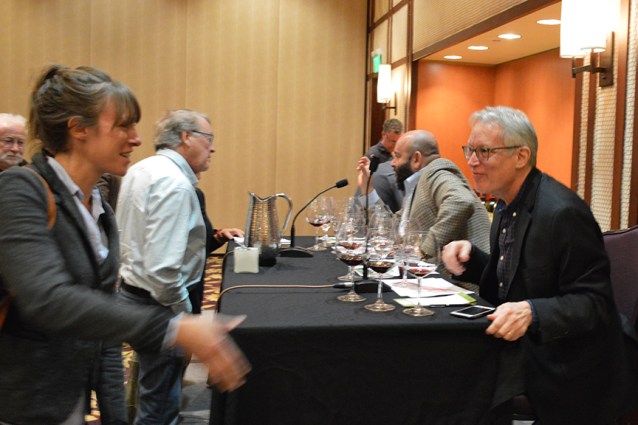
Above: Master of Wine Ashley Hausman Vaughters (left) greets New York Times wine critic Eric Asimov at the Boulder Burgundy Festival in mid-October.

It’s an issue and cause dear to my heart: the death-grip hold that American wine wholesalers employ (and enjoy) as they continue to stifle interstate retail sales of wine in the U.S.

I call it a “death grip” because it’s killing wine culture among young people across our nation. I’ve traveled from coast to coast over the last three years, visiting not just major markets but also budding wine communities in fly-over country and beyond. Again and again, I’ve met young wine professionals who are thirsty and eager to taste iconic Italian wines that they simply cannot get in their home cities. As the wholesale lobby has continued to tighten its grip on interstate retail sales, young sommeliers are increasingly forced to travel to other markets to taste wines otherwise unavailable to them.

It’s unfair, it’s anti-competitive (anti-capitalist) it’s un-American, and it’s downright pig-headed: not only does it hurt U.S. consumers who simply can’t buy the wines that they want, it’s putting a generation of future wine professionals and restaurateurs at a disadvantage.

I’m a wine buyer in California (where I write two lists) and Texas (where I write one). Over and over again, I see wines that are available to me and to consumers in California that are not available to me and my fellow consumers here in Texas (and in some cases, vice versa). And it’s thanks to efforts of the powerful wholesaler lobby. As farty old white men are getting rich in Texas and Florida (the states where some of the worst offenders make their home), American wine lovers are being denied a fundamental right that other Americans take for granted (it’s called the “Interstate Commerce Act”).

As New York Times wine critic Eric Asimov put it in his column this week for the paper: “In an age where you can order just about anything on the internet, including wine, consumers deserve safe access to great retailers over state borders.”

Eric writes:

    For a golden moment, motivated wine lovers could rely on high-speed internet as a sort of national wine shop. A consumer in Little Rock, Ark., for example, unable to find particular bottles locally, could order them from a shop in New York. It required only a willingness to pay shipping costs.
    Those days are no more. In the last year or so, carriers like United Parcel Service and FedEx have told retailers that they will no longer accept out-of-state shipments of alcoholic beverages unless they are bound for one of 14 states (along with Washington, D.C.) that explicitly permit such interstate commerce…
    But now, states — urged on by wine and spirits wholesalers who oppose any sort of interstate alcohol commerce that bypasses them — have stepped up enforcement efforts. Retailers say that the carriers began sending out letters to them a year ago saying they would no longer handle their shipments.

Please read Eric’s excellent piece for the Times.

And for some background and perspective, see this post by blogger and industry observer Tom Wark, who has written for years about this un-American, anti-competitive, monopolistic lobby.

California wine country wildfire updates @ Slow Wine (Slow Food). And please don’t forget the cannabis growers…

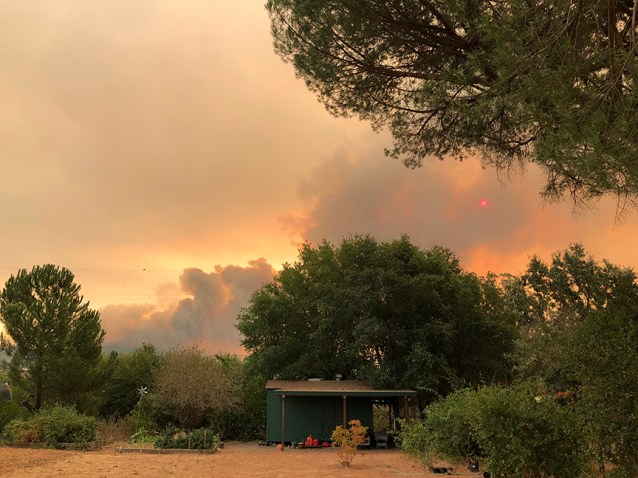
Yesterday, we posted an update on the California wine country wildfires over on the Slow Wine California blog, where I served as the coordinating editor of the guide and contributing editor to the site (image via Vino Girl’s Instagram).

We had been planning to continue publishing the 2018 debut guide prizes this month. But we took a break in order to shift coverage to the developing and ongoing crisis in northern California.

I highly recommend reading Eric Asimov’s piece “Wildfires Spared the Vineyards, but the Wines Could Suffer.” And please be sure to check out Alder Yarrow’s post on how to help with relief efforts, “Helping Northern California Wine Country After the Fires.” (“Undocumented immigrants are not eligible for federal disaster relief,” wrote Alder. “That’s why UndocuFund exists.”)

The fire may be mostly contained. But the human crisis continues. And that includes human and financial challenges for cannabis growers as well.
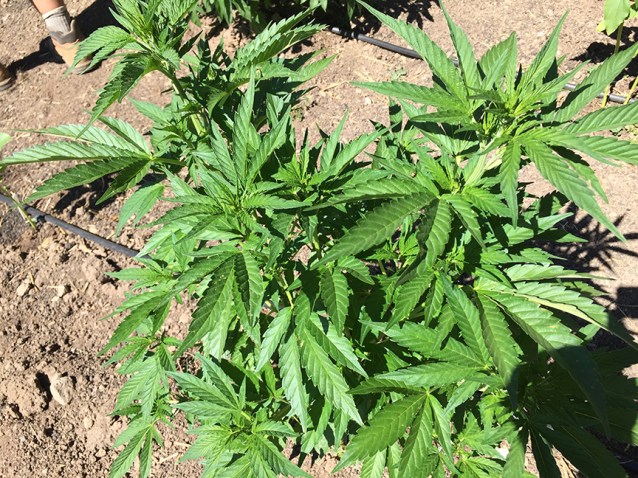
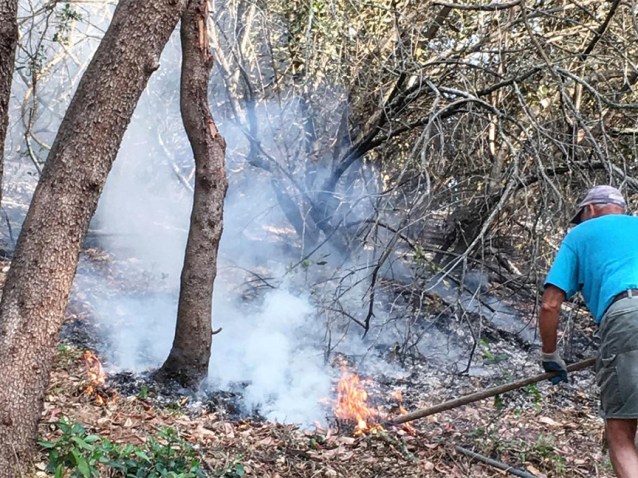
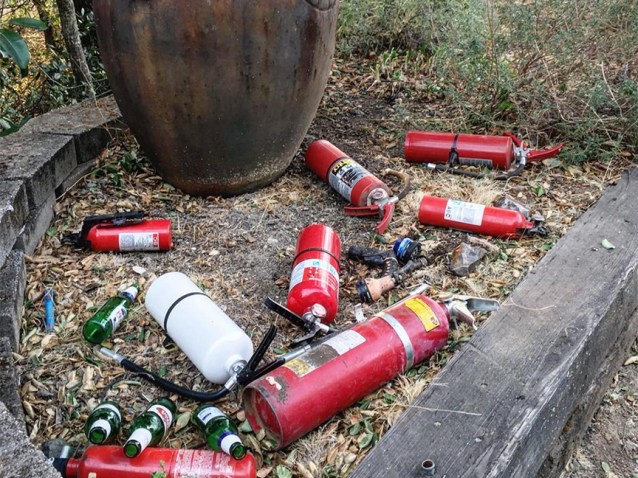
I visited a biodynamic cannabis farm in Sonoma earlier this year (images above and below): just as growers were investing heavily in their farms in preparation for the launch of recreational cannabis in California on January 1, their nascent industry had been literally decimated by the wildfires. Because cannabis is still considered to be illegal by the federal government, growers and other entrepreneurs are not eligible for federal aid.

It seems that states rights only matter to conservative Christians when it comes to putting down blacks and Mexicans and restricting reproductive rights and access to health services. States rights don’t matter much to them when it comes to the cultivation of one of G-d’s creations — a plant that occurs naturally — and its medicinal and recreational applications. Most conservative Christians are okay with wine (which doesn’t occur naturally). But cannabis? It’s the devil’s lettuce.

I was glad to see this excellent piece published by Washington Post (#AmazonWashingtonPost #fakenews!), “Wildfires scorched marijuana crops, possibly complicating California’s rollout of legal sales.”

And although I was surprised not to see more coverage on the excellent blog The Cannabist, the editors were among the first to repost this article by AP, “At least 31 legal cannabis farms have been destroyed in the California fires.”

What a year 2017 has been… Now, more than ever, all voting-age Americans need to look deep into their souls and reflect on what kind of country and legacy they want to leave for their (and our) children. Thanks for reading and clicking.

Rossoblu makes TOP 10 list in Jonathan Gold’s 101 Best Restaurants (Los Angeles Times)

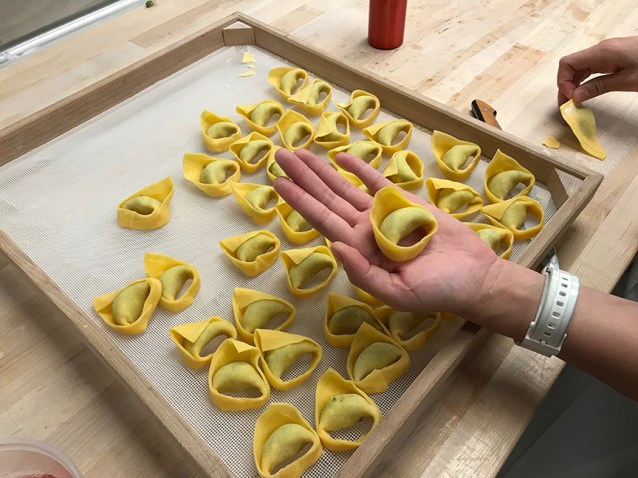
“The tortelloni, stuffed with the traditional mixture of ricotta and chard,” wrote LA Times food critic in his review of Rossoblu, “could illustrate the concept of Italian dumplings in a textbook.” I took the above photo last week when I was at the restaurant to lead a vertical tasting of Nebbiolo stretching back to 1996.

It was back in New York in the late 1990s when my friend from college Steve Samson (we met on our junior year abroad in Italy) first talked to me about his dream to open a fine-dining restaurant devoted to the cuisine of Emilia-Romagna, where his mother was born. By the early 2000s, when I was just a few years into my wine writing career, he was already talking about the wine list he wanted me to create for it.

We used to call it “the Dream.”

I couldn’t be more thrilled to share the news: late last night, the Los Angeles Times published “Jonathan Gold’s 101 Best Restaurants,” including Steve’s Emilia-Romagna-themed Rossoblu, which landed in the top 10 (at number 10). I’ve been co-authoring the wine list there with my colleague Christine Veys since the restaurant opened this spring and I couldn’t be more proud to be part of such a great team of restaurant professionals.

Seeing Rossoblu up there with restaurants like Spago and Providence (one of my all-time favorites) was like a childhood fantasy come true.

And as proud as I am of the wine program that we’ve created there, the credit goes solely, wholly, and rightly to Chef Steve and his wife Dina, who have always stayed true to the vision that they had for this superbly unique restaurant.

Over the arc of my career in the wine and restaurant trade, I’ve been involved with many high-profile restaurant openings. A restaurant launch is always stressful, chaotic, and unpredictable. The only thing you can count on is that you can’t count on anything when it comes to opening the doors of a multi-million dollar venue.

But the thing that keeps it together is a shared vision and staying true to that vision. None of this would have been possible if it weren’t for the son of schmatta-industry drop-out from Brooklyn who studied medicine in Italy and a wonderful home cook and loving mamma from Bologna.

Mazel tov and congratulations, Steve and Dina. I couldn’t be more honored to be a part of it. Thank you for bringing me along for the ride. I love you guys. Well done and well deserved!

Don’t cry for me Nebbiolo. The truth is I never left you…

The California wine country fires affect everyone in our industry. Please read my post today for the Slow Wine California blog.

Burgundy may be my mistress.

But Langa will always be my signora.

Last weekend, I attended the Boulder Burgundy Festival, where I not only have I served as the gathering’s official blogger for last four years but I also get to taste and drink far above my pay grade. It was a remarkable experience. Possibly the best event yet.

But as much as I loved sitting across from Bobby Stuckey as we tasted through a spectacular six-wine flight of Chambolle-Musigny, with Raj Parr and Eric Asimov leading us on our journey from the red soils at the bottom of the côte to the white soils at the top (what a seminar!), my mind and my heart always find their way back to Nebbiolo.

Last night I led a tasting of seven of my favorite expressions of Nebbiolo for 24 guests at Rossoblu, the new downtown Los Angeles Italian where my college buddy Steve Samson is chef and owner and where my colleague Christine Veys and I have been writing the wine program since it opened this spring.

We were joined by Cesare Barbero, director of one of my favorite wineries, the Barbaresco cooperative Pertinace — one of the unsung heroes of the appellation.

The flight: 13 Barbaresco, 12 Barbaresco Marcarini, 12 Barbaresco Nervo, 98 Barbaresco, 98 Barbaresco Nervo, 96 Barbaresco, and 96 Barbaresco Nervo.

My top wine of the night was the 98 (classic) Barbaresco, which we paired with the first white truffles of the season to arrive in LA (they were literally flown in the day before). What a flight of wines, what a dinner, and what at night!

Thank you to everyone who came out to support this event: our first wine dinner in the restaurant’s newly christened wine room. And thank you to the spot-on staff at Rossoblu for the seamless service and the beautifully polished stemware.

On Thursday, December 7, the restaurant and I will be hosting Prince Ludovisi (Fiorano) for a dinner and tasting of red wines made by his uncle in the 1980s. The Prince is flying in especially for the occasion and the wines are coming from the family’s personal grotto (they don’t have a cellar; they keep their wines in an ancient Roman cave). I hope you can join us (registration isn’t open yet for this event but if you’d like to reserve one of the 18 seats available, please shoot me an email so I can hold your spots for you).

Thanks, everyone, for your support. It means the world to me.

Please don’t forget our sisters and brothers in California wine country.

Domenico Clerico and the year he never stopped changing: the new wave of the old school in Barolo

It was fascinating to sit down and chat yesterday with Oscar Arrivabene (above) in Los Angeles where he was pouring Domenico Clerico wines with the estate’s new California importer.
Like many Nebbiophiles, I had a $64,000 question on my mind: which vintage marked Clerico’s shift from standard bearer of the modernist movement in Barolo to champion of large-cask-aged traditional-style wines?

If you’re reading this blog, you probably know that Domenico, a truly lovely man who was deeply cherished by his community and the many young people he mentored, left this world for a better one in July of this year (see this Wine Spectator obituary by Bruce Sanderson to put the arc of Clerico’s career and wines into context).

“The thing about Domenico,” said Oscar, who first visited the winery as Clerico’s student and then later joined the estate as enologist, “was that he was always changing his approach to winemaking. He never stopped changing.”

Tracie (my wife) and I had the immense pleasure of dining with Domenico in Piedmont almost a year to the day before he passed. And he spoke that evening of how he had decided to abandon barrique (new wood, small cask) aging for his wines.

But what year marked the sea change?

Oscar needed no nudging to reveal that it was in 2014, when they were blending the 2011 harvest, that Clerico decided to sell off some of his barrique-aged wines and bottle a blended Barolo sans vineyard designation — a first for him and the estate. From that point onward, said the young winemaker, Clerico and his wines set back down a traditionalist path, including some of the wine he was already aging in large cask.

When the great Barolo and Barbaresco traditionalist Bruno Giacosa suffered health problems in 2006 and ultimately decided not to bottle the vintage, Oscar told me, Clerico (who succumbed to a long and courageous battle with cancer this year) began to revisit Giacosa’s wines, “rediscovering” his own passion for wines aged in botti (large cask). That led him to begin re-tasting wines by other old school producers whose wines inspired him to change his own style, said Oscar.

I told Oscar about the wonderful dinner we shared with the always colorful Clerico in July 2016. In turn, he shared a story about the Barolo grower’s boundless generosity.

He and Clerico were touring the U.S. last year when a young wine professional asked him to explain the difference between modernist and traditionalist Barolo. Without uttering a word, Clerico left the table and returned with the restaurant’s sommelier and $600 worth of wine — two bottles, one by a classicist, one by an avant-garde producer. When there wasn’t quite enough wine for everyone to taste, Clerico quickly called for another bottle of each. $1,200 later, quod erat demonstrandum.

Rock out with me and The Go Aways October 29 in Houston

Please keep praying for all our friends and colleagues in Northern California where wild fires continue to threaten life and property. So many of my friends still can’t get back to their homes. Click here for relief effort resources.

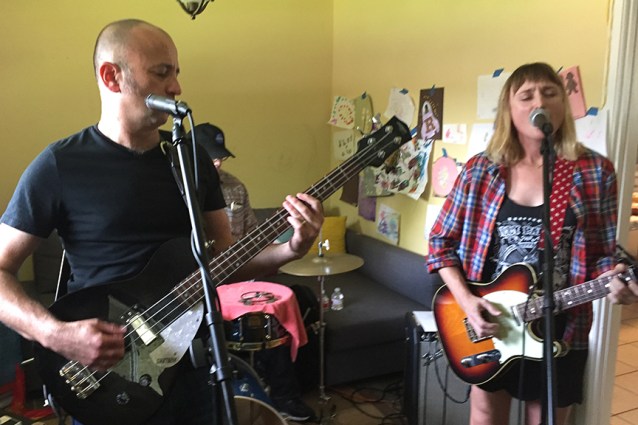
Please join me and my band The Go Aways for a set of Americana rock and country on Sunday, October 29 at 13 Celsius wine bar in Houston (Midtown). Show starts at 5 p.m. No cover.
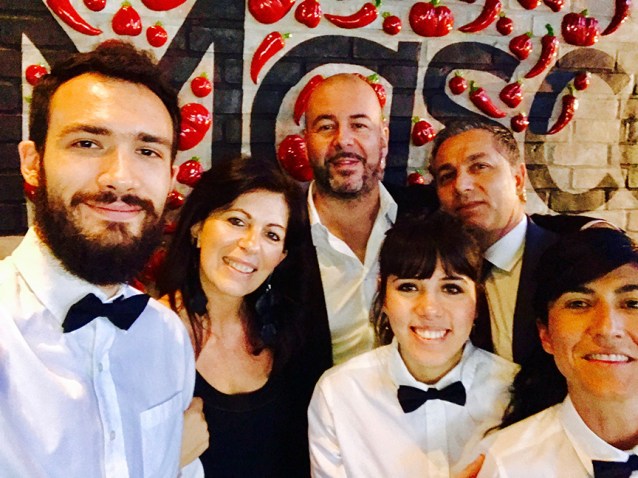
My bandmate Gwendolyn Knapp and I have been working on a new album of her songs that we hope to release by Christmas of this year. She and I have been producing the music in my home studio and I’m pretty stoked about it.

Her tracks can be dark and they can be funny and they always rock with just the right amount of twang. She and I have also written a couple of Christmas songs — one political and one inspired by my daughter Georgia age 5 who wrote the title.

Two other Houston-based bands will be performing as well, Londale and Golden Cities. Please come rock out with us.

In other news…

I’m up in Colorado this weekend for the Boulder Burgundy Festival. I’ve been the gathering’s official blogger for the last three years now and it’s always a great experience. Stay tuned for posts from the gig (I’m about to walk into the kick-off event: Old and Rare Burgundy with Master Sommelier Jay Fletcher, one of the most engaging speakers and tasters I’ve ever had the pleasure to taste with).

I’ve also gotta send out a shout-out this morning to my bromance and client Paolo Cantele (below, center) who came to Houston this week to present a wine dinner featuring his wines at Mascalzone where I’ve been writing the wine list since August. It meant so much to all of us, Paolo, that you came to Houston when we need people like you most.

California Fire Relief Efforts: Where and what to donate (via @Biondivino)

Images via Vino Girl’s Instagram (Napa).

The stories of devastation and loss are as gut-wrenching as they are heartbreaking.

“The ferocious fires in the Wine Country and beyond,” wrote the editors of the San Francisco Chronicle yesterday, “destroyed new territory on multiple fronts Wednesday, threatening communities untouched by the previous onslaught — including the cities of Sonoma, Napa, Calistoga and Fairfield — and prompting evacuations of thousands more people.”

“Fires raked across the state, but the primary battlefields were in Napa, Sonoma and Solano counties where wind gusts topping 30 mph were giving out-of-control fires new life and sending firefighters from across California and Nevada scrambling to save lives and property.”

Below, I’ve copied and pasted an email blast by Ceri Smith, owner of the Biondivino wine shops in San Francisco and Palo Alto. Both locations are accepting donated items (the list of suggested items follows). Relief supplies can also be shipped to either location and Ceri has also included other resources for donations and recovery efforts.

Tracie and I are praying this morning for our sisters and brothers in California. G-d bless the Golden State.

Fire Relief
Donation Drop Location
Biondivino San Francisco & Biondivino Palo Alto

There are no words that can ever express the impact and devastating sorrow we feel
for the tragedies and insurmountable losses our Northern California neighbors,
friends and colleagues are going through daily.

Many basic items are needed as so many have lost so much.

From what I understand these are the most immediate needs:

  • Face Masks (3M 8511 N95 – needs to be able to filter out smoke/gasses, please, not the light weight basic model
  • Individual or Small Eye Drops – Eye Rinse
  • Pillows & Pillow Cases /Air mattresses/Blankets
  • Flashlights/Batteries/Chargers
  • Diapers – Children & Adult – Feminine products
  • OTC Medicines: Advil, Tylenol, Antihistamines, DripDrop etc…
  • Wetwipes, sanitizers, toothbrushes, hair combs etc
  • Baby food – Pet food/Supplies
  • New Undergarments: Men, Women, Children of all sizes
*Consider anything you would need if you had to leave at a moments notice (or any person young or elderly would need)

Many out of town people have asked how they can help/contribute – please feel free to ship anything to either of our locations.

**Please address the receiver as FIRE RELIEF c/o Biondivino

EASY LINKS:

Bay Area residents – Cole Hardware: Mask Link | Sanitizer Link | Batteries | Emergency Supplies
or Amazon (prime if you have it).

Biondivino SF:
1415 Green Street (between Polk/VanNess)
any time Tues – Sat 11am-8pm – Sun 12pm-7pm – closed Mon

South Bay Biondivino Palo Alto:
Town & Country Palo Alto
855 El Camino Real #160 (Next to Belcampo & The Sushi House)
any time Mon – Sat 10am-7pm – Sun 11am-5pm

*NO CASH DONATIONS ACCEPTED – THANK YOU

More Links to Help:
Petaluma Volunteer/Evacuee/Donation
NBC-Fire Relief Links

Fires threaten iconic California wineries: A Dispatch from Sonoma by Slow Wine senior editor Elaine Brown

The North Coast of California was hit last night by a rash of wildfires. Most of the fires were sparked by gusting winds taking down trees hitting above-ground power lines. Fires spread quickly with one of the largest, the Tubbs Fire in Santa Rosa, spreading to over 25,000 acres in a matter of hours. The Tubbs Fire has burned portions of the northern part of the city of Santa Rosa and forced the evacuation of two area hospitals and thousands of people…

Click here to continue reading a dispatch from Sonoma this morning by Slow Wine senior editor Elaine Brown.

Could this be Freisa’s moment in the sun?

Scrolling through the 499 winery’s Facebook this morning, I was reminded of Carlo Petrini’s August 2016 article in the Turin edition of La Repubblica (the Italian national daily): “The hegemony of Barolo is putting other Langhe wines at risk” (translation mine).

The piece echoed something that I’ve been hearing Langhe growers say for a long time.

Over the last two decades, the lucrative nature of the Barolo trade has prompted many producers to plant Nebbiolo in vineyards where grapes of a lesser god were once traditionally grown.

“Nebbiolo used to be planted only [in parcels] where the snow melted first,” Maria Teresa Mascarello said to me some years ago when I visited with her at her family’s historic cellar.

It’s always a revelatory experience to drive around Langhe during the winter and see how the sun melts away the flakes in the top crus before it shifts its efforts to the surrounding blocks. And this tradition is reflected in the Piedmontese dialectal term sorì, used to denote the best hilltops for raising Nebbiolo. It comes from (and is akin to) sol or sole in Italian. It means well-exposed [to the sun] or sun-bathed.

When I finally had the opportunity to taste 499’s Freisa a few weeks ago in Los Angeles, I couldn’t help but think to myself: is this Freisa’s moment in the sun?

This delicious wine, grown at 499 meters a.s.l. in the township of Camo, is the brainchild of two Barolo veterans: Mario Andrion (Castello di Verduno) and Gabriele Saffirio (Brovia), who have both had a hand in producing some of my favorite expressions of Langhe viticulture. It was fresh and bright, with nuanced floral notes that really impressed and surprised me. But it still had that tannic character that you expect from Fresia. A really original and utterly delicious wine.

With Barolo setting records in release prices these days (thank you, 2010!) and Moscato d’Asti (which they also grow) becoming more and more alluring thanks to the growing interest in sparkling wines, it’s hard not to think of Mario and Gabriele as Don Quixotes.

It’s great to see the interest in Langhe growing among wine collectors across the world. But it’s also wonderful to see these young Langhe growers not allowing their viticultural heritage to be eclipsed by Barolo’s bright star.