
 Above: cannabis grown on a private biodynamic farm in Sonoma, California. I spent the day yesterday in Sonoma county touring some of the damage from the wildfires.
Major-league wine blogger, marketer, and lobbyist Tom Wark is worried.
He’s concerned that legal recreational cannabis, which goes into effect in California in January 2018, will eclipse the sales of wine.
Earlier this week, he wrote that “cannabis is bad for wine.” He quotes a new and widely reported study whose authors claim that “alcoholic beverage sales fell by 15 percent following the introduction of medical marijuana laws in a number of states.”
And just today on his blog, he included “Cannabis and Wine” as one of the top 10 “wine stories” of 2017 (leave it to Tom, a blogger and writer I admire greatly, to nail it when it comes to listicles).
“Some [in the trade] like myself,” he wrote, “have been looking closely at the degree to which cannabis will cannibalize sales from the wine industry.” (Great parononmasia!)
 Save for linguistics (a sine qua non tool in any self-respecting philologist’s gearbox), I’m not well versed in hard sciences like psephology. I can’t counter the results of studies like this one, which came to my attention via Tom’s blog (which I highly recommend to you btw, one of the best wine blogs out there).
But I can speak from personal experience. Like many in the industry (see this article by Eric Asimov for the New York Times), I don’t see cannabis as a threat to wine sales or consumption because pot smoking is already pervasive among grape growers, winemakers, and wine consumers. And it’s been that way for decades.
The fact that recreational cannabis will soon be available for retail purchase won’t change the robust cannabis culture that already exists across the United States — most vibrantly in California, where I grew up and where pot and wine are woven into the fabric of everyday consumption since the 1970s when I was a kid.
I’ve got news for white bread wine lovers: Americans love pot, they have for generations, and even though some Americans still associate it with sinfulness (like Tom, who calls it a “sin industry”), pot culture is an all-American tradition — from San Diego to Austin, from Portland to New York City, from Seattle to Boca Raton. The fact that it’s now becoming part of the mainstream business community doesn’t really change much in the way that I or hundreds of my colleagues and peers will consume cannabis (after all, you can’t write business without writing sin).
I’ll never forget when, in 2010, then Governor Rick Perry said: “if you don’t like medical marijuana and gay marriage, don’t move to California.”
I’ve got news for you, Rick. It’s not just coming to a town near you soon. It’s already there…
Check out Tom’s blog. It’s a daily read for me and one of the best wine blogs out there.
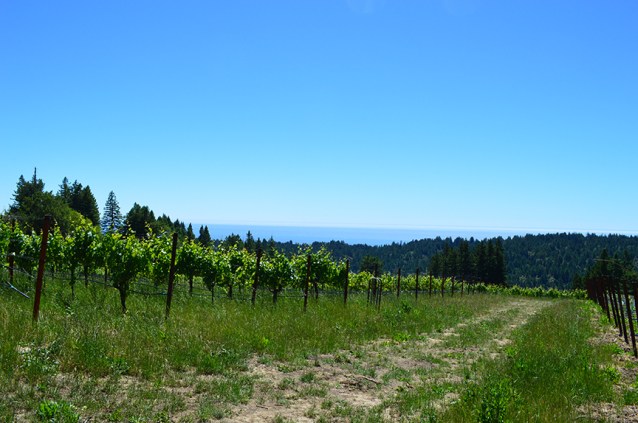 Last week, Slow Wine editor-in-chief Giancarlo Gariglio and I began publishing the first winery profiles from the 2018 Slow Wine guide to the wines of California on the Slow Wine blog.
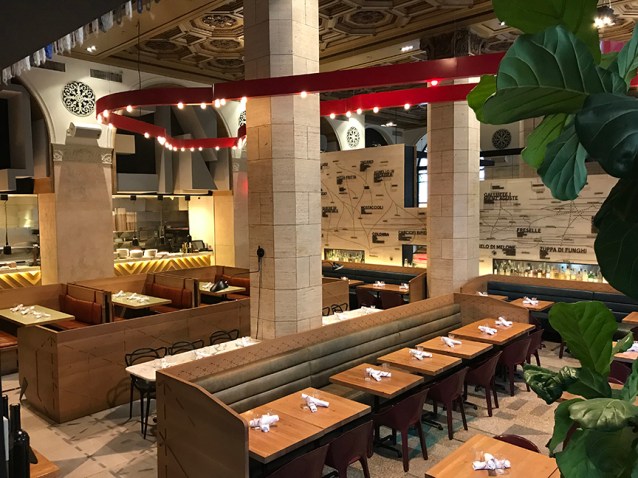 This week found me in LA where I checked in on the wine lists I author and co-author at Sotto and Rossoblu. I also spent some time this week eating out around town to catch up with what has shaped up to be a genuine Italian culinary renaissance here.
 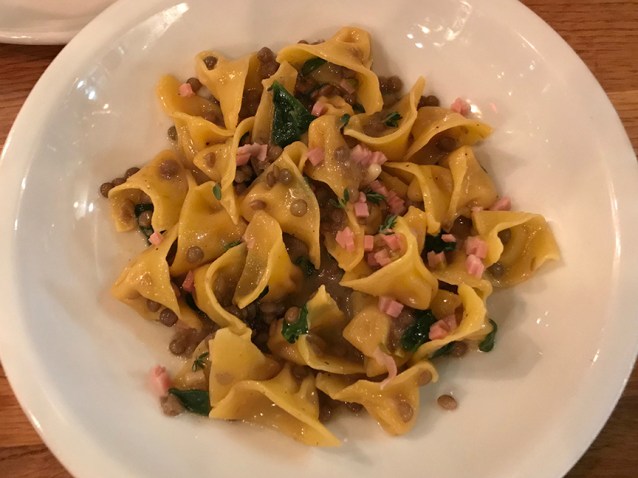 Bestia was completely packed on Monday night. The Monday after Thanksgiving! I had to pull a restaurant connection string to get a table but man, was it worth it.
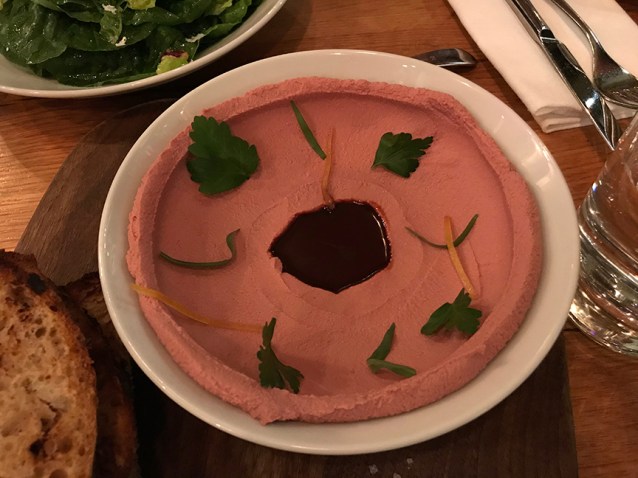 But as much as I loved Bestia and as much as I love the two restaurants I consult with here, the all-time king of Italian cuisine in Los Angeles will always and forever be Gino Angelini, owner and chef at the eponymous Angelini Osteria.
 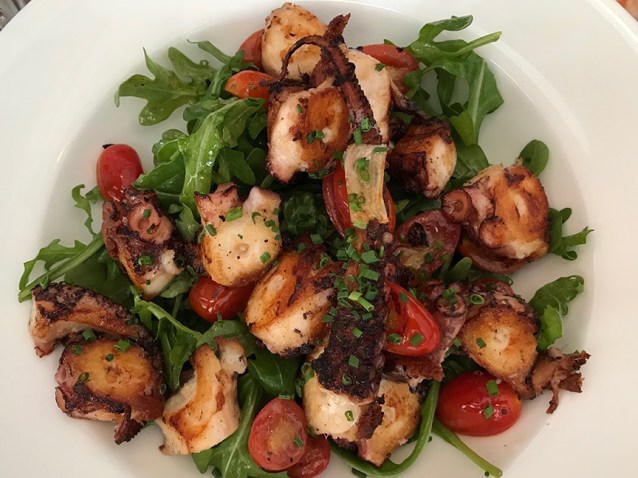 The legendary tagliolini al limone (below).
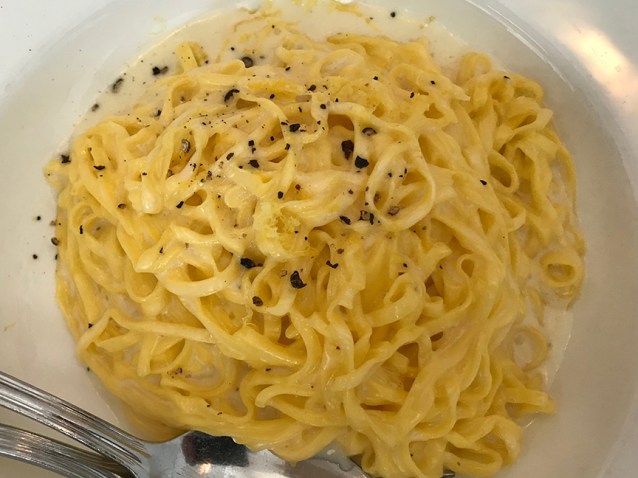 The pappardelle with duck ragù (below) were also fantastic.
 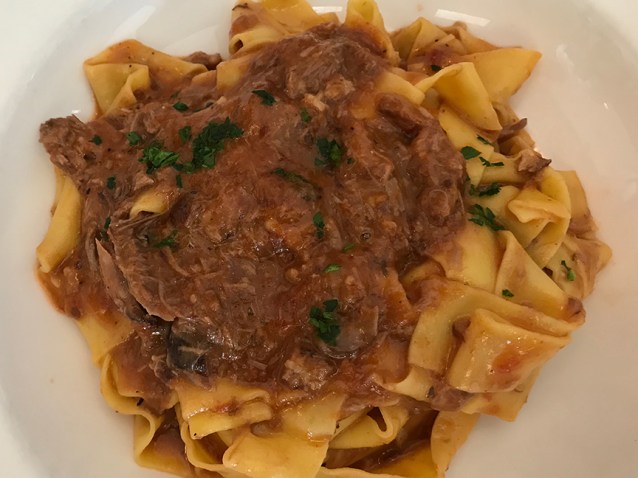 Wow, Gino, as always, ubi major minor cessat. I really love and have always loved your cooking. It was great to be back. Thanks for taking such good care of us (and thanks Anthony for treating!).
 If you’ve ever studied Italian as a second language, you know that you invariably encounter irregular nouns early on in your class.
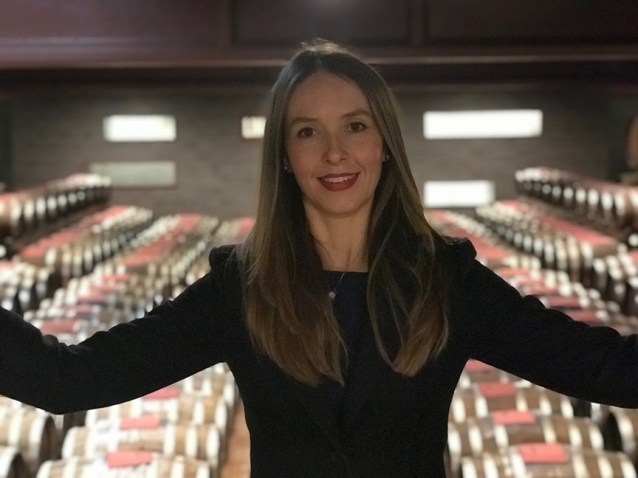 The magnetic Alicia Lini (above) and I will be pouring her wines at Rossoblu in downtown LA on Tuesday. Alicia’s one of my best friends in the wine business and her family’s wines are as contagious as she is.
 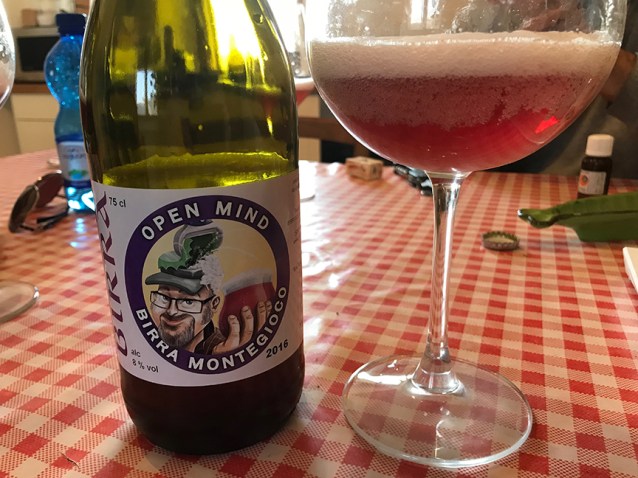 There’s a first time for everything and one of my firsts this week in Italy was tasting
 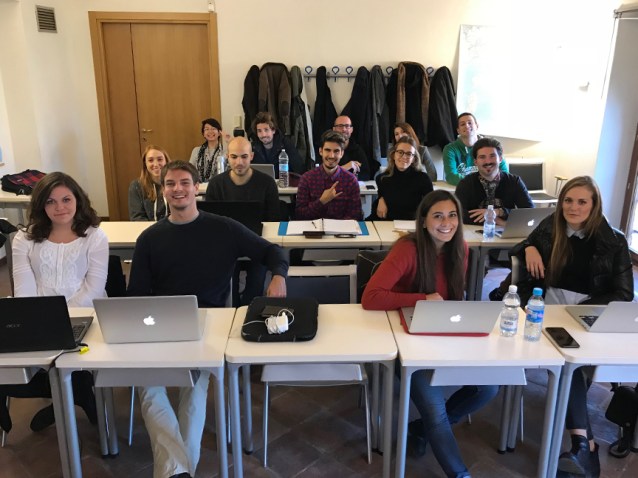 Today, I’ll teach my last wine writing seminar in
  Some of you may remember the famous line by John Landau, music critic and later record producer, published in 1974:
 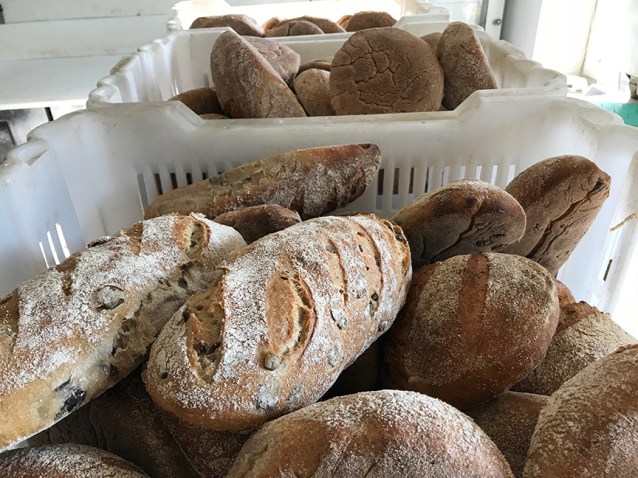 Carlo grows his own wheat and makes his own bread.
  He raises his own pigs and makes his own salumi.
  He farms his own barley for his line of beers.
 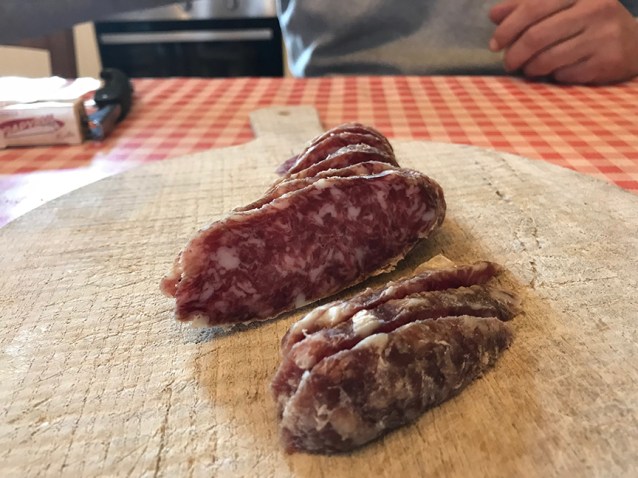 His salame, considered one of the best artisanal salamis in Italy today, was as creamy as butter (for real).
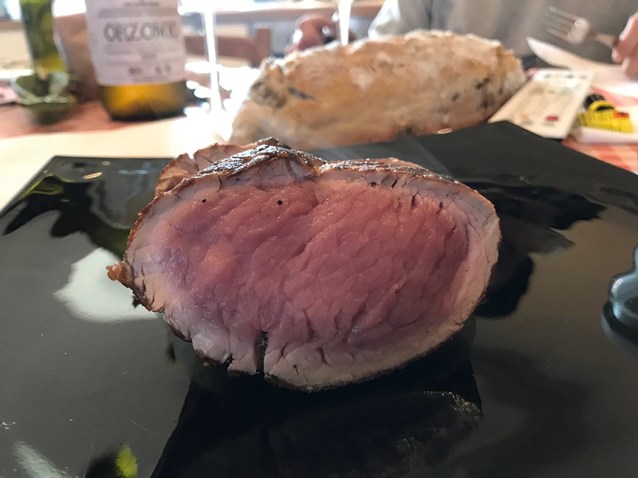 He prepared a pork loin from one of his pigs and then seared it — without any oil, other type of fat, or salt — in a non-stick pan to show us how flavorful it is.
 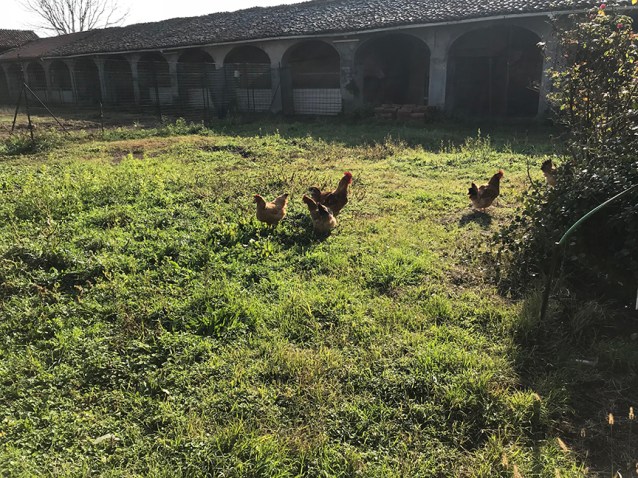 He also sells preserves and eggs from his farm.
  In the fall of 2012, an older white man in a pick-up truck pulled into the parking lot of the post office in the Austin, Texas-area middle-class neighborhood where my wife Tracie and I used to live with our two young daughters.
 It was remarkable to re-read the piece this morning.
 Back in my grad school days, my dissertation advisor — the great Milanese poet Luigi Ballerini — used to boast that he would never let our department become a fabbrica dei disoccupati, a factory churning out unemployable graduates.
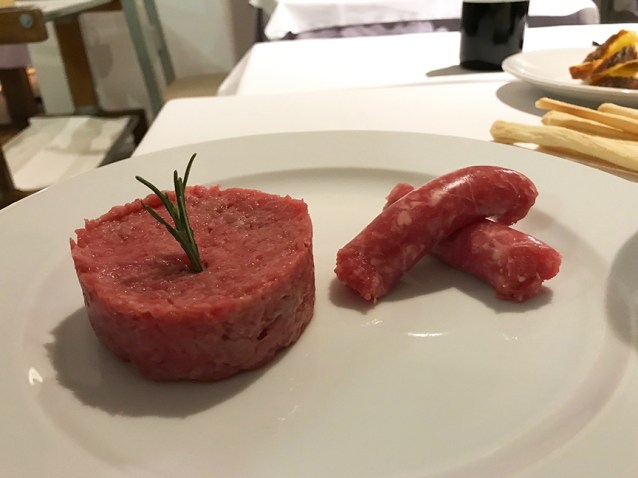 What a meal last night at
  Last night, I had the immensely good fortune of being a guest in the home of professor
  For the wine pairing, he told us, you need a white with enough body to stand up to the saltiness and fattiness of the dish. He highly approved of Michele’s Van Volxem 2011 Saar Riesling (above).
  Do Bianchi
