
 Last week, Slow Wine editor-in-chief Giancarlo Gariglio and I began publishing the first winery profiles from the 2018 Slow Wine guide to the wines of California on the Slow Wine blog.
Even though we will be publishing a hardcopy version of the guide (slated for release in early 2018), each one of the profiles of the 70 wineries featured in the book will be published online. In keeping with the spirit of Slow Wine, the guide and its editorial mission, the idea is to make the book an open source of information about the estates, the wines, and the evolving California wine trade. As with the Italian and Slovenian sections of the guide, the entire California guide will ultimately be available online.
We plan to publish nearly one a day, four-to-five every week.
In other news, the New York public relations firm who handles logistics for the Slow Wine U.S. tour, Colangelo, has launched a website devoted to the annual tasting itinerary. This year, the tour will be visiting Atlanta, New York, Houston, and San Francisco. I’m so glad that Giancarlo decided to include Houston for 2018: our city is a major hub for fine wine in general and a great destination for Italian wine in particular. I’m also glad that Colangelo has agreed to publish the site and update it regularly. It’s an important resource for info that’s bound to come in handy.
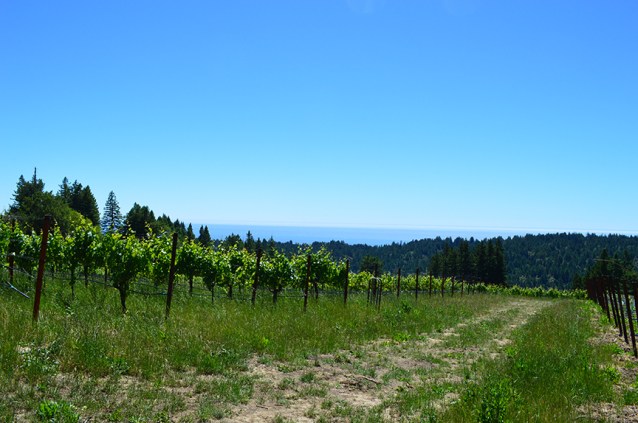
That’s a photo I shot earlier this year at Hirsch Vineyards in Sonoma (Sonoma Coast). You can see the sloped growing site; the proximity to the Pacific Ocean (and the resulting maritime influence); you can see the naturally occurring grass and plants growing between the rows. What you can’t see is the ancient-seabed subsoil, ideal for growing Pinot Noir and Chardonnay. The presence of ancient seabed there is owed to the nearby San Andreas site.
I’ve written here before that I was wrong about California wine. At another time in my life, in the early years of my career as a wine writer, I wrote-off California wine as being too jammy, too oaky, overly concentrated, too hot (alcoholic), and lacking balance.
My experience this year as the coordinating editor of the guide and one of its contributors has really reshaped my thoughts and impressions of the California wine industry.
And California wine country needs us all — you and me — more than ever before. Tomorrow, I’ll be heading to northern California to survey the damage and recovery in the aftermath of this year’s terrible wildfires.
Stay tuned: I’ll be posting about the trip here and on the Slow Wine blog as well.
Thanks for reading and thanks for drinking California wine.
Please see my post, from earlier this year, California wine, I was wrong about you. I’m sorry…
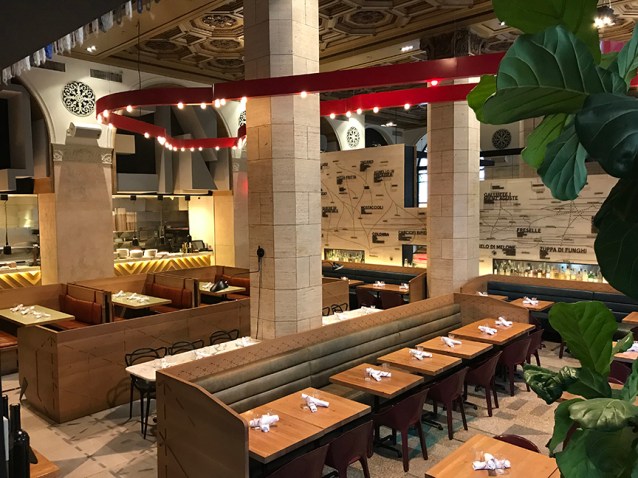 This week found me in LA where I checked in on the wine lists I author and co-author at Sotto and Rossoblu. I also spent some time this week eating out around town to catch up with what has shaped up to be a genuine Italian culinary renaissance here.
 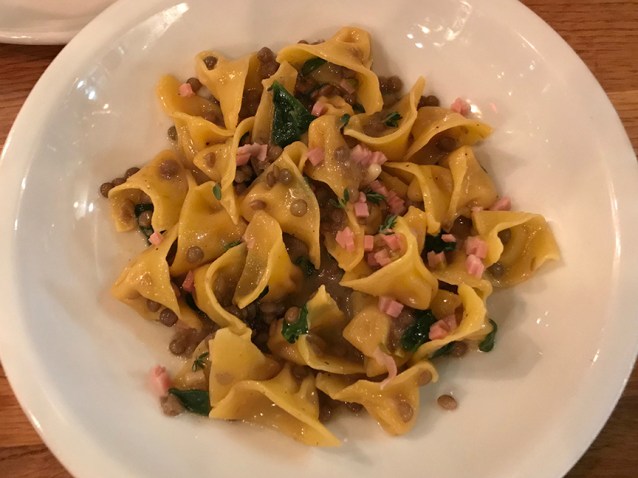 Bestia was completely packed on Monday night. The Monday after Thanksgiving! I had to pull a restaurant connection string to get a table but man, was it worth it.
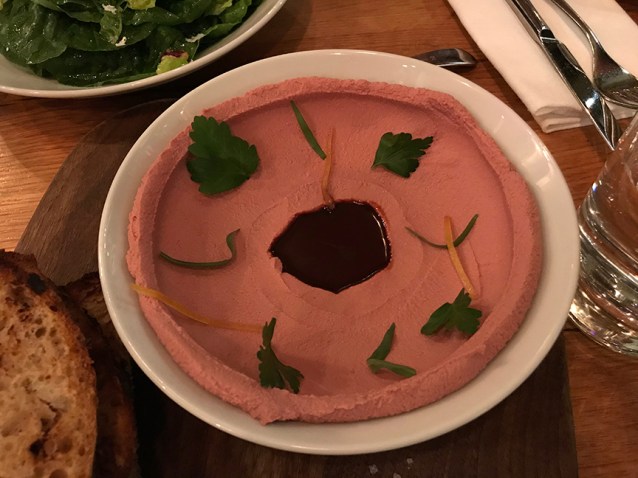 But as much as I loved Bestia and as much as I love the two restaurants I consult with here, the all-time king of Italian cuisine in Los Angeles will always and forever be Gino Angelini, owner and chef at the eponymous Angelini Osteria.
 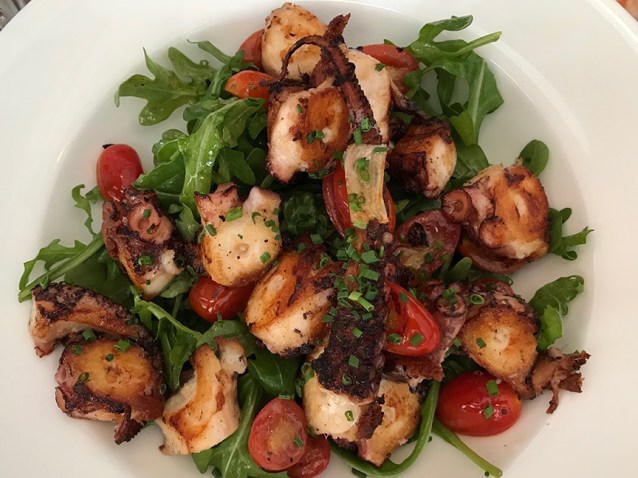 The legendary tagliolini al limone (below).
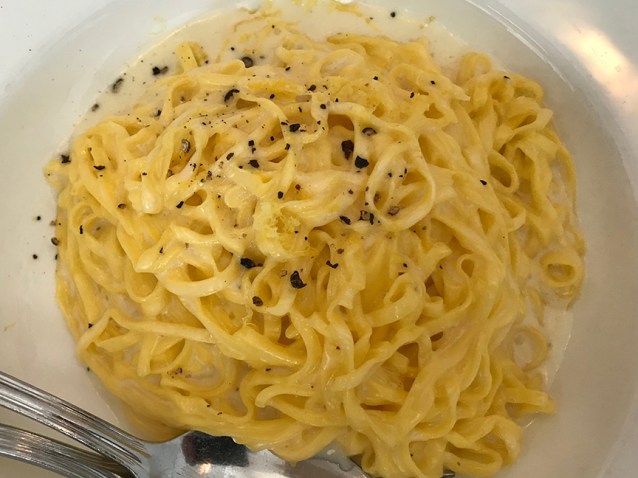 The pappardelle with duck ragù (below) were also fantastic.
 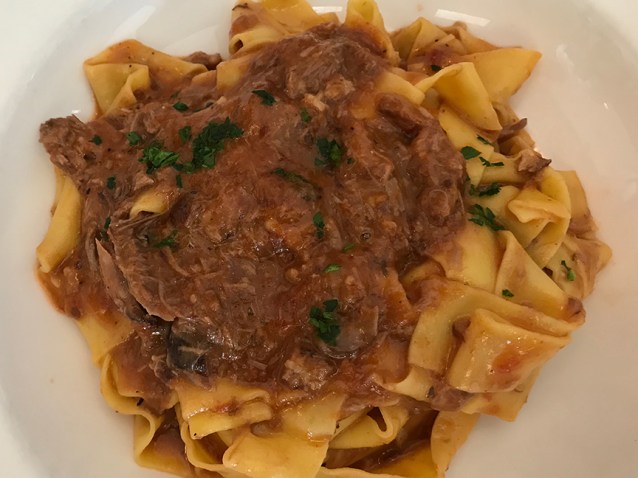 Wow, Gino, as always, ubi major minor cessat. I really love and have always loved your cooking. It was great to be back. Thanks for taking such good care of us (and thanks Anthony for treating!).
 If you’ve ever studied Italian as a second language, you know that you invariably encounter irregular nouns early on in your class.
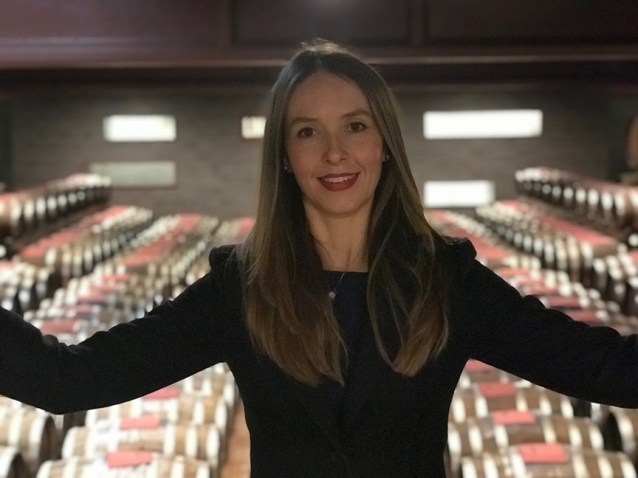 The magnetic Alicia Lini (above) and I will be pouring her wines at Rossoblu in downtown LA on Tuesday. Alicia’s one of my best friends in the wine business and her family’s wines are as contagious as she is.
 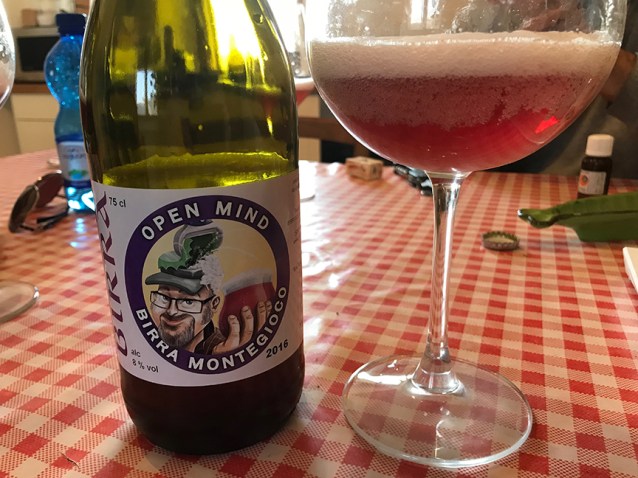 There’s a first time for everything and one of my firsts this week in Italy was tasting
 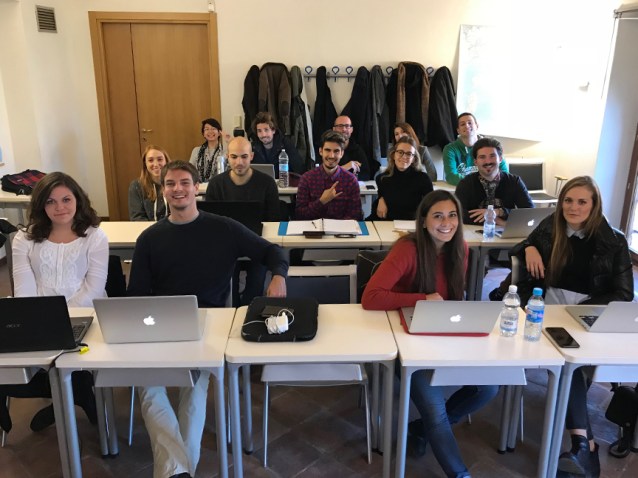 Today, I’ll teach my last wine writing seminar in
  Some of you may remember the famous line by John Landau, music critic and later record producer, published in 1974:
 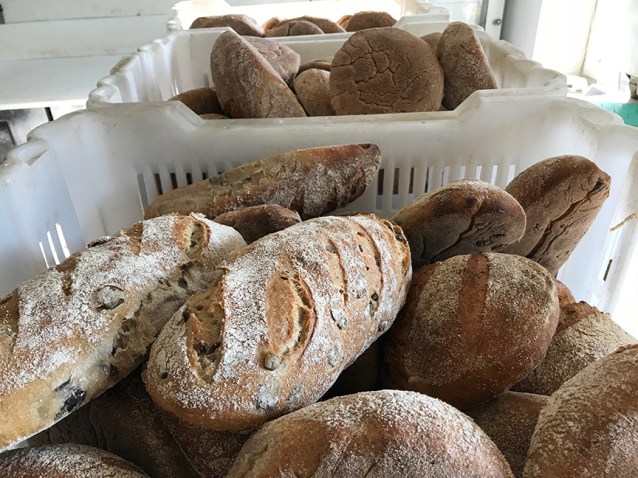 Carlo grows his own wheat and makes his own bread.
  He raises his own pigs and makes his own salumi.
  He farms his own barley for his line of beers.
 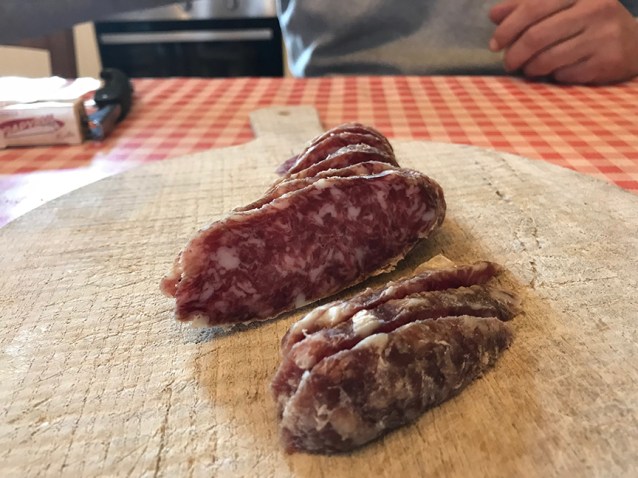 His salame, considered one of the best artisanal salamis in Italy today, was as creamy as butter (for real).
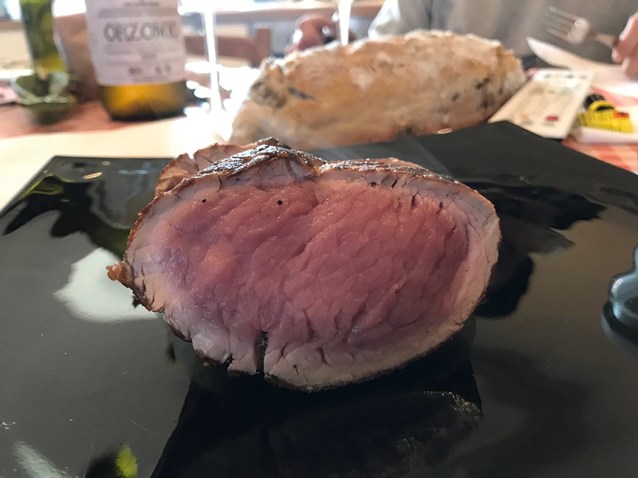 He prepared a pork loin from one of his pigs and then seared it — without any oil, other type of fat, or salt — in a non-stick pan to show us how flavorful it is.
 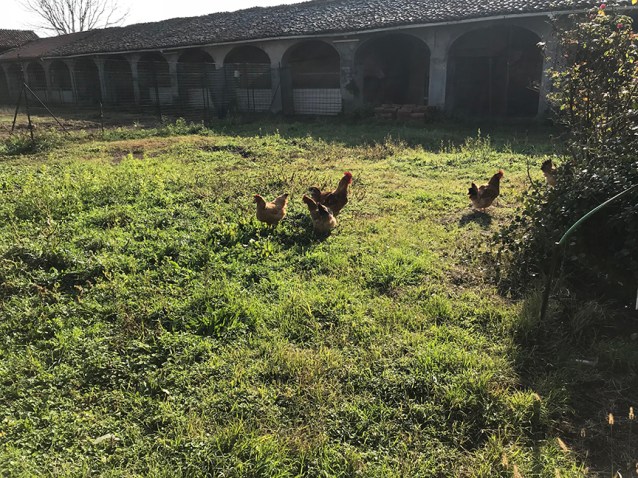 He also sells preserves and eggs from his farm.
  In the fall of 2012, an older white man in a pick-up truck pulled into the parking lot of the post office in the Austin, Texas-area middle-class neighborhood where my wife Tracie and I used to live with our two young daughters.
 It was remarkable to re-read the piece this morning.
 Back in my grad school days, my dissertation advisor — the great Milanese poet Luigi Ballerini — used to boast that he would never let our department become a fabbrica dei disoccupati, a factory churning out unemployable graduates.
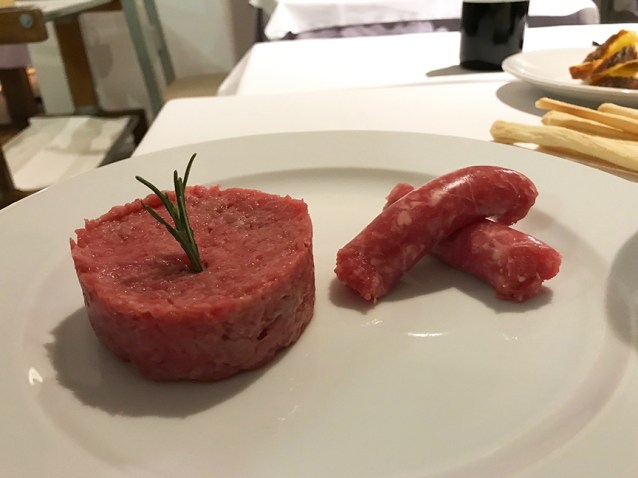 What a meal last night at
  Last night, I had the immensely good fortune of being a guest in the home of professor
  For the wine pairing, he told us, you need a white with enough body to stand up to the saltiness and fattiness of the dish. He highly approved of Michele’s Van Volxem 2011 Saar Riesling (above).
  I’ll be heading out tonight for the town of Bra in Piedmont, Italy, where I’ll be teaching a seminar on wine writing for the Master’s in Wine Culture program at the University of Gastronomic Sciences — the Slow Food university (
 Do Bianchi

