Rock out and taste with me in San Diego: July 27-28 #music #Lambrusco

Above: my San Diego-based band The Grapes plays mostly psychedelic country and British invasion.

Please come rock out and taste with me in San Diego on July 27-28!

On Friday, July 27 my band The Grapes will be playing at Beaumont’s in La Jolla (northern San Diego). We’ll probably go on around 9 p.m. And the amazing country guitarist Dave Gleason will be sitting in with the band (not to miss).

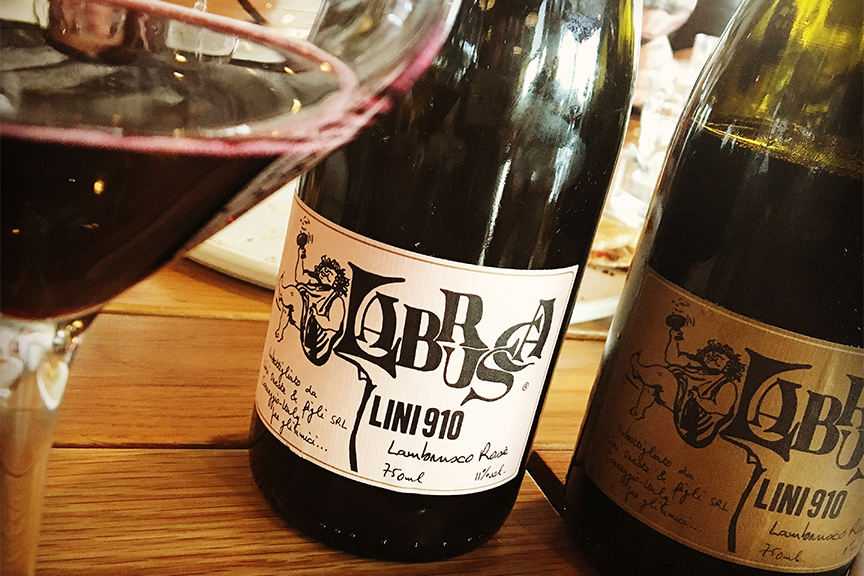
And then on Saturday, July 28, I’ll be hosting a Lini Lambrusco tasting at my favorite San Diego Restaurant, Jaynes Gastropub. I don’t have the exact details yet but it will be late afternoon. And Tracie and the girls will be joining me for dinner that night. So please come down and taste some Lambrusco and say hello!

Thanks for your support! Please stay tuned for details and have a great weekend…

The Grapes
Friday, July 27
Beaumont’s
5662 La Jolla Blvd.
La Jolla CA 92037
(858) 459-0474
Google map

Lini Lambrusco Tasting
Saturday, July 28
3-5 p.m.
$15 per person
Jaynes Gastropub
4677 30th St.
San Diego CA 92116
(619) 563-1011
Google map

Lambrusco image via Corkscrew Concierge.

Is Barbera feminine or masculine (grammatical gender)? And why is there a photo of the great Ethiopian Emperor Menelik II on my blog today?

Is Barbera (the grape and wine) a feminine or masculine noun? In other words, what’s its grammatical gender? Is it correct to say la Barbera or il Barbera?

Believe it or not it’s an orthographic that comes up frequently in Italian winespeak.

The Barbera d’Asti Consortium published my post answering the linguistic conundrum this week.

My research for the post led me to dig up my grad school notes on the great Italian poet, scholar, and critical theorist Giovanni Pascoli.

And one of his poems led me to the renowned Italian soldier and patriot Giuseppe Galliano (the one the liqeuer is named after).

And that led me to the great Ethiopian Emperor Menelik II (1844-1913) (above).

Galliano died at the Battle of Adwa (1896) where Emperor Menelik defeated Italian imperialist forces led by General Oreste Baratieri.

The biography of the Ethiopian ruler is as fascinating as it is thrilling: he was a brilliant military strategist and he became the first Africa ruler to repel European colonialism. The Italians’ defeat at Adwa stunned the world and Menelik became an icon of African and African-American independence.

Read my post on Barbera’s grammatical gender here. Next week, I’ll translate the poem (which also fascinated me) in its entirety with a brief critical apparatus.

In other news…

Parzen family made it home from Italy safely and soundly last night.

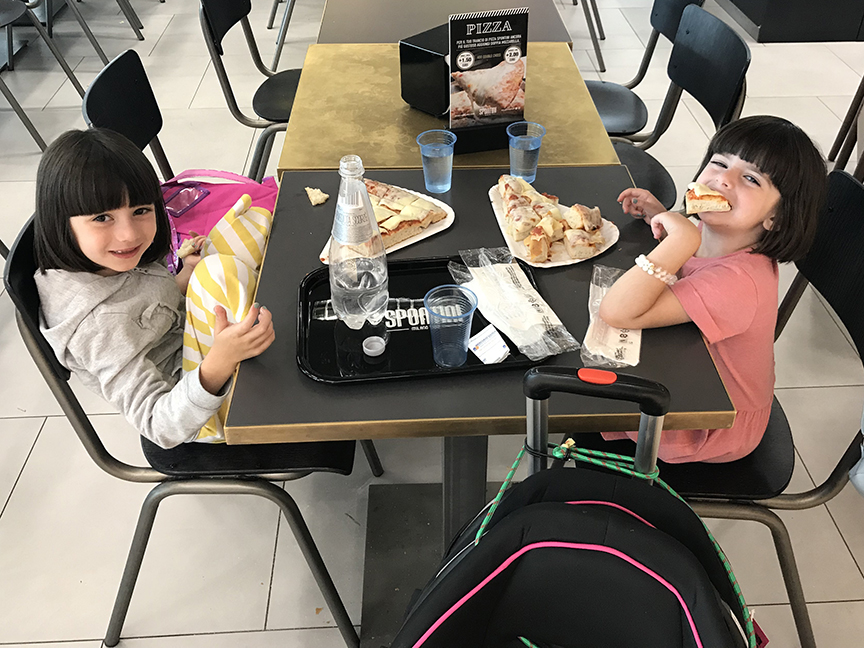
Georgia and Lila Jane (above) enjoyed one last taste of pizza yesterday morning for breakfast at Malpensa airport outside Milan.

The ladies at the food court were so sweet to them. It was a wonderful coda to our stay in a country where children are universally adored.

Both girls were extremely well behaved on our flights and both were overjoyed to sleep in their own beds last night — as were their parents.

Thanks again to all of our friends who made the trip so fun, special, and memorable. It was a really great one.

One of these days I’ll get around to telling the story of the Michelin-starred chef who made Lila Jane a hamburger on the spot (because ethereal housemade spaghetti tossed in delicately sautéed cuttlefish and garden-grown tomatoes just wouldn’t do)…

Top image via Wikipedia Creative Commons.

Arrivederci, Italia! Thank you for treating our girls so well!

It’s been a wonderful three weeks in Italy with our girls, ages (almost) five and six and a half.

They’ve been trying all kinds of new foods (Lila Jane now loves rabbit; Georgia has a yen for fried anchovies) and picking up Italian words along the way (Georgia can now count to 13 in Italian; Lila Jane’s grazie is impeccable).

They’ve made a ton of friends here: Cecilia, Tiziano, Lorenzo, Federico, Andrea, Alba, Azzurra, Atena… too many to count. And they played with kids from all over the Mediterranean.

Their mother and father have been eating well, too.

Our host (and the best friend you could ever ask for), Giovanni, made us delicious linguine with fresh tomatoes and coppa last night (above), a perfect pairing for his Franciacorta Dosaggio Zero (Arcari + Danesi).

Other highlights were fish stew in Liguria, a cow-goat hybrid Robiola paired with Nebbiolo in Piedmont, spaghetti with clams at Giancarlo and Francesca’s house (Piedmont), erbazzone and homemade salame on Michele and Vanina’s farm (Piedmont), aperitivo with the Lini mispucha (Emilia), tortelli verdi with the Levy clan (also in Emilia).

Another highlight was a vineyard picnic on Sunday with my dissertation advisor Luigi and his son Edoardo, also a great friend of mine. We were the guests of the Arcari + Danesi winery in Coccaglio (Franciacorta, Lombardy), where we enjoyed perfect weather, wine, and a paradisiacal Bagòss.

And that brings me to the best part of all — loving and being loved in return.

That’s Giovanni in the photo below (top, left) with Nico (his partner at Arcari + Danesi, top right), and Andrea (their partner in SoloUva, bottom left), Georgia (center) and Lila Jane (right).

The guys did everything in their power to make sure that the Parzen family was comfortable, safe, and well fed. By the time we said goodbye this morning, the girls were playing with them (and on them!) like they were uncles — my Italian brothers.

Words cannot express how thankful I am to them for everything they did for us. Just knowing they were there for us in case we needed them made the trip all the more relaxing and enjoyable for Tracie and me.

Not many can boast of having such loving, lovely, and generous friends. We’re so lucky to have them in our lives.

Many tears were shed as we all said goodbye this morning: dew cascading gently from a grape bunch as the sun rises over Montorfano.

Arrivederci, Franciacorta! Arrivederci, Italia! We have loved you as you have loved us.

Take your children for a walk in a vineyard. You won’t regret it…

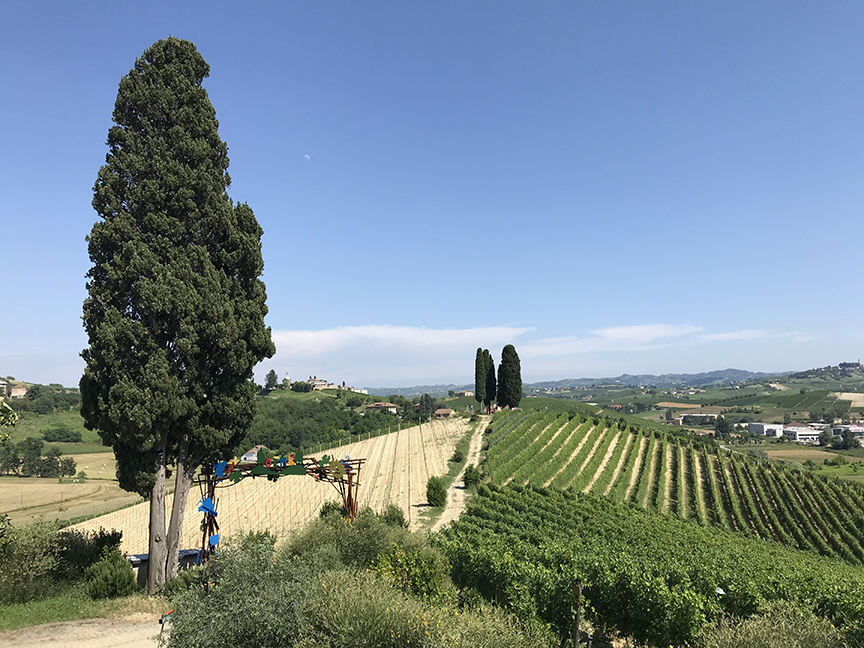
Yesterday Parzen family spent the afternoon meandering through the Michele Chiarlo winery’s Parco Artistico La Court in Asti province with Stefano Chiarlo.

Lila Jane and Georgia, who had been complaining about the hour-long drive from Bra in Cuneo province (“daddy, this is taking forever!”), literally bounded out of their car seats and headed straight for the park’s observation tower.

It was a clear, beautiful, but hot day in Barbera vineyardland yesterday.

Atop Chiarlo’s Cascina La Court, a cool breeze gently soothed their cheeks as they marveled at the newly born bunches, still green only a few weeks after fruit set.

Any keen observer of grape growing would remark on how wild Barberaland is and how the vines don’t have the manicured look of their counterparts in Nebbiololand. The farming there alternates with woods and other crops and many growers have shifted to organic practices like Chiarlo, said Stefano.

That’s Stefano as he showed us the apotropaic totems mounted on each of the rows. His family’s park is open to the public throughout the day and the winery will organize picnics and tastings by appointment. But everyone is welcome enjoy the estate, any time of day, he said.

There are works of art by contemporary artists installed across the park. And there’s even free wi-fi.

“Hills, that’s what makes Italian viticulture unique,” said Stefano as he waxed agronomic (he’s the family’s vineyard manager). Our girls couldn’t agree more.

I can’t think of a better way to spend an afternoon…

Have Rossese, won’t travel: notes from the Ponente

Americans often claim that the wine just tastes better in Italy.

There are a variety of theories as to why this is (purportedly) the case: the Italians keep the good stuff for themselves; the wines taste better with the food there; the wines don’t travel well

As I drooled over his ample selection of Rossese, I was surprised to hear the sommelier of Bistrot I Torchietti in Finale Borgo (Liguria di Ponente) tell me that “you don’t find these wines in America because they don’t travel well. They need to be drunk here.”

Considering how few bottles of Rossese seem to make it to the U.S., he may have a point.

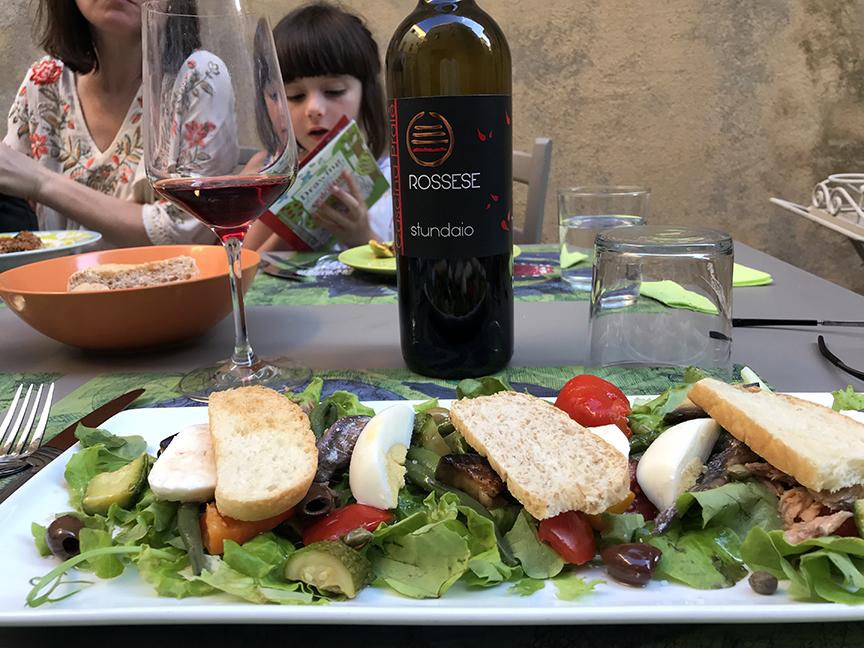
The enigma of the wine well traveled may never be solved… but Tracie and I thoroughly enjoyed the Cascina Praié Rossese Stundaio that he poured for us on Saturday night in the ancient city overlooking the riviera in western Liguria.

With zippy and balanced acidity and restrained alcohol, this wine was electric and lithe with bright berry fruit and Mediterranean scrub. Served room temperature, it paired gorgeously with the condiggiùn in the photo above (condiglione in Italian, the Ligurian niçoise). It was equally delicious with fried anchovies and fish stew.

I couldn’t recommend Ai Torchietti highly enough and I’m looking forward to trying the sister fine-dining concept Ai Torchi the next time we can visit.

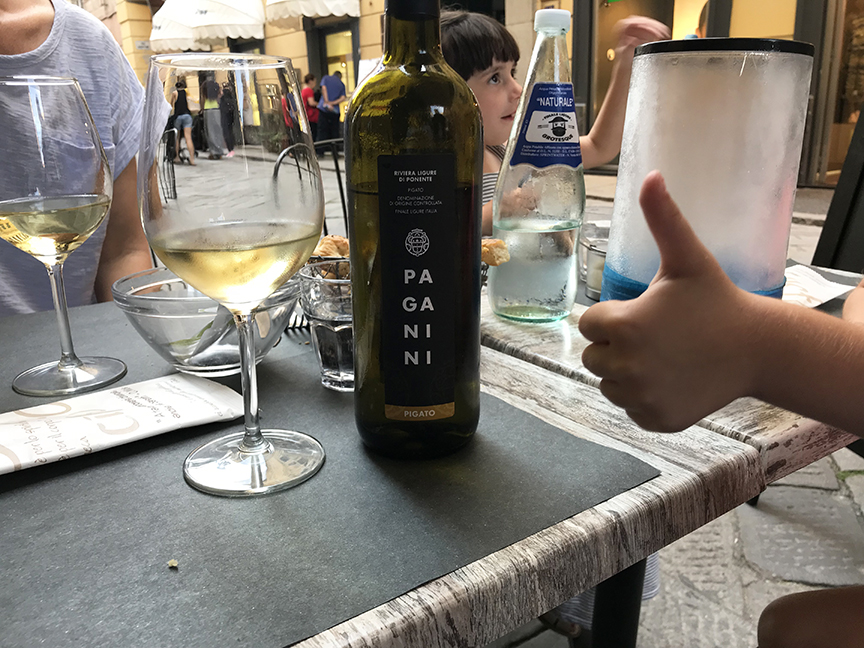
Paganini Pigato was another wonderful discovery at Osteria Grotesque in the beachside village of Finale Ligure.

This food-happy wine had the mouthwatering minerality and classic muted yellow fruit and gentle almond notes that you find in old school expressions of the variety.

It was recommended to us by the young man who was running this popular restaurant on Friday night. He and the server working the floor of this tiny spot were so kind to our family. You don’t always find such nice people in jaded seaside towns brimming with tourists. These guys were the best.

Those are Osteria Grotesque’s antipasti above. We loved the place and we loved the people- and dog-watching (be sure to get there early to snag an outdoor table as we did; we ended up staying all night, with the girls playing with other children in the pedestrian-only street long after we finished eating).

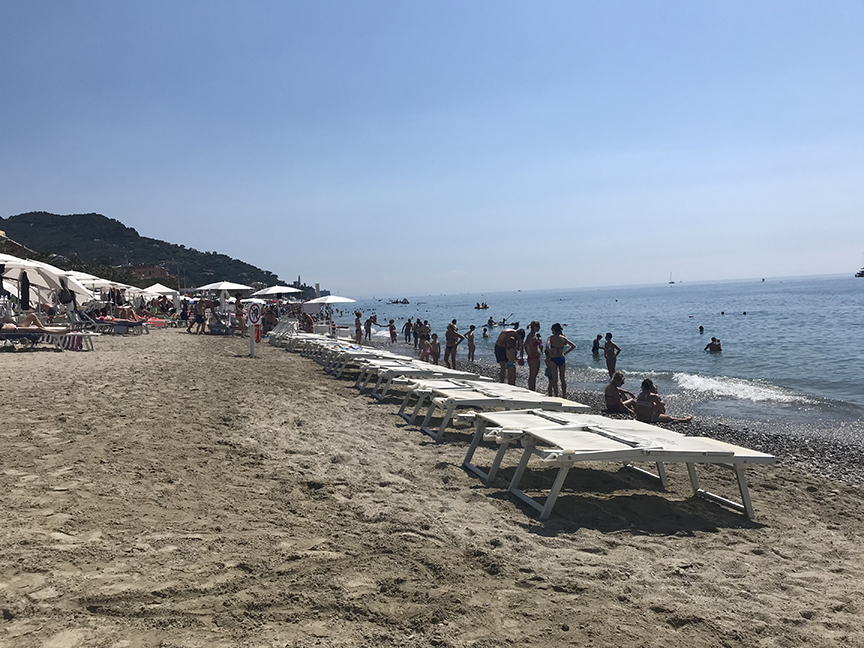
All in all, Parzen family had a magical micro-vacation before returning sun-tanned and sandy to Bra in Piedmont where I have a heavy teaching load this week.

Finale Ligure, thank you! We can’t wait to see you again…

Passito di Pantelleria by Basile, one of the best I’ve ever tasted…

Tasting this superb bottle of Passito di Pantelleria “Prescelto” 2008 by Cantina Basile the other night, the expression “sticky wine” came to mind.

But not because the wine was sticky. The opposite was true: it was so lithe in the glass that it drank more like a classic white wine in terms of its texture. The alcohol and acidity were so well balanced that its sweetness never felt overwhelming or pervasive on the palate.

The other thing that really impressed me about this truly extraordinary wine was its spectrum of primary, secondary, and tertiary aromas and flavors (I know, I know… I don’t like those terms either and they sometimes mean different things for different people. But it’s really the best way to describe this remarkable wine).

As the Italians like to say, you felt like you were chewing the fruit, dried fruit, and almonds in this wine. It really blew me away. And it was made all the more special and memorable by our gracious hosts and the delicious meal they prepared for Tracie, me, and our girls.

What a wine!

In other news…

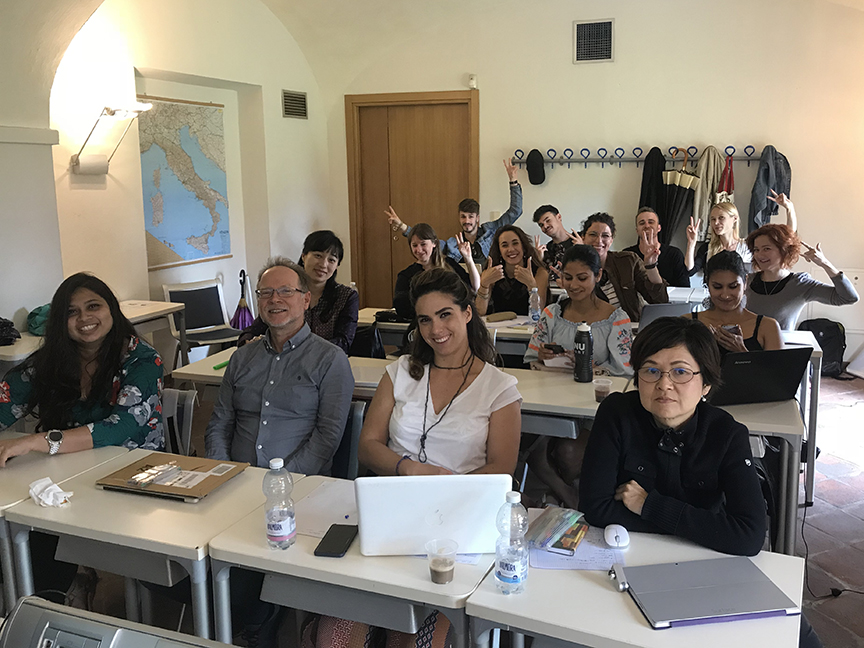
It’s been a busy week of seminars with my students in the Master’s of Wine program at the Slow Food University in Pollenzo (Piedmont).

It’s my third year here as an adjunct and I love the interaction with students and the high level of discussion and dialogue.

Lisa Perrotti-Brown’s post on “The Big Parkerization Lie,” published earlier this week on Wine Advocate, couldn’t have been more timely or relevant as we’ve discuss books by Lawrence Osborne, Eric Asimov, and Alice Feiring.

It’s incredible to think that more than 10 years after Alice’s book, the debate over Parker’s influence and impact still marches on.

The students really surprised me with the insights and experiences they shared. A really great group this year. But then again, each class of students seems to have its own unique take on the world of “wine communication” (one of the subjects I teach).

The other really fun thing this week has been watching our daughters as they discover the sights, sounds, and flavors of Italy.

They’ve both been really adventurous about trying new foods (although the snails didn’t go over so well last night!) and they’ve both been making a college effort to speak a little Italian.

It’s a dream come true for Tracie and me. We’ve been having so much fun and tomorrow I’ll take them to the beach for the weekend.

Living in Italy was such a profound experience for Tracie and me. It shaped the arc of our lives as adults and it’s how we ultimately met. It fills me with joyous wonder to think of how it will shape theirs…

For our vines have tender grapes: our daughters discover the vineyards in Italy

Take us the foxes, the little foxes, that spoil the vines: for our vines have tender grapes.
Song of Solomon 2:15

Tracie and our girls have been with me in Italy for the last five days.

It’s been really wonderful to have them here. I’m teaching at the Slow Food University in Piedmont this week and next. They’re on vacation.

The food has been great and they’ve been having a blast. But the most rewarding thing has been watching our girls — ages 4 and 6 — explore a vineyard.

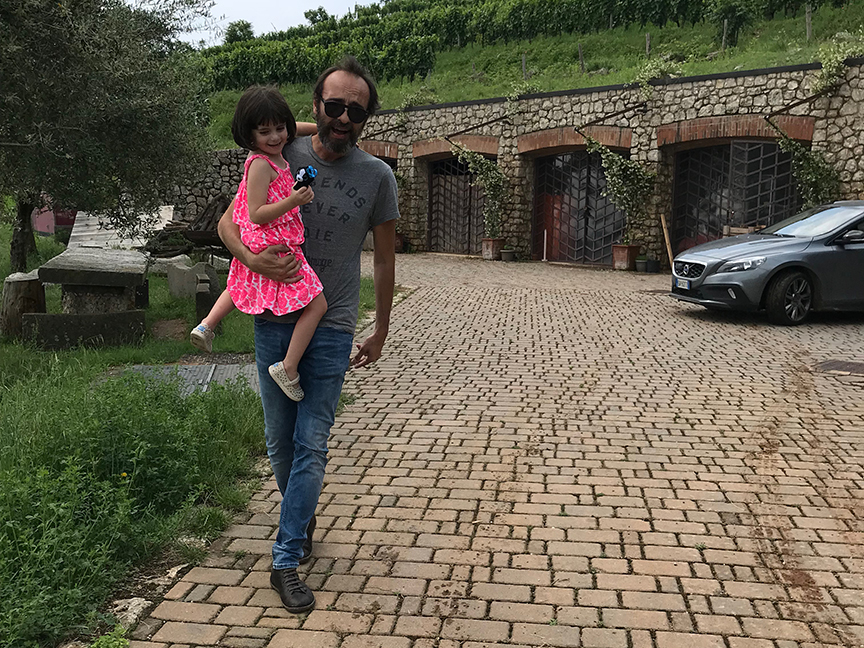
That’s Giovanni above, the most generous friend you could want and a brilliant grape grower and winemaker in Franciacorta (where we stopped on our way to campus). And that’s Lila Jane, our youngest, in his arms. She spent the better part of an afternoon with her sister Georgia picking flowers and chasing butterflies in his vineyard.

And that’s Tracie, showing Georgia and Lila an old wine press outside the winery at the Castello di Verduno. We had such a magical visit there, enjoying the garden and the view at the Real Castello.

“How do grapes turn into wine?” asked Georgia.

How do you explain a miracle to a child?

One of the words Tracie’s taught them is vigna. It’s been a fantastic trip so far and I know many discoveries and adventures await them.

The flowers appear on the earth; the time of the singing of birds is come, and the voice of the turtle is heard in our land;

The fig tree putteth forth her green figs, and the vines with the tender grape give a good smell.

Barbera, the origin of the grape name (a philologist’s perspective)

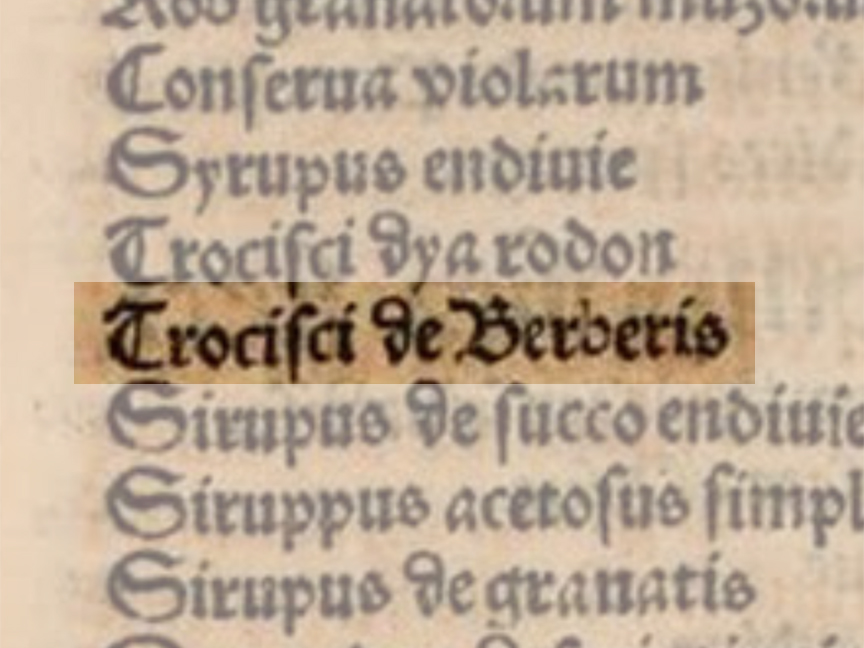
Above: An early 16th century medical manual lists barberry lozenges as a commonly used cure.

In today’s world of hypercorrective ampelography, it’s hard to believe that people didn’t used to care as much about grape names as we do in the contemporary age.

Writers on agriculture didn’t began to record grape variety names on a wide scale until the latter half of the 19th century. And even those early modern ampelographers couldn’t rival today’s giddy obsessions with the etymologies of grape names.

Contemporary wine writers can’t seem to resist the urge to dip their toes in the etymological waters. And despite their access to Google Books and the growing legions of searchable encyclopedic resources available online, they continue to wax philologic (and errouneous) over the origins of ampelonyms like Sangiovese and Aglianico (even though the former doesn’t mean “the blood of Jove,” nor is the latter a cognate for Hellenic).

But in the case of Barbera, Hermes generously let the experts off the hook: Most concede that the origin of this grape name, which didn’t begin to appear in print until the 18th century, is unknown.

Ian D’Agata sums up the current state of Barbera philology in his landmark work Native Grapes of Italy (which I highly recommend to you).

    The origin of its name is unclear; Pietro Ratti of Renato Ratti feels it’s a derivation of barbaro (barbarian) due to its deep red color, while others believe the origin is vinum berberis, an astringent, acidic, and deeply hued medieval drink. Vinum berberis is different from the vitibus berbexinis referred to in a 1249 document located in the archives of Casale Monferrato, which was most likely another variety, Barbesino or Berbesino, better known today as Grignolino.

For the record, vinum berberis was a barberry elixir. And medicinal barberry extract was more commonly applied on a lozenge (a troche, in English, trochiscus in Latin) than in a vinum or wine.

Even when we turn to a more authoritative source, our grand desire to uncover Barbera’s origin story remains unfulfilled.

The Treccani Italian dictionary (a benchmark of the Italian academy) offers two possible etyma.

The first is the Latin grape name albuelis, notably mentioned in Columella and Pliny. It’s a linguistic stretch, however possible (Barbera could be a metathetical reduplicative contamination).

Click here to continue reading my post today for the Barbera d’Asti growers association…

Au revoir, Oregon, until we meet again…

A week of Oregon and the Willamette Valley wine scene has really swept me off my feet.

Since arriving on Monday, my Slow Wine colleagues and I have tasted hundreds of wines and met so many cool people. And we’ve enjoyed some extraordinary meals, including an unforgettable dinner at Recipe Part Deux in Newberg where we’ve been staying.

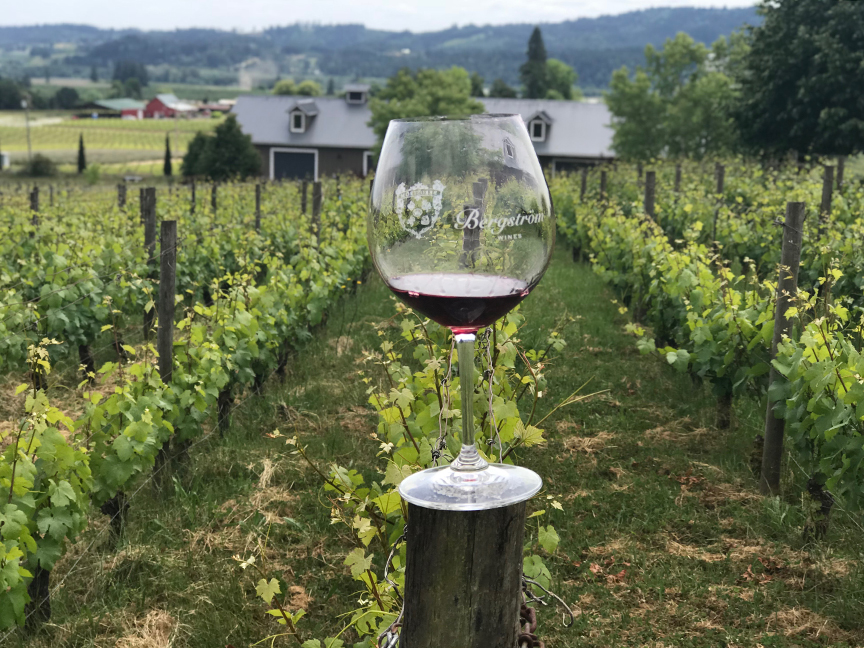
The shot above comes from the biodynamic farm at Bergström. What pure and vibrant wines… One of the many highlights for me.

Today, Slow Wine editor-in-chief Giancarlo Gariglio and I will head to Napa where we start all over again: hundreds of California wines await us for our 2019 guide panel tasting.

I’ll already be back in Texas by then but on Wednesday, June 6, the Fiorello Olive Oil company in Fairfield, California will be hosting a tasting of wines from our panel sessions from 6-9 p.m. All proceeds from the event will go fire-affected Sonoma and Napa residents and winery workers. Giancarlo will be presenting the walk-around tasting.

Here’s the link for details and registration info.

And back in Houston… I’ll be in Italy by then but on Wednesday, June 13, my wine friends Patrick Comiskey and Taylor Parsons (two of the U.S. wine pros I admire most) will be hosting a seminar and lunch featuring the wines of Georgia at one of the city’s favorite wine bars.

The event is open only to trade and media: reserve by emailing azarr@marqenergie.com.

What a week it’s been up here in the Pacific Northwest, where the forest meets the sea! Thank you, Oregon, for your beauty, your warm hospitality, and your delicious wines. I can’t wait to get back in February when we’ll present the new guide.

The amphora of the future is here (in Oregon’s Chehalem Mountains)

What an incredible visit yesterday to Andrew Beckham’s pottery studio and winery in Oregon’s Chehalem Mountain AVA!

That’s Andrew above with the first full-size winemaking amphorae that he’s churned out of his kiln (above and below).

He’s produced a video about the project that you can watch on his family’s winery’s site here.

I had already tasted and admired some of the excellent wines that he and his wife Annedria produce there. And it was exciting to taste through their full line of wines, including their wines vinified in his smaller hand-thrown amphorae.

He may be the only amphora potter cum winemaker on the planet and it was fascinating to hear his insights into why the vessels make for such a unique winemaking tool.

Lovely people and extremely compelling wines.

The Slow Wine team has been on the ground here all week and today we have our big panel tasting. I’ve been blown away by the caliber and quality of the wines I’ve tasted over the last few days. And the hospitality and food have also been fantastic. It feels like Oregon, between its old and new guards, is poised to reshape the way the world perceives American wines. Andrew and Annedria are undeniable stars of that growing wave.

Writing in hurry this morning as I prepare for a BIG day of tasting. Wish me luck and wish me speed… Thanks for being here.