An unforgettable Lugana — everything and nothing “natural” about it…

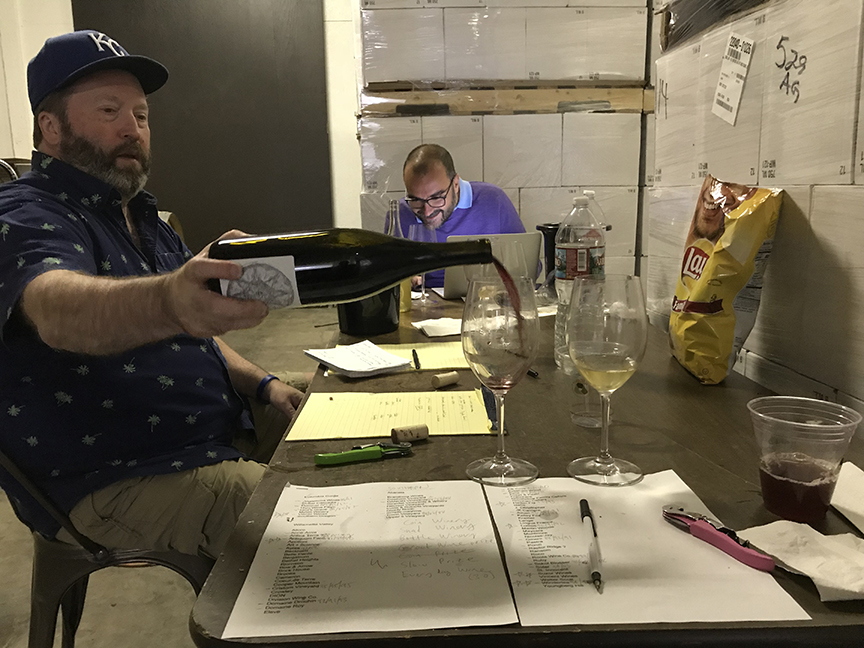
One of the wines that impressed me the most during my early February trip to Italy was this Lugana fermentazione spontanea (spontaneous fermentation) by the Sansonina estate, a property and label that Nadia Zenato is developing for her family.

Back in the 2010s, she began experimenting with wild yeast fermentation using grapes sourced from a vineyard planted there in the 1970s. The first release of the wine was from the 2014 vintage.

Man, this wine has eno-hipster written all over it!

The “old-vine” (40+ year old) Vigna del Moraro vineyard — one of the Zenato family’s top holdings — is farmed organically, she said, and will soon be certified.

It’s planted to Turbiana, the hyper-local clone of Trebbiano used to make monovarietal Lugana.

The grapes are picked by hand and vinification is carried out in stainless steel using only naturally occurring yeast.

I loved the way the savory component in this cru-designated wine played against the white flower notes on the nose and the fresh and gently dried stone fruit in the mouth. Subtle oxidative character accentuated the wine’s delicate almond notes that seemed to float ethereally throughout its body without ever weighing it down. The texture was lithe but balanced and confident in the mouth, the finish was a gift that just kept giving dried fruit and nuttiness.

It made me feel so hip that I thought I was going to grow a handle-bar mustache!

But just as I was about to break out my Brooklyn Grooming Commando Old School Pomade (animal fat and petroleum product free), it occurred to me that the word natural hadn’t been uttered during my tasting and conversation with Nadia. She seemed genuinely surprised when I speculated that the wine, hitherto unknown to me, must be a hit among the natural wine crowd.

If ever there were a Lugana that “speaks of place,” that stands apart as an expression of “site,” this would be it, for sure.

As we moved on to the estate’s flagship Merlot, also excellent, it occurred to me that Nadia hadn’t conceived this wine with marketing in mind. It was a challenge: a desire to create the purest and truest representation of an appellation her father helped to create and a vineyard that she and her mother hold extremely dear.

I loved it and I admire Nadia for growing, raising, and bottling it. What a great wine — everything and nothing “natural” about it!

Soldera: The “stubborn genius” and “heretic” of Brunello. Remembrances of an iconoclast winemaker.

Above: thanks to my connections in the wine trade, invitations to Soldera’s winery and vineyards were extended to me on three occasions. But the first visit, in September of 2008, was the most memorable. Many trade observers would agree that his approach to viticulture was “maniacal.” Those Sangiovese bunches — nearly cinematic in their perfection — are examples of his devotion to his vineyards.

News of legacy Brunello grower Gianfranco Soldera’s passing broke on Saturday morning as the Italian wine world was gathering in Montalcino for the appellation’s annual tasting of new releases, Benvenuto Brunello.

According to at least one mainstream media report, trade members and observers were surprised when Patrizio Cencioni, president of the Brunello consortium, announced that the Sangiovese giant had died in his opening remarks at the gathering.

“He was an emblematic figure,” said Cencioni (according to the piece published online by the Italian national daily Corriere della Sera), thanks to “the great wines he made in the 1980s and 90s. I can still remember a day he came to visit my winery with Luigi Veronelli,” the 20th-century Italian food and wine writer, considered by many to be one of the architects of the Italian gastronomic renaissance and a close friend of Soldera’s. “His impact on Montalcino was profound.”

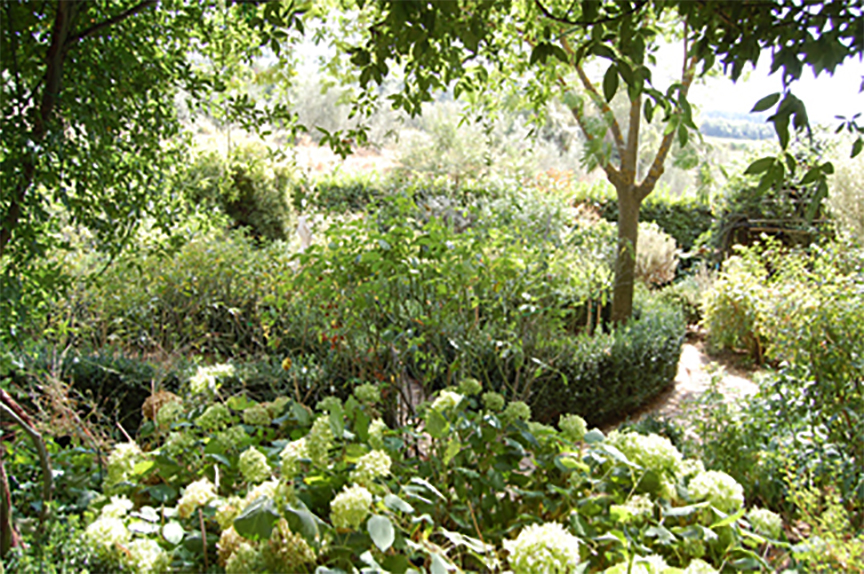
Above: anyone who’s visited Soldera’s storied Case Basse estate in Montalcino will tell you the same story. The grower and winemaker was most proud of the property’s “white flower garden,” essential, he claimed, to creating biodiversity — a key element in his approach to winemaking.

The author of the Corriere obituary called him “heretical.” My preference would have been iconoclast: even while he was still part of the Brunello consortium (he was expelled and sued by the body in 2013), he was outwardly and loudly critical of Brunello growers and bottlers — even to the point of making him a reviled personage.

“Certainly iconic,” wrote wine writer and natural wine authority Alice Feiring on Instagram upon learning of his passing. “What a character he was. And the wines were sublime.”

Some would argue that he was an ante litteram advocate of the natural wine movement that came long after he had established his celebrity as one of Europe’s premier winemakers.

Above: another feature he was always keen to point out to visitors was the “marsh” he had built. The pond was another important source of biodiversity in an otherwise barren sub-zone of Montalcino.

But the best obituary and tribute to appear so far — whether in Italian or English — were penned by Robert Parker Italian review Monica Larner.

I loved the way she dubbed him the “stubborn genius” of Montalcino. And I highly recommend that you visit the link she provides for the last review of a Soldera wine published by her (the obituary appears on her Facebook while the review is behind the RobertParker.com paywall). She really captures the essence and controversy of his life as a winemaker and she covers the major scandals (or scandalous episodes) that reshaped the arc of his career in the last two decades.

It’s a great piece of writing that could only have been produced by someone like Monica: she has the talent, the experience, and perhaps most importantly the ear to the ground needed to deliver such a compelling piece.

I can’t imagine that profiles by Antonio Galloni and Wine Spectator aren’t forthcoming. And I’ll be looking forward to reading the insights they share.

But I’d also like to point you to this piece (free for non-subscribers) by Jancis Robinson on her site, published just last summer: “Soldera – whom doubt doth not assail.”

Soldera will be remembered, no doubt, as both a champion and denigrator of Montalcino. The wines he grew, raised, and bottled were among Italy’s and Europe’s best. But they were so expensive and the winery’s allocation protocol was so byzantine that they were rarely tasted beyond a tight circle of well-heeled admirers.

Although many will remember him for the controversies he stirred (wittingly and unwittingly perhaps), “now is the time for forgiveness,” as one of my best friends in Montalcino wrote me this morning.

Amen… So be it.

Gianfranco Soldera, outspoken Sangiovese grower and iconic winemaker, dies at 82

As the Italian wine world gathers this weekend in Montalcino for the annual debut of the appellation’s new vintage and releases, Brunello has lost one of its most outspoken and iconic masters, Gianfranco Soldera, 82.

According to reports that began to circulate in mainstream Italian media about 2 hours ago, the winemaker suffered a heart attack apparently while driving. He was found on this morning around 10:30 a.m. not far from the his famed Case Basse estate. Efforts to revive him were unsuccessful.

Soldera was an inspiration for a generation of Italian and international growers and winemakers. And his wines were among the first Italian bottlings to command the attention and prices once reserved solely for their French counterparts.

A hermetic figure who seemed to attract controversy, he will undoubtedly be remembered as one of the greatest Italian winemakers of the late 20th and early 21st centuries.

I’ll follow up on this story with translated excerpts of the myriad tributes and remembrances that are sure to be published in coming days.

Slow Wine tastings coming up in SF and PDX, Taste of Italy here in HTX: come out and taste with me!

Happy Valentine’s Day, everyone!

Above, from right: Slow Wine Oregon senior editor Michael Alberty with Annedria and Andrew Beckham of the Beckham Estate Vineyard in the Chehalem Mountains of Oregon wine country. The Beckham winery, producer of some of the most compelling wines I’ve tasted from the Pacific northwest, appears in the debut edition of the Slow Wine Guide to the Wines of California and Oregon.

On Monday, March 4 and Tuesday, March 5, I’ll be joining Slow Wine editor-in-chief Giancarlo Gariglio as we present the second edition of Slow Wine California and the inaugural edition of Slow Wine Oregon in San Francisco and Portland.

I won’t be following the entire tour but tastings will also be held that week in Denver, New York, and Boston.

Click here for tour information.

Please come out and taste with me and my fellow editors! There will be plenty of amazing American wines to taste not to mention the Italian and Slovenian estates that will joining the tour as well (click the link above for info on the wineries that will be pouring at each event).

A true labor amoris, the Slow Wine experience has been a real eye-opener for me: I realize now how wrong I have been in the past about California viticulture (really wrong) and I also now have a richer sense of Oregon’s greatness.

Back at the home office in Bra (Piedmont), Italy, my colleagues are in the process of publishing the entire U.S. guide online on the Slow Wine blog (click here to view, no paywall). And you’ll also find posts there on our field editors.

Before I head off to the west coast, I’ll also be presenting some really great tastings here in Houston, including “How to Pair Texas BBQ with Italian Wine,” at the Taste of Italy food and wine trade fair and festival on Monday, February 25. Now in its fifth year, it’s an event that I help to produce together with the Italy-America Chamber of Commerce Texas (one of my most beloved clients, rated the number one chamber in NAFTA, no joke!).

The seminars, which will also feature Master Sommelier June Rodil and top American wine writer Bruce Schoenfeld, are nearly all full. If you haven’t already signed up, please shoot me a PM and I’ll see what I can do to get you in.

We are also looking for volunteers in exchange for a comped spot at the BBQ tasting and seminar.

Hit me up, people! I hope to get to taste with soon and I’ll also be at the upcoming Gambero Rosso tastings in Chicago and New York if you happen to be around.

Sorry for the too-much-info post and thanks for the support! I hope to get to taste with you this month and next! That’s Oregon editor and wine writer extraordinaire Michael Alberty below, left, and Slow Wine editor-in-chief and super taster Giancarlo Gariglio tasting with me in Oregon in late spring of last year.

Good food I ate in Italy over the last couple of weeks…

On my way home from a whirlwind research trip to Italy. Barely had time to catch my breath let alone get in a good meal. But here were some of the highlights of what we ate. Wish me luck, wish me speed! I need it. See you on the other side…

Piadina with prosciutto, brie, lettuces, olive oil-cured roasted peppers, and salsa rosa (chez Arcari, Franciacorta).

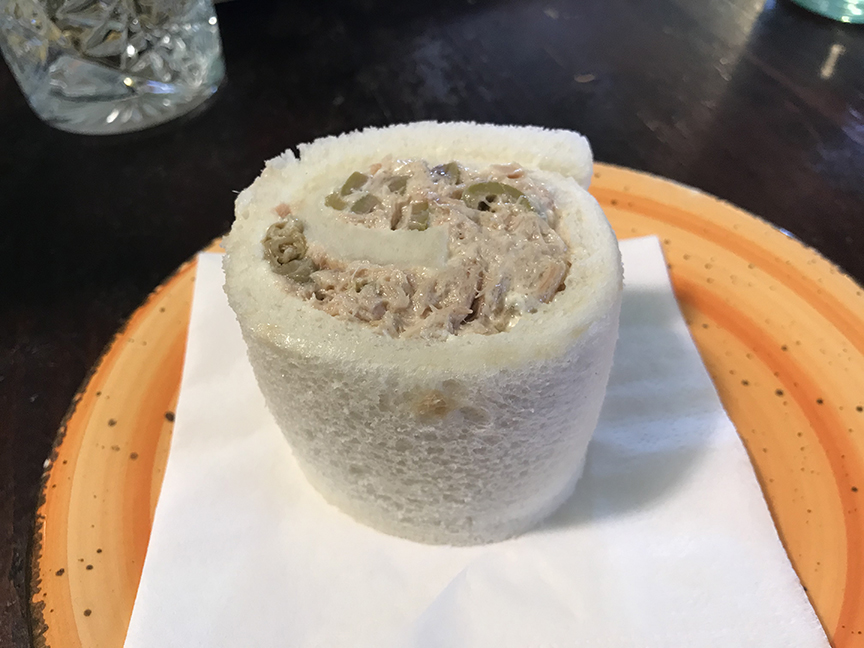
Tuna tramezzino (Piccolo Bar, Crocetta del Montello).

Pizza with bufalo mozzarella and datterini tomato sauce (iDon, Padua).

Puccia with prosciutto, fontina, lettuces, insalata russa (La Puccia, Lecce).

Cavatelli with mussels (iSensi [Cantele], Guagnano).

Orecchiette with meatballs (iSensi [Cantele], Guagnano).
Continue reading

Is a massive wine scandal fermenting in Italy? Let’s get the facts straight, people, please!

Above: A Carabinieri NAS officer inspects salmon. NAS is an acronym for Nuclei Antisofisticazioni e Sanità or Anti-Adulteration and Health [Safety] Squad (image via the Carabinieri Facebook).

On Saturday, a high-profile English-language pop culture website published a factually challenged post on a “sting operation” in Italy that has — according to the cheapjack author — ensnared “cheap grapes in fancy” and “prestigious wines.”

The story she referred to was first posted online by the Pordenone (Friuli) edition of Il Gazzettino on Wednesday afternoon of last week (she doesn’t credit the masthead).

“Early this morning,” wrote the author of the Gazzettino post, “in a dozen provinces (Pordenone, Udine, Treviso, Venice, Padua in the northeast, but also Reggio Emilia, Modena, Ravenna, Florence, Livorno, Naples, Bari and Foggia), Carabinieri from the Udine [Friuli] offices of NAS [Italy’s anti-adulteration and health safety force] and technicians from [Italy’s] anti-counterfeiting inspectorate searched roughly 50 wineries, distilleries, farming businesses, homes, and shipping companies. The searches were conducted on behalf of the Pordenone district attorney.”

Evidently, the search focused on the Cantina di Rauscedo cooperative (not to be confused with the famous Rauscedo grape vine nursery, which shares the place name Rauscedo — the largest hamlet in Pordenone province — with the bottler).

Nearly all 10 of the “roughly 10” persons under investigation, writes the author of the Gazzettino report, reside in Pordenone province.

(Translation mine. Because of the copyright, I don’t want to translate the entire article. Read it here in Italian.)

A query on WineSearcher.com reveals that the highest-price wine available from Cantina di Rauscedo clocks in at a hefty $12 or so (retail).

The winery also produces bag-in-box wine (what Americans know as “box wine”).

It appears that the wines are not available in the U.S.

So far, that’s what we can ascertain. We won’t know more until (notoriously tight-lipped) Italian officials reveal more information about the investigation.

Is a massive wine scandal fermenting in Italy? Let’s get the facts straight, people… please!

I’ll continue to follow the story and will post about it as it develops.

happy anniversary, Tracie P… I don’t who, what, or how I would be if you weren’t the love of my life…

Nine years ago today Tracie and I were wed.

Nine years gone, we are still broke and struggling but we have each other and our girls.

And that’s all we need.

Happy anniversary, Tracie P… I don’t who, what, or how I would be if you weren’t the love of my life… I love you yesterday, today, and forever…

Here are some songs I’ve written for her over the years.

The photo above is one of my favorites, taken on a chilly night in New York City in the greenroom at the Mercury Lounge where my band played to a packed house later in the evening. Bollinger was in our plastic cups. It was February 2009 not long after we had begun dating.


Continue reading

Does Missy Robbins’ Misi represent a turning point for Italian cuisine in the U.S.? (Let’s hope so…)

When our party was seated the other night in Misi’s impossibly crowded dining room in Williamsburg, another impossibly popular Italian restaurant came to mind — one that had its heyday 20 years earlier.

Back in 1998, a culinary shot was heard around the world when then Times food critic Ruth Reichl mentioned something about goose-liver ravioli and veal calf’s head in a now watershed review of the then brand new Washington Sq. enoteca with a bisyllabic name.

The chef who built his culinary legacy on that venue has now been sent out to pasture in a field of well-deserved obscurity and obsolescence. And we should hardly waste our breath to mention his name here.

But that restaurant, which still churns on, marked a turning point in the Italian food and wine renaissance in New York and — ergo — in the world.

Extreme (as in extreme sports) was the signature of said restaurant when it first opened. Its dishes were purposely meant to challenge and flout passé attitudes about Italian cuisine. The food was good and at times brilliant. But the ambition of the ambitious food is what I remember mostly from those early years (a later visit included “tagliatelle with jalapeño pesto”).

Like that restaurant in its own time, Misi is the hardest-reservation-to-crack restaurant of the moment. And like that restaurant of twenty years ago, Misi is marked by the electric energy that you feel from the moment you enter: it’s hard to put your finger on it, but when a restaurant has that special something (that extra gear in the motor, as the Italians say), you can just feel it. And man, our party of four could taste it that night.

Misi’s cuisine is much more reflective of how people in Italy actually eat today in restaurants and at home. Mostly vegetarian friendly appetizers and pasta. That’s (nearly) it. The night we were there there was only one second course, a fiorentina, the night’s special.

It struck me how Chef Missy Robbins’ cooking is more authentically Italian than nearly any place else I’ve eaten in the U.S. over the last few years.

And that’s the key to her success, I believe: Chef Missy manages to wow you and your palate without ambition, without challenging you to like it. And at the same time, her food was never workaday. It tasted like genuine and wholesome passion, not high-minded concept, was driving the menu and dishes.

I bet her already landmark restaurant is going to be remembered for its wonderfully measured tone and not just for the see-and-be-see scene that has sprung up around her cooking. I loved it, through and through.

Here’s what we ate that night. My recommendation? Run don’t walk!

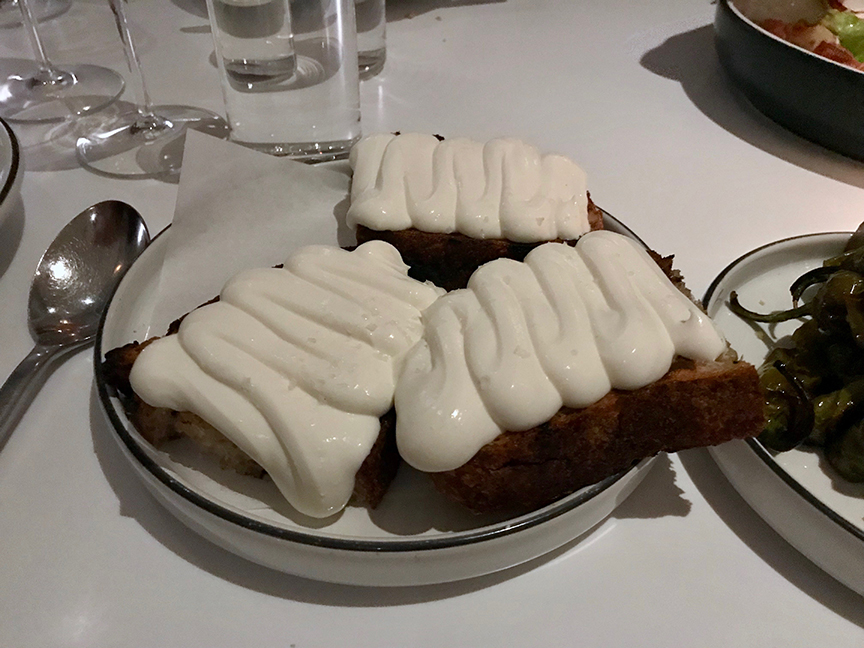
The must-have whipped ricotta crostini

The broad bean appetizer was classic Tuscan in every way. Very simple and thoroughly delicious.

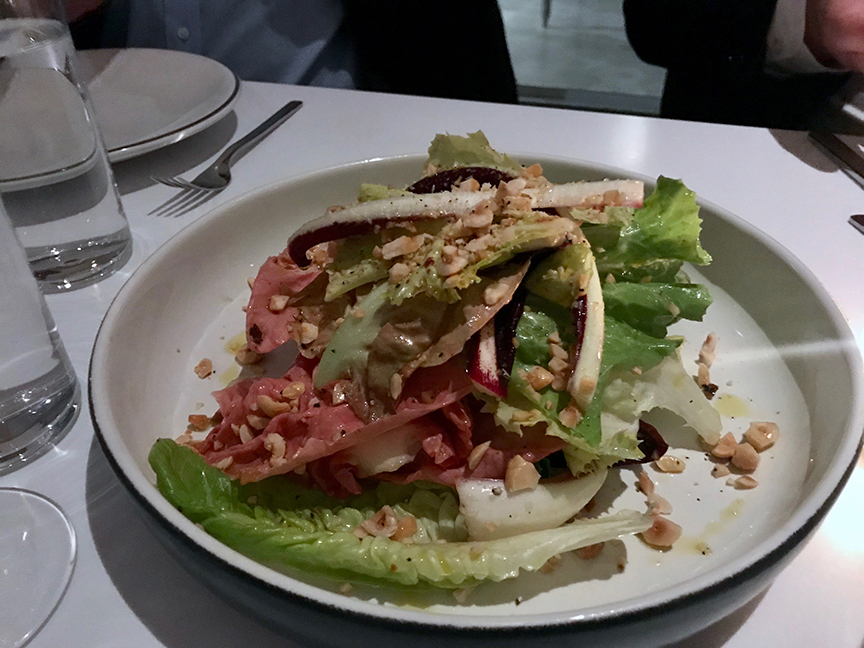
This was the best salad I’ve eaten in a restaurant in months. And I eat a lot of salad when dining out. I know it may sound silly to be so excited about a salad but this was over-the-top good.

I believe the anolini were a special. I really liked this dish, especially for the texture and rich flavor of the pasta.

Pasta with herbs and breadcrumbs. This dish is SO Italian, the kind of thing that you eat at home or at your favorite restaurant.

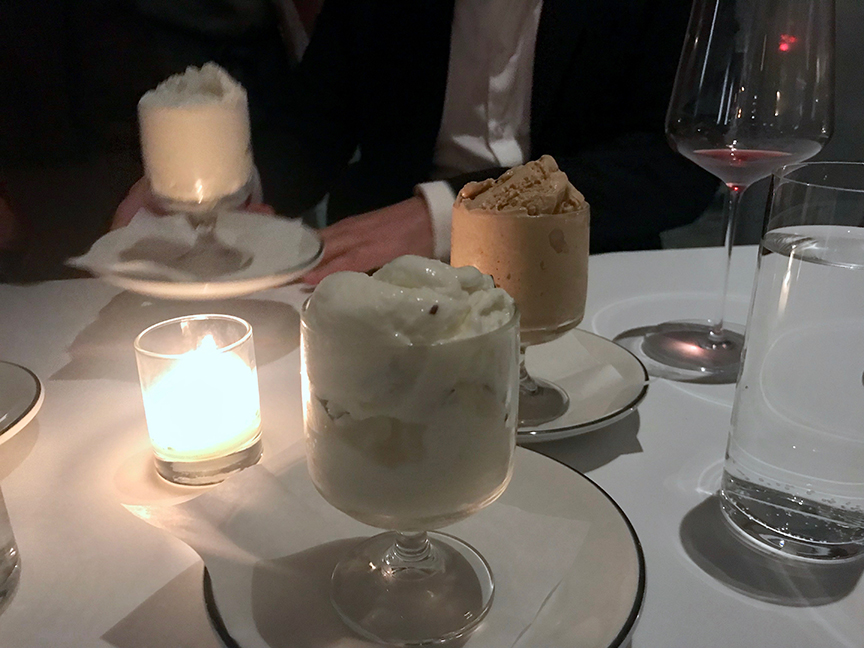
Olive oil ice cream, another must-have when dining at Misi.

First-ever Slow Wine Guide to Oregon and second California edition coming online…

Above: wine writer Michael Alberty (left), Oregon editor of the 2019 Slow Wine Guide to the Wines of California and Oregon, and Slow Wine editor-in-chief Giancarlo Gariglio.

Click here for Slow Wine Guide 2019 Tour Dates.

Click here to follow the guide online.

With more than 50 estates added to this year’s California guide and 50 estates appearing in the debut edition of the Oregon guide, the 2019 Slow Wine guide covers more ground than ever before. And the entire guide will be published online this year (free access). My colleagues in Italy have already begun to publish this year’s winery profiles here.

The following is my introduction to the new edition, including notes on our team of editors and contributors.

*****

The Slow Wine Guide to the Wines of California and Oregon 2019 is the fruit of a team of highly talented and dedicated tasters, wine writers, and editors. Without their “boots on the ground” during the summer and fall of 2018, the greatly expanded book simply wouldn’t have been possible. And its spirit is infused by their passion and devotion to their work.

Thanks to their efforts, the number of California wineries in this year’s guide has expanded greatly and is nearly double with respect to last year’s.

And for the first time, we are publishing profiles of 50 Oregon wineries.

From the outset, our editor-in-chief Giancarlo Gariglio never intended the guides, whether for California or Oregon, to be perceived as “exhaustive” or “comprehensive.” In fact, the project will only continue to grow and evolve over the years. And we are really pleased with the results of this year’s survey of the Californian viticultural landscape, with more than 50 new wineries added.

Our Oregon team, guided by the leading expert on Oregon wine today, Michael Alberty, debuts with 50 estates. It’s our hope and goal to expand that number with the 2020 edition as well.

With decades of experience in fine wine writing and solid roots in the Oregon wine community, Michael was the natural choice to lead our Oregon panel of tasters. From the Willamette Valley tour he organized for Giancarlo, to the panel tasting he put together and the team of field contributors he assembled, he’s made the inaugural Oregon guide a unique and benchmark entry in the state’s wine media coverage. His profound knowledge of Oregon wine country is difficult to rival and it was wonderful — and wonderful fun — to watch him dive into the project with his signature verve and gusto. His groovy energy was reflected in the winemakers’ embrace of our undertaking.

Click here to continue reading…

Texas BBQ and Italian wine tasting and seminar, February 25 in Houston

In a time before Frankin Barbecue in Austin and Killen’s Barbecue in Houston, smoked meats were simply part of the everybody-everyday Texas culinary fabric and landscape.

“We don’t go out for bbq,” said Tracie, then my girlfriend, 10 years ago now.

“We eat [family friend] Melvin’s or Uncle Tim’s,” she explained.

When we shared news of our wedding plans, Melvin exclaimed (and this is not a joke, people): “how am I gonna get my smoker to La Jolla?”

Today, 10 years gone, Texas BBQ has conquered the world. Even in faraway Como, Italy, Houston Chronicle BBQ columnist J.C. “Chris” Reid found authentic Texas smoked meats.

On Monday, February 25, Chris will be presenting a tasting and seminar exploring the alchemy of pairing Texas BBQ with Italian wine (a heavenly match imho). The paper’s wine writer Dale Robertson will join him on the dais and I will be moderating the session.

We’ll also be joined by three of Houston’s leading pit masters, who will be sharing their secrets and their smoked meats with 80 lucky registrants.

This event will sell out quickly, folks, and registration has just opened.

Details follow below. I hope you can join us!

Btw, check out Chris’ thread here. He’s the world’s greatest living expert on Texas BBQ.

*****

CLICK HERE TO REGISTER FOR
“HOW TO PAIR TEXAS BBQ WITH ITALIAN WINE”
(Monday, February 25, 3:30 p.m.)

CLICK HERE TO REGISTER FOR
THE TASTE OF ITALY GRAND TASTING
(Monday, February 25
open to trade and media at 11 a.m.
open to public at 3 p.m.)

The Italy-Texas factor: How to pair Texas BBQ with Italian wine.
seminar and tasting
Monday, February 25

Presented by
Italy-American Chamber of Commerce Texas
and
Taste of Italy
trade fair and food festival
Hilton Post Oak
2001 Post Oak Blvd.
Houston TX 77056

Click for festival information and registration details.

Leading Texas BBQ expert J.C. Reid and veteran Houston wine writer Dale Robertson explore the magic and science of pairing classic Texas smoked meats with Italian grape varieties and wine styles. They will be joined by 3 top Houston pit masters who will share some of their smoking secrets as well as insights into matching their foods with wines from the Old Country.
Continue reading