Fast vs. organic food in Italy: a battle played out in the streets

Above: Joe Bastianich, one of the architects of the current Italian food and wine renaissance and one of Italy’s biggest television stars, now has a signature line of sandwiches at McDonald’s.

Earlier this year, an itinerant American professor took an old friend out for dinner in Milan. Their friendship stretches back more than 20 years: they met when he was studying philology in Rome and Pisa and she was completing her degree in Milan.

They were joined by her teenage daughter, who’s grown up in Milan where her mother practices law.

The American asked the young Italian what she and her schoolmates like to eat most. The answer? The Double Down at KFC, the “panino senza pane,” in other words, “the breadless sandwich.”
Continue reading

Good (and unusual) things I ate in Italy where the gastronomic landscape is increasingly globalized

These days, my trips to Italy are all about maximizing my time on the ground and making the most of the days that I have to spend away from Tracie and our girls. Long gone are the times that I would indulge in wandering the halls of a crusty museum or poring over an incunable in a dark seminary library. Instead, it’s always a mad rush to the next tasting, event, meeting, or seminar, with little time to soak in Italy’s rich cultural landscape and to visit with my old university chums there.

A boy’s gotta eat though!

Those are nervetti above: slow-cooked chunks of veal cartilage served at room temperature. That was at old-school Osteria La Colonna in downtown Brescia.
Continue reading

Houston wine professional Joseph Kemble needs our help

It’s with a heavy heart that I share the following: Joseph Kemble, one of Houston’s leading wine professionals, is dying and he needs our help.

Late last week, a friend of Jospeh’s created the “Help for Joseph” GoFundMe.

“For those of you who may not be aware,” she writes, “Joseph Kemble has a terminal illness and has been given only 6 months to live. Due to this prognosis, he has not been able to work for many months. He is unemployed with no income, nor insurance whatsoever. He has also lost his life insurance. After Harvey flooded his home, he was forced to find alternate housing for over a year, which put quite a strain on his savings. In the last 6 months, he was forced to use what savings her had left for medical care. He has been the sole caregiver for his mom, Francis, who still resides with him. He has medical cost that are mounting as well as living expenses that will go uncovered. This has left him in a frightening place, possibly facing the loss of everything he has when he should be able to live out his life in peace doing things he loves and spending time with close friends and family.”

Read her complete post here.
Continue reading

Chag Pesach Sameach! Wishing everyone a good Passover!

I dunno why but there’s nothing quite like the flavor of Premium Gold Gefilte Fish in Jellied Broth by Manischewitz paired with fiery horseradish. Seriously… I’m not kidding. It’s just one of the memories from childhood whose deliciousness can never be replaced.

Serve with a fresh California rosé (that’s what we’ll be doing).

Chag Pesach sameach, everyone! Happy Passover!

Happy Easter, too!

Enjoy the holidays. See you next week!

A Pinko Passover and Easter: holiday wine recommendations for anywhere USA

Click here for my Marxist-friendly holiday wine recommendations today for the Houston Press.

Happy pagan rite, everyone!

cognà (cugnà) my latest obsession, Piedmont’s cheese friend

One of the perks of teaching at a gastronomic sciences university in the heart of Piedmont wine country is that the food and wine aren’t bad.

Add to that mix the fact the town(ship) where the school is located is also home to the Slow Food movement and an acute interest in wholesome and traditional foodways. It’s a recipe for a whole lotta deliciousness.

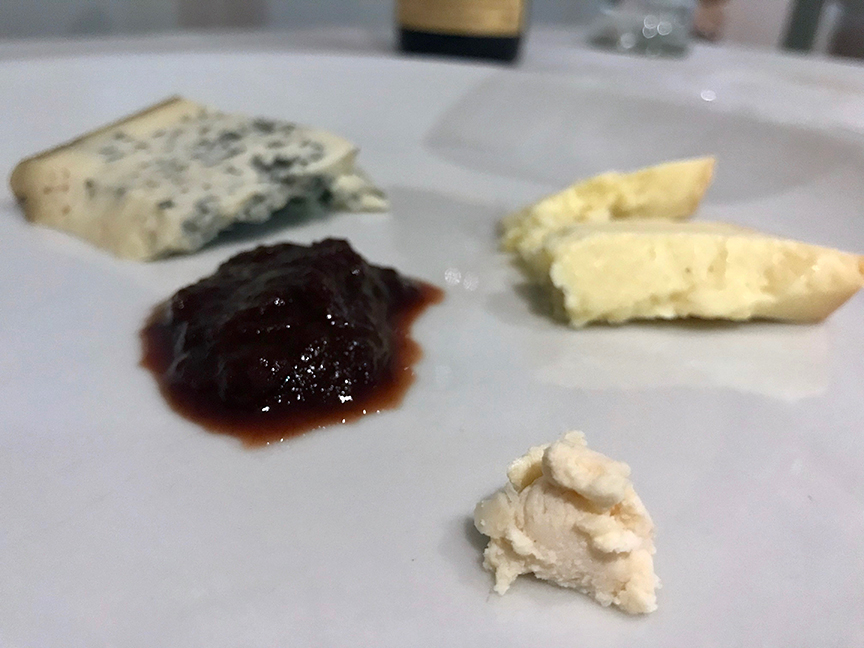
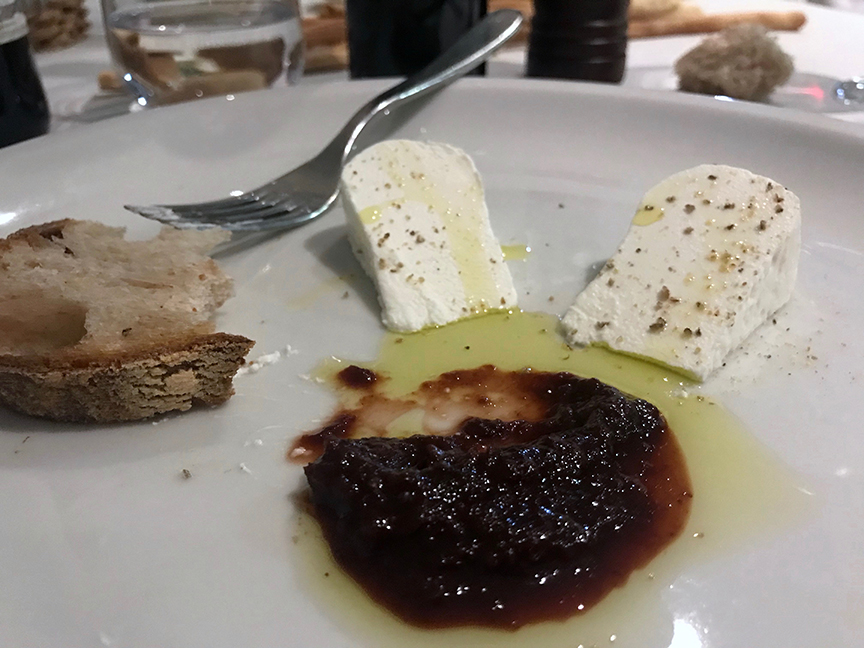
After returning from a winery visit in La Morra (Barololand) yesterday following class, one professor settled into his favorite local dining spot, Ristorante Battaglino in Bra (the toponym Bra comes from the late Latin/Longobard braida meaning farm or countryside btw). Following a repast of tajarin with sausage ragù and a glass of Ferdinando Principiano 2014 Barolo, he leisurely nibbled at a selection of cheeses accompanied by crusty bread and cognà or cugnà in the local patois.

It’s a cheese friend that falls somewhere between jam and relish.

Made from freshly crushed grape must (the main ingredient) with the addition of other fruits like apple, pear, and quince (depending on the recipe), hazelnuts and walnuts, and figs (dried or fresh), it’s one of those if it grows with it it goes with it dancing partners for cheese and Nebbiolo (or Dolcetto as the case may be).

Said instructor is no stranger to the wonders of the triptych cheese-Nebbiolo-cognà. Unsurprisingly, he had enjoyed a similar confluence the prior evening, save for the fact that the enoic component was Dolcetto.

Wise and informed humans also report that cognà marries superbly with Piedmontese-style bollito misto as well.

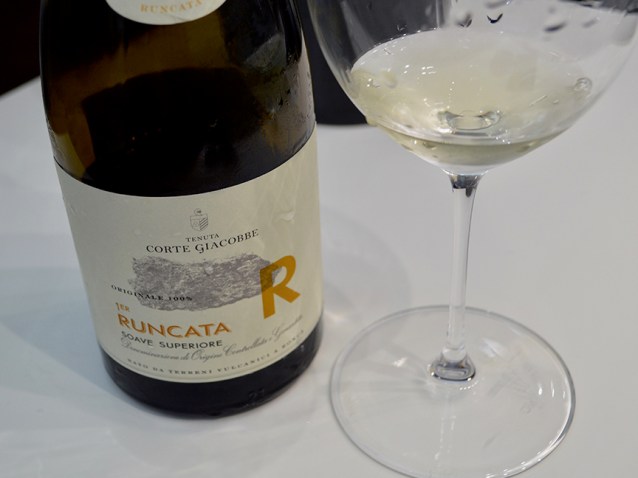
Corte Giacobbe Soave, a wonderful discovery at this year’s Vinitaly

You spend so much time schmoozing and taking tasting notes at Vinitaly that sometimes you forget to look out for new discoveries.

Every year, I try to take time out each day of my fair to taste as much “undiscovered” wine as humanly possible.

Yesterday, thanks to my friend Marco Tinello, one of the best sommeliers and tasters I know in Veneto, I was introduced to the fantastic wines of Corte Giacobbe by the lovely Dal Cero family.

Their old-school-vinified, single-vineyard-designate Soave wines were mineral and savory in character (sapidi, as they like to say in Italian), with rich nuanced fruit and the nervy acidity they’ll need to evolve as they age.

Great wines across the board and a wonderful personal discovery for me.

Empson is bringing them to the U.S, I was told. I can’t wait for them to reach me in Texas. I know that Tracie P. is going to love them, too. They’re “our kinda wines.”

If you’ve ever attended Vinitaly, you know that it can often be compared to a Dantean “circle of Hell,” as one of my colleagues put it yesterday. It’s always a jumble of information and sensation. It can make your “brain hurt like a warehouse,” to borrow a line from Bowie. But every once in a while, the magic happens: thanks to a friend and colleague like Marco, you stumble across a wine you’ll love for a lifetime.

Wish me luck, wish me speed. Tonight after the fair, I head to the University of Gastronomic Sciences in Piedmont where I’ll be teaching this week and next. Thanks for being here.

Heading to Vinitaly in Verona, capital of Italy’s culture wars.

This week, thousands of American wine professionals will travel to Verona, Italy for Vinitaly — the Italian wine trade’s annual fair.

They will represent the U.S. citizenry in all of its walks of life and gradations: from the fat-cat CEOs and managers of behemoth importers and distributors to average punters who hit the streets each day with a wine caddy in tow.

Between the long days of tastings and meetings on the fairgrounds and the bacchanal parties and dinners hosted by wineries throughout the city every evening, few of them will take time out to experience Verona’s cultural riches.

And even fewer of them will have any inkling that Verona is now the bona fide capital of Italy’s fascist resurgence and the backdrop for Italy’s pitched culture wars.

On Thursday of last week, Jason Horowitz, the Rome bureau chief for the New York Times, published this excellent piece about Italy’s current political climate and Verona’s status as the epicenter for regressive policy and institutional racism and sexism: “Italy’s Right Links Low Birthrate to Fight Against Abortion and Migration.”

(Anyone headed to the fair this year should read it. And I also highly recommend following his feed.)

In his article, he offers an overview of Verona’s openly fascist local government (a eye-popping primer on who’s in charge of the city and what they stand for). And he obliquely references a recent and frightening episode that took place at a Verona city council meeting last year.
Continue reading

The influencer instascam is a scourge. Restaurateurs deserve better.

These are true stories.

Last year, at an “influencer” dinner hosted by a popular restaurant in a major American city, a so-called “restaurant critic” writing for a high-profile food blog insisted that the organizer give her cash for the valet parking — including tip.

Earlier this year, at a similar event for social media users, a guest ordered a bottle of wine that wasn’t included in the menu for the evening. He was indignant when the restaurateur presented him with a bill.

A few weeks ago, a well-known and well-liked restaurateur in an affluent American market received the following request from a social media user from a different city (paraphrased for anonymity’s sake): I would like to surprise my significant other with the following menu and wine from your menu at your restaurant. Will you organize the dinner and pick up our tab in exchange for Instagram posts? I have a lot of followers.

It happens all across America every day, from metropoles and megalopoles to small towns in the heart of farmland: Food-focused social media users ask restaurateurs to pick up their tab in exchange for content.

Few restaurateurs are willing to discuss it openly — for fear of retribution and ostracism. But they are bombarded incessantly by brazen requests for free food.

Whenever you cross the threshold of a restaurant’s entrance, whether you are the New York Times restaurant critic or an Instagram user with a handful of followers, you enter into a social compact with the restaurateur, the restaurant employees, and the other diners.

Today, I penned and published the following post for the Houston Press: “Influencer or Freeloader? 10 Tips for Social Media Users Who Expect a Free Lunch.”

I hope it will give aspiring influencers new perspective into the insidious but sadly all too common practice of extorting restaurateurs and their employees.

There ain’t no such thing as a free lunch.
—Heinlein