Late spring freeze adds to Italian winemakers’ woes.

Above: a farm in Montalcino burns hay to protect vineyards during a late spring freeze this week across central and northern Italy (image via the Brunello di Montalcino Consortium Facebook).

According to a widely disseminated blog post by the Brunello di Montalcino Consortium, temperatures in the appellation have dropped to nearly 15° F. this week. In order to protect their vineyards from frost damage, many growers have been burning hay to warm the vines (as in the photo above, published this week by the consortium).

This late spring freeze comes at a delicate time for winemakers across central Italy as well as the northern regions, where there have also been widespread reports of damage. Once the plants have begun to bud, an extreme freeze can arrest formation of the clusters.

According to mainstream media reports, this year’s freeze is the latest in a string of three consecutive vegetative cycles that have been affected by frost damage. But the latest extreme weather event appears to be the worst.

The freeze couldn’t have come at a worse time for winemakers. Nearly all of Italy is still on complete lockdown and restaurants and cafés remained closed except for take-away orders. To give you a sense of the restrictions for private citizens living in small towns, most are not allowed to travel beyond a five-kilometer radius from their homes. (Earlier this week, restaurateurs in Rome clashed with police as they protested the continued restrictions.)

“In the middle of the night,” wrote the editors of the Brunello Consortium’s social media, “producers banded together in an effort to keep the temperatures from dipping too low in the vineyards. This is an important period [for grape growing] because the vines are at the beginning of their vegetative [productive] phase.”

The Prosecco ColFondo “10 Commandments.” A new Prosecco ColFondo farmers union takes shape.

Last month, a new consortium of Prosecco ColFondo producers was born in Treviso province, Prosecco’s spiritual homeland: ColFondo Agricolo or the ColFondo Farmers Union.

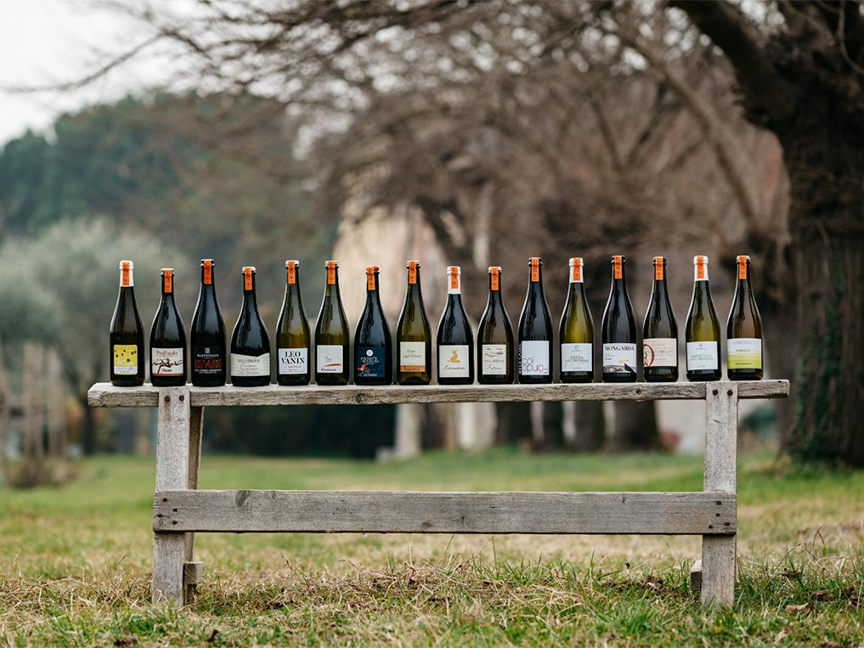
The project, spearheaded by ColFondo advocate and Italian wine authority Gianpaolo Giacobbo, includes “the 10 ColFondo Agricolo Commandments,” production requirements and guidelines for members (below).

For those of you who missed the ColFondo movement that began to take shape in the late 2000s, ColFondo is a pseudo-historic designation for a style of Prosecco that has been re-fermented in bottle and released without disgorgement. The name means con il fondo or with its sediment. (Most Prosecco is made using the tank method whereby the wines are re-fermented in pressurized tanks and then disgorged before bottling.)

The genre represents a link to the not so distant past before the international Prosecco boom of the 1990s. These were the wines that were produced and drunk by the grandparents of the current generation of Prosecco ColFondo producers. Over the last 15 years or so, the style has been embraced by growing legion of small family-owned estates and Italian wine enthusiasts.

“Farmers ColFondo,” wrote Gianpaolo, the group’s tasting committee chairperson, on the Slow Wine blog, “is a slow wine, a wine that respects time and history. It’s a wine that requires patience to be born and patience to be enjoyed. It’s not a drink but rather a sublimation of a human being’s life — the life of a grape grower. It’s the bottle that’s never missing on the table. Without filters, it tells the story of experience and hard work, honesty and sweat, freshness and simplicity.”

The following family farms currently belong to the new group of growers and winemakers: Bastia, Bele Casel, Ceotto Vini, Fratelli Collavo, Leo Vanin, Malibran, Martignago Vignaioli, Masot, Miotto, Mongarda, Moro Sergio, Ruge, Siro Merotto, and Terre Boscaratto.

All members must adhere to the union’s precepts in the form of “10 Commandments” (below, translation mine).

The 10 ColFondo Agricolo Commandments

  1. Your grapes must be grown in the Treviso hills where hillside vines have always ripened in the sun.
  2. You must produce your sparkling wine by refermenting it in bottle without disgorgement.
  3. The wine must be bottled between March and June in the year following harvest and it must be released for sale the following year.
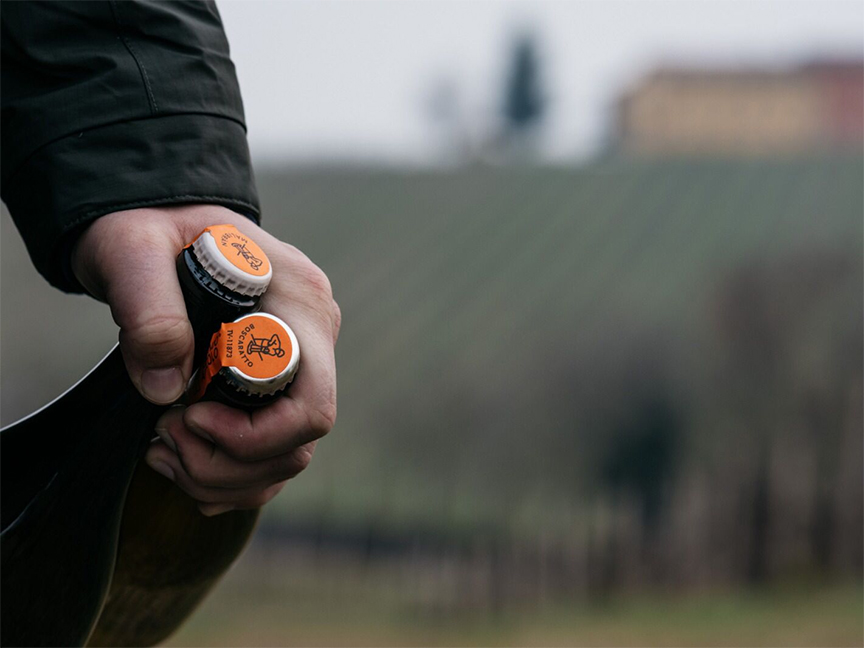
  4. You must use a crown cap.
  5. You must use the following grape varieties: a minimum of 70 percent Glera blended with other historic varieties — like Perera, Verdiso, Bianchetta, Boschera, and Rabbiosa — making up a maximum of 30 percent in the blend.
  6. You must use grapes you have grown on your own property. And you must personally select the fruit for the wine.
  7. You mustn’t fear time: these wines deliver pleasant surprises after years of bottle aging.
  8. You must indicate the vintage of the wine with a colored paper strip on the bottle [see below]. The color of the strip will be changed for each harvest.
  9. You must drink Colfondo the way you like it. Cloudy or clear, the choice is yours alone.
  10. You must serve the wines to your friends together with a sopressa [a classic salame of Treviso province], the perfect pairing.

As Gianpaolo notes in his post for Slow Wine, ColFondo wines must be “artisanal with a little bit of rock ‘n’ roll” in the mix.
Photos by Arcangelo Piai via the Slow Wine blog.

Happy Easter from the Parzen family.

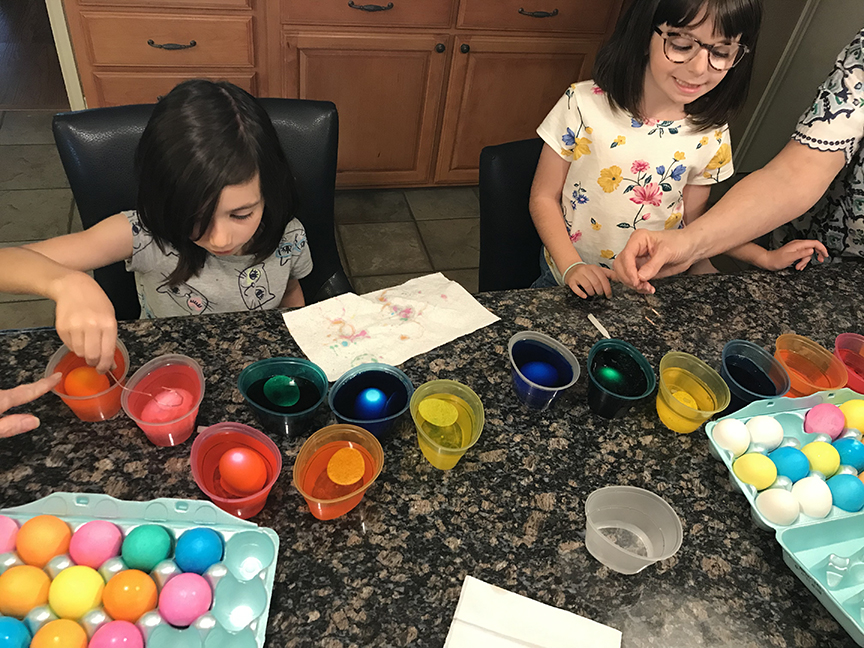
Happy Easter, everyone! That’s a photo, above, from the girls’ Easter in 2019.

This year, we’ll be back at their grandparents house in Orange, Texas for the holiday. We can’t wait!

And no Easter would be complete without a song from my favorite Easter movie, Easter Parade (1948) with Judy Garland and Fred Astaire (below).

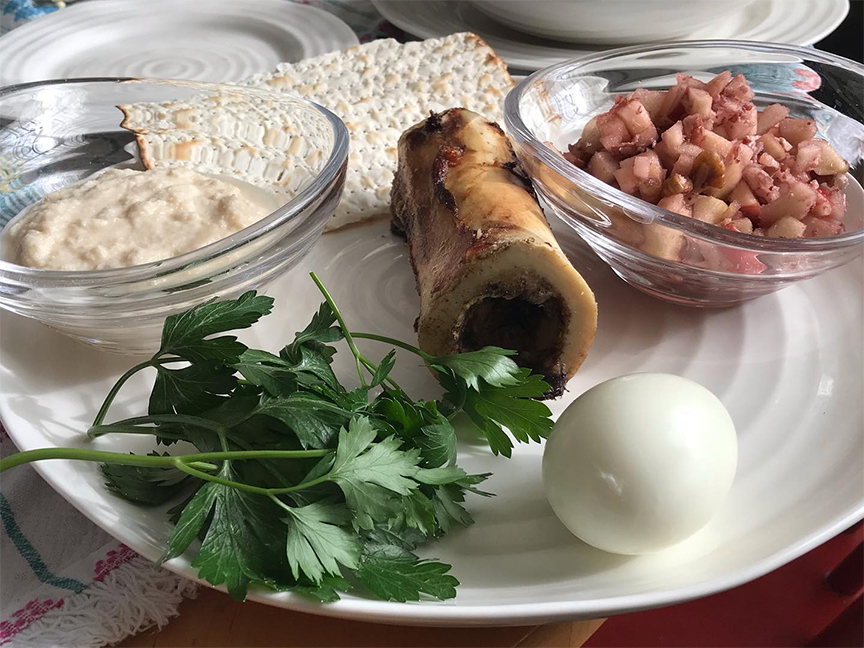
And btw, Passover is still on so Parzen family also wishes you a happy Passover! Chag sameach!

This Etna Rosso is just waiting to sing its song. Listeners wanted.

On Tuesday of this week, I tasted the above Etna Rosso Lenza di Munti by Nicosia as part of the Taste of Italy Virtual Trade Fair presented by the Italy-America Chamber of Commerce South-Central (my client).

This wine simply blew me (and Tracie) away. Powerful but lithe in the glass, it had that “unbearable lightness” that makes wines like these stand apart from the crowd. And the wonderful balance between its tannin and texture buoyed its perfectly ripe, delicious red fruit and berry fruit. We drank about half the bottle the night I opened it for the virtual tasting. On day two, all kinds of other aromas and flavors kicked in: cinnamon, nutmeg, and wild sage. A gift that just kept giving, this bottle impressed me on so many levels, including the pricing.

But it was also impressive for how “ready-to-go” it is.

Especially now, as the new normal of the pandemic era settles in, Italian winemakers without U.S. representation are facing an uphill battle as they try to carve out a place for themselves on this side of the Atlantic. Unfortunately, so many of them don’t have the wherewithal that the U.S. market demands.

In my book, this wine — beyond being utterly moreish — has so much going for it. The pricing aligns with U.S. sensibilities. The packaging is smart and U.S.-friendly. And the winery has a perfectly bilingual, young Roman wine professional serving as its ambassador for our country. He’s familiar with our market, has already spent lots of time here, and he’s working on putting together a network of regional importers and distributors in the U.S.

Wines are like songs. If you write the greatest song in the world but you only play it by yourself in your room, you might as well not have even composed it (unless for your own idiosyncratic enjoyment). Analogously, a wine without the means to reach its target wine lover is like a song sung in the forest without anyone to hear it.

There’s no doubt in my mind that Nicosia — pronounced NEE-koh-ZEE-ah — has the right stuff. And while its international suppler rep Fabio has already lined up a few east coast importers beyond New York, he’s looking for partners in other states across the country.

This wine is 100 percent ready-to-go and 100 percent delicious. My recommendation is run don’t walk.

Nearly all of Italy on lockdown through Easter weekend.

Above: a view of the Po River Valley from Montorfano in Franciacorta in Brescia province (to the north of the region at the foot of the Orobic Alps, also known as the Bergamasque Alps, in Lombardy). Restaurants there have been closed for more than four weeks now. They will remain shuttered at least through Easter weekend. Image via the Arcari + Danesi winery.

As of this weekend, nearly all of Italy has been designated zona rossa or red zone. Residents in Campania, Emilia-Romagna, Friuli-Venezia Giulia, Lazio, Lombardy, Marche, Molise, Piedmont, Trento, Puglia, and Veneto can only leave their homes for work or emergencies; restaurants are closed for dine-in service and only a few essential businesses remain open.

The following regions have been designated zona arancione or orange zone: Abruzzo, Tuscany, Bolzano, Umbria, Calabria, Liguria, Sicily, Valle d’Aosta, and Basilicata. Residents have slightly more freedom of movement but restaurants remain closed for dine-in service.

Sardinia is the only region in Italy’s zona bianca or white zone. Residents there are restricted from any type of social gathering. But they can travel from township to another and restaurants are open.

The entire country will be designated a red zone for Easter weekend, a holiday when many Italians travel home to visit family in normal years.

According to the New York Times:

    Fewer than two million people in the country have been fully vaccinated so far, partly because of late deliveries from the pharmaceutical industries, but also because of logistical problems in some regions. Italy is one of the hardest-hit countries in the world: The coronavirus has killed more than 100,000 people there, and infected 3.2 million.

In places like Puglia in the south, the new lockdown comes as residents have been enjoying increased freedom of movement and dine-in service at lunchtime. In places like Lombardy, a region now experiencing its third surge in infections (and an epicenter of the first outbreak last year), residents have already been in red zone lockdown for four weeks.

The restaurant closures continue to strain the Italian wine trade, especially among smaller-scale growers who rely on independent restaurants for much of their sales. Those wineries also depend on tasting rooms (now closed) and wine tourism (practically non-existent) to keep their businesses solvent.

After more than a year of rolling lockdowns and restrictions, winemakers there are facing a perfect storm of financial challenges with no relief in sight. Restaurants are a key element in Italy’s social fabric: beyond the economic devastation, the psychological toll of the lockdowns is nearly impossible to overestimate.

Dalla Terra CEO/founder Brian Larky and I discuss the “State of the Italian Wine Trade,” Wednesday 3/17, 10 a.m. CST WEBINAR.

Please join me and Dalla Terra CEO and founder Brian Larky for our virtual discussion of the “State of the Italian Wine Trade” on Wednesday, March 17, 10 a.m. CST/8 a.m. PST.

Click here to register for the webinar.

The event is open to all.

The event is part of the Italy-America Chamber of Commerce South-Central’s Taste of Italy Virtual Trade Fair, which takes place here in Houston and throughout Texas, Arkansas, Oklahoma, and Louisiana with virtual tastings and meetings, March 15-19.

Click here to register for tastings.

Brian revolutionized the way Italian wine was imported and sold in the U.S. when he started his company Dalla Terra in 1989. Literally decades before anyone else envisioned an importing model that would save consumers money by working outside of the traditional three-tier system (importer-distributor-retailer/restaurateur), he began setting up regional distribution networks that allowed wineries to sell their wines directly to local vendors. Today, Dalla Terra brokers the sales of some of Italy’s most iconic wineries, including Vietti (Barolo), Casanova di Neri (Brunello di Montalcino), Adami (Prosecco), Selvapiana (Chianti), and so many more.

But he is also so much more: winemaker (he made sparkling wine at Ca’ del Bosco after finishing his degree in enology at U.C. Davis); pilot (shuttling between his home in Napa and his mom’s place in LA in his Cessna); and all-around great guy whose company and conversation I enjoyed wholly in the time before the pandemic and virtually over the last 12 months.

He’s got the right energy for this moment. Man, we need us some Brian Larky right now! And he’s going to share some of his time and insights with us next week. You don’t want to miss this. I hope you can join us. Everyone is welcome.

You know your DOC from your IGT. But what about your PAT?

The better part of yesterday’s morning was spent video chatting with my friend Stefano Albano (above) in Rome. He is the owner of VERO Traditional Italian Food. The topic of our conversation was Italy’s “PAT” designation, his company’s specialty (pun intended).

PAT, you ask? We’ll get to that in a second. But first let’s dot some i’s and cross some t’s.

Surely, you already know your DOCs from your IGTs. But here’s a crib sheet and some background for the unitiated (see abridged version below).

DOC is an acronym for denominazione d’origine controllata or controlled origin designation.

IGT stands for indicazione geografica tipica or, when translated slavishly, typical geographic indication (arguably rendered more precisely as authentic geographic designation).

Both of these designations were used in the Italian wine appellation system prior to the European Union overhaul of agricultural product designations in 2010.

Today, DOC is still used internally in the Italian wine appellation. But it is now part of a pan-European designation known in Italy as DOP or denominazione d’origine protetta. It applies to foods and wines and is rendered into English as PDO or protected designation of origin.

IGT, which like its counterpart DOC is still used within Italy’s borders for wine, has now been changed in EU parlance to IGP or indicazione geografica protetta. It is represented in English as PGI protected geographical indication. IGT and PGI are used today for wines and foods, within and without Italy respectively.

The Italians still also internally use DOCG which stands for denominazione d’origine controllata e garantita or designation of controlled and guaranteed origin. This designation isn’t recognized within the broader EU system. (The main difference between the Italian DOC and DOCG is that the DOCG supposedly — and please underline the word supposedly — requires a more stringent evaluation of the wine’s “typicity” or typicality. But that’s another story for another time.)

But what about PAT?

PAT stands for prodotto agroalimentare tradizionale or traditional [food-]agricultural product. It was created by the Italian agricultural ministry in 2000 as a means to retain the designation status of traditional food products in Italy as the EU overhaul began to take shape. At the time, it was feared that many Italian food products would lose their designation status because of more narrow criteria imposed by Brussels.

According to ministerial decree, PAT foods must be “obtained with well-established production, storage, and aging methods that are widely adopted throughout the area in question. They must align with traditional practices and be in use for a period no shorter than 25 years.”

But the Italian government left it up to the regions, with only minimal bureaucratic oversight, to determine which foods would qualify. Today there are thousands of them. Campania has the most of any region, clocking in at more than 500.

They can include meats and cheeses, animal products like honey and milk, candies and pastries, and even recipes in certain cases.

You can browse lists of the products on the Italian Wiki here. Veneto, for example, has four distinct PATs for radicchio. Piedmont has 81 PATs for meat and offal alone.

PAT is akin to but should not be confused with another little-known EU designation, TSG or traditional specialties guaranteed. It requires 30 (as opposed to the Italians’ 25) years of “tradition” and unlike its Italian counterparts doesn’t have to be associated with a delimited region.

Pizza is arguably Italy’s most well known recipe included in the list of TSG or specialità tradizionali garantite (STG). It’s made using a PDO product from Campania but it is produced all over Italy.

Stefano is a lovely man and the apotheosis of the Italian food culture entrepreneur. His company sells and exports PAT products exclusively. And he’s one of the presenters at next week’s Taste of Italy Virtual Trade Fair here in Houston, organized the Italy-America Chamber of Commerce South-Central (where I am a paid consultant). To see the complete list of producers who will be presenting their wines and foods, click here. Although the deadline for next week has passed, Texan food and wine professionals can sigh up for virtual meetings and tastings throughout the month of March. The wines and food products are delivered to your doorstep and then the chamber will coordinate the virtual meeting.

Check out Stefano’s site for a wonderful list of PATs.

ABRIDGED CRIB SHEET

DOC = denominazione d’origine controllata or controlled origin designation (Italian).

DOCG = denominazione d’origine controllata e garantita or designation of controlled and guaranteed origin (Italian).

IGT = indicazione geografica tipica or typical geographic indication (Italian).

DOP = denominazione d’origine protetta. Applies to foods and wines. Rendered into English as PDO or protected designation of origin (EU).

IGP or indicazione geografica protetta. Applies to food and wines. Rendered into English as PGI protected geographical indication (EU).

PAT = prodotto agroalimentare tradizionale or traditional [food-]agricultural product (Italy).

STG = specialità tradizionali garantite (Italy).

TSG = traditional specialities guaranteed (EU).

“Hustling in every direction at 100 mph with no GPS.” An American sommelier’s story of survival.

Above: sommelier Heath Porter at the Château de Bagnols in Beaujolais (pre-pandemic photo).

Yesterday at Houston’s first in-person trade tasting since the pandemic began, a young court-track sommelier told me the story of one of her colleagues who had abandoned her apartment in San Francisco after going eight months without working. She recently moved to Texas in search of a job, turning her back on her life in the Bay Area. Her story is just one in a rising tide of top wine professionals who have faced increasingly tough life choices as they navigate the uncharted waters of a pandemic-era career in wine.

In a time when many wine professionals are discovering creative ways to support themselves and further their careers and education, I turned to one of my favorite America sommeliers, Heath Porter, for some insights into how he’s shifted his business model since covid reshaped the way we socialize and dine. For someone like Heath, who had a robust wine tour business before the health crisis began, the new normal has driven him to find new ways to stay afloat. His is a story of survival…

You were operating a highly successful wine tour business when the pandemic struck. How have you shifted your business model?

Holy crap, have I shifted! Understatement of the millennium! I’ve hustled in every direction at 100 mph with no GPS. It’s been insane. Virtual events just like everyone else, some by myself, some straight education, some with chefs and winemakers. I’ve also been able to pick up some consulting gigs and start building really cool wine and food events for high-end resorts around the country. Outdoors gigs with wine tastings, live chefs with smokers, bourbon tastings, you name it. We’ve done Swine & Wine weekends, oyster festivals, dumplings and Riesling, pizza and Champagne, you name it. If it’s fun and slightly educational, I’ve dialed it up to 11! And side note: I’m also releasing my own private wine label next month. I’m not very good at having free time.

As you dove into virtual events, what were some of the surprises about the medium?

After 30 years in F&B, if you can’t tap dance with some “snarkasm” and wit, then you’re in the wrong biz. What I quickly realized is that people need to laugh and drink wine more than ever and needed to be transported from their living room to anywhere around the world. So I started planning events with destinations, recommended regional wines and curbside from regional restaurants to support local and pair the wines with local foods. I also stuck with my guns and became more of a wine entertainer, if I can make people laugh and learn in the same sentence, then I’m rockin’ the juice cleanse hardcore!

What makes for a truly memorable virtual wine event? Any highlights from your series you want to share?

Inside stories with winemakers, tricks of the trade with chefs, seeing personalities and telling stories. I had Ken Wright the OG of Oregon wines on. I asked him who his favorite bands were and the next thing you know he was telling stories about eating dinner with Dire Straits and Van Halen. You should hear Nancy Irelan of Red Tail Ridge do her Scooby Doo impersonation with Shaggy. Really just amazing experiences, I could go on for days.

When do you think we’ll be able to start wine touring again and what’s that experience going to feel/look like?

I’m planning some tours in summer and fall to the Finger Lakes, Walla Walla, Sonoma and harvest in Santa Barbara. I’ve got some private groups trying to get to Italy with me in October. I build the bubble. We take over entire bed and breakfasts, have the same bus and driver all week and go to the wineries as the only people there when they’re closed. The trips have always been intimate but now they’re secluded as well.

Heath will be presenting a virtual tasting in Miami with one of my best friends in the biz, Lambrusco producer Alicia Lini, on Saturday, March 27. The line-up includes Alicia’s classic method Lambrusco. Check it out here.

MASKS will be REQUIRED today at Houston’s first in-person wine trade tasting since the pandemic began.

A photo from the Italy-America Chamber of Commerce Taste of Italy Houston trade show in 2018 (image via the IACC Facebook.

When the Miami-based event planning company I.E.E.M. first began discussing today’s Maremma Consortium trade tasting in Houston with the Italy-America of Chamber of Commerce, one thing was clear to everyone involved. This gathering would be Houston’s first in-person wine trade tasting in over a year, everyone on that first Zoom call acknowledged, and all parties — including attendees and staff — would need to make safety protocols a key element in the event.

When roughly 30 Houston wine professionals meet later this morning at a once popular events space, masks will be required (except when tasting) and each taster will be seated at their own table to ensure social distancing of a minimum of six feet.

It’s important to underline the fact that masks and social distancing will be mandatory: even though our state’s rollback of the mask mandate doesn’t officially take place until Wednesday of this week, many Houstonians — at least the barflies — shed their masks and began ignoring safety measures this weekend.

Once the seminar and guided tasting portion of the event have been completed, the walk-around tasting of roughly 40 wines will be divided into four tasting stations, each with a professional sommelier. Tasters will be assigned a color (using a poker chip) and then will be asked to observe social distance while tasting with their group at their assigned station. They will then be asked to follow their group to the next station. The systems is intended to avoid logjams at each station and ensure social distancing.

I’ll be the featured speaker and moderator of today’s tasting. And I’m also one of the organizers through my affiliation with the chamber. It’s not without some trepidation, tempered by hope and faith in human nature, that I’ll pull the cork on that first bottle of wine this morning. But the overwhelming response in the run-up to the gathering has been wonderfully positive and heartwarming. People want to get out and taste, we learned to our surprise when we first announced the date. And they’re ready to do what it takes to make it safe.

There’s no doubt in my mind that it will be a momentous occasion for all concerned.

Today, we will also spend a moment in silence remembering our colleague, beloved sommelier Thomas Moësse who died unexpectedly last month.

We will also take a moment to observe International Women’s Day, which is today.

And in case you hadn’t already seen it, the IACC is hosting its second-annual Taste of Italy Houston Virtual Trade Fair next week and throughout the month. It’s a great model for tasting safely: the food samples and wines are delivered directly to the taster’s home or office and then the IACC coordinates virtual meetings between trade members and the producers.

Please visit this link for information on who’s presenting and how to sign up.