Best summer wines, Anywhere, USA

Readers (and editors) love lists: today, the Houston Press posted my top five picks for under-$25 wines for the Texas summer.

It’s been really rewarding for me to share my palate with readers over there. I always keep it real, writing honestly and openly about wines we actually buy and drink and reviewing wines that I wouldn’t normally reach for.

The greatest reward comes when people either write me or stop me in a Houston restaurant to say, “now that I’m on to the low-alcohol and high acidity thing, I just can’t go back!”

Thanks, everyone, for reading and keeping up with it all.

Here’s the link to the post.

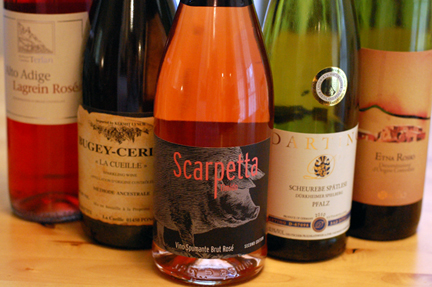
I can’t wait for Mrs. B. to taste the Darting Pfalz Scheurebe Spätlese Dürkheimer Spielberg!

Nothing like lunch at Tony’s, a Napa Cab I actually liked and Aldo Sohm and Levi Dalton

From the department of “Jar, you’re just bragging now” says Jon Erickson

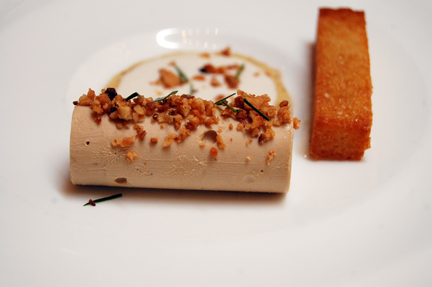
Above: Tony’s foie gras au torchon is one of his signatures and one of the dishes where simplicity and purity of flavor is offset by detail in the presentation.

How could Giovanni’s visit to Texas be complete without a meal at Tony’s in Houston?

Tony is my client (I curate his website and his media relations) but he’s also become one of my best friends in Texas and he is the architect and author of some of the most stunning meals I’ve ever had. Yesterday, Giovanni and I drove to Houston to meet Cousin Marty for lunch and a confabulatio that centered around… yes, of course… food and wine

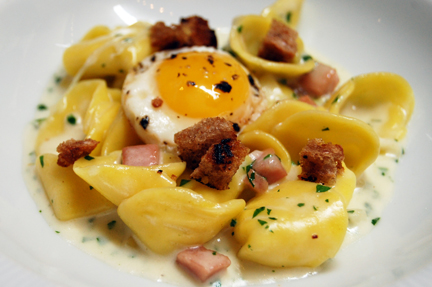
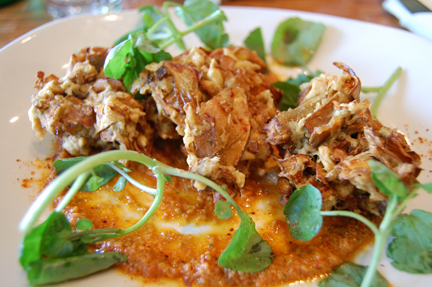
Above: Orecchiette with seared mortadella cubes and runny quail egg.

The secret to the rich yellow color of his pasta, said Tony, is locally sourced, organically farmed eggs. “But it’s also the fact that I use only flour and mineral water imported from Italy,” he added. Some would argue that sparkling mineral water is key to super pasta like this. But Tony insists that still water (acqua naturale) is a sine qua non.

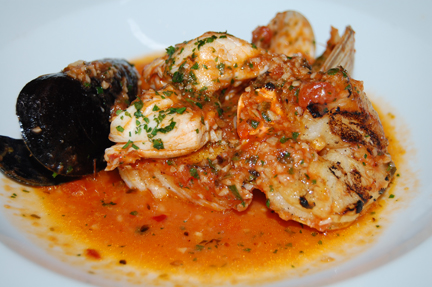
Above: Halbut and seafood medley “al Mare Chiaro,” named after the neighborhood in Naples.

Tony’s is the only place in Texas where we eat fine seafood (a category we reserve otherwise for our trips to California). This dish was simply stunning in its simplicity and presentation (and my camera didn’t do it justice, frankly).

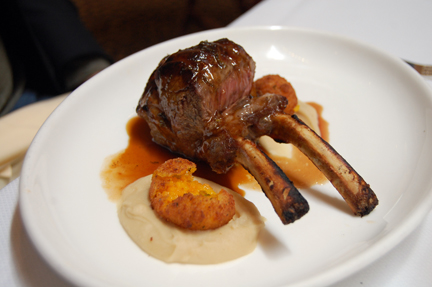
Above: Lamb chops.

Tony likes to tease me, calling me the chiodo (the nail) because I’m so careful about what and how much I eat. Lamb chops would have been a bit much for me for a Tuesday lunch but Giovanni dove in with gusto.

Above: General Manager and wine director Scott Sulma’s selection was right on.

And the wine? A tall order considering the fact that one of Italy’s top winemakers was seated at our table. And let’s face it, my general disdain for the Californian style is well known to my colleagues at Tony’s. But it also seemed right to have Giovanni taste something from my home state. GM Scott’s selection, Palmaz Vineyards 2007 Cabernet Sauvignon, delivered acidity, earth and gorgeous dark fruit, and balanced alcohol and wood. It was superb with the Bucatini all’Amatriciana that I had as my second course, playing beautifully against the savory guanciale in the dish. Chapeau bas, Scott!

Above: Nobody does it better than Tony.

I can’t conceal my pride in sharing the Tony’s experience with my good friend Giovanni, who made the trans-Atlantic crossing to see, hear, taste, and feel what life is like in Texas, California, and America.

Above: Two of my favorite fressers.

Thanks, again, Tony for yet another fantastic meal and an unforgettable experience. Ti ringrazio di cuore…

In other news…

Question: What could be better than a conversation with one of my favorite New York City sommeliers?

Answer: An interview with one of my favorite NYC sommeliers conducted by one of my favorite NYC sommeliers.

Click here to listen to Levi Dalton’s conversation with Aldo Sohm (pictured above).

“You can’t get a bad meal in Napa” and my favorite Napa wine blog

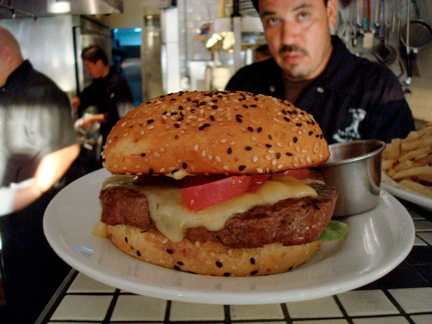
Above: The burger and fries at Grace’s Table in downtown Napa. The thing that took it over the top was the superb quality of the bun.

“You can’t get a bad meal in Napa these days,” said the waiter at Grace’s Table downtown as she insisted that I taste the baguette that the restaurant sources from a bakery down the street.

I hadn’t been to Napa for three years or so: there’s been an explosion of restaurants in the town and while competition is high, I was told, there’s plenty of high-quality materia prima to go around. Say what you will about the Napa style of wine, but there’s nowhere in the U.S. that can beat the quality of the produce that the farms here deliver. And the culture that once corralled the best restaurants in the villages to the north has now graciously populated its namesake township. Gauging from a stroll in the town center, there are many affordable options for dining: my “Hand Formed Burger, Meyers Ranch Chuck, House Made Pickles, Chili d’Espellette-Parmesan Fries” was just $12.

Above: Artichoke fritters at Grace’s were delicious.

After Giovanni and I finished an early repast in town, we headed back up north to Yountville to meet the author of my favorite Napa wine blog, Vinsanity, Vinogirl.

She was pouring wine at an exclusive private event but she managed to sneak Giovanni and me through the back of the venue so that we could taste her wine and chat with her and husband Vinomaker.

Above: In Yountville, Giovanni and I were impressed by this “transgenic” sage plant, as he called it. Note the size of the plant’s leaves.

On her excellent blog, Vinogirl chronicles the vegetative cycle of Napa with wonderful photographs and occasional scouser humor (she Liverpudlian). Her posts are peppered with viticultural knowledge and insights into what’s happening “on the ground,” including the recent cooling trend that has vexed growers here.

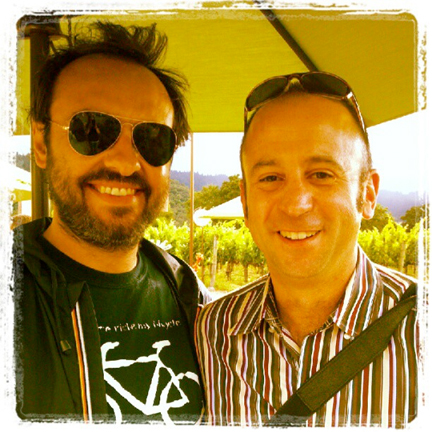
Above: “Did you know,” writes Vinogirl on her blog today, “that there’s no Italian word for ‘bromance’?” She snapped this photo of Giovanni and me, four days into the California leg of his visit to the U.S.

Why were Giovanni and I in Napa? You’ll be surprised to know the reason and I’ll explain all next week… stay tuned…

In the meantime… Thanks again, Vinogirl, for the photo! It was so great to finally meet you!

Jared Brandt, reluctant Natural winemaker at Donkey & Goat @SottoLA

Above: Polymath and reluctant Natural winemaker Jared Brandt sat down for dinner together last night at Sotto.

It’s hard to explain the role that Donkey & Goat wines play in our lives.

We serve them by the glass and by the bottle at Sotto in Los Angeles, where I curate the wine list.

Tracie P and I drink them regularly at home (the last vintage of Sluicebox is currently our house white).

And Rev. B, my father-in-law, just can’t get enough of the Berkeley winery’s red wines, which, like most of Jared’s wines are sourced from a new frontier of grape growing in contemporary California winemaking, El Dorado, where wine grapes have been grown since the time of the Gold Rush.

“It’s really interesting to see where they planted their vines” during the Gold Rush, said Jared, who doesn’t own any land there but works closely with growers.

“You’ve got to consider that they had no means to acidify their wines and so they needed to plant on sites where they had diurnal temperature variations.”

The thought of gold miners growing wine grapes in an era before Pasteur’s discoveries had taken root would have been enough to occupy the conversation for the entire evening.

But there were so many questions I had for Jared, a polymath who came to wine and winemaker later in life after a career in high tech but who has now emerged as one of our country’s leading Natural winemakers — however reluctantly.

“I don’t like labels and I don’t consider myself a Natural winemaker” per se, he said. “I think of it more as ‘unmanipulative’ winemaking. But that’s not as fun to say.”

“Basically,” he explained, “I don’t put anything in my wine that could hurt my daughter if she ate it,” referring to the many chemical treatments that even Natural and biodynamic producers use regularly. Of course, his rule of thumb resonated with me, father of a six-month-old baby girl (Tracie P has been posting about Georgia P’s Baby Led Weaning on her Sugar Pie blog, btw).

I don’t have time to recount our entire confabulatio this morning but I was impressed by his take on Native yeast.

“It seems that the one thing that everyone [of the Natural winemakers] agrees on is native yeast,” he said. “I’ve experimented with commercial yeast but every time, I’ve ended up with a stuck fermentation. You’d be surprised by how many famous Californian winemakers use native yeast.”

His approach to winemaking has been enjoying popularity among young U.C. Davis enology students, he told me. “Davis is changing: there is a generation of professors there and we have a quite a following of students who come to visit us at the winery.”

The spark that ignited his career in winemaking?

“I was collecting the wines of [Rhône producer] Eric Textier and had tasted a white wine he made and loved it. I then read in the Wine Advocate that Robert Parker found the wine undrinkable. That’s when I decided I wanted to travel to France to make wine with him.”

An ice cream machine, said Jared, is one of the techniques employed by the famed zero-sulfur producer as a means to stabilize his wines and eliminate the need for sulfur. But that will be have to be another story for another day…

Taste Jared’s wine with me tonight at Sotto if you’re in LA…

@JaynesGastropub has never been better

Above: The Jaynes Burger, with house-pickled red onions, Vermont cheddar, aioli, and frites — a sine qua non on any visit to San Diego for me.

It’s predictable, I know, but I just had to have the Jaynes Burger last night at Jaynes Gastropub in San Diego, where I checked in with the folks who are like family to me in the town where I grew up.

The burger’s never been better and the Caesar predictably rocked my world but I was also digging the new grilled Moroccan lamb meatballs with chickpea purée and the Québécoise chips and gravy poutine. Jaynes is simply going through one of those moments of grace that devoted, passionate restaurateurs experience — like an athlete in top form or a virtuoso musician at the zenith of a career. And I love how gourmet “comfort food” knows no international boundaries these days.

Jayne and Jon graciously let Giovanni open three bottlings of his Franciacorta to share with our friends but Jon has so many killer wines on his list right now: Venica & Venica, Movia, Valli Unite (one of my favorite Natural whites from Italy), Musar (red), Foillard Morgon Cuvée Corcelette, Massolino (classic) Barolo… such an amazing (and courageous) list in a town where “Napa Cab” and “old vine” Zinfandel generally prevail.

Thanks again, Jayne and Jon, for an awesome evening…

Giovanni’s been blogging about his Texas-California adventure here btw.

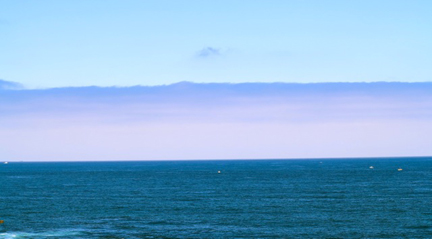
Here’s a photo he snapped yesterday from mamma Judy’s window overlooking the Pacific. The photo’s entitled “Three Shades of La Jolla Blue.”

GREAT NEWS! Bindocci new president of Brunello Consortium

Because we were recording all day, I was offline yesterday when the news broke: my friend Fabrizio Bindocci, winemaker at the historic Montalcino estate Il Poggione, has been named the new president of the Brunello bottlers association.

The news came in the wake of Ezio Rivella’s sudden departure from the post on June 8 (for personal reasons, he reported in a press release issued by Montalcino mouthpiece WineNews.it).

It’s hard to believe that nearly ten years have passed since the disastrous 2003 vintage and more than four years since the Brunello controversy exploded in 2008.

In my view, Rivella’s presidency only prolonged the issue (remember when Rivella told an Italian journalist that 80 percent of Brunello was made with grapes other than Sangiovese?).

Fabrizio is a Tuscan (Rivella is from Piedmont and didn’t even keep a residence in Montalcino while president, opting instead to commute from Rome); he was born and raised in Montalcino; he has worked for Il Poggione since 1976; and he is one of the most respected and beloved winemakers in Tuscany today.

His presidency marks a new (and happy) chapter in the saga of Montalcino and I — along with many other lovers of Brunello — could not be more thrilled.

Tracie P and I will visit with Fabrizio later this year when we travel to Montalcino.

Georgia on the mic (and heading to California)

Georgia P got to stay up past her bedtime last night after Céline and I finished our recording session and Giovanni arrived from Brescia.

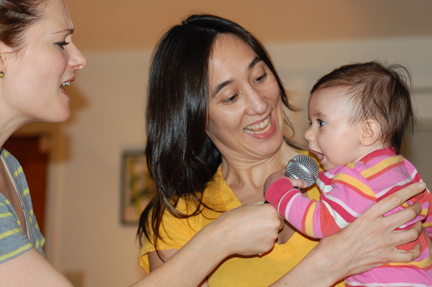
After a dinner of chicken tacos with chipotle, Georgia P had fun doing karaoke to her mommy’s favorite, Xanadu by ELO.

Giovanni and I are heading today to California where we’ll be spending the night in La Jolla and then driving up to LA, where I’ll be working at Sotto tomorrow and Thursday.

Winemaker Jared Brandt of Donkey & Goat will be at the restaurant tomorrow night and we’ll be pouring a flight of three of his wines.

Stay tuned… lots of cool stuff to come… :)

A Frittata and a Glass of Wine

Tracie P’s superb frittata inspired my post today for the Houston Press. We paired it late Saturday night with a bottle of 2008 Fixin by Mongeard-Mugneret, which I had picked up — literally — for a song for $26 in San Antonio (where I spoke at a wine dinner earlier in the evening).

I’ve posted these passages — one probably known already to you and one that may surprise and delight you (I hope) — over at the Houston Press as well. But I just had to post them here, too.

From “An Omelette and a Glass of Wine”

“If it were true that wine and eggs are bad partners, then a good many dishes, and in particular, such sauces as mayonnaise, Hollandaise and Béarnaise would have to be banished form meals designed round a good bottle, and that would surely be absurd. But we are not in any case considering the great occasion menu but the almost primitive and elemental meal evoked by the words: ‘Let’s just have an omelette and a glass of wine.'”

Elizabeth David, T.B. Layton’s Besides, 1959

Omelette

“Of all French dishes, the omelette is perhaps, the most thoroughly representative. The French omelette is known far and wide, by reputation, at all events, and various are the parodies of the great French dish that are to be met with in the different corners of the world. In some places, omelettes are served up in a liquid melting mass; in other places they take the form of solid custard-like composition; elsewhere they take a leathery shape, and are altogether as unpalatable as they are unlike the real thing. An omelette, moreover, is a dish which most Frenchmen, whether he cooks or not, declare that they are adepts [sic] at concocting. The French poet, the painter, the dramatist, the statesman, the aristocrat — all will tell you that had it pleased Providence to place them in the classes from which, as a rule, cooks spring, they would have won renown by the excellence of their omelettes alone. No saying is more true than that which declares every French man to be a born cook; and the foremost dish on the execution of which he prides himself, is the omelette.”

—Charles Dickens (ed.), Household Words, 1882