06 Barolo Garblèt Sué, birthday fiorentina & the aeration condom

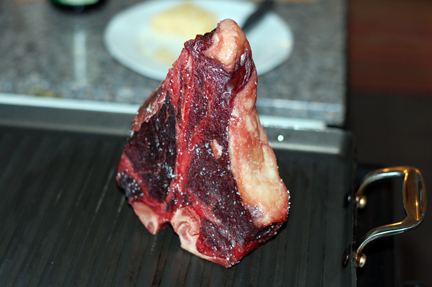
This year’s birthday celebration centered around a porterhouse cooked alla fiorentina: the steak is cooked upright so that the T in the t-bone release its flavor and the entire steak heats through without cooking the sirloin and tenderloin. This year, Tracie P bought me the steak three days before my birthday and we dry-aged it in the fridge (you just put it on a plate, uncovered, and let it dry out). It’s the simplest thing but it makes such a big difference in the tenderness and flavor of the beef.
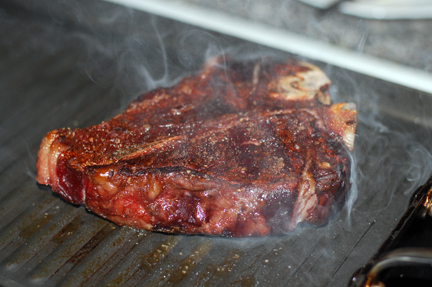
When you see the marrow begin to bubble in the bone, quickly grill the steak on either side at high heat.

We paired with a bottle of 2006 Barolo Garblèt Sué by Brovia, one of my all-time favorite Nebbiolo growers and bottlers.
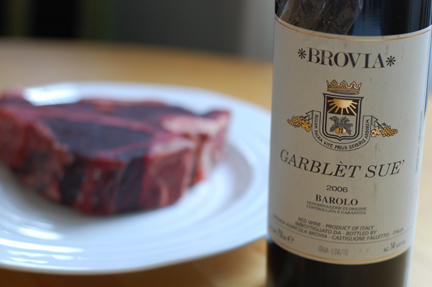
The Garblèt Sué vineyard is on the Bricco Fiasco and its name comes from the name of the farm that lies below, Garbelletto Superiore. (The dialectal inflection of the toponym, Garblèt Sué, was authorized in new legislation that went into effect in 2010 allowing for added geographical mentions, as they are called in red-tape jargon.)

Honestly, the wine was still very tight, even though I had opened it early in the day to let it aerate. But that didn’t diminish our enjoyment of this classic expression of Barolo from Castiglione Falletto, the township that lies virtually in the center of the appellation and is known for its balance of elegance and fruit (imparted by the more generous Tortonian soils to the west of the Barolo-Alba road) and opulence and tannic structure (delivered by the austere Helvetian soils to the east). Even though this wine wasn’t anywhere near its peak, a Saturday night with a Barolo by Brovia is always an undeniable and unforgettable treat for me (thanks again, Tracie P!). This was the second 2006 by Brovia that I’ve tasted this year and I’ve been impressed with how fresh and bright the vintage is showing from Langa.

Beyond the new flip flops (much needed) and the gorgeous brown agate cufflinks (much appreciated) that Tracie P gave me for my birthday this year, she has given me the greatest gift that anyone ever could: our little Georgia P, whose smile could light an entire city block and whose sweetness can wash away even the bluest blues.

We have so much to be grateful for and this year’s celebration of my birthday (my forty-fifth year!) reminded me of how rich our lives have been in the last year and a half. I love both of them so very much…

In other news…
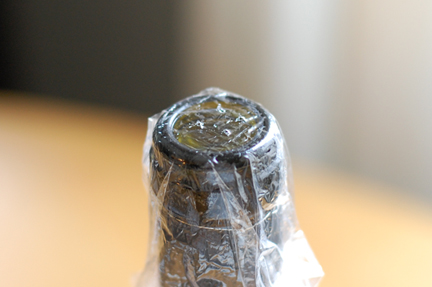
Over at the Houston Press this morning, I explain why I don’t decant wines like the Garblèt Sué and offered a trick for allowing wine to breath over the course of the entire day: the “aeration condom,” I call it.

Thanks for reading and thanks for all the birthday wishes on the Facebook and the Twitter! :)

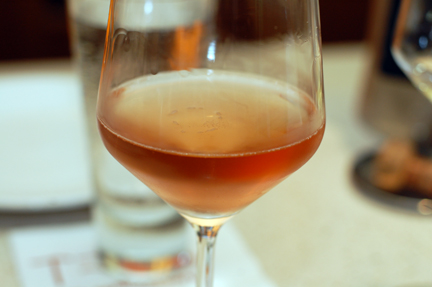
99 Bollinger Grande Année Rosé, one of the best wines we’ve had this year

I really enjoyed Eric the Red’s article this week in The New York Times, “Weighing the Importance of Setting a Date (Champagne disgorgement dates provoke debate).”

It brought to mind a wine that Tracie P and I shared earlier this year, a baby gift from one of my best friends, and a wine that made me question the wisdom of Alfonso’s excellent post today on “The Ultimate Wine,” in other words, as Alfonso put it, That by which you can taste, but that which you can never taste.

The 1999 Bollinger Grande Année Rosé was simply one of the best wines we’ve ever shared together… pretty much as close to an “ultimate” wine as you can get…

BTW, if you’ve never heard the song that Céline and I wrote and recorded about Bollinger, here’s a link to listen. It’s from our album Ménagerie (Aeronaut 2009).

Perhaps only in Barbaresco have I encountered this wine’s ineffable, sublime balance of power and lightness (the “unbearable lightness,” I like to call it). But where Barbaresco tends toward earth and truffle, great Champagne like this bottling evokes salinity and the sea.

Of course, Tracie P and I shared with our sommelier (Mark Sayre, who generously allows us to bring special bottles into Trio at the Four Seasons and who expertly serves them to us). And he, too, was stunned by the elegance, focus, and precision of this nearly perfectly formed bottle.

I write nearly because as Alfonso rightly points out in his superb post today, the ultimate wine cannot and does not exist — even if for a brief fleeting instant, Tracie P and I, had a glimpse of it.

Thanks again, MAS, for the wine! And buon weekend, yall!

Crisis in Hermitage,12.5% Napa Cab, and 5 reds to chill (@EatingOurWords)

From the department of “the vinous is political”…

One of my favorite wine bloggers, Jim of Jim’s Loire, let me use the awesome photo above today for my post over at the Houston Press.

His blog is my go-to when it comes to info on Loire Valley wines but today he’s trying to raise awareness of a crisis that’s emerging in the Rhône: “Hermitage threatened by pylon lunacy.”

I’ve reposted the link here in the hope that other bloggers will repost it as well. As he wrote me in an email this morning, “What an insane idea it is to build an 18 metre transmitter on Hermitage!”

In other news…

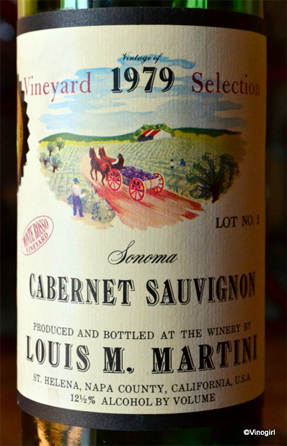
I loved this post by my favorite Napa blogger Vinogirl, who reports tasting notes for a 1979 Louis Martini Sonoma Cabernet Sauvignon and a great backgrounder on Martini the winemaker. Really cool stuff, Vinogirl!

12.5% alcohol! If only they’d make wines like that again in Napa!

In other other news…

Here’s my post on Top 5 Red Wines to Serve Chilled in Summer for the Houston Press.

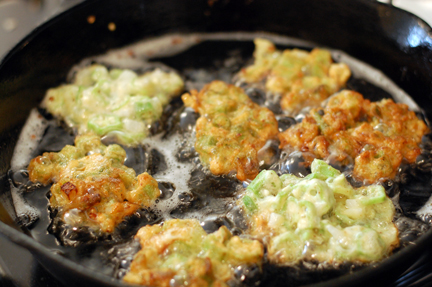
A wine for fried okra, east-Texas style!

My post today for the Houston Press

Even in East Texas, where fried okra is to the culinary landscape what George the Gator is to Peggy’s on the Bayou, people simply can’t tell you what okra tastes like.

My wife Tracie P, an accomplished gastronome and native of Orange, Texas (where she grew up frying her okra in Nanna’s cast-iron skillet), is hard-pressed to describe the mallow’s sensorial virtues.

“It just takes like okra,” she’ll say. “It tastes slimy.”

And therein lies the rub: More often than not, when people describe the flavor of okra they actually refer to its texture (and in doing so, they employ a literary device known as synaesthesia, whereby we use one sense to describe another; but that’s another story for another day).

I didn’t grow up eating okra, but I’ve certainly had my share since moving to Texas nearly four years ago to be with Tracie P.

On my palate, it has a certain spiciness, more gentle but reminiscent of jalapeño and mint, and, of course, its unctuous texture is a unique experience in the gastronomic spectrum.

Okra’s in season right now and we’ve been receiving a heaping helping each week with our weekly CSA delivery. So, what wine to pair with okra (which is rigorously fried at our house)?

Click here to continue reading…

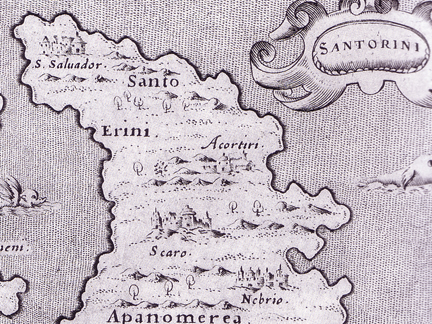
Revisiting my research on Vinsanto (Greek) vs. Vin Santo (Italian)

I’m taking a break from blogging for the next couple of days and so I thought I’d revisit my research on the etymologies of the enonyms Vinsanto (Greek) and Vin Santo (Italian) and their philological relationship (for anyone who missed it the first time around or for anyone who’s only recently started following here).

Here’s a link to the thread.

Happy reading, everyone! I hope you drink something great for the holiday and have a safe and fun Fourth of July!

a boysenberry jam frat party shit storm

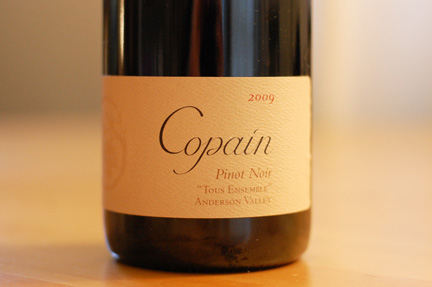
Above: I included the Copain Pinot Noir Tous Ensembles in my recommendations for the Houston Press today. The alcohol content — 12.9% (YES!) — is reported in lettering so small and faint that you’d think the winemaker was embarrassed by it.

I never thought in a million years that I’d find myself writing regularly about American wines.

But then again, I never imagined in a million years that I’d have an editor that would allow me to write things like “a boysenberry jam frat party shit storm” (thank you, Cathy! you rock!).

I didn’t write the line in reference to the Copain Pinot Noir (above). It was inspired by a sales rep that tried to hard sell a wine to Darrell Corti one day when I was visiting him in his store (Darrell is one of the people in the world I admire most and whose friendship I cherish most dearly).

When Darrell courteously asked the gentleman to leave the bottle for his weekly staff tasting, he responded saying, “you’ve got to taste this wine: it tastes like boysenberry jam!” After he left, Darrell showed me the label, pointing to the 16 percent alcohol. He just shook his head, as if to say they’ll never learn.

A few months later (I was in Sacramento on that occasion making a record at The Hangar), the earth-shaking story about Darrell prohibiting 14.5 percent Zinfandel broke in the blogosphere.

The editors at the Houston Press have been very supportive in my efforts to write about American wines with candor and honesty and in keeping with my steadfast belief that wines with high acidity, low alcohol, and wholesome (as opposed to chemically manipulated) flavors and aromas are the key to healthy and happy enjoyment of wine (and good pooping)… And while I can’t say that Tracie P and I serve the wines regularly in our home (where Italian prevails, pervades, and precludes, and French and Natural Californian appear more than occasionally), I can say that I only review wines that I’ve actually tasted and wines that I genuinely respect (and of course, I’m limited to wines that are available in the Houston market).

Click here for my “Top 5 All-American Red” recommendations today in the Houston Press.

Wine and the Sumpreme Court Health Care Ruling

When I was a student in Italy in my early twenties, I ate twice a day in a university cafeteria, where 3,000 lire (roughly $2) got you a pasta or rice first course (usually topped with tomato sauce or tomato and meat sauce), a second course of fish or meat with a side of vegetables, a piece of bread, a small dessert, and one small glass of wine — white or red.

Like any red-blooded American college student, I had done my share of drinking. At that age, wine and (mostly) beer were a sine qua non component of adolescent socialization. And their sole purpose was inebriation: I can’t remember an instance when my companions or I stopped to say, wow, this beer is really hoppy! or this Chardonnay is really well balanced! (you get the picture and if you’re reading this, you’ve probably been there yourself).

And so when I first started eating at the university cafeteria, I was impressed by the fact that wine was served at lunch and dinner. Of course, the quantity wasn’t sufficient to “catch a buzz” or “get your drink on.” The serving size was just enough to allow the gentle alcohol in the wine to stimulate the acids in your stomach and the acidity to give you a jump start in digesting your food.

Click here to continue reading my post today for the Houston Press…

Quintarelli Valpolicella & Lucy’s fried chicken (Giovanni’s Easy Rider tour comes to an end)

There was one sine qua non pillar of Americana that Giovanni had not yet experienced on his “Easy Rider USA Tour 2012”: fried chicken, the way its done in the South.

And so on his last day in Texas, we decided to take a ride to the south side of Austin to Lucy’s Fried Chicken, where irony and hipsterdom collide in a deep frier (photo above by Giovanni). We picked up a bucket of chicken, which, according to Lucy’s serves four but could easily accommodate a party of six (unless folks squabble over who gets the breast).

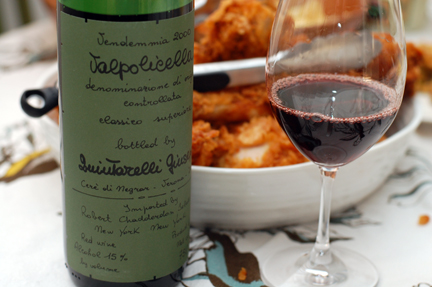
When we visited Houston on Tuesday, Giovanni had spied a bottle of Quintarelli 2000 Valpolicella, which he generously bought for us to share. As deep as our friendship may run, Giovanni — a top Italian winemaker — and I often disagree about wine. The “rough edges” of many of the Natural and old-school wines that Tracie P and I cherish preclude his nod of approval. He even turned his nose up at a bottle of 2006 Romangia Bianco by Dettori that we opened — one of our all-time favorite wines, showing gorgeously right now! Blasphemy at the Parzen residence!

But one thing we can all agree on is Quintarelli. And the superb bottle inspired an interesting conversation on the use of oxidation and filtration, with Giovanni pointing to Quintarelli as a master in both regards (where many Natural winemakers use excessive oxidation and don’t filter at all).

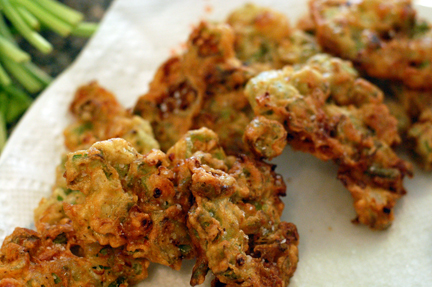
The richness of the wine (served slightly chilled) was simply brilliant with the fatty, juicy (and delicious) fried chicken and its dark red fruit ideal with the flavors of Tracie P’s mouth-watering fried okra (above) and mashed potatoes.

This morning I took Giovanni to the airport and he’ll be back in Brescia by lunchtime tomorrow. It was great to have him here and share our lives with him. (Italian-speaking readers, please check out his posts on Texas truck culture and his impressions of a Texan wine.)

Thanks again, Giovanni, for the visit and the Quintarelli! Travel safe, friend. As we say in the South, come back and see us, ya hear?