Frank Cornelissen in Austin, Texas

frank cornelissen texas

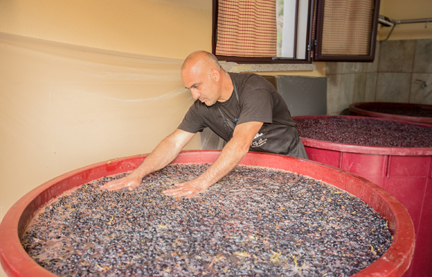
Above: Frank Cornelissen — considered by many to be one of the world’s most radical Natural winemakers — visited Austin yesterday (image via On the Wine Trail in Italy).

Work obligations (and hungry mouths to feed) prevented me from attending Etna winemaker Frank Cornelissen’s trade tasting yesterday at Bufalina, one of our favorite restaurants in Austin, Texas.

I was disappointed to miss him but thrilled to see that he came to Texas, where the wine scene is finally beginning to attract marquee names from the indy wine world like Frank (just a few weeks ago Yves Cuilleron was here; for both growers, it was a first time in Texas).

Here’s Alfonso’s excellent post on the tasting…

Buona lettura, yall!

Was the Prosecco DOCG a mistake? Brit retailers fear Prosecco will follow Cava path

luca ferraro prosecco bele casel

Above: My friend and client Luca Ferraro (left, with Montello and Colli Asolani consortium president Franco Dalla Rosa) was indoctrinated last week into the brotherhood of Montello and Colli Asolani wines. Watching the video of the ceremony and admiring its solemnity and ritualistic grab, I couldn’t help but be moved by these hillside growers’ passion for their wines and traditions. Here’s a link for the video on his blog.

“Seventy million bottles are made in the [Prosecco] DOCG each year, compared with around 230 million in the DOC region,” wrote Rosie Davenport last week in offlicense news, a wine trade publication that covers the wine and spirits retail industry in Britain.

“With such vast differences in production between the DOC and DOCG tiers, it’s easy to see why the UK and other markets have been flooded with products of varying quality. And despite its staggering success, there are concerns that poorly made, volume-grabbing wines, coupled with the kind of kamikaze pricing that drove cava’s reputation to the bargain basement, could put the brakes on a category currently proving it can outpace much of the competition on shelf.”

My friend and client Luca Ferraro (above) brought the article to my attention this morning. Luca, who makes Prosecco in Asolo, is one of the many small-production hillside growers who produce premium bottles of Prosecco. Over the last four years, he — like his counterparts in Valdobbiadene and Conegliano, have watched growers in the flatlands of the Piave river plains expand their Prosecco production to record levels.

When the Prosecco DOCG was created in 2009, it was intended to protect growers and bottlers in the historic hillside growing areas. With their steep slopes, maritime ventilation, and Morainic subsoils, they deliver the highest quality Prosecco. The rationale — and I remember distinctly discussing this with a top grower in 2009 — was that the DOCG would help the consumer to distinguish the best products from the mediocre wines grown in the flatlands where farm crops were once grown and have now all but disappeared.

But anecdotally (as evidenced by the interviews with leading British retailers), it seems that consumers are being drawn to the lower-priced labels they find in the super market, more often than not produced outside the DOCG and also labeled as Prosecco thanks to the sweeping DOC created when the DOCG went into effect (the DOC, btw, also allows Friulian growers to label their wine as Prosecco).

On my recent visit to Valdobbiadene, I spoke with one of the appellation’s top growers about this very issue. And he literally hung his head and said that the situation is dismal.

The Prosecco DOCG consortium hasn’t done much to help the situation either. When I met earlier this year in Houston with consortium president Giancarlo Vettorello, I asked him to describe the association’s mission. When he answered that its mission was to disseminate information about the higher quality of the DOCG, I then asked him what English-language media the consortium planned to use to achieve its mission. He said that none were currently in place.

As we head into the holiday season, when sparkling wine sales see their biggest numbers, fine wine retailers on both sides of the Atlantic will surely be watching the pricing and availability of Prosecco DOC wine at super market chains.

Was the Prosecco DOCG a mistake?

Final (?) vintage notes 2013 by Italian Enologist Association “bizarre but not negative weather”

grape harvest sardinia

Above: Harvest at cult grower and Cannonau producer Giovanni Montisci in Sardinia late October. Photo courtesy of Renzo, a reader.

Assoenologi, the Italian association of enotechnicians, released their final evaluation of the 2013 vintage this week.

The report came to my attention today via Luciano Pignataro’s excellent wine blog.

According to the report, Italy’s “bizarre” weather did not have a negative effect on the quality and quantity of the vintage.

“A bizarre climatic progression but not negative,” write the authors of the report. “After a very mild fall (among the warmest in the last 25 years), the winter began with a sharp drop in temperatures, which were lower than average. Throughout Italy, January, February, and March were characterized by high rainfall with greater levels than the seasonal average. The amount of rain- and snowfall during this period were the highest in the last 50 years.”

Giovanni Montisci

Above: Among Italian wine insiders, Giovanni Montisci is considered to be one of the top producers of Cannonau working today. Even at around $50 a bottle, the wines are well priced for the quality (there is some available, according to WineSearcher, in California).

Italy will produce “between 47 and 48 million hectoliters of wine, a 6% increase with respect to early forecasts and a 15% increase with respect to 2012.”

The association, which published an earlier report in August of this year, has “some second thoughts regarding quality.”

The vintage is “surely excellent for white wines but there are some questions regarding red wines that were harvested in the first part of October because throughout the entire peninsula, rainfall hindered the end of ripening for certain varieties and caused other varieties to be harvested earlier” than desired.

Italy could be the world’s largest producer of wine this year, write the authors, although Spain could also take that title.

Translations mine.

The other Fiorano & the voice of the prince himself

fiorano white

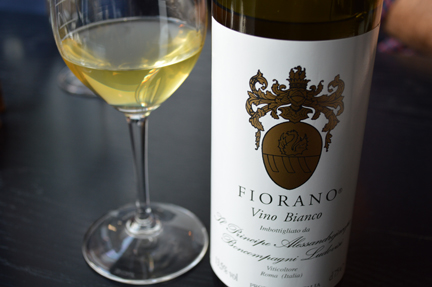
Above: The 2010 Fiorano Bianco is made mostly from Viognier, which dominates its aromatic profile. I thought the wine was stunning, with great balance, acidity, and nuanced stone fruit flavor. The wines are not yet available in the U.S. but I recently tasted a bottle that had been brought here by Philadelphia-based wine professional Jason Malumed, who had bought them in Rome.

Few members of the New York fine wine scene — myself included — will forget Eric “the Red” Asimov’s excellent 2004 article “An Italian Prince and His Magic Cellar” for the New York Times.

The piece described the long-lived white wines of Roman prince Alberico Boncompagni Ludovisi and Eric’s visit to his mysterious and magical cellar with its large-format casks covered by foamy mold.

It was such an important moment for Italian wine in New York and the nation. The Italian wine renaissance was just beginning to take shape here and Eric’s essay was one of the first to be devoted exclusively to one of Italy’s great white wines.

In those years, when Friuli was just beginning to emerge as a leading producer of fine white wine and you could still find Verdicchio in a fish-shaped bottle at the super market, most looked to Italy only for reds.

But Eric’s tale — and the subsequent arrival of the wines in the U.S. — spoke loudly to many of us, especially because it took note of Italian whites. Eric was already a champion of Italian wine (he often writes about his passion for the category today) and the story bolstered our belief that Italian wine would be delivered from the dusty obscurity rendered by its 1970s marketing blunders.

fiorano red

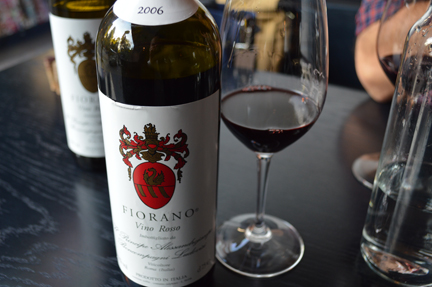
Above: The 2006 red, a Bordeaux blend in which Cabernet Franc dominated the tasting profile, was also excellent, with earthy and goudron notes on the nose and vibrant acidity and austere red fruit in the mouth. I’d love to revisit this still youthful wine in another 5-10 years. I can’t thank Jason enough for sharing them with me.

A few weeks ago, Eric wrote about the wines again in an article entitled “Fiorano Wine Estate in Italy Making a Comeback.”

Have a look at his piece for the background on the estate but to sum it up briefly here, it’s an Italian story as classic as it is tragic: after the prince died, some of the historic vineyards became the property of his son-in-law Piero Antinori and the winery, trademark, and other vineyards went to a biological heir, “Alessandrojacopo Boncompagni Ludovisi, a cousin of the prince, who had been living on the property and who had bought several parcels on the estate from the prince.”

Again, see Eric’s piece for background and see also Charles Scicolone’s excellent post on his recent visit with Alessia Antinori (the prince’s granddaughter) who now manages the vineyards and is planning to relaunch the wines under a new Fiorano label.

I had the good fortune to taste the wines made by Alessandrojacopo on my recent trip to the east coast (thank you, again, Jason!). And I thought they were excellent.

They had been purchased at Trimani, the famous wine shop in Rome.

I was told that the owners of Trimani believe that Alessandrojacopo’s wines represent the prince’s true legacy.

Many in the Italian wine trade believe that the prince attempted to destroy his vines before his passing because he feared that Antinori would use them to make a modern-style wine.

It’s probably true (see the translation below) but does it really matter anymore? When the prince — a pioneer of chemical-free farming in Italy — died in 2005, Italian wine was at a crossroads and it appeared that modernism (note the -ism) would prevail over the classic. But today, that trend has been reversed.

The only thing I know for certain is that it makes for a great story.

Here’s my translation of Luigi Veronelli’s 2001 interview with the prince…

Since 1934, when I [Prince Alberico Boncompagni Ludovisi] was sixteen years old, the use of industrially produced chemicals in land management has never seemed wise to me.

The Fiorano estate began to produce wine around 1930 using local grape varieties. In 1946, when I received the property from my father, I judged the wine to be inferior and consulted with Dr. Giuseppe Palieri who was producing wine on the Maccarese estate about 20 kilometers southwest of Rome. Dr. Palieri suggested that I graft Cabernet and Merlot to my vines for the reds, 50% of the one and the other, and Malvasia di Candia and Semillon for the whites. I continued to rely on Dr. Palieri for the rest of his life. Dr. Tancredi Biondi Santi subsequently became my enologist and continued to work with me until his passing.

I pulled out almost all of my vines because of advanced age and poor health and the advanced age of the vines. But I still produce a small amount of wine from Cabernet and Merlot grapes, blended in equal amounts.

My three granddaughters [Albiera, Allegra, and Alessia] have inherited their interest in wine not from me but from their father Piero [Antinori], an eminent producer of fine wine.

Mother shucker: sweet oysters & salty bartenders in Seattle WA

shuckers oyster seattle

Above: Oysters on the half shell at Shuckers at the Fairmont hotel in Seattle. As the name would suggest, Shuckers is an old and crusty oyster bar, just the way I like it.

Oysters have been on my mind all morning: I just filed a story on pairing wines with Gulf oysters for a Houston lifestyle magazine.

I like Gulf oysters a lot and I love the way that Gulf coast culinary culture calls for them to be grilled, roasted, smoked, fried, and prepared in any which way but loose.

But nothing comes close to the oyster culture that they have up there in the wild northwest of the United States and Canada.

best oysters seattle

Above: I was blown away by the bartender’s expertise on the oysters. A salty old dude with a pony tail, he’d been working there for more than 20 years he said.

When Paolo and I were in Seattle a week ago today, I slipped into our hotel’s oyster bar, Shuckers, for a glass and few oyster before heading out for dinner.

The restaurant was a classic old west coast saloon, where tourists mixed with a “get your drink on” crowd at the bar who seemed to be on a first-name basis with the staff.

I loved the range of oysters I tasted (a half dozen in all) and I loved that they were all from the northwest.

washington state sauvignon blanc

Above: If I remember correctly, I paid $9 by-the-glass for this stainless-steel Washington Sauvignon Blanc. It was fresh and clean and varietally correct. With its cool weather and maritime influence, Washington is one of the few places in America where it actually makes sense to grow wine.

“It’s pretty rare that we need to bring oysters from somewhere else,” said the bartender, a salty dude with pony tail and sideburns almost as long as mine. “That only happens when the water’s not clean. And that hasn’t happened for a long time now.”

He blew me away with his knowledge of the oysters and his nuanced tasting notes. He never cracked a smile but he was as friendly and as helpful as a bartender could be.

If you ever make to that part of the world, be sure to go see him…

Does “blush” wine still exist? Was that a Nagel on the wall?

blush wine san francisco

I’m sorry, Houston. You may have some great restaurants and an evolving wine scene… and you certainly have the braggadaccio. But in my view of the world, San Francisco is the hippest enogastronmic destination in the U.S. these days.

Between the “new California wine,” the vibrant restaurant scene there (Tosca? St. Vincent’s? RN74? And all of Shelley Lindgren’s restaurants?); the accessibility of the best produce in the country; the availability of great Italian (Vinity is one of my favorite portfolios), Spanish, and French wines; and a host of great wine writers and wine media platforms, the bottom line is that San Francisco leads the nation in its fine food and wine awareness.

So is it possible that blush wine still exists there?

Last Sunday night, Paolo and I stayed at the Hilton in the Financial District on Kearny.

Before we headed to dinner (more on that later), I stopped at the hotel’s restaurant (“East Meets West with a Northern California Twist!”) for a glass before our evening’s main event.

I couldn’t believe my eyes when I saw “blush wine” on the list (above).

I texted the image to Tracie P who replied swiftly: “that’s so 1982!”

As I sipped an insipid glass of sparkling white, I felt like I was living in a Nagel painting.

nagel

8 cities 9 days a few lbs heavier & many tall tales to tell

potatoes

Above: Potatoes that had been simmered for eight hours and then fried at Genoa in Portland where I spoke at a wine dinner on Tuesday night. They were delicate and creamy in the middle, gently crunch on the outside and the caviar gave just the right amount of saltiness.

By the time I got to Oregon on Tuesday, I had been in eight cities in nine days: New York, Philadelphia, Houston, Austin, Los Angeles, San Diego, San Francisco, Seattle, and Portland. The lines from the Simon & Garfunkel song never rang more true: everyday’s an endless stream/of cigarettes and magazines/and each town looks the same to me/the movies and the factories…

Back in the “day,” when my band Nous Non Plus and the band that came before it used to tour aggressively, I was accustomed to the intense travel and a different hotel room every night, often waking up without remembering what town we were in.

But back then I was in my mid-thirties. Now I’m in my mid-forties.

Back then it was cheap beer and crappy food. Today, it’s fine wine and haute cuisine.

Back then I didn’t have anyone to go home to. Now I have a loving family more beautiful than I could ever have dreamed of.

hamachi

Above: I loved the way the chefs at Genoa used color in their dishes. I had been invited by the restaurant’s wine director, Michael Garofola, to co-present his second annual Orange Wine dinner. It turned out I had to be in Seattle the day before so it worked out nicely.

On each night of the trip (except the last), my friend and client Paolo Cantele and I ate in a fabulous restaurant and met with local media to talk up his family’s wines and his new cooking school iSensi.

I’ve been documenting and will continue to post about our trip over on his CanteleUSA blog.

We called it the “Rolling Thunder Cantele USA 2013 Tour” and although the food was a lot better, it reminded me of my rock ‘n’ roll days, especially for the camaraderie between the two of us in the face of prolonged fatigue, weight-gain, and the disorientation that comes with such a heavy travel schedule.

pappardelle

Above: The pappardelle at Genoa were light in body but firm to the bite. I was so impressed by their food and it was wonderful to see what a vibrant food scene they have in Portland. It was also a thrilled to meet wine writers Allison Jones of Portland Monthly and Katherine Cole (whose newest book is called Complete Wine Selector), both such gracious ambassadors of Oregon wine and Portland’s gastronomy.

The last night I was on my own in Portland with a great group of wine and food lovers, who were so welcoming and so hospitable.

As much as a missed home and my girls, as much as my digestion took a beating (for the fatigue and over-indulgence, not the high caliber of the food), as much as I missed my own bed and my good-night kisses and good-morning hugs, I know that I am very fortunate to have the work that I do and to be living in the U.S.A. during this unrivaled renaissance of enogastronomy.

In eight cities, I saw, tasted, conversed, traded notes, and learned, learned, learned so much about what’s going on in our country culinarily speaking.

And in eight cities, I connected with people whom I know through our food and wine blogging community. This was a trip of hugs and “so great to finally meet you,” not handshakes and “thanks for your time.”

keber collio wine

Above: I’d never met Genoa’s wine director Michael before. But thanks to social media, he and I knew that our palates align nearly seamlessly. Case in point was the Keber Collio that we drank at the end of the night after the dinner guests went home.

Still in a daze as I catch my breath and catch up on hugs, kisses, burps, diapers, and meals with my beautiful girls and my beautiful Tracie P, I find myself thinking about another song from the 60s, not as well known but one of my favorites.

Without going out of my door
I can know all things on Earth
Without looking out of my window
I could know the ways of Heaven

The farther one travels
The less one knows
The less one really knows

The meals were nearly all excellent and some truly superb. And I love the excitement of travel and meeting new people.

But I know that all these experiences are all the richer because of the virtual community that we’ve created over the last five years or so.

The experiences would mean so much but they mean even more because we’ve all connected through our computer screens and smart devices long before we ever met in person. And we’ll stay connected after our goodbyes.

Thanks for reading and keeping up with it all. I’ll begin posting more trip highlights next week.

Please check out bromance 1WineDude’s post on our dinner at Vetri, a highlight of highlights.

Now it’s time to catch up on some spit up, a burp, a poopy diaper… and many, many, many overdue I-love-yous…

A perfect bottle of Brunello by Argiano 1971 TY @WineGuru @JaynesGastropub

argiano brunello

As Merle Haggard sang it…

I wish Coke was still Cola
And a joint was a bad place to be
It was back before Nixon lied to us all on TV

And Brunello di Montalcino was still brightly colored, transparent Sangiovese…

What a thrill to taste this perfect bottle of 1971 Brunello di Montalcino by Argiano, shared with us on Saturday night at Jaynes Gastropub by San Diego wine writer and friend Robert Whitley (aka @WineGuru).

The wine was fresh and brilliant, with the classic Sangiovese flavors and balance that you expect from pre-climate change Montalcino. Unforgettable…

Thank you again, Robert!

Posting in a hurry on the last day of the ROLLING THUNDER CANTELE USA 2013 TOUR. Last night we were in San Francisco and today we’re on our way to Seattle.

So much to tell and so little time… Stay tuned…