Tasting old Nebbiolo with Jamie Wolff and Kerin O’Keefe at Maialino

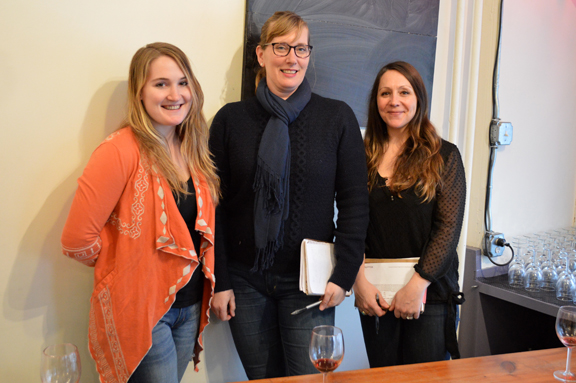
kerin o keefeAbove: the guests at last Thursday night’s dinner honoring Kerin O’Keefe (center) had some tough questions for her. I really admired her grace in explaining omissions from her new book on Langa wines.

On Thursday of last week, I had the great fortune to attend a dinner in New York honoring wine writer Kerin O’Keefe and her 2014 book on Barolo and Barbaresco (Barolo and Barbaresco: The King and Queen of Italian Wine, UC Press; check out Ed McCarthy’s review here).

I was the guest of my friend Jamie Wolff, co-owner of Chambers Street Wines, who had hosted Kerin for a book-signing and talk at the store.

If you’ve never been to the shop, be sure to check it out the next time your in Manhattan. Beyond the fact that it’s one of world’s most renowned independent wine retailers, it’s also an independent wine lover’s locus amoenus. Honestly, I can’t think of a better way to describe than by means of the Latin. It’s a truly lovely place, a safe harbor for those seeking soulfulness in their wines.

As Jamie writes on the store’s Twitter, “we are committed to stocking the best naturally made, small-producer wines from around the world.”

best vintage bartolo mascarelloAbove: the undisputed champion of the flight was the 1971 Bartolo Mascarello Barolo. It almost seems pleonastic to mention B. Mascarello and Barolo in the same utterance. To my mind, it is the apotheosis of the appellation.

I learned on Thursday night that Jamie’s independent spirit spills over and rubs off — by means of organic osmosis — on his clientele. In all my experience over the years attending dinners and tastings like this, I’ve never come across such a lovely group of collectors, with not a braggart or blowhard in the bunch.

Of course, no event featuring old Nebbiolo would be complete without the sine qua non parsing of the wines’ maturity.

best vintage cavalotto baroloAbove: one of the wine’s I was the most excited about was the 1979 Cavalotto Barolo Riserva Colle Sud Ovest. While I’ve tasted older bottles from the other estates represented that night, I’ve never tasted Cavalotto beyond the 1990s. On my Facebook, California legacy retailer Gerald Weisl wrote, “Back in the mid-1980s, Langhe winemakers all conceded Cavallotto’s 1979 was THE best wine of the vintage….glad to know it’s still got it.” This was another standout for me and still has many years ahead of it.

The 1989 Marcarini Barolo Brunate from double-magnum was too young, some grumbled.

But I wasn’t complaining. While the wine’s muscular character dominated the fruit, I thought it was supreme example of Marcarini’s rigidly traditional style. A great wine from one of my favorite vintages (and not just mine).
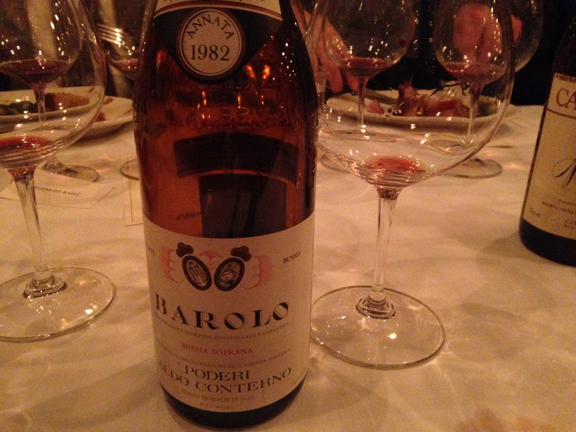
best vintage aldo conternoAbove: the 1982 Aldo Conterno Barolo Bussia Soprana was also a real treat for me. Aldo was and is one of Langa’s undeniable greats. But I’ve always found his 1990s to be a bit modern-leaning. This wine danced in the glass to a song that was a hit before your mother was born.

Beyond Kerin and the stellar wines, the other star of the evening was the wine staff at Maialino, where Jamie hosted the dinner.

Even on a day when the snow had fallen from dawn to dusk, the Gramercy Park restaurant was bustling with a full book (as they say in the trade).

But the wine team, led by wine director Jeff Kellogg, didn’t miss a beat. From the presentation of the wines to the service, the execution was truly flawless. Very impressive stuff.

The only disappointment was the 1974 Giacomo Conterno Barolo Monfortino, which never seemed to come into focus — a great wine from an extremely challenging vintage.

With such a bounty of fabulous and (arguably) mature expressions of Nebbiolo, it was Nature’s way of reminding us on a wintry night in Manhattan that there would be no yang without the yin.

Here’s the complete flight:

Giacomo Conterno Barolo 1964, Bartolo Mascarello Barolo 1971, Giacomo Conterno Barolo Riserva Monfortino 1974, Cavallotto Barolo Riserva Colle Sud Ovest 1979, Aldo Conterno Barolo Bussia Soprana 1982, and Marcarini Barolo Brunate 1989 (from double-magnum).

My goodness, Jamie, thank you… thank you. Your generous spirit is rivaled only by the soulfulness of your selections. I can’t tell you how much I cherish our friendship and conversations.

Modern vs. traditional pecorino: a cheese shop grows in Brooklyn at Pair

chung park pair cheese bar brooklynOne of the more interesting conversations I had while in New York last week was with veteran cheese monger, Chung Park (above), who recently opened a new cheese bar on Atlantic Avenue in Brooklyn called Pair (no site but you can find details on his Yelp).

We were tasting my client La Porta di Vertine’s Chianti Classico — a wine that falls squarely on the traditional side of the modern vs. traditional spectrum.

Even though he says he’s new to wine tasting, Chung is one of those naturally gifted tasters who — at least in the flight of roughly six wines we tasted together — doesn’t get caught up in painful self-awareness or affectation.

As we tasted together, we talked about the clichéd differences in the wine world between old school and new. And he said something that was as entirely unexpected as it was wholly brilliant.

In the cheese world, he noted, you don’t really have this divide.

After all, he pointed out, “there are many differences in how pecorino is made. It can be aged in straw. It can be buried and aged in the ground. The rind can be rubbed with wine [solids]. But all of these traditions stretch back literally thousands of years.”

“There is no ‘modern vs. traditional’ pecorino,” he said wryly.

oma cheese vontrappAs we munched on some Latium pecorino and Von Trapp cow’s milk oma (yes, the Von Trapp family) paired with our Sangiovese, I reveled in the notion of a world without an old world vs. new world dialectic.

In the last four decades, wine tastes and winemaking philosophies have oscillated radically and often with breakneck speed.

The cheese world, it seems, is free from yoke of post-post-modern critical and commercial subjugation. I’m sure the truth is more nuanced than my reductive take on it. But wouldn’t it be nice if the wine world had glossed over and glided through the era of modernization?

I really liked Chung and his cheese bar a lot. Brilliant guy, great palate.

I’ll be rooting for his new place, Pair.

More New York stories to come. Stay tuned…

That ol’ Nebbiolo sure cures those subterranean homesick blues

From the department of “you don’t need a weather man to know which way the wind blows”…

price conterno wine monfortinoMan, it’s been a crazy week here in New York. The weather tried to keep me from getting here but I made it just the same through sheer determination. And all week, I’ve been slugging through the snow and the slush trying to keep up with my appointments and meetings.

Yesterday, the snow fell over Manhattan from dawn to dusk (literally). Today, thank goodness, it looks like my flight back to Texas is going to get out on schedule.

I managed to catch up with a lot of great folks and met some new ones, too.

I have lots of tales to share but right now I’ve got to get my butt out to Newark and on a plane.

The one thing I can tell you is that ol’ Nebbiolo sure cures those subterranean homesick blues: next week, I’ll post my notes from an extraordinary dinner hosted by Chambers Street Wines last night at Maialino.

paula rester new york wineIn the meantime, I wanted to give a shout out to fellow Texan and Austinite Paula Rester (above) who moved to the city last year to take a job at Maialino as one of the restaurant’s sommeliers.

There’s a lot to be said about hard-nosed studying and maniacal tasting at a desk. But there’s also a lot to admire about someone who leaves the provinces, heads to the big city, and dives right into what is arguably the world’s best wine scene.

It was great to catch up with her, however briefly, last night at Maialino and taste the wonderful Charlot Tanneux Champagne that she’s pouring by-the-glass these days at the restaurant — the first time the wine’s been available in the states, she said.

Heartfelt thanks to the many gracious and generous people who hosted and poured for me this week. It’s been an amazing visit to my old city, despite the extreme weather.

I’m looking forward to posting my notes next week. But right now I just want to squeeze my babies, give my wife a big juicy kiss, and put on some dry socks.

Thanks for being here. See you on the other side…

A fantastic wine shop in Brooklyn and a first kiss with a great Lugana

best wine store brooklynNew Yorkers are pretty grumpy these days and it’s not hard to understand why: for four weeks, they’ve been schlepping through snow, bitter cold, and the grimy slush that follows snowfall in the city that never slips on the black ice.

Yesterday, I spent the afternoon “working the market” (as they say in the trade) with my client from Chianti Classico, La Porta di Vertine.

It had already begun to snow (again) around 3 p.m. when winemaker Giacomo Mastretta, my old friend Kevin Russell (who sells the wine), and I emerged from the mythical G train in Williamsburg.

But my spirits were bolstered when we stepped out of the weather and into the lovely Vine Wine shop on Lorimer (above).

Talitha WhidbeeThat’s owner Talitha Whidbee (center) with a couple of her team members. Her shop is as bright and smart as she is and nearly every wine has a handwritten label with thoughtfully composed notes on the wine.

I was really impressed by the breadth of the selection in her tidy store, which is about to celebrate ten years in business.

But I was even more impressed by her savvy use of social media to create awareness and visibility for her brand.

Her blog is updated regularly and her Instagram is a true phenomenon among Brooklynite wine lovers.

Nearly every day, a staff member (whoever opens the shop, I was told) scribbles parodic news bites on a chalkboard outside the store and then posts it. It’s a brilliant way to host and exploit content. Chapeau bas, Talitha!

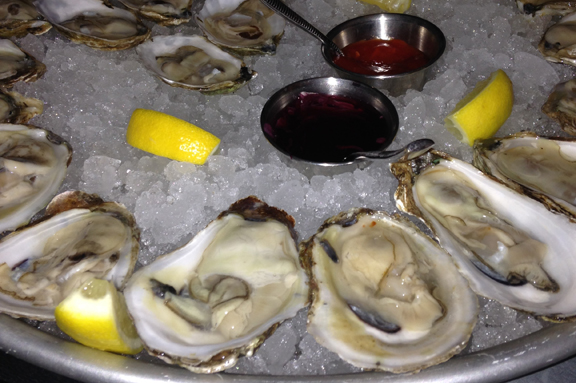
best oysters new jerseyAfter meeting and tasting with Talitha and her team, our rush-hour “no talking on the train allowed” schlepp out to Morristown, New Jersey was rewarded by a delicious spread of oysters, courtesy of New York restaurateur Chris Cannon, who’s opened a wonderful new Italianate restaurant there called Jockey Hollow.

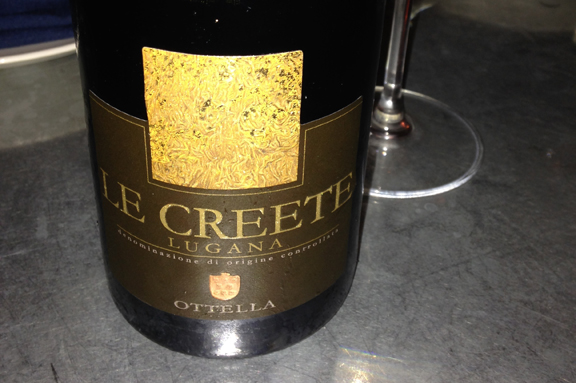
Chris is a passionate Italocentric enophile. And I loved the pairing he served us: the Ottella Lugana Le Creete (below).

le creete lugana otellaIts intense aromatic character was unusual for Lugana and its flavors were equally rich and focused. Great wine and a great discovery for me.

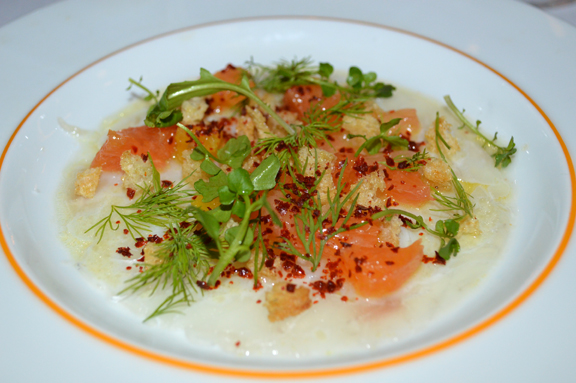
snapper carpaccio recipeThat’s the snapper carpaccio that Chef Kevin Sippel served as an antipasto to a delicious meal set against the ornate Vail mansion that Chris has transformed into an elegant fine dining experience.

I’m about to head out for another day of media appointments and market work with Giacomo and that’s all I have time for today.

It’s currently 37° outside and there’s a 50 percent chance of rain. Snow and a high of 28° are predicted for tomorrow.

But hey, someone has got to keep the world safe for Italian wine… Thanks for tagging along for the schlepp.

Daddy, will you take me on the plane with you? You can’t go to Nork City!

polaroid camera filmEast coast weather is so bad today… It’s a miracle that I’m getting on a flight at all.

I had to switch up my travel plans and so the girls drove me to the airport (because I’ll be returning to a different airport).

Before we got in the van, Georgia P said, “you can’t go to Nork City, daddy!” (“Nork” is her word for New York).

And when they dropped me off, she said, “daddy, will you take me on the plane with you?”

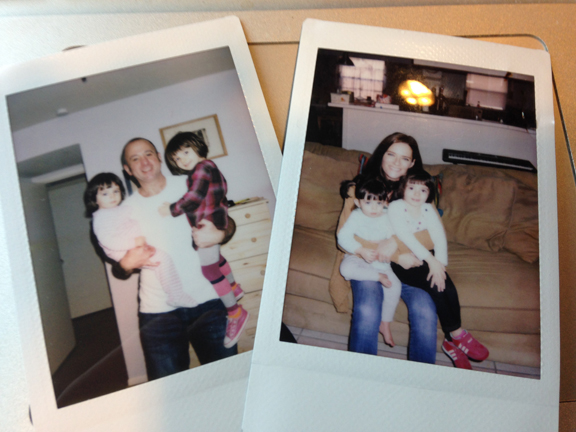
Man, it is so hard to say goodbye. Tracie P gave me some polaroids to take with me.

I love them so much and miss them so much already.

See you on the other side… wish me speed!

Scenes from Franciacorta in Austin and Chianti Classico tasting at Chris Cannon’s new restaurant next week in NJ

Click here to check out my notes from the super fun Franciacorta tasting I led this week in Austin.

It was great to catch up with River City wine folks and it was exciting to meet lifestyle writer and fragrance expert Alyssa Harad. She’s super cool.

Thanks again to Vino Vino owners Jeff Courington and Kelly Bell, Jr. for letting me hold the tasting at their swell joint.

And thanks to Buckley Wineholt for the swell photo above.

It’s been a busy week over here at Do Bianchi Editorial but I’m looking forward to the weekend with my girls and my trip next week to the east coast.

I’ll be speaking on Tuesday night at Chris Cannon’s new restaurant, Jockey Hollow, in Morristown NJ (among other events I’ll be attending).

Giacomo Mastretta (above) from La Porta di Vertine, my client, and one of the grooviest growers and winemakers in Chianti Classico will be pouring and speaking about the wines.

Click here for event details.

Should be a good time. The wines are awesome and Giacomo is amazing.

Thanks for being here this week!

Buon weekend, yall!

Is Luc Morlet the future of high-end California?

From the department of “nice work if you can get it”…

best foie gras recipeAbove: my friend and client Tony Vallone’s foie gras torchon with “pear cracklings,” crispy pear skins.

Last night found me a guest of my friend and client Tony Vallone at his flagship Tony’s for a wine dinner featuring the wines of Morlet Family Vineyards.

After reading up his California estate, I was impressed by the glowing praise and the across-the-board astronomic scores the wines have received from all sides of the wine writing establishment.

Robert Parker, Jr. has called him a “genius.” Honestly, that doesn’t really score a lot of points with me personally. But then when I saw that Antonio Galloni also wrote about Luc’s wines with superlatives like “off the charts” and scores to match, I began to inuit that Morlet has resonated broadly with the California wine intelligentsia.

I’d tasted a few of Luc Morlet’s wines previously at Tony’s but I had never tasted his top wines and I was very curious meet Luc and taste with him.

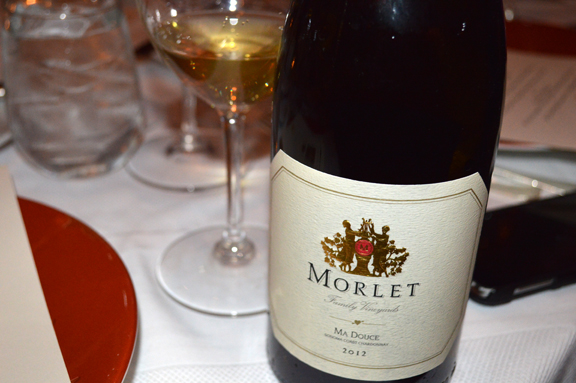
ma douceAbove: Luc’s Sonoma Coast Chardonnay Ma Douce illustrated his deft hand at barrel fermentation and barrel aging. He talked at length about the importance of not filtering. This isn’t a wine that I can afford but I thought it was gorgeous and enjoyed it immensely. Parker called a previous vintage “staggering.”

Luc, who was born and raised in Champagne, where his family continues to produce barrel-fermented wines, didn’t seem keen to talk about the fact that he is one of the premier cooperage brokers in California today. Understandably, he wanted to keep the focus on his wines and he wanted to connect with the well-heeled crowd that gathers at Tony’s for dinners like this.

But it’s abundantly clear that his experience in Europe and his expertise in cooperage has set a high new bar for the use of barriques in California, where, historically, winemakers have often favored oakiness in their wines.

Luc’s Sonoma Chardonnay Ma Douce and his Sonoma Coast Pinot Noir Côteaux Nobles were both fantastic. And they perfectly illustrated how restrained, thoughtful use of oak can deliver wonderful balance and extreme elegance. I liked the wines a lot.

(Luc will be speaking about cooperage and pouring barrel samples today at the Houston Sommelier Association, btw. It should be a fascinating tasting and he’s a great speaker.)

crescent island duckAbove: Tony and his chef Kate McLean are geeked about the Crescent Island duck they’ve been serving at the restaurant. I loved its balance of gentle fattiness and earthy flavor. It was a great pairing for Luc’s Knights Valley Cabernet Sauvignon Mon Chevalier.

In the short time I got to speak with Luc intimately, he was eager to talk to me about the Knights Valley AVA where he is growing Cabernet Sauvignon.

It lies in between Napa and Sonoma and the community there has resisted heavy investment in viticulture.

But there are a few growers who have planted to vine there and Luc is one of them.

It’s on the west side of Mt. Saint Helena, he explained, the highest peak in the area, and so it has the ideal elevation and temperature variation for the cultivation of Bordeaux grapes.

I liked the Knights Valley Cabernet Sauvignon Mon Chevalier a lot but I think the wine will benefit from more bottle aging. Here the oak was evident and not yet entirely integrated into the wine, which is from Luc’s 2011 harvest. I hope I’ll have a chance to revisit it in a few years: with great acidity and earnest, classic Cabernet Sauvignon flavors, there’s no doubt this wine will represent yet another great effort from Luc’s cellar.

As he talked to me about Knights Valley, I became more and more convinced that Luc and his approach to winemaking could very well be the future of high-end wine in California.

Whether he’s raising wine in a little known appellation tucked between Napa and Sonoma or whether he’s illustrating the expert application of cask fermentation and aging, he seems always to be one step ahead of his contemporaries.

As the “new California” has begun to reshape the viticultural landscape there, Luc and his “old world” sensibilities align nearly seamlessly with the tastes of current-generation collectors and winemakers.

Very interesting wines. I just wish I could afford them!

You’re a better man than I am, Master Sommelier candidate! Houstonians head to Dallas for theory exam

david keck houston sommelierI admire but do not envy them: the three dudes to the right, Travis Hinkle, David Keck, and James Watkins are heading next Monday from Houston to Dallas where they will be seated for the Court of Master Sommeliers theory exam, which, according to the court’s website has a 10 percent pass rate (holy smokes!).

I had the chance to taste Austrian wines with them last week when my friend Master Sommelier Jesse Becker came to town to lead a guided tasting from Winebow’s portfolio. That’s Ben Roberts to Jesse’s left. He’s also a Master Sommelier candidate but has already passed the theory exam.

As I was reading up on the grueling exam for my Houston Press post today, I was reminded of my years as a grad student prepping for my orals. It was a great experience and I’m glad I did it. But, man, I’m glad I don’t have go through that again!

Check out my post here.

Master Sommelier candidates: you are better men than I am!

In bocca al lupo! That’s what you say in Italian in this situation: may you go into the wolf’s mouth.

Is biodynamic farming the new religion of Italian winemaking? Tasting Alois Lageder in Houston

urs vetterWhenever possible, I always try to meet up and taste with Italian winemakers when they come to Houston.

And so yesterday early evening found me with Urs Vetter (above) who’s worked for more than two decades as the sales and marketing director for legacy Alto Adige grower and winemaker Alois Lageder.

In my experience, Lageder’s entry-tier wines are always clean, focused, and very approachable and they represent great value. But it’s when you get into the higher tiers that the wines really start to take on character and depth imho.

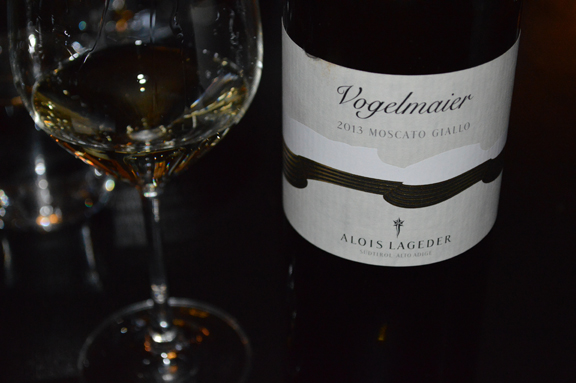
alois lageder moscato gialloI loved the 2013 Moscato Giallo Vogelmaier, with its show-stopping aromatics, balanced alcohol (12.5% according to the winery’s website), and elegant white fruit. Urs said this wine should retail for around $25 in our market. Great wine…

It was fascinating to hear Urs describe Lageder’s evolution as a biodynamic grower and the “snowball” effect that it’s had in the appellation.

Magrè, the village where the Lageder is located, he told me, has been transformed by the ongoing process of conversion of both estate-owned growing sites as well as vineyards owned by other growers who sell to Lageder.

Currently, he said, roughly fifty percent of Lageder’s wines are Demeter biodynamic certified and the winery is moving toward 100 percent certification.

He also mentioned that Lageder’s popular Summa wine fair, now in its seventeenth year, is leaning more and more toward biodynamic farming as its focus.

The fair includes roughly fifty producers, he said, and while “old friends” will never be excluded, the organizers are making biodynamic farming a priority in selecting new wineries to be included.

One of the things that always impresses me about Italians winemakers’ attitudes toward organic and biodynamic farming is that they often embrace it not only as a means to achieve greater quality but also as civic and even moral responsibility.

Hearing Urs describe the many grape farmers who have “converted” in recent years and Lageder’s own conversion made me think about how biodynamics has become the new “religion” of Italian winemaking. And I mean that in both figuratively and literally.

Most young and middle-aged Italians that I know are agnostic. And I can only think of three Italian winemakers (in my personal orbit) who are practicing Catholics.

But when I hear Italian growers — young and old — talk about biodynamic farming, I often get a sense that they perceive it as a higher mission that fills a spiritual gap and fulfills a basic human need to give meaning to things that lie beyond our comprehension (even though I believe that some are more self-aware in this perception than others).

When I asked Urs about this, he said that yes, most definitely, there is a “spirituality of the land” that has emerged in the village of Magrè where Lageder grows grapes and vinifies its wines.

Blessed are the meek: for they shall inherit the earth.

That verse from Matthew often pops into my mind when I think about what life will be like for our daughters after we are gone.

Will it be the earth as G-d created it? It would seem that more and more Italian winemakers are working to make it so. And no matter where you stand, that’s a good thing.