Wine country fires: “Buy Napa and Sonoma wines” to support their communities

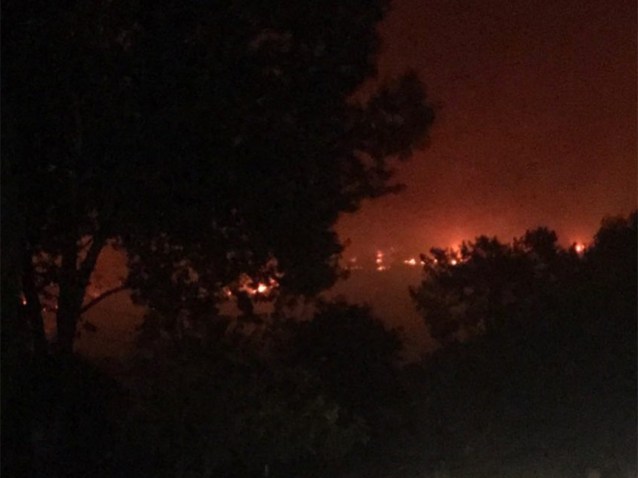
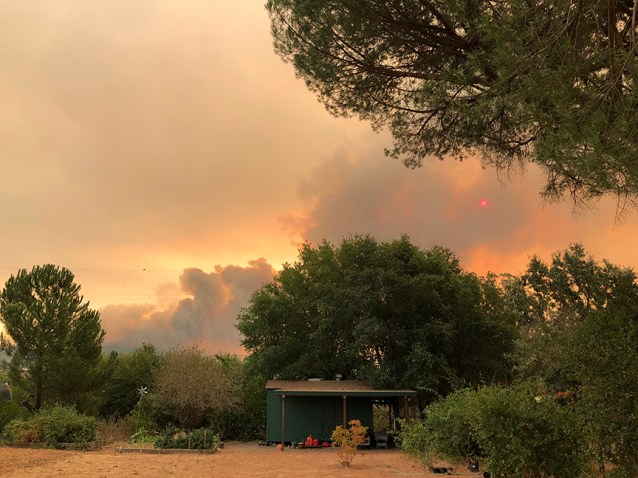
Image via the Matthiasson Facebook. They posted the photo yesterday afternoon local time in Napa.

It seems like yesterday that Steve and Jill Matthiasson, grape growers and winemakers at Matthiasson in Napa, were sending out an e-blast informing subscribers that they were donating 100 percent of the sales of a library release to Texas hurricane relief. As a Houstonian, their solidarity and generosity meant a lot to me. That was August 30.

Last Friday, they sent out another blast letting readers know that so far their family has made it safely through the ongoing fires in Northern California. They included a link to the Napa Valley Community Disaster Relief Fund (their recommended donation resource). And they also offered this appeal to fans of California wine:

Beyond donations to the above,

“the other thing that would help all of us is to BUY NAPA AND SONOMA wines at restaurants, wines shops, and through your favorite winery websites, and finally we hope that you will VISIT Napa and Sonoma after the fires are put out. This is the height of our tourist season and the middle of harvest. The workers in our wineries, vineyards, and hospitality are not getting paid, small businesses and restaurants are either closed or have limited hours. Please consider a trip here during our ‘off-season’ so local businesses, wineries and all the employees can make up some of the lost income.”

Tracie and I are praying for all our friends in Northern California and for all of our fellow wine professionals impacted by the fires.

Click here for list of information and relief effort resources that I posted today over on the Slow Wine California blog.

Napa, Sonoma, Mendocino: thoughts and prayers for our sisters and brothers affected by the fires…

The image above comes from the Instagram of my dear friend Vino Girl who lives on the east side of Napa, just west of the Napa River. She and her family were evacuated yesterday at 4 a.m. She took the photo from her house. They’re back in their home now (thank goodness) as authorities are trying to assess the extent of the damage.

In an article updated late last night, the San Francisco Chronicle reported that “a swarm of fires supercharged by powerful winds ripped through Napa, Sonoma and Mendocino counties Monday, killing at least 10 people, injuring dozens of others, destroying more than 1,500 homes and businesses, and turning prominent wineries to ash.”

“Sonoma County officials received more than 100 reports of missing people as of Monday evening,” wrote the editors of the paper.

It’s been heartbreaking this morning to scroll through the #NapaFire thread on Instagram. Vino Girl’s post is just one of thousands of images that document the devastation.

Another dear friend and colleague, Elaine Brown, California contributor to JancisRobinson.com and senior editor for the Slow Wine Guide to the Wines of California, posted this dispatch yesterday morning on the Slow Wine blog (I’m the coordinating editor for the guide) and she posted this update on Jancis’ site late last night.

Elaine lives in Sonoma with her family and they evacuated voluntarily yesterday. They’re alright today (thank goodness).

One of the most stirring posts came from Carlo Mondavi’s Instagram.

“Wildlife and mankind are as one kind,” he wrote, “and we are all running for cover.”

As we follow the news reports today, our hearts, thoughts, and prayers go out to all of our sisters and brothers in Napa, Sonoma, and Mendocino counties.

Fires threaten iconic California wineries: A Dispatch from Sonoma by Slow Wine senior editor Elaine Brown

The North Coast of California was hit last night by a rash of wildfires. Most of the fires were sparked by gusting winds taking down trees hitting above-ground power lines. Fires spread quickly with one of the largest, the Tubbs Fire in Santa Rosa, spreading to over 25,000 acres in a matter of hours. The Tubbs Fire has burned portions of the northern part of the city of Santa Rosa and forced the evacuation of two area hospitals and thousands of people…

Click here to continue reading a dispatch from Sonoma this morning by Slow Wine senior editor Elaine Brown.

Slow Wine California now online, prizes and producer profiles coming soon…

The following is a preview of one of my posts this week for the new Slow Wine Guide to the Wines of California. Our site came online this morning. The Slow Wine prizes will be announced shortly. Producer profiles will follow.

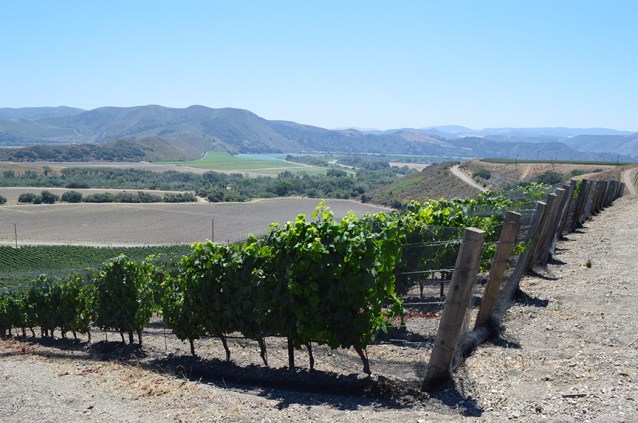
Above: The western edge of the Santa Ynez American Viticultural Area. The Pacific coast lies just a stone’s throw away.

The time is right for the Slow Wine California.

Perceptions of gastronomy’s cultural value have changed radically since the Slow Food international movement was founded in the late 1980s in Piedmont, Italy as a champion of traditional foodways threatened by Italy’s growing appetite for fast-food. As a wide-eyed undergraduate student in Italy on my junior year abroad in 1987, I was keenly aware of the controversy sparked by the newly opened McDonald’s at the foot of Rome’s Spanish Steps. It was that year that I first heard the name Carlo Petrini, the essayist and political activist who had founded Slow Food the previous year. In 1989 he would publish the Slow Food Manifesto, a battle cry for an emerging generation of Europeans who saw their culinary traditions being eclipsed by the march of industrialism and the growing popularity of Coca Cola and assembly-line pseudo-sustenance.

“Speed became our shackles,” he wrote. “We fell prey to the same virus: ‘The fast life’ that fractures our customs and assails us even in our own homes, forcing us to ingest ‘fast-food’… In the name of productivity, the ‘fast life’ has changed our lifestyle and now threatens our environment and our land (and city) scapes [sic]. Slow Food is the alternative, the avant-garde’s riposte.

(Click here for the complete manifesto and click here for a Slow Food timeline.)

Borrowing from the fencer’s lexicon (with his “riposte,” the sport’s return thrust, made after parrying a lunge), he underlined the urgency of his cause and mission.

Click here to continue reading my post today for the Slow Wine California blog…

Whoa California wine! Skyline Ridge, Santa Cruz Mountains…

What a revelation for me to tour and taste through Skyline Ridge in the Santa Cruz Mountains yesterday!

So much of California wine is known for its manicured character. But up on the ridge that looks down to the east on Silicon Valley and to the west out to the Pacific Ocean (about 15 miles away), the landscape is wild and untamed.

It blew me away to find such robust mountain viticulture here. It certainly wasn’t what I was expecting.

It was also really interesting to see the San Andreas fault here and learn how the collision of the tectonic plates brought ancient marine bed to the surface.

I’m spending the next few days between Sonoma and Napa working on a new project that I am really exited about. It’s a little too early to reveal it yet but stay tuned.

Thanks to everyone who tasted with me and showed me around yesterday. There is a soulfulness to the place and the people here and it definitely comes through in the wines.

That’s all I have time for today. Now it’s time to hit the road again, taste, and tread through some more vineyards…

California wine on my mind: a study in two extremes…

Last week, over the course of 24 hours on the ground in Southern California (my dolce natio loco), it felt like I spanned the extremes of viticulture there.

On Tuesday evening, I tasted some of the extraordinary Santa Barbara-grown wines of Scott Sampler, a show business veteran who has been buying and bottling fruit since the 2012 vintage there under the Central Coast Group Project label.

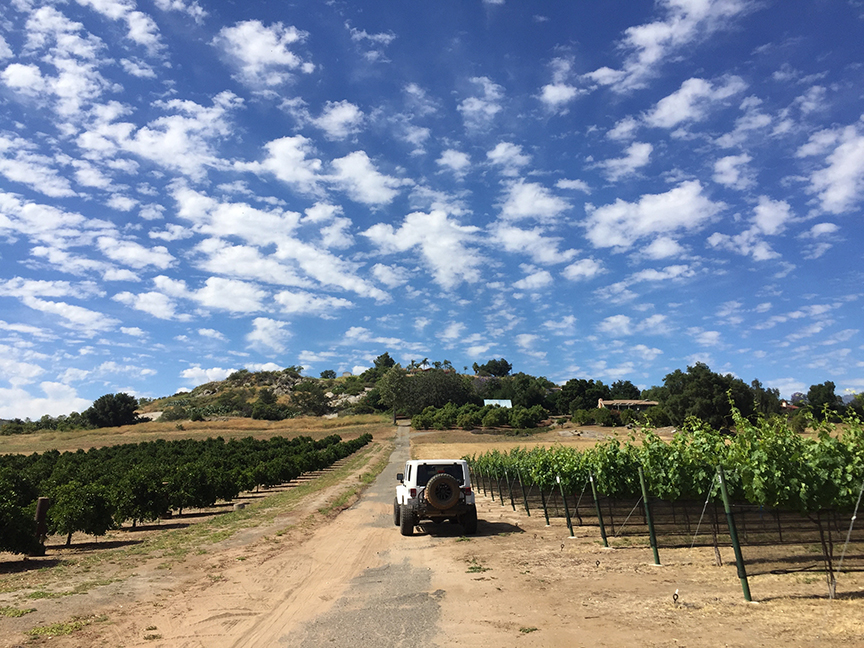
On Wednesday afternoon, I toured vineyards in Valley Center (not far from where I grew up in San Diego) with winemaker and grape grower Chris Broomell whose family has been farming there for five generations.

Chris’ family started growing grapes, he said, in the era after the Second World War when ongoing drought made viticulture more lucrative.

Scott abandoned a robust career in entertainment to become a full-time winemaker.

Chris vinifies delicious, moreish, and highly affordable monovarietal wines for his family’s Triple B Ranches winery. I especially loved his gorgeous Vermentino.

Scott employs extended maceration times to make brilliant, jaw-droppingly beautiful expressions of Rhône Valley grape varieties that cost more than I can afford and sell out as soon as he releases them. I was blown away by his 2013 Grenache, Mourvèdre, and Syrah blend below and its ballerino’s balance despite its muscular alcohol.

Meeting and tasting with both winemakers was an exhilarating and eye-opening experience for me. In part because they each represent distinct and powerful voices in the new wave of California winemaking and in part because they share a vision of transparency in winemaking. And by transparency, I mean clarity and sincerity of fruit in their wines.

Chris and I talked a lot about the historic disconnect between California grape growers and winemakers. California is a great place to grow fine wine grapes, he explained (and we all know this to be true), but until the current generation, Californian winemakers have focused more on their work in the cellar than in the vineyards. When he returned from a year working in vineyards and wineries in Australia early on in his career, he said, he was nonplussed by the way California winemakers interpreted the fruit delivered to their cellar doors by local farmers.

Similarly, Scott seems to belong to a growing number of California winemakers who see their role as custodians or guardians of their fruit. He works with growers who deliver superb grapes to his cellar door and like Renaissance master Pietro Bembo meticulously transcribing the idiograph Italian poems of Petrarch, he appears (at least to me) more as a protector and defender of the berries than their interpreter or manipulator.

Both winemakers have looked abroad for inspiration. And both are making delicious and — in my view — thought-provoking wines, both for their historical perspective and their wholesome deliciousness.

And both of them have me thinking big thoughts. I’ll have a lot more California on my mind this month and the months to follow. Thanks fo reading and stay tuned…

Is being Mexican in Trump America a zero-sum game?

chicano-park-san-diegoOver the span of one week, conversations with two friends of mine, both of them middle-aged and middle-class American women of Mexican heritage, revealed a dichotomy in attitudes about Latinos living in the U.S. in the Trump era.

In Houston, the Texan of the two told me that she and her family are deeply concerned about how the president-elect’s immigration policies are going to affect them and the wider network of their community.

If Trump makes good on his pledge to deport 11 million Latinos from the U.S. and, in particular, if he revokes Deferred Action for Childhood Arrivals, her extended family will surely be affected.

No one knows for certain what Trump will actually do but it’s highly likely that his newly implemented immigration policies will literally rip her family apart.

In North County San Diego, the Californian of the two told me she hopes that Trump acts on his vow to expel “undocumented” Latinos living in the U.S.

“Not another Mexican should ever be allowed into this country,” she said (verbatim).

I grew up in Southern California and called it my home until I was 30 years old.

Now 49 years old, I’ve lived in Texas since 2008.

According to the most recent data on demographics in the two states that I could find (notably here and here), roughly 40 percent of the people living in both states are Latinos. And in California, there are currently more Latinos than Whites. In Texas, the number of Latinos is expected to surpass the number of Whites by the end of this decade.

When I was a child, my caretaker was a Mexican woman (who is still a close friend of my family). I learned to speak Spanish fluently by the time I was 13 years old (long before I learned to speak Italian). My classes were filled with Mexican kids during my years of high school (La Jolla High) and college (U.C.L.A.).

When Trump announced his bid for the presidency in 2015, he said that “when Mexico sends its people, they’re not sending their best. They’re not sending you. They’re not sending you. They’re sending people that have lots of problems, and they’re bringing those problems with us. They’re bringing drugs. They’re bringing crime. They’re rapists. And some, I assume, are good people.” (Read the text of his June 2015 address here.)

Aside from my decade in New York and my years as a student in Italy, I’ve lived almost 40 years in states where Spanish is spoken regularly as a second language and where Mexicans and Whites live, work, study, and raise families side-by-side (as the demographics reveal, Texas and California are very similar in this regard). Gauging from my own personal experience, Trump’s remarks (in his opening bid to become the U.S. president) are as far from the truth as they are deeply offensive.

As a contributor to the Washington Post wrote about a month before the general election, “anyone… sold on the idea that Trump’s comments have simply been misunderstood or taken out of contest seems unable to grasp is that the act of declaring an entire group prone to illegal activity is about as close to a textbook example of bigotry and xenophobia as possible.”

In January when Trump takes office, we’ll see how he intends to implement his often repeated campaign pledge. Some states, like California, are already taking steps to protect their residents from Trump’s bigoted and xenophobic approach to immigration reform.

In the meantime, countless people who reside in our country are living in fear of what will come next.

It was only two generations ago that my family immigrated to the U.S. when my grandparents’ families fled religious persecution and economic subjugation in what are now Russia and Poland. All of my ancestors were Jews and nearly all of them were poor, disenfranchised, and “undocumented” migrants. According to our family mythology, my paternal grandmother came from a family of bootleggers. I don’t know if that’s true. But I do know that she was born into abject poverty. As the tide of history in Eastern Europe has shown, her family’s migration probably saved their lives and their biological legacy. My children are her great-grandchildren.

Trump claims to be a Christian and the majority of Whites who elected him identify as Christians (including Evangelicals’ nearly unmitigated support).

I often wonder how my White-Christian friends are sleeping the days, now that Trump is poised to become the leader of our nation.

I know for a fact that a lot of my Mexican-Christian friends have been losing a lot of sleep.

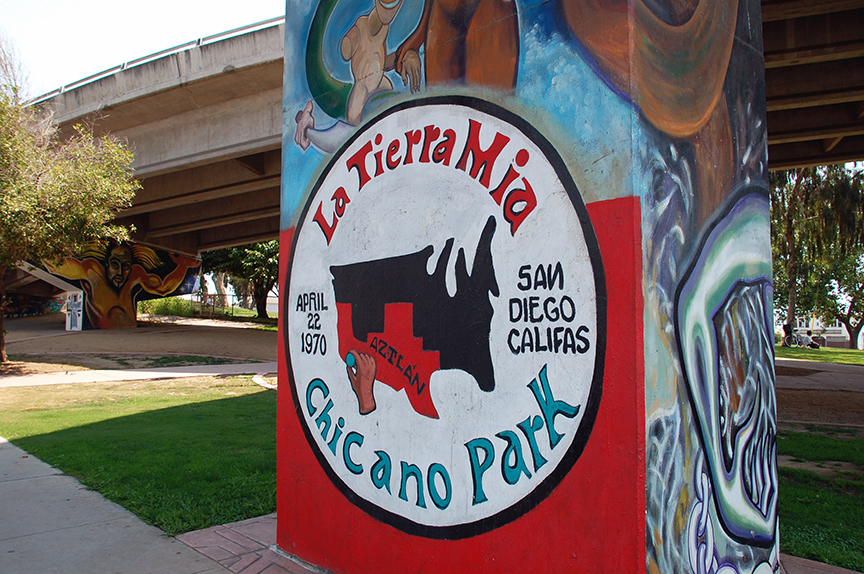
mexican-park-barrio-logan-san-diegoImages of Chicano Park in San Diego where I grew up via Peyri Herrera’s Flickr. See also the Wiki entry for Chicano Park.

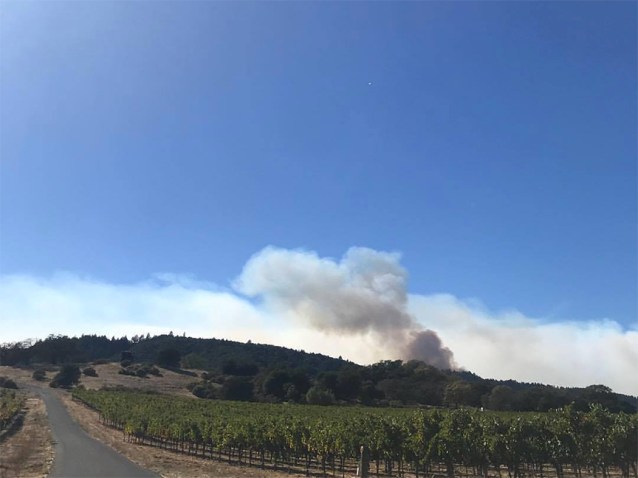
Goodbye California (a poem)

toes in the sandGoodbye California, goodbye beach, goodbye pool. 
Goodbye fish tacos, goodbye nigiri and sashimi, too.
Goodbye ocean, goodbye seal, seagull, and pelican.
Goodbye to some of our favorite things American.

parzen poolThank you San Diego, La Jolla, and thank you sweet friends.
Thanks for a week of paradise we wished would never end.
Thank you dear mother and thank you big brother.
Sister-in-law, niece, better family there is no other.

jeremy parzen wine blogBless you daughters and bless you wife.
Thank you for sharing the place where I came to life.
Sun, water, sand, and good things to eat.
This vacation will be a tough one to beat.

Thank you Sherman-Parzens, Yelenoskys, Battle-Ericksons, Georges, and Krylows for making this such a special week for the Texas Parzens in California!

And thank you, mom, for making this trip possible and for the great week at your apartment… What a wonderful experience for us. We’ll never forget it.

Suffer from Jewish Boy Stomach? Eat at Moruno in Los Angeles (and thanks to Sotto team and guests)

david rosoff restaurant los angelesEvery time Sotto brings me to Los Angeles to work on our wine list, general manager Christine Veys and I try to break away to check out one of the new restaurants on LA’s vibrant food scene.
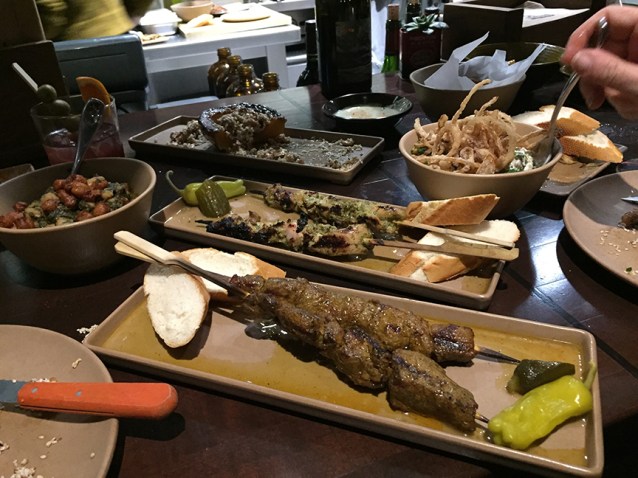
On Tuesday evening, after tasting roughly 30 wines with 6 different sales reps, we headed to my friend David Rosoff’s newly opened Moruno in the West Hollywood Farmer’s Market (a haunt of my youth).

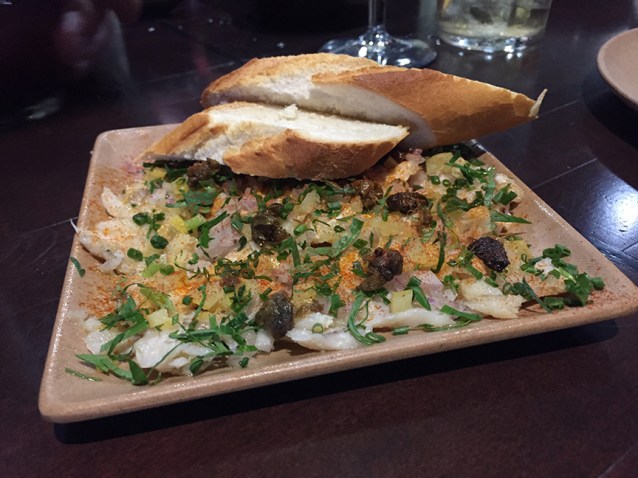
That’s the absolutely delicious albacore tuna conserva in the photo above.

The menu is inspired by Spanish and Middle Eastern cookery and is delivered mostly in small plates and on skewers (as David put it, a moruno is “meat on a stick”).

We had a wide variety of dishes, including the roast butternut squash topped with cashews and sesame seeds, one of the guests’ and staff’s favorites, David said.

And of course, we sampled both the chicken and lamb morunos.

what is a morunoEverything was truly fantastic and it was great to see his energetic team working in the kitchen with such focused skill and decisive sense of mission.
But the thing that really blew me away about the experience was how good I felt the next day (sparing you the details, I’ll presume you know what I mean).

Whenever I travel for my work (and this year, I already have four trips to Italy and visits to New York, Miami, Santa Barbara, Boston, and LA under my belt), one of the greatest challenges I face is the combination of fatigue and distressed digestion (I’ll leave it at that).

best spanish wineEven though Christine and I really dug into our meal with gusto at Moruno, my “day after” was bright and sunny, as it were.
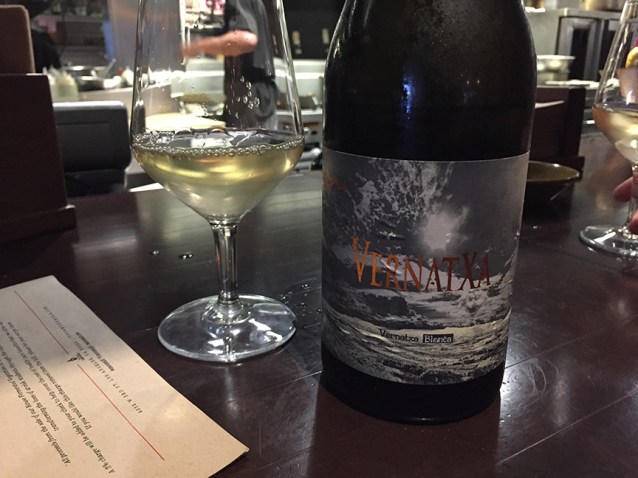
Maybe it was thanks to the superb Grenache Blanc by Cellar Frisach from southern Spain that made the difference. Zinging acidity in this hillside wine from the high lands, vibrant fruit and great balance, with restrained alcohol. I really dug it, especially at just $45 a bottle.

David, from one Jew to another, I LOVE your restaurant. The ultimate mark of a great meal is how you feel the next day and man, I woke up ready to go… as it were…

In other news…

My goodness, what a lovely night at Sotto last night where we launched our new wine list with a guided tasting of five new wines by-the-glass!

I can’t tell you how many times I lead tastings where guests show up only wanting to tell me about how they once visited Gaja.

Last night’s group was one of the best and most fun that I’ve ever tasted with: a very gracious ensemble of wine lovers who asked informed questions and shared thoughtful impressions of the wines. Thank you, everyone, for joining me.

And super heartfelt thanks to Christine for being such a great friend and colleague and for believing in my crazy reboot of our list (which I love).

And I also have to give a shout-out to my Texas family who surprised me by showing up at the tasting unannounced and staying for dinner. It was so fun to connect with them in LA and wonderful to know that I have family that supports me in what I do for a living. What a thrill for me to see Aunt Gladys enjoying my wine selections!

Now it’s time to get my butt back on a plane for Houston and some much needed downtime with Tra and the girls… Thanks for being here.

Microaggression and my Houston apologia

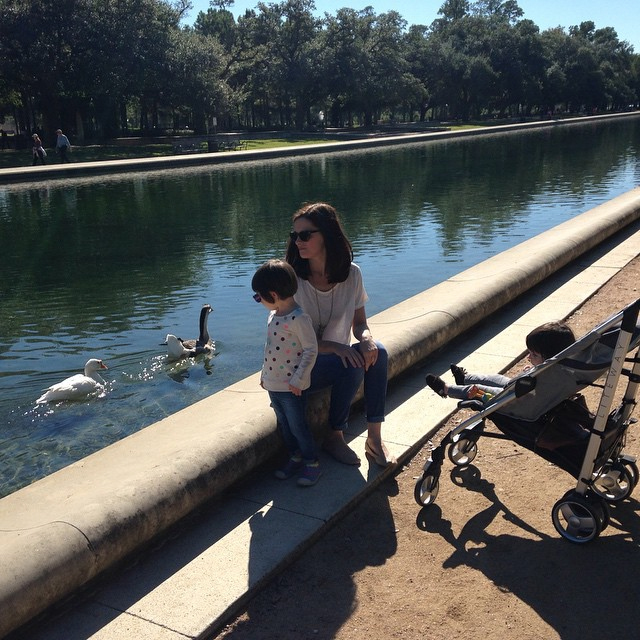
houston hermann park conservatoryAbove: my family at the Hermann Park Conservancy in Houston last year, not long after we moved here from Austin.

12,000+ views, 2,000+ Facebook shares, and 28 comments later, it’s still going strong… When I published it a week ago Sunday, I never imagined that my post “You’re from Houston? I’m so sorry” would have generated such a response.

When she shared it on her Facebook on Thursday, Houstonia magazine managing editor Katharine Shilcutt (and one of my editors there) wrote: “it’s always heartwarming to see non-natives become Houston apologists.”

Katharine, a Houston native, is a friend and one of the writers and editors I admire most on the food scene here. It was a thrill to discover that she enjoyed the post enough to share it with her legions of followers.

And today, the post was featured on the Houston Chronicle “Opportunity Urbanist” blog.

Honestly, I never intended the post as a panegyric.
Continue reading