Montalcino a Marxist parable (thank you Harry Lime)

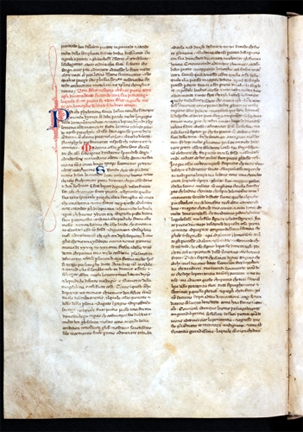
hamilton 90 boccccio

Above: Hamilton 90, the Boccaccio “autograph” manuscript, from the Staatsbibliothek in Berlin. Image via Quirinale.it.

In the world of rare books (a world I used to inhabit in my academic days, when I studied and wrote about Italian incunabula and humanist amanuenses), most “special collection” libraries observe the same protocol when two scholars request the same manuscript or codex on the same day: the librarians give the manuscript to neither.

One of the most notorious anecdotes from my days as a student of scribes was that of two illustrious Italian professors — one Italian, one American — who competed to discover the earliest autographed redaction of Boccaccio’s Decameron, in other words, his first “authorized” version of the work, transcribed in his own hand (a holy grail among philologists and paleographers like myself).

When the one professor discovered that the other was headed to the library in Berlin to request a viewing of the vellum, he raced to arrive before his colleague and he swiftly put in a request to view it as well. As a result, the librarians gave it to neither that day.

Ultimately, the one professor stole the manuscript, took it to Rome, had it x-rayed, and became the first to prove its connection to the fourteenth-century author. He replaced the manuscript before anyone noticed.

Not long after, the other professor killed himself.

That’s a true story.

There’s a saying in academics, the competition is so fierce and the enmity so ferocious because the stakes are so low.

And the same can be said about wine writing.
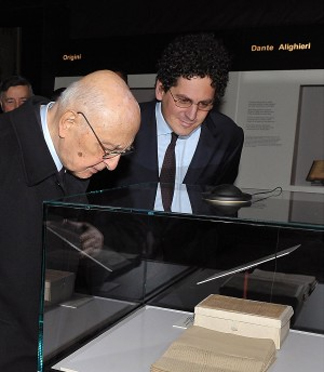
giorgio napolitano

Above: Codex Hamilton 90 is currently on display in Rome, in a show organized by the Italian government. That’s Italy’s first two-term president, recently re-elected Giorgio Napolitano (left), viewing the show. An article devoted to the show appeared in today’s edition of Repubblica.

One of the ugliest episodes in the history of oenography has been playing out over recent months, with Montalcino as its backdrop.

If you haven’t been following along, the Brunello consortium announced last week that it was expelling and suing one of its members for defamation. (Here’s a link to my post on the legal action; it includes links to my reporting of events that led up to the consortium’s move).

December 2012: Soldera’s winery is vandalized; six vintages purportedly destroyed.
December 2012: Consortium offers to donate wine to Soldera winery out of solidarity.
March 2013: Soldera accuses consortium of encouraging him to commit fraud when offering to donate wine; announces he’s leaving consortium; announces that he’s recovered a good quantity of wine and that he plans to sell it.

If Gramsci Pasolini Marx were alive today, he surely see the situation in Montalcino as a text-book example of his theories.

In the 1950s and 60s, Montalcino was still an agrarian economy, with a few patrician families — like Biondi Santi — who served as stewards of its production of fine wine.

In the late 1960s, “big wine” arrived: American-based Banfi set up shop, not to produce Brunello but rather to produce sweet sparkling wine (Moscadello di Montalcino).

In the 1970s, Soldera, a rich Milanese insurance broker, who was unable to acquire property in Piedmont, bought land in Montalcino and started to produce fine wine.

By the 1980s, Banfi had shifted to the production of Brunello and helped to make Montalcino as a brand in the U.S. through high volume and aggressive marketing.

There were many other players in this equation but these two more than any other reshaped the way Brunello was perceived beyond Montalcino’s borders. And in doing so, they changed the way that the Montalcinesi viewed themselves.

On the one hand, Banfi opened up the world’s largest markets to Brunello. In the 1960s, there were only a handful of Brunello bottlers. Today, there are more than 250.

On the other hand, Soldera transformed Brunello into an extreme luxury product, delivering bottles that fetched astronomical sums.

Along the way of this dichotomy, Montalcino passed from de facto feudalism to full-throttle capitalism.

And the tension that has come to a head here is, in many ways, a dialectic held taut by a battle between agrarian and capitalist values, with indigenous growers on the one side and outsider financial interests on the other.

Add to this mix that Soldera is generally considered a carpet-bagger (he is) and that his cantankerous personality and his unbridled egotism have won him few friends there. After years and years of acerbic commentary (public and private) from Soldera, it was only natural that a situation like this would arise (many in Montalcino predicted something like this in 2008, when it was rumored that Soldera had sent a letter to authorities igniting the Brunello adulteration scandal).

Let’s face it (and it’s high time that someone wrote this): when news broke that Soldera’s winery had been vandalized, many observers of the Italian wine world (myself included) couldn’t help but think, to borrow a phrase from Lennon, instant karma’s gonna get you.

Was the consortium right to sue him? It’s not for me to say or pass judgment.

Most on the ground in Montalcino believe that his “resignation” stunt in March was a means to let the world know that he had miraculously recovered wine to sell.

No one can know for certain. But the consortium and its members had to do something. If they didn’t, they’d be allowing the “broker from Treviso,” as the consortium’s lawyer has called him, to exploit their brand in the service of his own personal agenda (this is how many in Montalcino view the situation).

Does any of this matter? Maybe to Marxists like me. The bottom line is that the renewed controversy has only helped to keep Montalcino in the news. And as any public relations veteran will tell you, all news — even bad news — is good news when it comes to raising awareness of your brand.

In other news, over the weekend, newly elected president Giorgio Napolitano, after a nearly three-month stalemate, ushered in a new government to be headed by political scientist and statistician Enrico Letta.

These political acrobatics (as the New York Times has called recent developments) are remarkable: Letta, center left, has emerged as “bridge builder” from a seemingly intractable deadlock, with the support of the most vitriolic opponents on either side of the aisle.

Only in Italy, some have said, shaking their heads (myself included).

But it’s all part of our my fascination with Italy and the enigmas of its greatness.

In the words of the great Harry Lime, “in Italy, for thirty years under the Borgias, they had warfare, terror, murder and bloodshed, but they produced Michelangelo, Leonardo da Vinci and the Renaissance. In Switzerland, they had brotherly love, they had five hundred years of democracy and peace — and what did that produce? The cuckoo clock.”
On Gaglioppo must read @EvanDawson @PalatePress cc @SottoLA @CaptainWine

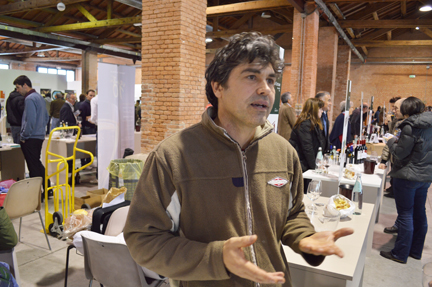
vini veri cerea

Above: While in Italy in early April, I tasted with my favorite producer of Gaglioppo, Francesco de Franco of ‘A Vita, at the Vini Veri gathering in Cerea. Next week I’ll post my notes from the fair.

I was thrilled to see Evan Dawnson’s superb post earlier this week for Palate Press on Gaglioppo.

After all, our friendship took shape over a glass of Garganega followed by a glass of Gaglioppo a few years ago in Brescia, Italy at the European Wine Blogger conference.

Since we launched our all-southern Italian wine list at Sotto in Los Angeles more than two years ago, my cohort Captain Wine and I have been preaching the virtues of Gaglioppo to our guests. We weren’t surprised that the 1997 Gaglioppo by Ippolito quickly became one of our top sellers.

Please read Evan’s post.

And please have a great weekend…

The most brilliant wine blog post ever… period… by @hawk_wakawaka

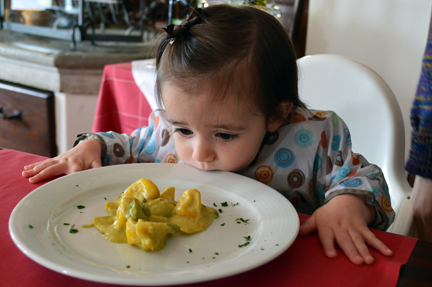
morlacco

Above: Today, for lunch, Georgia P had tortelli stuffed with stinky Morlacco (cow’s milk cheese) and seasonal asparagus in the village of Rolle (in the heart of Proseccoland). She loved them.

Among the blogs I follow, there were a number of stand-out April’s fools day posts.

Pope Alfonso shared a vision of a harmonious world where some of the most litigious among us actually get along.

King Franco revealed that he’s closing up shop and going to work for Frescobaldi (and I actually fell for it; blame it on the sleep deprivation caused by traveling with a fifteen-month old and a mommy who is twenty-five weeks pregnant).

But… it was Hawk Wakawaka who wrote the best one. Indeed, she delivered what I consider the most brilliant — absolutely and of all times — wine blog post ever.

In it she recounts her visit to the winery of Jean-Luc Picard (former captain of the Federation Starship Enterprise).

It’s sci-fi meets wine blogging, Bradbury meets 1 Wine Dude. And it gives us a glimpse (just as Gene Rodenberry did) of a future just beyond our reach…

(For a little background on wine vs. synthehol, see here and here.)

most beautiful baby girl prosecco

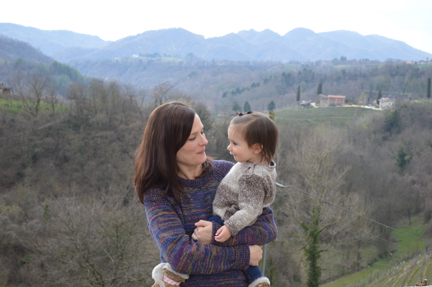
Above: Remember the last time Tracie P and I were in Rolle? The view of the vineyards was gorgeous today (as well).

I can’t recommend Hawk Wakawaka’s post highly enough!

Buona lettura (happy reading)!

Brunello consortium official response to Soldera interview accusations @BrunelloMaker

The English translation of the Brunello consortium’s official response to the Soldera interview accusations came to my attention today via the blog Montalcino Report.

Click here for an excerpted translation of the Soldera interview and Colombini’s response.

montalcino

Piè franco, origins of the designation (more fascinating than expected @finewinegeek)

pie franco meaning

One of the Italian wine bloggers I admire most, Ken Vastola, wrote me this morning asking about the meaning and origins of the Italian expression piè franco.

The designation can be confusing, especially to the non-Italophone among us.

Here’s what he wrote to me:

    I have read in my places that Franco in “Pie Franco” means French. Thus implying European root stock. But Keith Levenberg wrote to me “a correction to the pages for the Pie Franco, “Franco” actually doesn’t mean “French” as is usually assumed — it means “free,” so, free feet as distinguished from feet that got cut off and tied up, I guess.”

    Can you clarify this for me? I know linguistic and Italian in particular is your specialty. I thought Franco was Piemontese, not Italian.

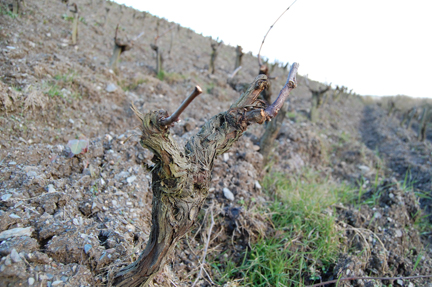
Piè franco is used in Italian wine parlance to denote ungrafted rootstock and is often employed to designate wines made from ungrafted, pre-phylloxera vines, like the Cappellano Barolo Piè Franco. It is akin, although not derived from, the French franc de pied.

The word franco means free or independent in Italian (not French). Lexicographers point to the Franks, third-century Germanic invaders of the Italic peninsula, as its etymology. They were “free,” unrestricted by Roman law.

By the time of the Renaissance, the term campo franco (free field) denoted an open field where a duel could be held.

By the end of the seventeenth century, the term lingua franca (free language or tongue) denoted a means of communication between speakers who did not share a common language.

Here’s where it gets interesting…

Piè appears for the first time in Italian in the fifteenth century, as a truncated form of piede (foot). One of the earliest instances is found in humanist poet Politian (Poliziano, who was from Montepulciano, btw). The wonderfully maleable Italian language is ideal for poets and prosodists: syllables can seamlessly be elided and vowels can mellifluously be fused in the name of versification (my dissertation was devoted to Italian Renaissance prosody).

The expression piè franco (literally, free footed or free standing) begins to appear in the eighteenth century, the age of the Italian enlightenment (Parini, for example) meaning with unclouded thought. It’s borrowed from religious parlance, where it meant free willed.

Camminare a piè franco meant to walk with a free gait, as in the English expression to go one’s own gait, in other words, to pursue one’s own course (OED). (It’s interesting to note that Manzoni changed piè franco to passo libero or free passage in his 1840 edition of The Betrothed. But that’s a longer conversation!)

By the mid-nineteenth century, agronomists had begun to employ the term to denote free-standing trees. Many note how lower planting density in orchards can produce higher quality fruit. (The Bindoccis wrote about this recently on their blog in regard to olive grooves.)

Only later, toward the end of the century, does its usage as ungrafted begin to appear and by the end of the century, we see the first instances where it is used to apply to vines.

This makes perfect sense because the evolution of the meaning mirrors the emergence of the phylloxera plague of the 1800s.

So there! Thanks, Ken, for setting me down this path and nudging me to walk with my own gait!

The subtitle of my blog is: “Negotiating the Epistemologic Implications of Oenophilia.”

This little philological romp is just the type of thing that gets me going: using wine as a lens to see and better understand the world around us.

Thanks for reading.

Read the Wine Spectator on Giacosa and Foradori

wine spectator

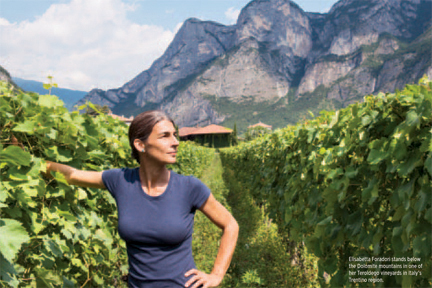
Over the weekend, friend Mitch Frank, associate editor at Wine Spectator, generously sent me a preview of the April issue of the magazine and his superb profiles of Elisabetta Foradori (above) and Bruno Giacosa.

So much has been written about the wines of Bruno Giacosa but little ink has been devoted to his life, his family, and his legacy as a winemaker whose career has spanned the worst and best of times in Langa. In his article, Mitch elegantly weaves cultural context and perspective in a biography that stands apart as much for its insights as for its nitty-gritty account of the family’s recent vicissitudes.

On Foradori and her wines, Mitch travels a path seldom taken by Spectator editors, who tend to favor the wine world’s greatest hits over its in fieri evolution and revolution. I loved the way he coaxed her into speaking of the personal challenges and professional setbacks she’s faced. Where many writers have relished a glamorization of Elisabetta, he portrays her as human, all too human. His narrative invests the wines — which I love and have followed for many years now — with an intimacy that you rarely see in the boastful oenography so popular today.

As I read the stories over my early morning tea, I couldn’t help but think that both stories were about fathers and daughters. In Elisabetta’s case, a father who expired when she was still a child. In Bruna Giacosa’s case, a father whose legend still casts a long shadow across the Langa hills.

Then I set about thinking of the Italian daughters who have inherited or will inherit the vinous legacy of their fathers: Maria Teresa Mascarello, Marta Rinaldi, Gaia Gaja, the Pepe sisters, Elena Pantaleoni… They are the Atalantas of Italian wine, princesses who bear a heavy load as they tread the footsteps of kings.

Chapeau bas, Mitch! Great work…

Caveman wine & wild vines in Italy & Eric the Red’s excellent article on Valle d’Aosta

valle d'aosta wines eric asimov

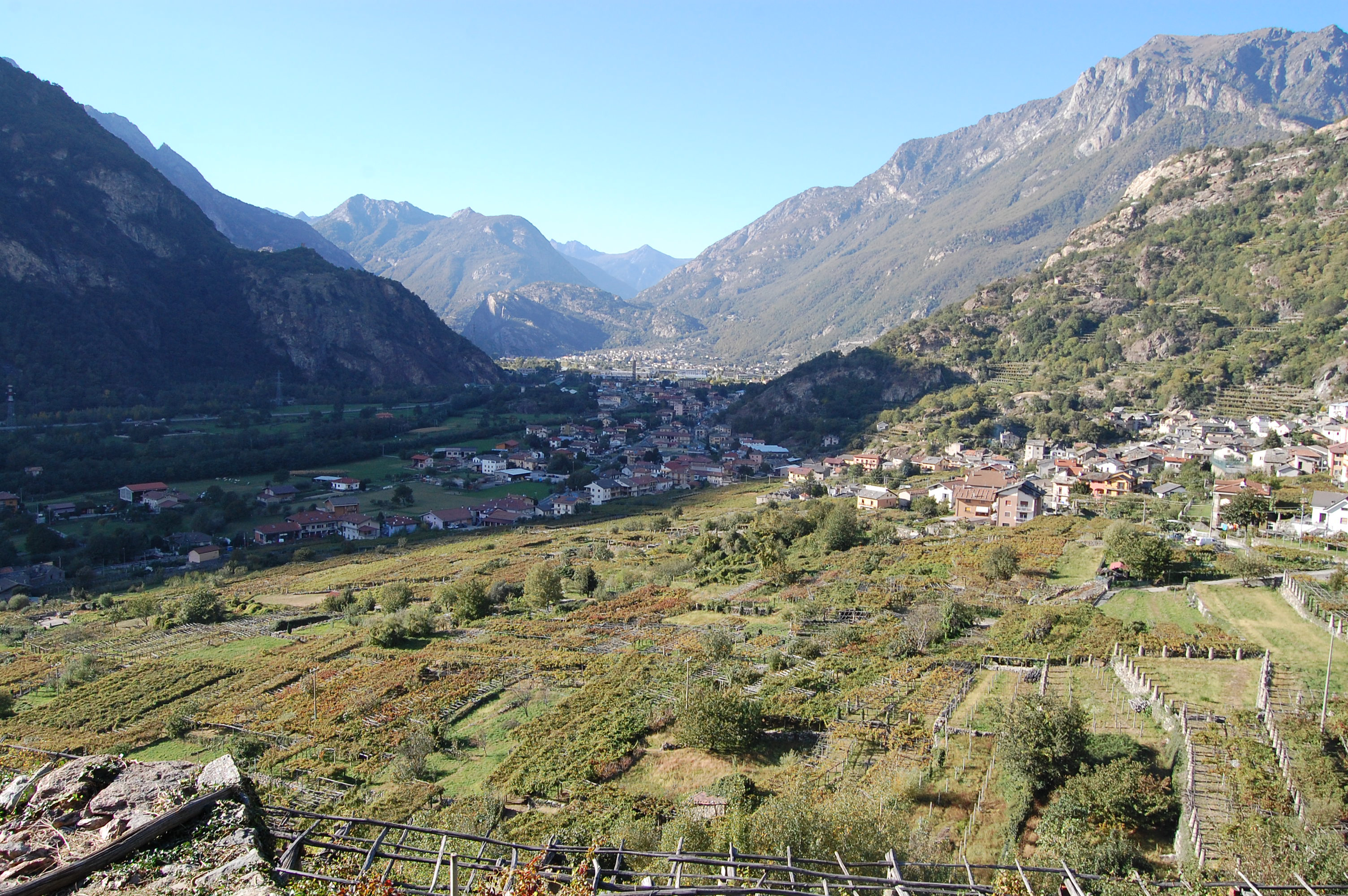
Above: That’s the village of Donnas, Valle d’Aosta, in the distance (photo taken from the village of Carema). Click the image for a high-res version.

Eric the Red’s excellent article and tasting notes on the Valle d’Aosta last week reminded me that I have neglected to repost the video below by my friend, wine writer, publisher, and winery consultant Maurizio Gily.

In it, Maurizio visits Mt. Fenera Park (not far from Donnas in the Valle d’Aosta) where he and his colleagues inspect wild pre-phylloxera vines and ancient cave dwellings where they believe pre-historic viticulture may have emerged.

The discoveries are significant, in part because they offer evidence that the Etruscans and early Greek settlers may have not been the first to make wine on the Italic peninsula. And ampelographically speaking, the plants may offer clues as to the truly indigenous (and genetically pure) origins of Italian grape varieties.

The video is in Italian but it’s easy to follow (and the images are what is most important).

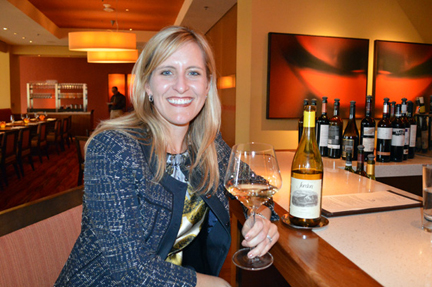
This woman made me drink California Chardonnay @LisaMattsonWine

best california chardonnay

We have a saying at our house, sometimes in life, you have to drink the Chardonnay.

When I sat down the other evening with my blogging colleague Lisa Mattson here in Austin, we couldn’t help but share a laugh about my (perhaps overly) rigid attitudes about “California Chardonnay.”

I was geeked to talk to her about the excellent social media program she’s developed for the Jordan winery.

I blogged about our chat and “California Chard” culture today over at the Houston Press.

There’s Chardonnay in dem dare hills! :)

Heated response to the Gambero Rosso (Red Lobster) controversy

gambero rosso

Above: Gamberoni in Castiglioncello, Tuscany, at Nonna Isola.

Few remember that the Gambero Rosso monthly magazine and publishing brand take its name from the “Osteria del Gambero Rosso” or the “Inn of the Red Lobster” in The Adventures of Pinocchio, which originally appeared in the Italian in the early 1880s.

Here’s a transcription of the scene in the book where the Cat and the Fox first take Pinocchio to eat there (from a 1904 English translation):

    They walked and walked and walked until they arrived at the Red Lobster Inn, tired to death.

    “Let us stop a little here,” said the Fox, “just long enough to get something to eat and rest ourselves. At midnight we can start again and to-morrow morning we shall arrive at the Field of Miracles.”

    They entered the Inn and seated themselves at the table, but none of them were hungry. The poor Cat felt very much indisposed and could only thirty-five mullets with tomato sauce and four portions of tripe; and because the trip did not taste just right he called three times for butter and cheese to put on it.

    The Fox would willingly have ordered something, but as the doctor had told him to diet, he had to be contented with a nice fresh rabbit dressed with the biglets of chicken. After the rabbit he ordered, as a finish to his meal, some partridges, some pheasants, some frogs, some lizards, and some bird of paradise eggs; and then he did not wish any more. He had such nausea for food, he said, that he could not eat another mouthful.

    Pinocchio ate the least of all. He asked for a piece of meat and some bread, but he left everything on his plate. He could think of nothing but the Field of Miracles.

Some believe that the fictional osteria is based on the Trattoria da Burde near Florence where author Carlo Collodi (Lorenzini) dined regularly.

italian crawfish emilia

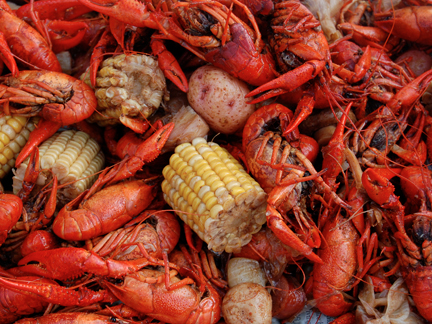
Above: An image from my first “crawfish boll,” which took place not long after I moved to Texas to be with Tracie P.

Gambero rosso is also a designation used by Italians for the common American crayfish, the “Gambero Rosso della Louisiana.” Its introduction to Italy in the mid-1800s led to a series of crayfish plagues in Europe.

Collodi was certainly aware of the crayfish calamity of his era and the very name — gambero rosso — surely instilled biblical fear in the minds of his readers.

In the light of this, the choice of gambero rosso for the title of a magazine devoted to Italian gastronomy may seem infelicitous to some.

gambero rosso trash

Above: The Gambero Rosso brand has often been the center of controversy and its editors have often been accused (however informally) of conflict of interest. I’ve written about the brand on many occasions.

On Monday, when I posted my translation of an open letter by a confederation of Italian winemakers to the editors of the magazine, I didn’t imagine the heated reactions that the post would generate (just look at the comment thread and you will find the comments and links to other bloggers who posted view points often diametrically opposed to one another).

For my part, I was just trying to provide a public service by rendering the text of the letter into English.

O, and one last thing…

Down here in Texas, you know what they call the gambero rosso?

They call the little critters mud bugs.

Tomorrow, I’ll get back to the business of posting about the wines we’ve been tasting and some of the interesting wine professionals I’ve had the chance to interview recently. Thanks for reading…

We tease @VinoalVino a lot because we got him on the spot, right @TerraUomoCielo?

Austinites! Please don’t miss my band’s first appearance in the River City, this Saturday, Feb. 9, at the Parish Underground, 9 p.m. sharp. Click this link for details. FREE SHOW!

giovanni arcari

If you follow the wide world of Italian wine blogging, you have probably noticed that our wine blogging colleague Franco Ziliani experienced something of a funk last year. We all stood by him as the vicissitudes of life handed him some tough times.

The good news is that Franco is back, blogging again with the same verve — as mutual friend Francesco likes to put it — that gave him one of the biggest followings in the Italian enoblogosphere.

Continue reading