
Above: Coppa cotta, “cooked coppa” at the Dispensa Pane e Vini in Franciacorta.
Whenever I lead a guided wine tasting, I make a point of asking the guests to consider what I believe is one of the most important elements in wine appreciation: how do you feel the day after you drink the wine?
I’m not talking about being hung over. We all know about the physical and emotional fallout of excessive alcohol consumption.
No, I’m talking about the role that wine plays in digestion.

Above: Fried coregone and coregone “ice cream,” made from Coregonus lavaretus, European white fish from Lake Iseo (Franciacorta).
We spend so much time talking about how wine tastes, the rarity and prestige of certain bottles, etc.
But we devote too little time — in my view — in reflecting on wine’s value as a nutrient and digestive.
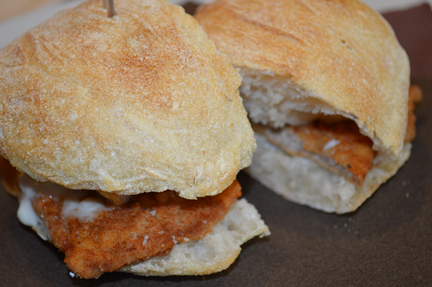
Above: The “Milanese” antipasto is a panino stuffed with a mini cotoletta alla milanese. A schmear of potato purée is applied to the bun before the dish is plated.
Sadly, I believe that the western world’s fetishization of food creates a disconnect between the food we consume and our bodies (excuse the paronomasia).
Ask anyone who’s ever worked at one of our country’s temples to the fetishization of fine dining, Per Se: they’ll tell you that guests, especially elderly diners, often regurgitate at the dinner table.
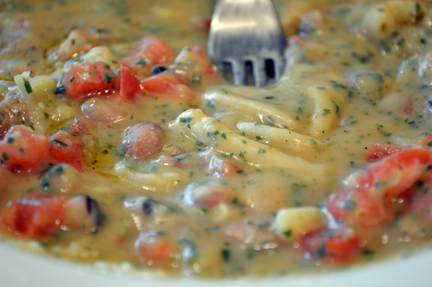
Above: Pasta e fagioli. The health-enhancing properties of this dish were truly remarkable. I speak from personal experience.
And so with wine, so with the foods our family consumes. One of the most important ways we gauge the quality of meal is how we feel the next day.
On our last trip to Italy, I was so thrilled about taking Tracie P and Georgia P to Vittorio Fusari’s Dispensa Pani e Vini in Franciacorta that we booked a hotel down the road just so we could eat there at least twice before we headed to our final destination in the Veneto.
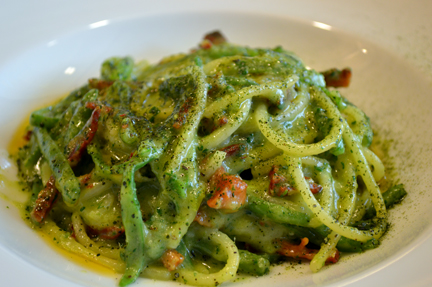
Above: Spaghetti with green beans. One of the things that was so remarkable about our visits was how Vittorio created dishes especially for Georgia P. She loved this.
Vittorio’s technique is astonishing and his work is renowned throughout Europe. But it’s his maniacal attention to the materia prima that makes his cooking a game-changer.
Although Tracie P has been avoided raw fish and uncooked cured meats during our pregnancy, she consumed both at the Dispensa (and we discussed our concern and our desire with Vittorio beforehand; he assured us that the provenance of the salmon and the prosciutto was impeccable).
As much as I enjoyed this meal — our first on our recent trip to Italy and one of the best — I was reminded of how good it was the next day when I visited the bathroom (and I apologize for the level of detail here but if you’ve read this far, I know you’re with me on this).
This was one of two meals authored by Vittorio during our day-and-a-half stay in Franciacorta. I’ll post about the others tomorrow.



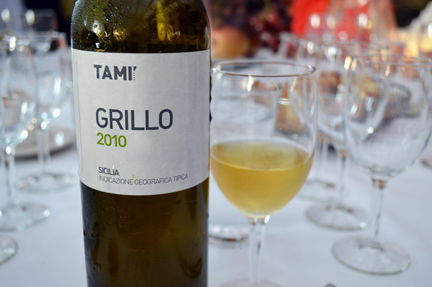


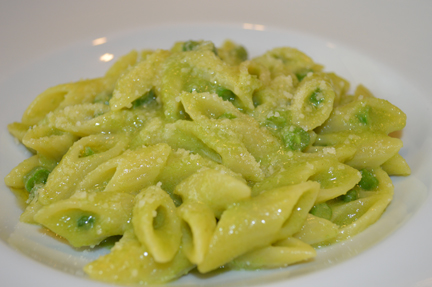
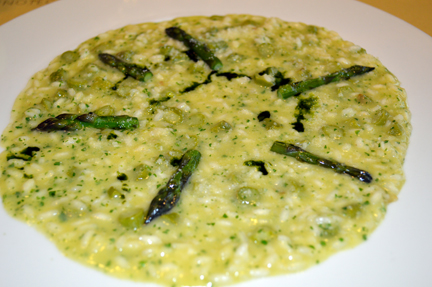


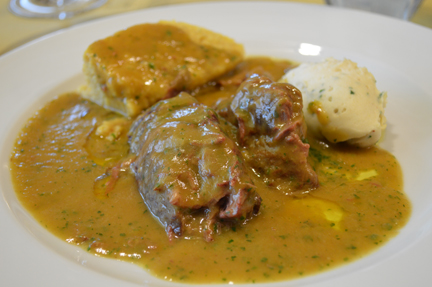








 Do Bianchi