What’s the difference between an osteria and a trattoria? The answer lies in the wine.

A recent article in a high-profile food magazine got me thinking about how to define the difference between an “osteria” and a “trattoria.”

Most Italians will tell you that while a trattoria (pronounced traht-toh-REE-ah) focuses on food, with wine as an added element, the osteria (ohs-teh-REE-ah) gives equal weight to its menu and wine list and might also have an extended small plates offering.

While you visit the trattoria exclusively to dine, the osteria might offer proper dining but also a “wine bar” setting where you can snack and taste different wines by-the-glass.

The word trattoria comes from the Latin trahere meaning to drag or to pull.

Its kinship to the word trattore or tractor in English reveals its origin: the earliest trattorie were places where farmers “dragged” (“delivered”) their food to be prepared for consumption.

The lemma osteria comes from the Latin hospes meaning host (it would later denote also guest).

From personal experience, I would add that where trattorie are commonly found in cities and the countryside, osterie are located more typically in cities or in villages where there is some form of urban life. Historically, you visited the trattoria for an ante litteram “farm to table” experience. The osteria was geared for the traveler passing through town or the local reveler looking to socialize.

It’s important to remember that in today’s world, these terms have flexible meanings, often overlapping and often diverging from their historical and traditional usages.

So what’s the difference between the above and the ristorante? Blog post on deck!

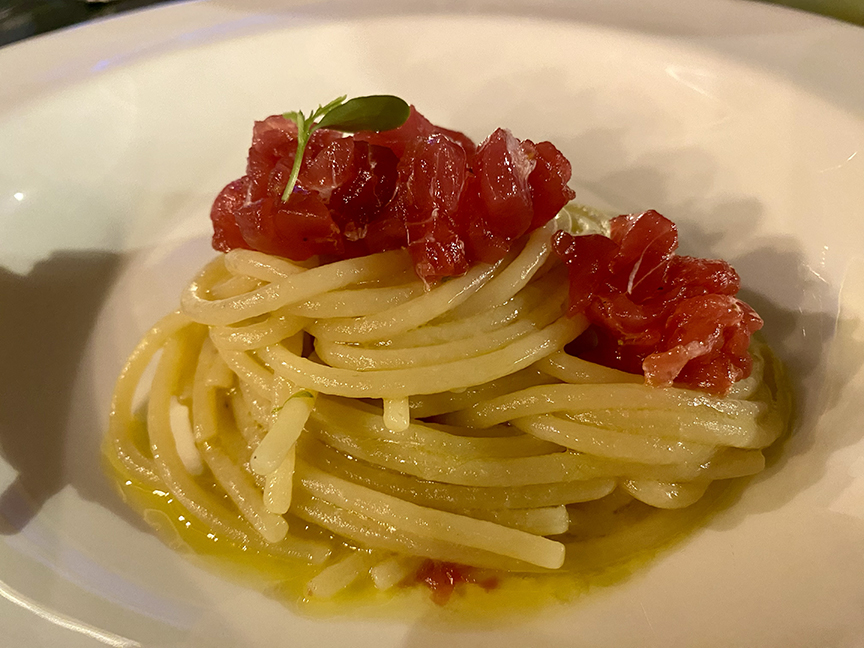
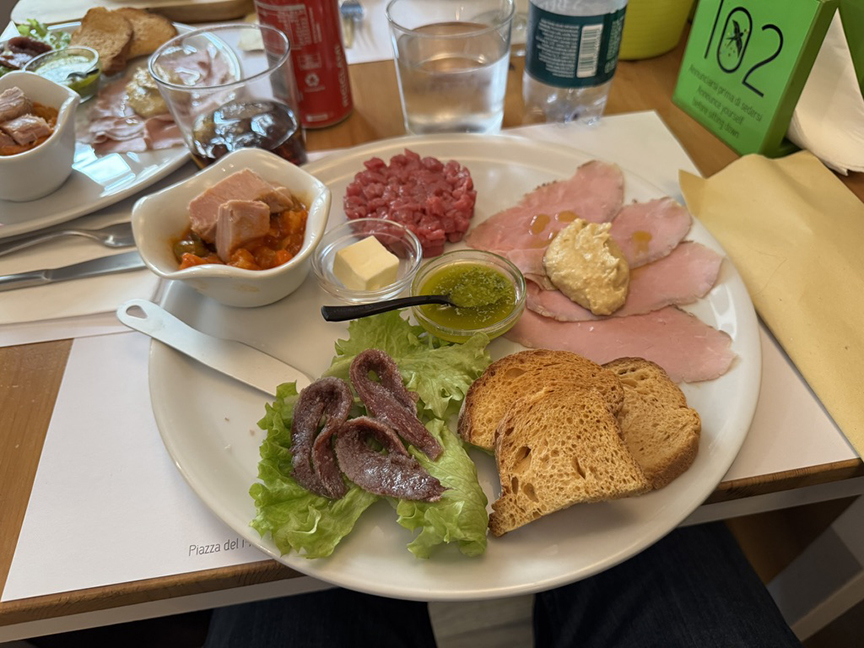
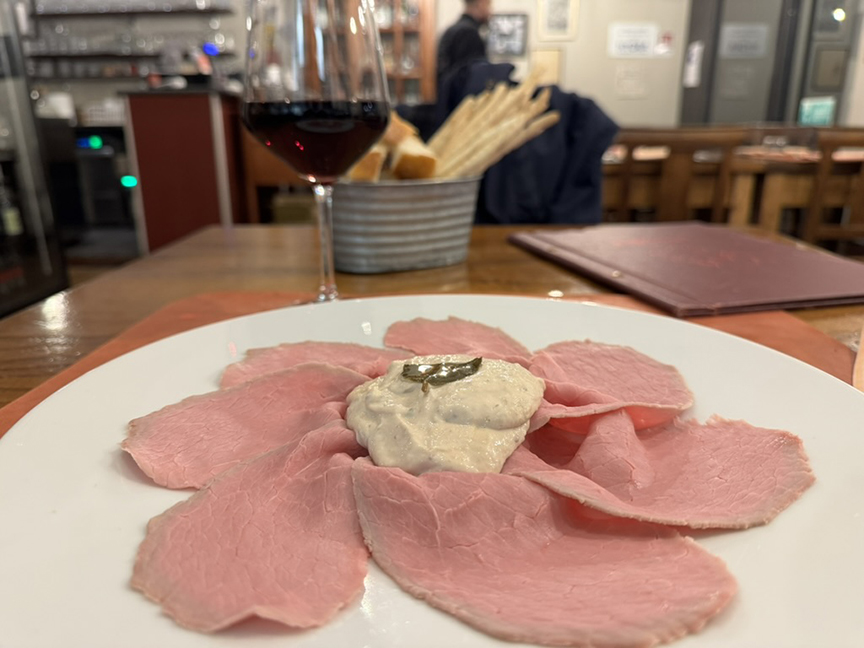
The above photo is from Le Vitel Ettoné in Turin.

Thanks for being here. Happy eating!
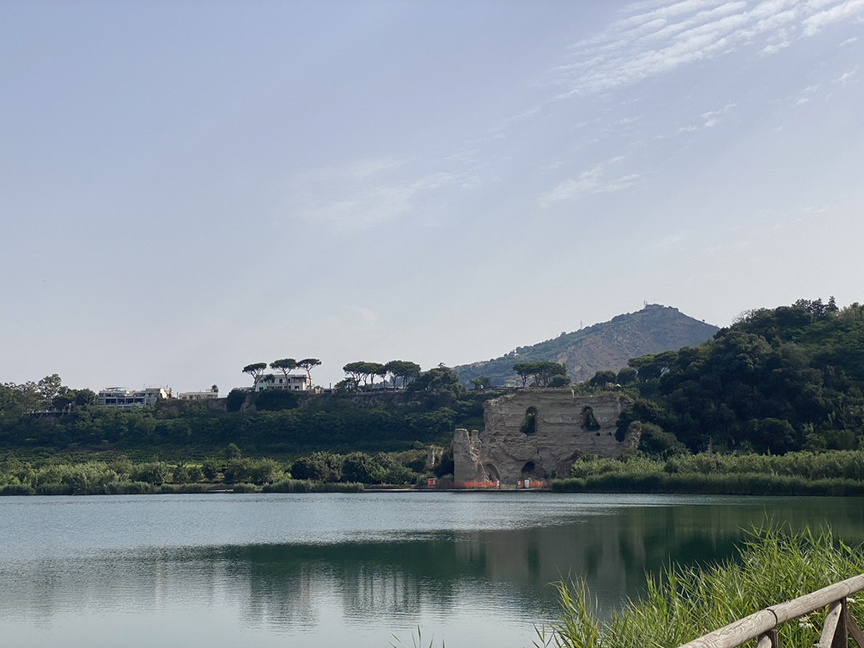
My favorite restaurant in Naples? You’ll find it at the gates of hell! Yes, literally, the gates of hell.

This let me crave, since near your grove the road
To hell lies open, and the dark abode
Which Acheron surrounds, th’ innavigable flood;
Conduct me thro’ the regions void of light,
And lead me longing to my father’s sight.
For him, a thousand dangers I have sought,
And, rushing where the thickest Grecians fought,
Safe on my back the sacred burthen brought.

Virgil, Aeneid, Book 6

That’s Aeneas, the founder of Rome, speaking to the Sybil at the gates of the underworld along the banks of Lake Avernus in Pozzuoli (Naples), above.

Those familiar with the Western Canon will immediately recognize the scene: book six of Aeneas’ story is one of the most powerful works of ancient literature, emulated and imitated by generations of European writers, including Dante, who modeled his own journey through hell on that of the Roman hero.

Can you imagine my utter thrill when I realized my favorite restaurant in Naples is just a three-minute walk from the site of Aeneas’ descent? I practically fainted I was so excited!

Thanks to friends in the wine trade, I discovered the magical Akademia Cucina in the hamlet of Lucrino, a village in Pozzuoli.

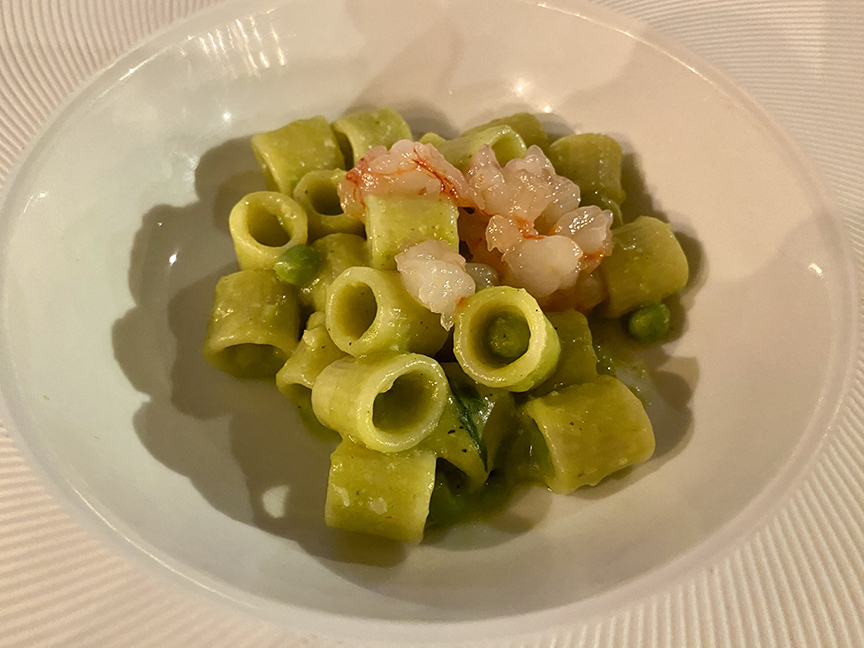
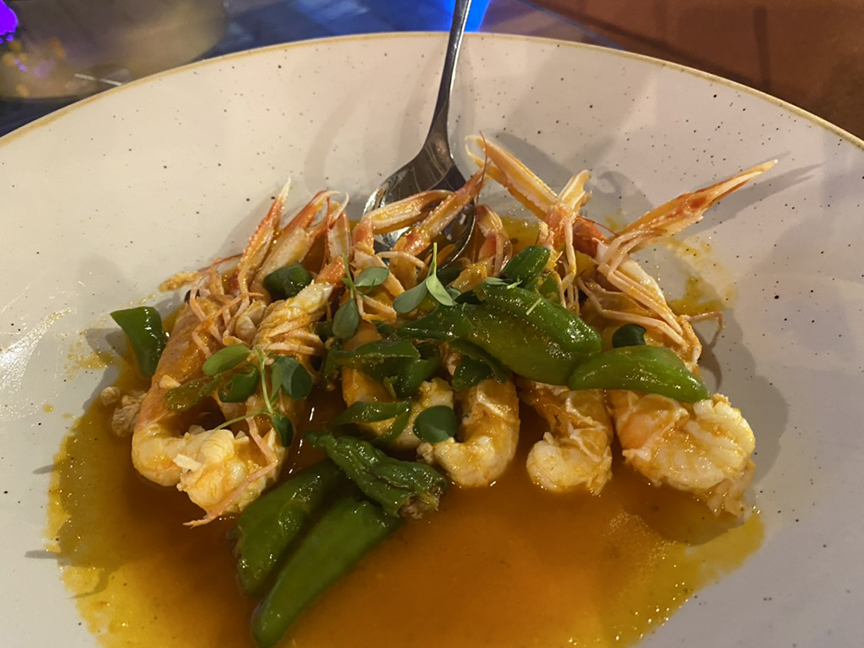
This was, hands down, the best dining experience of my 2024. Man, this place has it all: location, vibe, ridiculously good seafood, great wine list, and the perfect tone for a hedonistic community that likes to dine on the late side. I LOVED this place.

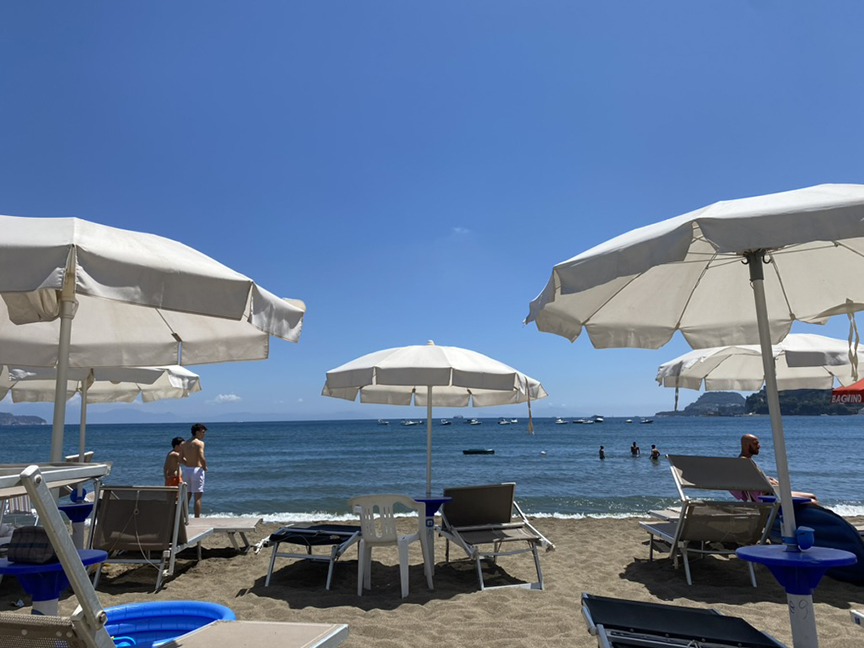
Here are some photos of what I ate and where I swam.

And wow, the nearby hotel where my buddies suggested I stay, Albergo delle Rose, was just my speed in terms of pricing and convenience.

There’s an urban light rail train that stops in Lucrino: a 45-minute ride to Naples proper (perfect) and connections to all kinds of little towns and gorgeous sea views; wonderful beach access across the road; a ferry from nearby Pozzuoli takes you to Ischia. It was a dream for me.

But the oneiric quality of my sojourn was mostly shaped by this locus, this “place” where Aeneas first made landfall and the Greeks first colonized southern Italy. History and literature came to life before me. It was a wonderful experience that I highly recommend for your summer tour.

An Italian couple who serves great Japanese cuisine in Pescara. A Japanese man who makes superb Piedmontese cuisine in Barbaresco.

When I first traveled to Italy in the late 1980s, there were no Japanese restaurants I was aware of beyond a famous and prohibitively pricy spot in Milan.

In the late 2000s, Japanese-style restaurants began popping up in urban centers. They seemed like the Japanese restaurants we used to go to in Southern California in the first half of the 80s — fun but commercial and not particularly exciting, especially by today’s standards.

Today, that’s all changed as a wave of high-concept Japanese-focused restaurants have opened across the country, mostly in urban centers but sometimes even in smaller towns.

Anyone who’s ever worked in high-end Italian-focused restaurants in California or in top-tier restaurants in Italy knows that there is an organic affinity between Japanese and Italian cuisines. It was only natural that the two schools would begin to blend. And with glorious results! Italy and Japan are both surrounded by waters rich with materia prima. The collision of cultures was bound to deliver something interesting.

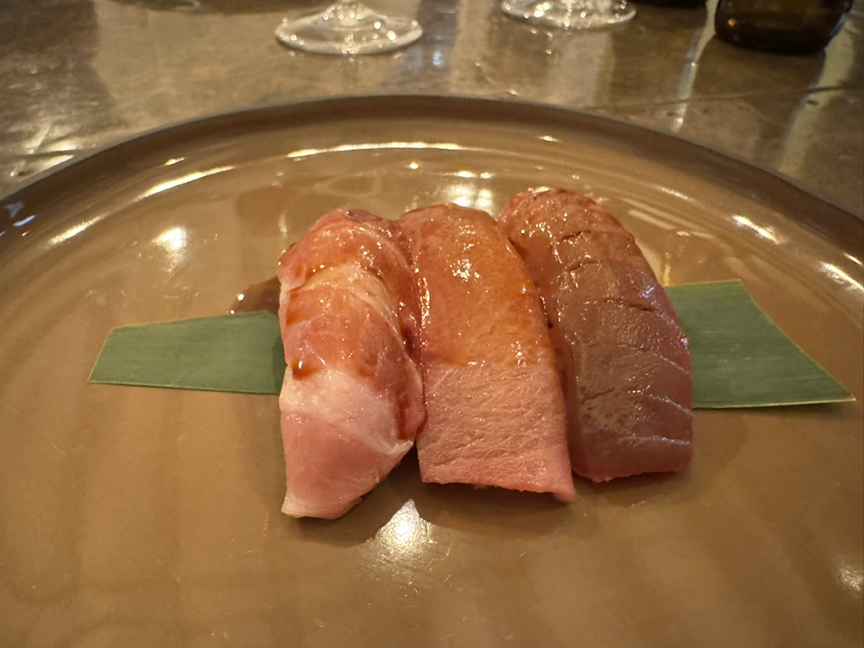
During my visit to Pescara (Abruzzo) earlier this year, a good friend took me to dinner at Hiroshima Mon Amour (you had me at the name!).

The food was great, the presentation was brilliant, and I loved how the couple who owns the place, Susanna and Riccardo, shared their insights into the different grades of tuna that they butcher themselves at the restaurant. I loved this place. My photo above doesn’t do the restaurant justice.

As I enjoyed my last meal from the road, I couldn’t help but think about the excellent Piedmontese lunch I’d enjoyed in Barbaresco village — prepared by a Japanese chef.

I had never been to Koki Wine Bar but I had had the food. A good friend in the Barbaresco appellation likes to serve take-out from Koki at family dinners.

I was thrilled to finally meet Koki and taste his excellent cooking. Next time I go, I want to try some of his Japanese dishes and his more creative work. But this time I went full-on traditional. Another must-visit spot, with a fantastic wine list.

Great Japanese cuisine by Italians. Great Italian cuisine by a man from Japan. It’s a small and wonderful world and I’m glad I’m in it.

Parzen family LOVES Tiny Champions pizza in Houston. Angeleños: I’m presenting a wine dinner and a Christmas wine retail pop up at Rossoblu DTLA next Wednesday.

My goodness! It’s hard to put into words how much gastronomic fun our family had at Tiny Champions in Houston’s EaDo (East Downtown) district last night.

We were celebrating Georgia’s 13th birthday (an official teenager!).

I didn’t get a shot of it (that’s how fast it went). But Tracie and I were literally spellbound by a dish of broad beans cooked in mushroom broth and then seasoned with dill and lemon.

Outside of Puglia (Le Zie in Lecce), I had never had a vegetarian dish so rich in flavor that you were surprised to discover its purely vegetal origins.

The wine list was fun, Italian-focused, and reasonably priced (we drank COS Ramì).

And the vibe is super welcoming and richly Houstonian. What a wonderful place. We were tempted by dessert but Georgia had her heart set on Amy’s ice cream, a nod to her Austin origins.

She’s having a great birthday btw (she got the combat boots she wanted). She is hosting a small party for her friends this weekend. We love her so much and are so proud of her. This birthday of hers is so meaningful to me, especially when I think what my life was like and what my family was going through when I turned 13. I love her so, so much.

In other news…

I’m presenting a wine pairing dinner at Rossoblu in DTLA on Wednesday, December 18 where my old buddy Chef Steve is making BOLLITO MISTO! This is going to be AWESOME! Steve is Bolognese btw, so this is a hometown dish for him.

And if you need wine for the holidays, I’ll be doing a retail pop up that night AND the night before at chef’s westside place, Superfine. Come by and say hello!

It’s my very, very, very last wine dinner of the year.

Thanks to all for all the support and solidarity in 2024. Happy holidays!

Move over pizza, pinsa is here to stay. #pinsaenvy

No one knows for certain where the word pinsa came from. It is believed that it is a inflection of pinza or pinzo meaning extremely full.

What is known for certain is that this Italian neologism first began to appear around 2008 in Rome. By the late 2010s, it was a well-established lemma in the Italian language.

I had seen pinserie in Italy’s capital (pinserie, pin-ze-REE-eh, plural of pinseria, pin-ze-REE-ah, a place where pinse are made). But I was surprised when I returned recently to my beloved Brescia in Lombardy in the north to discover that there is now a popular pinseria there.

It would seem the pinsa is here to stay!

By seemingly every definition, a pinsa is neither a pizza or a focaccia (even if those words are nearly seamlessly interchangeable in Italy depending on where you are and what you are eating).

But the concept is the same: high-quality flour pies fired in a convex oven, sometimes with toppings already added, other times with toppings added after the pie is churned out.

The etymon pinzo is suspected because the toppings of a pinsa or pizza or focaccia can be considered a “filling,” the way a pastry or a calzone is “stuffed.”

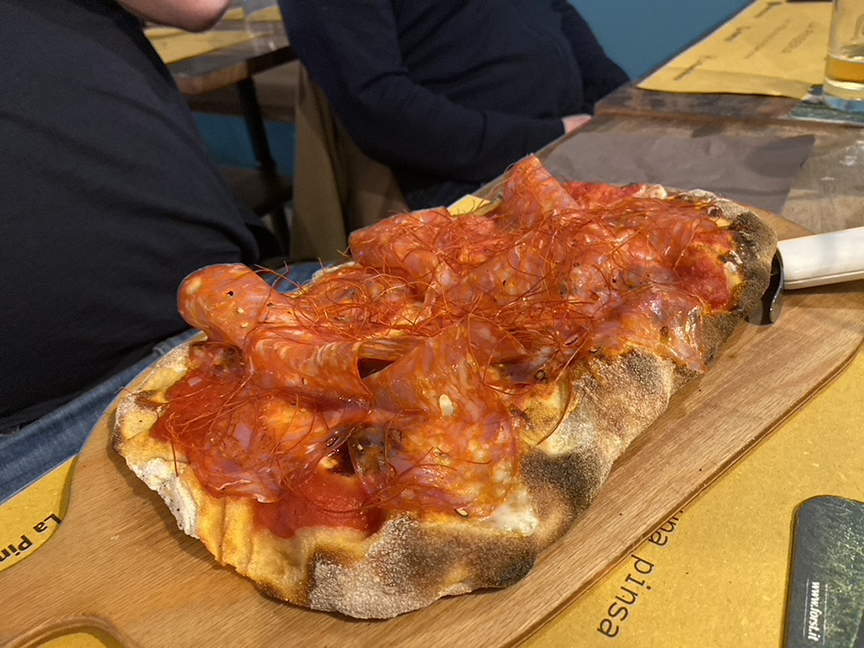
The pinse at the Pinseria in Brescia were excellent.

I also really loved their jalapeño poppers. Yes, you read that right. Italians are WAY into what they call “jalapeño poppers,” even though they don’t use jalapeños but rather a red Italian-grown pepper.

The concept is the same as for jalapeño poppers in the U.S., except here they use high-quality ingredients (instead of Sysco).

The jalapeño poppers at the Pinseria were great and so were all the Roman street food apps. The beer list was great, too.

Move over, pizza! I hope you’ll recover from your pinsa envy!

Terroir is “landscape, people, language, air, aromas, sounds.” Notes on why Italian wines taste differently on either side of the Atlantic.

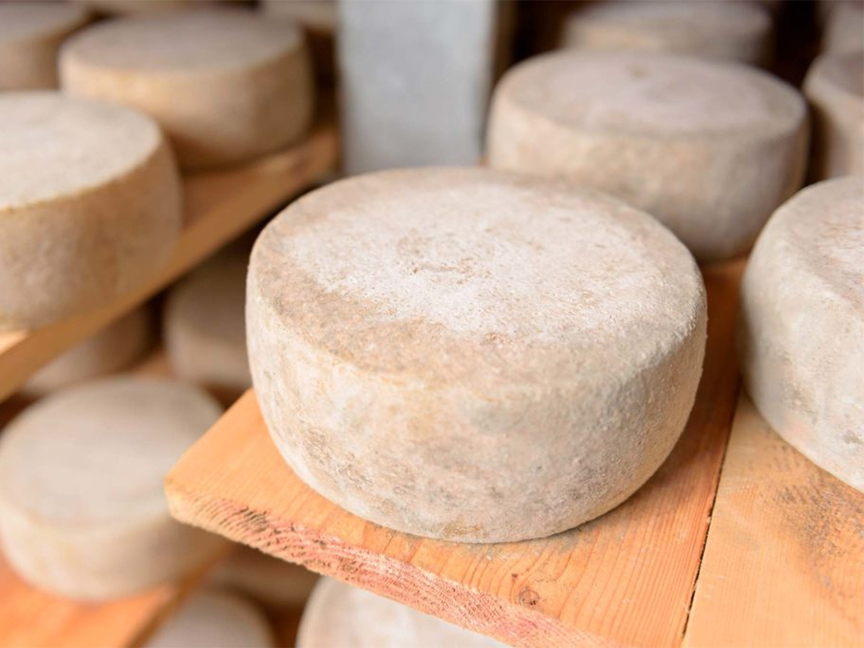
Above: Pecorino aging in the cellars of the Caseificio di Mario in Pienza, a stone’s throw from Montalcino, Tuscany.

Yesterday’s post on the differences in tasting Italian wines on either side of the Atlantic (“Is restrained sulfur the reason why Italian wines are easier on the body when consumed in Italy?”) elicited a tide of insightful comments where readers shared their experiences.

On the Facebook, the indomitable Silvana Biasutti, artist and mother to two of Montalcino’s most famous winemakers, wrote this (translation mine, although Silvana is fluently bilingual and literary):

    When I’m in Italy, in Tuscany, I go to the store to pick out an excellent Pecorino. Years ago, when I was still living in Milan, I would go to Tuscany and eat that Pecorino. It was so good that I would take a big piece of it back to Milan with me. Unfortunately, in Milan, it would lose a lot of its extraordinary flavor.
    When a food and wine are genuinely (and not just rhetorically) an expression of a land (of terroir), they lose something when they leave their natural environment. And they are always better when consumed with people from that place. Landscape, people, language, air, aromas, sounds — they are all part of a flavor. This isn’t just an impression of mine. It’s the way it is.

Truer words have never been uttered so eloquently.

Her notes were echoed by another keen observer of terroir, my wonderful friend and hero of the medical profession, Andy Pasternak, who wrote:

    So many variables contribute to this and you mentioned some of the main ones. I know it’s an old trope, but “if it grows together, it goes together” definitely holds true more in Italy. Another consideration that I’ve been thinking about is eating/drinking outside versus indoors and just some of the other aromas you get that interact with your food and wine. For example, the same white wine is likely going to taste different if I’m eating crudo outdoors on the coast of the Adriatic versus drinking it at a restaurant in a casino in Las Vegas.

Check out the thread and more comments here. And thanks to everyone who commented. It’s a reminder that our love and passion for great gastronomy continues to bring our vibrant community together.

The joy of a proper Sunday lunch in Italy.

People often remark that my work must be so glamorous and fun. While there are some wonderful perks to being a wine educator and communicator, the schlepping is not exactly what most would call a “good” time.
Too much flying, tight connections, cramped seats in economy (no business class for me!), miles and miles behind the wheel trying to make every appointment on time, shitty sandwiches at the freeway Autogrill because there not enough time to stop and have a genuine meal… It’s not exactly a stroll in the park.

But every once in a while, the stars align and fate delivers something truly compelling to experience.

This week, that moment came in the form of a proper Sunday lunch in Italy (I’m here this week for my yearly teaching gig at the Slow Food University of Gastronomic Sciences where I’m an instructor in the grad program).

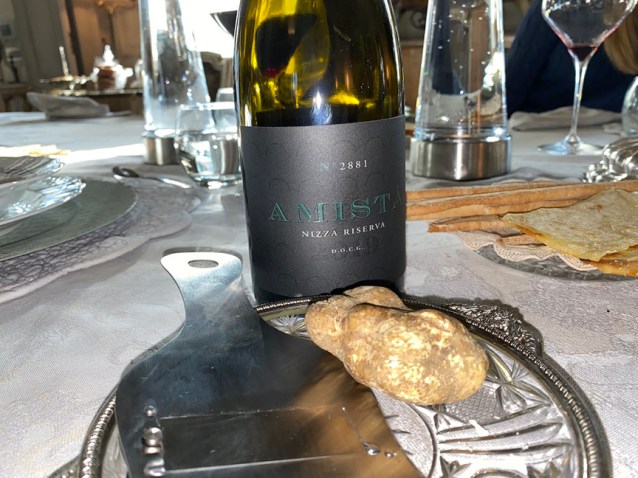
Yesterday, there was an invitation to join the Marsiaj family for their Sunday repast in Turin (Michele Marsiaj, owner of the Amistà winery in Nizza Monferrato, is a client and he and his wife Francesca have also become dear friends of ours).
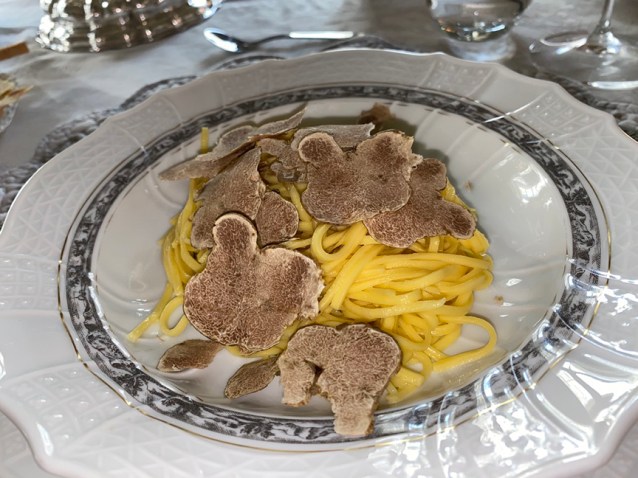
This is the type of meal where you start noshing and sipping around 12:30. The party then shifts to the dinner table around 1:30 as the first appetizers are served.

We began with lonza (capocollo) from Abruzzo and freshly fired focaccia topped with cherry tomatoes and onion. Then it was on to battuta (finely minced raw beef, topped in the case of the Marsiaj family with minced olives or finely crushed walnuts) and eggplant alla parmigiana.

The main attraction (above) was the showstopper: tajarin, the thin long noodles classically used in Piedmont, tossed in butter and then topped generously with freshly shaved Alba white truffle rounds.

And of course, no proper Sunday lunch in Italy is complete without a glass of wine… or two.
It’s literally been years since I was invited to someone’s Sunday lunch. Many great meals, some of them unforgettable, yes. But nothing can ever rival the joy of the proper Sunday lunch in Italy.

We finished up around 6 with a round of poached quail eggs topped with more truffles. Needless to say, everyone skipped dinner last night.

Thank you again, Francesca and Michele! I’m so blessed to have friends like you. Thank you!

Why are Italians so fascinated with American-style food?

If memory serves correctly, it all began with hamburgers in the 2010s.
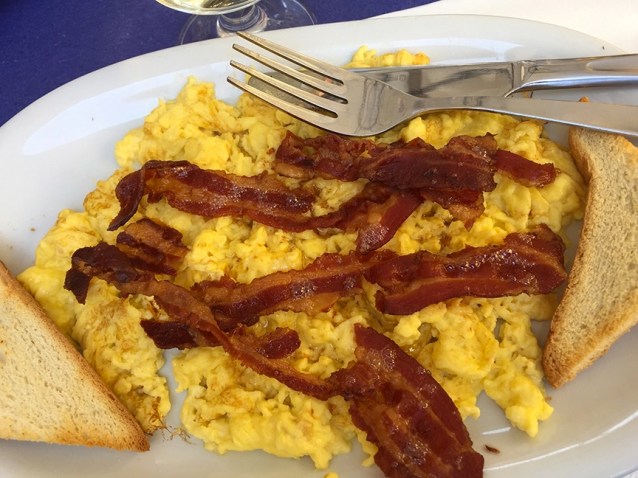
That was followed by bacon and (scrambled) eggs.
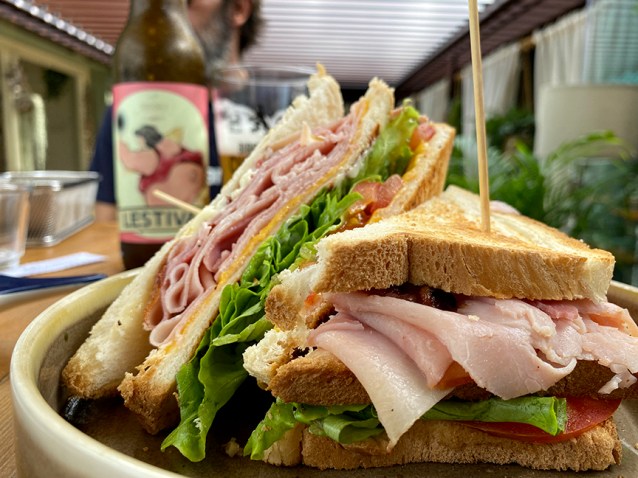
It didn’t take long before club sandwiches started to appear everywhere as well.
Today, it seems like there’s no end to the continuously growing list of classic American dishes that Italians are making and consuming.

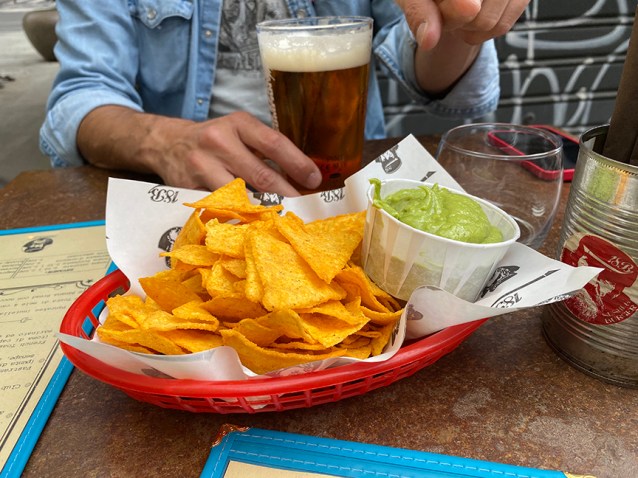
Over on the Facebook, there was a lot of chatter after I posted a picture of chips and guacamole that I was served earlier this week in Brescia. The restaurant actually calls the dish “nachos” (although that’s not what we would call it).
Honestly, I had never even seen guacamole in Italy until this week. On Saturday, I was served guacamole at lunch and then later that evening, when I was invited to a swank spot in the heart of downtown Turin, chips and guacamole appeared again at our table!

And let’s not forget the preponderance and ubiquity of “sushi” in Italy today! That cuisine is from Japan, of course, but nearly everywhere I see it here, it’s served in the American style that we grew up with.
I’ve seen more than my share of “Caesar salad” as well in recent years. Texas-style BBQ has also become extremely popular here.

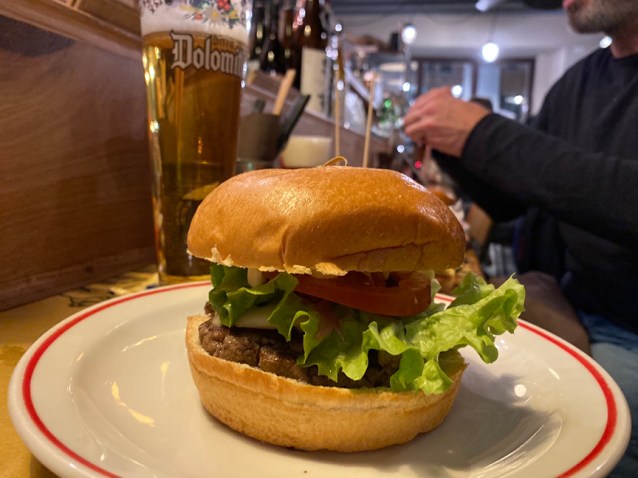
When it came to the initial wave of hamburgers, the Italians swiftly surpassed us in terms of the quality of ingredients. Where I grew up, the cheapest beef was used for burgers. Italians use top heirloom beef for theirs and they are also expert at mixing pork and beef for their patties. The quality of the bread is also an important factor.

I’m not exaggerating or kidding in any way when I say wholeheartedly that some of the best hamburgers I’ve ever had have been in Italy.

The burger above is from a wonderful, homey spot called 18B in Brescia. It was fantastic! Check out their Instagram here.

The joint is run by a lovely young couple. And even though the focus is burgers and their now famous “pulled rabbit” sandwich (a riff on pulled pork), they also have an extensive sushi menu. Incredible!

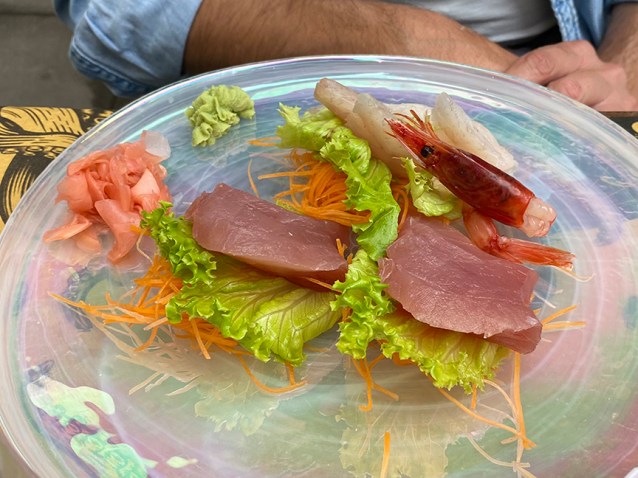
I’ve loved the burgers there. I still haven’t tried the sushi (that’s Giovanni’s sashimi above). The avocado was perfectly ripe and delicious but it was more like an avocado purée (like Americans have been spreading on toast).

I’m not really sure why Italians love American food so much. In many cases, they do it WAY better than we do (again, because of the ingredients).

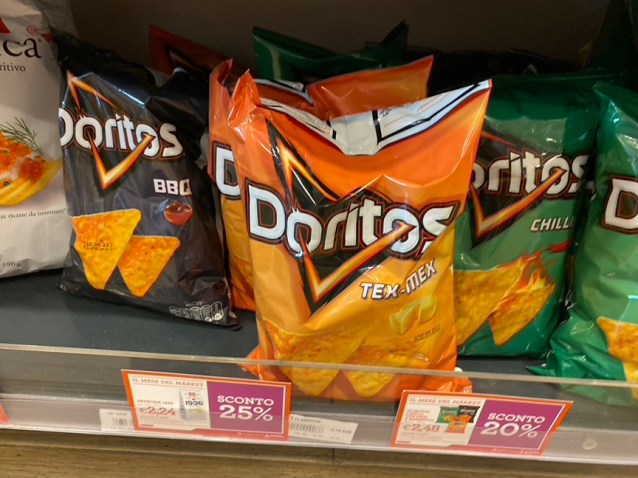
But “Tex Mex” Doritos is where I draw the line! Spotted in an Autogrill the other day.

All the photos are from Italy. The burger, sushi, and chips from 18B. The bacon and eggs are from a lunch many years ago in Milan. The club sandwich is from a place on Lake Iseo from a few years ago. Today’s my first day back teaching at Slow Food U. Looking forward to meeting the students this afternoon!

Robert Camuto’s wonderful profile of Darrell Corti for Wine Spectator, in case you missed it.

More than any others, two people have been the inspiration for my career: my dissertation advisor Luigi Ballerini and Darrell Corti.
While Luigi gave me the academic skills and rigor to fulfill my scholarly curiosity, Darrell showed me how that passion for inquiry could be balanced with making a living in the food and wine world.

Every time I’ve had the opportunity to interact with Darrell, it’s been nothing less than a wholly exhilarating gastronomic and intellectual experience.

That’s Darrell last year when he came to speak at the Taste of Italy trade fair in Houston.

In case you missed it, be sure to check out Robert Camuto’s profile of Darrell for Wine Spectator, “The Wizard of All,” published earlier this week and free to all.

Have a great weekend! Thanks for being here.

The best thing I ate on my last trip to Italy and an old flame rekindled.

Favorite restaurants are always a long-term commitment, kind of like a romantic relationship. Sometime the rapport is fiery and passion-driven. Sometimes the flame is diminished by the patina of time. But when you really love a restaurant, the rewards of your undying devotion can really pay off.

That’s what happened when my Brescian friends took me to one of my favorite restaurants on the planet, the Dispensa Pani e Vini in the heart of Franciacorta country.

From my first kiss with the restaurant back in 2008 to the present, some of the most memorable meals of my gourmet career have happened there. There have been some acceptable yet mediocre experiences as well.

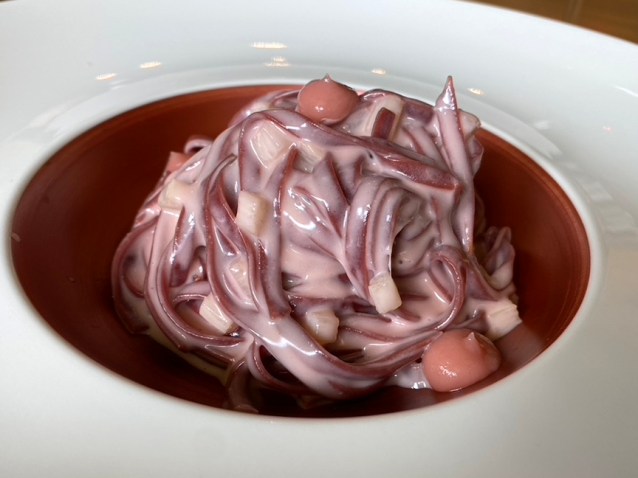
But I keep coming back: when the beet tagliolini with gorgonzola (above) arrived at our table, I thought I was going to faint.

It was the best thing I ate on my last trip to Italy. Simply spectacular, exquisite yet earthy and homey.

As Tony used to say, for Italian cuisine to be authentic, it has to be creative. This dish was all that and more.

The grilled octopus was another standout at our lunch.

Anyone who’s ever worked in the fine dining industry knows that chefs, managers, sommeliers, and owners come and go. The Dispensa, which was founded by one of Franciacorta’s most influential chefs, Vittorio Fusari, has seen a number of ownership and staff changes over the years.

But right now it has reclaimed the grace, verve, and mission of its original chef Vittorio.

I highly recommend it, even on its not-so-great days.

That’s the amuse bouche.

We paired with my friends Giovanni and Nico’s new release from the little known Botticino appellation. It’s a mostly Barbera blend that’s grown in Botticino’s marl- and limestone-rich soils and is raised in large cask. Delicious and with great depth.

As unfamiliar as Botticino may be to many Americans, anyone who’s ever passed through Grand Central Station has seen Botticino marble. Brescia province and the quarries that overlook Lake Garda are the source of that stone.

We didn’t get a chance to say hello to the new chef that day. But my faith was mended, my heart healed, and my belly sated. I can’t wait to make it back to that old lover in the heart of Franciacorta country.