Italian government, major wine consortia partner with trade group AEPI for “best wine shop professional” competition. Includes “professional abroad” category.

Above: Dal Zovo, a legacy wine shop in Verona (image via the Dal Zovo website).

In America, there are a number of channels and platforms where aspiring sommeliers and wine shop professionals can access educational resources. But our country lacks educational programs expressly created for and focused solely on wine shop professionals.

In 2017, members of the Italian association of wine shops, Vinarius, launched the national Association of Italian Wine Shop Professionals, known as AEPI (Associazione Enotecari Professionisti Italiani), an organization that fosters education and professional standards for people who own wine shops and work in wine retail.

Last week, the group announced that it has partnered with the Italian agriculture ministry and some of Italy’s leading appellation consortia to create a competition and series of awards for wine shop professionals: the Miglior Enotecario d’Italia awards, including a “best Italian wine shop professional” category.

The goal is “to bolster personal and collective growth,” said AEPI president Francesco Bonfio in a statement issued last week (disclosure: Francesco is a good friend of mine).

The competition is open to professionals, including owners and employees, who work in wine shops, wine bars, restaurants, and all public-facing services that offer retail wine sales (in Italy, where wine professionals scratch their heads at the thought of our anachronistic and repressive “three-tier system,” retail sales have always been allowed at “on premise” venues).

The competition also includes an award for “best Italian wine shop professional abroad.” The category is open to Italians working beyond the country’s borders, said Francesco in a WhatsApp message yesterday.

The following consortia are underwriters of the competition and others are expected to join: Vini Alto Adige, Colli Orientali del Friuli, Tutela Vini Colli Euganei, Vini Cirò, Tutela Vini Valpolicella, Vini del Trentino, IGT Toscana, DOC delle Venezie, Enoteca Regionale del Barolo, Vino Chianti Classico, Brunello di Montalcino, and the Comité Interprofessionnel du Vin de Champagne. Semi-finalists will be invited to those appellations for hands-on educational programs created especially for those who work in retail wine sales.

Visit the Miglior Enotecario d’Italia website here. The portal is now open for applications through the end of February.
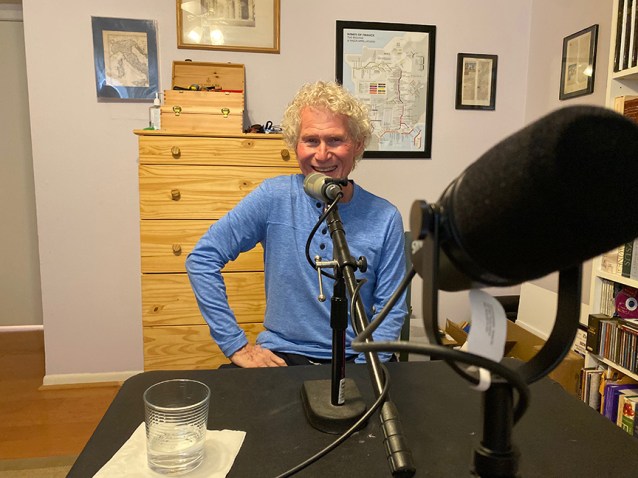
My new podcast with Houston wine writer and sports legend Dale Robertson.

Blame it on the Nebbiolo.

Over the course of my 13+ years in Texas, Dale Robertson, the longtime Houston Chronicle wine writer and legendary Houston sports writer, became a good friend and well, um, drinking buddy.

And now I’m proud to share the news that he and I have a new podcast: Sporty Wine Guy.

As Dale recounts in the first episode, he first became interested in fine wine while covering the Tour de France.

Later, a visit to Houston by a top Italian winemaker, a Barolo producer, turned him on to the quality and breadth of Italian wine.

It was around that time, in 2007, that he started writing a regular wine column for the Houston Chronicle.

Not only is he one of the nicest people I know in wine writing. He’s also one of the most interesting storytellers in our field. Over the course of his time at the Chronicle, he’s met and tasted with some of the most famous winemakers in the world, from Napa to Barolo to Bordeaux and beyond.

He and I had been mulling over the idea of a podcast for some time when 2020 derailed our plans.

Now that we’re feeling comfortable about gathering again, it seemed the perfect time to launch this project. And I’ve had a lot of fun recording and producing the shows.

Thanks for listening: check it out here. Stay tuned for more!

Was it possible to make a “great” wine in Italy’s “punishingly hot and dry” 2017 vintage?

Above, right: Gianni Maccari, winemaker and grower at Ridolfi in Montalcino, with his vineyard management team.
“From 1st January to 31st May [2017]” wrote my friend Laura Gray, a grower and winemaker in Montalcino, “we had just 126 ml of rainfall (for comparison in 2015 we received 292 mm… The summer was punishingly hot and dry, the only positive being that these conditions also mean zero issues or intervention for mildew. Deciduous trees lost their leaves months ahead of time; oaks were orange-tipped, cereal crops harvested early and the land was parched.”

For observers of the Italian wine trade, it’s hard to forget about the immense challenges of the 2017 vegetative cycle, especially in Tuscany where a devastating late-spring frost was followed by — to use Laura’s word — a “punishingly hot and dry” summer.

As the 2017 Brunello begins to make its way through the U.S. market, I’ve already tasted a couple of wines that have really impressed me with their finesse and freshness — not what many where expecting.

One of those wines was the 2017 Brunello di Montalcino made by Gianni Maccari at Ridolfi. Gianni, in my view, is one of the most exciting winemakers on the ground there right now. And the wines I’ve tasted, back to the 2015 vintage, have been nothing short of stunning, the 2017 included.

Gianni’s wines are imported to the U.S. by my client Ethica Wines. Today, on their blog, I published my translation of his notes on the 2017 vintage and the techniques he used to mitigate the severe weather conditions.

Check it out here.

Gianni’s notes remind me of what another Montalcino great, Piero Talenti, purportedly once said: There are no “bad” vintages. There are just vintages when we make less wine.

This just in: I just got word from my friend Raffaella Guidi Federzoni, a Montalcino insider, that the special New York edition of Benvenuto Brunello is going to take place February 23-24 (although with limited participants). I can’t find an official registration link or any info on the event. But it is supposedly happening.

Photo via the Ridolfi Facebook.

Abruzzo, Franciacorta, Moscato d’Asti. Taste with me next week and beyond in Houston.

So many wines, so little time!

On Wednesday, February 9, the Simply Italian Great Wines tour comes to Houston.

I’ll be leading three seminars that day: Abruzzo, Franciacorta (with Riccardo Ricci-Curbastro, who will be joining via Zoom), and Moscato d’Asti. It’s going to be a super fun day with a ton of great wines.

Register for the event here.

And that evening, FederDOC, the Italian appellation association and one of the events sponsors, will be hosting a dinner at Roma restaurant where I oversee the wine program. They generously gave me 10 spots to share with trade members. Please hit me up if you’d like to join. I’ll be pouring at the restaurant all night.

And wait, there’s more!

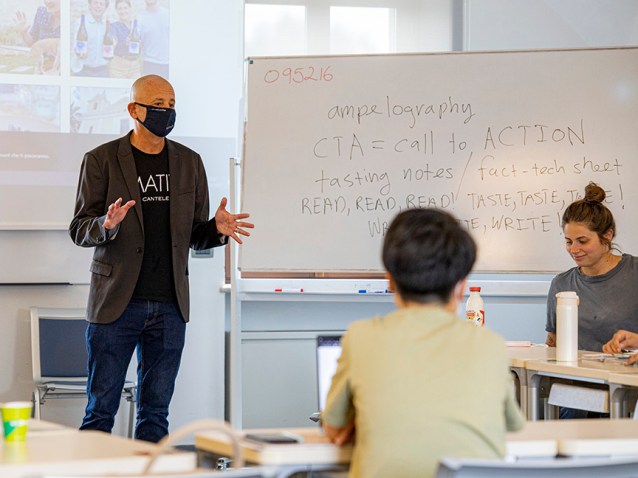
Our Thursday evening virtual wine dinner series at Roma continues: tomorrow night we’re hosting — via Zoom — Martina Molino, legacy grower at Mauro Molino in La Morra in Barolo (we’re tasting her 2017 Barolo Gallinotto); next week, my bromance Paolo Cantele is joining (tasting his 2015 Amativo, which is smoking right now btw).

Please visit our website for updates.

And behind door number three…

The Italy-America Chamber of Commerce is putting the final touches on the Taste of Italy Trade Fair and Festival, March 14 in Houston.

We’ve just confirmed a top Houston pit master for our “Texas BBQ and Italian Wine” seminar and a leading Houston sommelier for one of our wine seminars. Please stay tuned for details and feel free to hit me up if you want me to get you on our mailing list.

Thanks for all the support and thanks for loving Italian wine as much as I do! I hope to see you this month and beyond.

Gentle knowledge: an anniversary dinner we’ll never forget at Le Jardinier.

Above: Tracie and I celebrated our 12th wedding anniversary on Saturday at the extraordinary Le Jardinier in Houston.

It had been two years since Tracie and I treated ourselves to a splurge dinner. The last time was on our 10th wedding anniversary in January 2020 — the calm before the storm.

On Saturday night, the superb food and wine team at the extraordinary Le Jardinier at the Houston Museum of Fine Arts led us through their Michelin-style dining experience with panache and elegance.

Above: amberjack crudo topped with caviar paired wonderfully with Chateau Montelena Chardonnay.

We were seated along the window that looks out over the Cullen Sculpture Garden. We arrived about an hour before sunset and the view was nothing short of spectacular (check out the works in the installation here).

But beyond the food, which we enjoyed immensely, the thing that impressed me the most about the experience was the “gentle knowledge” of the staff.

On too many fine dining occasions, you sit through overly long-winded descriptions and explanations of the food and wine you are about to consume. Sometimes it feels like the paratext — the text about the text — is more important than the text itself!

Above: the green circle chicken paired brilliantly with Ogier Condrieu — yes, it was SPLURGE dinner! And we loved every minute of it.
I loved our rapport with our server. He imparted just enough information to help us shape our decisions on what to order. But when we wanted to dive a little bit deeper, we discovered that his knowledge of the food was as profound as his wonderful table-side manner was delightful.

He never crammed his spiel down our throats. He waited for us to be ready to digest it, as it were. It was nothing short of fantastic. And we loved every minute.

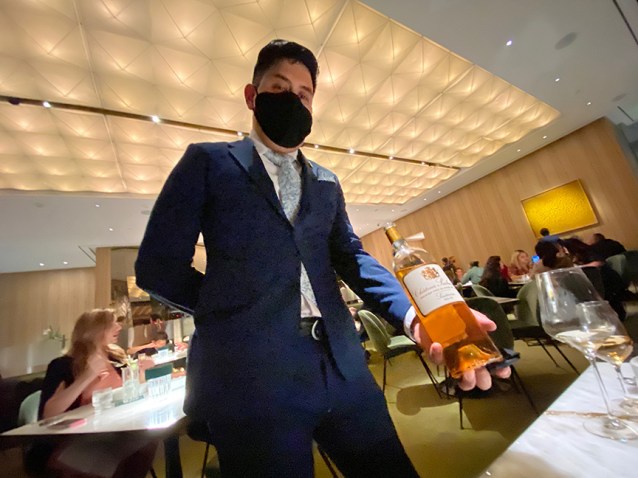
Above: my friend and colleague Andres Blanco, one of Houston’s top sommeliers, blew us away with his presentation and service. Thank you, Andres! That was amazing.

Similarly, the wine service was focused, informed, and guest-friendly. Sommelier Andres Blanco, whom I know from the Houston wine scene and my work on the Houston Sommelier Competition, engaged without ever lecturing, interacted without ever losing sight of our interests.

He was at our table as soon as we sat down to take our sparkling order. And as we enjoyed the Champagne he recommended, he “walked” us through our dinner and wine preferences without ever nudging. He only ever offered as much knowledge as we wanted to drink. And just like our food server, he had the chops when we wanted to learn more.

It couldn’t have been a more perfect evening and worth every penny. What a great restaurant! I can’t recommend it enough. Thank you, Andres. You were amazing!

Above: Tracie and I met through our blogs in 2007. By 2008 I moved to Texas to be with her and we were married in 2010.
Poo poo poo… as the old folks used to say where I grew up.

As Tracie and I celebrate our 12th wedding anniversary today (our actual date), there are simply too many blessings to count.

Our girls Lila Jane and Georgia, now eight and 10, are both thriving in school and in music.

Tracie’s been enjoying her first year as a realtor. My work has recovered and is going well.

And when I look at her, I just keep falling in love — over and over again.

Happy anniversary, piccina. Who would have thunk that a couple of crazy kids, broke and working in the wine industry, would manage to build the family that we have. I love you, I love you, I love you more than ever. Happy anniversary sexy, brilliant, wonderful lady! These have been the best — the very best — years of my life and they only keep getting better.

Scenes from the Slow Wine tour in Austin.

Above: My friend Paolo Pasini who makes wine in Valtènesi e Lugana.

It felt like there was electricity in the air at this week’s Slow Wine tour stop in Austin.

After a two-year hiatus (for the reasons we all too well), the tour finally came back to Texas.

Above: Valentina Di Camillo who makes wine at I Fauri in Chieti. I never knew that she was a concert pianist! We actually talked about pianos and not wine. She’s great.
Folks from both sides of the Atlantic were eager to connect, reconnect, and most importantly, do business.

And the Italians were all geeked to go out for BBQ, Tex Mex, and some old-fashioned honkytonking.

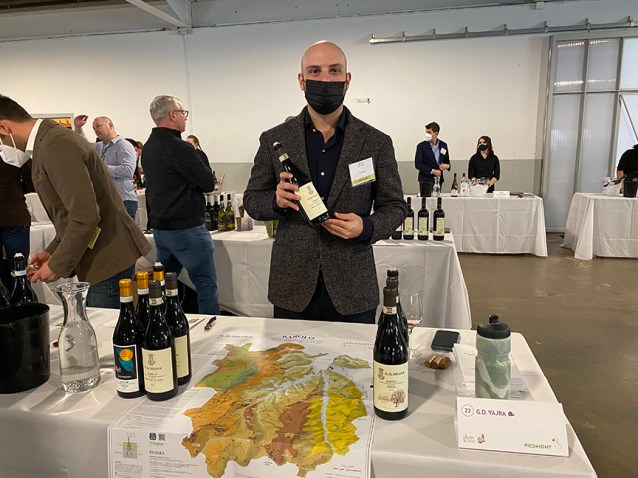
Above: Kevin Natoli who sells wine in the U.S. for G.D. Vajra.

It was cool to chat with Carlo Veronese, the director of the Oltrepò Pavese consortium.

Not only did he have a great flight of wines with him. He also had a sheet that listed their availability in Texas. We can use more Oltrepò in the U.S.!

Above: Oltrepò is a category that only has room to grow in America.
It was also wonderful to see some of the old Austin wine crew.

Tracie and I lived in the capital for six years and she worked in the wine industry before Georgia was born. Lila Jane was born in Austin, too.

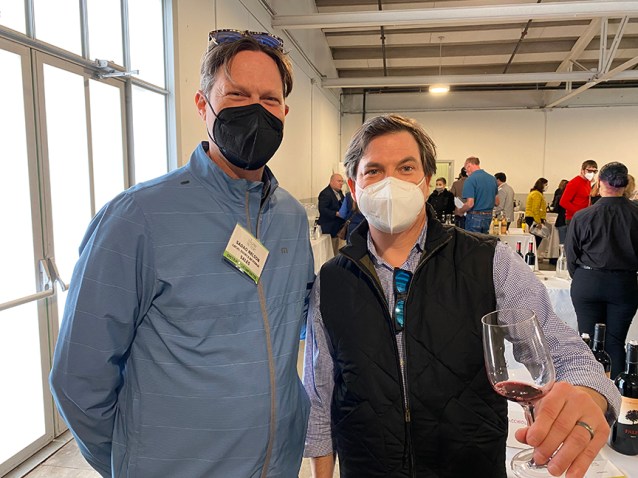
Above, from left: our friends Sadao Nelson from Local Source Beverage and Craig Collins from Vintus.

As much as we’ve all found new ways to do realtime business on video calls, there’s nothing like the real thing.

Thanks to Slow Wine for coming to Texas. With all the challenges we are facing these days, I know what a Herculean task that was. Thank you for making it happen. Safe travels to all.

Wine as art, art as wine in Renaissance Italy.

Above: frontispiece from a reprint of Agostino Gallo’s treatise on agriculture. See this wonderful post on the University of Florence Libraries website about Gallo and his work (in English).

Throughout the course of western history, periods of greater polity and prosperity have led to “golden ages” where artists and artisans have thrived and flourished.

Think of Hellenistic Greece or Augustan Rome where writers, scientists, and artists reshaped human knowledge, aesthetics, and human self-awareness.

The leading figures of Greek and Roman culture and their achievements would become the guiding lights of their counterparts during the Renewal of Learning in Europe in the 14th, 15th, and 16th centuries in Europe.

Proto-humanists like Dante, Petrarch, and Boccaccio — the “three crowns” of Italy’s Trecento (1300s) — would be the harbingers of Italy’s Renaissance with a capital R. The painters, sculptors, architects, craftspeople, writers, and thinkers who would follow continue to inform our aesthetic and critical sensibilities today. Even pop culture in the “age of mechanical reproduction” (see Walter Benjamin), with its petty references to Leonardo’s “Gioconda” or Michelangelo’s “David,” feels the influence of Renaissance Italy’s epistemological might.

In a parallel with our own age, it was only natural that the interest in wine — arguably the most intellectual of the agricultural arts — would rise in tandem with the fermentation of human thought.

The works of Renaissance-era ampelographers and viticulturalists like Andrea Bacci and Giovan Vettorio Soderini are evidence of this. As other Italian writers, aided by Renaissance Italy’s pioneering typographers (think Aldus Manutius), would publish books on manners and style (Della Casa) and politics and governance (Machiavelli and Castiglione), so too did Italy’s great manualists compose tomes on agriculture and viticulture. Think of the now neglected writings of Brescian agronomist Agostino Gallo whose Giornate dell’agricoltura et de piaceri della villa ([On the] Daily Management of the Farm and the Pleasures of Country Life) was a best-seller of its time and widely popular even beyond Italy’s borders.

Egged on by my dissertation advisor and friend Luigi Ballerini, whose been nudging me for some time to publish my research on wine writing during the Italian Renaissance, I’ve been diving into some of those delicious manuals in recent weeks. And by diving in, I mean reading the entire works and not just the often quoted, underlined passages that reappear in wine writers today.

I’m super geeked about some of my findings and I’m looking forward to publishing them later this year.

But I just had to share this nugella (nugget) from Soderini. In his Treatise on the Cultivation of Vines, composed at the end of the 1500s, he observes: “Just as art is destined to correct and modify many things in nature using human thought and diligence, similarly, in crafting wine, it is worthwhile to revisit and study the undeniable value of experience which forms the basis of the entire science of agriculture.”

Man, if that’s not Renaissance thought in a nutshell, I don’t know what is! The Renewal of Learning, after all, was a rediscovery of ancient thought repurposed and reimagined for the new age.

There’s so much to say about Soderini and other writers that I’ve been studying and I’m looking forward to sharing my findings. Some, I think, are going to inspire and compel.

Thanks for being part of my journey…

Houston Sommelier Competition, Taste of Italy, Simply Italian: upcoming wine tastings and events in the Bayou City. Taste virtually and in person.

There is SO much to be excited about in the Houston wine scene. But the event I’m most looking forward to is the return of the in-person Taste of Italy trade fair and festival and the Houston Sommelier Competition (that’s a photo of the winners from 2019, the last time the event was held in person).

And the even better news is that the Houston Sommelier Competition is now open to any and all wine professionals, from anywhere in the world. Only full-fledged members of the Court of Sommeliers are excluded from competing. You just need to be in Houston on the testing days to participate.

The competition is the brainchild of sommelier and wine buyer for Kroger Jaime De Leon (one of the coolest dudes in our business). Click here to read more and to apply.

Taste of Italy/Houston Sommelier Competition
March 13-14

The event will be co-presented by the Italy-America Chamber of Commerce on the occasion of Taste of Italy, to be held on March 13-14 in Houston. This year’s event is going to include a “BBQ and Chianti” tasting and seminar, one of the panels that will be open to consumers. It’s going to be fun. Stay tuned for more info on the festival and please check out the website here.

Also on deck for coming weeks:

Simply Italian
Wednesday, February 9

I’ll be presenting three seminars on Wednesday, February 9 at the traveling Simply Italian Tour in Houston. See the link for details and registration info. I’ll be leading guided tastings of Abruzzo, Moscato d’Asti, and Franciacorta (together with Franciacorta’s Riccardo Ricci Curbastro who will be joining via Zoom).

And our virtual winemaker dinner series at Roma also continues.

Virtual Winemaker Dinner: Frecciarossa (Oltrepò Pavese)
Thursday, January 20 “at” Roma

Tonight we have Valeria Odero and her 2013 Oltrepò Pavese Pinot Nero Giorgio Odero (super geeked for that wine and Valeria is awesome). Just a few spots available at this point.

Virtual Winemaker Dinner: Cordero di Montezemolo (Barolo)
Thursday, January 27 “at” Roma

Next Thursday, January 27, we’ll be welcoming Alberto Cordero and his Cordero di Montezemolo 2017 Barolo Monfalletto (!!!). Of all the great, historic houses of Langa, Cordero is possibly the one that Americans know least. The wines are super. I’m so stoked that you can now buy them across the U.S. (they’re imported now by Ethica Wines where I’ve been doing media consulting for the last couple of years).

Virtual Winemaker Dinner: Mauro Molino (Barolo)
Thursday, February 3 “at” Roma

And this just in… I just spoke to Martina Molino of Mauro Molino in Barolo. She will be joining us for her 2017 Barolo Gallinotto on Thursday, February 3.

There’s other cool stuff happening but I can’t spill the beans yet. Stay tuned.

And btw, I’ll be attending the Slow Wine tasting in Austin next Thursday (I’ll be there on the early side). Please say hi if you’re planning to come.

The dreaded “ZTL” and the evolution of the Italian traffic ticket.

From the department of “oops, I did it again”…

It happens to the best of us.

As American wine professionals have begun to travel to Italy again, it was inevitable that they would inadvertently commit a traffic infraction or two.

The most common ticket is for speeding. And today, enforcement of speed limits comes via electronic cameras (like the one in the photo below).

Speed limits are generally well positioned and visible. But occasionally, while driving on a country road in the dark, you’ll happen upon a small village where the speed limit is suddenly decreased and the signs aren’t so easy to discern.

That’s what happened to me the last time I got a speedy ticket in Italy while driving back to Siena from Montalcino one foggy evening.

Because most Americans have to rent cars to get around Italian wine country, the ticket goes to the rental car agency. The car companies don’t share the ticket with you but they do send you a notice that you have received a ticket. They also charge you a ticket processing fee.

Then the waiting begins.

In my experience, it takes about six months, give or take, to receive the actual ticket. By that time, it’s already long past the prompt payment period and you’ve already accrued a second fine for late payment.

The instructions for payment, often written in macaronic English (excuse the unintended pun), indicate the bank info for payment. But after you pay, you receive no confirmation from the traffic authority (at least in my experience). You just have to hope that sum has been received and processed.

The problem with not paying — whether because of negligence or spite — is that you can be black-balled by the rental companies. In the early years of the electronic systems (which started to come online after 2009), people who didn’t pay were often refused service at rental car counters when they returned to Italy. I heard of numerous instances when that happened to my traffic pirate colleagues.

The other top infraction is the encroachment of the dreaded ZTL or zona [a] traffico limitato, the limited traffic zone (dreaded even by Italians).

These areas, where only authorized local residents can drive, are intended to reduce congestion and pollution in urban areas. And the fines can be stiff.

When I returned to Bra in Piedmont last summer to teach at Slow Food U., part of the piazza where my usual hotel is located had been changed to ZTL. Unaware of the upgrade, I drove right through the zone as I tried to reach the hotel’s parking. Because the hotel, which also includes a restaurant, had expanded its outdoor dining, the courtyard where I used to park my rental was now closed off.

A few months after returning to the U.S., the notice (and fee) from the rental car company arrived. When I went back to Bra to teach in the fall, I went to the local police station and they printed out the ticket for me. I then took the ticket to a post office where they processed my payment.

But then, on Saturday of last week, more than six months after the infraction occurred, I received a letter from a third party requesting payment (despite the fact that I had already paid).

The good news is that the third party, European Municipality Outsourcing, is relatively easy to navigate. It even gave me the option to inform them that I have already paid (which I did).

I still haven’t received confirmation that they have received my message. And I still haven’t received a response from the email I sent them with my documentation (the receipt from the post office).

But I’m hopeful, if not optimistic, that I’ll be able to resolve the issue. It’s great to see that EU authorities have created a more user-friendly platform. I’m disappointed that I have paid and am now being asked to pay again. But hopefully, this will all be resolved soon. I’ll follow up with a post once the outcome is clear.

Thanks for reading and hoping this is helpful for future Italian travelers!

Read more about Italian and European traffic laws here.

Happy Martin Luther King Day! Today, we celebrate his life and work through activism.

Happy Martin Luther King Day!

As a chilly dawn breaks over Southeast Texas, a billboard with an image of Dr. King and one of his most famous quotes can be seen rising over eastbound Interstate 10, just a few miles west of the Louisiana border.

The image stands on MLK Dr., one of the main arteries of Orange, Texas where Tracie grew up and where we often visit our family with our children, ages 8 and 10.

Our girls, Georgia and Lila Jane, know a lot about Dr. King, his life and legacy. They know that only a generation ago he fought for all Americans to enjoy the freedoms of living in a democracy. They know that he ultimately gave his life in his ceaseless efforts to make our country a true democracy, one where all people, regardless of their color, could live without fear of authoritarian violence and suppression.

They know little of the insidious efforts of neo-Confederates like the Sons of Confederates Veterans who unveiled a newly built monument along MLK Dr. in Orange in the shadow of I-10 in 2017.

They know little of the Sons’ main propagandists, the Kennedy brothers, who sell their books on the Sons’ website — books like Was Jefferson Davis Right?, Rekilling Lincoln, and The South Was Right (also available on Amazon).

They know little of how their neo-Confederate foot soldiers, like the ones who raised the monument in Orange, claim to be merely celebrating their “heritage” and “history,” as they like to put it.

They know little of the historic, collective suffering the Black community in Orange has endured for generations since slavery, Reconstruction, and Jim Crow.

They know little of the pain that residents, Black and White, feel when they drive past the Sons’ neo-Confederate memorial when they drive to work each day.

Georgia and Lila Jane drove by those flags just a few months ago when they attended their great-grandmother’s funeral. She worshipped at a church just a few miles up the road from the monument. Between the church and graveside services and then the reception that followed, they passed by the site four times. But they hardly know what those flags mean and what they represent to the people who live here.

They do know that their parents, with the help of generous donors, have raised the billboard that today appears across the road. They know that each year their family visits Orange on MLK Day to march in the city’s historic MLK Day parade (now on hold because of health concerns). They remember that they themselves have marched in that parade in years past.

Happy MLK Day! Please check out Jelani Cobb’s excellent essay for the New Yorker this week, “Martin Luther King, Jr.’s History Lessons.”

Tracie and I share our heartfelt thanks with everyone who contributed to our Go Fund Me campaign to raise the billboard this year. It was first posted on Friday and will remain in place throughout Black History Month (February).

Read more about our ongoing efforts to repurpose the site on RepurposeMemorial.com.