At Gemma, a Bartender Can Be Your Best Friend

The rain has finally started to fall in NYC and the city has turned grey as it does every year around this time. My heart is heavy and my life unsettled but I am trying to pick up the pieces in the wake of this summer’s tsunami.*

Friends have been reaching out, lending support, sometimes with an email letting me know that they think of me, sometimes with an invitation to dinner and/or a bottle of wine, checking in and catching up.

Ben Shapiro — an old buddy, a great drummer, and radio producer, cinematographer, and journalist — wrote me the other day and we made a date to check out one of the many new downtown places.

I wasn’t inclined to like Gemma. I figured it would be another Da Silvano, Morandi, etc. rip-off, yet another Disneylandish, faux trattoria. And frankly, The New York Times food critic Frank Bruni wasn’t too off the mark when he wrote that Gemma is “a cheat sheet of a restaurant whose proprietors take fewer risks than a hurricane-insurance agent in Nebraska.”

faux_trattoria.jpg

Above, you’ve seen it before: faux trattoria chic. It’s like dining in Fantasyland… Europe via Anaheim.

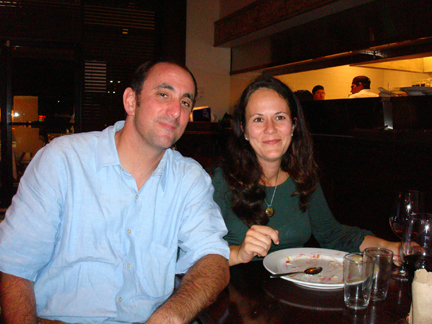
So, when I arrived (shortly before Ben), and sat at the bar where I chatted briefly with NYC restaurateur Chris Cannon (my only pseudo-star siting), I decided to get right down to business.

“Do you have any white wine that doesn’t see new wood?” I asked the bartender. And I was pleasantly surprised when he said, “Yes, of course, I’ve got a beautiful stainless-steel Sauvignon.”

He proceeded to pour a fresh and delightful 2006 Sauvignon Blanc by Poggio Salvi (who makes both barriqued and traditional wines, btw). You don’t commonly find bartenders with such wine knowledge in places like this, let alone someone who can appreciate that there are those of us who don’t like oaked wine. (In his column this week, The New York Times wine critic Eric Asimov pointed out rightly that “Oaky may be bad, but oak is good.” I may have tempered that by saying “but oak can be good.” Nonetheless, I was glad to see such a widely read authority like Eric tackle such a sticky subject.)

Ben arrived and we decided to let our bartender order for us: excellent Quattro Stagioni pizzas and a simply gorgeous bottle of 1999 Brunello di Montalcino by La Torre, a winemaker you don’t see very often in the U.S. (I remember it from my days in Bagno Vignoni where I first learned about Brunello nearly twenty years ago with my friends, the Marcucci brothers). Traditional in style, this wine had natural fruit on the nose and in the mouth, bright acidity and tannins that probably could have used a few more years in bottle. Case, our bartender, insisted on decanting the wine for us and the aeration helped it to open up.
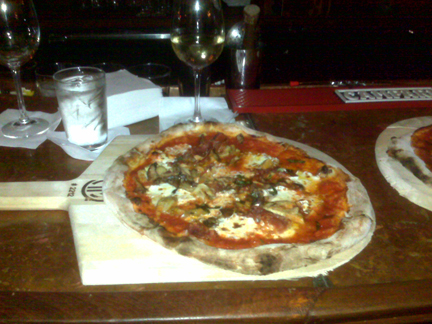
gemma_pizza.jpg

Above: the Quattro Stagioni pizza at Gemma, I have to say, was among the most authentic Italian pizza I’ve had in NYC. The crust was light but crispy and firm, the topping savory but not overly salty.

Truth be told, the list at Gemma isn’t exactly overflowing with wines that I like (at the end of the night, one of the sommeliers poured us a barriqued Aglianico del Vulture that tasted like industrial coffee syrup). But there are some true gems at Gemma, like a 2006 Verdicchio dei Castelli di Iesi by Villa Bucci (one of my all-time favs).

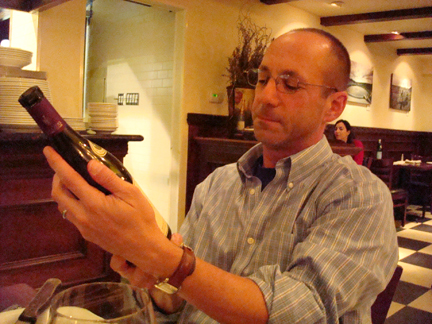
But what made the night was a great bartender, who knew his stuff and who understood my palate from the moment I sat down. Maybe Frank should have eaten at the bar.
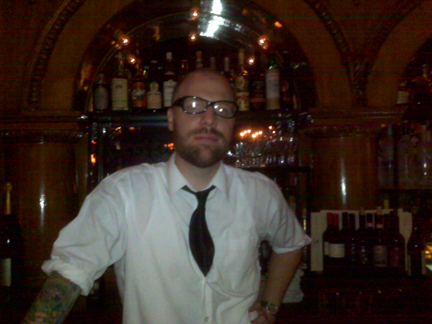
gemma_tender.jpg

Above: Case Newcomb, a great bartender and this man’s best friend at Gemma. Pour me some Brunello and I’ll tell you some lies.

*This old earthquake’s gonna leave me in the poor house.
It seems like this whole town’s insane.

— Gram Parsons
The Lice of Wine Writing Redux

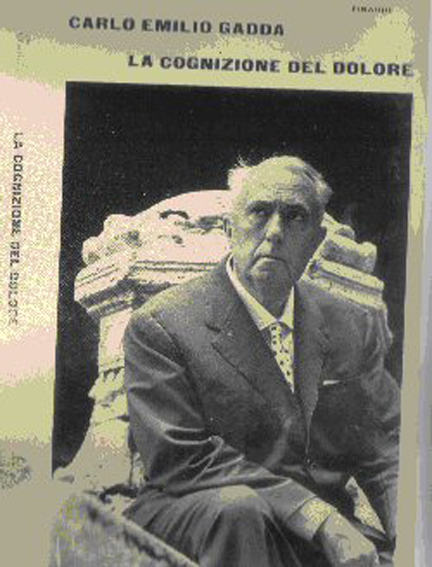
For propriety’s sake, this post must begin with an errata corrige: my recent post on my dinner with Leslie Sbrocco included an erroneous literary attribution (to Eugenio Montale). In fact, it was twentieth-century Italian novelist Carlo Emilio Gadda who wrote: “Pronouns! They’re the lice of thought. When a thought has lice, it scratches, like everyone who has lice…. and they get in the fingernails, then… you find pronouns, the personal pronouns.”

“Ah! the world of ideas! What a fine world! Ah! this, I, I…,” says Gadda’s autobiographical character Gonzalo in Acquainted with Grief, “among the almond blossoms… then among the pears […] I, I… the foulest of all pronouns!”*

gadda.jpg

Above: Carlo Emilio Gadda, the great twentienth-century Italian novelist. We’ve all been “Acquainted with Grief,” haven’t we?

Over the weekend, in speaking with journalist and wine writer Peter Hellman about all of the upcoming tastings and wine events in NYC, we shared our dismay at the state of wine writing today and what I like to call the “lice of wine writing”: tastings notes so impossibly subjective, so beleaguered by the presence of the “I,” that they are bereft of meaning.

An avid reader of wine writing, Peter pointed out the absurdity in a recent promotional email where two very famous wine publications were quoted about the same wine:

Parker: “The 2003 Cornas La Louvee is a blockbuster. Glorious aromas of flowers, blackberries, roasted meats, espresso roast, and white chocolate flow from this full-bodied, concentrated, modern-styled, impressively-endowed, full-throttle Cornas. Drink it now and over the next 15+ years. 93pts”

Wine Spectator: “Tight and structured, with lots of iron and mineral notes framing the black cherry, plum, briar, tar and olive paste flavors. Long finish sports mouthwatering acidity. Very impressive for Cornas in 2003. Best from 2007 through 2015. 800 cases made. 92pts”

As Peter pointed out rightly, the tasting notes in the two passages are “mutually exclusive.” As I’ve asked many times before, how can a wine really taste like so many different things? And, come on, “mouthwatering acidity”? What the hell does that mean?

He also directed me to the website of Château Palmer where a similar discongruous hypertext emerges. Of all the I-can-taste-and-write-more-descriptors-than-you descriptions that I found there, the only one that showed some sanity was the wise Jancis Robinson, who, it seems to me, always takes a much more objective approach to wine writing and tasting notes, a style much more real and accessible to both the expert and the lay person:

Very, very deep crimson. Very intense and nervy – impressive on the nose – but more obviously big and fruity than the more delicate Ch Margaux… Slightly charred and smoky. Round and fresh and very beguiling. Real lift and only the slightest hint of inkiness on the finish. Bravo! Very fine tannins – very suave and polished with good density while still being Margaux. Very sweet. Hints of modern idiom but very gentle. Super silky texture. Sinewy – but polished sinews!

Hers is a more poetical approach and she avoids the subjective virtuosismo of the Parkers, Wine Spectators, and Tanzers, who just can’t resist the “I taste this, I taste that” one-upmanship** (as Peter pointed out, Tanzer is probably the only person in the world who knows what “Vermont granite” tastes like… Next time I go to Vermont, I’ll be sure to eat some).

When will wine writers come to their senses (pun intended) and realize that these overblown descriptors are the lice of wine writing???!!!

When I read “blackberries, roasted meats, espresso roast, and white chocolate” and “black cherry, plum, briar, tar and olive paste,” I scratch my head and like Gadda’s Gonzalo, I find lice in my fingernails — the lice of wine writing.

—

*Gadda, Carlo Emilio, Acquainted with Grief (original title: La cognizione del dolore), translated from the Italian by William Weaver, Braziller, New York, 1969, p. 86.

For the original Italian, see: ibid., La cognizione del dolore, Einaudi, Torino, 1970 (1963), p. 123.

In the passage, Gonzalo (Gadda) tells his doctor that he doesn’t need anyone but himself for a diagnosis of his ills, anyone but his “I.” Then, all of a sudden, a thought bursts from his mouth:

“Ah! the world of ideas! What a fine world! Ah! this, I, I… among the almond blossoms… then among the pears […] I, I… the foulest of all pronouns!”

The doctor smiled at this outburst; he didn’t understand. Still he seized the chance to direct into more serene channels their words, if not the man’s humor and thoughts.

“And why, for God’s sake? [the doctor asks Gonzalo] What have they done wrong, pronouns? When a person thinks something or other, he still has to say, “‘I think…'”

“Pronouns! [Gonzalo answers] They’re the lice of thought. When a thought has lice, it scratches, like everyone who has lice…. and they get in the fingernails, then… you find pronouns, the personal pronouns.”

**I write anti-chauvanistically “one-upmanship” and not “one-up-personship” because I believe that women have finer noses and palates in wine tasting and that they dispense with the ever-present male bravado that accompanies wine enthusiasm and connoisseurship.

Nothing to write home about but a good Bordeaux white

New York is one of the great restaurant cities of the world. So many restaurants and wine bars open and close so quickly in this town, that it’s often hard to keep track. And while there is a lot of great food here, there’s plenty of bad to go around as well. I’ve had a lot of free time on my hands lately and no kitchen to cook in, so I’ve taken the opportunity to try some new — well, new for me — places.

white_talbot.jpg

Above: the only thing I liked about Quality Meats was a few interesting wines on the list, including this Caillou Blanc 2004 Château Talbot.

A few nights ago, Greg and I — we’re both steak lovers — dined at Quality Meats, a recent addition to the Smith & Wollensky mediocrity group. The decor was kinda cool: the restaurant is dressed as a old-school meat locker, with hooks on the ceiling etc.

Our gracious waiter — who later abandoned us when the restaurant got busy — recommended that we not order the rib steak for two (“it can be too fatty,” she said) and so we both ordered the sirloin, bone in, black and blue. Greg’s came so charred that he said it tasted like charcoal. Mine was medium rare and not charred at all on the outside. We also both ordered Caesar salads: the dressing was insipid (“no anchovy,” our waiter said) and the croutons store-bought.

While the wine list was laden with the classic, over-priced, over-oaked, and overblown “Napa Cabs,” there were a few interesting wines like Sinskey, Olga Raffault (we drank the 2002 Les Picasses at a really great price), and a wine I’d never had, Caillou Blanc 2004 Château Talbot, a white made from Sauvignon and Sémillon. You rarely see white Bordeaux in NYC and Greg and I immensely enjoyed this dry, structured wine.

rice_balls.jpg

Above: the chef at Centro Vinoteca needs some Italian lessons.

Another recent outing took me to the very new Centro Vinoteca in the Village to meet a good friend of a friend, Ariel, who has just joined the ranks of us wine professionals. I really wanted to like Centro Vinoteca: the list is all Italian and has some great stuff, including a Verdicchio dei Castelli di Jesi Classico Superiore Vigna delle Oche 2002 San Lorenzo that was fantastic. I got there early (about 5:50 p.m.) and the place was empty and I sat at the bar. My waiter was knowledgeable and skilled and was happy to open a new bottle for me when I told him the wine he had poured — open from the night before — was dead. They serve wines by the quartino there and the prices are very reasonable for the quality (“wine by the quartino,” equivalent to roughly 2.5 glasses depending on how you pour, is a Batali-Bastianich affectation, but more on that below).

But by the time Ariel arrived, about 20 minutes later, the place was packed, we lost our good waiter, and our new waiter simply didn’t know how to open a bottle of wine. Ariel wanted to try the Verdicchio and so our new waiter opened it by swirling the bottle around to rip the capsule off; she inserted the worm incorrectly and broke the cork as she pulled it out; and then — to my disbelief — she inserted the worm again, put the bottle between her knees (!!!), and ripped the cork out. After Ariel tasted the wine and opted instead for a Falanghina, the waiter poured the Falanghina into the Verdicchio glass. Oy…

Trying to move past this mishap, we did order a few things from the menu. The arancine (above) turned out not to be arancine but just simple fried rice balls dusted with some grated pecorino. Throughout Italy, arancini (masc.) are fried rice balls stuffed with meat, cheese, and/or peas. A classic Sicilian dish, the are called arancine (fem.) in Palermo and Western Sicily, arancini (masc.) in eastern Sicily and the rest of Italy.

We also ordered — partly because it seemed so preposterous — the mortadella pate [sic]. I guess the person who types up their menus doesn’t know how to use diacritics. This dish consisted of ground mortadella. I know that mortadella is “in” these days but why ruin it by destroying its texture?

My first waiter, whom I liked, mentioned that the chef at Centro Vinoteca had been Mario Batali’s sous chef on the Iron Chef TV show. Evidently she learned a lot from Molto “make-it-up-as-you-go-along-and-then-claim-it’s-authentic-Italian-food” Mario. The so-called quartino is another Batali-Bastianich affectation that you never see in Italy. It’s really too bad… I really wanted to like Centro Vinoteca. The wine list there is interesting but the service and the affectation just ruined it for me.

An Odd Couple: BBQ and 1996 Barbaresco Pora

odd_couple1.jpg

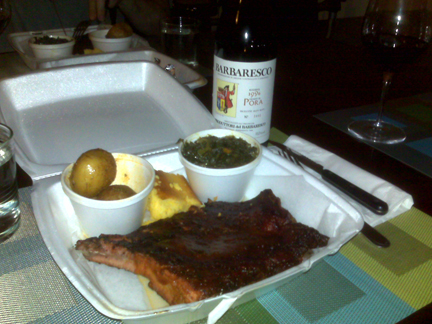
Above, an odd couple, styrofoam and crystal stemware: Produttori del Barbaresco 1996 Barbaresco Pora (Cru) paired with bbq ribs from Dinosaur (take-out from Harlem).

Life has always been full of surprises — some good, some not so good — and I am still coming to terms with the recent changes in my life. Frankly, it’s not been easy. Luckily and thankfully, I have been offered a place to stay through the end of the year by my good friend and bandmate Greg Wawro, who is not only the drummer in my band Nous Non Plus (codename = Prof. Harry Covert) but is also a distinguished professor of Political Science at Columbia University.

Greg is a true gourmand and cheese connoisseur. Over the years, on the road and in the apartment where I used to stay, we have enjoyed many a great meal together and many a great bottle of wine. On the occasion of my first night at his apartment, he ordered ribs from one of his favorite barbeque restaurants, not far from his place near Columbia University, Dinosaur BAR B QUE.

A few months ago, when I had to scramble to find a place to live, Greg generously let me store my wine library at his apartment. While Lambrusco would have been my wine of choice to pair with bbq ribs (which were pretty darn good, btw), the closest bottle at hand was a Barbaresco Pora 1996 Produttori del Barbaresco, one of my favorite crus (single-vineyard wines) from one of my all-time favorite producers. Bottlings from the legendary 1996 vintage in Langhe (Piedmont) will probably drink at their best in another 10-20 years but this bottle drank superbly nonetheless (however oddly paired). The fruit and acidity were vibrant, the tar and rose petal flavors rich, and a few more years in bottle would have softened the tannins, which were still very pronounced.

Of all the Produttori del Barbaresco Crus, Pora tends to be the “softest” and it “evolves” more quickly than the others (Asili is perhaps the most coveted and long-lived).

Here’s what Produttori’s winemaker Aldo Vacca has to say:

“PORA: The Dolce Vita Wine. The sandier soil gives to the Pora wine a smoother character, tannins are soft and the aromas always tend to evolve a little faster. This vineyard shows a more exotic character, sometime earthier, than others; it has a ‘lay back’ attitude and it makes me feel like I want to sip it resting in my comfortable armchair, eating pieces of Parmigiano Reggiano cheese, watching an old Fellini movie.”

Although the tanginess of the sauce on the ribs wasn’t the ideal pairing, the wine drank beautifully and opened up nicely, the tannins mellowing by the time we poured the last glass.

Life has thrown me some truly “odd” curveballs over the last few months and so an “odd couple” of Barbaresco and BBQ didn’t seem so strange.

oscar_felix.jpg

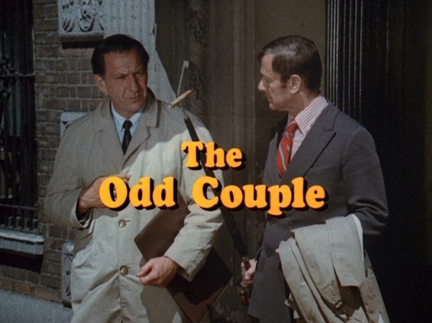
On November 13, Felix Unger was asked to remove himself from his place of residence. (Unger’s unseen wife slams door. She reopens it and angrily hands Felix his saucepan) That request came from his wife…

“Acidity is like a bra”: Dinner with Leslie Sbrocco

Addendum: please look for another post of the “Lice of Wine Writing” coming early next week.

There are wine writers and then there are wine writers. Friday night found me at an undisclosed location dining with the lovely and immensely charming Leslie Sbrocco, whose entirely novel approach to wine writing and tasting has made her one of the most popular wine personalities in the U.S. today (not to mention the fact that she’s simply a lot of fun to be around).

leslie.jpg

Leslie launched her wine-writing career with a book written expressly for women, the aptly titled Wine for Women, and has written for countless newspapers, magazines, etc.

What I like about her approach to wine is that she avoids the canonical wine descriptors and encourages her readers and audience to draw from their own personal experiences to describe the wines that they are tasting.

The celebrated twentieth-century Italian poet Eugenio Montale once wrote famously — or at least this quote has been attributed to him — “i pronomi sono i pidocchi della poesia,” “pronouns are the lice of poetry.”

ERRATA CORRIGE: Montale did not write “pronouns are the lice of poetry.” (I realized my graduate-school-days memory was a little rusty so I did some snooping around until I found the correct attribution.) In fact, twentieth-century Italian novelist Carlo Emilio Gadda wrote: “Pronouns! They’re the lice of thought. When a thought has lice, it scratches, like everyone who has lice… and they get in the fingernails, then… you find pronouns, the personal pronouns.”*

To borrow [Gadda’s] phrase, affected tasting notes are the lice of wine writing and tasting.

Here’s a great example, drawn from the website of a restaurant in Boston:

“2003 (Oregon) Chardonnay, Willamette Valley, Clos du Soleil, Domaine Serene ~ rich aromas of mineral, lime, toast, fig; rich and round palate of peach, pear, star anise, clove, long creamy finish 67.00”

Of all the wine made in the U.S., I find the Willamette Valley’s style among the most palatable and had some great Pinot Gris when I traveled through there with Nous Non Plus. But, for crying out loud, is it really possible for a wine to taste like all of those things? And while there are many wine professionals out there whose noses are so well trained that they can indeed perceive different levels of flavor and aroma (sometimes called secondary and tertiary), is there really someone out there who can taste all of those descriptors? I don’t want to taste wine that tastes like that (if it really does). Of all the affected wine descriptors, I think my favorite is “star anise.” I mean, when is the last time that anyone put star anise in their mouth?

I can’t even count how many times I’ve seen people turned off when they hear some would-be wine expert/snob rattle off a series of descriptors that most people would never have had any contact with let alone relate to. The best way to describe wine is to draw from your own personal experience and memory. That’s what is so great about tasting wine, especially when you taste it in the company of others. That’s the eureka moment of wine tasting: when two people find that they share a common sensation and sensorial memory in the act of tasting wine. (I do like this glossary of wine tasting terms, which eschews the affected terminology that you find among the ostentatious and the barkers.)

This summer when I was invited to a tasting of nine Barolos in the home of Jay McInerny (we also drank a Chablis Butteaux 1992 Raveneau and Hermitage Blanc L’Orée 1991 Chapoutier from his cellar for dinner), he complained to me about how the editors of his wine column insist that he provide tasting notes. Wouldn’t the world be a better place, we mused, if instead of writing tasting notes, wine writers wrote poems about the wine they taste?

As we enjoyed a Chambave Rosso 2004 Le Muraglie Ezio Voyat (from the Valle d’Aosta, one of my favorite wines), I told Leslie how much I admired her for making that break from the conventions of wine tasting and wine tasting notes and how I felt that it resonated with her readers and audience. It’s people like Leslie who are helping to make wine approachable and accessible to a whole new group of people, who would otherwise be intimidated and turned off by wine.

“One of my favorite examples,” she told me, “is how I help people to understand what acidity [in wine] is. ‘Acidity is like a bra,’ I tell them. ‘It holds everything up.'”

*Gadda, Carlo Emilio, Acquainted with Grief (original title: La cognizione del dolore), translated from the Italian by William Weaver, Braziller, New York, 1969, p. 86.

Summer 07 Ends, Eating Raoul’s and Drinking 1990 Chinon

raffault_1990.jpg

The summer of 2007 will be remembered — in my mind at least — as the summer that I quit my full-time day gig (September 7 was my last day as Marketing Director at the group that runs Centovini, I Trulli, and Vino), the summer that Nous Non Plus went back to France for the second glorious time, the summer that I turned 40, the summer of my official mid-life crisis, and the summer that I fell in love with Cabernet Franc and Chinon.

The seemingly endless and at-times-painful summer of 07 (for there was a promise that unraveled sadly, as well) came to an end on Sunday, September 23 at 5:51 a.m. (or so they say), the day after Yom Kippur and the day after my mother’s birthday.

The night before I left for California (to spend Yom Kippur and my mom’s birthday with the family) was a summery evening in New York and the city was bustling with the last notes of warm-weather partying. I found myself downtown with a wine biz bud and we couldn’t get a table anywhere: Blue Ribbon was packed to the gills, Balthazar was as bustling as Belshazzar’s Babylonia, and a Bellini sludge sparkled and shimmered as it oozed over the sidewalk at Cipriani into the gutter.

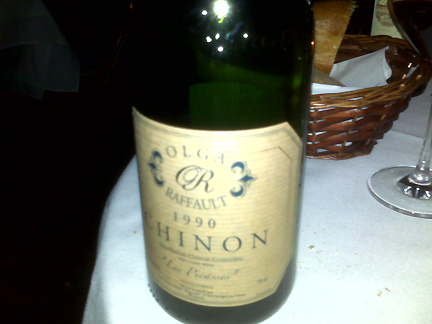
The solution? Raoul’s… where the colorful characters and the Negronis (with maraschino garnish) took the edge off a thirty-minute wait for a table. Our reward? The best seat in the house — the deuce in the corner of the dimly lit garden — and a wine list that included a 1999 Lopez de Heredia Viña Bosconia (“the best Burgundy in Rioja,” our skilled and sharp-witted sommelier noted), and a 1990 Domaine Olga Raffault Chinon Les Picasses, both at very reasonable prices.

I had never been to Raoul’s, a true downtown New York experience where locals with thick eastcoast accents and full heads of hair (some real, some faux) gather, an authentic 1970s scene, too upscale for Scorsese’s Mean Streets but not mundane enough for Allen’s Manhattan.

The Viña Bosconia was light and fresh and went well with my frisée salad (laden with lardoons and topped with a runny egg).

The 1990 Chinon was simply sublime. I’d been drinking Chinon all summer (in Paris and New York) but had never had the chance to drink any older vintages. The 1990 single-vineyard Raffault teemed with the wonderful vegetal flavors that Robert Parker seems to despise — he once wrote infamously, “I have found the majority of these wines (made from 100% Cabernet Franc) to be entirely too vegetal and compact for my tastes” — and it paired beautifully with my steak au poivre, the house specialty at Raoul’s. The wine had a delightful freshness — impressive for a seventeen-year-old wine — and we enjoyed every drop.

By June of 1990, I had finished my first year of post-grad studies at the Università di Padova (where I met my friend, cineaste and novelist Mauro Gasparini, whose excellent blog, I recently discovered). I spent the rest of the summer in San Diego living at home and working as a bike messenger, preparing for the doctoral program at the UCLA Italian Department where, in September, I began teaching Italian language.

I never could have imagined that the summer of 2007 would find me working as a writer and a copywriter on the New York food and wine scene. But stranger things have happened. Hopefully, even stranger things will happen yet.

eating_raoul.jpg

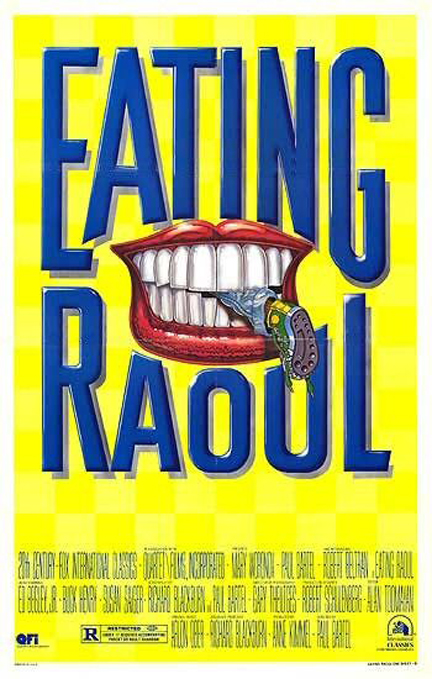
Above: Eating Raoul, 1982. Isn’t funny that the male lead works in a wine store? Well, it seems funny now.

Mexican Nebbiolo? A night with family at Restaurante Romesco in Bonita, CA

Above: the smoked Sea of Cortez marlin, thickly sliced, was a show stopper at Restaurante Romesco in Bonita, CA.

The Parzen family traveled southward from La Jolla yesterday evening toward the Mexican border to beautiful Bonita (about 10 minutes from the Otay Mesa border crossing) where we celebrated Judy Parzen’s birthday at Restaurante Romesco, a wonderful, elegant strip-mall restaurant that bills itself as a “Baja Med Bistro.”

Above: grilled tacos stuffed with shrimp and mozzarella.

Micah and Marguerite, Tad and Diane, and yours truly raised a glass to celebrate Judy’s birthday (actually the day before, September 22, which happened to fall on Yom Kippur this year). It had been so long since we’d all been together as a family for a holiday and although we’re all sad about how my life has been changing, it was great to be together as a family for the holiday and our mother’s birthday (the last time was four years ago… but things were a lot different then…).

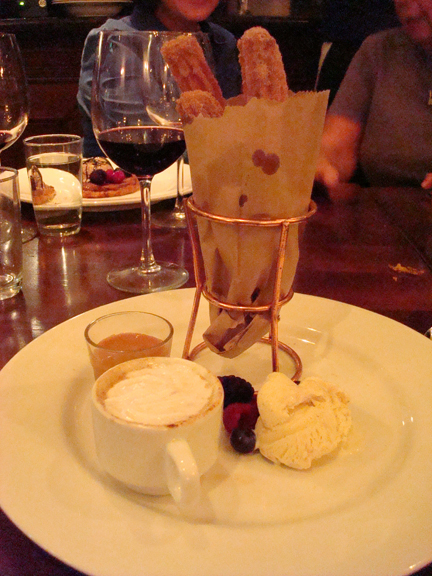
Menu highlights: excellent smoked Sea of Cortez marlin, thickly sliced and drizzled with vinaigrette (made in Ensenada, our waiter, Omar, told me); tacos stuffed with sliced tongue that had been braised in a tomato-chili sauce, very tasty; grilled tacos stuffed with shrimp and mozzarella (I didn’t think I’d like the combination of seafood and plastic cheese, partly, I must admit, because the dairy-seafood combination is a taboo in some parts of Europe, but this taco was fantastic); and piping hot churros, just firm on the outside, their dough creamy on the inside, rolled in cinnamon sugar.

Above: the dough inside the churros was creamy and the dish came with a demitasse of Mexican hot chocolate and a caramel dipping sauce.

The wine list is nothing to write home about. We drank a very forgettable Albariño and commercial and regrettably barriqued Tempranillo, both from Spain. But the cellar at Romesco also features some Baja California wines and when the waiter told me that his favorite was a Nebbiolo, I had to try it.

The 2002 Nebbiolo by winery L.A. Cetto is proudly aged “14 meses en barrica de roble francés” according to the website (14 months in French oak barriques). For those who know me and read my blog, you know that I’d rather drink mayonnaise soda* than barriqued (oaked) Nebbiolo. The wine was concentrated and alcoholic and didn’t taste anything like Nebbiolo. Only a handful of Californian winemakers have grown Nebbiolo (mostly in Central Coast) and I was truly surprised to see that someone was doing it in Baja California. I can’t say I liked the wine but was impressed by its novelty. I wonder how it would have shown if it hadn’t been barriqued. One of the unique things about Italy and its wines is that while international grapes (Cabernet Sauvignon, Cabernet Franc, and Merlot in particular) have been cultivated and vinified in Italy with great success, native Italian grape varieties have yielded disastrously disappointing results abroad. You can take the grape out of Italy but you can’t take Italy out of the grape… I guess.

Above: my sister-in-law Diane, left, and Judy share a laugh.

But I believe in drinking wines appropriate to the occasion and the place, and, ideally, wines made by and for the people who prepare your food. It was exciting to drink “locally” and to discover what Baja winemakers are doing. Our waiter, Omar, whose wine service was very good, was proud of this bottle and I was proud to taste it at this excellent restaurant.

Above: brother Micah and my sister-in-law Marguerite.

And… you know… to quote a phrase, sometimes it’s not the wine you drink but whom you drink it with and where that matters.

You may have known that all the time, but I’m learning it these days.**

Above: brother Tad contemplates Mexican Nebbiolo.

*Life’s like a mayonnaise soda
And life’s like space without room
And life’s like bacon and ice cream
That’s what life’s like without you

— Lou Reed

**Love is so simple
To quote a phrase
You’ve known it all the time
I’m learnin’ it these days.

— Bob Dylan

No Place Like Home

After all the recent (and drastic) changes in my life, I didn’t have anywhere to attend High Holy Day services in NYC and so I decided to come home, where I spent Yom Kippur with my brother Tad, his wife Diane, their kids, and my mom Judy at Temple Beth El in La Jolla, where I had my Bar Mitzvah some twenty-seven years ago (when this now thriving congregation worshipped in the living room of a house on La Jolla Scenic Dr.).

The services were good, my fast was easy, and it was great to be with my immediate family (hadn’t spent the holidays with them in way too many a moon). Rabbi Graubart, who plays a pretty mean Havdalah service on 6-string (Yom Kippur fell on the Sabbath this year), gave a good sermon on forgiveness (citing the story of Joseph and his brothers), something the world — and my life — is in need of (both to give and to receive). We broke the fast at Tad and Diane’s, where, after dinner, I played guitar with my nephew Cole, who’s getting really really good.

view_bahia.jpg

Above: the view from Bahia where I grinded down on a Carne Asada Burrito with Guacamole and drank a beer with my bro Micah.

Today (Sunday), I went to one of my all-time favorite taco stands, Bahia Don Bravo on La Jolla Blvd., with my brother Micah, who, like brother Tad, is a super successful lawyer based in San Diego (he also has a Ph.D. in anthropology from Case Western).

I found this crazy site called Burritophile that lists the address and phone number etc. And I thought that I had too much time on my hands!

The weather is beautiful today (we’re about to go down to the La Jolla Cove and jump in the water) and we sat outside where we both ate Carne Asada Burritos with Guacamole and drank a Negra Modelo.

The burrito’s chopped onions, cilantro, tomatoes, and guacamole were fresh and the beef tasty. And, man, that beer tasted good as we gazed out at the water (which was looking particularly beautiful today, with different layers of blues and greens).

Life sure has been crazy lately and it’s been a really, really hard time for me. It’s good to know that some of the good things in life don’t change… like a Carne Asada Burrito and a beer on La Jolla Blvd. a few blocks from my old elementary school, Bird Rock Elementary.

“The Big Test for High[ly] Alc[oholic] Wines”

A few days ago, my older brother, Tad Parzen (a top-knotch lawyer who owns and runs a governmental/educational/legal consulting firm in San Diego, CA, and who has worked with a number of the state’s biggest school districts), introduced me — via email — to the wine program manager at Jonathan’s, a gourmet grocery and wine store in La Jolla where we grew up (and where Tad, his family, and my mother still live).

Since I had just read the recent article on Darrell Corti and “Zingate” in The San Francisco Chronicle, I sent him the link and asked for his perspective. Here’s what he wrote back:

“Hey Jeremy, The Corti Bros. are definitely stirring the proverbial wine pot out here, but the high alc wines just keep coming. I’m a fan of both old world rustic elegance and new world lush, lip smacking wines. The big test for quality high alc wines is their ability to maintain appropriate amounts of acidity and minerality. [italics mine] Obviously, balance is the key. When people ask me why domestic wines have more fruit and alcohol than the old world versions, my cliche’d response goes something like: when did you start drinking coca-cola and when they tell me, I generally say that is when europeans had their first glass of wine. Speaking of trends, for every 1 bottle of old world wine purchased at the store, at least six domestic bottles are purchased. Definitely stop by the shop next time you’re out here…

Happy drinkin,
Patrick”

I like his analogy about Coca Cola: Americans (and Californians in particular) want their wine to taste like soda pop and not like wine… and I guess there’s nothing wrong with that. In fact, as Patrick points out, “for every 1 bottle of old world wine purchased at the store, at least six domestic bottles are purchased.”

But I am disconcerted by the notion that a highly alcoholic wine can be balanced. With today’s technology (whereby fermentation is accelerated and whereby the water and alcohol in wine are separated — through “reverse osmosis” — and then blended back together), it’s easy to make wine with high alcohol content.

Minerality and good acidity come from nature, from the fruit and the land, and can only be achieved naturally (although many Californian winemakers, even high-end wineries, actually acidify their wines by adding acid! Why do you think that so many people complain of headaches after drinking fancy Californian wine?).

In fact, the highly alcoholic wines of California are by their nature imbalanced and don’t taste like wine. They smell like alcohol and they taste like “tobacco”, “chocolate”, “boysenberry pie”… To me they taste like cough syrup.

Californian wines can tend to have higher alcohol content in part because of the California wine country’s warm climate. But it is the Californian winemaking style — and not nature — that creates “new world lush, lip smacking wines,” wines that — in my opinion — have no business be served at a meal because they lack the balance that makes wine an organic element in the human diet.

Time for me to get off my soap box? Yes, indeed. There’s nothing inherently wrong with liking Californian and California-style wines and Patrick is right to sell and serve his customers wines that they like. De gustibus non est disputandum.

In all fairness, I have tasted many Californian wines that I like, notably older Cabernet Sauvignon from producers like Stag’s Leap Wine Cellars and Corison and others (Keens, my favorite steakhouse in Manhattan, has a wonderful vertical of Corison going back to the early 1990s). And Darrell Corti has introduced me to some excellent Sonoma Coast Syrahs.

It is a pity, nonetheless, that generations of wine lovers will not know the truly mineral flavors of a great Chablis or the tar and manure aromas of an earthy Barbaresco. But, then again, maybe I’m crazy to want my wines to taste like rocks and shit.

Zingate? A Voice of Reason in a World Gone Mad

A few years ago, on a memorable sojourn at the Castello di Brolio in Chianti Classico, the Baron Bettino Ricasoli (great-great-great grandson of the “Iron Baron” Bettino Ricasoli, who reshaped the landscape of Tuscan viticulture in the late 19th century) urged me to visit Darrell Corti in Sacramento, telling me that he was perhaps the most erudite and refined collector of Italian wine that he had ever met. The following year, when I went to make a recording at The Hangar in Sacramento (a great studio), I drove to the other side of town to Corti Brothers, the wonderful gourmet food and wine store co-owned by Darrel. When I introduced myself, Darrell produced a copy of my Maestro Martino translation (UC Press, 2005), which he sells in his store, and asked me to sign it.

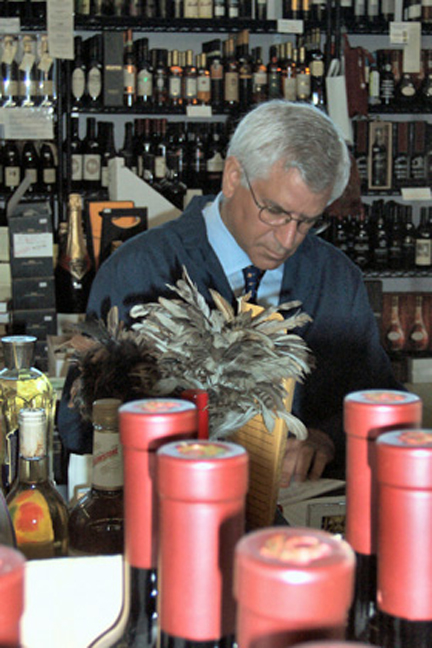
darrel.jpg

Above: the erudite Darrell Corti in the wine section of Corti Brothers.

Since that time, I have seen Darrell in Sacramento and New York on a number of occasions. His knowledge of wine (and Italian wine in particular), his erudition, his mastery of Italian, and his worldliness are a model to which I aspire. Whenever I have had the chance to discuss wine with him, I come away — as if by osmosis and not by reverse osmosis! — enlightened in ways that surprise and enrich me.

And whenever I travel to Sacramento to record, I shop at Corti Brothers every chance I get: Darrell’s selection of olive oil is among the finest I’ve ever seen and the servers in his charcuterie department never mangle the prosciutto by slicing too thickly or thinly.

Darrell has been in the news lately, following an episode that has been dubbed “Zingate.”

Last week Olivia Wu published this story in The San Francisco Chronicle where she reveals that an internal memo on Darrell’s tasting policy was leaked to the press. But the fact of the matter is that Darrell openly tells wine salespersons that he won’t taste with an alcohol content greater than 14%. As Darrell has told me directly, he feels — and I agree wholeheartedly — the California “modern” winemaking style has spun out of control, with wines that have been deconstructed and reconstructed to have excessive alcohol content and flavors that have nothing to do with wine.

I loved this passage from the interview:

“Look at the description of wine today. What’s the first word? Chocolate! Wines are supposed to taste like fruit. It’s like food these days. They used to make something with three ingredients. Now the chef puts in 12 ingredients. And sometimes they cancel each other out. The same is happening to the wines.”

Thank goodness for Darrell Corti, a voice of reason in a wine world truly gone mad.

I also found this article on Zingate and Darrell, worth checking out.