Chicago photo essay

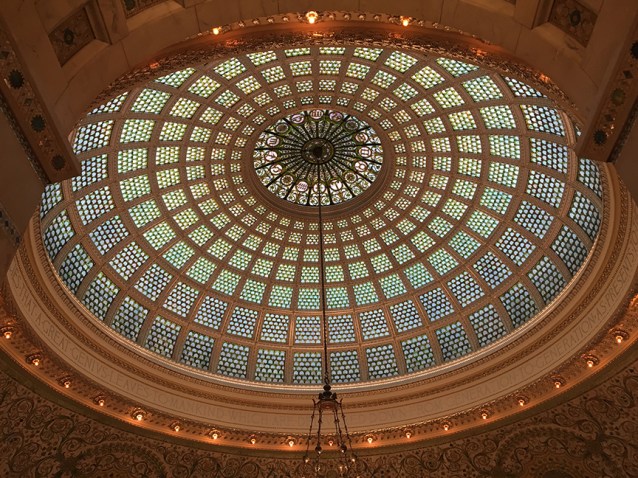
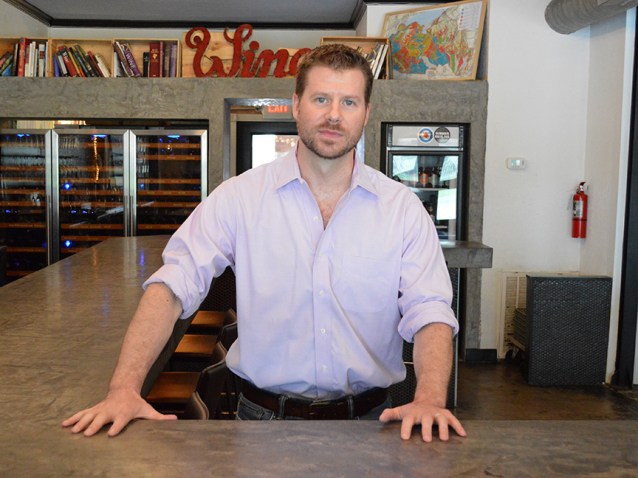
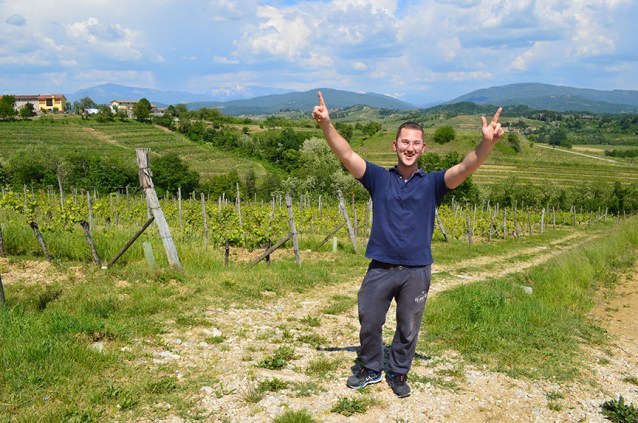
I was born in this beautiful troubled city and I love visiting here. Heartfelt thanks to everyone who made the Franciacorta tasting such a great experience. Here are some snaps…

millennium park beanMillennium Park

chicago art instituteArt Institute of Chicago

chicago cultural centerChicago Cultural Center

best hotdog chicagoChar dog

Six glasses stood between him and his Master Sommelier title

master sommelier texas david keckAbove: Newly minted Master Sommelier recounts the tense moments as he and 62 other candidates awaited the results of their examinations in Aspen last month.

Just a few years ago, even as its visibility had grown considerably, the Court of Master Sommeliers received only a sliver of the number of applications it receives today. The last time I asked, more than 600 people had applied to join its ranks in one year alone. That’s a lot, especially when you consider that there are only 237 Master Sommmeliers (including David) worldwide. And that’s also a lot of disappointment. Only a handful of candidates will pass the grueling examinations: theory (probably the toughest), wine service, and the dreaded blind tasting, where candidates must correctly identify at least five of six wines.

Last week I sat down with newly minted Master Sommelier David Keck of Houston (above). Happily for his and my adoptive city, he returned victorious from the Aspen exams in May. But he was one of just three new Master Sommeliers in a group of 63 who had been seated for the tests.

In my post today for the Houston Press, I share a little bit of his experience waiting to find out his results in blind tasting.

In other news…

Have you ever wondered why so many wines from Piedmont are called bricco this and bricco that?

I wrote a post (of which I am particularly proud) on the origins and usage of the term last week for the Tenuta Carretta blog.

And in case you’ve been pondering Arneis lately, check out this post I translated for the nice folks (and my clients) at Carretta.

In other other news…

I’ll be moderating a panel and attending a luncheon at the Wine and Food Festival in the Woodlands (Houston) on Friday. I believe there are still seats available. So please join me for some day drinking if you are so inclined.

Right now I’m on a plane heading to Chicago where I’ll be leading a standing-room-only guided tasting of Franciacorta at Perman Wine Selections. Apologies to all who couldn’t get in and thanks to all the wine professionals who will be coming.

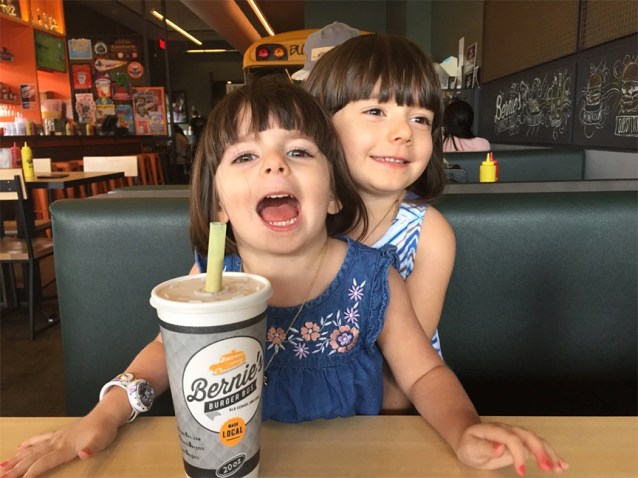
Man, it was tough to say goodbye to our girls and Tracie P this morning after a super fun weekend of carousel rides, giraffes and zebras, dinosaurs, and French fries and milkshakes. But hey, someone’s got to pay the bills… See you on the other side…

parzen daughters

Sauvignon scandal in Friuli? Much ado about nothing: no charges filed against any winemakers implicated in inquiry

natisone river friuliAbove: the Natisone river runs through Frliulian wine country.

They actually knew it was coming.

More than a year before the media-dubbed “Sauvignon connection” scandal appeared in the local press, Friulian producers of Sauvignon Blanc were aware that authorities were scrutinizing their production.

According to the agricultural superintendent for Friuli at the time, Vannia Gava (a vocal member of the separatist Northern League political party), winemakers from her region were doctoring their wines to give them aromas that didn’t align with the classic profile of Sauvignon Blanc grown there.

“It seems,” said Gava in an interview published by the Messaggero Veneto in May 2014, “that certain well-known Friulian wineries are using additives, preservatives, and chemical perfumes, some of which are carcinogenic. They are added during bottling, especially when it comes to Sauvignon [Blanc].”

More than a year later, in September 2015, the Friulian mainstream media reported that authorities had raided a number of high-profile Friulian wineries and confiscated wines and winemaking materials. According to the report, officials accused the winemakers of using unauthorized additives that would enhance the wines’ aromas.

cristian specognaAbove: Cristian Specogna, one of Friuli’s leading and most respected producers of Sauvingon Blanc. Investigators’ lab results found that he uses native yeasts to ferment his wines.

Today, more nine months after anti-adulteration agents’ raids, no charges have been filed against any of the alleged wrongdoers.

And the lab results show that no unauthorized enzymes or cultured yeasts were found in the wines seized and tested by authorities.

I’ve seen the report myself.

When I visited Friuli in early May, I had the opportunity to meet and discuss the ongoing episode with three winemakers there — two who were not implicated in the controversy and one who was.

All three told me that they are confident that no charges will be filed. And all concurred that winemakers implicated in the inquiry are now stuck in a bureaucratic limbo: there is no word as to when officials will clear their names.

It’s not my place to speculate as to what prompted authorities to launch the investigation. But I know for a fact that they acted aggressively, descending on the accused winemakers’ facilities in great numbers and with a significant show of force. And prior to the raids, officials had tapped the winemakers’ phones.

In at least one case, a Sauvignon Blanc producer was forced to appear at his son’s school in the custody of Carabinieri (the Italian paramilitary police). As for all of the producers implicated in the investigation, wines by that winemaker were shown not to contain any unauthorized additives.

One of the winemakers I met with in May pointed out to me that there exists no list of unauthorized yeasts for the production of Friulian Sauvignon Blanc. In other words, even if authorities had discovered that selected yeasts were being used to give the wines aromas that didn’t align with sanctioned varietal expressiveness, there would be no legal basis to charge the winemakers accused of wrongdoing.

In the end, it was all much ado about nothing. Yet neither authorities nor local media have moved to share investigators’ findings.

What to make of all of this?

In the short-term, the authorities’ aggressive and misguided attitude and media’s blood thirst for clicks have gravely damaged the Friulian “wine brand.” When in Venice last month, a prominent sommelier told me that he “prefers the reds” of one the winemakers implicated in the inquiry.

In the long-term, I know that the industrious and earnest winemakers of Friuli will recover from the blow. It will take time but I believe the excellent wines they make there deserve our attention and our respect.

And I encourage you to seek them out.

Thanks for reading…

Prosecco-flavored soda? It’s gone too far…

prosecco flavored soda HEB central marketAt a recent dinner at his excellent restaurant Frasca in Udine province (Friuli), Valter Scarbolo treated a group of American interior designers and publishers to a vertical tasting of his Pinot Grigio.

It was incredible to see the looks on their faces as they tasted through the wines (stretching back to the mid-00s): however sophisticated and worldly this group of high-end travelers, none had ever experienced Pinot Grigio beyond the commercially produced brands that line the shelves of America’s supermarkets (you know the usual suspects).

I was reminded of this marvelous scene yesterday when one of Houston’s leading wine professionals and italophile wine lovers posted the photo, above, of “Prosecco-flavored” soda yesterday on his Facebook.

Like Valter’s guests, my Houston-based colleague’s reaction was that of astonishment, although in this case, the surprise was inverted.

“Words fail me,” he wrote in the caption.

He couldn’t have had a more apt response (in my view). His words echo a classic Veneto dialectal expression: no go paroe (non ho parole in Italian), in other words, I have no words.

Apropos for the very reason that my Veneto fellows will surely utter the same when they learn of the existence of Prosecco-flavored soda. After all, Prosecco isn’t just a favorite wine of Venetians and the Veneti: it is a synecdoche for the Veneto people.

Like Pinot Grigio, Prosecco has transcended its origins to become an über-brand in the U.S. and the greater anglophone world. Transcendence might imply amelioration, depending on your point of view (not mine). But anyone who’s ever tasted traditional-style Prosecco will surely recognize the disconnect between the citrus, salty, and slightly bitter flavors of wines made from Glera (formerly known as Prosecco) grapes and the notion of sweet-tasting Prosecco soda.

They say that in antiquity amphoras were filled with marzipan before they were shipped from the Middle East to the West in order to protect the earthenware vessels from breaking. According to the legend, by the time they would arrive, the recipients would mistake the contents for the container. The sweet paste, they believed, was the conveyed and not the conveyer.

When wines and wine brands travel across that vast misunderstanding otherwise known as the Atlantic Ocean, their continuity with their origins is often diminished.

But “Prosecco-flavored Italian organic soda”?

As an adoptive Texan and a lover of our HEB and Central Market stores, it pains me to write that it’s gone too far.

I can’t imagine what it tastes like and I have no intention of ever drawing this beverage to my lips. But I seriously doubt that it tastes like Prosecco or anything even vaguely reminiscent of Glera that has been transformed into wine. And more importantly, why and how on earth did someone conceive of a soda that “tastes like” wine? I could write a dissertation on the wrong contained therein.

No, as much as I love the HEB where Tracie P and I shop nearly every day, this screaming lack of enogastronomic responsibility runs counter to a corporate ethos that purports, ostensibly, to nourish my community.

In fact, this colonization rape of Italian viticulture egregiously harms our community by propagating mis- and disinformation.

I, who stand atop a Prosecco grape harvest crate, cannot stand for this.

And so, I implore you, o readers of this blog: do not buy or consume Central Market’s Prosecco-flavored Italian organic soda.

(But if you’re reading this, you probably wouldn’t drink it anyway.)

Suffer from Jewish Boy Stomach? Eat at Moruno in Los Angeles (and thanks to Sotto team and guests)

david rosoff restaurant los angelesEvery time Sotto brings me to Los Angeles to work on our wine list, general manager Christine Veys and I try to break away to check out one of the new restaurants on LA’s vibrant food scene.
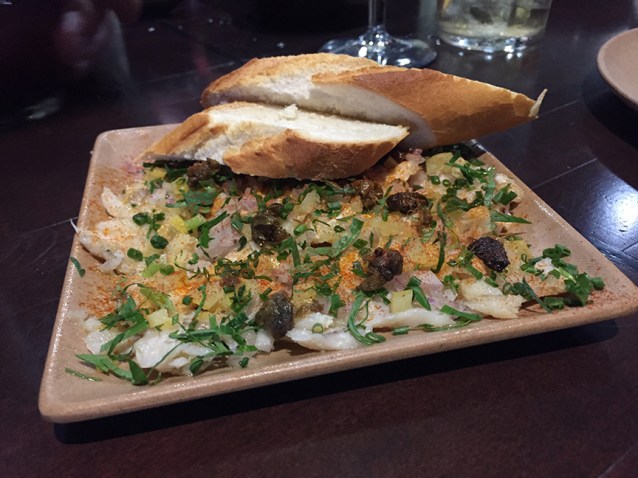
On Tuesday evening, after tasting roughly 30 wines with 6 different sales reps, we headed to my friend David Rosoff’s newly opened Moruno in the West Hollywood Farmer’s Market (a haunt of my youth).

That’s the absolutely delicious albacore tuna conserva in the photo above.

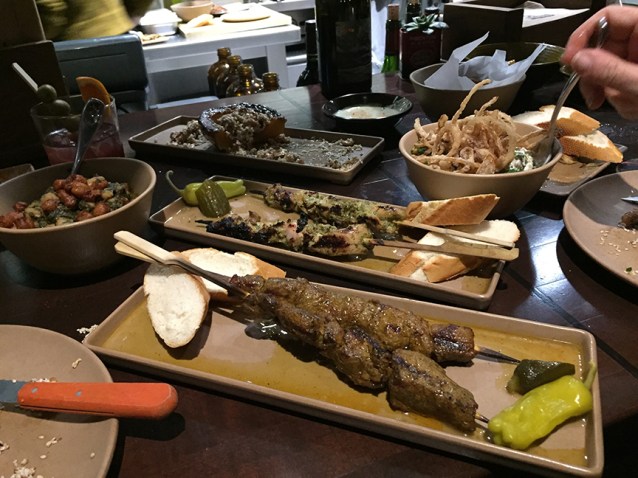
The menu is inspired by Spanish and Middle Eastern cookery and is delivered mostly in small plates and on skewers (as David put it, a moruno is “meat on a stick”).

We had a wide variety of dishes, including the roast butternut squash topped with cashews and sesame seeds, one of the guests’ and staff’s favorites, David said.

And of course, we sampled both the chicken and lamb morunos.

what is a morunoEverything was truly fantastic and it was great to see his energetic team working in the kitchen with such focused skill and decisive sense of mission.
But the thing that really blew me away about the experience was how good I felt the next day (sparing you the details, I’ll presume you know what I mean).

Whenever I travel for my work (and this year, I already have four trips to Italy and visits to New York, Miami, Santa Barbara, Boston, and LA under my belt), one of the greatest challenges I face is the combination of fatigue and distressed digestion (I’ll leave it at that).

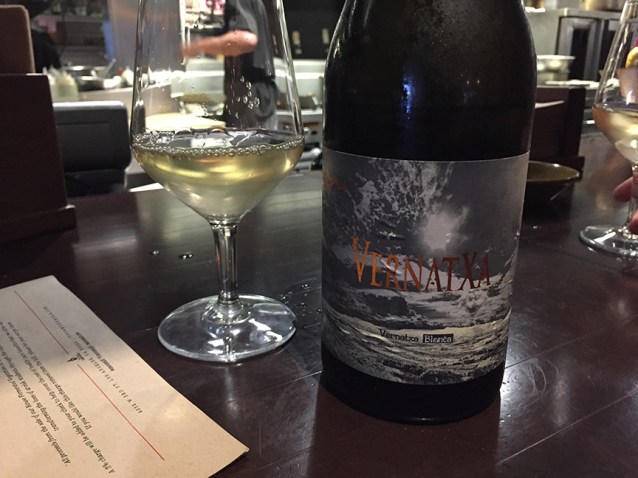
best spanish wineEven though Christine and I really dug into our meal with gusto at Moruno, my “day after” was bright and sunny, as it were.

Maybe it was thanks to the superb Grenache Blanc by Cellar Frisach from southern Spain that made the difference. Zinging acidity in this hillside wine from the high lands, vibrant fruit and great balance, with restrained alcohol. I really dug it, especially at just $45 a bottle.

David, from one Jew to another, I LOVE your restaurant. The ultimate mark of a great meal is how you feel the next day and man, I woke up ready to go… as it were…

In other news…

My goodness, what a lovely night at Sotto last night where we launched our new wine list with a guided tasting of five new wines by-the-glass!

I can’t tell you how many times I lead tastings where guests show up only wanting to tell me about how they once visited Gaja.

Last night’s group was one of the best and most fun that I’ve ever tasted with: a very gracious ensemble of wine lovers who asked informed questions and shared thoughtful impressions of the wines. Thank you, everyone, for joining me.

And super heartfelt thanks to Christine for being such a great friend and colleague and for believing in my crazy reboot of our list (which I love).

And I also have to give a shout-out to my Texas family who surprised me by showing up at the tasting unannounced and staying for dinner. It was so fun to connect with them in LA and wonderful to know that I have family that supports me in what I do for a living. What a thrill for me to see Aunt Gladys enjoying my wine selections!

Now it’s time to get my butt back on a plane for Houston and some much needed downtime with Tra and the girls… Thanks for being here.

LA Update: Tomorrow’s tasting at Sotto sold-out. Taste Franciacorta with me in Chicago June 6.

franciacorta new yorkPosting from the plane on my way to Los Angeles where we will be launching my new wine list at Sotto this week. I’m happy/sad to report that tomorrow night’s preview tasting at the restaurant is sold out.

But I will be at the restaurant all evening on Wednesday: please stop by and let’s drink some Schioppettino and Vitovska and munch on Chef Steve’s awesome Neapolitan-style pizza! Seriously, I’ll be hanging out all evening.

And I have just a few spots left for the guided Franciacorta tasting I’ll be leading in Chicago week after next. It’s free and we already have a great group of wine professionals who will be attending. I literally have 4 seats left so please email at your earliest convenience to ensure availability. Thanks for your support and looking forward to tasting with you!

Franciacorta Real Story Tasting
Monday, June 6, 2016

Perman Wine Selections
802 W Washington Blvd.
Chicago, IL 60607
(312) 666-4417

Monday, June 6, 6:00 p.m.
seated/guided tasting
11 Franciacorta wines
please RSVP by emailing Jeremy: jparzen@gmail.com
limited availability

Taste 11 Franciacorta wines with Jeremy Parzen, Ph.D. author of DoBianchi.com.

Franciacorta is a classic-method sparkling wine produced using Chardonnay, Pinot Noir, and Pinot Blanc in the foothills of the Alps in Brescia province, Italy (about an hour east of Milan by car). Since the 1960s, winemakers there have made some of Italy’s (and the world’s) most coveted sparkling wines thanks to the area’s unique growing conditions, including: The wide variety of morainic, limestone, and clay subsoils of the Franciacorta amphitheater; the maritime influence of Lake Iseo to the north (part of Italy’s beautiful Lake District); and the Alpine climate of their high-lying vineyards. Because Franciacorta growers are able to achieve greater ripeness than their counterparts in other sparkling wine regions and because they have a wider diversity of soil types, their wines stand apart from their transalpine cousins for their remarkable freshness, rich fruit character, and signature minerality (some would call it salinity).
Continue reading

See why I moved to Texas? Thank you, Tracie P, for giving them to us!

tracie and georgia thumbWhat a joyous day for this proud daddy yesterday when Georgia P performed in her first big dance recital at the Stafford Centre theater in southwest Houston!

She was part of the ensemble performance by her four-year-olds class at the Banbury School of Dance (located in our neighborhood, Westbury; they did a fantastic job of producing this show, btw).

That’s my little ballerina with her mother, above!

georgia on stage thumbMan, can you imagine the lump in my throat and the pounding in my chest as we waited patiently in the audience for her big stage debut!

And lo and behold, she took the stage with that gorgeous smile on her face and unbridled confidence in her steps.

Georgia P, I couldn’t have been more proud! The stage lights, the packed house, and a sizable cast of talented dancers: you handled yourself like a pro, my sweet, sweet girl!

lila jane thumbAnd Lila Jane, you had so much fun cheering your sister on!
You sat so patiently through the dress rehearsal and the show. By the end of last night’s performance, you were performing the moves in the aisle!

Tracie P, thank you for giving us these beautiful girls. You gave them your big heart and your brilliant smile.

And you have given me a dream life that I never could have imagined until I came here to Texas to be with you.

I love you all so much…

Epitaph for an Everyman: “I am America” (guest post)

Today, a guest post by my cherished friend Nico Danesi…

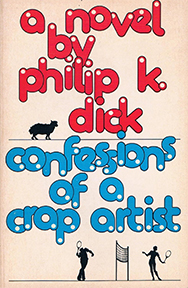
confessions of a crap artists dick“If this world’s all for the winners, what’s for the losers?”
“Well, somebody’s got to hold the horses.”

Before I first crossed the Atlantic, there was a man who brought me to America. He took me there without ever going.

He took me to places where America is colored by the exasperated reflections of legend and contention, where poetry is fragmented into hallucinatory but vivid images, unreal only in the eye of those who believe in proclamations and don’t know how to listen to humanity in pain, imperfect but beautiful nonetheless.

Sam Peckinpah’s ugly mugs and Altman’s moonstruck players. Arthur Penn’s humble heroes and Cimino’s emarginated immigrants. Coppola and Scorsese’s Italians. Hal Ashby’s unknowns and Monte Hellman’s taciturn characters but also the Beat provocateurs and especially the hyperbolic jazzers with their impossible solos as long as a long illness is long.

If, in her or his propaedeutic arc, a functional wine drinker sets out as an “Absolute Beginner” drinking the “bestest wines” of the world, would she or he understand them?

Surely, she or he would be hard-pressed to describe them or offer commentary but she or he would surely enjoy them. Such enjoyment would come in brilliant flashes and would deliver a deep well of wonderment upon which the most solid of foundations could rest.

I believe the same holds for artistic expression as in music, cinema, poetry, and literature.

As a child, I was nourished by an uncle who was more like a friend and big brother. He fed me words and magical images that drifted inside of me as they evoked a limpid but also often terrible America.
Continue reading

Venissa, a project and a wine sui generis that deserve our attention

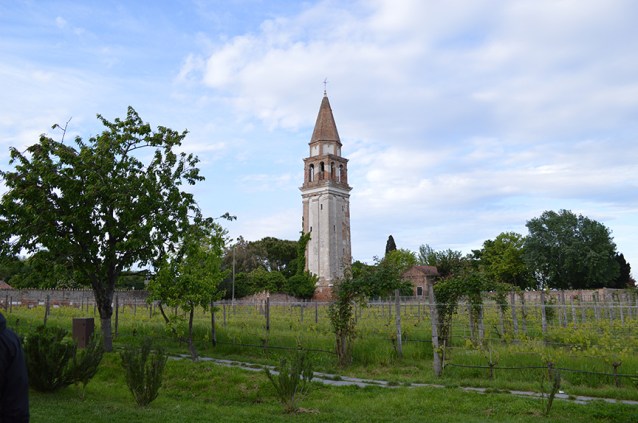
venissaHonestly, despite everything I’ve read about Venissa and the wine that is grown and raised there (above), I couldn’t really wrap my mind around the place and the project until I visited there recently with Adam Japko’s Design and Wine Tour.

I’ve known Matteo Bisol for years, since I first met him in Texas in 2009. And over the years, we’ve become friends thanks to our shared interest in wine (his family is a legacy producer of Prosecco) and poetry (he and his family were intimate friends and patrons of the great Veneto poet Andrea Zanzotto).

In 2008, the Bisol family replanted a historic vineyard on the Venetian island of Mazzorbo in 2008, using a local clone of Garganega called Dorona.

The vineyard had lay fallow since the great flood of 1966 (see the newsreel below).

Once the water had subsided, Matteo explained to me when I visited a few weeks ago, there was scarce interest in replanting. Although the site had produced wine for hundreds of years (stretching back to the Middle Ages), Italy’s economic boom of the 1960s was luring erstwhile farmers to the newly emerged industrial sector on the mainland.

Even if there had been interest in reviving the growing site, it would taken years before the soils would have been purged of elevated levels of salt in the soils owed to the severe flooding.

matteo bisolToday, the Bisol family uses the same drainage system that has been in place in the vineyards for generations.

Seawater flooding is inevitable, explained Matteo (that’s Matteo and me in the photo above). But it is manageable in part because the Dorona grape seems to have adapted to the environment and conditions where it is grown.

As you walk through the small vineyard there, with its wild grasses growing high between the rows, you can’t help but breathe in its robust health and life. It’s a remarkable experience and an entirely unique one. There’s really nowhere else in the world where something like this does or could exist.

Mazzorbo island is one in the group of the oldest Venetian settlements, dating back to the Longobard invasions of the late Roman era. Torcello is the most famous of these.

The Bisol family has done a superb job of preserving the viticultural legacy there: an island vineyard planted with a historic and entirely unique clone of Garganega that most likely evolved in situ.

dorona venissaAt dinner that night at the Michelin-starred Venissa restaurant, our group of roughly 30 persons had the opportunity to taste the wine.

It’s vinified in an elegantly macerated style. I liked it a lot: it showed great depth and nuance in its layers of flavor and I was impressed by its surprising freshness and fruit character on the nose.

It’s not cheap. Bottles can be had through private channels for around 120 Euros. The bottles are adorned with a gold leaf label intended to evoke the wine’s color and name: Dorona is believed to come from uva d’oro or golden grape.

But to my mind, the quality or value of the wine is not what’s important. What’s significant in my view is that this wine, a true wine sui generis, exists and has a sustainable structure in place that will preserve its future and legacy.

This example of extreme viticulture on a tiny island off the mainland reveals so much about Italy’s place in the world of wine and the country’s unrivaled ability to produce singular expressions of vitis vinifera.

When in Venice, if only a day trip to walk the gorgeous vineyard and see the drainage system, the journey is well worth the time on the water. Mazzorbo is easily reachable, btw, by public transportation and the vineyards are always open to anyone who cares to read their rows.

Thank you again, Matteo, for a wonderful visit and this precious chapter of Italian wine so intelligently preserved and thoughtfully presented.