
Thanks to everyone for the wishes for our new house! It’s been a crazy week between moving and unpacking. But we are settling in nicely to our new home. Thanks for thinking of us. It’s great to be finally getting back into the groove…
 The world of wine is encyclopedic in breadth and scope. No matter how much you know, you’ll never know everything there is to know about wine.
That maxim came to mind the other day during a virtual tasting with two Italian winemakers (via the Italy-America Chamber of Commerce in Houston where I work as a media consultant, content creator, and presenter).
While I’m certainly not the first to notice the eco-friendly icons on the back label of a bottle of wine, it was my first time seeing the above markers — bottom, left — that guide the end user on how to recycle the various elements in wine’s detritus: the cork, the bottle/glass, the aluminum capsule, etc.
“Check recycling guidelines with your local authorities,” says the note underneath the images. “Separate the components and recycle them correctly.”
I’ll never forget going to Italy for the first time in the late 1980s and seeing battery recycling kiosks on every block. Why don’t we have that in America? I thought to myself.
I’ve always been impressed how Italians and Europeans in general see recycling and, more broadly, eco-awareness not as a “feel good” campaign but rather as a civic responsibility.
In the Italian wine world today, you see this nearly everywhere.
I really liked the wines by Usiglian del Vescovo in Pisa province where the owners grow Sangiovese and international grape varieties. The wines were fresh and vibrant in their aromas and flavors. And the prices ex cantina were excellent. The linguistic element may prove challenging for non-italophones (you had me at “Usiglian”!). But these wines would work great in a by-the-glass program anywhere in the U.S. I’m dying to try their whole-cluster Chardonnay and Viognier blend aged in amphora (which wasn’t in the flight I tasted the other day).
Great, well-priced wines in search of a U.S. importer.
 I also have to give a shout out to the excellent wines of Gianni Tessari.
Before our virtual tasting the other day, I had only tasted wines he has made for another winery in Veneto. It was my first time tasting his eponymous label and I was blown away by the quality, the varietal expression, and the restrained alcohol. I loved the Soave but was also impressed with the Pinot Noir he grows, something very usual for Veneto. It clocked in at around 13 percent alcohol. Great!
That’s his daughter Valeria in the image above.
Virtual tasting is one of the legacies of the lockdowns. And I have to say that I like it a lot!
 Tracie, the girls, and I couldn’t be more geeked to share the good news: earlier this month, we closed on a house in the same Houston neighborhood where we’ve been living for the last eight years.
  I have a big confession to make: I’ve been sleeping with my realtor!
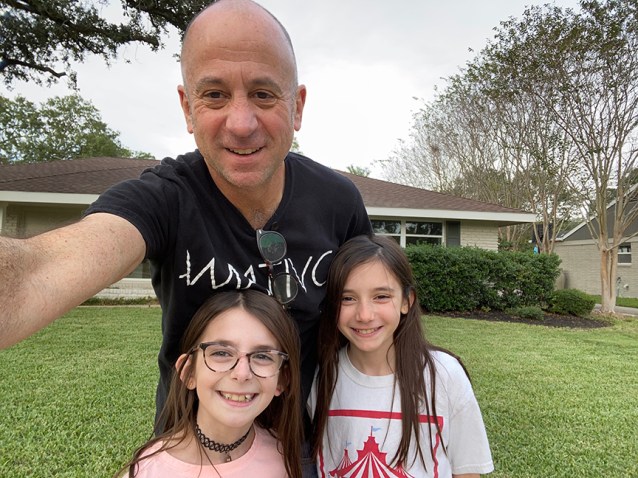 It’s been a surreal and magical time for all of us and maybe most of all for the girls.

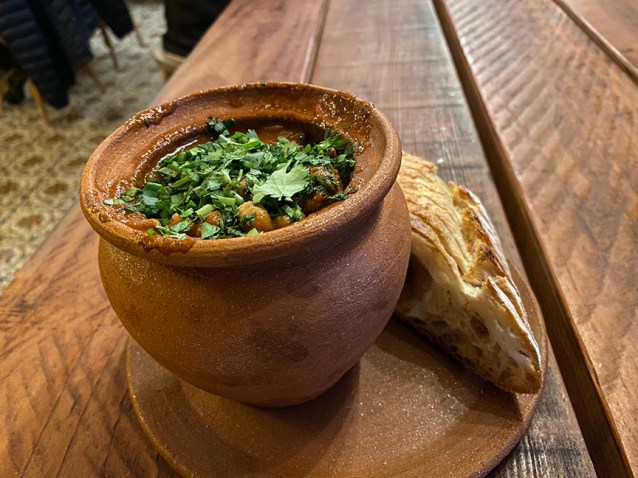
 As I stuffed myself silly a few weeks ago at my friend Jeff Berlin’s new Georgian restaurant in Sebastopol, California, I couldn’t help but remember a restaurant that opened in 1998 in New York called Bondì.
  The menu at Bondì was a breakthrough because it was being hailed as “authentic Sicilian food.” In other words, even though “Southern Italian” — aka Sicilian or Neapolitan — was passé, this was something brilliantly new and deliciously old at the same time.
  Some here are old enough to remember that the late 1990s wave of the “new/old” Italian gastronomy was preceded by a new wave of Italian wine that focused on — excuse the pleonastic — the authentic and the native.
 I was blown away by how good the food was at Piala.
  In retrospect, those italophilic entrepreneurs were on the cutting edge of a movement that would reshape the way citizens of the U.S. and the world would dine. They transformed an “ethnic” cuisine (ooooooo! how I despise that term!) into a world cuisine. And they had a “new” wine to lead them.
 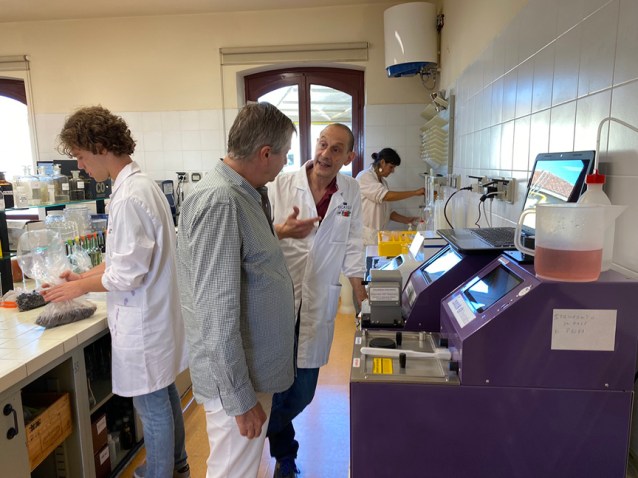 Above: Francesco Ricasoli, legacy Sangiovese grower and Chianti Classico producer, with technicians in the Ricasoli winery’s laboratory.
 On Tuesday and Wednesday, November 29-30 in Houston, the Italy-America Chamber of Commerce South Central is proud to present two wine tastings featuring three Italian producers:
 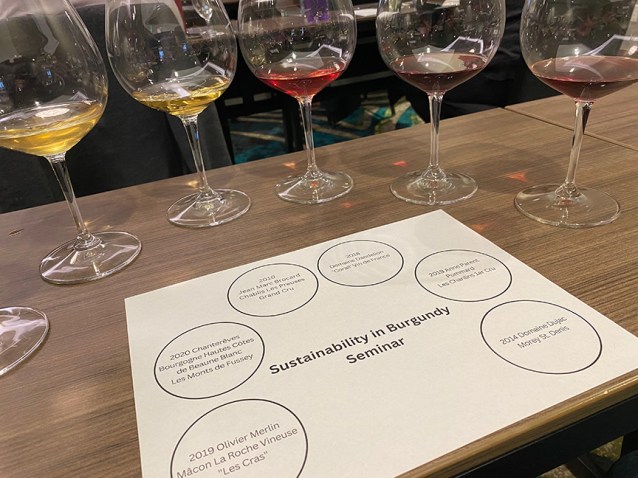 Thanks to everyone who came out this year to make the Boulder Burgundy Festival 2022 such a great event!
  Every year I have to pinch myself: the thrill of getting to be part of an event like this, with wines that clock in WAY above my pay grade, has never lost its sheen.
 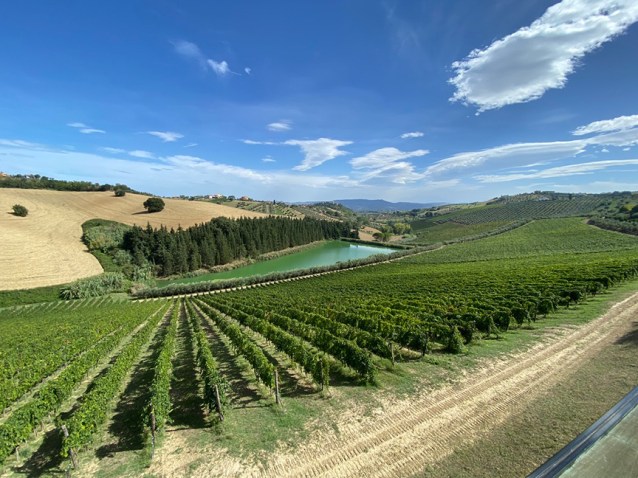 When I finally found my way to the Nicodemi winery in Colline Teramane in Abruzzo in September, I cautiously descended the steep driveway in my rented 500L to discover a paradise revealed behind the bushes that obscured the view from the road.
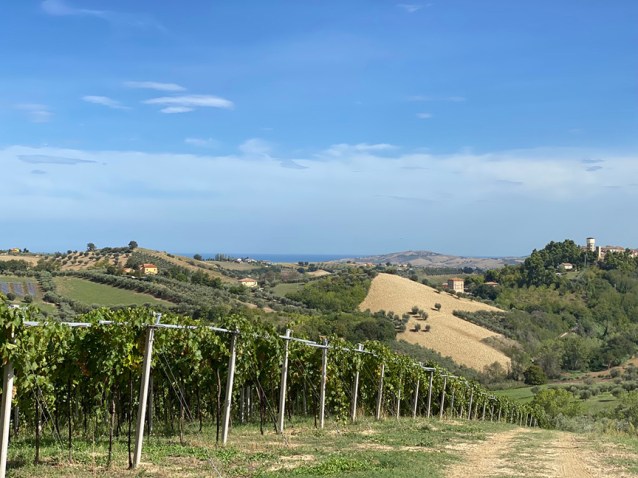 As you can see in the photo above, in the Colline Teramane, the vineyards are literally located a stone’s throw from the Adriatic. It’s where some of the region’s best wines are raised.
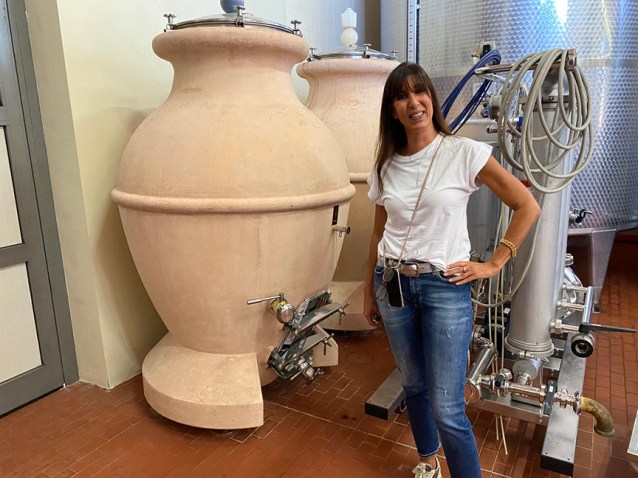 The beauty and viticultural significance of the Colline Teramane were no surprise to me, of course.
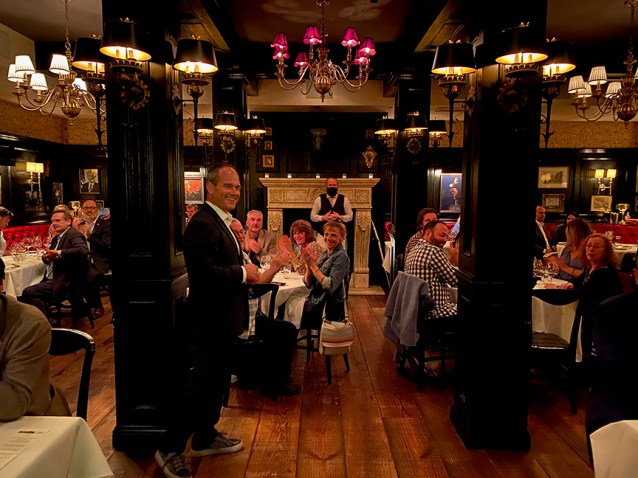 Festival founder Brett Zimmerman presents one of the marquee dinners at last year’s Boulder Burgundy Festival at Steakhouse Number 316 in Boulder. The wines, the food, and the people at all of the festival’s events are as compelling as they are welcoming and inspiring.
 The notion that tendone and pergola training systems could represent one of the grand solutions for winemakers facing the wrathful challenges of climate change was first suggested to me many years ago by the writer, publisher, and in-demand vineyard manager Maurizio Gily.
 Where pergola is a patchwork of small square structures that support the vines, tendone is a continuous and seamless series of pergolas, as it were. (To better get a sense of the system, keep in mind that a tendone in Italian means big tent.)
 The wines tasted at Caivolich were among the best during my early September harvest tour of central and northern Italy.
 It was such a treat for me to meet Chiara and Guerino. And it didn’t take long before my conversation with Chiara veered into 20th-century and contemporary literature (my kind of winemaker!). I highly recommend her wines and if you ever get the chance to taste and interact with her, take the opportunity. I really enjoyed visiting with her and came away inspired by our chat.
 Do Bianchi