
“The closer the look one takes at a word, the greater the distance from which it looks back.” – Karl Kraus.
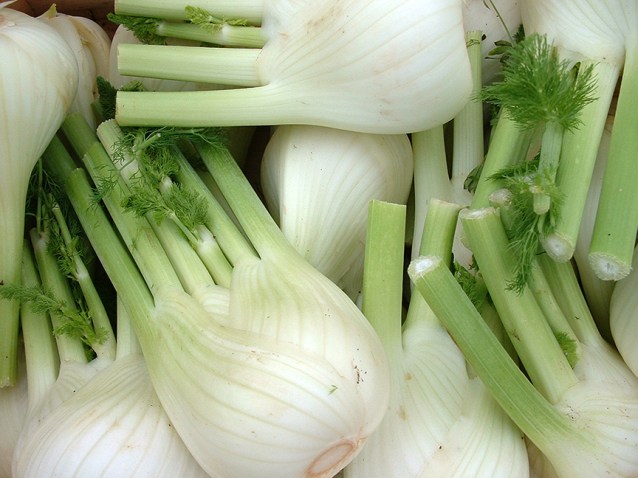 Image via Nick Saltmarsh’s Flickr (Creative Commons).
A conversation at last night’s Italian Trade Commission dinner in Houston led to a discussion about the Italian word infinocchiare (to cheat or to swindle someone) and its relation to wine and wine tasting.
First of all, let’s get one thing straight: wine sellers did not doctor their wine with fennel (finocchio in Italian) or fennel seeds in the Middle Ages or Renaissance.
What they did do (and we have ample knowledge of this from primary sources) was to serve certain foods like fennel before customers would taste wines they were considering buying. They did this, it is now well known, to impair the buyers’ ability to perceive the aromas and flavors of the wine. (Fennel seeds were widely used in the preparation of salumi in the Middle Ages but that was an unrelated practice.)
And while the first known mention of fennel used to deceive wine buyers dates back to the 15th century (Corniolo Della Cornia’s La divina villa), the foods that were primarily used for this purpose were walnuts and cheese (Crescenzi mentions this in the early 14th century and Corniolo also mentions this a hundred or so years later; English speakers will find all of this info in Massimo Montanari’s excellent book Let the Meatballs Rest, And Other Stories About Food and Culture).
But today, philologists are relatively certain the word infinocchiare does not come from this practice (although Montanari seems not to be up on the current philological dialectic with regard to the lemma).
Instead, they believe (and I concur), it most likely came from the Greek word φένᾱξ (phénāx) meaning liar or cheater.
The word finocchio (commonly used in the plural, finocchi, to avoid equivocation), comes from the Latin foeniculum (the perennial herb was a popular vegetable in Roman times).
So to say that infinocchiare comes from a medieval practice of doctoring wine with fennel is entirely erroneous.
Neither of these terms is to be confused with the Italian homophobic slur finocchio.
The etymology of this ugly epithet is unknown. The one thing we know about it was that it originated in Florence, probably in the early 20th century. The most plausible etymology, embraced by many philologists today, is that it came from the name of a mask used in 19th-century Florentine theater. There’s no hard evidence of this. But it is believed to be the most likely etymon among experts in the history of the Italian language.
What’s important here is that three terms — finocchio (vegetable), finocchio (homophobic slur), and infinocchiare — are probably not related and should be considered separately in terms of their cultural significance.
Making flippant jokes about their homonymity only propagates an ugly cultural trope that gay people are in some way “deceiving” those around them.
Next on deck: the difference between lasagna and lasagne and cultural swindlers like so-called “chef” the Kevin Bryant at Roma restaurant in Houston. Yes, I have a bone to pick there as well, pun intended… stay tuned.
 Image via
 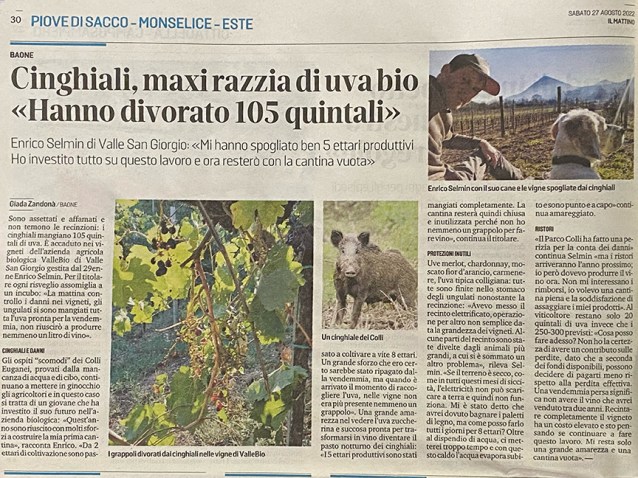 Enrico Selmin had used electric fences to protect his five hectares of organically farmed grapes — his first commercially viable crop.
 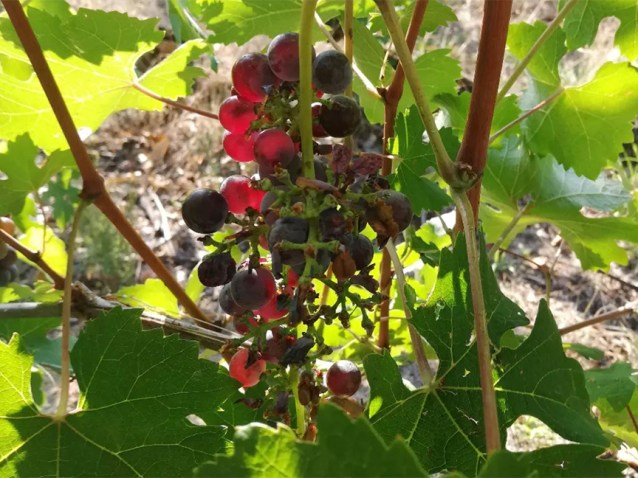 “The Sreja 2022 died before it was even born,” wrote
  For more than a decade, the Boulder Burgundy Festival has quietly grown an extremely loyal following among top Burgundy collectors and wine lovers.
  Late last week, I was pleasantly surprised to discover that two songs by my band Nous Non Plus had been used in the 2020 film “Sister of Bride,” starring Alicia Silverstone.
 Making the deal even more sweet was the fact that I wrote that song for Georgia, our now 10-year-old, when she was still a baby.
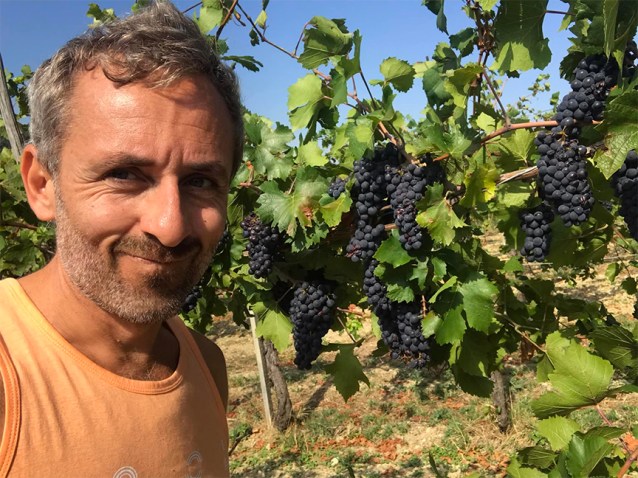 Above: winemaker Gianluca Cabrini of Tenuta Belvedere in Oltrepò Pavese
  Above: Lake Iseo in Brescia province as seen from Mt. Orfano in the south of what is now the Franciacorta appellation. Its morainic “lean” soils, as they were described in the Middle Ages, contributed to its reign as a top zone for wine between the 14th and 16th centuries.
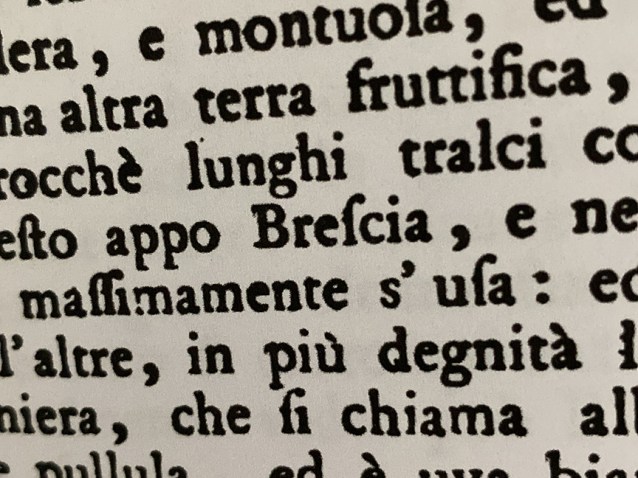 What will come as a surprise to contemporary readers is that neither Tuscany or Piedmont figure as top centers for wine production. Tuscany would become an elite region for wine as the Medici family’s power grew. But it was still far from dominant when Dante began writing the Comedìa. Piedmont was centuries away from becoming a top wine region.
  Grape harvest in the north of Italy began this week.
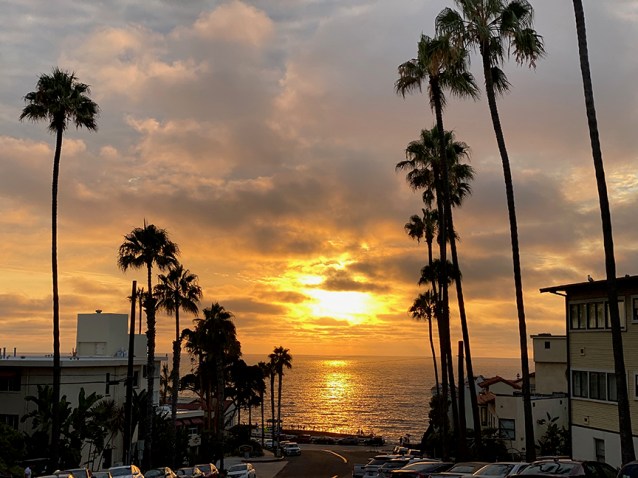 The Parzen family just got back from our yearly summer trip to La Jolla, California to visit our family and friends there. It was an awesome trip.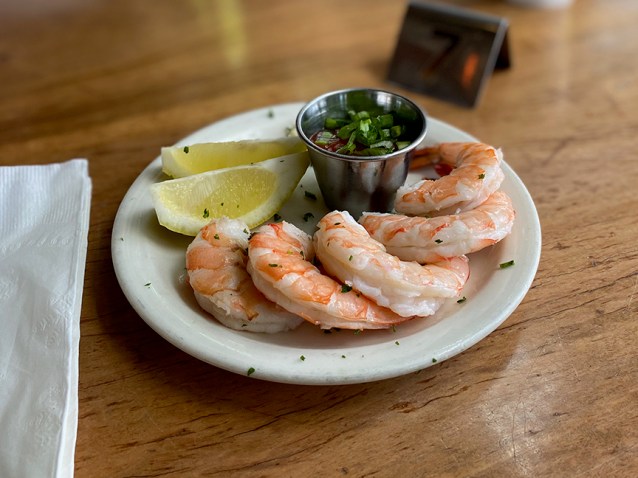
 Do Bianchi
