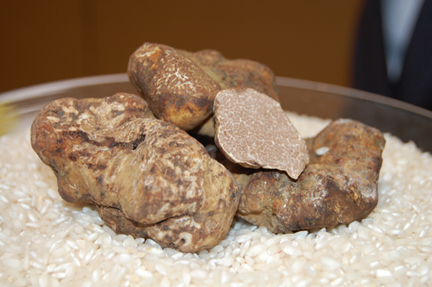
first Alba truffles of the year @TonyVallone

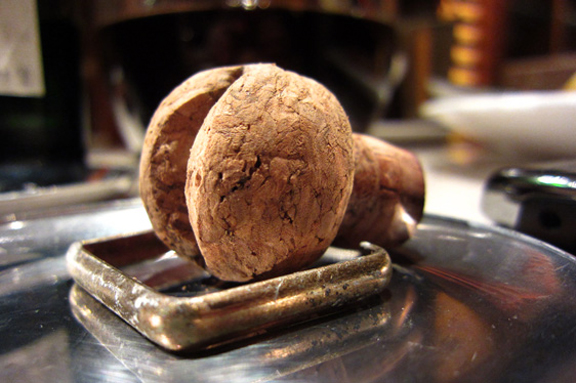
I snapped this photo today at lunch at Tony’s in Houston, the first Alba truffles I’ve seen this year.

Tony — my friend and client — talked about how the truffles are arriving early this year because of drought conditions over the summer in Italy.

There is no food in the world with a greater aura. (Does anyone get my Latin paronomasia?)

tagliatelle ai funghi porcini & a note from Francesco Bonfio

In my post yesterday for the Houston Press, I recounted the last time I was served a bottle of wine that was technically correct but nonetheless off:

    I was in Siena, Italy, the last time this happened to me (about a year ago). My colleague Francesco — the president of the Italian wine shop association — and I ordered a bottle by one of my all-time favorite producers of Chianti Classic, an icon in the field, Castell’in Villa.

    The vintage was 1995, a great one for the appellation. As we ate our delicious tagliatelle ai funghi porcini, we realized that the wine had simply lost its life. It was good. It just wasn’t what it could have been (and he and I had tasted it many times before). Something about it was just off.

    When the restaurateur noticed that we had left three quarters of the bottle on the table, he immediately offered to open something else for us. We thanked him but declined. One glass of wine was enough that evening, however mediocre.

    Francesco bought dinner that night and while I didn’t see the bill, I’m sure that the proprietor didn’t include the cost of the bottle of wine. Next time I’m in Siena, I wouldn’t be surprised if Francesco and I go back to the same place. He eats there at least once a week.

    In my view, this is a great parable about restaurant-going. The economics of fine dining are as much about relationships and human interaction as they are about good food, wine, and service. A bad bottle of 1995 Castell’in Villa? Lupus in fabula

The Francesco in question was my good friend Francesco Bonfio, owner of the excellent Enoteca Piccolomini in Siena and president of the Italian wine shop association, Vinarius.

He encountered technical difficulties as he attempted to leave a comment on the Houston Press site and so he asked me to post it for him (don’t mind his “formal” tone; it’s part of his schtick):

    Sir,

    Thank you for mentioning that occasion. Let me underline one aspect: it is true that the owners of the restaurant know me, and it is true that they did not charge for that bottle. It is also true and I may guarantee to you that they do this all the time because they have this policy with anybody dining at their restaurant. It is also true that this is possible ONLY when the people who dine AND the restaurants owner do know the object of discussion. That bottle was an “unhappy bottle” not a bad bottle and this difference can be found only if both sides know that wine. Consequently it is different if the bottle is sent back just because the customer simply does not like that type of wine. By the way the restaurant was Enoteca I Terzi.

I wanted to share it with you here and I wanted to share the wonderful tagliatelle ai funghi porcini that we were served that night (above). The dinner took place last year in October, the time of year when the porcini are in season.

Thanks, everyone, for all the comments and RTs of the post over on the Twitter. And thanks, again, Francesco for dinner and the wine: even when it’s off, a bottle of Castell’in Villa is always memorable!

thoughts on how [not] to send back a bottle you don’t like

Thoughts on how [not] to send back a bottle you don’t like today over at the Houston Press.

Buona lettura, yall!

An Aglianico del Vulture that blew me away: Musto Carmelitano

Above: Elisabetta Musto Carmelitano is making some of the best Aglianico del Vulture wine that I’ve ever tasted.

Every once in a while you come across a wine that just makes you stop in your tracks. Stop the world and let me off: I need to spend some time with this wine, you say to yourself.

That’s what happened to me when I first tasted the wines of Musto Carmelitano a few months ago in Los Angeles.

The importer had been hounding me about natural this and natural that, biodynamic this and biodynamic that. But when I tasted the wine I remembered some sage advice that a sommelier once shared with me: don’t trust the story, trust the wine.

This wine is THAT good. Who cares what made it that wine?

In our quest to create the largest selection of Aglianico del Vulture at Sotto in Los Angeles (where I curate the wine list), this is just one of the myriad wines that have come across our tasting table (there are more available in the U.S. than you would imagine). And it lept to the top of our list…

vulture

Above: Grapes harvested by Elisabetta this week in Vulture, image shared with me by the importer, former Italian pro baseball leaguer Justin Gallen.

When Tracie P tasted the wine for the first time — the Pian del Moro, from Elisabetta family’s oldest vineyards — her reaction was “wow, there’s a lot going on in that wine.”

Dark red and black fruit, dark black earth, and an resilient “nervy” acidity that holds the wine in balance.

Of all the Aglianico del Vulture I’ve tasted lately — and I’ve tasted a lot in the wake of our visit to Vulture — Elisabetta’s is perhaps the one that most greatly captures that “unbearable lightness” (as I like to call it), that unlikely combination of power and ethereal elegance, muscularity and grace in the glass.

I love this wine.

There will be many other labels that we’ll be featuring at the restaurant this fall and I’m thrilled about all of them. But this is one of my favorites.

Served, by the glass and by the bottle, a casa Parzen.

Causing trouble again @EatingOurWords: How to send back a bottle of wine #ShitStorm

From the department of “I can already hear the massive shit storm brewing”…

From my post today for the Houston Press

A few months ago, when I was dining with family in a Houston restaurant (that shall remain unnamed), I ordered a bottle of Dolcetto, one of the classic food-friendly grapes of Piedmont, in northwestern Italy.

The server disappeared and swiftly returned with the bottle I had asked for. And presumably because I had asked for the wine list and had ordered the bottle of wine, he poured the first sip — the tasting sip — for me.

I swirled the wine in the glass, smelled it, smelled it again, and said matter-of-factly, “this is great. Thank you very much.”

And then he did something that transgressed the inherent social compact that exists between waiter and guest.

“Sir, taste the wine,” he said.

“The wine is fine,” I said politely, “please go ahead and pour it for our table.”

“Sir,” he insisted, “taste the wine.”

I looked at him incredulously.

“Sir, the other night, I had a customer who smelled the wine and said it was okay. But then, after he tasted the wine, he sent it back. So I have to ask that you taste the wine.”

When in Rome, I thought, do as the Romans do. And so I tasted the wine.

“It’s really great. I really like it. And it’s going to be great with our meal, I’m sure.”

Satisfied that the wine’s fitness had now been unquestionably verified and reaffirmed, he smiled and poured the wine.

This episode reminded me of how uncomfortable most people are when they are asked to determine the fitness of a bottle of wine at a restaurant.

Click here to continue reading…

my lasagne alla bolognese for @MyLifeItalian’s birthday

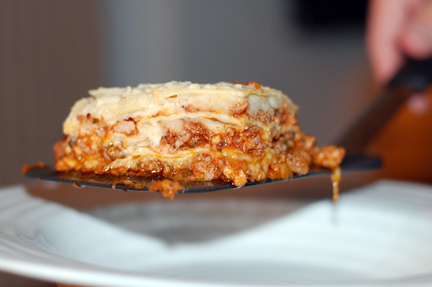
For her birthday dinner this year, Tracie P requested lasagne alla bolognese, one of my pièces de résistance in the kitchen.

In my experience, lasagne alla bolognese are best prepared over the course of two days: the key is to make the ragù the day before (classic soffritto, equal parts ground pork and lean beef, one sausage link crumbled, tomato purée, white wine, chicken stock, salt and pepper to taste, a bay leaf, and a dash of chili flakes, simmered slowly for a few hours after the meat has browned well and been deglazed with the wine).

I cover the ragù and reserve it over night in the oven (there’s no need to refrigerate it since it will be reheated after you assemble the lasagne).

Making the lasagne isn’t as challenging as it seems: all you need is a food processor and a pasta rolling machine. (There’s a great recipe for making pasta sheets in Cesare Casella’s Italian Cooking Essentials for Dummies.)

Once you’ve rolled out and trimmed the lasagne, you layer them (in a oven-ready casserole dish that’s been greased with butter), alternating between ragù (the first), béchamel (second), and freshly grated Parmigiano Reggiano (third, topped with a layer of pasta).

For my béchamel, I always use a tablespoon of white wine and a tablespoon of chicken stock, two subtle ingredients that give the sauce great nuance in my experience. And the Parmigiano Reggiano must be freshly grated, a sine qua non to great lasagne alla bolognese.

The combination of the rich flavors and textures is one of the supreme expression of Italian gastronomy and well worth the time and effort it takes to make this dish. We paired with a bottle of 2010 Langhe Nebbiolo by Produttori del Barbaresco. (The classic pairing would be Lambrusco, of course.)

Georgia P is still not ready for the fattiness of lasagne alla bolognese but she did get to have some pappardelle that I made from the trimmings. We tossed them in a pat of butter and topped them with a dust of Parmigiano Reggiano. She loved them…

We’ve had such a wonderful year, with too many blessings to count.

Thanks for reading and buona domenica, yall!

Alice Feiring joins us @SottoLA with Frank Cornelissen and Lou Amdur

From the department of “ubi maior minor cessat”…

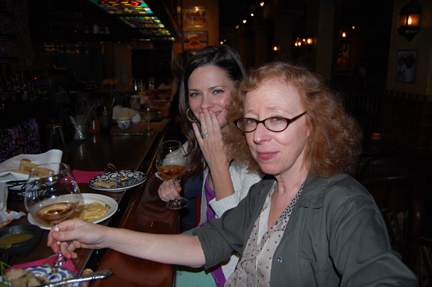
Above: When ever Alice (foreground), Tracie P, and me get together, we always manage to cause trouble (just ask Alice; she’ll tell you!).

A few months ago, I was approached by one of the top wine distributors in California, Amy Atwood, who asked me if Sotto in Los Angeles (where I curate the wine list) would like to host a wine dinner with radical natural winemaker Frank Cornelissen, who raises wines on Mt. Etna (Sicily).

I was thrilled, of course, and I immediately reached out to Natural wine authority Lou Amdur, a Los Angeles icon in the field: to not have Lou at the event would have been nothing less than egregiously negligent.

And of course, my dream was to have Alice Feiring there as well: between her excellent blog and her two monographs on the subject, Alice is the Natural wine movement’s leading authority and its most sage voice. (And she’s also a dear, dear friend who has not only mentored me at different moments of my career but also helped me regain my footing in some of the darkest moments of my life.)

Well, folks, I’m here to tell you that dreams do come true.

We’ve hit the Natural wine trifecta: this week Alice agreed to attend our Cornelissen dinner at Sotto on November 11.

Click here for details. I hope to see you there: it should be a night to remember…

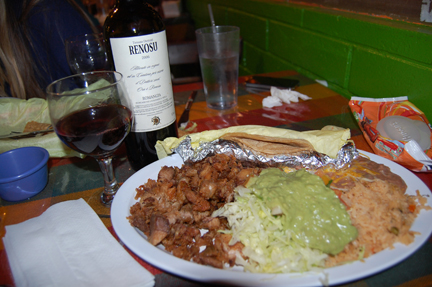
Declassified Dettori 06 Cannonau Renosu & carnitas at Bahia Don Bravo (La Jolla)

Last year I was lucky to pick up a case of 2006 Romangia Rosso Renosu by Dettori (Sassari, Sardinia), Alessandro Dettori’s declassified Cannonau from the “uneven” 2006 vintage there (as Antonio Galloni has called it).

The U.S. retailer and Alessandro don’t seem to be on the same page as to why the wine was declassified (possibly because of a language issue?).

According to Alessandro, he decided to bottle the wine in 2008 in the middle of a disastrous vintage for him. Normally, he would have let the wine age longer in vat before bottling. But according to one of his ever lyrical emails, the bottling was inspired by a bout of powdery mildew during the devastating summer (for Dettori) of 2008.

Maybe he was concerned the onslaught of bacteria tainted a few of his vats. Or maybe, as he suggested in an email, he remembered how previous generations bottled their wine right away. They did so because they wanted the wine to be ready for the winter and feared being without wine. But by doing so, they also avoided potential spoilage issues.

I’d seen mixed reactions to this wine in the chat rooms. But I also know that Alessandro’s wines require patience — in your cellar and at the table.

He calls his declassified wines “Renosu,” meaning sandy (from the Latin [h]arena, meaning dry, sterile sand). According to his own gloss on the term, it refers to the wines raised in the lower-lying sandy subsoils as opposed to his hillside vineyards (when in fact, the grapes used to make this wine were once intended for his flagship red wine, the Dettori Rosso).

The good news is that the only bad news is that I wish I would have bought more of it!

When opened a bottle the other night with a heaping helping of carnitas at our favorite taco stand in La Jolla, Bahia Don Bravo.

We didn’t get any of the volatile acidity that folks on the boards have talked about and the wine was fresh and bright, juicy and tasty. Had I not known it was a declassified Dettori, I would have said it was the rosso (it’s one of those wines that, if you follow the producer, you can easily pick out in a blind tasting).

I loved the wine and it was a fantastic pairing for the salty, fatty carnitas.
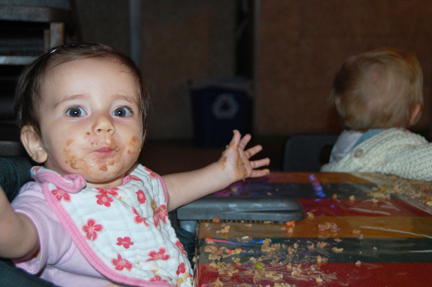
Georgia P had refried beans for the first time that night. I think it’s safe to say that she liked them. ;)

We were sad to say goodbye to grandma Judy, Georgia P’s cousins, and all our good friends in San Diego. But after a week on the road and away from our little house at the corner of Gro[o]ver and Alegria, it was time to get back to Texas where we belong…

a superb post on #BartoloMascarello by @Levi_opens_wine

from the departement of “ubi maior minor cessat”…

I highly recommend Levi’s truly superb post on his visit to Bartolo Mascarello. I know that you will find it as thrilling and vital as I did…

Chapeau bas, Levi, and thanks for this great post…