Nuthin’ but a G thang: an updated list of DOCGs

I will spare you my Derridian dissertation on the différance that a G makes between the DOC and DOCG designations (nor will I comment on the superfluousness of the recent political jockeying that resulted in a DOCG boom for Italian winemakers).

As one of the greatest poets of the twentieth century once said, it ain’t nuthin’ but a G thang.

I will, however, point you to an updated list of DOCGs authored by Alfonso (above).

In other news…

Sunset yesterday in La Jolla where I’ve been busy delivering wine for my wine club Do Bianchi Wine Selections and visiting with mama Judy and Parzen brood (jamming out with nephew Cole after dinner last night, him on upright piano and me on guitar, was a highlight).

How does the song go?

What is not: a simpler manifesto for Natural Wine?

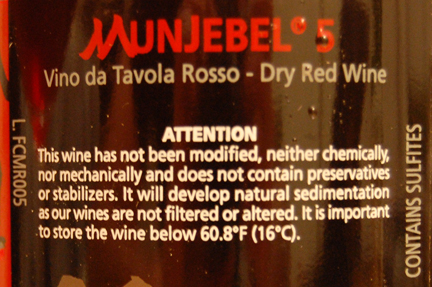
Last night, as Tracie P and I were sitting on our living room couch, watching our Sunday night TV (gangsters and zombies, please), munching on an excellent potato and leek torte that she made, and sipping Cornelissen’s 2007/2008 Rosso Munjebel 5, it occurred to me that one of the most tormented aspects of the tortuous quest to define “Natural Wine” is the fact that its definition is, by its very nature, a definition of what is not.

In many ways, the art and science of producing Natural Wine are defined by what the winemaker does not do: no chemicals in the vineyard, no pharmaceutical yeast in the cellar, and no manipulation of the vinified must (or as little as humanly possible, because human intervention is required on some level).

The Natural Wine Authorities seem to agree that Cornelissen’s wines are impeccably Natural (and I certainly do not want to descend into the abyss of the Natural Wine debate here). I’m sure even the Grouchy One would agree that Cornelissen’s wines are Natural (even though he’s probably pissed that he doesn’t import them).

In any case, Cornelissen’s “Natural Wine” credo, as published on his label (above), seemed to me a succinct and excellent way to define what Natural Wine is by describing what it is not. (Check out Cornelissen’s site here.)

O, and the wine?

For however difficult they are to track down and buy, Cornelissen’s wines are not prohibitively expensive.

Although the wine was slightly “hot” on the nose (as we say in the biz, denoting high alcohol content), we loved it: bright fruit, bright acidity, light in body, and a rich grapey meatiness that was fantastic with Tracie P’s torte.

Is it a wonderful wine? Yes. Is it a life-changing wine? I’d have to say no. Tracie P noted that it reminded her of the vino paesano that she used to drink when she lived in Ischia.

We enjoyed it thoroughly with our gangsters and zombies and we remembered that sometimes the simplest things in life are the best.

15 is the new 10: scenes from an Asian wine pairing, thinking outside the Bento box

Last night, for the second year in a row, I served as sommelier and speaker at Saheli’s annual benefit in Austin, “Discovering Asian Food through Wine.”

SAHELI is a nonprofit organization based in Austin, Texas, that provides assistance to Asian and other immigrant families dealing with domestic violence, sexual assault and trafficking.

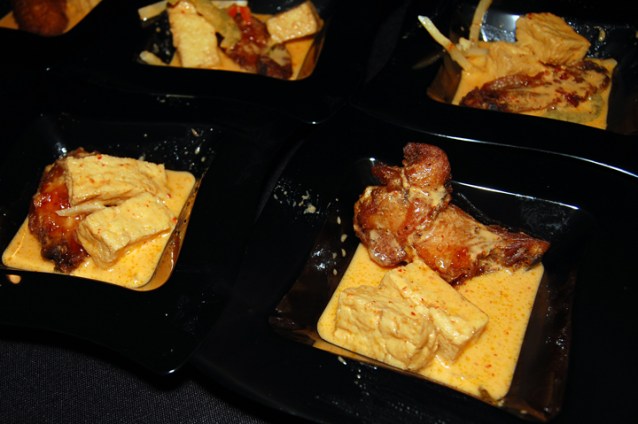
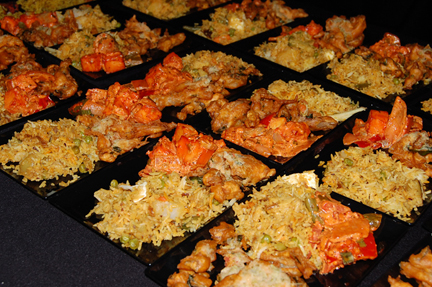
This year, Tracie P was able to join me and we had a blast pouring and talking about wine, admiring the many ladies dressed in traditional Asian garb, and tasting the FANTASTIC Asian dishes paired with European and North American wines.

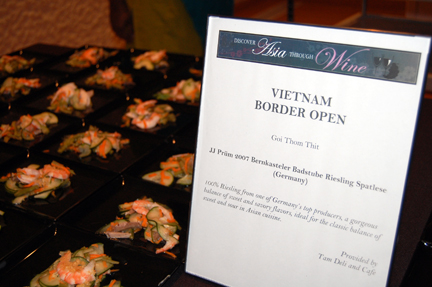
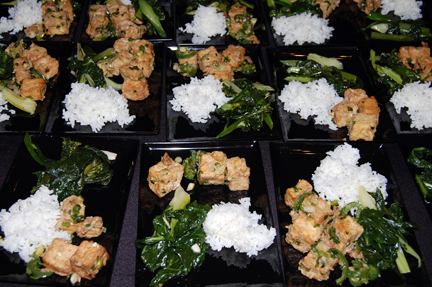
Roughly 150 persons attended the event and it was amazing to see the sea of colors and patterns formed by the tasting plates all lined up for the guests to sample.

The organizers had asked me to select wines at a median $15 price. We were very fortunate to find a great price on the JJ Prüm 2007 Bernkasteler Badstube Riesling Spätlese, a no-brainer pairing for the tart and often intensely spicy flavors of Asian cuisine. What a fantastic food wine…

The wine that impressed me the most was the Planeta 2008 Cerasuolo di Vittoria. I’m not generally a fan of Planeta. I mean, who needs another buttery Chardonnay or oaky Merlot from Sicily? But then a few years ago my friend Marco Barat insisted that I taste it with him. I discovered that this wine is true to its appellation and deliciously well priced (around $15). When done right, Cerasuolo di Vittoria is one of those wines that always wows the first-time taster. It was great to watch the guests ooo and aaa over its bright fruit nose and gritty earth. It went great with the Kibbeh (below).

I also loved how we were able to put together a fun flight of wines using the $15 rule: by taking advantage of a mixed case discount, looking for special value, and balancing the higher priced with the lower, I was able to deliver the goods.

When people ask me buying tips, I always tell them: 1) buy from an independent retailer and get to know your merchant well (so that the seller knows your palate and will alert you to special pricing; 2) always take advantage of case discounts (I rarely buy just one bottle of wine); 3) once you establish your budget for wine, use an average per bottle cost so that you have a variety of wines (for drinking every day, for Saturday night dinner, and for special occasions).

And remember: 15 is the new 10!

On the subject of pairing Asian cuisine and European wine, check out Lyle’s hot-off-the-presses post on the new Lotus of Siam in NYC (I’ve only been to the one in Vegas when my band NN+ has played there and am dying to get to the new one in the City).

I also led a private tasting this week at the elite River Oaks Country Club in Houston. But price wasn’t an issue there! The night ended with 03 Sassicaia and 06 Ornellaia… not really my speed but one of those professional hardships I was forced to endure…

Postcard from Cirò: “I am trying to avoid that a wine unique and inimitable becoming a wine without soul.”

Francesco de Franco (above), owner, grower, and winemaker at ‘A Vita in Cirò, left the following comment on my post Soylent Merlot: the Montalcino Syndrome infects Calabria. Please have a look at the thread and add your voice to the chorus if so inclined.

I am a small wine producer from Cirò. I together with other producers (Tenuta del Conte, Acting, Crapisto, Arcuri etc.) am trying to avoid that a wine unique and inimitable becoming a wine without soul.

We are not conservatives or traditionalists, we want the wine of Ciro speaks of the terroir. I am totally with Cevola is a matter of pride and style. I am convinced that the Gaglioppo grape may make an elegant and surprising wine.

I believe it.

—Francesco de Franco

Taste with me for a good cause this Friday in Austin

Above: My favorite pairing from last year was Selvapiana Chianti Rufina paired with Tandoori chicken. This year I think it might be Planeta’s Cerasuolo di Vittoria with Guang Pah. Wines by The Austin Wine Merchant.

On Friday, I’ll be pouring and talking about 7 wines paired with Asian food…

“Come celebrate 18 years of giving hope to Asian families affected by domestic violence by joining SAHELI on a voyage to Discover Asia Through Wine. This annual event is your passport to a magical evening with a great cause.”

Last year’s event was a blast and I’m expecting this year’s to be just as delicious and fun…

Discover Asia Through Wine
Friday, November 12th
7:00 pm-10:00 pm
Mexican American Cultural Center
600 River Street, Austin TX 78701
www.wine.saheli-austin.org

What is the secret of Soylent Merlot?

SPOILER ALERT: Please do not click on the below YouTube if you want the answer to be a surprise.

But please do click on the comment thread from yesterday’s post on Soylent Merlot and the Montalcino Syndrome, which includes insights from two Italian winemakers (Giampaolo Venica and Marilena Barbera). And please add your voice to our chorus.

The Montalcino Syndrome… It’s about people, people who lie, and people who face the agony of telling the truth…

What Parzens will be drinking for Thanksgiving

If you live in California and would like to drink what Parzens will be drinking this year at their Thanksgiving, check out my current offering at Do Bianchi Wine Selections (my wine club).

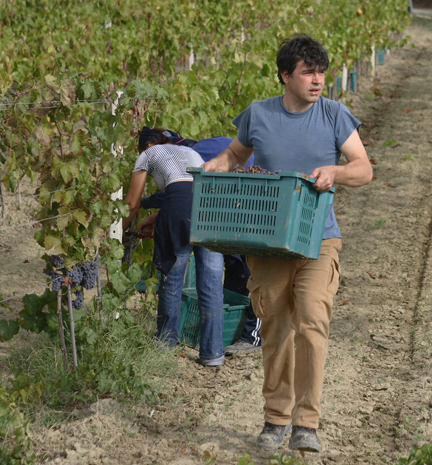
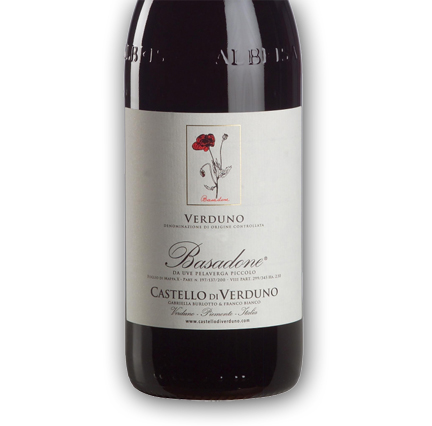
The year was 2006 and I was working in New York as the media director for a high-profile Italian restaurant group that also happened to be a direct importer of Italian wines. Earlier that year, I had made the annual trek with my colleagues to the Italian wine fairs, where we met and tasted with a young winemaker at the natural wine fair, Vini Veri: Mario Andrion of Castello di Verduno, producer of awesome Barolo and Barbaresco and a then relatively obscure grape called Pelaverga…

Click here to read the rest of the story.

Soylent Merlot: the Montalcino Syndrome infects Calabria

It’s the year 2010… People are still the same. They’ll do anything to get what they need. And they need MERLOT.

I couldn’t help but think of the classic horror movie Soylent Green (1973) when a desperate plea appeared in my feed this morning.

Yesterday, the authors of the blog In Difesa dell’Identità del Vino Cirò (In Defense of the Identity of Cirò) posted an open letter to the Italian Association of Enologists* asking them to examine the absurdity of what’s happening on the ground in their appellation in Cirò and Cirò Marina, Calabria (the letter was reposted today by one of Italy’s top wine blogs Esalazioni Etiliche and Mr. Franco Ziliani and I posted about it at VinoWire today as well).

Essentially, this is what has happened… Back in the summer of 2009, before EU reforms came into effect, a relatively small group of commercial producers in Cirò got together and rewrote appellation regulations to allow Cabernet Sauvignon and Merlot for the first time in Cirò. Calling themselves the “Consortium of Cirò producers,” they submitted their changes to the Italian government, even though their group did not include the flagship producer Librandi, nor the majority of Cirò producers. As a result, today, the EU is considering said change in the appellation even though it was proposed by a minority of greedy, commercial producers.

Mr. Franco Ziliani said it best when he first posted on what was happening there back in June 2009, calling it the “Montalcino Syndrome.” The parallels are crystal clear: a small group of large, industrial wine producers are lobbying (successfully) to eclipse their smaller competitors who not only play by the rules but actually care about the people, place, and grapes that go into their wines. (Remember what Baldo said in the Brunello debate in October 2008? Italian appellation regulations are intended to protect the territory, not the consumer.)

It’s unlikely that the blog and accompanying petition will stop the changes from being approved by Brussels. As a result of the amendment, commercial producers will pump up their Gaglioppo with Cabernet Sauvignon and Merlot (easier and cheaper to grow) and the wines… well, we already know what the wines will taste like… Soylent Green, anyone?

Here in Texas, btw, we eat Soylent Greens accompanied by Charro beans and hot sauce.

*I’m not linking to the Association website because it requires that you download the latest version of Flash to view it.

Veronelli’s olive oil manifesto

Posts from my September Friuli trip continue…
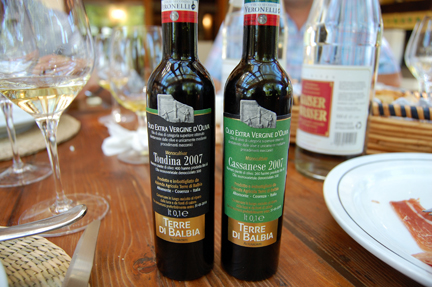
Friuli isn’t the first region that comes to mind when you think of great Italian-raised extra-virgin olive oil. In fact, very little olive oil is produced there (later in this series I will be posting on the tiny subzone of Friuli where higher winter temperatures make the cultivation of olive trees for fine olive oil possible).

“It’s just too cold here during the winter,” said the lovely Ornella Venica when we sat down for lunch at her family’s estate. Winter freezes, not uncommon in this most northeastern region of Italy, can kill the trees, she explained, making it virtually impossible for her family’s estate to produce fine olive oil there.

Determined to make great olive oil, her husband Gianni and one of his business partners launched the estate’s Terre di Balbia program in 2001 in Calabria, where they grow olives for their family’s olive oil and bottle estate-grown Magliocco and Gaglioppo.
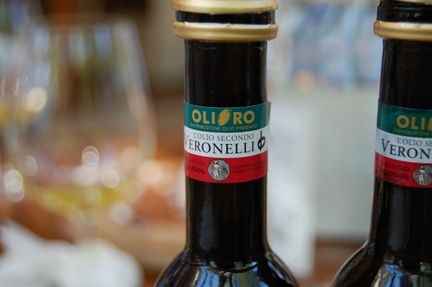
The Venica family became early undersigners of Luigi’s Veronelli’s 2001 “Olive Oil Manifesto” (you can download a PDF version of the manifesto at the movement’s official website).

Publisher, writer, editor, and gourmet Luigi Veronelli, for those of you unfamiliar with his legacy, was the architect of Italy’s current food and wine renaissance. His early catalogs of the wines of Italy (first published in the early 1980s) and his restaurant and food guides reshaped the map of Italian food and wine, domestically and abroad (Veronelli appears often here at Do Bianchi, most recently in this post).

The manifesto is extensive and meticulous, but the basic concepts of l’olio secondo Veronelli (“oil according to Veronelli,” i.e., Veronelli’s “vision” of olive oil) can be distilled as follows: 1) no-chemical farming; 2) quick pressing of the fruit in situ 3) depittting of the olive oil before pressing; 4) exclusive pressing and bottling of individual cultivars, i.e., olive varieties (the section on how to clean the press to avoid cultivar contamination is impressive); 5) detailed labeling, including the mono-cultivar, “vintage,” and provenance; 6) exclusive packaging in glass bottles. There’s a lot more to it, but the basic concepts are these.

The oil? FANTASTIC… Venica & Venica is not the only producer-member of the Veronelli movement but I have been unable to find a comprehensive list of all the members.
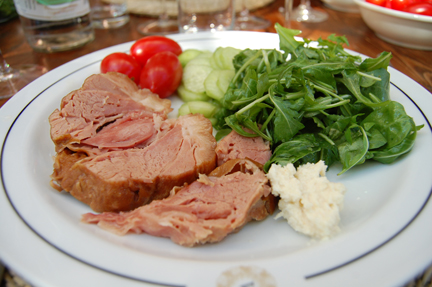
In case you were wondering what we ate for lunch that day: roast pork shank with kren and fresh greens.
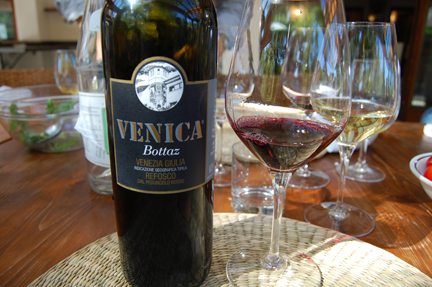
And we drank a 2005 Venica & Venica Refosco, which I had never had the opportunity to taste. Chewy and earthy and sooooooo good…

Venica and its current generation Giampaolo Venica will be appearing in an upcoming post in this series. Giampaolo was one of the most fascinating persons I met on the trip and we became fast friends. Stay tuned…

Unbelievable risi e bisi and other good stuff we ate and drank at Tony’s

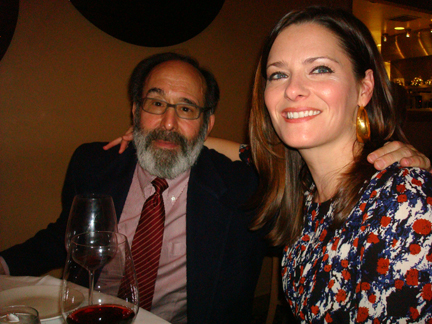
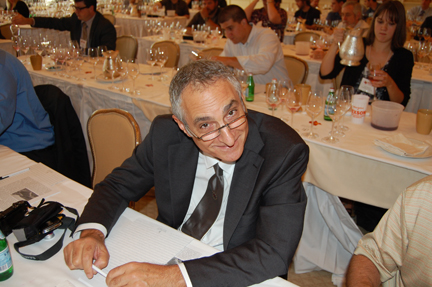
Cousin Marty (above with Tracie P) and I often remark how remarkable it is that two schlubs like him and me ended up with such jaw-droppingly beautiful women. I guess it just runs in the family.

Last night, as their wedding present to us, his better half Joanne and he treated Tracie P and me to dinner at Tony’s, the hottest see-and-be-seen table on any Saturday night in Houston. Judge Manny and wife Betty joined us for what, I think it’s fair to say, was one of the most glamorous nights of our year so far: federal judges, U.S. ambassadors, bank execs, top radiologists, and throw in a sports celebrity or two — everyone came by our table to say hello to Judge Manny.

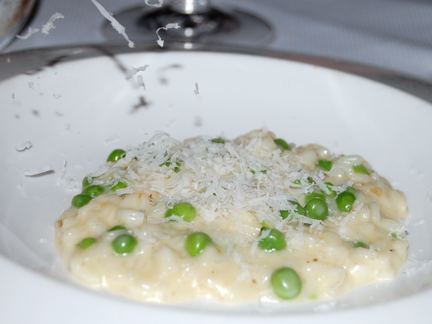
Tony, himself, presided over our table. Knowing our love of regional Italian cuisine, he answered my request for a great risotto with an improvised risi e bisi, a classic dish of the Veneto (where he knows I lived) and a favorite dish of Italian Jews. It was fantastic.

It had been preceded by a burrata drizzled with honey and a balsamic reduction and then topped with freshly grated Alba truffles (SHEESH!).

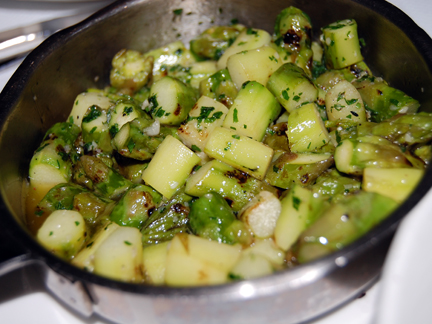
The tip-to-stalk ratio in the asparagus with Pecorino Romano gave the dish just the right balance of bitter and sweet.

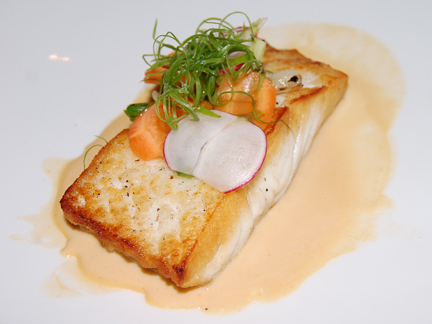
Tracie P’s halibut was served over a sea urchin sauce.

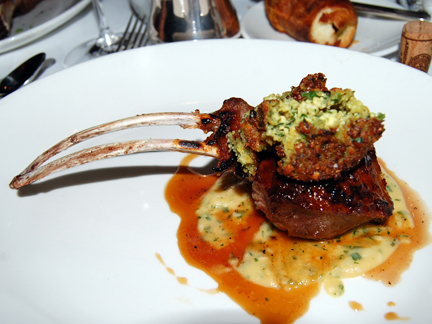
My lamb chops were served over a cannellini “humus” and topped with a crumbled green falafel. Can you humus a few bars?

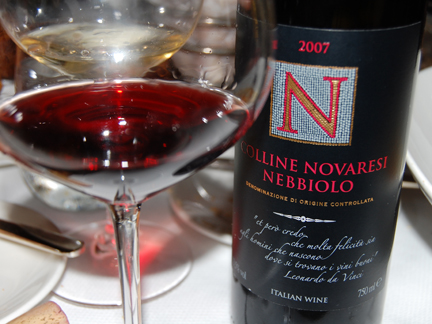
Sommelier Scott Banks surprised us with a Nebbiolo we’d never tasted, this Colline Novaresi by Fontechiara (Borgomanero, Novara). Extreme value on an otherwise high-roller list, grapey and with bright acidity, fresh on the nose and earthy on the palate, perfect for the wide variety of foods set before us.

Joanne and Marty, thank you for such a wonderful dinner… a dinner-event, really! And thanks, from the bottom of our hearts, for all the support you’ve given me and Tracie P, in this first year of our marriage, as we’ve begun building a life for ourselves in Texas. I can’t tell you how much it means, on so many levels, to both of us. We have so very much to be thankful for and are truly blessed to have you as part of our lives. And who knew my relatives were such fressers and machers?