Yeaster me, yeaster you, yeaster day

September 14, 2009

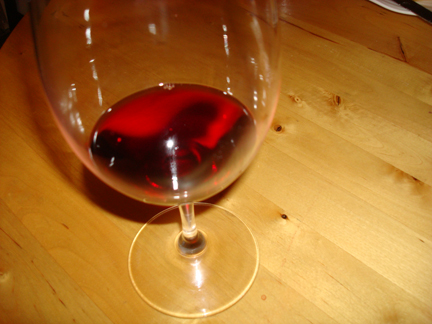
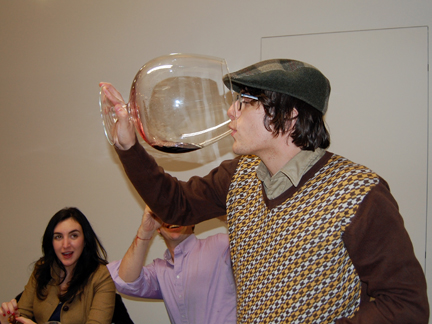
Above: In some parts of the world, the “yeasting” of wines is common practice and is considered a genuinely positive aspect of human intervention, as evidenced in this post by Vinogirl. I don’t know much about Vinogirl but I love reading her blog and her posts about harvest in Napa are wonderful.

Ever the Solomon of wine bloggers, Eric posted Friday on the sometimes “strident” tones tossed about in the debate over natural wine and its definition.

I greatly appreciated Eric’s observation:

    I think that too much effort is spent coming up with a precise definition. Making wines “naturally,’’ after all, does not mean the wines are any good. All things considered, I prefer wine that would fit a rough definition of natural. But I don’t think the dividing line between natural and — what, unnatural? — is always that clear. Certainly, it is not if you are trying to characterize a winemaker.

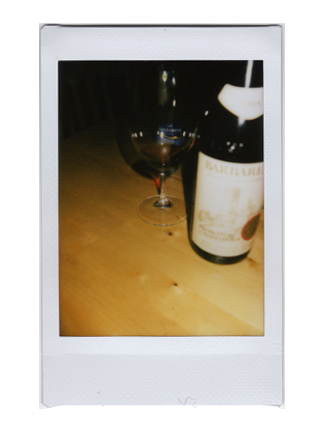
Above: I tasted with Produttori del Barbaresco winemaker Aldo Vacca this year at Vinitaly. He is one of the most earnest and forthright winemakers I’ve ever met and I love his wines.

It does seem that the one thing that all natural wine lovers — from enthusiast to dogmatist — agree on is that “ambient” or “native” yeasts (i.e., naturally occurring yeasts) are a key if not the key element necessary to be allowed into the natural wine pantheon.

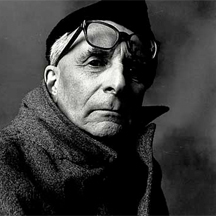
The delicate issue of yeast was illustrated Eric’s account of winemaker Roumier who “tries to make wine as naturally as he can, but he told a story once of having a batch of wine that had gotten stuck in mid-fermentation. The only way he could get it going again was to add yeast, a cardinal sin among many natural wine devotees.”

It made me think of what Produttori del Barbaresco winemaker Aldo Vacca recently told me when I called him to transact some other business but couldn’t resist asking him about the practice of “yeasting” at the winery.

“In a great vintage, we do not add yeast,” he said, “because the fermentation does not need any help. But in many vintages, we use a yeast called ‘Barolo strain’ that was developed based on yeasts that occur naturally in our terroir.”

According to the results of a quick Google search, the Barolo strain was “selected from 4 year study by University of Torino from over 600 isolates taken from 31 wineries of the Barolo region. The selection goal was to find a dominant natural yeast from Nebbiolo that is able to retain and enhance color.”

I never have and never would call Produttori del Barbaresco a “natural wine,” even though I believe the style of the wine jives with the wines of producers who subscribe to the natural wine movement. And I wonder if any of those winemakers have ever used a cultured yeast in a challenging vintage (like Roumier).

Throughout the debate, many have asked rhetorically, would the coinage of an expression other than natural wine offer an umbrella for those wines that aspire to the ideals of natural winemaking but don’t quite achieve its sanctity?

Founder Teobaldo Cappellano dubbed the Italian natural wine movement Vini Veri or Real Wines and added the epigram, wines as natural intended them.

Perhaps we should call these wines “humanist” wines. After all, all wine is made by humankind for consumption by humankind. In the end, I find that the wines I like the best are the ones that take into account not nature but rather “human scale,” as Guilhaume Gerard put it (in his remarks at the Symposium).

We can discuss natural wines and their definition until we’re blue in the face, but in the end, we are human — all too human.

Forget natural wine: the Texas weather will put the fear of G-d in you. I snapped this photo yesterday as Tracie B and I were strolling across the Colorado River. Click the photo for the full-sized image.


Natural wine with a capital N: 91 Nicolas Joly Coulée de Serrant

August 17, 2009

Above: What is natural wine? The question of what it is (and what it isn’t) is one of the most hotly debated topics in the world of wine blogging and punditry today. No one would deny, however, that Nicolas Joly’s Coulée de Serrant is natural wine. The 1991 was fantastic the other night.

Things have been so crazy lately — between “keeping the world safe for Italian wine” (check out this recent post I translated for VinoWire) and hawking wine in California (hey, Alder, there are wine bloggers who start wine clubs and are proud to attach their names to them!). So crazy that I neglected to post about a very special bottle of wine — 1991 Coulée de Serrant — that Tracie B and I opened to celebrate our anniversary a few weeks ago.

Above: I had packed the bottle in a thermal bag (recycled from my mom’s annual mother’s day gift of gravlax from Barney Greengrass) with an ice pack and stashed it my suitcase and brought it back from La Jolla to Austin. The sturdy wine held up well — not surprisingly.

Where did we find this bottle? In this most unlikely of places: La Jolla’s oldest luxury hotel, located on Prospect, in the heart of downtown, La Valencia (often pronounced lah vah-LEHN-chah by locals), affectionately known as “The Pink Lady” or “La V.” A good friend and fellow wine dude had mentioned that he found the wine on the list, which is otherwise dominated by flights and flights of big, oaky California Cabernet. Tracie B and went in there a few months ago at the end of the night and convinced the current sommelier to sell it to me (I have to say it was a steal for a Joly that old).

Above: At Trio, chef Todd Duplechan prepares shishito peppers the same way that padrón peppers are served in Spain. The pepper is not spicy but tangy and moreish, as the British might say.*

As it turns out, I recently became friends on Facebook with the sommelier who put that wine on the list at La V, Dustin Jones, who now reps for Fourcade and Hecht. “It was definitely a hand sell,” he wrote me, “and a tough one at that, the fact that 6 bottles were put in inventory and they still have it suggests that this is not a wine that sells itself!” One man’s esoterica turned out to be our golden Chenin treasure: Tracie B and I were thrilled to get to taste an older Joly and it didn’t disappoint.

Above: We shared our 91 Coulée de Serrant with sommelier Mark Sayre and chef Todd, who surprised us with this special dessert for the occasion. Mark is without a doubt the top sommelier in Austin and so whenever I have something really special that we want to open away from home, I take it to him. Mark and I are good friends but whenever you BYOB, you should always remember to share a glass with your sommelier.

The wine had bright acidity and nuanced fruit on the nose and in the mouth and it showed a caramel note that Tracie B attributed to the winery’s practice of letting botrytis form on the grapes. (Remember her post on our visit there?) No one would question the “natural wine” street cred of Joly and Joly’s approach to winemaking proves over and over again how natural winemaking can deliver remarkably delicious wines with remarkable aging ability.

Above: We had so much fun that night at Trio and Mark and Todd made such a special dinner for us. Even I feel handsome when I’m standing next to the beautiful Tracie B. Who wouldn’t?

In the wake of the San Diego Natural Wine Summit, a few folks have written me pointing out that not every wine we poured at the event would be considered a “natural wine” by everyone. I’ve even heard from some of the most authoritative voices in the field. I’m beginning to believe that the notion of “Natural Wine” (with a capital N) is more of an ideology and an attitude about living, eating, and drinking than a set code of self-imposed regulations. Recently, I’ve been fortunate enough to have the opportunity to interact with Kermit Lynch, who, when I asked him about this, told me: “Before I find out how the wine is made, I taste it, and if I like it then I ask about the winemaking.”

Can a wine taste “natural” even if some elements of vinification go against natural winemaking dogma?

* Of food or drink: that makes one want to have more (Oxford English Dictionary, online edition).


Orange wine awaits at the beach

August 6, 2009

Above: Not everything we’re going to taste in San Diego on Sunday at Jaynes Natural Wine Summit will be as orange and cloudy as this Picrate (Chenin Blanc from the Loire) that Alice, Tracie B, and I shared last February in Paris.

Seems that everyone who is someone is talking about “orange wine” these days. Last week Eric and Alice attended an “orange wine” dinner in Tudor City (Manhattan) and posted these excellent dispatches respectively, here and here.

Just like the ongoing discussion of what can truly be called “natural wine,” I’m sure some will disagree as to what “orange wine” is exactly but the generally accepted defining element is skin-contact (maceration) during fermentation of otherwise white grapes. Not all the wines included in the “orange” genre undergo maceration but there is most definitely an orange revolution afoot.

Not all the wines Tracie B and I will be tasting on Sunday at the first-ever San Diego Natural Wine Summit at Jaynes Gastropub will be as orange as the Picrate (in the photo above) but there are 29 — yes, count ‘em — 29 superbly stinky, natty wines* for your tasting pleasure, paired with Jayne’s “farm to table” menu and DJ Greyboy’s “rare grooves.”

Above: This weekend, Tracie B and I will most definitely be hitting our favorite San Diego taco shack, Bahia Don Bravo. Natural wine and fish tacos, anyone? Yummmmmmm…

If you happen to be in town, please come by to see me, Thursday through Saturday nights at Jaynes and don’t miss the Natural Wine Summit on Sunday!

All of the wines we’ll be tasting on Sunday will be available for purchase at my new snazzy site, 2bianchi.com. Check it out if you have a moment and thanks for reading and for your support! Hope to see you in SD!

And remember, Stay classy, San Diego…

* The expression natty wines was happily coined by my Nous Non Plus bandmate Bonnie Day on our 2009 California mini-tour. I’ve got to be the only wine blogger in the world that uses footnotes, right? ;-)


How to make a living by wineblogging and 31 days come to an end

July 22, 2009

dirty south

A “hardy” mazel tov for Hardy Wallace (above), author of the excellent blog Dirty South Wine, who has emerged as the winner in the Really Goode Job contest and will be heading to Sonoma for a six-month tenure of blogging, tweeting, and Facebooking — and getting paid a handsome sum all the while! All I can say, Dirty, is chapeau bas, you did it: you figured out how to make a living by wineblogging! Tracie B and me have always enjoyed your blog and we’re thrilled that you won the contest. It couldn’t have happened to a nicer guy or a cooler blogger… I won’t bother explaining what the Really Goode Job contest was but I will say that it was an ingenious marketing tool and it is indicative of how the lexicon and lexicography of wine marketing is rapidly being transfigured. Hardy congratulations, Dirty!

Like Tracie B and me, Dirty contributed to Saignée’s 31 Days of Natural Wine blogging series: the blogilicious event ended today with a post by Joe Dressner, whom many would consider one of the pioneers of wine blogging and whom we all revere as one of the fathers of the natural wine movement in this country.

The 31 Days series got a great writeup at The Cellarist by Jon Bonné, who also participated in the blogging event, as did a lot of our bloggy friends.

There were so many awesome posts among the 31 (and I recommend you read them all, whether you’re just getting into natural wine or whether you are already a natural wine fanatic) but one highlight for me (beyond Tracie B’s post on our visit to Joly, of course!) was Arjun’s treatise on sulfur and sulfites, a subject so hard to get a grasp on and so often misunderstood by wine lovers.

In other news…

I’m about to get on a plane for Vegas and then San Diego, where I’ll be hawking natural wine tonight at Jaynes Gastropub and talking up the first-ever San Diego Natural Wine Summit, where I’ll be presenting natural wines next month (August 9). (Click on the link and you can read a little manifesto of natural wine that I authored.) I saw the above license plate in the Austin airport gift shop and remembered the one that Tracie B brought me the first time she came to visit me in San Diego last year. It rode on the dash board of my old Volvo (“la Dama Azzurra”) all the way from the Pacific Ocean to Central Texas. Tracie B and I have only been apart since this morning and I already miss her…


Big news: the San Diego Kid heads back west

July 2, 2009

That’s me, The San Diego Kid, back in 1978, when I was just 11 years old, the year the whole world changed around me (but that’s another story, for another time).

I wanted to let y’all know that me and my squaw will be heading west next month to pour and talk about natural wine at the first-ever San Diego Natural Wine Summit at Jaynes Gastropub.

Now, mind you, it ain’t that we ain’t coming back to Austin, Texas. That’s the Kid’s home now. But summertime is here and the Kid has a hankering for some ceviche and some waves… and some natural wine.

SAN DIEGO NATURAL WINE SUMMIT

Sunday, August 9, 2009
Noon – 2 pm Media/Trade Preview
2 pm – 6 pm Public Tasting $45/person

Jaynes Gastropub
4677 30th Street (@ Adams Avenue)
San Diego 92116

To reserve, please call 619.563.1011 or email info@jaynesgastropub.com

Space is extremely limited so please reserve now!

WINE AS NATURE INTENDED IT.

In other news…

Want to drink what me and Tracie B drink? Send me an email and I’ll add you to my email blast list: I’ll be doing a 6-pack offering next week, including some of my favorite wines and Dora and Patrizia’s Vino Nobile di Montepulciano — stinky and natural like we like it!


Sunday poetry: Dante and wine

June 28, 2009

Of the entire corpus of Dante’s writings, his Inferno — the first canticle of his Commedia, with its gallery of eternally damned, their sordid tales, and their punishments — is indisputably the most popular (in part because of its inherently cinematic and more immediately accessible content). The other two canticles are much more dense and more difficult to penetrate but they are equally — and in many cases more — inspired, as Dante travels up toward heaven through Purgatorio (see the terraces of Purgatory left) toward Beatrice in Paradiso.

The word vino or wine appears twice in the Commedia, both times in the Purgatorio. In the first instance (Purg. 15, 123), Dante refers to his fatigue, “like a man overcome by wine or sleep.”

In the second, wine plays a much less mundane role. In Purg. 25, 76-78, the Latin poet Statius compares the miracle of winemaking (natural winemaking, I might add) to how God creates life:

    E perché meno ammiri la parola
    guarda il calor del sol che si fa vino,
    giunto a l’omor che de la vite cola.

    And, that you may be less bewildered by my words,
    consider the sun’s heat, which, blended with the sap [must]
    pressed from the vine, turns into wine.

(You can read the tercet in context at the Princeton Dante Project here and I’ve included the Princeton Dante Project commentary to Statius’s lecture on embryology, the physiology of the spirit, and the formation of the aerial body below, together with a link to the entire commentary.)

I had been thinking about this tercet after I posted in Saignée’s 31 Days of Natural Wine Series on the “miracle” of winemaking. (The series continues through July 18 and is definitely worth checking out.)

This passage from Dante is a great example of how Western thinkers and poets saw winemaking as a divine act. I find it beautiful how Dante (in the voice of Statius) uses the example of winemaking to illustrate how life is formed — a concept not easy for the mortal to grasp. As the heat of the sun starts fermentation, so the miracle of grape juice being turned into wine begins. Juice for thought, no?

Thanks for reading and buona domenica! Tracie B and I are off to the movies now…

From the Princeton Dante Project, a great tool for reading, browsing, and studying Dante’s Commedia:

Statius’s lecture on embryology may be paraphrased as follows. He is willing to deal with Dante’s desire to know how the aerial body is formed ([Purg XXV 34-36]): (1) After the ‘perfect blood’ is ‘digested’ (the fourth digestion) in the heart, having now the power to inform all the parts of body, it is ‘digested’ once again and descends into the testicles; (2) it now falls upon the ‘perfect blood’ in the vagina; it is ‘active,’ the latter ‘passive’; (3) the male blood now informs the soul of the new being in the female; (4) but how this soul becomes a human being is not yet clear ([Purg XXV 37-66]). Once the fetal brain is formed, God, delighted with Nature’s work, breathes into it the (rational) soul, which blends with the already existent souls (vegetative and sensitive) and makes a single entity, as wine is made by the sun ([Purg XXV 67-78]). At the moment of death the soul leaves the body but carries with it the potential for both states, the bodily one ‘mute,’ the rational one more acute than in life, and falls to Acheron (if damned) or Tiber (if saved), where it takes on its ‘airy body,’ which, inseparable as flame from fire, follows it wherever it goes; insofar as this new being ‘remembers’ its former shape, it takes on all its former organs of sense and becomes a ‘shade’ ([Purg XXV 79-108]). This ‘lecture’ is put to the task of justifying Dante’s presentation of spiritual beings as still possessing, for the purposes of purgation, their bodily senses even though they have no bodies. Souls in Heaven, we will discover, have no such ‘aerial bodies,’ but are present as pure spirit.


Day 2 of 31 Days of Natural Wine: nothing natural about it

June 20, 2009

This post is the second installment of Saignée’s 31 Days of Natural Wine. Click the link below for more…

“Natural wine” is something of a misnomer. Wine is, after all, an act of humankind.

It’s true that wine occurs naturally. Aleš Kristančič of Movia once explained to me how when a grape falls from the vine, it is a natural winemaking vessel: the hole at the top of the berry (where the stem has broken away) is a natural valve that allows yeast on the skin to enter the berry and begin turning the sugar into alcohol.

Wine was a gift from the gods (think Bacchus), or a gift of G-d (think Noah), or an accident (think mother Natura), depending on how you look at it: the magic of grape juice being turned into wine was probably discovered by someone who forgot some grapes in an amphora, only to open the vessel later and find that they had been turned into wine (the original carbonic maceration). But the moment that someone employed this stumbled-upon technology (tehnê, meaning art or craft) a second time, it became an act of humankind…

Click here to read more…

In other news…

Dany the Red is now Dany the Green. Remember this post from East Germany back in September 2008? That’s me stage left, above, rocking out with Daniel Cohn-Bendit, who was in the news today and whose “Europe Écologie coalition of European Green parties came in third in French voting for the [European] Parliament, winning 16.28 percent of the vote. It was just behind the squabbling Socialists, who had only 16.48 percent, and ahead of a presumptive presidential candidate, François Bayrou of the centrist Democratic Movement, or Modem.” Check out this article in the Times. I love how the girl in the photo above is wearing a bright red outfit.

By now you should know the identity of the mystery girl to whom I threw the kiss!


NPA and NN+ in SF CA

May 8, 2009

Above: A view from the stage. My bandmate Céline Dijon (Verena Wiesendanger, right) was in a super good mood last night at our show at Rickshaw Stop (hint: a fan was buying her Jameson). The show was a blast and we did three encores. Thanks again to Waldo of Rickshaw for letting us rehearse at the club: enjoy the Clos Roche Blanche Cot we gave you!

It was something of a blogger summit and a meeting of virtual friends last night between Terroir Natural Wine Bar and Merchant and Rickshaw Stop in SF.

Among them were my virtual and now real friends Cory Cartwright (author of Saignée) and his delightful wife Emily. We shared a bottle of the enigmatic 2002 Ribolla Gialla by Gravner. One blogger, who prefers to remain anonymous, noted (and I concur) that the Gravner is an “abstract” wine, a wine (in a certain sense) that you cannot drink. There’s no question that Gravner’s wines are fascinating, thought-provoking, and intriguing: as the wine aerated it revealed a remarkable array of fruit aromas — think dried and moldy apricot (but in the mouth, it still felt to me like the wood dominated). Owners Dagan Ministero and Luc Ertoran were on hand as well, and a lively discussion of “orange wine” ensued and they generously tasted us on a number of bottlings (including Ca’ de Noci and Damijan). Virtual friends Slaton Lipscomb and Simona (author of Briciole) were there, too, and Clark Terry of Kermit Lynch blog fame also joined up at the show.

The most interesting and unique wine of the evening was the Natural Process Alliance skin-fermented Chardonnay (above), sold only in reusable stainless-steel containers. (Spume has written about this wine as has Alice.) This wine is as stinky and cloudy as it gets and it is 100% delicious (maybe not for everyone but just right for yours truly). Slaton noted that it tastes slightly different every time because its malolactic fermentation has not completed when it ships. You can only get locally and I highly recommend it.

The crowd was fantastic last night and we did three encores, closing with a rocking version of “Ca Plane Pour Moi” by Plastic Bertrand. Tonight we play at an all-ages club in San Jose and I’m just passing time until tomorrow when I get to be reunited with my Tracie B, who’s flying in to visit with her girlfriends and see our show at Spaceland.

Highway run
Into the midnight sun
Wheels go ’round and ’round
You’re on my mind
Restless hearts
Sleep alone tonight
Sendin’ all my love
Along the wire


Follow

Get every new post delivered to your Inbox.

Join 6,100 other followers