
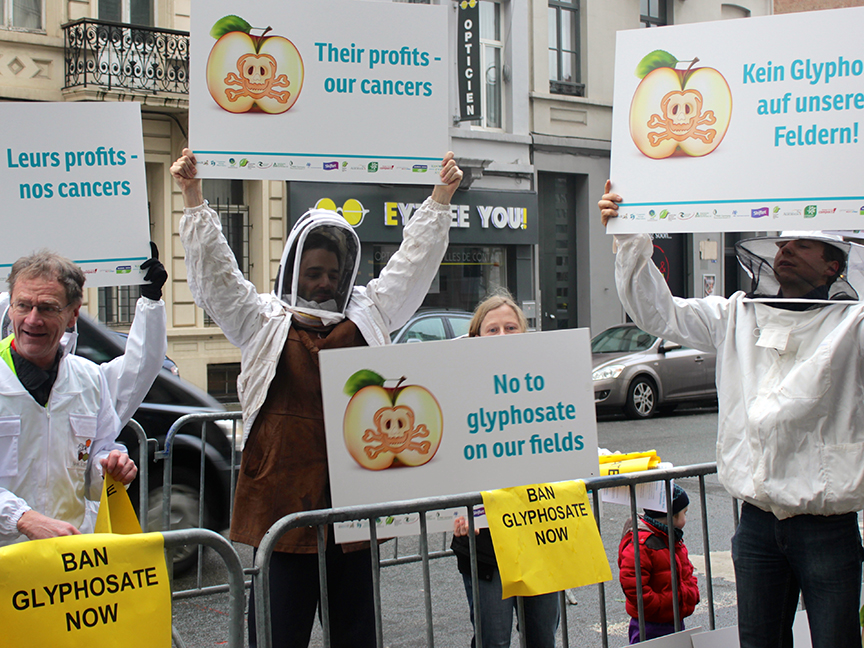
 So much terrible is happening in the world right now. With the public’s myriad distractions, little is being said about the Supreme Court’s audience yesterday where Big Chemical is seeking to dismiss scores of lawsuits claiming that Roundup — and its primary active ingredient, glyphosate — causes cancer.
The central legal issue is a lawsuit where a Missouri man was awarded $1.25 million dollars in a suit where he claimed that Roundup made him sick.
If Bayer — the owner of the patent — wins, all the pending cases will be wiped clean.
Back when I was writing about wine and interacting regularly with grape growers and winemakers on both sides of the Atlantic, I met people who called glyphosate one of the most evil inventions of humankind. At the same time, I also met winemakers — including producers of expensive, top-tier wines — who swore by the product and insisted that they wouldn’t be able to achieve the same high quality in their wines without it.
One of the problems for grape growers, I’ve learned, is that excessive use of glyphosate can contaminate the local water table. In places like northern Italy, where families live side-by-side with the vines, that can lead to dangerous consequences.
But there’s another reason that growers think Roundup is a bad thing. So many people I talked to said that Roundup gave those who use it an unfair advantage. They would also note that it compromises the “natural” or “terroir-driven” character of wine. By using such a specifically targeted weed killer, they argue, they are cheating nature. Winemakers who use it counter that it allows the terroir — the “sense of place” — to shine through.
In any industry where brands are often centered around the “wholesomeness” of the product, glyphosate is an extremely sticky subject.
I, for one, will be looking out for the court’s decision. It will have a huge impact on grape growing. Google it up to read more about the background.
Image via Corporate Europe Observatory’s Flickr.
 Do Bianchi