Above: Franco Ziliani and I tasted some fantastic Franciacorta together last September in Erbusco (before Tracie B convinced me to shave my mustache). Franco has been a great friend, a mentor, and an inspiration. I am proud to be his partner at VinoWire. Photo by Ben Shapiro.
Just keeping the world safe for Italian wine… that’s what we do around here.
It was one helluva way to wake up this morning in sleepy La Jolla — where Botox trumps micro ox — to find that the editors at Decanter.com had decided to publish our post on recent developments in Montalcino and subsequent reports by the Italian media.
I’m glad we got a chance to set the record straight and that I can drink my Vino Nobile tonight with Tracie B at Jaynes knowing that the world is safe for Sangiovese (or maybe we’ll drink the 2007 Selvapiana Chianti Rufina, which is showing gorgeously right now).
In other news…
If you’re planning on attending the San Diego Natural Wine Summit this Sunday at Jaynes, please email the restaurant to reserve. We’re almost at capacity and we’ll have to turn people away if they don’t have tickets. Click here for details and to reserve.
In case you don’t know him already, “Monty Waldin, a British wine writer who has been living in Italy for the last few years, is one of the best known commentators on (and advocates of) biodynamic wine growing.” — Jamie Goode
Here’s just part of what British television wine personality and wine writer Monty Waldin had to say about Decanter’s post on Friday claiming that Banfi has been “cleared of Brunello adulteration”:
Decanter also swallowed a press release last year in which Brunello’s biggest winery Banfi declared itself as innocent — when this was absolutely not the case as the Siena prosecutor subsequently made perfectly clear. Although some (most in fact) of the wineries who were investigated have not been charged others — perhaps with something to hide, perhaps not — have taken the option of plea bargaining pre-trial (a perfectly legitimate option in Italy if you, ahem, feel you may have broken the “Brunello must be 100% Sangiovese” rule).
Monty posted his thoughts on Jancis Robinson’s pay-per-view site and Franco was gracious enough to repost them at Vino al Vino.
Evidently, Franco and I are not the only ones outraged by Decanter’s egregiously disinformational post. Today, I’m trying to get to the bottom of what actually happened in their editorial offices. Stay tuned…
One of Italy’s greatest and most polemical wine writers, Franco Ziliani is first and foremost a friend. He is also a mentor and a partner: together we edit the Italian wine world news blog, VinoWire. He was one of the first to encourage me to expand my own blog and the often self-deprecating honesty of his writing has always inspired me to examine my own perceptions of wine and wine writing. I like to call Franco the Giuseppe Baretti and Aretino of Italian wine writing today. That’s Franco and me, outside the Vini Veri tasting in April in Isola della Scala.
It is a quixotic appeal, no doubt, but a voice that must not go unheard.
The other day, I was dismayed to read a pusillanimously anonymous comment on Alfonso Cevola’s post on recent developments in Montalcino. “Italians love their ‘crisi,'” wrote the would-be pundit, who identified himself solely as Scott, “and it was wine’s turn after calcio [football] had the headlines for a while. As with all things Italian, life goes on and things work themselves out.”
This sort of stereotypical reductive attitude is entirely inappropriate and frankly offensive in this case. And it was authored by someone who doesn’t read beyond the sports page.
What happened in Montalcino is a tragedy and the omertà — the screaming silence — that followed is doubly tragic. Just go ask the many folks there — old and young (and I have asked them personally) — who have fought vigorously if not always successfully to protect the traditions of their land against the evils of globalization.
In other news…
Some good news has arrived from Montalcino today, in the form of a post by my friend Alessandro Bindocci who reports that the Regione Toscana has approved legislation lowering the maximum yields allowed for Brunello and Rosso di Montalcino.
Above: I had fun pouring this flight of rosé, including the 1998 López de Heridia Viña Tondonia Rosado Reserva last night at Jaynes Gastropub in San Diego. I’ll be there on the floor (pouring not lying!) again tonight. Please come down to say hello if you’re in town (Comicon conventioneers receive a 10% discount for having monopolized all rental cars within a 100-mile radius! Just mention this ad…).
Franco and I have published an excerpted translation of a letter to Brunello association members from the body’s director today at VinoWire. For the first time — nearly 16 months after the Brunello investigation was first reported — the association director has begun to address the issue, not publicly, but internally… Click here to read… It just blows my mind that the association has waited so long to respond to accusations but I’m glad the truth — or at least some of it — is beginning to emerge. All I can say is, in vino veritas, the truth is in the wine.
For a reaction on this side of that misunderstanding otherwise known as the Atlantic Ocean, read Alfonso’s moving post here.
*****
From “Roses” by Outkast
I know you’d like to think your shit don’t stink
But lean a little bit closer
See that roses really smell like boo-boo
Yeah, roses really smell like boo-boo
I know you’d like to think your shit don’t stink
But lean a little bit closer
See that roses really smell like boo-boo
Yeah, roses really smell like boo-boo
There’s been a lot of talk in the wine blogosphere lately about the nature of wine writing and how it’s changing. De vinographia or “on wine writing” has always been a category on this blog and I often post on the subject of wine writing and wine writers.
Yesterday and today, I’ve thought a lot about what must be the saddest form of wine writing. A few days ago, agents of the Italian Treasury Department prepared and read a statement in which they announced the findings of their investigation of winemakers in Tuscany who allegedly — and evidently — released wines “not in conformity” with appellation regulations. Italian officials called the investigation “Operazione Mixed Wine” [sic], an infelicitous title, in my opinion, evoking American Dragnet-era criminal mystery, film noir, and crime-stopping television.
Back in September of last year, I created the above “I heart Brunello” logo, which Spume aptly dubbed “Bumper Sticker Brunello.” Hearting a wine is a form of wine writing, as is populating a fact sheet (technical), writing a tasting note (sensorial), rhapsodizing about a wine (panegyrical), negatively criticizing a wine (elegaical), rendering a tasting score (algebraic), or composing appellation regulations (taxonomic) or writing an indictment of a winemaker for adulteration (juridical)…
When I posted yesterday at VinoWire on the news that emerged not only from Montalcino but also from Chianti Classico, I couldn’t help but think to myself that this must be the saddest form of wine writing.
We all read the news today, o boy, and the truth that emerged was there right before us the whole time: in vino veritas, Tracie B and I mused this morning sitting in her living room with our laptops and cups of coffee, as is our habit on Sunday mornings. The truth was in the wine the whole time.
It was always with a heavy heart that my friend and partner in VinoWire, Franco Ziliani, has reported the story on his excellent blog VinoalVino, beginning on Good Friday, March 21, 2008, with a post on rumors from Montalcino.
Today, I’m sure that Franco’s heart is as heavy as mine. I heart Brunello: now more than ever, Brunello needs our support and love.
Above: Produced by Carlo Ponti, Jean-Luc Godard’s 1963 Contempt, based on Alberto Moravia’s novel, Il Disprezzo, was an Italian and French co-production. The results were decidedly better than last week’s Italissima at Vinexpo in Bordeaux.
It would have been enough that Franco rightly chastised his French counterpart and longtime sparring partner Michel Bettane for the selection of Bordeaux-inspired Italian wines to be presented in Bettane’s seminars at last week’s Italissima, a would-be Italian wine fair held in Bordeaux in conjunction with but with no official affiliation to Vinexpo, the annual see-and-be-seen French wine trade fair.
“Instead of calling it, ‘Italissima, the Italy that you love,’” wrote Franco, “they should have called it ‘Italissima, the Italy that they love,” where the ‘they’ stands for presumptuous French critics who do not know the real Italy of wine. In fact, they don’t understand it at all and they wouldn’t understand even if they seriously tried to study it…”
Wouldn’t the French be offended, asked one commenter to Franco’s post rhetorically, if Italians were to present French wines made with Italian varieties as authentically French?
But making matters worse was a slew of reports and blog posts about how Italissima participants were left sadly disappointed by lackluster turnout and poor organization. One Italian blogger called it a pasticciaccio brutto, borrowing from the title of Gadda’s 1957 novel Quer pasticciaccio brutto de via Merulano written in Roman dialect (That Awful Mess on Via Merulana).
Adding insult to injury, the French daily Sud Ouest called the event the “pavillion de la discorde,” a “monster,” and a case of “parasitism,” where the organizers were trying illicitly trying to piggy back on the exposure of Vinexpo just 200 meters down the road.
There was an even a report of wine destined for Italissima being hidden by Vinexpo organizers and a claim by the Italissima organizer that she had been attacked by one of the Vinexpo organizers.
Some of the greatest movies ever made were the French and Italian co-productions of the 1960s, like Godard’s Contempt. Maybe it’s best if dreamers of French and Italian partnership stick to movie-making.
Above: Tracie B and I tasted the 2006 Nebbiolo d’Alba and 2006 Barbera d’Alba by Bruno Giacosa the other night with our friend and top Austin sommelier Mark Sayre. We all agreed that the wines showed beautifully. (photo by Tracie B).
A few months ago, when it was decided (and certainly not without a heavy heart but after many tastings) that our 2006 vintage of Barolo and Barbaresco would not be bottled, no one thought that such a decision could give rise to so much controversy on behalf of certain persons.
We believe that it is the full right of a winery to choose its own strategy with complete autonomy and serenity, especially when with the aim of maintaining the high level of quality of the winery’s products.
In doing so, we had absolutely no intention to denigrate or demonize the 2006 vintage in general. We are sure that many wineries will put excellent products on the market. But in our opinion, the Giacosa winery’s 2006 wines — even though good in quality and entirely respectable — do not reach the excellence in quality to which our clients are accustomed.
In regard to events surrounding Dante Scaglione, no one has ever dared to question his technical abilities. We all admire him and recognize what he has done as our able collaborator.
We hope that we have definitively clarified any doubts in this regard because much has been said and much has been written — perhaps too much — often without deep-reaching knowledge of all of the details, especially with regard to the relationship between the winery and its collaborators. It is best for certain details to remain within the confines of “domestic walls.”
Looking forward to the future, we hope to receive you soon as our guest at the winery to taste the new vintages of Barolo and Barbaresco together. It would be our pleasure.
As much as Italians generally like Americans and the U.S. of A., they also love to make fun of us. They even have a word for it, americanata: the word (a noun) is used disparagingly to describe Americans’s tendency toward the grandiose, the overblown, exaggeration, bad taste, and kitsch. A classic if banal example of an americanata would be the Big Gulp. According to Wikipedia, the Big Gulp was introduced by 7-Eleven in 1980 and in its largest size, contains 64 fluid ounces of soda pop. Is it humanly possible to drink 64 ounces of Coke in one serving? That’s a lot of corn syrup. The Big Gulp is clearly an americanata.
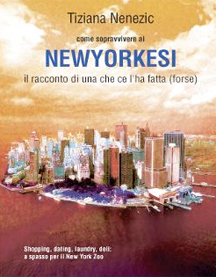
There is an entire genre of commentary on Americans and their americanate in Italian journalism. Vittorio Zucconi writes about the U.S. from an Italian perspective for the Italian national daily La Repubblica and is perhaps the most famous chronicler of americanate. There is even a blog called Americanata, authored by an Italian writer living in the U.S. Tiziana Nenezic has published two books: How to Survive New Yorkers, the Tale of a Woman Who Managed to Do So (Maybe) and Love in the Times of Globalization.
Do Italians really need another barriqued and oaky, overly extracted, jammy, hyperalcoholic Merlot? From California? I fear that this merger does not bode well for those of us who love Italy for its mosaic of indigenous grapes and who crave food-friendly wines made in the traditional style (wines for which no new oak has been used, no artificial concentration has been employed, and wines that express grape and place and people). It will only foster the continued Coca-Colization of the Italian palate. I can’t think of a bigger americanata.
I’m going to get down off of my soap box now but before I do, I invite you to watch the following Coca Cola commercial that aired recently in Italy. In the spot, a girl named Giulia from Pisa says, “lately everyone’s been talking about [the economic] crisis.” But she’s an optimist because she likes “simple things.” She eats pizza instead of sushi, a sandwich with salami instead of caviar. She likes to stay home and eat with her family instead of going to “gala dinners.” The spot ends with a message from Coca Cola, la felicità a tavola non va mai in crisi: “happiness at the table is never in crisis.”
Now watch the parody. In the original version, the girl has an Italianized Tuscan accent in the voice over. In the parody, she has a strong Tuscan accent (the use of dialect and dialectal accents is important and very Pasolinian here, btw). Bear with me if you don’t speak Italian: it’s worth it for the images.
No go paroe, I am speechless, as they say in the Veneto.
(Thanks Ale for sending me the “Real Giulia Commercial”!)
Above: Tracie B has a deft and steady hand with my little Sony Cyber-Shot camera. She snapped this pic last night as we tasted 06 Barbera and 06 Nebbiolo d’Alba by Bruno Giacosa with Mark Sayre — aka the Houston Coalminer, one of Austin’s top palates — at Trio in Austin.
“Giacosa’s 2006 Barbera d’Alba Superiore Falletto was the best he’s ever made,” friend and collector David Schachter told me when I called him yesterday, asking him to refresh my memory on the wine we had tasted together last year. He and I tasted a lot of Giacosa from his impressive collection last year and he knows the wines intimately.
Above: Ex-winemaker and Giacosa protégé Dante Scaglione with daughter Bruna Giacosa and winemaker Bruno Giacosa in 2004. In March 2008, Dante left the winery.
Last night, Tracie B and I tasted the 2006 Barbera d’Alba (the blended Barbera, not the single-vineyard Falletto) and the 2006 Nebbiolo d’Alba by Giacosa with top Austin sommelier Mark Sayre: we agreed that, while the vintage may not have been the best for everyone, Giacosa’s 2006 was outstanding.
So, why did Giacosa decide not to bottle his 2006 Barolo and Barbaresco? The plot thickens: read Franco’s editorial at VinoWire.
Above: Mexican food ain’t always pretty but it sure pairs well with traditional-style Sangiovese from Montalcino. The 2004 Brunello di Montalcino by Il Poggione is killer — its tannin, natural fruit flavors, and bright acidity a great match for the rich, intense flavors of cheap Mexican. Popping a top bottle like that with a pork burrito is one of my guilty pleasures.
The other night when Tracie B let me indulge in one of my guilty pleasures — Sangiovese and greasy Mexican food — I had no idea that I was drinking Antonio Galloni’s favorite bottling of 2004 Brunello di Montalcino.
One wine stands out… The 2004 Brunello di Montalcino from Il Poggione is awesome. This finessed, regal Brunello flows onto the palate with seamless layers of perfumed fruit framed by silky, finessed tannins.
—Antonio Galloni
Mazel tov, Ale! Your 2004 Brunello is killer and I’ve also been digging your series of posts on understanding Brunello terroir using Google Earth.


 One of Italy’s greatest and most polemical wine writers,


 “Instead of calling it, ‘Italissima, the Italy that you love,’” wrote Franco, “they should have called it ‘Italissima, the Italy that they love,” where the ‘they’ stands for presumptuous French critics who do not know the real Italy of wine. In fact, they don’t understand it at all and they wouldn’t understand even if they seriously tried to study it…”
 As much as Italians generally like Americans and the U.S. of A., they also love to make fun of us. They even have a word for it, americanata: the word (a noun) is used disparagingly to describe Americans’s tendency toward the grandiose, the overblown, exaggeration, bad taste, and kitsch. A classic if banal example of an americanata would be the Big Gulp. According to Wikipedia, the
  There is an entire genre of commentary on Americans and their americanate in Italian journalism. Vittorio Zucconi writes about the U.S. from an Italian perspective for the Italian national daily La Repubblica and is perhaps the most famous chronicler of americanate. There is even a blog called


 Do Bianchi