Manufacturing consent (again) in Montalcino

Above: Could the results of elections in Montalcino yesterday lead to changes in appellation regulations for Brunello? For many years, the now elected advisory council member and front-runner for association president has advocated a change that would allow up to 15% of grapes other than Sangiovese (above).

The results of much-talked-about Brunello advisory council election came my way early this morning via my friend Ale’s feed. But as soon as they hit the Brunello producers association website, they were immediately blasted across the internets by observers of the Italian wine industry. I have posted the results at VinoWire together with the newly elected members’s professional affiliations (I cannot but applaud the Brunello producers association for posting the highly anticipated news promptly… for once!).

Above: Has a metaphorical hail storm crippled the sacred primacy of Sangiovese? Many, like top Italian wine blogger Mr. Franco Ziliani fear it has.

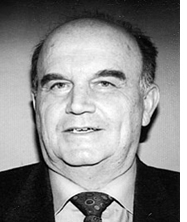
ezio rivellaMany believe that ex-director and eno-architect of behemoth Banfi, Ezio Rivella (left), will be the next president of the body (to be announced in the next three weeks).

For years, Rivella has advocated a change in appellation regulations that would allow up to 15% of grapes other than Sangiovese in Brunello di Montalcino.

In a genuine act of sixteenth-century “self fashioning,” ex-director of behemoth producer Banfi and the self-proclaimed architect of the Montalcino renaissance is about to publish an English translation of his memoir: Montalcino, Brunello, and I: the Prince of Wines’ True Story [sic and sick].

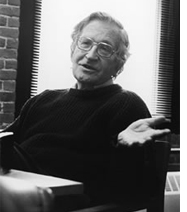
noam chomskyI’ll take the lead from my colleague Mr. Ziliani (who posted “no comment” this morning on his blog) and will leave you instead with the words of one of my linguistic and ideologic heroes, Noam Chomsky (left):

“The most effective way to restrict democracy is to transfer decision-making from the public arena to unaccountable institutions: kings and princes, priestly castes, military juntas, party dictatorships, or modern corporations.”

Montalcino MADNESS! If Pirandello were a winemaker…

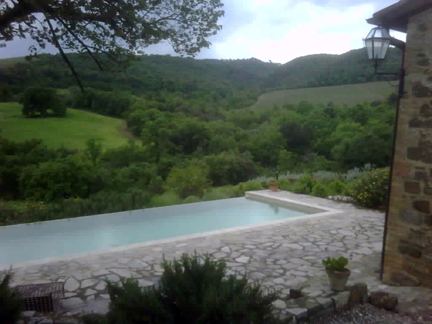
Above: Alfonso is on the wine trail in Italy today. He sent me this photo, taken with his blackberry, of his digs in Montalcino where he arrived this afternoon. Montalcino and the Orcia River Valley are among the most beautiful places I’ve ever been.

Life is full of infinite absurdities, which, strangely enough, do not even need to appear plausible, since they are true.
—Luigi Pirandello

Is it a enoic parable scribed by Karl Marx? Is it a dialectic on vinous hegemony by Antonio Gramsci? Are these winemaking characters searching for an author like Luigi Pirandello? Is this an engagé film made by Pietro Germi in the 1960s?

UGH! I’ve been tearing out what little hair I have left as I watch the MADNESS unfold in Montalcino from afar!!!

Yesterday, as I painfully stitched together this post on the pending election of a new administrative council and a new president of the Brunello di Montalcino producers association, I couldn’t help but think to myself that Giovanni Verga couldn’t have written it better!

Election procedures are secret and only certain candidates have revealed themselves. One presidential candidate is an aristocrat, Jacopo Biondi Santi the dashing and dandy son of traditionalist Franco Biondi Santi (the “father of Brunello”). Jacopo broke from his father and his father’s legacy many years ago only to stamp the family name on his international-style wines (from what I hear, father and son don’t speak).

One is an odious technocrat and bureaucrat, Ezio Rivella, who once produced “22 million bottles of wine a year” at the helm of Montalcino’s largest estate, according to his biography in his “order of the knights of Italian industry” bio.

Another is a lawyer, Bernardo Losappio, who represents flying enologist Carlo Ferrini (“Mr. Merlot,” as he is known locally) and Wine Spectator darling winery Casanova di Neri. Losappio wrote to Italy’s top wine blogger Mr. Franco Ziliani, assuring him that “My commitment will be focused on promotion of the appellation in all of its expressions, a broadening of media relations, preservation of Brunello’s typicity, and a rethinking of the Rosso [del Montalcino appellation].” He probably has some property in Brooklyn he wants to sell me, too.
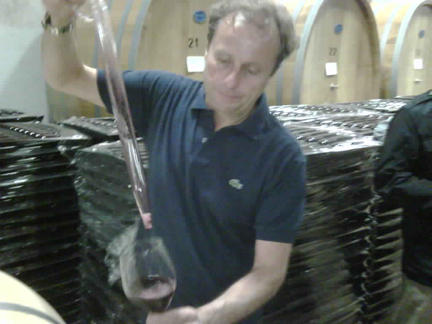
Above: Literally as I write this, Alfonso is tasting 2009 Brunello with a producer.

The backdrop for all of the above is the fact that of the 17 persons charged by authorities in the wake of the Brunello scandal (when producers were accused of adulterating their wines), 11 took plea bargains and 6 have now been indicted.

And as if it were a short story by Edmondo de Amicis, an absolutely heinous “anonymous letter” has been circulated, defaming some of the more notable candidates.

AND as if it were a novel by Giuseppe Tomasi di Lampedusa, the Piedmontese winemaker Angelo Gaja issued a statement two days ago admonishing the residents of Montalcino that tourism is the main issue they should be considering (not transparency or appellation regulation).

Reflecting on Gaja’s communiqué, another one of Italy’s top winebloggers, Antonio Tomacelli, observed: “There’s no question that tourists play their part, for goodness’s sake, but they come to shake hands with Brunello producers — a difficult operation, especially when they’re wearing handcuffs.”
There is one candidate whom I believe could really make a difference as the new president of the producers association. He’s a friend and he was born and bred in Montalcino. His wife grew up in the foothills of Mt. Amiata. He makes great wine… honest wine, true wine, and real wine. On the eve of the election, he — I believe — is Montalcino’s greatest hope.

I love Montalcino. I love Sangiovese Grosso. I love Brunello di Montalcino. It was there, more than 20 years ago now, that I first discovered my passion for wine. I remember meeting Giacomo Neri (of Casanova di Neri) in 1989. He had just finished his military service and he had just begun making wine on his father’s estate. Back then, he didn’t use Carlo Ferrini as his enologist. He just vinified the grapes grown in his families vineyards. He hadn’t yet built his state-of-the-art winery. He hadn’t yet received the top scores. His wines weren’t even available on the U.S. market. The wines were bright, light, and delicious, not opaque, dense, and woody. Back then, Brunello had yet to become a household word in the U.S.

The saga of Brunello is a Marxist parable: the socially enlightened ideals, mores, and ethos of post-war, “red state” Tuscany have been grubbed up and replaced by the insidious roots of capitalist greed. Tuesday’s election will undoubtedly determine the new trajectory of the wine, the land, the tradition, and the people. I hope that the members of the Brunello producers association will remember that that the legacy of Brunello di Montalcino belongs not only to them but also to the people of Tuscany, the people of Italy and of Europe and of the world.

I am a force of the Past.
My love lies only in tradition.
I come from the ruins, the churches,
the altarpieces, the villages
abandoned in the Appennines or foothills
of the Alps where my brothers once lived.

—Pier Paolo Pasolini

Don’t cry for me Montalcino

In an interview published this week by the Italian Sommelier Association, Ezio Rivella has called the results of the Brunello vote “a disaster.”

“I believe,” said Rivella, “that there is nothing left to do but cry for Brunello and its future!”

Click here to read my translation of an excerpt of the interview by Franco.

Don’t cry for me, Montalcino. The truth is I never left you.

Dear Ezio Rivella and Thomas Matthews, please give me a call…

In his post on Friday, Eric referenced my post at Do Bianchi (please see also the post published by me and Franco Ziliani at VinoWire).

In my post on the October 3 Brunello debate, I wrote:

As I watched the live streaming of the Brunello debate on Friday, I couldn’t help but think of Marinetti’s calls to abolish pasta and to “murder the moonshine” (uccidiamo il chiaro di luna! or let’s kill the claire de lune, 1909) when I heard one of Italy’s leading enologists, Ezio Rivella, say that “Sangiovese is a ‘lean’ grape with little color” and that the Italian wine industry would be better served by “using international grape varieties” and “making wines more international in style.”

“You don’t win a 100 points from the Wine Spectator,” said Rivella, “using just Sangiovese.”

Yesterday, Thomas Matthews, executive editor of Wine Spectator, made the following comment on Eric’s post:

After reading this blog entry, I called Ezio Rivella, who is currently in Rome, and spoke with him and James Suckling, Wine Spectator’s lead taster for the wines of Italy. Rivella told us the quotation referenced above was taken out of context, that his point was only to say that Sangiovese can benefit from blending in many cases. He wishes that Mr. Asimov had called him directly to discuss this issue.

Dear Ezio and Thomas, it’s a matter of fact: the statement was made in the context of a debate on whether or not the Brunello appellation regulations should be changed to allow the blending of international grape varieties. And it’s the fact of the matter: Rivella made that statement, voice raised, pointing his finger at Franco and admonishing him, during a debate on whether or not international grapes should be allowed in the Brunello appellation. I watched the debate live over the internet and Franco was there!

Thomas, me thinks thou dost protest too much.

Ezio, feel free to give me a call. Franco knows how to get in touch with me and I know that you and he are in cordial if not friendly contact.

Sincerely,
Jeremy Parzen, Ph.D.

*****

In other news…

Over at Montalcino Report, my friend Alessandro Bindocci reports that 153 Brunello producers have now signed an open letter to agriculture minister Luca Zaia and the Brunello Consortium asking them to keep Brunello 100% Sangiovese. 149 had signed the original letter last week and that number already represented a majority of producers.

Don’t Murder the Sangiovese: the Brunello debate, observations and reflections (part I)

Above: the Brunello debate panel included Banfi’s ex-director enologist Ezio Rivella (seated stage right), moderator Dino Cutolo, wine writer Franco Ziliani, and winemaker Teobaldo Cappellano.

In 1930, at the height of the “happy years” of fascism, the founder of the Italian Futurism movement and the father of the historical avant-garde Filippo Tommaso Marinetti published his Manifesto della Cucina Futurista, in which he advocated “The abolition of pastasciutta, an absurd Italian gastronomic religion.” (The term pastasciutta means literally dried pasta.)

Today, it is hard to imagine that one of Europe’s leading intellectuals and one of the 20th century’s most dynamic figures (indeed, he who literally gave new meaning to the word dynamism) would lash out so violently against one of Italy’s greatest contributions to world cuisine and a sine qua non of its identity. Thankfully, neither the Futurists nor the fascists prevailed and today pastasciutta and freedom, however bridled by consumerism, continue to thrive in Western Europe.

As I watched the live streaming of the Brunello debate on Friday, I couldn’t help but think of Marinetti’s calls to abolish pasta and to “murder the moonshine” (uccidiamo il chiaro di luna! or let’s kill the claire de lune, 1909) when I heard one of Italy’s leading enologists, Ezio Rivella, say that “Sangiovese is a ‘lean’ grape with little color” and that the Italian wine industry would be better served by “using international grape varieties” and “making wines more international in style.”

“You don’t win a 100 points from the Wine Spectator,” said Rivella, “using just Sangiovese.”

At a certain point during the debate, moderator Dino Cutolo (professor of anthropology, University of Siena), pointed out that the calls for the abolition of Brunello as 100% Sangiovese were coming “from the right.” He quickly added, “not the political right, but from my right.” But his lapsus linguae wasn’t lost on the crowd and drew a chortle from the gallery, palpable even over the internet.

At the height of the heated exchange, when voices were raised and tempers flared, Rivella leveled his finger at Franco Ziliani: “how can we not change the appellation regulations and allow for the use of Merlot in Brunello, caro Lei, Ziliani?” (borrowing a vocative, dear sir, evocative of another era). In the light of the “enormous capital we have invested, we need to make wines for the international market.”

The bottom line: when Banfi, led by Rivella, came into the picture in the 1970s and launched a new era of industrial winemaking in Montalcino, it tried — politically and viticulturally — to impose a modern imprint and it expanded the appellation’s plantings to international grape varieties. The large, commercial producers of Brunello have lobbied twice unsuccessfully to change appellation regulations (allowing for blending of international grapes) from within the now defunct producers consortium. Their bid failed because within the consortium’s hierarchy, the vote of the smallest producer (think Delaware) carried the same weight as the majors (think California).

I’ll let the reader infer her/his own parallels or analogies from the above.

Tomorrow, Teobaldo and Franco’s response. Stay tuned…

A Higher Authority (Brunello needs one)

Above: I watched a live “streaming,” as they say in Italian, of the heated Brunello debate today in Siena. That’s moderator and anthropology prof Dino Cutolo (left), Franco (center), and Teobaldo Cappellano, producer of one my favorite Barolos.

Sparks flew and and tempers flared at the Brunello debate today in Siena. Fascist, capitalist pig Ezio Rivella and his crony and brown-noser Vittorio Fiore faced off with the forces of good: Franco Ziliani and Teobaldo Cappellano. I’ll post my observations and thoughts about the debate soon (I have other pressing issues to attend to today) but you can read my cut-and-dry report at VinoWire.

Does it show that I’m pissed?

The arrogance of Rivella was only rivaled by the colorful remarks by Fiore that “it is not as if we need to make Kosher wine. Israelis make Kosher wines but there are Jews who will pay 200 or 300 Euros for those wines. We don’t need to be so stringent in our winemaking,” he said.

I think that Brunello needs a higher authority. Remember the ad below?

Ziliani vs. Rivella: heavyweight title bout live from Siena, Friday October 3

Above: Franco Ziliani is one of Italy’s most revered and controversial wine writers and his writings have always been an inspiration to me — for their verve, erudition, and the hard-hitting truths he brings to the tasting table (photo by Ben Shapiro).

No, this bout won’t be broadcast from the MGM Hotel in Las Vegas. But it will be streamed via internet from the Aula Magna or Great Hall of the University of Siena on Friday, October 3, 3 p.m. local time: enologist and ex-director of Banfi Ezio Rivella (an outspoken proponent for a change in appellation regulations that would allow for grapes other than Sangiovese to be used in Brunello di Montalcino) and wine writer Franco Ziliani (a steadfast traditionalist and defender of Brunello made from 100% Sangiovese) will face off in an unprecedented debate on the future of Brunello. Other panelists include Teobaldo Cappellano (Barolo producer and founder of Vini Veri) and noted Italian enologist Vittorio Fiore. (The debate will be “streamed” live at www.InToscana.it and www.Vinarius.it.)

Above: no, that’s not the rhino sported by the label of spoofulated Barbaresco. It’s a gravity defying ungulate that hovers above Ca’ del Bosco’s “gravity flow,” whereby the newly harvested grapes travel only by virtue of gravity as they are sorted, destemmed, and transformed into wine. Not only is Ca’ del Bosco a wonder of modern technology, it is also a objet d’art: works of art — ranging from Arnaldo Pomodoro to Igor Mitoraj to Helmut Newton — adorn the grounds and winemaking facility.

During my recent trip to Italy, I had a chance to taste with Franco in one of his favorite appellations, Franciacorta. Ben Shapiro, Giovanni Arcari (a Franciacorta winemaker and consultant), Franco, and I toured and tasted at the amazing technicolor dreamcoat that is the Ca’ del Bosco winery before we retired to dinner and confabulated late into the evening, lingering over Giovanni’s excellent Camossi Franciacorta rosé (would someone please import this wine to the U.S., Strappo?).

Above: a detail of one of the riddling racks in the Ca’ del Bosco cellar. Note the sediment in the neck of the bottle.

The highlight, however, was a stunning 1979 Ca’ del Bosco, disgorged à la volée by one of the winery’s technicians in the cellar. Comparing the ’79 to the recent vintages, it is clear that Ca’ del Bosco’s style has remained unchanged since its early years and these superb wines stand apart for their character, personality and terroir expression. Excuse the pun, but that wine was fly! (Brooklynguy would have loved its oxidized nose and intense hazelnut flavors.)

Above: one of the extraordinary Mitoraj sculptures on the grounds of the winery. Ca’ del Bosco does offer guided tours and tastings by appointment. I highly recommend it: the state-of-the-art winemaking facility is among the most impressive I’ve ever seen, much of the technology developed and patented by the winery itself.

Tornando a bomba, as they say in Italian, getting back to matters at hand… I’ll be publishing a report of next Friday’s Ziliani vs. Rivella face-off. Rivella has long championed changes in appellation regulations (in Piedmont and Tuscany) that would allow for liberal blending of international grape varieties. I regret that the current political climate in Italy appears outwardly amenable to such changes. I don’t believe that Franco and Teobaldo are the “last of the Mohicans.” But I do believe this unprecedented public forum represents a defining moment in what has become a national debate in Italy.

Don’t touch that dial…