Today is the first day of the Jewish New Year, Rosh Hashanah.
Like every year, Parzen family ate apples and honey before dinner last night, a new year tradition meant to deliver sweetness in the year ahead.
Here in Houston, we’ve already settled into our fall rhythms and routines.
Lila Jane is now in kindergarten and is taking cello (my instrument as a kid!) at their music magnet school.
And first-grader Georgia is playing her violin with growing confidence and ability.
They both love their school and their teachers.
With both girls now in school full-time, Tracie is working hard to expand her business and we’re finally moving toward being a two-income family, which is great.
Our lives are filled with too many blessings to count. But the year ahead also holds many challenges.
Rosh Hashanah is a time to look back on the year past and reflect on those times that we didn’t live up to our ideals — spiritual or secular.
I keep thinking about something that Susan Sontag wrote about the French philosopher and activist Simone Weil. Sontag described her as someone “identical with her ideas.”
My new year’s resolution, for the year 5779, is to work harder to make our lives and our life’s work identical with our ideas. In these times, I believe, we mustn’t fail in standing up for what is right and speaking out against what is wrong. Otherwise, we will be failing our children in making this world a better one for them to live in when we’re gone.
Happy new year, everyone. May your year be filled with good health and sweetness. L’shanah tovah, yall!
Images from a week of tastings and winery visits for the Slow Wine guide to the wines of California 2019. Thanks to everyone for taking time out to meet with me!
Sam Coturri of Sixteen600. Love that guy and love the wines. Favorite “new old school” Zinfandel. His family has grown organically since the 1970s. Great wines, all around.
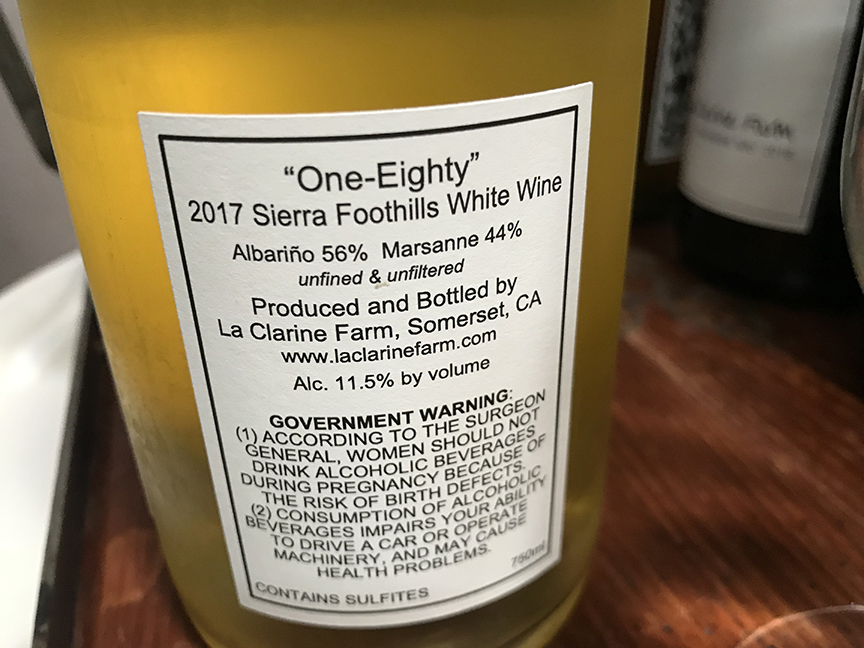
Meeting and tasting with Hank Beckmeyer at his house in Fair Play was a genuine dream come true. I love everything he releases at La Clarine Farm.
“Winemaking is all about timing,” said Gideon Beinstock of Clos Saron. Tasting and chatting with him was one of the most inspiring winery visits of my whole career. “It’s actually very simple,” he told me. “The grapes tell you when to pick them. The wine tells you when it’s done fermenting. The wine tells you when to bottle it.” His wines are simply astounding.
The vineyards at Volker Eisele, producer of my favorite Napa Valley Cabernet Sauvignon, have been organically farmed since the 1970s. It’s one of the most beautiful growing sites I’ve visited in California and I love Alex and Catherine, the owners and winemakers. Such cool people, such gorgeous wines.
The delicious burger at Compline, the super cool newish wine bar in downtown Napa.
The “hard press” Pinot Gris from Donkey & Goat, tasted yesterday at their wine club release party in Berkeley where they make their wines. Jared Brandt’s wines have always been great and we’ve always enjoyed drinking and sharing them. But man, he is on fire right now. His new Linda Vista Vineyard Chardonnay was one of my favorite wines from this trip.
It’s hard to describe how cool Ordinaire natural wine bar in Oakland is. By the end of my night, I had made all kinds of new friends and tasted a ton of compelling wines. Isabelle Legeron just happened to stop by! I was completely starstruck. She is super cool. I loved this place. I hugged all of the sommeliers before I left. It was such an awesome experience.
Just had to drink Gideon’s 2011 Texas Hill Vineyard Pinot Noir. What a wine and what a great coda to my trip.
No trip to California is complete without a Double-Double. I am a native Californian, after all!
Thank you, California, for an unforgettable experience. And thanks yall for tagging along. I’m on a plane back to Texas where I belong. Can’t wait to get back to Tra and the girls. L’shanah tovah, yall!
Above: Granvel Block recently began working again on construction of the new confederate memorial he is building in Orange, Texas where my wife grew up and where her extended family still lives. We have been actively protesting the monument since late last year.
Earlier this year, Tracie’s 97-year-old grandmother (“memaw”) received the below letter.
We believe it was sent to her by Granvel Block, the Sons of Confederate Veterans member behind the new confederate memorial in Orange, Texas where Tracie, her parents, and her grandparents grew up.
The memorial stands within view of motorists on westbound Interstate 10 (see this flyer circulated by Block). The property and memorial lie on Martin Luther King, Jr. Blvd., a main thoroughfare and one the city’s main arteries.
Nearly half the residents of Orange are black.
The city, religious leaders, and business leaders have all asked Block to reconsider. The city has even offered to buy the property. Because the memorial stands on private property owned by the Sons of Confederate Veterans, the city’s hands are tied (although it has taken significant steps in limiting the site’s visibility).
Tracie and I are among the organizers of the Repurpose protest movement: we are asking Block and the Sons to convert the site into a memorial that reflect community values. He refuses to engage in dialog.
He has threatened me with violence, telling me: “I’m a Texas boy and I’m going to kick your ass.”
Posting on the fly this morning as I head out to Napa and Sonoma to taste tomorrow and Friday for the Slow Wine guide 2019.
But I just had to share the above photo, snapped yesterday.
That’s grape grower and winemaker Gideon Beinstock of Clos Saron in the North Yuba AVA, a sub-AVA of the Sierra Foothills AVA.
In the image, he’s walking me through his “Home Vineyard,” a parcel planted to Pinot Noir and the source for some of his best wines.
Many have written about his astoundingly good, utterly compelling wines. I was left nearly speechless by our tasting (this year, for example, he’s releasing a 1995 Cabernet Sauvignon that he farmed and vinified there; the 2013 Pinot Noir Home Vineyard Lower Block was also a standout among many truly superb wines).
Others have written about how he arrived in North Yuba and his years there since.
It was a thrill for me to get to taste and interact with this sweet, thoughtful, and inspiring man. But the thing that really touched my heartstrings was talking with some of the young people he’s mentored. They speak of him in such glowing tones and with such affectionate reverence. And the reason is simple: he so generously shares his knowledge and experience with them.
Where I grew up, they call that a mitzvah.
Gideon, thank you for your time yesterday. Tasting your wines with you was a truly moving experience. You are a mensch among grape growers and winemakers.
Wish me luck and wish me speed! A lot of ground to cover between now and Saturday! Thanks for being here.
For oenophile couples like us, there are certain wines that feel like family members.
La Clarine Farm first came into our lives back in 2009 in New York when Tracie was traveling with me and the French band. An open bottle of Hank Beckmeyer’s Syrah had been sitting in a good friend’s lower Manhattan apartment for nearly two weeks. When we all tasted it together, it blew our minds and our palates with its freshness and its vibrant, electric fruit.
Ever since that day, La Clarine Farm has been one of our favorites (and we played a packed show at the Mercury Lounge that night, the one time Tracie saw us play in the city).
It was a thrill for me to finally meet and taste yesterday with Hank (in the top photo) at his winery in California’s Fair Play AVA, a stone’s throw from the El Dorado Trail.
His wines and winery will be one of those profiled in the 2019 edition of the Slow Wine Guide to the Wines of California (I’m the guide’s coordinating editor for North America).
Great wines and the lovely guy you’d imagine is behind them.
My itinerary yesterday also took me up to the North Yuba AVA where growers pointed me to one of the most remarkable vineyards I’ve ever seen: 300 acres planted to now abandoned vine in the heart of weed country.
Cannabis is the main industry here, I’ve been told. Dinner at a smokehouse bar in Auburn last night led to a conversation with a dude who told me he works “up the hill,” a euphemism, he said, used by employees of the massive cannabis crop here.
But the strange, otherworldly vines I toured seem to have an endless supply of delicious fruit for a handful of thoughtful winemakers. They, a bear, and a cadre of deer are the only ones left in this forgotten wine country.
The story of this now derelict but still bountiful estate has yet to be properly told.
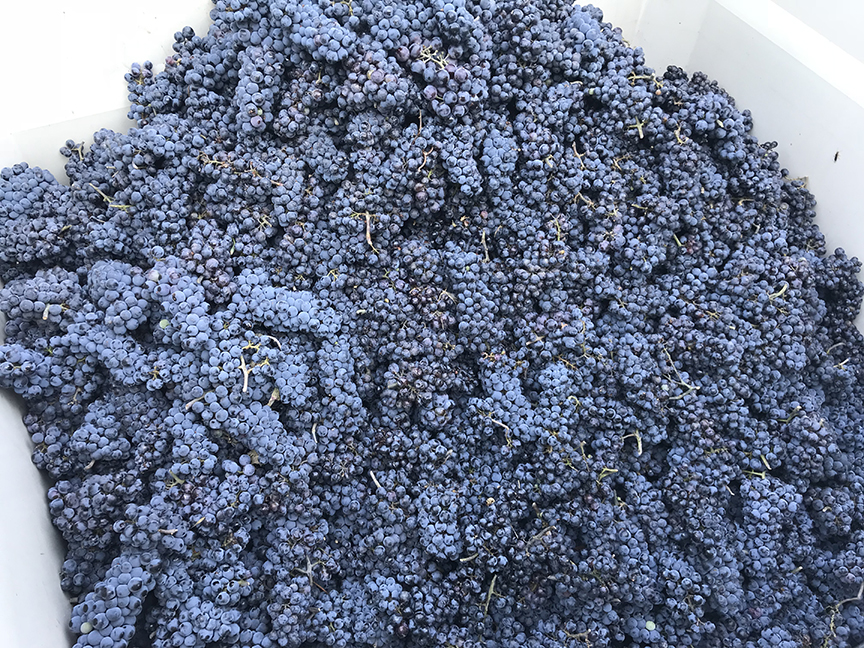
Those are Pinot Noir grapes in the photo above, btw, ready to be foot-crushed.
Writing in a hurry this early morning as another day of touring and tastings unfolds.
But I also have to give a shout-out to Grass Valley, one of the many tourist spots here in Gold Country.
The village was bustling with locals and tourists and nearly every store front was occupied by a shop, café, or restaurant. At least two vinyl records were also spotted.
Yesterday was the first day of my trip. Following another day here in the Sierra Foothils, I’ll be heading to Napa and Sonoma for more tastings and discovery.
Thanks for following along… more good stuff to come.
Beppe Rinaldi, iconic Barolo grower and outspoken natural wine advocate, has died.
According to mainstream media reports, he was 69 years old and was battling an unspecified illness. He would have been 70 in just a few days.
Known to his myriad admirers as “il citrico” (literally, the “citric [one],” a nickname attributed to his unmistakable white locks as well as his acerbic wit), he was widely revered as one of the world’s greatest winemakers and an unrivaled interpreter of Nebbiolo’s greatness.
An iconoclast proudcer who often spoke out stridently against the unstoppable commercialization of his appellation, he was also a founding member of the Vini Veri consortium of natural wine producers.
“An artisanal winemaker,” he said in an interview published by Vini Veri in 2010, “shouldn’t just watch over his little garden. He needs to have a collective vision of his appellation because the appellation belongs to everyone. Wine and land are cultural resources that we need to treat with care. First and foremost, we must prevent violence against the hills and the vines. Wine needs to be a manifestation and an expression of the appellation, a voice in the world that carries an overarching cultural message from the place that produced it… A wine needs to reflect the distinctive, unique characteristics of the appellation. This is why we need to take care of our appellation and never overwhelm it.”
In recent years, he had railed against the unbridled growth of the tourist industry in the Langhe Hills of Piedmont where Barolo is grown and vinified. It was the latest cause embraced in a lifetime spent advocating for organic farming practices, traditional winemaking, and more measured development of the Barolo appellation.
His single-vineyard bottlings of Barolo are among the most collected wines in the world today, benchmarks not just for the appellation and Italy but for fine wine across the globe.
He is survived by his wife Annalista and daughters, Marta and Carlotta.
Please come out and taste with me this fall in Houston!
Here are the events where I’ll either be leading a seminar or presenting the speaker and wines, including Abruzzo, Piedmont, Oltrepò Pavese, Italian marquee estates, and Alice Feiring (!!!).
Grandi Marchi
Gaja, Masi, Ca’ del Bosco,
Tenuta San Guido, Jermann,
and many other marquee estates
Monday, October 15
11 a.m. seminar
2 p.m. walk-around tasting
Earlier this summer, the European Union signaled that it might reduce the allowable amount of copper fungicide from 6 kg per hectare per year to 4 kg. The announcement has concerned organic grape growers who rely on copper treatments to combat fungal diseases. Leading organic growers have spoken out against the move and many claim it will gravely affect their ability to farm organically, thus threatening their livelihood.
“We are in favor of the reduction in the quantity of copper allowable per hectare that the EU is currently discussing. We hope it will lead to broader efforts in research on alternative and supplemental products,” said in the statement agronomist Francesco Sottile, a member of Slow Food’s technical advisory committee and a professor at the Slow Food University in Bra, Piedmont (UniSG).
“We are faced with a delicate question and our association has to keep a balanced outlook,” he added.
“Copper is a heavy metal and as such it can damage the soil and the microorganisms that live in the soil as it accumulates in the ground and the water table. For this reason, limits on its use are advisable… Copper doesn’t leave a residue on fruit or vegetables because it gets washed away. But it remains in the environment and is therefore potentially harmful. As an association, we are concerned with what consumers eat. But we also need to watch out for potentially critical situations in the fields and for people who work on farms.”
The heavy metal has been used in vineyards for more than 150 years to prevent peronospora (downy mildew). First developed in France in the second half of the 19th century, the “Bordeaux Mixture” has become an essential tool for grape growers who do not employ synthetic fungicides.
“For organic producers, there are no suitable alternatives to copper,” she noted in a press release issued by the group. The majority of its members are organic growers.
Image via the Slow Food blog. Disclosure: I am an adjunct professor at the Slow Food University of Gastronomic Sciences (UniSG) and I am also a senior editor of Slow Food’s forthcoming Slow Wine Guide to the Wines of Italy, Slovenia, California, and Oregon.
Above: the Colli Euganei, the Euganean Hills, where volcanic soils deliver vibrant fruit, earthy undertones, and lithe expressions of Merlot, Cabernet Sauvignon, and Cabernet Franc.
Scant attention is paid to the role that language plays in the ways wines are marketed by producers and perceived by consumers.
A key element in the success of Brunello in the early 1990s (when Banfi made sure there was a Brunello on every supermarket shelf in America) was the fact that broo-NEHL-loh is a lot easier for the average American to say than VEE-noh NOH-bee-leh dee MOHN-teh-pool-CHEE’AH-noh.
Similarly, back in the last decade of the 20th century when Americans began to adolesce as wine lovers, it was a lot less challenging for monolinguist anglophones to order a glass of Californian Merlot than it was to ask for a wine from St-Émilion.
“Waiter, waiter! Please cancel my date’s order for that bottle of Château Quinault Lafleur de Quinault and bring us some Mondavi Merlot instead!”
So what do you do with an Italian appellation like Colli Euganei? How are you ever going to convince Americans that they need to try these superb expressions of Merlot, Cabernet Sauvignon, and Cabernet Franc when they can hardly wrap their minds around how to pronounce the place where they are from?
That conundrum was on my mind as I tasted through countless breathtaking wines at the Vulcanei tasting in the Colli Euganei in May of this year, a gathering devoted to “volcanic soil” wines.
Thanks to my time spent at university in Padua not far from the Colli Euganei, I have tasted iconic producer Salvan many times over the years.
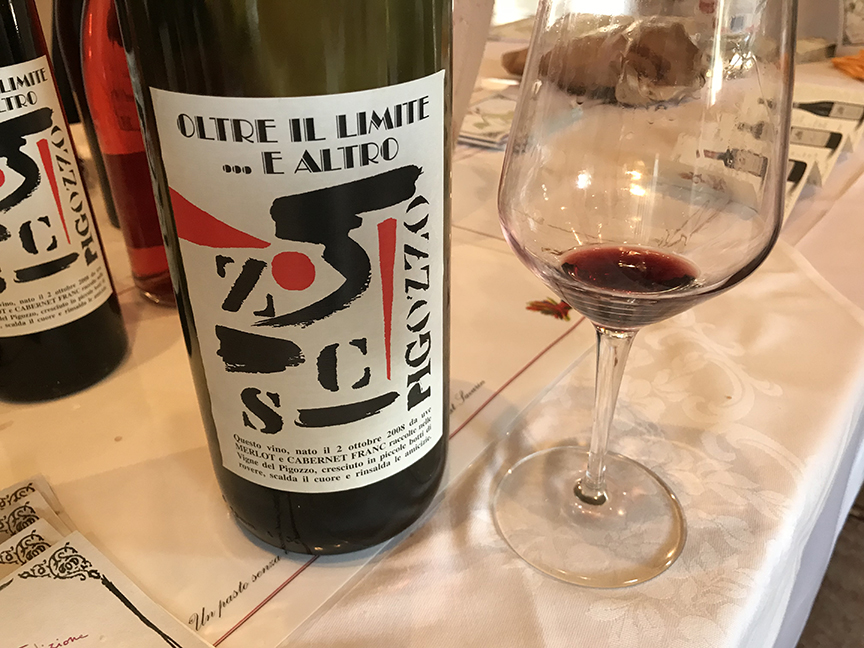
The 2008 Salvan flagship, in the photo above, is a current release for the estate. Aged in small and large cask, this blend of mostly Merlot and Cabernet Franc is one of the best Bordeaux blends I tasted this year. What a wine! Rich red fruit but lithe on the palate, with earthy undertones and vibrant acidity that made the wine taste refreshing with every sip.
According to WineSearcher, this wine retails for about $25 in Italy. Why is no one importing it to the U.S.? I can’t think of a better Merlot blend at that price point — a steal! But then again, there’s the problem of the appellation name…
I had never tasted Bacco and Arianna but was floored by their wines, especially this Rosso di Bacco, a Merlot and Cabernet Sauvignon blend aged in stainless steel.
Bright red fruit flavors with electric but gorgeously balanced acidity. And wow, organically farmed and no sulfur added? This wine retails for around $13 in Italy! Why is no one importing it to the U.S.? Can you imagine how popular it would be in the natural wine scene? I could literally drink this every day.
But then again, there’s the problem of the appellation name.
Given enough time, I could have populated this post with 20 Colli Euganei wines that really impressed me at the Vulcanei tasting.
This Pinot Bianco from Vigne al Colle also surprised me with how good it was, fresh but overflowing with white flower aroma and stone fruit flavor. I can’t find it on WineSearcher but the sommelier who was humanning the station told me he believed it retailed for less than $10. Unleashed in North America, this wine would become a king among by-the-glasses. I loved it.
Why is nobody importing it? There’s that little problem about the name.
I asked my good friend Francesco Bonfio, wine shop owner and Italian wine authority, to pronounce it for us. He grew up not far from the Colli Euganei and he and I visited there together in May. A Padua (Veneto) native, his pronunciation is impeccable…
Thanks for speaking Italian grapes and wines! Enjoy!
Saturday, August 25 marked the first anniversary of Hurricane Harvey.
But the impact of the catastrophe is still acutely felt in our city and in our community.
Our family was among the lucky ones whose houses didn’t flood. But not a day goes by that we don’t interact with Houstonians who haven’t been able to return home. Some of those still deeply affected are our neighbors, some have children who go our kids’ magnet school, some work in the Houston food and wine industry. Harvey touched everyone in our city, from the richest among us to the poorest.
Reading my posts from a year ago sent chills down my spine. I was living in New York during the September 11 tragedy; Los Angeles during the 1994 earthquake and the 1992 riots. Nothing has ever frightened me as much as Harvey, especially with two terrified young children who didn’t understand what was happening around us.
I took that Weather Channel screenshot, above, on August 26 during the peak of the rainfall and flooding. It was a terrifying experience for all of us. And the worst was yet to come as people started to get sick from the toxic flood waters. I’ll never forget cutting my hand on a nail as I was helping neighbors muck up their homes. Their houses were filled with flood water that had been “fermenting” in the heat for days.
I didn’t get sick. I was one of the fortunate ones.
In other news…
Between a three-week trip to Italy where I was teaching and a two-week road trip to California and Arizona, the Parzen girls had an awesome summer.
Today was their first day back at school, a music magnet.
Lila Jane, age 5, was really excited about her first day of kindergarten and Georgia, 6, strutted into her new first grade class like a seasoned pro. (Tracie and I, on the other hand, were practically sobbing.)
Georgia will be continuing her Suzuki violin program and Lila Jane was accepted into the cello class (especially sweet for me because cello was my instrument as a kid).
Looking back on where we were a year ago today, we can only thank our lucky stars for the countless blessings in our life.
And speaking of blessings…
Parzen family has a new dog: Rusty, a rescue that was picked up back in April in Pasadena, Texas.
He might very well be a Harvey dog, one of the myriad pets that were separated from their owners in the aftermath of the flood.
We’ll never know his backstory. But he’s becoming less skittish every day and he’s an endless source of companionship and entertainment for our girls, who adore him.
We think he’s no older than four years. He’s still adjusting to being around people but he’s super sweet with everyone in the family. He loves to steal the girls’ stuffed animals and add them to his collection of pilfered socks and toys.
And after Tracie nearly lost it when we dropped the girls off at school this morning for their first day, I know she was glad to come home to another “baby” to take care of.

 Happy new year, everyone!
 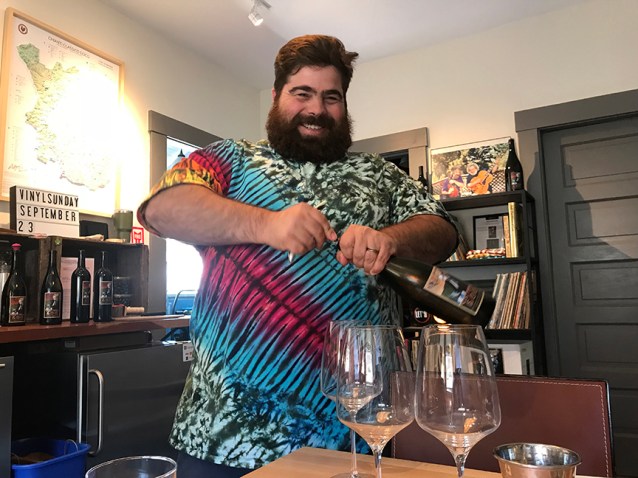 Sam Coturri of Sixteen600. Love that guy and love the wines. Favorite “new old school” Zinfandel. His family has grown organically since the 1970s. Great wines, all around.
  Meeting and tasting with Hank Beckmeyer at his house in Fair Play was a genuine dream come true. I love everything he releases at La Clarine Farm.
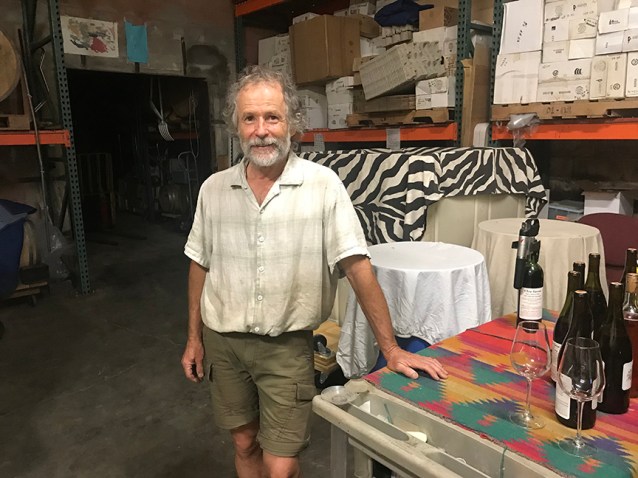 “Winemaking is all about timing,” said Gideon Beinstock of Clos Saron. Tasting and chatting with him was one of the most inspiring winery visits of my whole career. “It’s actually very simple,” he told me. “The grapes tell you when to pick them. The wine tells you when it’s done fermenting. The wine tells you when to bottle it.” His wines are simply astounding.
 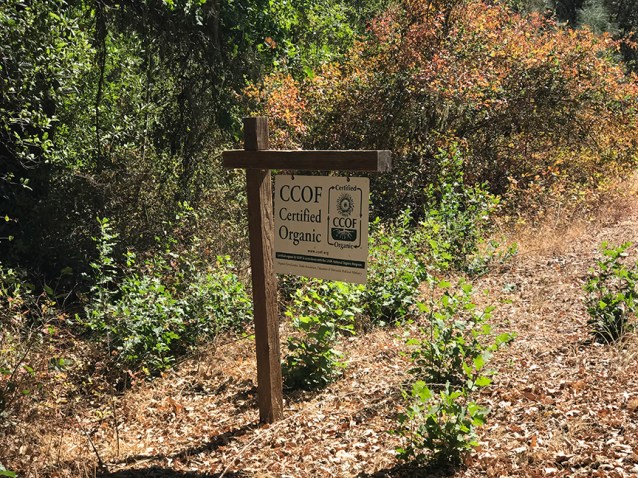 The vineyards at Volker Eisele, producer of my favorite Napa Valley Cabernet Sauvignon, have been organically farmed since the 1970s. It’s one of the most beautiful growing sites I’ve visited in California and I love Alex and Catherine, the owners and winemakers. Such cool people, such gorgeous wines.
 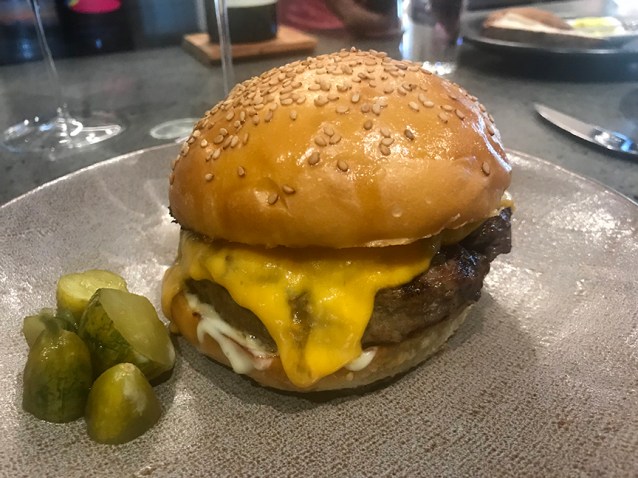 The delicious burger at Compline, the super cool newish wine bar in downtown Napa.
  The “hard press” Pinot Gris from Donkey & Goat, tasted yesterday at their wine club release party in Berkeley where they make their wines. Jared Brandt’s wines have always been great and we’ve always enjoyed drinking and sharing them. But man, he is on fire right now. His new Linda Vista Vineyard Chardonnay was one of my favorite wines from this trip.
  It’s hard to describe how cool Ordinaire natural wine bar in Oakland is. By the end of my night, I had made all kinds of new friends and tasted a ton of compelling wines. Isabelle Legeron just happened to stop by! I was completely starstruck. She is super cool. I loved this place. I hugged all of the sommeliers before I left. It was such an awesome experience.
  Just had to drink Gideon’s 2011 Texas Hill Vineyard Pinot Noir. What a wine and what a great coda to my trip.
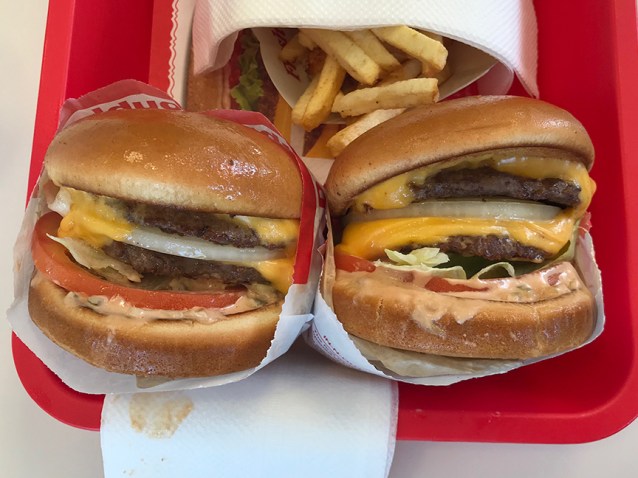 No trip to California is complete without a Double-Double. I am a native Californian, after all!
 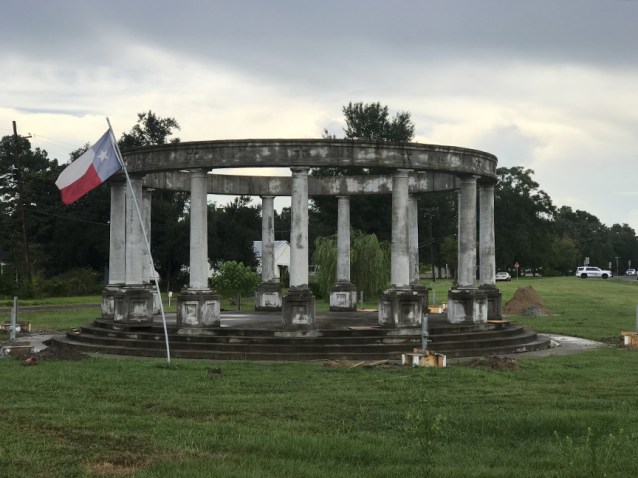 Above: Granvel Block recently began working again on construction of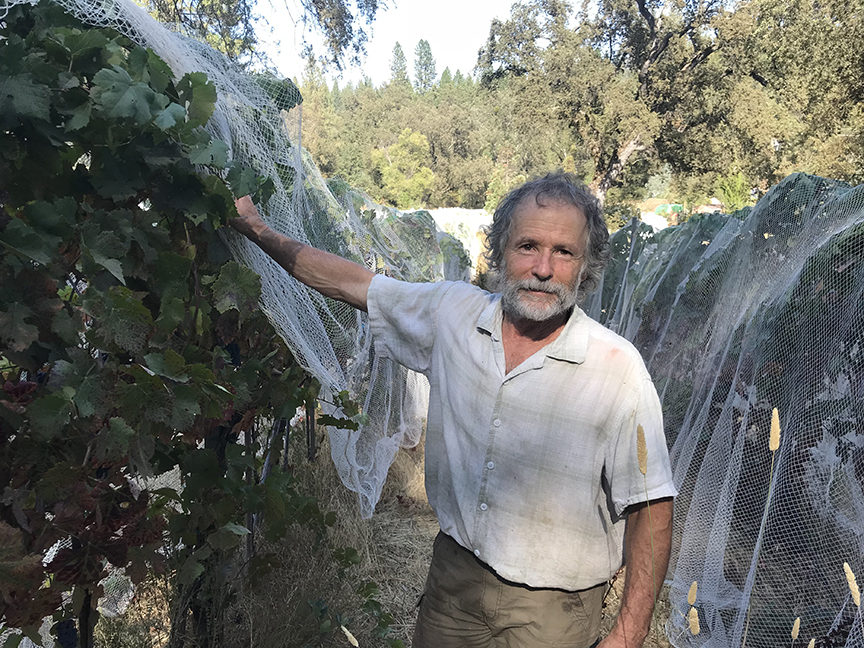







 Do Bianchi