3 Master Sommeliers, a top Barolo producer, and an erstwhile Francescana chef? Man, Houston’s wine and food scene really sucks (NOT!)

Click here for the latest WineBusiness.com update on the Kincaid Fire. 30 percent contained as of this posting.

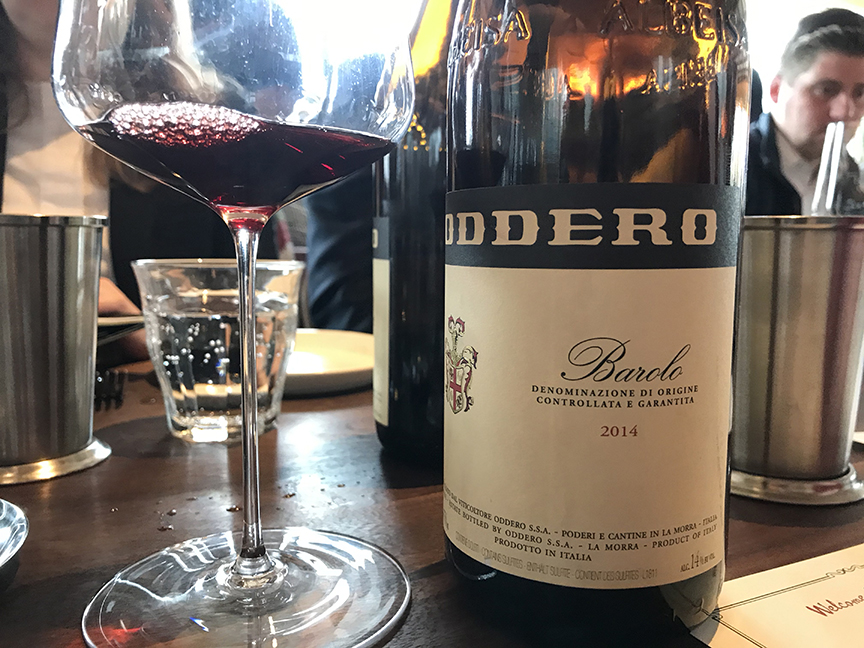
Last Friday I was massively enjoying an epic flight of Oddero Barolo, Barbaresco, and Barbera d’Asti at one of my adoptive city’s hippest new restaurants, and it occurred to me: Houston is a real backwater, ain’t it?

I mean when you’re seated with three Master Sommeliers, including two that run one of the most highly acclaimed steakhouse lists in the country, and being fed by an erstwhile Francescana chef, you just really wish you were among the lucky few who get invited to media lunches with globally renowned publicists and leading Italian wine writers and experts.

But hey, not everyone can have all the fun, can they?
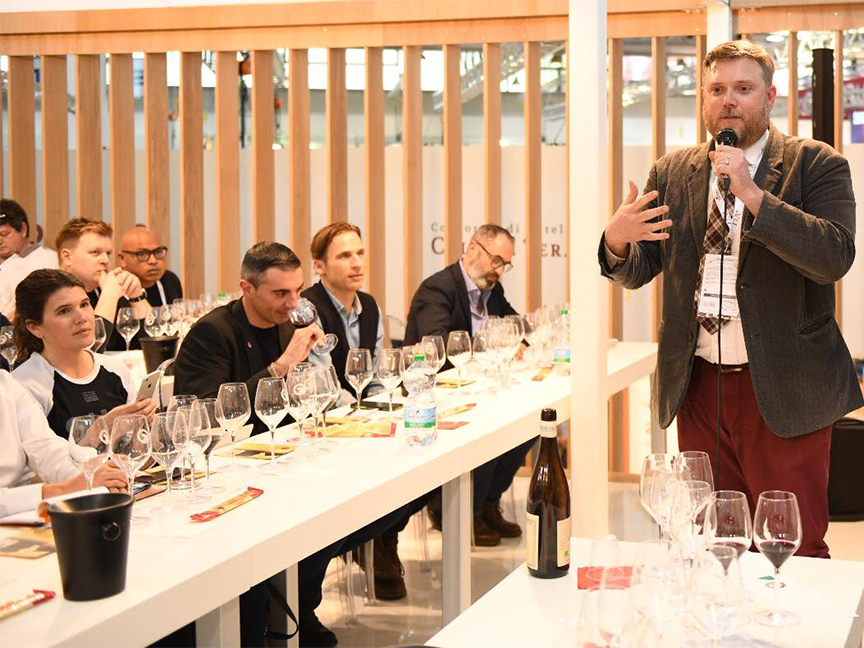
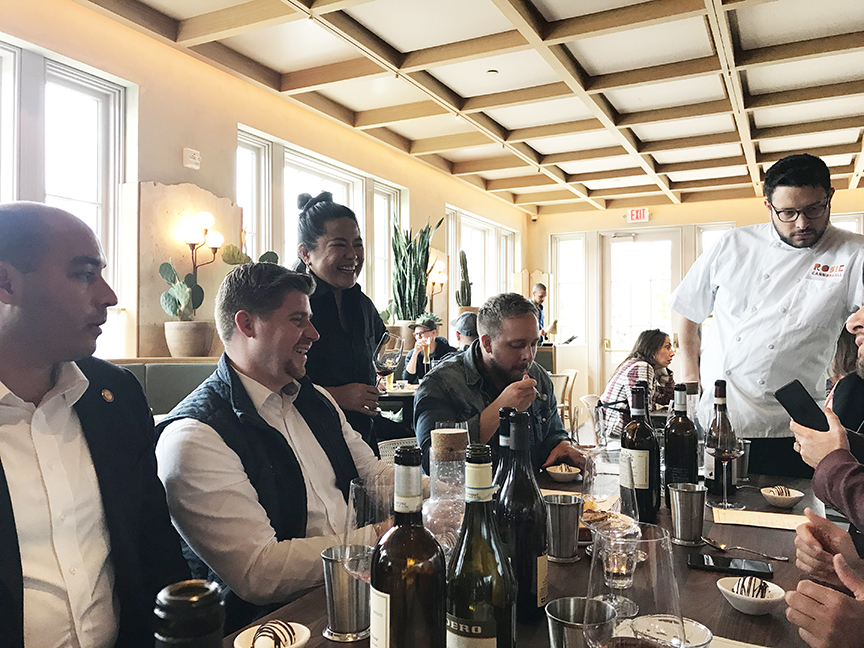
From left in the photo above, that’s Steven McDonald MS, Jack Mason MS, June Rodil MS, advanced sommelier Brandon Kerne (another badass), and chef Felipe Riccio, who not so long ago returned from a few years working in Massimo Bottura’s Osteria Francescana kitchen in Modena (Felipe’s story about making chilaquiles for Bottura is amazing, btw, but that’ll have to wait for another day, another blog post).

There was actually another Master Sommelier on the premises but he was otherwise occupied and too busy pouring wine to rich folk to stop by our table.

Also in attendance were Jane-Paige d’Huyvetter (likewise a badass), wine director at the super swank River Oaks Country Club; Weston “Piedmont Guy” Hoard (Oddero’s importer); and Ian McCaffery and Nathan Smith (Piedmont Guy’s distributor in Texas).
It was really interesting to hear Pietro Oddero talk about his family’s philosophy and approach to their classic Barolo (thank you, Americans, for not saying “normale” Barolo, an egregious misnomer for Barolo or any top appellation for that matter).

Americans are so single-vineyard focused (my impression not Pietro’s) that they often miss the point: the classic Barolo cuvée, blended from an estate’s top vineyards and rows, is the purest expression of the appellation and vintage. The single-vineyard designates are great (and I collect a lot of them). But they reflect a micro, highly localized expression of the appellation and vintage. They can be great and I love drinking and collecting them. But it’s always the classic wines, in Barolo and Barbaresco, that I find most compelling.

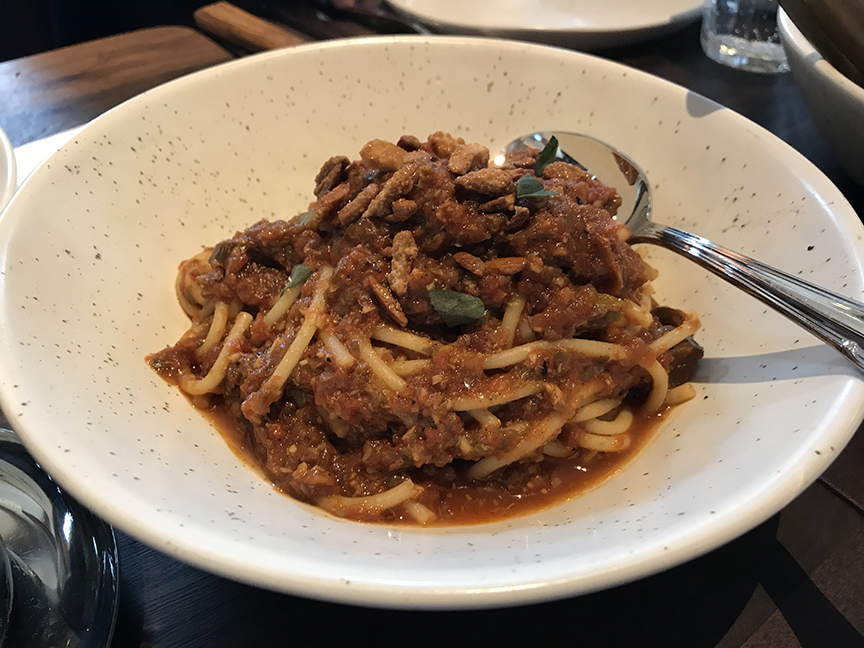
That’s Felipe’s housemade spaghetti tossed in caponata above. Utterly delicious.
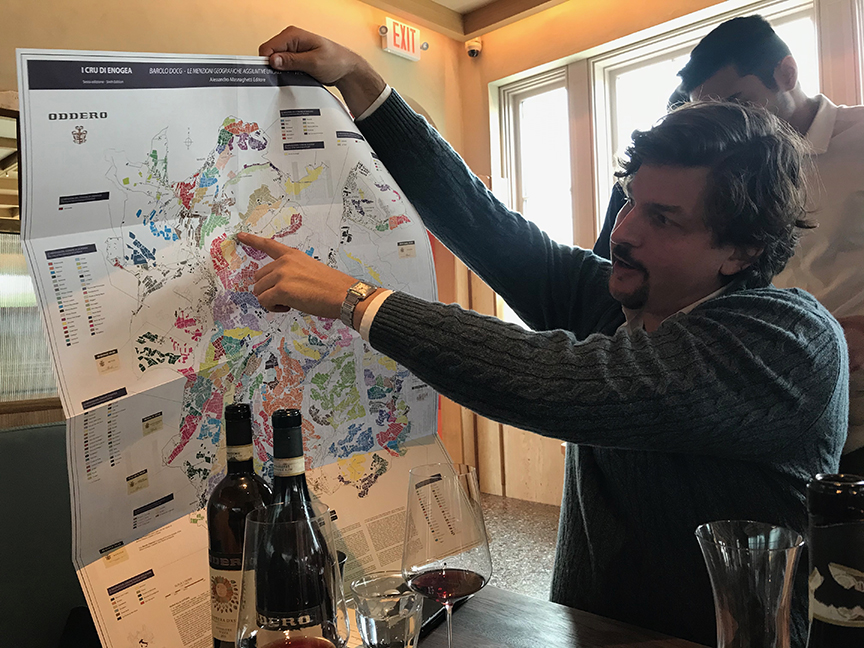
A propos single-vineyard designates, the Piedmont Guy (above) and Pietro discussed Oddero’s recent acquisition in the Monvigliero cru in Verduno township.

The 2015 Oddero crus — Rocche di Castiglione and Villero — were still very tight in the glass. Excellent, with the immense promise you expect from a house like this, but not forthcoming with their fruit.

My favorites of the flight were the 2014 and 2015 classic Barolo and the 2016 Barbaresco Gallina, which was showing beautifully, really ready to drink.

When Tracie and I decided to move from Austin to Houston six years ago, it was to be closer to family, hers and mine, and the support we need with small kids in the house. But our adoptive city was already starting to emerge as a food and wine “capital of the South,” as one glitzy magazine called it a few years ago.

Over the arc of time that we’ve lived and thrived here, Houston’s become a true epicenter of the American food and wine renaissance.

Just considering the amount of sheer talent and experience seated around the table with me on Friday, not to mention the caliber of the wines we enjoyed and the fact that a winery principal was there with us, it’s hard to argue that Houston isn’t one of the country’s top enogastronomic destinations. The food and wine speak for themselves… Don’t believe me? Come visit and the first bottle of Barolo is on me!

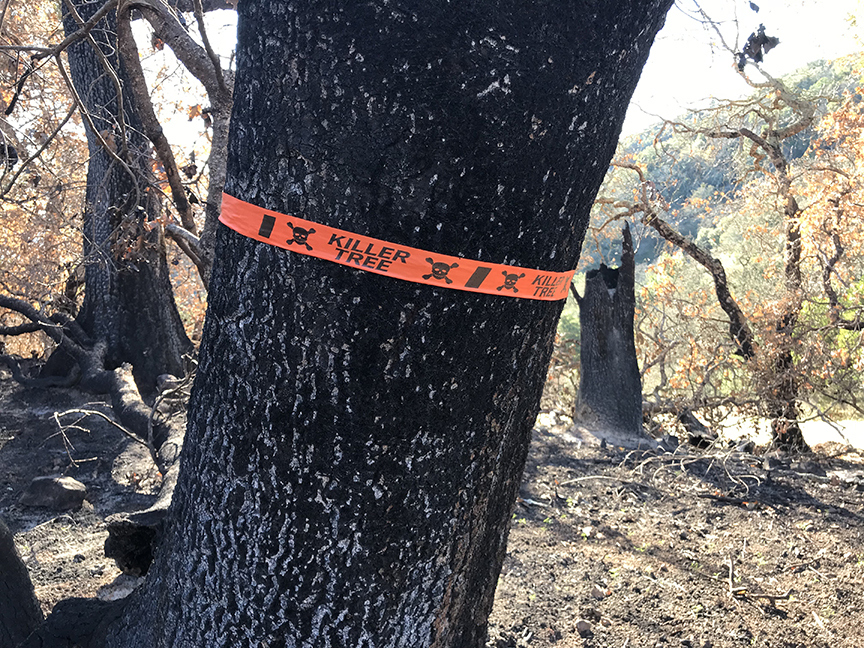
Cuando sea hora de irse, no lo dudes. When it’s time to go, don’t hesitate. #californiawildfires

Tracie and I sending our thoughts and prayers to all our California friends and colleagues who have been affected by the current wild fires in my home state.

As I read this morning on the Sonoma Sheriff Twitter, “Cuando sea hora de irse, no lo dudes. When it’s time to go, don’t hesitate.”

The photo above was taken by a good friend in Napa in 2017 during the Tubbs Fire, “the most destructive in California history.”

Parts of Napa have been evacuated and badly damaged over the last week in the Kincade Fire.

I used to live in a neighborhood in the San Fernando Valley that was evacuated last week in the Tick Fire.

And this morning, we woke up to read in the Los Angeles Times about what is being called the Getty Fire. It’s burning just across the 405 freeway, a stone’s throw from my alma mater UCLA.

Across social media, a number of people have been posting their — how else to say it? — bewildered terror.

We all grew up with the occasional however deadly and destructive wild fire. But they are simply more frequent, bigger, and more deadly and destructive than ever before.

I took the photo below when I visited northern California wine country in late 2017, after the fires had been put out.

Please stay safe, everyone! I’ll follow up with aid resources here on the blog.

Subzones don’t work in Montalcino. Here’s why (guest op-ed by Stefano Cinelli Colombini)

The following is an op-ed that I translated yesterday for Fattoria dei Barbi owner Stefano Cinelli Colombini, scion of one of Montalcino’s leading families. I hope you’ll find it as compelling as I did. Please see also his response to reader Andrea Fassone, a top east-coast importer of Italian wines.

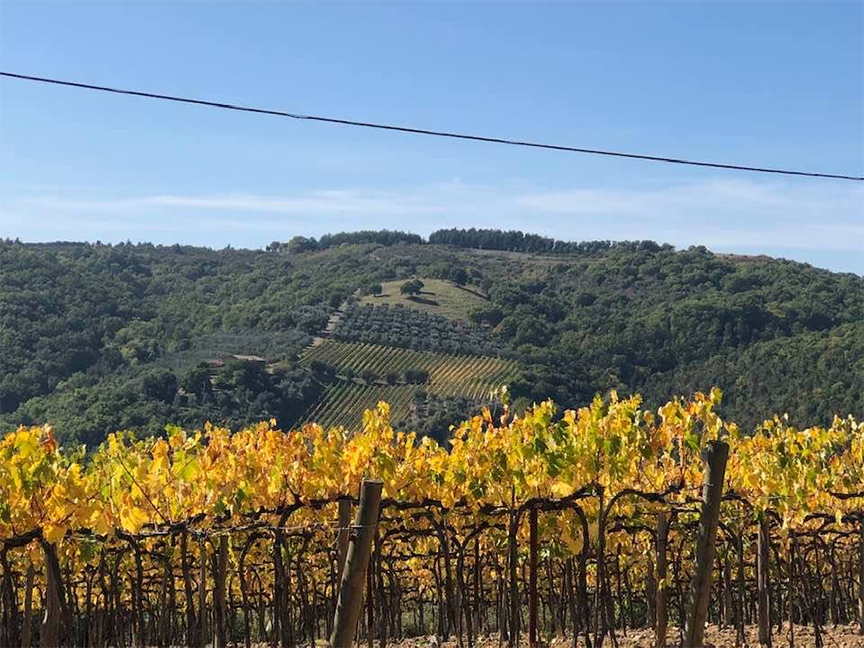
You can see Sangiovese’s gold across all of Montalcino!

In the background in the photo, you can also see another vineyard that’s located at the same elevation. But the color is different.

According to fanciful subzone-lovers, who are armed with their little multi-colored maps and their written-in-stone certitudes, it’s the same subzone. But according to nature, it’s not — obviously!

For all intents and purposes, Montalcino is a nearly monovarietal appellation. And at this time of year, the landscape reveals — with clear-cut evidence — that sub-zoning only works on paper. At every elevation, on every type of soil, and with every type of exposure, we can see different vines side by side, some resting, some with full vegetation, and others in an intermediary state.

Yet it’s all Sangiovese. If the subzone theory were exact, vines would act more or less in the same way in a given subzone. They would produce the same colors and aromas. And therefore, they would grow in exactly the same way. But that’s not the case. Why not? The answer is simple and anyone who has muddy boots knows the reason. Soil matters. Exposure matters. Rainfall matters. And grape growers matter even more.

If I use organic fertilizer to fertilize one half of a vineyard but don’t do the same for the other half, the wines will become more and more divergent over the years. The same thing will happen if I train the vines differently or if I use different rootstock or a different clone. And we’re not even considering the influence of spraying the vineyards at the right or wrong moment or the effects of poorly executed pruning.

Try combining all these effects. Mix them up with the thousand other variables created by nature and you’ll see for yourself. Great appellations like Montalcino were created for a reason. They offer the grape grower a range of variables that share a common theme.

The vineyards at Argiano and Sesti are divided by just a single hedge but are vastly different. If anyone can tell me what they have in common even though they are so diverse, I’ll be happy to give that person a big fat kiss. Their wines are much more similar to Brunellos made in the same style but in different locations. And they’re not similar to one another even though they are farmed side-by-side.

Ladies and gentlemen, take a look at the evidence and leave your colored maps for people who like to play Risk!

Stefano Cinelli Colombini

Translation by Jeremy Parzen.

Prosecco rosé is (probably) coming to a town near you in 2020 (and it’s all about the Pinot Noir)

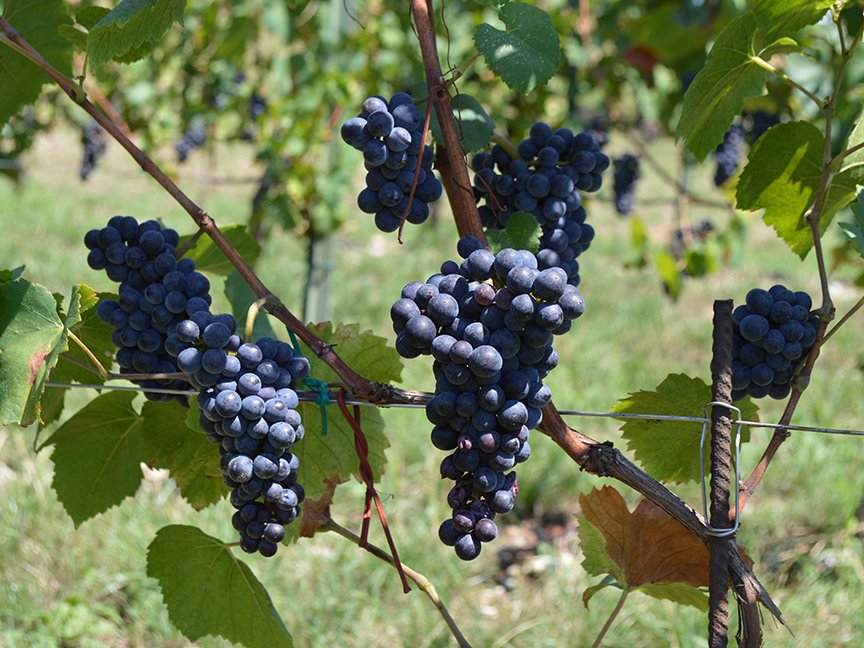
Above: Pinot Noir is grown across northern Italy for the production of sparkling wine, including Prosecco DOC and DOCG.

Many American wine professionals, including Italian-focused tradesfolk, will be surprised to learn that Pinot Noir is one of the “authorized” grapes in the production of Prosecco DOCG and Prosecco DOC (Pinot Noir is called “Pinot Nero” in Italian).

According to regulations for both appellations, the wines must be made with a minimum of 85 percent Glera — formerly known as Prosecco, the primary grape used in both appellations. But up to 15 percent of Verdiso, Bianchetta Trevigiana, Perera, and Glera Lunga — traditional, local grape varieties — may be added. And the same holds for “international” varieties Pinot Bianco (Pinot Blanc), Pinot Nero (Pinot Noir), Pinot Grigio (Pinot Gris), and Chardonnay.

In the case of Pinot Noir, the grapes must be vinified “off their skins,” in other words, without skin contact, so as to avoid color imparted by pigments in the skins.

In the light of this, it should come as no surprise that Pinot Noir, vinified on its skins as a red wine, will be allowed in the newly proposed “Prosecco DOC Rosé” that consumers could see on the shelves of their favorite wine shops as early as 2020.

The Prosecco DOC consortium is currently considering an already drafted amendment to appellation regulations that would call for Prosecco Rosé to be made with a minimum of 85 percent Glera grapes and 10-15 percent Pinot Noir, the only other grape variety to be included for the likely-to-be category.

But bottlers won’t be able to source the Pinot Noir from outside growers. According to the amendment under consideration, only “estate-grown” Pinot Noir, harvested from estate-owned and managed vineyards in the Prosecco DOC, will be allowed for the production of Prosecco Rosé.

The proposed regulations for the production of Prosecco Rosé have been met by skepticism and cynicism by trade observers who see it as a subversion of Prosecco’s authenticity. But many producers I’ve spoken to feel it’s a natural evolution for the region and the appellation, where growers and bottlers have been following market trends for decades now — with overwhelming success.

When I first lived in Italy in the late 1980s, Prosecco was a highly local phenomenon. It was still sold in demijohns and my Paduan schoolmates would drive up to hills in Valdobbiadene and Conegliano townships (Treviso province) where they would fill the trunks of their cars with wine purchased directly from growers. By the late 1990s, with large négociant bottlers focusing heavily on foreign markets, all of that had changed. Today, Prosecco producers will proudly tell you, an acre of Cartizze — Prosecco’s most highly prized subzone — costs more than an acre in Napa or Barolo.

Many Prosecco bottlers already sell sparkling rosé that’s made with Glera and Merlot, a commonly planted variety in the Piave River Valley. I’ve tasted a lot of them and they can be enjoyable. But the few examples of Pinot Noir-driven rosé sparklers from Prosecco I’ve tasted have more depth, especially when the dosage is restrained.

Tradition — with a capital “T” — is a fluid term in wine parlance. When I first tasted Prosecco 30 years ago, you could hardly find it outside of Italy’s Veneto region where it’s produced. Today, it’s the most popular sparkling wine in the English-speaking world. The appellation has changed radically since my first Prosecco kiss and the wines barely resemble the style that the previous generation enjoyed locally. They can be very good but they are only remotely linked (in my view and on my palate) to the wines of yesteryear.

However you feel about the new Prosecco rosé, it’s probably coming to a town near you.

Some of the best NY pizza I’ve had in years (Manhattan and along the New York Thruway)

Manhattan has changed so much in the decade since I left the city.

Nearly all of the cool downtown rock clubs where my band used to play are gone. Nearly all the great dive bars where we used to hang are shuttered. And many of the wonderful pizza-by-the-slice joints where you could get a classic New York slice are sadly and irrevocably no more.

Does anyone remember Salvatore Bartolomeo from Rosario’s on Orchard St.? On July 14 each year (my birthday btw), our French band used to play on that corner for the Bastille Day celebration. Between sets, I would hang with Sal and he would make me an off-the-menu Neapolitan-style espresso after I washed down my slice with a can of seltzer.

During my recent trip to the city, I was determined to find a great slice since all of my favorite places are now closed.

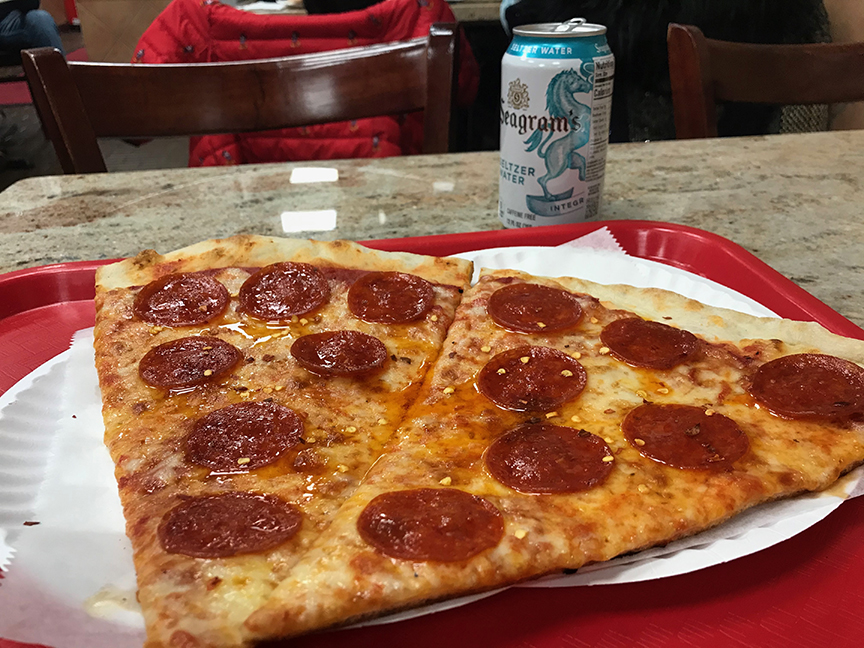
After much painstaking research, I decided to try the “city hall” Little Italy Pizza on Park Place. Those are the slices above.

As Eater New York notes, “all Little Italy franchises are not the same. In fact, some are superb while others awful, with doughy crusts and lifeless tomato sauces. The City Hall branch is one of the great ones, and you can tell the minute you step inside and see the elated diners.”

It’s so true about being able to gauge the caliber of a by-the-slice spot by the clientele.

Little Italy (Park Place) does have a website for ordering. But check out its Facebook to get a better sense of the fare.

The slices were a little bit on the greasy side (the way you like it). This place really delivered (excuse the pun) the flavor and texture I remembered from my years in the city.

I was working all day on Friday but then Saturday I had to head up to Plattsburgh in upstate New York to see an ailing relative (long, sad story but at least he’s not in pain; we had a nice visit).

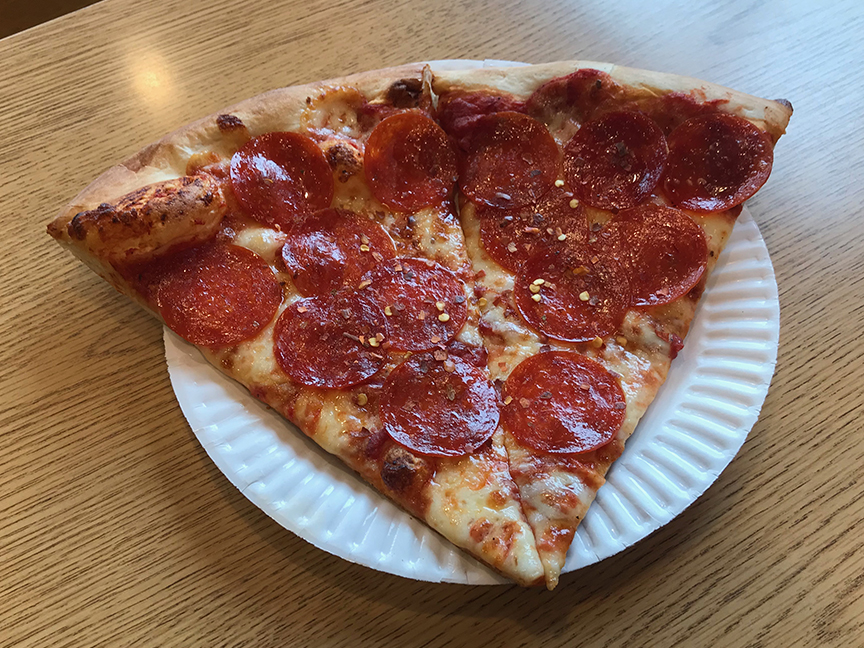
On the way back I was determined not to eat shitty New York Thruway food. And so, on a whim, I stopped at Saugerties, New York (not far from Woodstock) where I happened upon the wonderful Village Pizza (above).

They don’t have a website but they do have a Facebook (worth checking out).

Man, this place just nailed it. From the stone-faced pizzaiolo to the sullen (however polite) young lady working the counter, it had the old-school feel of the New York pizzerias of yore.

It took me about 10 minutes from the Thruway tollbooth to get there.

As I headed out, I took a puff and tuned into Woodstock Radio where I heard the most amazing country track by Steely Dan, “Brooklyn Owes the Charmer Under Me.”

It was just one of those seamless moments, a respite from the melancholy residual of my visit. The trip back to Newark airport was rainy, cold, dark, and lonely. And that pizza and the song were on my mind.

Great taste: Sip Trip with Jeff Porter and Antica Casa Scarpa come to Houston in November

On Tuesday, November 5, top sommelier Jeff Porter (above, right), one of the world’s most beloved wine pros (and native Texan), will be coming to Houston for a Sip Trip seminar and tasting at Goodnight Charlie’s.

Click here for details.

He’ll be pouring and talking about wines from his Sip Trip TV series.

I’ll be away that day but I can assure you that this a not-to-miss tasting and it’s always amazing to interact with Jeff and glean his insights into Italian wine.

And then on Thursday, November 7, I’ll be co-presenting a tasting of Antica Casa Scarpa at Vinology with Scarpa winery director Riikka Sukula, one of the coolest people working in Monferrato and Langa today imho.

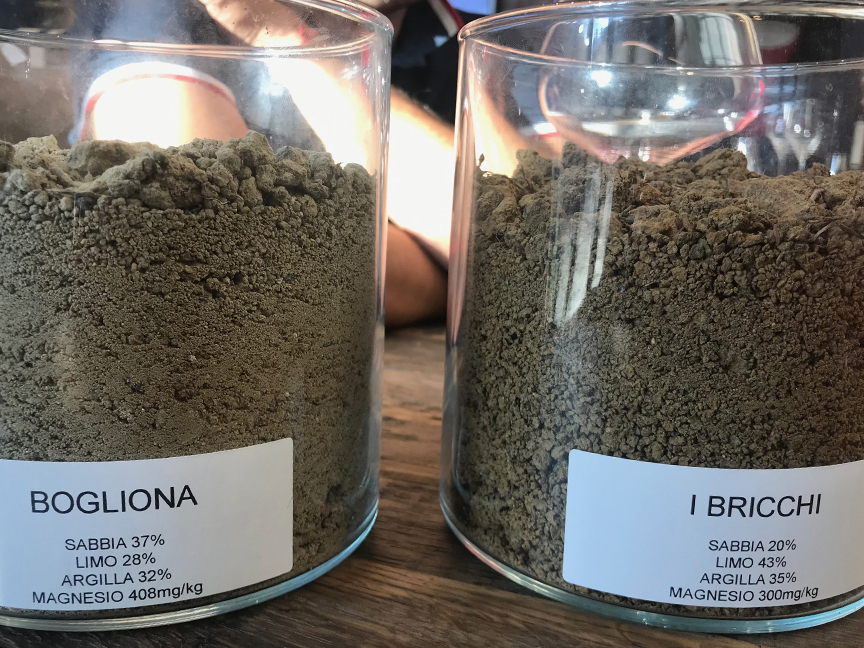
We’ll be tasting Barbera from Scarpa’s top crus and I can’t imagine there won’t be a Barbaresco in there somewhere (and I’m trying to get us a bottle of the 1996 Barbera d’Asti La Bogliona that I tasted with her earlier this year… amazing wine…).

Please join us! Info follows and thank you!

@ Vinology
Thursday, November 7
7:00 p.m.
RSVP @ jparzen@gmail.com
2314 Bissonnet St.
(832) 849-1687
Google map

Top image via Jeff’s Facebook.

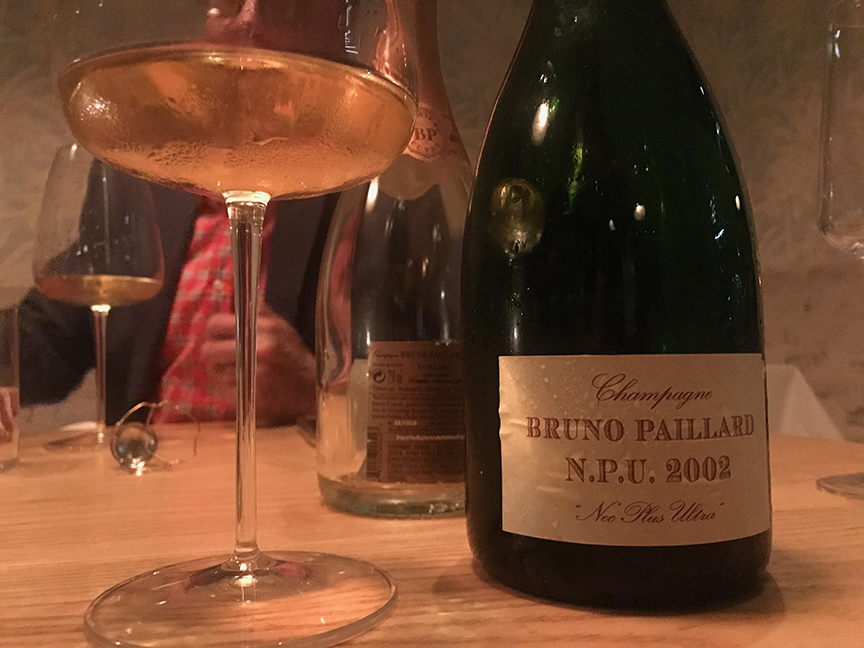
When do you pick? Honest answers and fantastic wines from Alice Paillard and her family’s estate Bruno Paillard

Honestly, I never really understood why I loved the wines of Bruno Paillard so much until I started to study sparkling wine seriously.

Sparkling wine is so widely and deeply misunderstood in my view.

We’ve been taught to serve it at the wrong temperature (too cold). We’ve been taught to serve it in the wrong vessels (flutes are too narrow). We tend to guzzle it down on festive occasions (without taking time out to taste it properly). And the biggest issue, in my experience, is that we don’t have proper knowledge about how sparkling wine is made.

When sparkling winemakers from Europe talk about the moment they decide to pick their grapes, they don’t speak of brix levels.

Instead they talk about alcohol content. And in the case of European sparkling winemakers, they talk about “degrees” of alcohol, which correspond to alcohol percentages in American wine parlance.

I was reminded of this when I had the wonderful opportunity to sit next to Alice Paillard, Bruno’s daughter, the other night at a dinner here in Houston. I rarely go to media lunches and dinners anymore but I could pass up the chance to interact (and grill) one of my all-time favorite sparkling producers.

The average American bubbles lover won’t be surprised to learn that most Champagne producers pick their grapes at “9 degrees” alcohol, in other words, with a potential alcohol content of 9 percent.

With that in mind, they will probably be surprised to learn is that most Champagnes on the wine store shelf clock in around 11 percent alcohol. How does the winemaker achieve those missing two degrees? It’s by the addition of refined cane or sometimes beet sugar. But it’s not during the dosage that those degrees of alcohol are created. That comes at the end when the winemaker chooses to sweeten the wine. It’s during the tirage — the provocation of the second fermentation — that those missing two degrees are made up for.

I hate to break it to Champagne lovers but Champagne can have a lot of added sugar in it. That’s not a bad thing. But it’s a real thing.

Alice told me that she shoots for 10.5 degrees when she harvests. That means that she doesn’t need to add as much sugar to achieve the desired alcohol level of the final product. It also means that she picks grapes that are slightly — although significantly — riper than many of her peers’. And that means that the wines are riper in style and less oxidative in character

(A lot of folks find it hard to believe that the “toasty,” “yeasty,” and “brioche” notes in Champagne are owed not to lees aging but to oxidation of sugar. I’m sorry to break the news to the wine education establishment but it’s true. Just ask a sparkling wine grower. But that’s another story for another time.)

Alice talked a lot about how historically, climatic challenges, even before the era of climate change, compelled Champagne producers to make wines with “ingenuity,” as she put it. When you were faced with capricious weather, she explained, you had to come up with creative solutions like cross-vintage cuvées (blends), for example. You also had to contend with vintages where you were lucky to achieve 9 percent alcohol at harvest (because of the cold). Today, the problem is inverse: with rising temperatures, the grapes can become too ripe.

I’ve been drinking and following her wines now (at least those I can afford) for more than a decade and I’ve always found them to be pure, leaning gently toward ripeness, with clarity and focus.

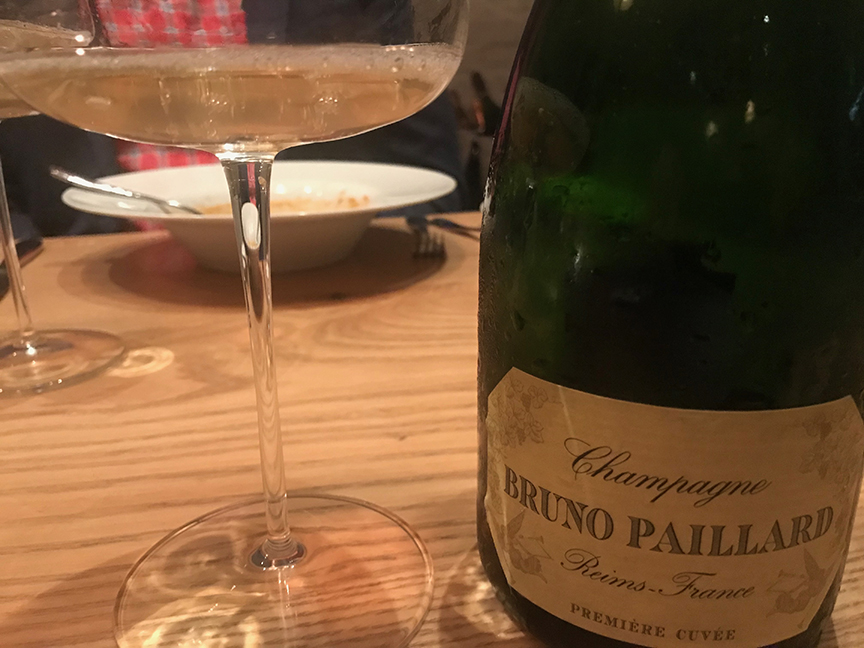
In my view, the entry-tier Bruno Paillard Champagne is simply one of the best values and one of the best wines in the category.

I’m one of her biggest fans. And now, I know why.

Thank you, Alice, for coming to Texas! And thank you for a wonderful dinner and conversation!

Oakland is the hippest place in America to drink wine (and À Côté is my new favorite Bay Area list)

Last week, after attending the Slow Wine panel tastings in Willamette Valley and San Francisco (where me and the other editors taste the prize-nominated wines), I spent an evening wine bar hopping in Oakland — the hippest place in America imho to drink groovy wine.

Well, I really didn’t “hop” that much.

As soon as I sat down at the bar at Jeff Berlin’s wonderful À Côté, I felt like I was glued to my seat.

Have you ever read a wine list and thought to yourself, man, I just have to meet the person who wrote and runs this?

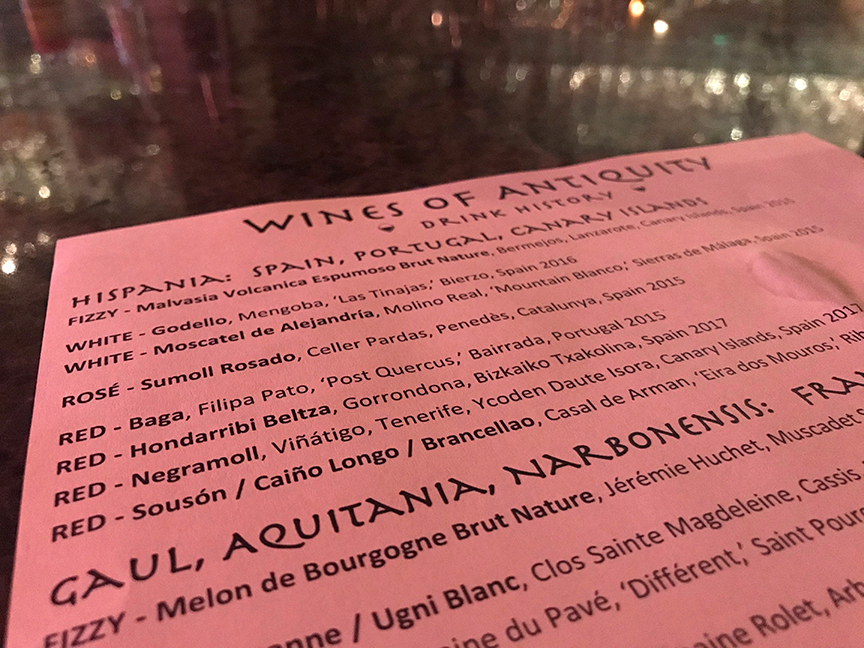
From the moment I started browsing, I just fell in love with the way he organizes the wines not by country but by “ancient region.” And I LOVED that he writes the titles of the sections in Latin.

His list (literally) spoke to me in ways that few programs do.

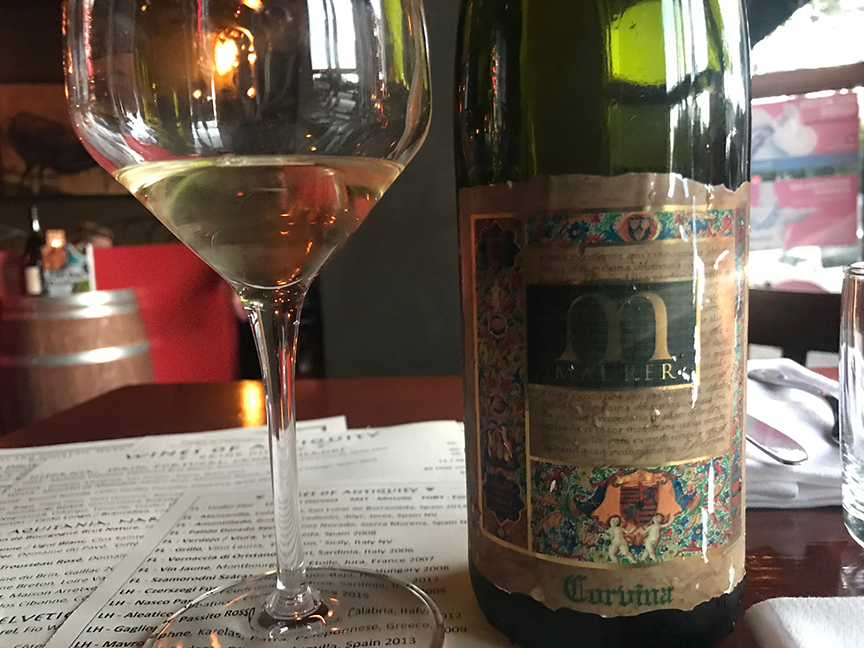
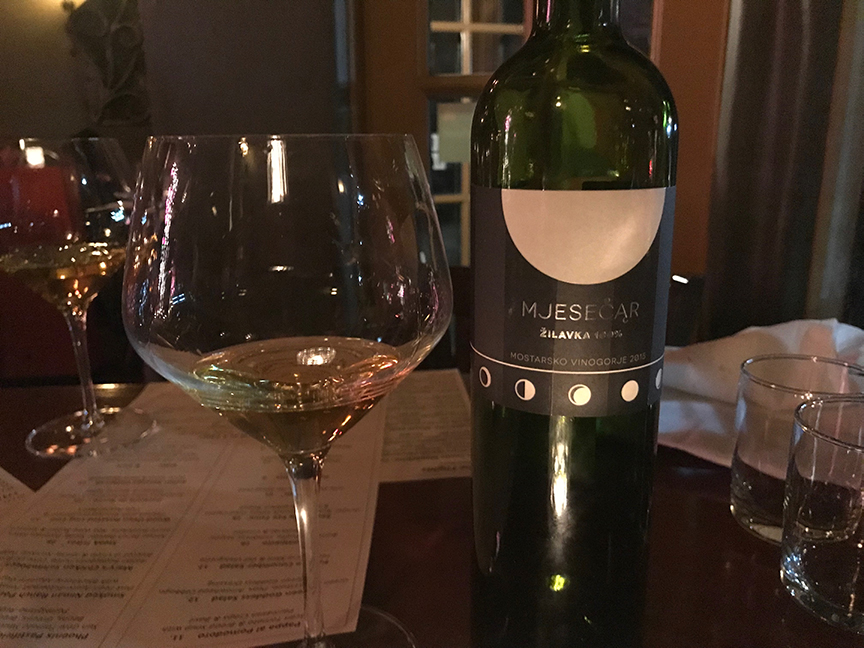
I told Jeff, whom I’d never met, that Balkan and Georgian are categories that I love exploring and he proceeded to pour one show-stopping wine after another as me and my buddy Billy munched out on the kitchen’s delicious food (we definitely had the munchies, so to speak).

Jeff has been at the restaurant for nearly 20 years and it’s amazing to see a veteran restaurateur and sommelier like him who’s never lost the spark, the verve, and the brilliance in running a program that expands the drinker’s experience. He definitely expanded mine.

That’s the last wine he poured for us that night, above, a wonderful coda to a great evening.

I did manage to make it over to the Punchdown natural wine bar later that night (we were ride-sharing). Jenny Eagleton, one of the brightest rising stars in the Oakland wine scene and my friend and colleague, poured us some fun stuff, too.

And before I hit À Côté, I met an old friend for a glass at the super cool Redfield Cider where the focus is — yes, you guessed it — on cider but there is a cool natural wine selection as well.

I had wanted to go to natural wine bar Ordinaire but it was closed because of the staff’s monthly field trip to wine country (how cool is that?). I’ve been before and it’s more like a salon than a wine bar in my experience. Really groovy.

Baygrape was also on my list but it’ll have to wait until next time.

I can’t think of another city in the U.S. where there is so much wholesome wine being poured so thoughtfully in a 20-minute ride-share radius, can you?

We’re paying for damages we didn’t cause: Italians feel wrongly punished in U.S. trade war.

Late yesterday, I had the chance to speak with Pecorino Toscano Consortium president Andrea Righini about the new U.S. tariffs on Italian cheese — part of the U.S. government’s ongoing trade war with the EU.

See my interview with him (for the Italy-America Chamber of Commerce Texas) here.

Andrea was stressed, as you can imagine. He’d been on the phone all day with frantic consortium members trying to figure out how the punitive tariffs are going to affect their livelihood.

Over the course of our conversation, he pointed out that Italy has nothing to do with the illegal subsidies that prompted the U.S. “countermeasures” against EU countries. In fact, “France, Germany, Spain, and the United Kingdom [are] the four countries responsible,” wrote the Office of the United States Trade Representative in a post on its website on Wednesday.

The whole affair was borne out of a “dispute with the European Union over illegal subsidies to Airbus.” But the only countries who profited from those subsidies were those listed above.

“We need to remember that these sanctions are the result of dealings that have nothing to do with Italy,” said Andrea. [If the tariffs were imposed] “the consortium would pay for damages it didn’t cause.”

He also talked at length about how the new import duties are going to affect the local economy in Tuscany, including Pecorino producers, their employees, and the shepherds that supply the milk. The surplus of unsold cheese and the drop in the price of sheep’s milk will be disastrous, he explained.

“All of these things are connected to one another,” he said. “It’s not just a matter of how much product you sell.”

American importers, retailers, and restaurateurs will also be affected. Last night I spoke to an Italian chef here in Houston who noted how the tariffs will impact his business: the food cost for his Cacio e Pepe — one of the most popular dishes on his menu — will also increase by 25 percent.

Ultimately, consumers will also feel the pinch. We grate a lot of cheese for pasta at our house and our daughters often eat Parmigiano Reggiano for a treat after dinner or after school.

Trade wars seem far-away… until they come to your town.

Click here for my interview with Andrea and be sure to enjoy your pasta with cheese this weekend.

Italian wine spared but top cheeses and other products from Italy fall victim to U.S. trade war

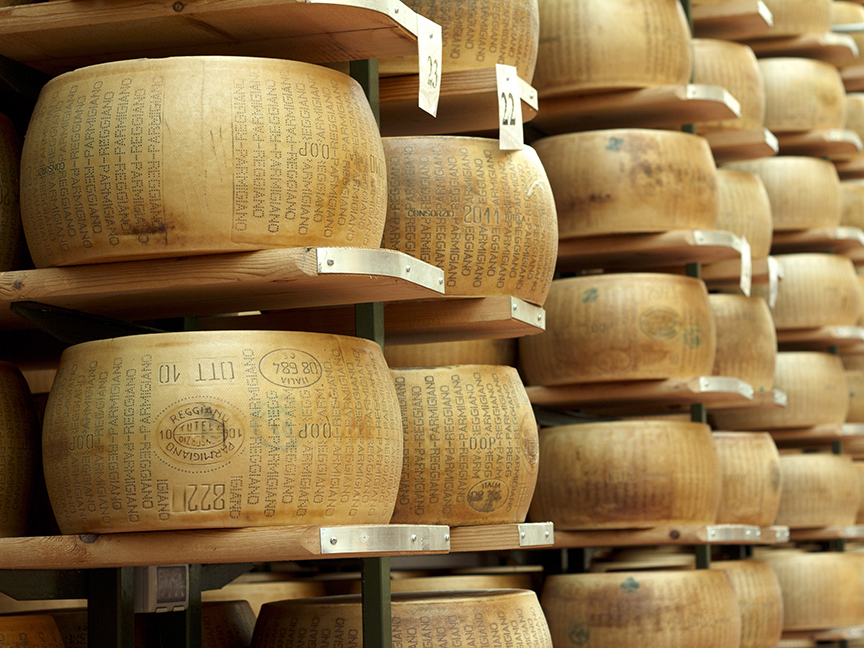
Iconic Italian cheeses like Parmigiano Reggiano and Pecorino are just two of Italy’s most popular food products that will be impacted by 25 percent tariffs, the latest volley in the U.S. government’s trade wars.

In a statement released yesterday, the office of the United States Trade Representative announced a long list of “tariffs [that] will be applied to a range of imports from EU Member States.” The focus of American “countermeasures” is “France, Germany, Spain, and the United Kingdom, the four countries responsible for the illegal subsidies” identified in a recent ruling by the World Trade Organization. But Italy, like other European Union members, is also “subject to additional import duties of 25 percent” on a wide range of food and wine products.

See the complete list of tariffs and products here.

As late as yesterday, there was growing concern among Italian winemakers that Italian wines would be included among the new tariffs. But Italian grape farmers were spared in this round of new import duties.

“The exclusion of Italian wine in the list of products that will be affected by tariffs lets us breathe a sigh of relief,” said Italian Wine Union president Ernesto Abbona in a statement issued via email. “And we’re thankful to [Italian] prime minister Giuseppe Conte, Italian diplomacy, and the efforts of the European Union Commission for that.”

Some of their European counterparts weren’t as fortunate. France, Germany, and Spain were included among those countries whose wines have been included in the new round of tariffs.

“Wine other than Tokay (not carbonated)” from those countries, “not over 14% alcohol, in containers not over 2 liters” are among the products that will be “subject to additional import duties of 25 percent” when the tariffs go into effect in a few weeks.

During an appearance with prime minister Conte yesterday in Rome, U.S. Secretary of State Mike Pompeo was handed a wedge of Parmigiano Reggiano by Italian comic actor and satirical journalist Alice Martinelli (see the clip here).

“It’s something that farmers make with the heart every day,” she can be heard saying (in English) in a video published by the Italian pseudo-news program “Le Iene.”

“We hope you can help us and take it to Trump,” she tells him in the video.

A few decades ago, Italian food products like Parmigiano Reggiano and Pecorino were found only in American speciality gourmet shops and were generally only available in major cities like New York and San Francisco. Today, they are ubiquitous across the country and are widely available even in rural parts of the country.

According to a report published over the weekend by Il Sole 24 Ore, Italy’s leading financial daily, exports of Parmgiano Reggiano to the U.S. grew by 26 percent in the first six months of 2019. Roughly five percent of the total production is shipped across the Atlantic, wrote the editors.

“It’s important to note the absence of [Italian] wine” among impacted products, said Ettore Prandini, president of Coldiretti, Italy’s agricultural trade association. In a statement issued by the organization, he noted that “we haven’t lost sight of the fact that the ‘nectar of Bacchus’ from France has been repeatedly threatened by the president of the United States Donald Trump.” It’s a “move that represents a de facto attempt to divide the European Union.”