 A scene from the June 2 Houston protest after Houston native George Floyd was murdered by police in Minneapolis. 60,000 Houstonians assembled and marched to protest his killing.
Say his name: George Floyd. Black Lives Matter.

A scene from the June 2 Houston protest after Houston native George Floyd was murdered by police in Minneapolis. 60,000 Houstonians assembled and marched to protest his killing.
Say his name: George Floyd. Black Lives Matter.
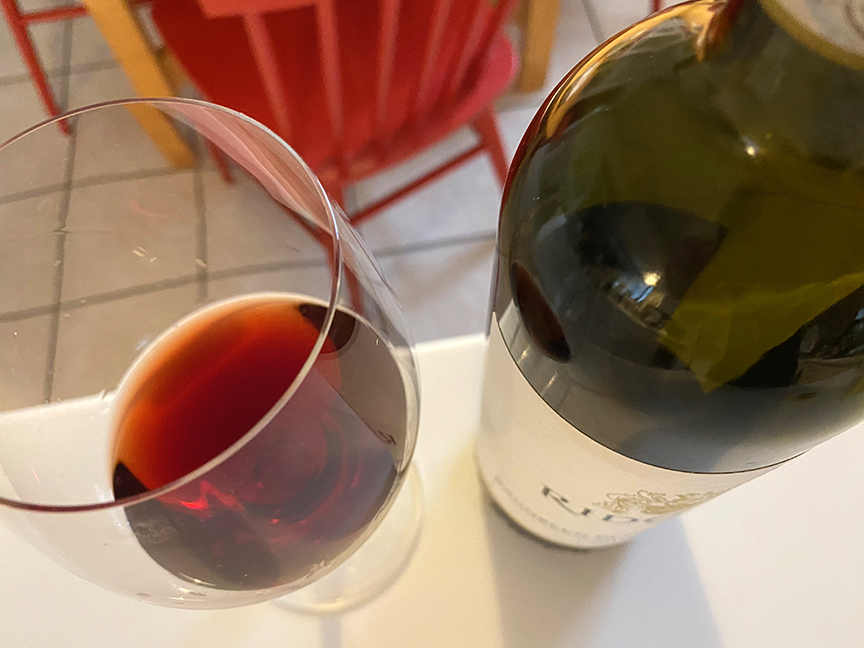 Look at the color of Gianni Maccari’s Brunello. That’s the hue of classic Sangiovese.
When my client Ethica Wines sent me to Italy a year ago in January, their Brunello producer Ridolfi wasn’t even on my radar.
Montalcino is where I first became interested in wine (while I was a grad student in Italy in the late 80s) thanks to one of the town’s leading sommeliers at the time. It’s the appellation I know possibly better than any other because of my extended time on the ground there and my work for some of the DOCG’s top players. But I had never even heard of newcomer Ridolfi when I saw the estate on my itinerary.
After the mandatory tour of the estate’s onsite vineyards and the winemaking facility, I finally got to sit down with winemaker Gianni Maccari and taste through his first vintages for the winery (which is owned by Giuseppe Peretti, an Italian entrepreneur who bought the estate in 2011).
Honestly — and this was a lacuna — I didn’t know that Gianni had quietly made some of Brunello’s most coveted wines from the 1990s. I don’t want to name the winery here (because it’s not my place to name names) but if you worked in the New York/Italian wine industry in the early 2000s like I did, there was one Brunello, and a very famous 1994 Brunello that was reclassified as a Rosso di Montalcino, that everyone was talking about. And I mean everyone. That winery’s 2001 Brunello would go on to be one of the appellation’s most collected wines of all time.
Little did I know that Gianni had been responsible for the day-to-day winemaking for those bottlings.
 I was also unaware that Gianni had also been one of the last disciples of Giulio Gambelli, the humble but widely celebrated blender of Sangiovese who had a hand in some of Tuscany’s greatest wines of the 20th and early 21st centuries.
“Giulio tastes what others do not,” said one of Brunello’s most famous growers when Gambelli passed in 2012. “There’s no one like him.”
(Google “Giulio Gambelli” and you’ll see what an impact he had on Italian wine over the years.)
As I tasted the wines with him, I had no idea of Gianni’s connection to Gambelli and his own legacy as one of Montalcino’s most deft hands. I just knew that I was sitting with the winemaker for one of my client’s estates.
But Gianni didn’t have to say much: his wines spoke for themselves.
I was completely floored with how good these wines were. Across the board, they delivered classic Sangiovese color (always first and telling indication of the Brunello producer’s approach); great acidity and freshness that countered the wine’s powerful tannin; a lithe and nimble character that gave the wines lift in harmony with the rich body; and brilliant clarity of fruit, perhaps reluctant at this early moment in the wines’ evolution but surely destined for greatness.
But the most important element — the thing that makes these truly great expressions of Montalcino Sangiovese in my view — was the notes of sottobosco or underbrush/vegetation. Those flavors, which evoke the Montalcino countryside with its mix of woods and vine, are the hallmark of Brunello greatness. They shouldn’t eclipse the wine’s fruit, savory flavors, or minerality. But if ever there were an example of terroir in wine, this is one: in my experience, it’s what makes Brunello Sangiovese so unique and compelling.
If it’s not already abundantly apparent, I’ve been obsessed with the wines since I first tasted them over a year ago in Montalcino (on my last trip to Italy). So you can imagine my joy when I received a bottle in an Ethica Wines care package.
After letting the wine rest for a week, we opened the bottle with some collector friends on Sunday. It was wonderful to watch our friend Bill marvel at the color of this wine — the true color of Sangiovese! He was also surprised by its buoyant character. It was so different from what he was expecting, he said.
This is one of the true Brunello greats, I told him, by the once and future king of Montalcino: Gianni Maccari.
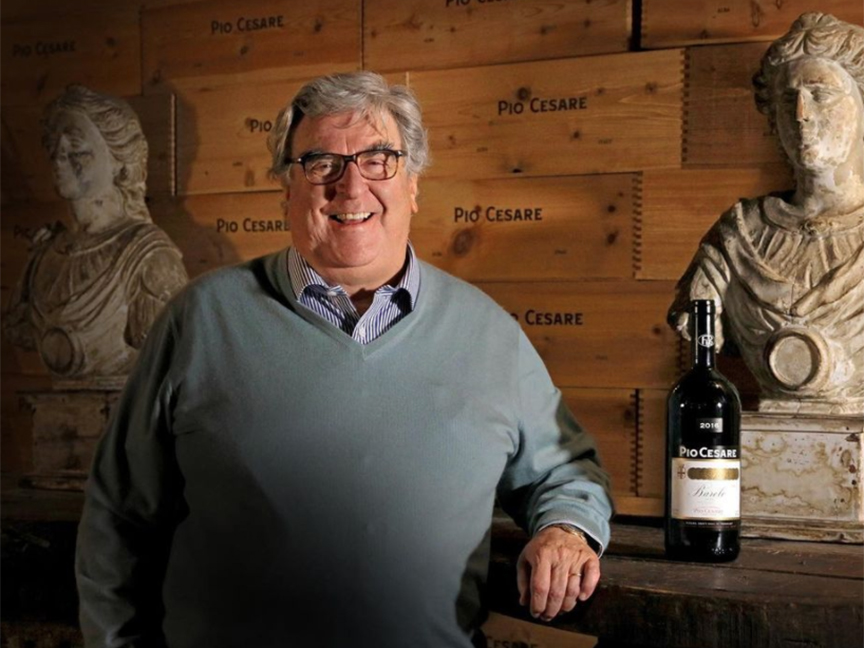 Image via the Pio Cesare Instagram.
This week, the world of Italian wine mourns the loss of Pio Boffa (above), the fourth generation to lead the historic Pio Cesare winery in Langa, producer of top Barolo and Chardonnay.
See Robert Camuto excellent obituary for Wine Spectator, “Pio Boffa, Piedmont Wine Patriarch, Dies of COVID-19.”
See also this wonderful tribute by wine writer Monica Larner.
“It takes a great man to show support for a next generation of enthusiasts,” she wrote. “He was one of those men. He will be missed.”
“For roughly four decades, he was a central figure of Italian wine,” wrote the editors of Gambero Rosso. “He wrote some of the most important pages of its history.”
Together with a small group of determined Langa winemakers, Pio was among the first to travel extensively in the U.S. as he sold his labels and educated trade members and consumers about Nebbiolo and the wines of Piedmont. Today, Barolo is widely considered to be one of the world’s greatest wines. Back in the 1980s and 90s when he started coming to the U.S., it was a total unknown in most fine wine circles. He helped to change that by visiting not just New York, Los Angeles, and San Francisco. A visionary for what Barolo could become in this country, he also made a point of visiting then secondary markets like Texas, for example.
His uncanny sense of the U.S. fine wine scene also led him to offer some of his wines at prices that made then even more appealing to restaurateurs — the exact opposite of what some of his peers did. If Barolo is widely known and consumed in the U.S. today, it is in great part thanks to his Herculean efforts combined with his larger-than-life personality.
I had the great fortune to interact with Pio on a number of occasions when I was writing for his then U.S. importer. Even though our conversations were supposed to be “all business” (he was a very busy man, after all), his flair and verve in speaking about his wines were as thrilling as the wines themselves. I always came away from our talks and tastings feeling like my Barolo knowledge had been exponentially expanded. I most recently tasted his wines when I presented the winery together with his daughter Federica at the Grandi Marchi tasting in Houston in 2018. A great family of great wine professionals.
Barolo has lost one of its guiding lights. He will be sorely missed.
Sit tibi terra levis Pie.
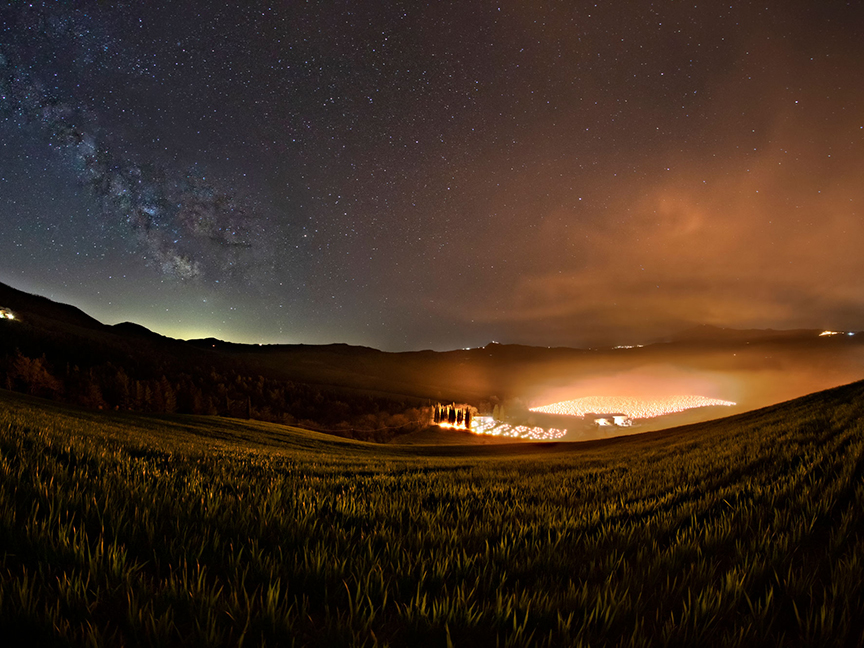 Above: Tenuta di Trinoro burns bucket-sized candles in its vineyards to mitigate frost damage after last week’s spring freeze. Images like this have been common in France over the last decade. They are becoming more common in Italy (image by @enea_barbieri_photo).
Inboxes teemed this morning with press releases from Italian wine-focused PR firms and growers consortia. Each had a different take on the impact of last week’s late spring freeze.
At the time of the extreme weather event, budding had begun across most of Italy. When frost occurs at this delicate stage in the vine’s cycle, it can arrest the plant’s fruit production. If the buds freeze, they won’t appear again until the following year. In some cases, growers lost up to 70 percent of their crop.
The Thurner firm in Florence, one of the country’s premier agencies, issued these stunning photos (above and below) from the Trinoro estate in Tuscany’s Val d’Orcia.
They show the bucket-sized candles that vineyard workers traditionally use to warm the plants during extreme cold. Images like these from France have not been uncommon in recent years. For northern and central Italian growers, on the other hand, the now more frequent occurrence of spring frost and efforts to mitigate the impact mark the second time in the last four years that they have had to face nature’s heartless caprice. The last late spring freeze came for them in 2017.
 The Consorzio di Tutela Barolo Barbaresco Alba Langhe e Dogliani (the Barolo, Barbaresco, Alba, Langhe, and Dogliani growers association) took a different tack in their dispatch.
“Overall,” wrote the authors of their release, “it appears this early spring frost only affected a few vineyards and did not impact the whole production area — contrarily to what occurred in 2017, when late April frost affected more areas at all altitudes. After a first inspection, we do not believe the vintage will suffer from significant production drop due to recent freezing temperatures.”
They also point out that late-ripening (and late-budding) grape varieties like Nebbiolo were less affected by the extreme weather.
While northern Italian growers have remained mostly silent or have taken a euphemistic approach to the fallout (as above), Tuscan winemakers are reporting significant losses.
The Brunello di Montalcino consortium was among the first last week to issue a statement about the damage and efforts to contain it.
And earlier this week, the Col d’Orcia winery in Montalcino reported in a Facebook post that “budding was advanced” at the time of the frost. As a result, “the damage was extensive.”
All of this comes as nearly all of Italy remains in lockdown. With restaurants shuttered and wine tourism on hold, many wineries — especially small family-owned estates — are struggling to stay afloat. The recent extreme weather event is yet another challenge they must face.
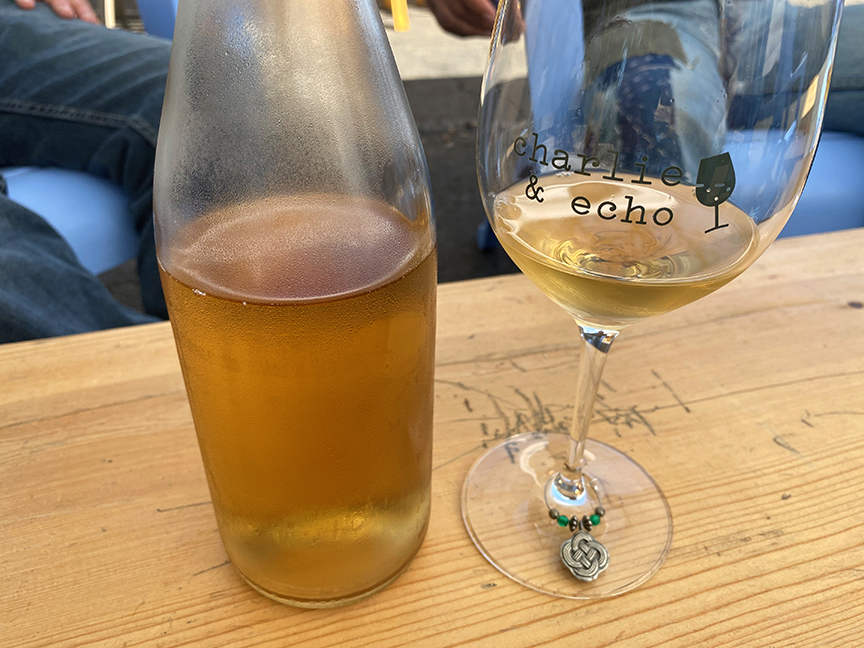 You can take the grape out of Italy but you can’t take Italy out of the grape.
The chiasmus flowed through my mind when Eric Van Drunen and Michael Christian poured me the first of their latest releases from the Los Pilares winery in San Diego, California last week.
The wonderful Los Pilares skin-contact Falanghina from their 2020 harvest — one of their best to date, they said — had all the hallmarks of great Falanghina: freshness, good acidity, and classic notes of citrus and minerality. On-the-skins fermentation gave the wine a creamy texture that made me crave for some grilled fish tacos (mahi mahi, if you don’t mind). But the thing that really impressed me was how clean and focused this wine was.
The fruit for this wine, like all their labels, comes from San Diego-county grown grapes, including vines on tribal lands. It was barely 13 years ago when people would still sneer when the seemingly oxymoronic expression “San Diego wine” was uttered. Eric and Michael seem to have put that old chestnut into the roaster for once and for all, as the metaphorizing goes.
 The other wine that had my tongue on its toes was this excellent Assyrtiko-Mission-Barbera co-ferment.
Los Pilares grower Coleman Cooney has been experimenting with new grape varieties for years now and this is definitely one of his best efforts imho.
The Mission, a California native that has been deservedly getting more and more attention in recent years (thank you, Bryan Harrington), seemed to give this wine the “lift” that young sommeliers look for these days. But it was the Santorini grape that imparted the rich saltiness in this wine. Eric and Michael served it cellar temperature: it was one of the moreish wines that you just can’t put down. Vibrant fruit, nice acidity, and best of all, fresh and extremely clean on the nose.
Both wines were 1,000 percent winners on my palate and in my book (sorry for the mixed metaphorizing).
It seem like only yesterday (the now prehistoric 2016 to be exact) that snootiness was still required when discussing the wines produced in “America’s finest city.”
Does anyone remember wine professional Allison Levine writing about a Los Pilares wine for the Napa Valley Register?
“I was told it was from San Diego,” she reported. “Yes, you heard me correctly — San Diego, the beach city at the bottom of California.”
In all fairness to Allison (and beach/bottom alliteration aside), she liked the wine, even though she relegated it to the dust bin of “natural wine,” always a non-starter for the Napa set. But her note still oozes with the disdain that northern Californian natives feel for their southern counterparts (sorry for the Google alert, Allison!).
I grew up in that “beach city at the bottom of California” and it was great to be back and taste some of my county’s most recent viticultural efforts. As the allegorizing goes, BOTTOMS UP!
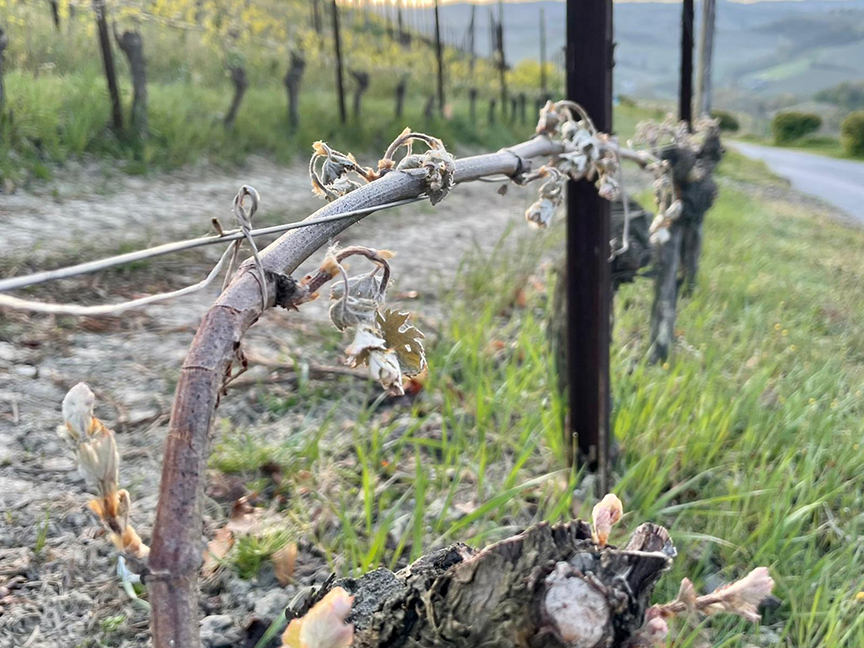 Above and below: frost-damaged vines in Piedmont, Italy. Photos via Vinarius, the Italian Association of Wine Retailers.
“Even in Sardinia — just think of that! — even in Sardinia they had frost damage,” wrote president of the Italian Association of Wine Retailers Andrea Terraneo in a WhatsApp message yesterday.
As Italian wine grape growers assess the damage from last week’s late spring freeze, when temperatures from Tuscany northward dipped below 20° F., the prospects of a bountiful 2021 harvest grow even more dim.
See, for example, this Facebook album posted by Cantina Berritta in Dorgali, Sardinia where the winemaker reports that up to 70 percent of their grape crop was destroyed by the extreme cold.
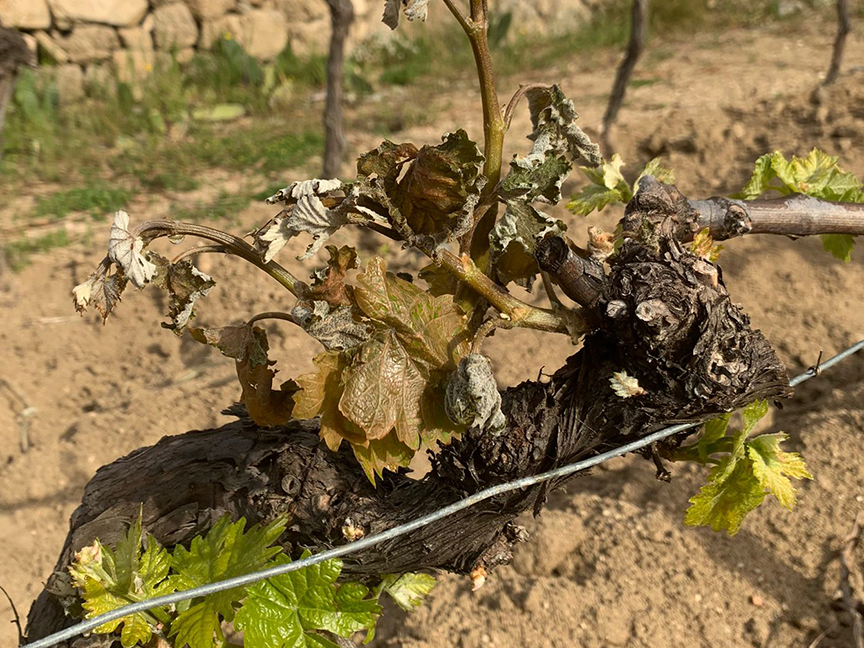 Trentino-Alto Adige was the only northern Italian regions that seemed to have avoided widespread frost damage, he said.
“They are telling me that because budding was a little bit behind” with respect to other regions, he wrote, “only a few buds were frozen. But in warmer regions, where the vines had already begun to bud, the frost left its mark.”
In a heartfelt Facebook post addressed to winemakers, Andrea wrote that “it’s going to be up to retailers to explain to consumers just how challenging your work is.” He added: “if frost damage forces you to raise your prices, rest assured that we will be there to explain why to our customers.”
 Above: a farm in Montalcino burns hay to protect vineyards during a late spring freeze this week across central and northern Italy (image via the Brunello di Montalcino Consortium Facebook).
According to a widely disseminated blog post by the Brunello di Montalcino Consortium, temperatures in the appellation have dropped to nearly 15° F. this week. In order to protect their vineyards from frost damage, many growers have been burning hay to warm the vines (as in the photo above, published this week by the consortium).
This late spring freeze comes at a delicate time for winemakers across central Italy as well as the northern regions, where there have also been widespread reports of damage. Once the plants have begun to bud, an extreme freeze can arrest formation of the clusters.
According to mainstream media reports, this year’s freeze is the latest in a string of three consecutive vegetative cycles that have been affected by frost damage. But the latest extreme weather event appears to be the worst.
The freeze couldn’t have come at a worse time for winemakers. Nearly all of Italy is still on complete lockdown and restaurants and cafés remained closed except for take-away orders. To give you a sense of the restrictions for private citizens living in small towns, most are not allowed to travel beyond a five-kilometer radius from their homes. (Earlier this week, restaurateurs in Rome clashed with police as they protested the continued restrictions.)
“In the middle of the night,” wrote the editors of the Brunello Consortium’s social media, “producers banded together in an effort to keep the temperatures from dipping too low in the vineyards. This is an important period [for grape growing] because the vines are at the beginning of their vegetative [productive] phase.”
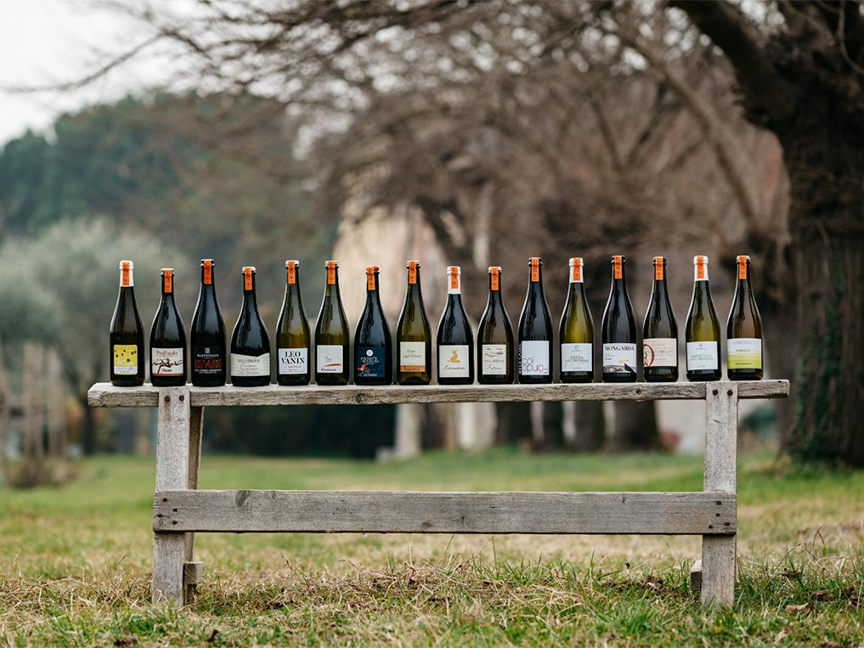 Last month, a new consortium of Prosecco ColFondo producers was born in Treviso province, Prosecco’s spiritual homeland: ColFondo Agricolo or the ColFondo Farmers Union.
The project, spearheaded by ColFondo advocate and Italian wine authority Gianpaolo Giacobbo, includes “the 10 ColFondo Agricolo Commandments,” production requirements and guidelines for members (below).
For those of you who missed the ColFondo movement that began to take shape in the late 2000s, ColFondo is a pseudo-historic designation for a style of Prosecco that has been re-fermented in bottle and released without disgorgement. The name means con il fondo or with its sediment. (Most Prosecco is made using the tank method whereby the wines are re-fermented in pressurized tanks and then disgorged before bottling.)
The genre represents a link to the not so distant past before the international Prosecco boom of the 1990s. These were the wines that were produced and drunk by the grandparents of the current generation of Prosecco ColFondo producers. Over the last 15 years or so, the style has been embraced by growing legion of small family-owned estates and Italian wine enthusiasts.
“Farmers ColFondo,” wrote Gianpaolo, the group’s tasting committee chairperson, on the Slow Wine blog, “is a slow wine, a wine that respects time and history. It’s a wine that requires patience to be born and patience to be enjoyed. It’s not a drink but rather a sublimation of a human being’s life — the life of a grape grower. It’s the bottle that’s never missing on the table. Without filters, it tells the story of experience and hard work, honesty and sweat, freshness and simplicity.”
The following family farms currently belong to the new group of growers and winemakers: Bastia, Bele Casel, Ceotto Vini, Fratelli Collavo, Leo Vanin, Malibran, Martignago Vignaioli, Masot, Miotto, Mongarda, Moro Sergio, Ruge, Siro Merotto, and Terre Boscaratto.
All members must adhere to the union’s precepts in the form of “10 Commandments” (below, translation mine).
The 10 ColFondo Agricolo Commandments
As Gianpaolo notes in his post for Slow Wine, ColFondo wines must be “artisanal with a little bit of rock ‘n’ roll” in the mix.
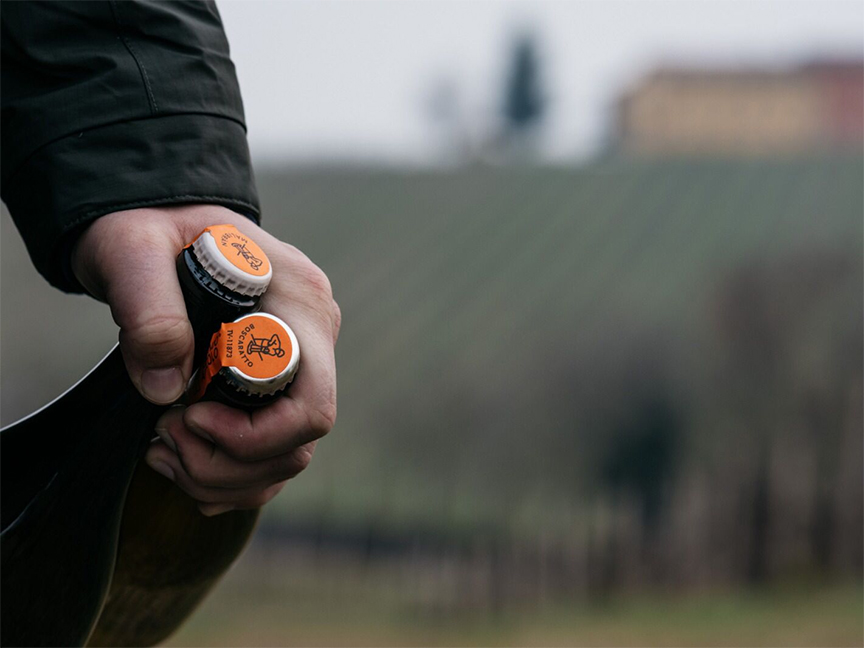 Photos by Arcangelo Piai via the Slow Wine blog.
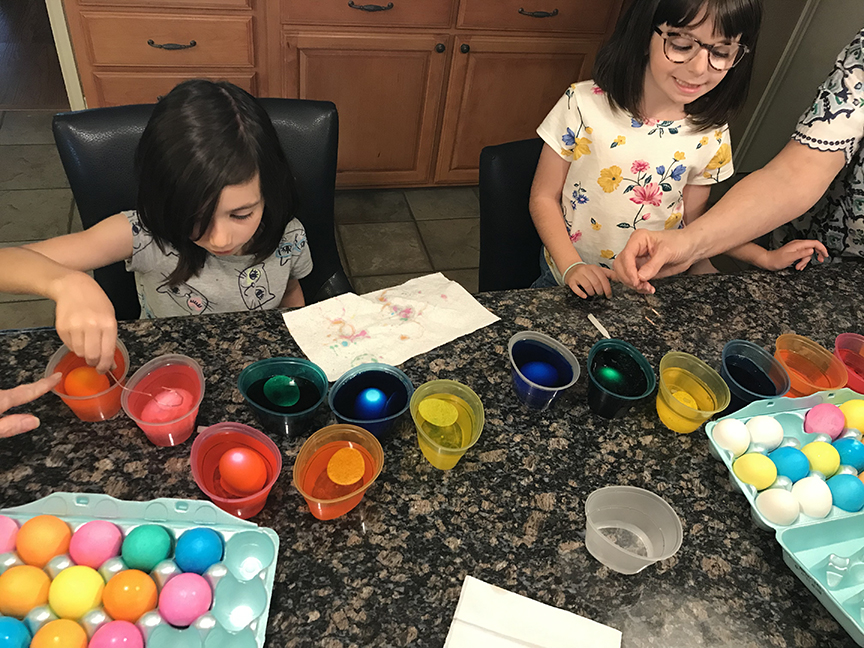 Happy Easter, everyone! That’s a photo, above, from the girls’ Easter in 2019.
This year, we’ll be back at their grandparents house in Orange, Texas for the holiday. We can’t wait!
And no Easter would be complete without a song from my favorite Easter movie, Easter Parade (1948) with Judy Garland and Fred Astaire (below).
And btw, Passover is still on so Parzen family also wishes you a happy Passover! Chag sameach!
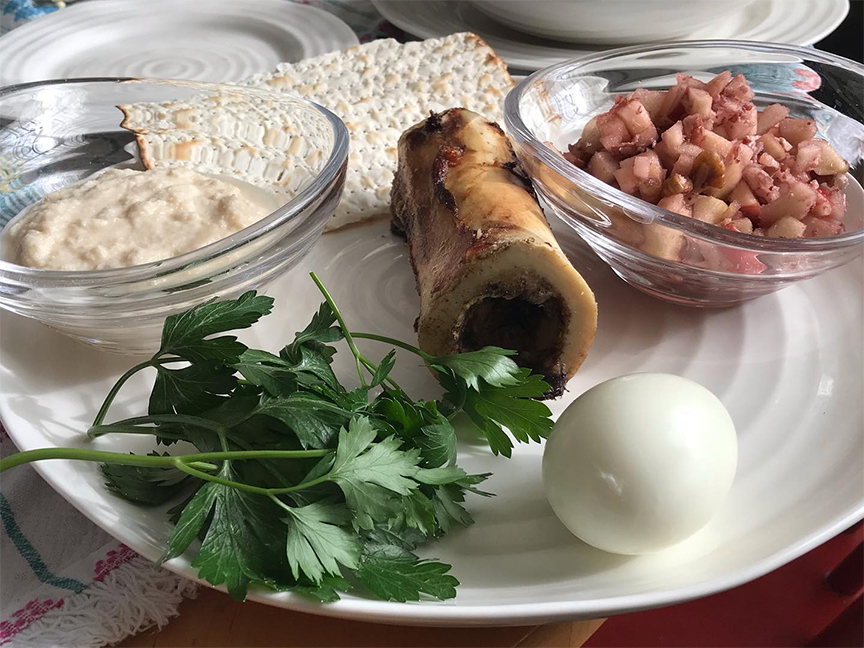 Happy Passover, everyone!
Chag Pesach kasher vesame’ach!
[Wishing you a] kosher and joyous Passover!
There are so many ways to wish someone a happy Passover — in Hebrew, Yiddish, and English. Check them out here on Chabad.org.
 Do Bianchi