What’s going on with pizza in Italy? A new trend emerges.

What’s on this pizza? I’m not sure I even know.

One of the trends I’ve noticed in my recent trips to Italy is that Italian pizza — or should I say, pizza in Italy, since pizza is a champion among world foods — has been undergoing a radical transformation.

Increasingly, I’ve been seeing creative pizzas like the one above (with fennel and what I believe was a beet ricotta cream).

But the bigger trend I’ve noticed is that pizzaioli are adding the toppings after the pie has been fired.
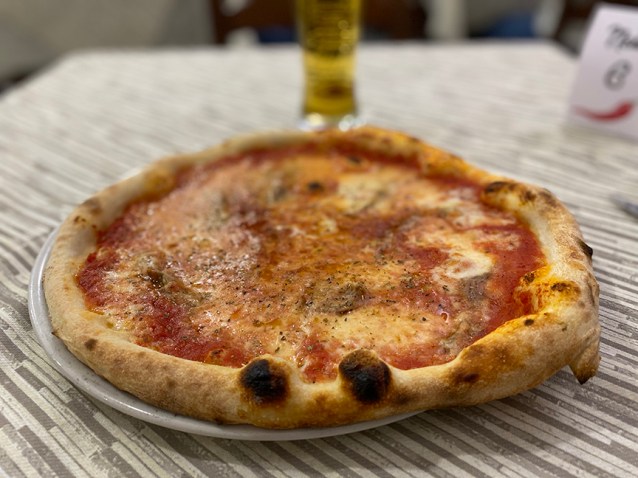
Take, for example, the photo immediately above.

That’s a classic “napoli,” the kind you’d find in nearly every pizzeria in Italy in the 80s and 90s, with salt-cured anchovies and capers.

It’s the kind and style of pizza that I found when I first began studying in the country.

Now look at this pizza (immediately above). It’s a “napoli” but the ingredients have been added only after (notice how they aren’t incorporated into the mozzarella and they). The mozzarella was also added after it was fired.

Tracie and I first encountered this style of pizza at the legendary I Tigli in San Bonifacio near Verona.

At the time, about 12 years ago or so, people thought that owner and pizzaiolo Simone Padoan was either a genius or a lunatic.

As one hipster pizzaiolo explained it recently, this new approach was inspired by the fact that the toppings and crust have wildly divergent cooking times.

If all the ingredients are fired at the same time and at the same extremely high temperature (the key to a great pie), the toppings suffer at the expense of the vessel.
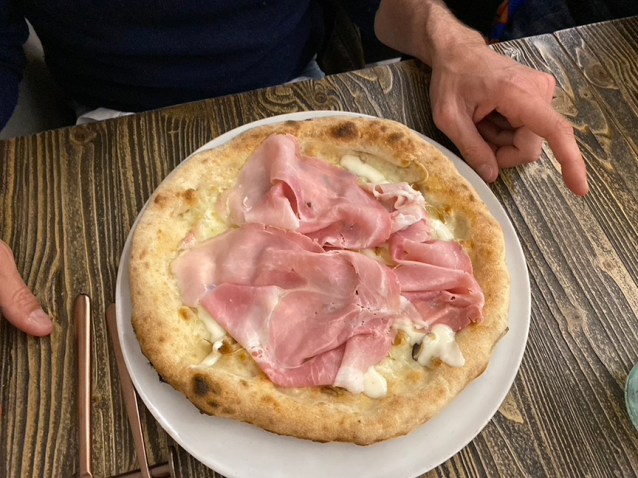
Notice how the prosciutto cotto (literally, cooked ham) was added only after the pie had been cooked through.

The heat of the dough is transferred to the toppings and they become — at least in my experience — more tasty as their flavors are “freed.”

Will Americans begin following this new and sometimes controverial trend of post-fired toppings? I’m not sure that we are ready for such blasphemy!

Thanks for being here. And THANK YOU to everyone who came out to our sold-out Piedmont diner last night at Rossoblu in DTLA. What a blast! Thank you Chef Steve and Dina for a truly wonderful evening!
The best bottle of wine in Orange Beach, Alabama.

Traveling across small-town country in the U.S. is always a reminder that an overwhelming number of Americans care little about fine wine.

In big and medium-sized U.S. cities today, it’s almost impossible not to find at least a handful of venues where the wine program is thoughtfully authored and managed.

But as our recent trip to Orange Beach (near Gulf Shores), Alabama revealed, even in popular tourist destinations like the pristine white beaches of the Alabama coast, wine is just another adult beverage like the tequila, vodka, and beer etc. restaurateurs use to fill their bar wells.

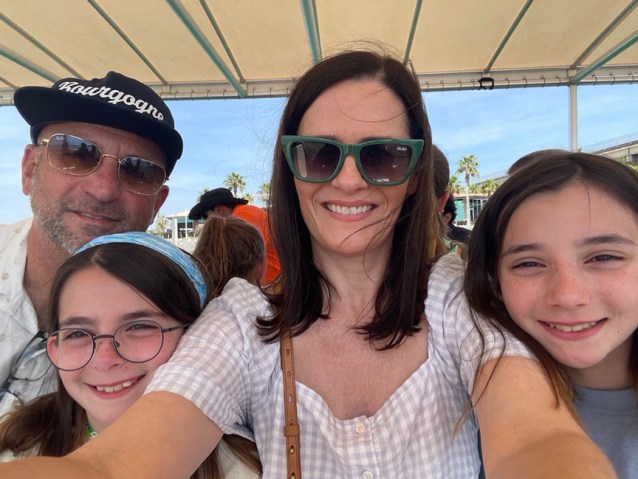
When Tracie and I take road trips with our girls, ages 10 and 11, we always bring a cooler filled with our own wine to drink at the hotel.

But when it comes to mealtimes, it’s highly uncommon to find restaurants that allow corkage outside our country’s great metropoles.

And as Tracie always says, if you can’t be with the Chardonnay you love, drink the Chardonnay you’re with!

Our go-to wine on this last trip was La Crema Chardonnay. Yes, you got that right. La Crema. Its fruit is cloyingly present and you can taste the oak chip treatment. But it’s not offensive or unpleasant. To me, it tastes more like a wine cooler than wine. But it’s fresh, drinkable, and ubiquitous.

One of the big surprises was how much we liked the Ferrari Carano Chardonnay, another mid-tier restaurant staple. This showed great for its class at one of our dinners, with good balance, freshness, and fruit, however unidimensional.

But we did find a compelling if modest wine program at Zeke’s in Orange Beach where we were staying.

We ended up drinking a bottle of Jermann Pinot Grigio with what was probably the best shrimp I’ve ever eaten in my life — no joke, they were that good.

Zeke’s prints and laminates its beverage list. That means when a wine is locked in, it’s there to stay.

But I was impressed with the drinkability and food-friendliness that informed the selections. There is clearly someone there who cares about wine. And we LOVED the food there.

Beyond the shrimp boil for two, I did Gulf Oysters, which were delicious, and Tracie ordered a hummus appetizer that we also enjoyed. I was tempted to the Moroccan-style pompano but had to do the crustaceans.

For the record, there is a fine dining, surf and turf venue in Orange Beach — Voyagers at the Perdido Beach resort — where there is a serious program. But this was more of a flip-flop and bathing suit vacation.

We had so much fun and the girls loved it so much that we are planning to go back next year to explore the beach — and the wine lists.

Happy summer, everyone! Hope you are staying cool. And thanks to everyone who signed up for our sold-out Piedmont dinner Wednesday night at Rossoblu in downtown Los Angeles.

The Sporty Wine Guy podcast keeps on truckin’! Check it out!

That’s me, left, with my buddy, the legendary sports and wine writer for the Houston Chronicle, Dale Robertson, tasting at Marchesi di Gresy in Barbaresco last month.
After Dale went into semi-retirement last year, he and I launched a podcast, The Sporty Wine Guy, where we talk mostly about the Houston wine scene, our travels, and the occasional anecdote from our personal lives.

But the cherry on top is the many tales that Dale shares from his time as one of the highest-profile sports writers in the country.

On yesterday’s episode, he told the story of the time he hunted Ken “Snake” Stabler down in a bar in Gulf Shores, Alabama after the famed quarterback had turned his back on a lucrative contract and virtually disappeared (it’s a good one).

After nearly a year of podcasting, we’ve been getting some great feedback on the show and most importantly, we’ve been having a blast just kibbitzing and trading notes on wines, wineries, wine bars, restaurants etc. we like.

Check out the podcast here. And check out Dale’s blog here.

Thanks for listening and following!

Taste Nizza — a SUPER Nizza — with me on August 9 at Rossoblu in Los Angeles.

It took me a minute to make sure the wine was available in California since it only newly arrived there.
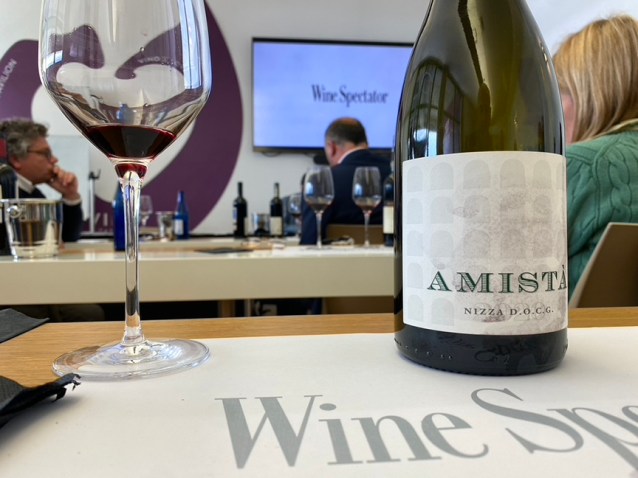
But I’m thrilled to announce that I’ll be pouring the Amistà Nizza DOCG by winemaker Luca D’Attoma at my August 9 Piedmont dinner at Rossoblu in Los Angeles!

View the menu and registration link here.

The Amistà Nizza will be the last wine in a flight of Piedmontese bottlings that I’ve picked especially for this event (which includes Chef Steve’s vitello tonnato!).

Amistà is owned by my friend and client Michele Marsiaj, a Torinese entrepreneur who has really opened my eyes to Nizza’s magic. And the wines are made by Luca, a genuine Italian wine industry legend.

Ours will be there very first event where it is served in California. And I know our guests are going to be blown away.

And I can’t wait to share the wonders of Nizza, an appellation that many of us are just getting to know in the U.S.

You can read more about Amistà and the Nizza DOCG on the blog that I manage for the winery here.

The photo above comes from a Nizza DOCG seminar that Bruce Sanderson of Wine Spectator asked Luca and me to attend at Vinitaly this year. It was so amazing to be in the same room as nearly all the great historic producers from the DOCG, which was created in 2014 but stretches back ante litteram for centuries.

Isabella Oddero spoke at length about how her grandfather always believed that Nizza had the potential to become one of the great red wines of Italy. Today, Amistà is just one of a growing number of top growers working to raise the appellation’s visibility in the world.

And please see the menu and registration info here. I hope you can join us. This will be a night to remember for sure (the last one I did at Rossoblu was so fun). Thank you for your support and solidarity.

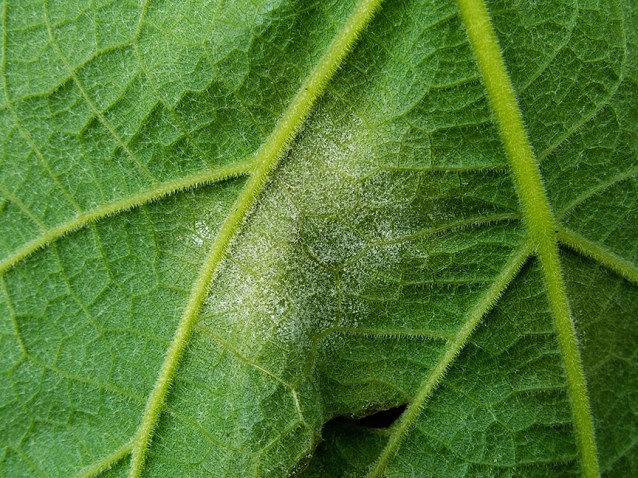
Areas in central and southern Italy heavily impacted by peronospora.

Plasmopara viticolaAccording to a report published on Monday by the Sole 24 Ore (Italy’s “Financial Times”), Italian winegrowers are predicting crop losses of up to 40 percent in peronospora-affected areas in central and southern Italy.

Abruzzo, Molise, and Marche are among the regions most impacted by the presence of the downy mildew. But Marche, Puglia, Basilicata, Umbria, Latium, Tuscany, and Sicily, and Tuscany are also mentioned among the regions where growers are experiencing significant drops in production.

The Sole 24 Ore report is based on data published this month by the wine industry trade unions Assoenologi and Unione Italiana Vini together with Ismea, a branch of the the Italian ministry of agriculture.

Organic farmers have been acutely impacted according to authors the report.

The outbreak of vine disease is blamed on heavy rainfall late spring. They brought much needed water. But the lingering humidity created challenging conditions in the vineyards.

The Sole 24 Ore article has been widely cited this week in Italy’s mainstream and wine industry-focused media.

Above: Plasmopara viticola aka Peronospora viticola (via Wikipedia Creative Commons).

The best vermuteria in Turin? Fulvio Piccinino, the world’s leading expert on vermouth, has the answer.

In the wake of Eric Asimov’s article on vermouth for the Times last week, “This Summer, Pause for the Vermouth Hour,” it seemed like a great time to reach out to Fulvio Piccinino from Turin.
Fulvio, a professor at the Slow Food University of Gastronomic Sciences in Bra, is widely considered to be the world’s greatest expert on vermouth.

In the 2019, he published the definitive book on Vermouth of Torino. But he has also published seminal works on gin and on Futurist mixology, among others.

He and I have interacted on occasion because he consulted on the recipe for a vermouth produced by my client Amistà in the Nizza DOCG.

He’s an amazing dude and I always learn so much when I get to chat with him.

During our interview, I ask him why he thinks vermouth has become so popular in recent years. He doesn’t really answer the question directly but he talks at length on how interest in vermouth has changed and grown over the last decade or so.

In the early years of his seminars (his first session on vermouth dates back to 2010), he had just a handful of mixology professionals in attendance. Today, he said, he can barely accommodate the number of people who want to learn more about vermouth. But, he notes, they are mostly consumers.

He attributes that trend to the fact that people increasingly want to know what goes into the production of the vermouth they drink.

As I expected, it was a fascinating chat. And I’m pleased to sure it here. You can also watch it over on the Amistà blog. Enjoy!

Taste vitello tonnato with me August 9 in LA at Rossoblu.

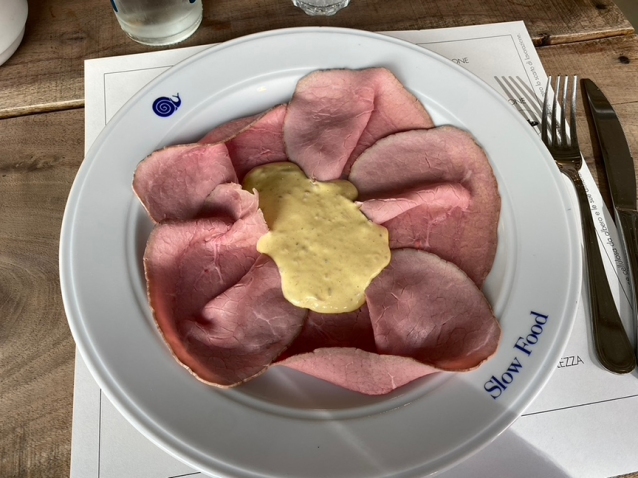
Above: vitello tonnato at the famous Osteria Boccondivino in Bra, Piedmont, where the Slow Food movement was founded in 1986. The town is also home to Slow Food U.
Thanks to my teaching gig at the Slow Food University of Gastronomic Sciences in Piedmont, I’ve been making at least two or more trips to the region every year for the last eight vintages.

That’s been great news for my Jewish boy stomach: Piedmont is home to what is arguably my favorite dish of all times — vitello tonnato.

For the uninitiated, vitello tonnato is garlic- and clove-studded roast veal that has been chilled, thinly sliced, and then topped with a sauce made of olive oil-cured tuna, capers, egg, and anchovy.

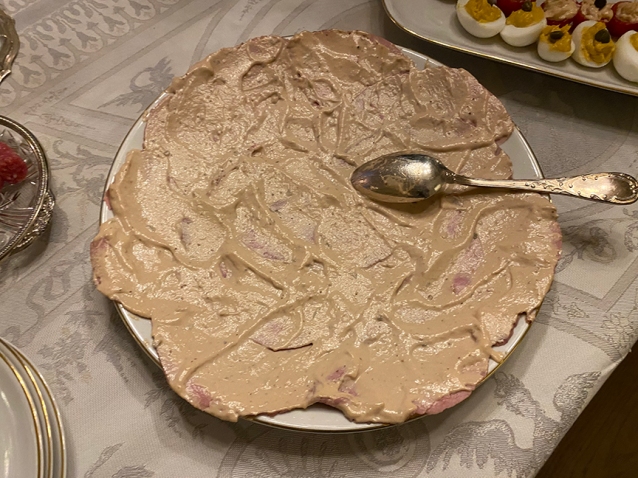
Above: homemade vitello tonnato at the home of my good friend and client Michele Marsiaj, owner of the Amistà winery in Nizza Monferrato.
While the origins of the dish are uncertain, most believe that it came about through a conjugation of cured fish (tuna and anchovy), available in Piedmont thanks to its proximity to the sea, and Piedmont’s ranching legacy.

To put it in blasphemous terms, it’s as if roast beef and tuna salad — the favorite dishes of many young male American Jews of a certain age — got together.

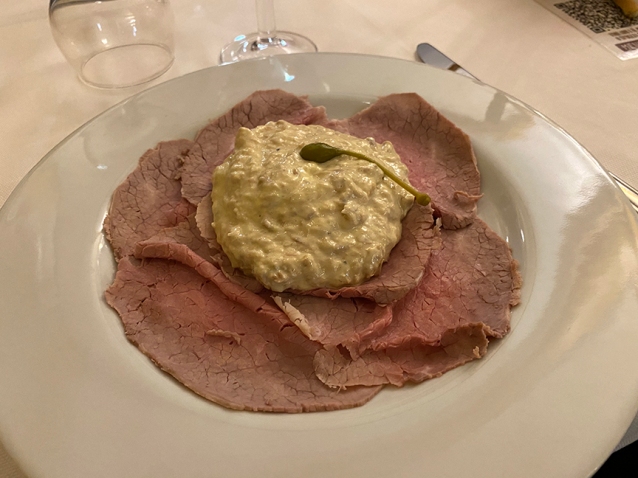
Above: old school vitello tonnato at the classic Antico Ristorante Porto di Savona, a crusty but must-experience culinary gem in Turin.
On Wednesday, August 9, at Rossoblu in Los Angeles, Chef Steve Samson, a close friend since college, will be serving vitello tonnato as part of a Piedmont-inspired menu. And I’ll be presenting the wines.

You can view the menu and registration link here. And I’ll be sharing the flight shortly on my blog.

Man, I am SUPER PSYCHED for this dinner. I hope you can join me. I know it will be a great time. Thanks for the support and solidarity. And thanks for loving Italian enogastronomy!

Alpine mountain high: tasting with Italian wine great Luca D’Attoma.

One of the most exciting things about my professional life this year has been the opportunity to interact with Luca D’Attoma, one of Italy’s genuine “rock star” winemakers.
Luca first began making a name for himself and his work about 20 years ago when he began to land some astronomical scores from the top Italian wine writers.

I first met him in Bolgheri in 2008 when he was making wine for my friend Cinzia Merli of Le Macchiole. Their partnership helped to launch her brand into the stratosphere. Today, the average U.S. retail price for her 100 percent Merlot, Messorio, is around $250… if you can find it.

Tua Rita and Fattoria Le Pupille are just two of the iconic estates for whom he has made wine.

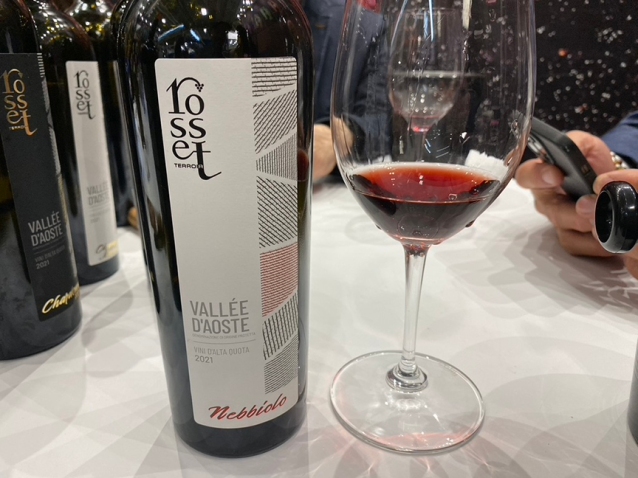
So, it was with some degree of surprise that I agreed to meet Luca at the stand of his Val d’Aosta client, Rosset, at Vinitaly this year.

Luca D’Attoma, the rugby player turned enologist, of Super Tuscan fame, in the Italian Alps? I thought to myself as I scratched my head.

I loved the wines, their focus, and the electric energy that seems to be the red thread in Luca’s work. The Nebbiolo was a stand-out, as was the Moscato. Super wines.

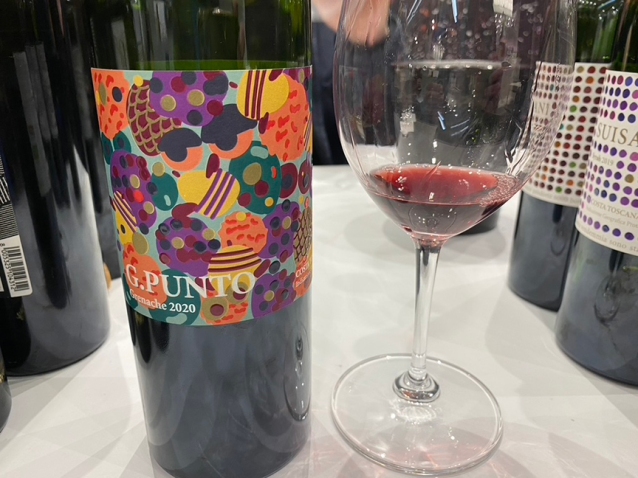
Next we tasted Luca’s personal project, Duemani, the Tuscan coastal estate he and his business partner recently sold to a major Italian winery group.
If the Alpine wines were electric, these wines were electrified!

Hyperbole aside, there is a vibrance to the fruit in Luca’s wines that makes them stand apart from the crowd. The Grenache by Duemani was outstanding, extremely fresh and lithe yet also rich and complex. The whole line up… these are wines meant for food. It was as if I could taste the cacciucco (a dish the Tuscan typically pair reds with).

Beyond the sale of his own winery, Luca has been in the news recently thanks to an interview by Gambero Rosso where he talked about his mixed feelings on Natural (with a capital N) wine.

On the one hand, he feels that the movement has become a marketing tool for lesser quality wines. But on the other, he spoke at length to the interviewer (my friend Lorenzo Ruggeri) about how Natural wine has impacted the greater world of wine in extremely positive ways.

Luca began as a conventional farmer. Today, he works exclusively with biodynamic growers, for example.

I know this to be the case because Luca and I share a client, Nizza producer Amistà.

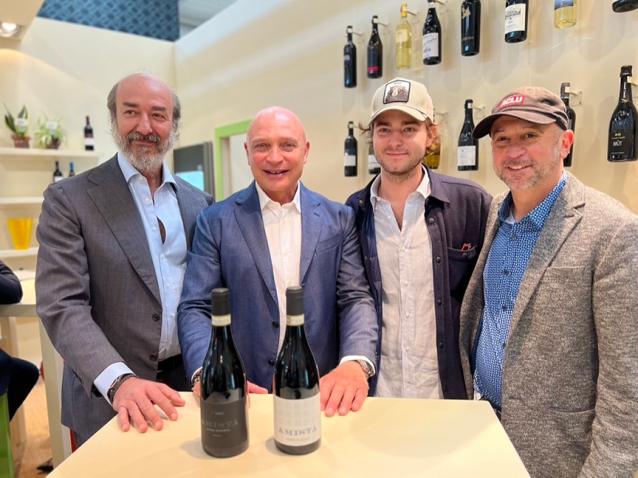
That’s Luca (below, second from left), with Amistà owner Michele Marsiaj (far left), Michele’s son Iacopo, and me (far right).

I couldn’t be more thrilled to be working on such an exciting project. And getting to interact with Luca has been the icing on the cake.

Hopefully, I’ll be accompanying Luca to NYC in early 2024 for some special tastings. I can’t wait!

Je t’aime. Moi Nous non plus. Jane Birkin and how our band got its name.

On Sunday, two days after Bastille Day (and my birthday), the legendary actor and singer Jane Birkin passed away. See the Times obituary.
I first became aware of her work when I saw Antonioni’s 1966 film “Blow Up” when I was a grad student at U.C.L.A.

But it was many years later that I discovered that she was the female voice in Serge Gainsbourg’s epic 1969 song, “Je t’aime.” (Brigitte Bardot was the singer on the original first version of the track. But a second track, the one that was released commercially was produced with Birkin; read the Wiki on the song.)

Serge Gainsbourg was arguably the greatest inspiration for my band. Our songs, nearly all in French, are mostly about sex and the dialectics of amour (I’ll just euphemize it like that) — à la Gainsbourg.

In 2005, after we kicked one of the singers out of the band, we were forced to change the name thanks to a federal court trademark case. Yes, it’s where the expression comes from: he made a federal case about it.

After what seemed like endless discussion and parsing of potential band names, it was Jean-Luc (aka Dan), I believe, who suggested we borrow it from the title of Gainsbourg cut where Birkin appears.

She moans (and feigns orgasm) as she says “je t’aime” (“I love you”).

He responds not by saying “moi aussi” (“me, too”) as one would expect.

Instead he tells her, “moi non plus” (“me neither”).

To French speakers, the malapropism is immediately apparent. And in many ways, it captured the newly unbound culture of sexuality of the era, of which Gainsbourg and Birkin were both icons in their own rights.

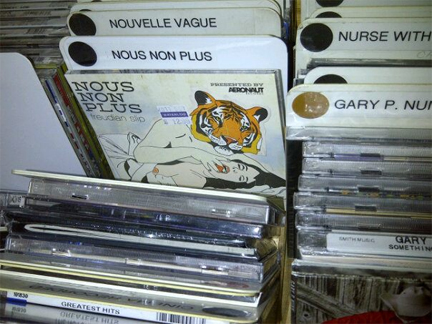
And so, in an allusion and nod to our music heroes, we called the band Nous Non Plus (“us/we neither”). The paronomasia also reflects the fact that we could no longer call our band the original name — neither do we, so to speak.

Rest in peace, Jane. Your life was an inspiration to so many of us and your work brought joy and thought to so many of our artistic pursuits!

Stop calling Barbera the “wine of the people”! We no longer live in a classist wine society!

Above: Barbera was featured as one of Italy’s greatest grape varieties in Giorgio Gallesio’s landmark work of ampelography, published in the early 19th century.

It’s hard to believe in this day of growing wine awareness, appreciation, and enthusiasm.

But it’s still not uncommon to encounter wine professionals, including wine industry institutions, who continue to call wine made from Barbera the “wine of the people.”

Roughly a quarter century after the Italian wine renaissance began (1998 is the year, in my view, of the shot heard round the world), it’s unfathomable and entirely unacceptable that we continue to divide wine lovers into “haves” and “have-nots.”

Let’s put it this way, if Barbera were in fact the “wine of the people,” are other wines reserved, intended, or conceived exclusively for nobility and the managerial classes? If that were the case, shouldn’t the classist-minded among us call it the “wine of the proletariat”?

Joking aside, haven’t we outgrown this caste-driven view of the wine world?

Historically, Italy’s aristocracy and haute bourgeoisie preferred French wines. Cavour, the Piedmont noble and first prime minister of Italy, wrote that he didn’t believe Italian grape varieties could reach the same heights as Pinot Noir. The Incisa della Rocchetta family, also Piedmont nobility, famously planted Cabernet on their horse ranch on the Tuscan coast. The producers of what would become Sassicaia drank Bordeaux-style wines while the local Tuscan cowboys drank Sangiovese, or so the legend goes.

In the early 19th century, Ligurian botanist Giorgio Gallesio devoted ample space to Barbera in his landmark work of ampelography and Italian botany Pomona italiana. Only the fig tree received more face time. Nebbiolo is a footnote by comparison.

Gallesio’s love of Barbera was echoed loudly in another seminal work of ampelography, Ampélographie universelle, by the great French viticulturalist Alexandre Pierre Odart, who describes Barbera as one of the best grape varieties in Italy. With evident and warm enthusiasm, Odart quotes Gallesio’s work and points to Barbera as a variety that growers, French and otherwise, should know.

Before you call Barbera the “wine of the people,” please remember that we — rich or poor — are ALL people. It’s just that only some people know how good Barbera can be.