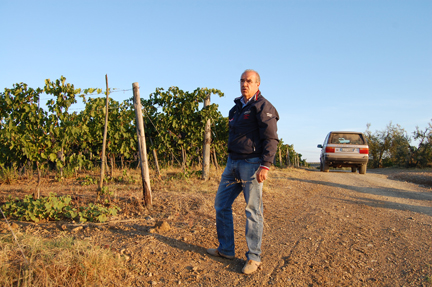
When we met and tasted in the days leading up to harvest, he told me that he had sent a request to the Italian agriculture ministry asking them to clarify a technical point. If no restriction on emergency irrigation is mentioned in appellation regulations, he inquired, can it be allowed in extreme situations (even though it’s not prescribed in the appellation regulations)?
Today, Laura Gray, author of Il Palazzone blog in Montalcino, reports that “We just received word via the Brunello Consortium that the Ministry for Agriculture published a circular (number 6858 – 19 April 2013) clarifying that irrigazione di soccorso (emergency irrigation) is permitted for DOCG, DOC and IGT wines when this is not mentioned in their disciplinaries.”
The sky was partly cloudy yesterday, the temperature in the mid 70s, and there was gentle rain as I rolled into Houston from Austin on a early spring evening around 6 p.m.
It was a perfect storm: between the mild heat, the intense humidity, and the heavy Texas pollen, there was no way that I was going to avoid a major allergy attack.
By the time I managed to find a seat at one of my favorite Houston by-the-glass wine programs (which will remain nameless in order to protect the innocent), tears were literally rolling down both sides of my face and I had already retired one of the cloth handkerchiefs that I carry with me (these days, I make sure to have two on hand at any given moment).
It was nothing that a crisp, cool glass of Roter Veltliner, with a wonderful spearmint note, and a steaming bowl of Nova Scotia mussels couldn’t clear up in a matter of minutes.
Until…
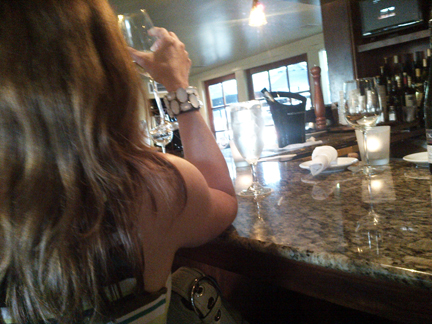
An attractive, middle-aged woman joined a party sitting to my left, taking the seat in between me and her friends at the crowded bar.
The fragrance she was wearing was SO aggressive that it dominated even the marine aromas of the mollusks. And my lovely Roter Veltliner, with its gentle herbaceous nose, was sent adrift in a sea of chemically induced “honeysuckle.”
It was as if her fragrance were shouting SHOUTING at me.
I later discovered, feigning that my wife “might enjoy her perfume,” that the lady in question had just applied — and very generously, I may add — a lotion from Bath and Body Works, not an item “you can find on the shelves,” I was informed, but a special order item for which you must “be in the know.”
I’ve never been one to curb personal freedoms but is intense perfume or fragrance really necessary when you visit a fine dining venue?
The city of Houston still allows outdoor smoking areas in restaurants.
My thought would be to abolish the cigarette ghettos and banish the heavily perfumed to their own section outside.
As the French lover once exclaimed, after being trapped in the perfume cabinet for a week hiding from a jealous husband, de la merde s’il vous plaît!
Above: Tench pâté, pike crudo, and marinated sardines by my current favorite chef in Italy, Vittorio Fusari of Dispensa Pani e Vini (located in the heart of Franciacorta).
Let’s face it: Vinitaly — Italy’s annual wine trade fair in Verona — isn’t exactly known for the seamlessness with which it executes. Last year, the cellphone and wireless network were offline the entire duration of the fair (leading to utter chaos among fairgoers attempting to confirm appointments via text and email).
This year, a two-hour lunch event for Italian wine bloggers was delayed for an hour and fifteen minutes (supposedly because Daniele Cernili went overtime for his event in the same space). I was invited to the event and spent an hour chatting with my Italian blogger colleagues outside before I had to move on to my next appointment.
Above: Chef Fusari and Franciacorta consortium president and legendary bon vivant Maurizio Zanella.
But, man, when it comes to putting on a Vinitaly event, the folks from the Franciacorta Consortium sure know how to get it right.
Not only did the event “Franciacorta in Cucina: l’arte dell’abbinamento” (Franciacorta in the Kitchen: the art of pairing [food and Franciacorta]) start right on time, its entire execution was flawless, with superb food (by Vittorio Fusari), world-class waitstaff (from his restaurant), and an excellent speaker, Nicola Bonera, the consortium’s in-house sommelier (winner of Best Sommelier in Italy 2010).
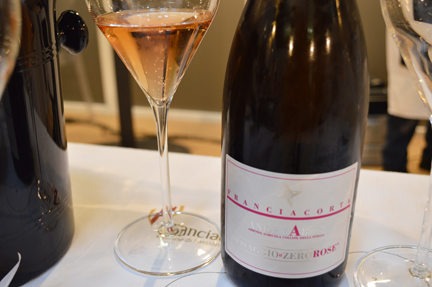
Above: The menu included five courses and five wines. My stand out was the Arici rosé, made by my good friend Giovanni Arcari who had invited me to the event.
I get invited to SO many events like this and I reluctantly accept, knowing that they’ll probably start late, go over time, and bore the guests with a speaker who talks down to the crowd like preschoolers.
Nicola’s spiel was impressive and engaging and I was thrilled by the insights he shared regarding disgorgement and varietal composition of the wines. Did you know, for example, that Franciacorta producers must include disgorgement information on their labels? This new regulation went into place three years ago. (Does anyone remember a high profile U.S.-based Italian wine writer calling for more transparency in disgorgement info last year?)
The event was nearly seamless… except for the fact that I had to request a dump bucket, which appeared a few minutes after my petition.
I still haven’t posted my photos and notes from the two visits that Tracie P and I made to Fusari’s AMAZING restaurant in Erbusco (and I will soon).
In the meantime, the moral of the story: when invited to a Franciacorta Consortium event, ACCEPT the invitation!
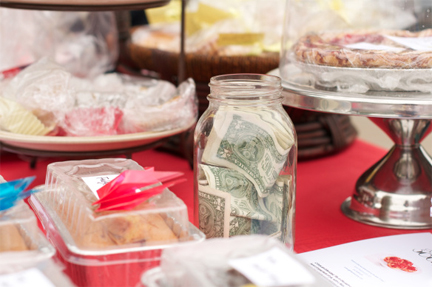
It’s being organized by Kathryn Hutchison, president of the Austin Food Bloggers Alliance (of which I am a card-carrying member) and its “goal is to raise $15,000 for West at or before Saturday’s bake sales.”
On April 17, 2013, an explosion occurred at the West Fertilizer Company storage and distribution facility in West, Texas, 18 miles (29 km) north of Waco while emergency services personnel were responding to a fire at the facility. At least 15 people were killed, more than 160 were injured and more than 150 buildings were damaged or destroyed. The cause of the blast is as yet unknown.
From the department of “good girls go to heaven and bad girls go to Italy”…
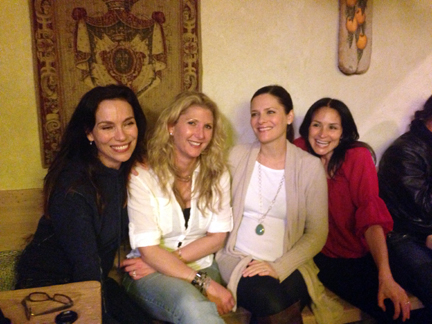
Just had to share this photo, sent by one of my best friends, of the “band wives” on the night of the first of two shows that my band “the Americani” played earlier this month in the village of Cison di Valmarino in the province of Treviso (Veneto).
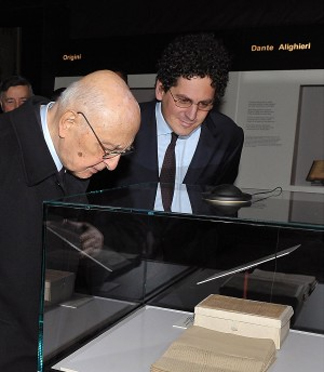
Above: Hamilton 90, the Boccaccio “autograph” manuscript, from the Staatsbibliothek in Berlin. Image via Quirinale.it.
In the world of rare books (a world I used to inhabit in my academic days, when I studied and wrote about Italian incunabula and humanist amanuenses), most “special collection” libraries observe the same protocol when two scholars request the same manuscript or codex on the same day: the librarians give the manuscript to neither.
One of the most notorious anecdotes from my days as a student of scribes was that of two illustrious Italian professors — one Italian, one American — who competed to discover the earliest autographed redaction of Boccaccio’s Decameron, in other words, his first “authorized” version of the work, transcribed in his own hand (a holy grail among philologists and paleographers like myself).
When the one professor discovered that the other was headed to the library in Berlin to request a viewing of the vellum, he raced to arrive before his colleague and he swiftly put in a request to view it as well. As a result, the librarians gave it to neither that day.
Ultimately, the one professor stole the manuscript, took it to Rome, had it x-rayed, and became the first to prove its connection to the fourteenth-century author. He replaced the manuscript before anyone noticed.
Not long after, the other professor killed himself.
That’s a true story.
There’s a saying in academics, the competition is so fierce and the enmity so ferocious because the stakes are so low.
One of the ugliest episodes in the history of oenography has been playing out over recent months, with Montalcino as its backdrop.
If you haven’t been following along, the Brunello consortium announced last week that it was expelling and suing one of its members for defamation. (Here’s a link to my post on the legal action; it includes links to my reporting of events that led up to the consortium’s move).
December 2012: Soldera’s winery is vandalized; six vintages purportedly destroyed.
December 2012: Consortium offers to donate wine to Soldera winery out of solidarity.
March 2013: Soldera accuses consortium of encouraging him to commit fraud when offering to donate wine; announces he’s leaving consortium; announces that he’s recovered a good quantity of wine and that he plans to sell it.
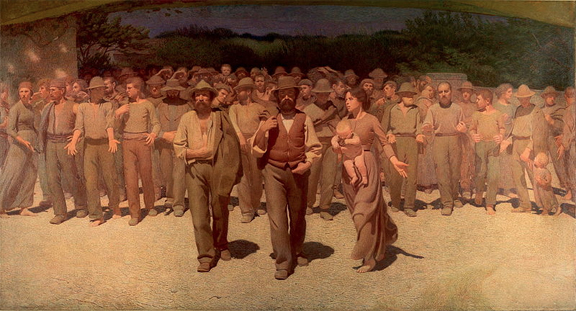
If GramsciPasolini Marx were alive today, he surely see the situation in Montalcino as a text-book example of his theories.
In the 1950s and 60s, Montalcino was still an agrarian economy, with a few patrician families — like Biondi Santi — who served as stewards of its production of fine wine.
In the late 1960s, “big wine” arrived: American-based Banfi set up shop, not to produce Brunello but rather to produce sweet sparkling wine (Moscadello di Montalcino).
In the 1970s, Soldera, a rich Milanese insurance broker, who was unable to acquire property in Piedmont, bought land in Montalcino and started to produce fine wine.
By the 1980s, Banfi had shifted to the production of Brunello and helped to make Montalcino as a brand in the U.S. through high volume and aggressive marketing.
There were many other players in this equation but these two more than any other reshaped the way Brunello was perceived beyond Montalcino’s borders. And in doing so, they changed the way that the Montalcinesi viewed themselves.
On the one hand, Banfi opened up the world’s largest markets to Brunello. In the 1960s, there were only a handful of Brunello bottlers. Today, there are more than 250.
On the other hand, Soldera transformed Brunello into an extreme luxury product, delivering bottles that fetched astronomical sums.
Along the way of this dichotomy, Montalcino passed from de facto feudalism to full-throttle capitalism.
And the tension that has come to a head here is, in many ways, a dialectic held taut by a battle between agrarian and capitalist values, with indigenous growers on the one side and outsider financial interests on the other.
Add to this mix that Soldera is generally considered a carpet-bagger (he is) and that his cantankerous personality and his unbridled egotism have won him few friends there. After years and years of acerbic commentary (public and private) from Soldera, it was only natural that a situation like this would arise (many in Montalcino predicted something like this in 2008, when it was rumored that Soldera had sent a letter to authorities igniting the Brunello adulteration scandal).
Let’s face it (and it’s high time that someone wrote this): when news broke that Soldera’s winery had been vandalized, many observers of the Italian wine world (myself included) couldn’t help but think, to borrow a phrase from Lennon, instant karma’s gonna get you.
Was the consortium right to sue him? It’s not for me to say or pass judgment.
Most on the ground in Montalcino believe that his “resignation” stunt in March was a means to let the world know that he had miraculously recovered wine to sell.
No one can know for certain. But the consortium and its members had to do something. If they didn’t, they’d be allowing the “broker from Treviso,” as the consortium’s lawyer has called him, to exploit their brand in the service of his own personal agenda (this is how many in Montalcino view the situation).
Does any of this matter? Maybe to Marxists like me. The bottom line is that the renewed controversy has only helped to keep Montalcino in the news. And as any public relations veteran will tell you, all news — even bad news — is good news when it comes to raising awareness of your brand.
These political acrobatics (as the New York Times has called recent developments) are remarkable: Letta, center left, has emerged as “bridge builder” from a seemingly intractable deadlock, with the support of the most vitriolic opponents on either side of the aisle.
Only in Italy, some have said, shaking their heads (myself included).
But it’s all part of our my fascination with Italy and the enigmas of its greatness.
In the words of the great Harry Lime, “in Italy, for thirty years under the Borgias, they had warfare, terror, murder and bloodshed, but they produced Michelangelo, Leonardo da Vinci and the Renaissance. In Switzerland, they had brotherly love, they had five hundred years of democracy and peace — and what did that produce? The cuckoo clock.”
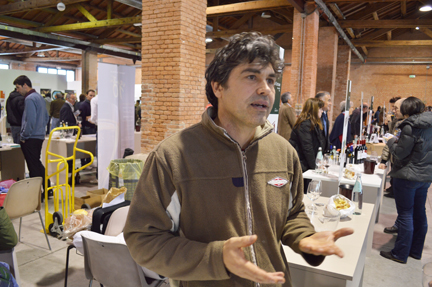
Above: While in Italy in early April, I tasted with my favorite producer of Gaglioppo, Francesco de Franco of ‘A Vita, at the Vini Veri gathering in Cerea. Next week I’ll post my notes from the fair.
After all, our friendship took shape over a glass of Garganega followed by a glass of Gaglioppo a few years ago in Brescia, Italy at the European Wine Blogger conference.
Since we launched our all-southern Italian wine list at Sotto in Los Angeles more than two years ago, my cohort Captain Wine and I have been preaching the virtues of Gaglioppo to our guests. We weren’t surprised that the 1997 Gaglioppo by Ippolito quickly became one of our top sellers.





 Do Bianchi