#TexasWineFreedom: Texans, please call our legislators and ask them to support a bill that would allow Texans to DRINK WHAT THEY WANT

The following post is taken from Wine Freedom Texas, a blog devoted to promoting Texans’ freedom in choosing the wines they want to drink. Texans, please call the numbers below and leave a message for our legislators asking them to support this bill. Its passage would be a monumental leap forward in freeing Texan wine lovers from the yoke of big business interest and its “ridiculously anti-competitive” hold over our state’s shipping laws, as the bill’s author, Dallas-area Republican state representative Matt Rinaldi, has called it it.

WINE FREEDOM FOR TEXANS
(House Bill 2291) – Updated May 2, 2017

Texas law bans its citizens from receiving shipments of wine from out-of-state wine stores, internet wine retailers, wine clubs and wine auction houses. [Texas Legislature] H[ouse]B[ill] 2291 would remove this ban and create a free market in wine for Texans and giving its wine lovers access to hundreds of thousands of wine now unavailable to Texans.

STATUS OF BILL

A hearing on HB 2291 was held on May 1 in the House Licensing & Administrative Procedures Committee. In testimony by Texas consumers, the National Association of Wine Retailers and the bill sponsor, Matt Rinaldi, committee members heard how consumers could not find the wines they want, how the current anti-competitive and anti-consumer law impacts consumers, and how HB 2291 would not harm Texas package stores. By contrast, lobbyists for Texas wholesalers and package stores testified that they ought to be protected from competition and that the bill was a threat to minors’ safety.

The Committee members did not vote to pass on the legislation to the full house at the May 1 committee hearing. The future of HB 2291 could take three possible paths: Committee members vote to kill the bill in committee, take no vote and let it die or vote to move the bill to the floor for consideration.

CONSUMER ACTION NEEDED

Call Key Committee Members. Now is the moment when committee members need to hear from Texas consumers. Call the committee members below and respectfully tell them you support HB 2291 and that you are calling to urge them to vote it out of the Licensing committee.

Chairman John Kuempel: (512) 463-0602
Rep. Ryan Guillen: (512) 463-0416
Rep. John Frullo: (512) 463-0676
Rep. Charlie Geren: (512) 463-0610
Rep. Ana Hernandez: (512) 463-0614
Rep. Abel Herrero: (512) 463-0462
Rep. Chris Paddie: (512) 463-0556

Read more here…

The Robert Parker conundrum: it’s never boring to sit down and taste with Robert Kamen

Screenwriter, grape grower, and winemaker Robert Kamen was in town last night for what’s become his yearly stop in Houston, where he always holds court over dinner at Tony’s, my friend and client Tony Vallone’s iconic restaurant.

I always have to pinch myself: how did I get here? I wondered as I hob-nobbed with some of the city’s leading politicians, oil moguls, and real estate developers, not to mention the man who gave the world wax on, wax off.

But wine has its unique way, I always remember, of connecting people from the most disparate walks of life. (And Tony’s generosity may have a little something to do with it, too.)

I also had the great fortune to sit down with Robert earlier in the day to chat about a wide variety of subjects, from the current political landscape to his cannabis advocacy, the latter a subject that he’s touched upon in every conversation we’ve had since I met him back in my NYC days in the late 1990s. When we first connected, he was just starting out and I’ve followed him and his wines ever since. I can tell you that the confabulatio is never dull!

One of things I was curious to ask him about was something that I view as an anomaly in the contemporary wine trade: on the one hand, you have a New York-born lefty writer cum Sonoma winemaker whose vineyard manager is California’s pioneer of biodynamic farming and whose wines embrace an Old World, acidity-driven and restrained style; and on the other, you have the wine world’s über-critic who regularly gives these wines 98- and 99-point scores, even though he historically tends to favor the big, bold, and powerful when it comes to his top-rated wines.

And let me tell you, folks: Robert Kamen is no Ann Colgin!

“I don’t give my wines to anyone,” said Robert referring to the fact that he doesn’t submit his wines to the major mastheads for review.

“I’m in the movie business and I’m critic-adverse,” he told me.

But when former Parker editor Antonio Galloni visited the estate some years ago and spent the better part of the day there touring the growing sites and tasting the wines, “I decided to give him the wines.”

And that legacy carried over even after Antonio departed from the storied publication.

Do the scores have an effect on sales? I asked Robert.

“In all the years that I’ve been making and selling wine,” he revealed, “only once did someone come into the tasting room and say he wanted to buy the wines because he was collecting ’98-point’ Cabernet.”

That’s the octopus with fiddleheads and favas that Tony served last night with Robert’s 2013 Cabernet Sauvignon. An awesome dish that danced with the lithe but meaty wine.

As the dinner wound down, I had the opportunity to speak with one of the city’s leading Republican politicians. We chatted about our shared view that Houston is the future of America: it’s the one great American metropolis, we agreed wholeheartedly, where left and right, blue and red, Democrat and Republican interact every day; and it’s also America’s most diverse city, where people from all parts of the world live and breath in harmony and civility (and if you don’t believe me, come see me please).

Only at Tony’s, I thought to myself, does a lefty like me (a native Californian and lapsed New Yorker) get to drink one of America’s best wines with a leading advocate for the right in one of the union’s most conservative states.

But then again, only Tony could serve octopus and Cabernet Sauvignon and make the food and wine dance so gloriously on our palates.

Click here to read the interview with Robert that I published this morning on Tony’s blog.

Post-frost outlook not as bad as it may seem, says former Barolo-Barbaresco consortium president Giovanni Minetti

Last week, late spring freezing temperatures damaged vineyards across northern Italy. Piedmont was not spared, writes Tenuta Carretta CEO Giovanni Minetti, my client, friend, and former president of the Barolo and Barbaresco Consortium. But dire predictions for this year’s harvest are premature and market panic is uncalled for and is best avoided, he notes. I received and translated the following email from him this morning.

Dear Jeremy,

I wanted to share my thoughts about the spring freezes that occurred last week over the course of two nights, Tuesday and Wednesday, April 18-19.

As far as weather phenomena go, this was an extraordinary event. It affected a wide surface area and it burned a series of buds that promised to deliver excellent fruit and a crop similar in quality to last year’s harvest.

The number one thing that makes me reluctant to comment on episodes like this is the media and writers who set about casting doubt on this year’s future harvest. The truth is that hail and frost during this time of year do not compromise the quality of the end product. But just try explaining that to people who have already read the news and committed it to memory. It’s hard to believe but there were even people who asked what the vintage would be like this year while the buds were still dormant!

Secondly, we need to look at the true extent of the damage, above and beyond the emotion of the moment. The quality of the grapes that will be produced will surely be greater than forecasted. At the moment, everything has been burned. But aside from the Nebbiolo, which was only minimally affected and suffered barely even a scratch, most grape varieties have base buds that are still fertile. This means that the plants will lose about 10-15 days in their growing cycle but they will also recoup about 80 percent of their production. You could say that this will actually save us a green harvest. Obviously, it all depends on what happens down the road. But you could say the same thing about every vintage.

Then there is the effect on wine prices. The excessive coverage of the damage (however probable but far from certain) immediately impacts the market by creating higher prices for bulk wines. In turn, this raises fears of shortages. That outlook immediately causes an increase in the price of grapes. That’s good for those selling. Not so good for those buying. It would be much better to wait until the dust settles, so to speak, so that market panic can be avoided.

Lastly, calls for government aid and a tendency toward self-pity have only caused damage to our agricultural economy. Luckily, things are starting to change. But there is still a strong desire to cry out for help in the hope that government institutions (and politicians) will be moved to the point of releasing funds in the form of emergency subsidies for lost agricultural income. But no one knows yet what the final production numbers will be…

These are the main reasons why I am reluctant to take part in this sort of collective apocalyptism.

Giovanni Minetti
CEO
Tenuta Carretta

Super Barolo a precursor of Super Tuscan? A note on the origins of “Super Barolo” labels from the 1930s and 40s

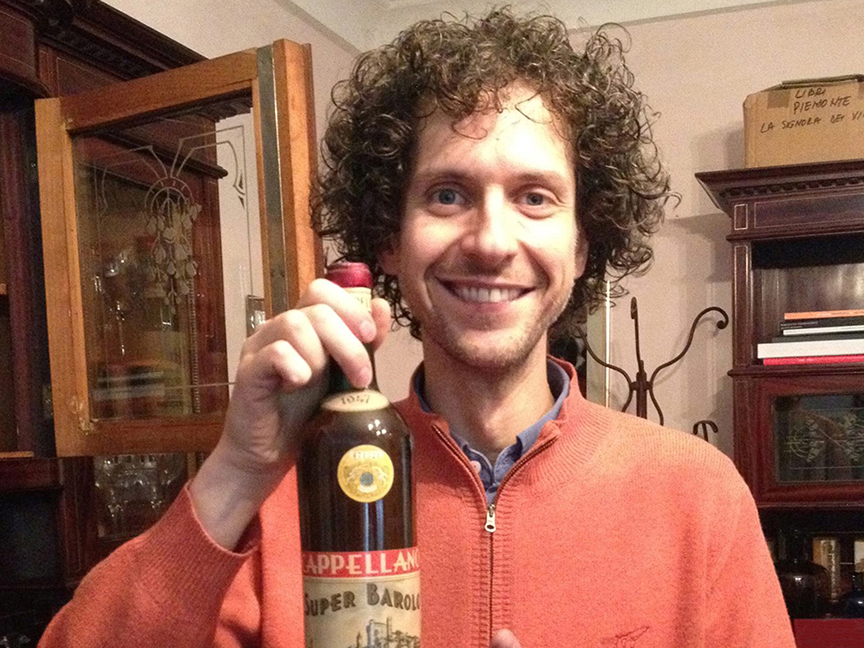
Yesterday I received an email from Barolo and Barbaresco collector and chronicler extraordinaire Ken Vastola asking me about the label on a bottle of 1947 “Super Barolo” by Cappellano. That’s Augusto Cappellano in the photo above (via Ken’s excellent blog), the fifth and current generation of the Cappellano Barolo legacy.

A reader, said Ken, “wrote to me to say he thought [the bottles] must be fakes because the word super wasn’t borrowed from English until much later for supermarket or perhaps super gas. Then I found that photo of Augusto [Cappellano] holding a bottle of it, so I think it must be authentic.”

“Then today, I noticed that in a Wine Atlas of the Langhe, there is a profile of Giacomo Conterno. It says: ‘the Conterno advertising slogan for the tenth Fiera del Tartufo in 1938 was ‘Conterno Giacomo – Produttori Vini – Specalità Super – Barolo – Monfortino.’ And they translate super in Italian into super in English.”

In his post, Ken also makes a reference to a 1935 Super Barolo by Cappellano.

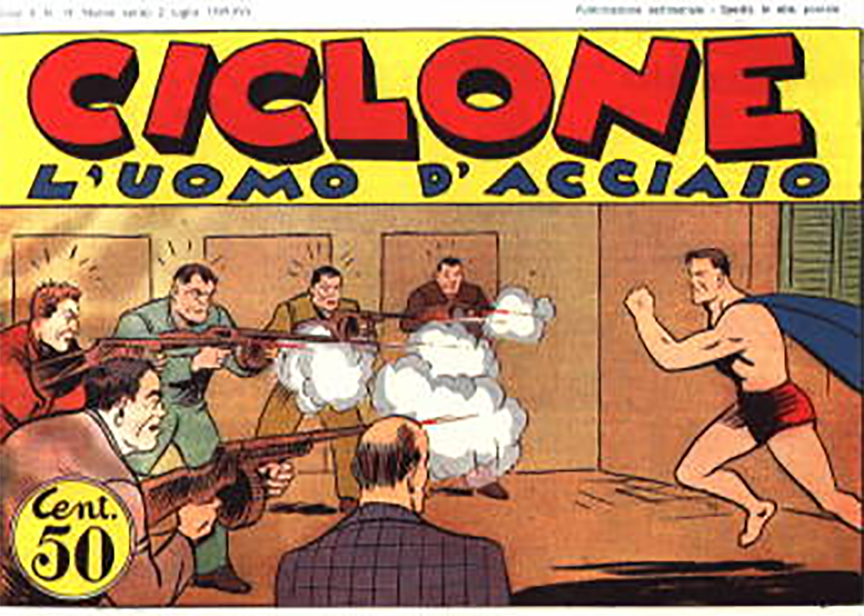
“So I wonder if this is an interesting topic for you: when did super make it into Italian and perhaps why? Could it have been the Superman comics which started in 1938?”

The adjective super, meaning above or excellent or superior, is a Latin word well known to Italians long before the 20th century. It comes from Latin superus, meaning above, upper, or higher.

But it’s unlikely that super Barolo was inspired by Superman. It’s true that Superman first appeared in the U.S. in 1938 and then in Italy for the first time in 1939. But the character wasn’t known as Superman in Italy until the 1970s. Although he appeared repeatedly in Italian cartoons from 1939 onward, he wasn’t associated with the name Superman until much later. While he had a number of names other than Superman, the uomo d’acciaio or man of steel seems to have been one of the character’s most frequently used nicknames.

This was probably due to the fact that Fascist-era censors (active during Mussolini’s reign, 1922-43) purposefully revised foreign media and they aggressively Italianized foreign-sounding words (so-called “linguistic purism” was a top priority for the Fascist regime).

But the adjective super was nonetheless highly popular during that period. Not thanks to Superman but rather to Nietzsche’s Übermensch (Uebermensch), the overman or super[hu]man.

I won’t go into the concept of the Nietzschean Superman here: check out the Wiki entry for background.

But Italian philologists point to a 1898 Italian-language book on Nietzsche and a 1899 translation of Thus Spoke Zarathustra as works that popularized the term superuomo or superman in Italy and Italian.

As early as 1905, the proto-Fascist lexicographer Alfredo Panzini noted that “this term, for however long it will endure, has swiftly achieved remarkable popularity, although in a mocking and derisive sense. It was first used to denote the followers of Nietzsche or those who boast of following his philosophy and then later it was used for persons who boast, by means of their ostentatious demeanor, words, or style of dressing, of belonging to a separate and superior humanity as opposed to common, wretched humanity.”

One of the intriguing takeaways from Ken’s post is that above and beyond (excuse the pun!) its Fascist-era origins, it may have been a precursor for the term Super Tuscan, which seems to have first appeared in wine trade marketing materials in the 1980s, although it’s still unclear who coined the designation. To my knowledge, no one has ever taken credit for it nor have I been able to identify its author.

Image above via Glamazonia.it.

Northern Italian frost update: mainstream media reports of severe damage trickle in

Above: vineyards affected by this week’s sudden frost in Franciacorta. Note the down-turned, wilted leaves (image by Dario Vezzoli).

Mainstream media reports of frost-affected vineyards across northern Italy are beginning to trickle in as grape growers assess the damage in the wake of this week’s anomalous freezing temperatures.

One Prosecco grower told me that even the “old folks” don’t remember a late spring frost like the one that occurred mid-week.

Making matters worse, the vegetative cycle had been accelerated this year by unusually warm temperatures in March and the young shoots were even more susceptible to the freezing temperatures.

In some northern Italian regions, there are calls for the government to declare a state of emergency.

According to a report published by Oggi Treviso, 30-50 percent of this year’s Prosecco harvest has been affected.

In a post by La Stampa Asti (the Asti edition of the national daily), at least one grower said that he had lost 25 percent of his crop (although anecdotal reports on social media seem to indicate that the damage may be much greater).

ANSA (Italy’s counterpart to the Associated Press) reported that in some areas in Emilia-Romagna, where temperatures reached -4° C., “60-70 percent of vineyards in an advanced phase of budding” have been impacted.

According to Il Giorno di Brescia, up to 40 percent of farmland in Franciacorta could be affected.

The editors of the Il Gazzettino Pordenone wrote that “Friulian agriculture is on its knees.”

Growers across northern Italy are bracing for more freezing temperatures expected tonight.

Breaking news: spring freeze in northern Italy could severely compromise 2017 vintage

The photo above is just one of a series posted today on Facebook by Asti grower Gianluca Morino.

“Such a widespread event has never happened,” he wrote in the post.

Freezing cold temperatures have been reported throughout Italy today and northern Italy seems to be the hardest hit by this unusual spring frost.

I’ve spoken to at least one northern Italian winemaker who told me that his harvest is going to be severely affected.

The only mainstream report I’ve been able to find so far appeared on PadovaOggi (Padua Today): “not everything is compromised but there will definitely be a drop in production,” said Federico Miotto, president of Coldiretti Padova, the Padua chapter of the Italian federation of wine and food growers.

He called the situation a “climatic anomaly,” noting that the freezing temperatures had “boiled” the shoots and leaves in vineyards in the Colli Euganei.

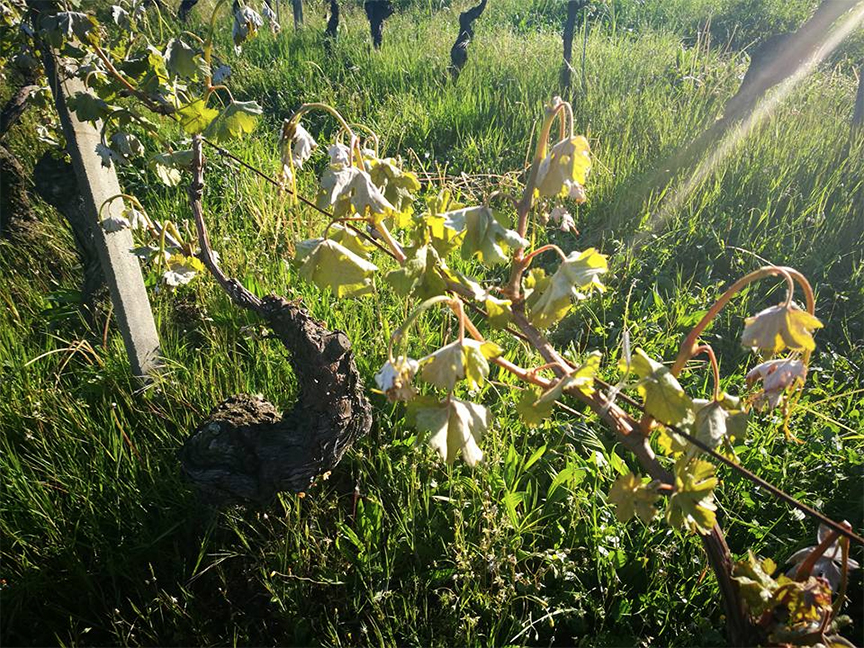
Spring freezes can interrupt the vines’ growing cycle when the young shoots (like the ones in the photo above) are extremely vulnerable to cold temperatures.

It’s too early to assess the extent of the damage but I will be following the story closely as it develops.

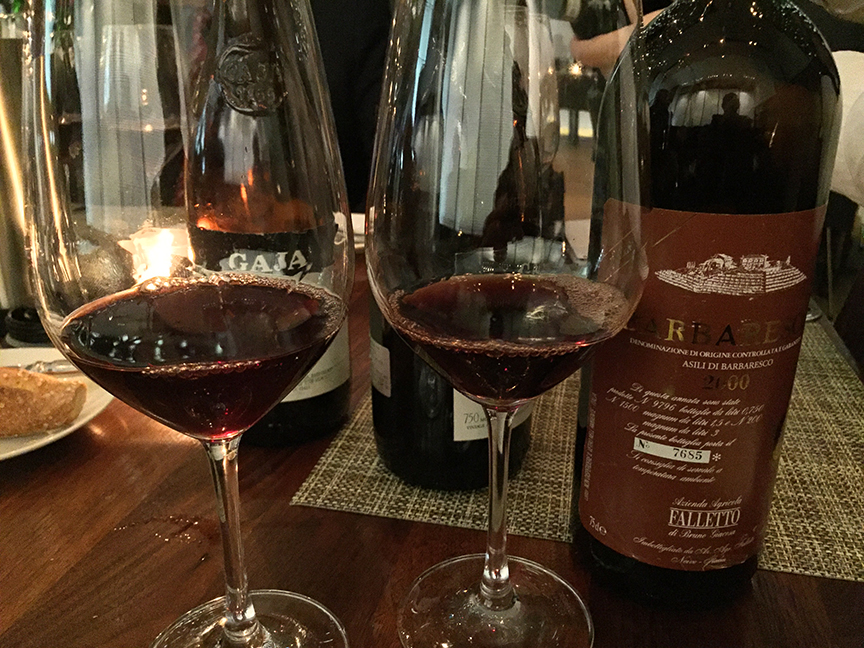
Bruno Giacosa 2000 Barbaresco Asili Riserva was stunning last night in Manhattan. Thanks again, Ken and crew…

From the department of “somehow, some way, I just keep drinkin’ funky ass wines like every single day (we gonna drink a Balthazar to this)”…

“Arriving or departing?” wrote my friend Ken Vastola, author of the excellent Fine Wine Geek, yesterday on my Facebook. He was commenting on a photo of Manhattan island that I had snapped as my plane touched down at LaGuardia.

In the PM that followed, he generously and graciously suggested that I stop by his table where he and a group of like-minded Nebbiolo collectors were opening some of their favorite bottles.

Not wanting to push my good luck, I only tasted five of the roughly 12 wines they were pouring before I headed off to dinner with an old and cherished friend. But, man o man, what wines!

Of those, the 1989 Gaja (classic) Barbaresco and the Bruno Giacosa 2000 Barbaresco Asili Riserva (above) were highlights.

The 2000 vintage is remembered for its warm summer and the ripe wines it delivered. Many Nebbiolophiles lament that it was overrated by the American wine media with inflated scores.

But this wine was a great example of how top growers and winemakers made extraordinary wines that year. I was blown away by how expressive this wine was, with rich fruit and remarkable freshness on the nose and in the mouth.

Thank you again, Ken and crew, for including me. That was such a treat!

Posting on the fly from the city this week… stay tuned. And if you happen to be in town, please come and taste my favorite Franciacorta, Arcari + Danesi, with me at Chamber Street Wines from 5-7 p.m. on Friday.

“I used to be a racist but racism’s just got to go.” A ray of hope in southeast Texas in Trump America

“I love you, man” were the first words I heard Tim utter when he finally reached me at the Shell I-10 Travel Plaza in Cove, Texas, a few miles west of Old River Lake, roughly an hour east of Houston where we live.

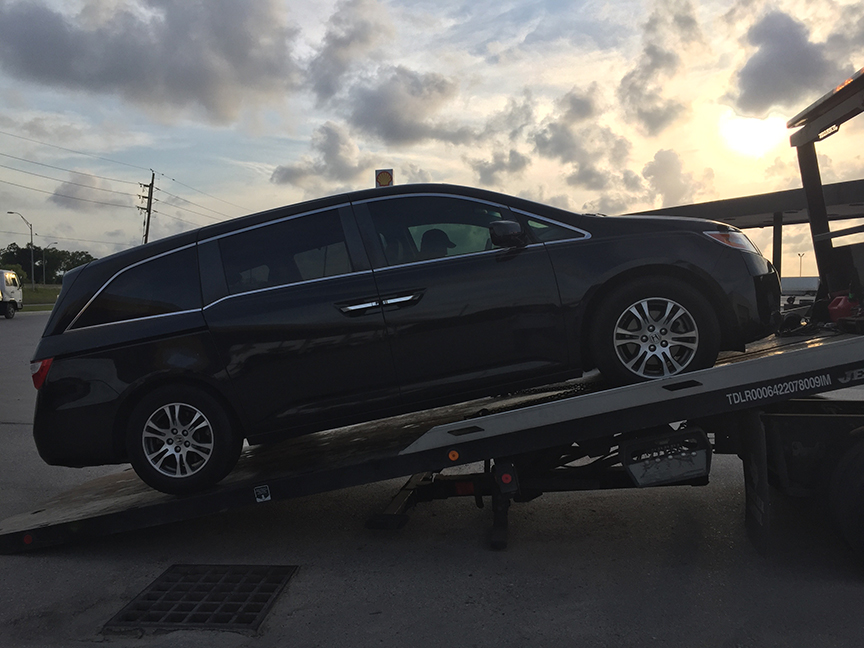
Tracie P, our girls, and I were in two cars caravanning back from our Easter with her family in Orange, Texas on the Louisiana border, when a faulty piston in our Honda minivan unexpectedly forced Tra to pull off the road at the first opportunity.

Luckily, it happened not far from the truck stop. We switched the girls’ car seats to my Hyundai sedan and their mother and they were delayed just a half hour before getting back on the road for home.

But I had to wait for Tim, the tow-truck man, for more than 3 hours at the Travel Plaza: an unexpectedly busy Easter Sunday had found him working his stretch of the interstate on his own and he had two jobs ahead of mine.

“Thanks for working with me on this,” he said with the unmistakable mellifluous drawl that you only hear in southeast Texas, where people eat and speak more like Louisianans than Texans.

“I had two tows that were emergencies and I knew you were already safe. I appreciate it, man!”

He held out his hand, blackened by the soot of the highway, and shook mine warmly.

After he secured the van on his truck’s bed, I climbed in the cabin with him. I was his last tow of the day and he was in a talkative mood. We had a nearly hour-long drive ahead of us back to southwest Houston.

“Where were you coming from?” he asked.

“Orange,” I said. “We had Easter with my wife’s family. She’s from there.”

“Orange, huh?” he asked, raising an eyebrow. “That’s not far from Vidor,” the notorious southeast Texas town that lies a stone’s throw from where my wife grew up in Orange, one of the strident holdouts of Jim Crow-era attitudes and a historic happy place for the Klan.

“Some of my guys won’t let me send them out there,” said Tim, taking a puff off of one of his Marlboro reds. “And I’m not just talking about black guys. Not even my Mexican guys will go out there for a tow.”

And then he said something that really blew my mind, something I never expected he would say.

“I used to be a racist,” he said almost proudly but earnestly and honestly, with an emphasis on used, so as to prompt my inference that he no longer was one.

Wow, I thought.

“But racism’s got to go!” he declared looking over at me from behind the wheel as we headed toward the Sidney Sherman Bridge where we would span the Houston Ship Channel.

His wife is originally from southern California and she’s an ex-service member, he explained. Her experience in the diverse workforce of the U.S. military had shaped her own attitudes about race and racism. And she wouldn’t stand for his racist beliefs and values in their marriage. And so he changed his ways.

“I used to be a racist. But racism has just got to go,” he kept on saying.

Though I gauged he may not meet an ACLU acid test for what racism is or isn’t, I believed him.

We talked for the entire trip, 47 miles to be exact. Historic racism in southeast Texas, contemporary politics (he’s an avid Trump supporter), and his love of the movie “Hidden Figures” were among the myriad topics. He highly encouraged me to see the film.

At one point, he told me that he often stops and helps stranded motorists even when he’s not on the clock.

“My wife says I’ve got to stop doing that,” he lamented. “She’s says ‘you get paid for this now.'”

“I just like to help people, that’s all,” he said. “The world would sure be a better place if we all helped each other.”

As we crossed over the ship channel, he pointed out the yard where he drops off his scrap cars. I was his last tow of the night and he was my last chance to escape the forgotten bayous of Old River Lake and make it home to my girls.

I think that he enjoying seeing Georgia and Lila Jane as much as they marveled at watching him unload our Honda Odyssey in front of our house.

“They are so damn cute,” he said. “Are they spoiled rotten?”

The sun was also setting over southeast Texas as Tim headed back to the Sidney Sherman Bridge and Tracie and I put them to bed.

Thanks for reading…

Happy birthday Cristian! Happy Easter to everyone…

My friend Cristian Specogna (below), one of the Italian winemakers I admire most, turned 30 yesterday.

To mark the occasion, his fiancée Violetta asked friends from around the world to share video wishes. And so I made him this musication, as we call it in the Parzen family (above).

Happy birthday, Cristian! Now more than ever, the world needs honest, earnest, and genuine growers like you. In your three decades on earth, you’ve accomplished so much, often in the face of adversity. I’m looking forward to the next chapters and the many delicious wines I know you will share with us.

And I wish you and Violetta a lifetime of joy and prosperity.

Happy Easter, everyone… Have a great holiday and see you next week.

My Easter brunch wine recommendations @HoustonPress

Wishing everyone a happy Easter and Passover! I’ll see you next week. Thanks for being here and have a great holiday…

G-d bless America, home of the brave, with its high-alcohol, oaky fruit-bombs bursting in air.

For more than a generation, we Americans have embraced a “big” and “bold” wine style and tasting profile that lean toward intense and concentrated fruit flavors, oakiness, high alcohol levels, and low acidity. That’s because we Americans are bigger and bolder and better than anyone else on the planet. And it only makes sense that we build our walls bigger and bolder than any other country’s and we make our wines with higher alcohol than any other country’s.

But when it comes to Easter and Easter Sunday brunch, we can make America (drink) great again by serving wines that make more sense: wines with lower alcohol, higher acidity, and more balanced fruit flavors that are calibrated by savory tones and a more judicious use of oak aging.

Click here to continue reading my Easter brunch wine recommendations for the Houston Press…