Whoa California wine! Skyline Ridge, Santa Cruz Mountains…

What a revelation for me to tour and taste through Skyline Ridge in the Santa Cruz Mountains yesterday!

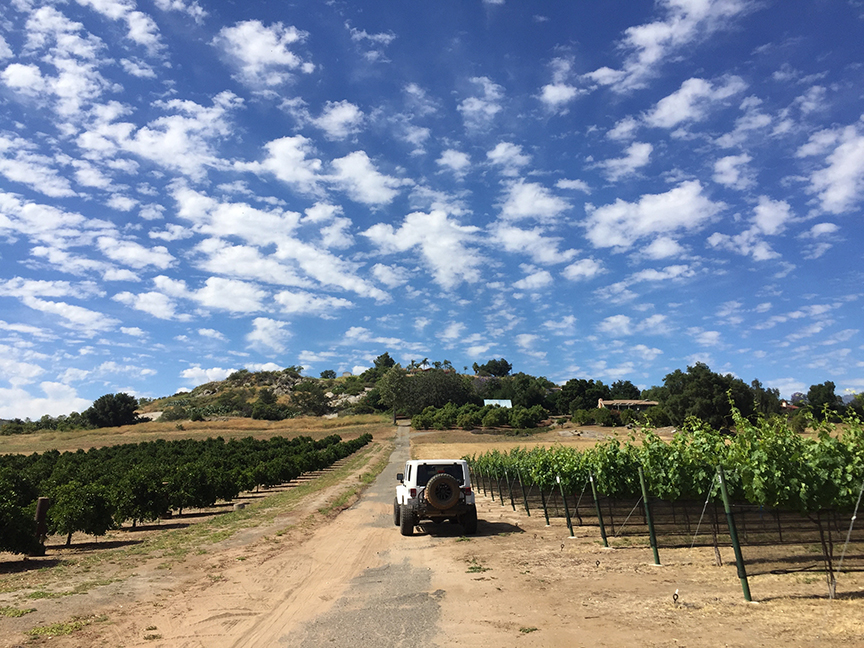
So much of California wine is known for its manicured character. But up on the ridge that looks down to the east on Silicon Valley and to the west out to the Pacific Ocean (about 15 miles away), the landscape is wild and untamed.

It blew me away to find such robust mountain viticulture here. It certainly wasn’t what I was expecting.

It was also really interesting to see the San Andreas fault here and learn how the collision of the tectonic plates brought ancient marine bed to the surface.

I’m spending the next few days between Sonoma and Napa working on a new project that I am really exited about. It’s a little too early to reveal it yet but stay tuned.

Thanks to everyone who tasted with me and showed me around yesterday. There is a soulfulness to the place and the people here and it definitely comes through in the wines.

That’s all I have time for today. Now it’s time to hit the road again, taste, and tread through some more vineyards…

My 50th birthday concert in La Jolla and my client Ceci in the news

I was born on Bastille Day, July 14, 1967. To this day, my mother still claims that she heard La Marseillaise on the radio as she was heading to the hospital to deliver me into this world.

Ever since I was a kid and discovered the Beatles, I wanted to be a guitar player and a song writer. And by the time I was in high school, I was already playing and singing in rock bands with my friends.

I was 20 years old when I co-wrote my first song to appear in a major motion picture. But it wasn’t until I was in my 30s that I really made a mark in independent music.

During my decade in New York, two French-language bands I played with and wrote songs for — Les Sans Culottes and Nous Non Plus — were headliners in the downtown indy rock scene. In 2003 we opened for Ringo Starr and Norah Jones at the storied Bottom Line in Manhattan. And in 2006, after licensing a number of songs to television shows and movies, Nous Non Plus had a college radio hit record. We stayed in the top 10 for four weeks.

You could say that I was born to be in a French rock band.

This year for my birthday, I won’t be performing with my old bandmates, now scattered across Europe and the U.S.

But I will be playing a set with some of my best friends in La Jolla, California as I celebrate my 50th birthday.

On Friday, July 14, 2017, we will be rocking out at Beaumont’s in Bird Rock on La Jolla Blvd., one of the rowdiest clubs in San Diego (no joke).

If you happen to be in San Diego that evening, please join me to celebrate my half century on this planet. It’ll be a super fun night. Stay tuned for more details.

In other news…

My newish client, Lambrusco producer Ceci, was in the news last week.

Click here to read an interview with legacy Parma producer Alessandro Ceci (below) in Grape Collective.

I connected with Alessandro and the Ceci family thanks to their consulting winemaker, Nico Danesi, one of my best friends in Italy and arguably the best classic-method producer in the country right now (I’m biased, of course, but there’s no question that Nico’s Arcari + Danesi Franciacorta and SoloUva Franciacorta have set a new benchmark for the appellation).

The Ceci are ramping up their presence in the U.S. with a growing presence in New York City and a new California importer coming online in just a few weeks.

The wines are great and I can’t recommend them highly enough. Taste them and I know you’ll see why they stand apart from the crowded field of Lambrusco today.

All in all, it’s looking to be a pretty good summer. Thanks for reading and I hope you’ll come out to celebrate with me and my friends on Friday, July 14 in La Jolla. Tracie P will be there that night as well.

Lidia Bastianich speaks of the immigrant experience in Houston and Drunken Cyclist leads a great rosé tasting

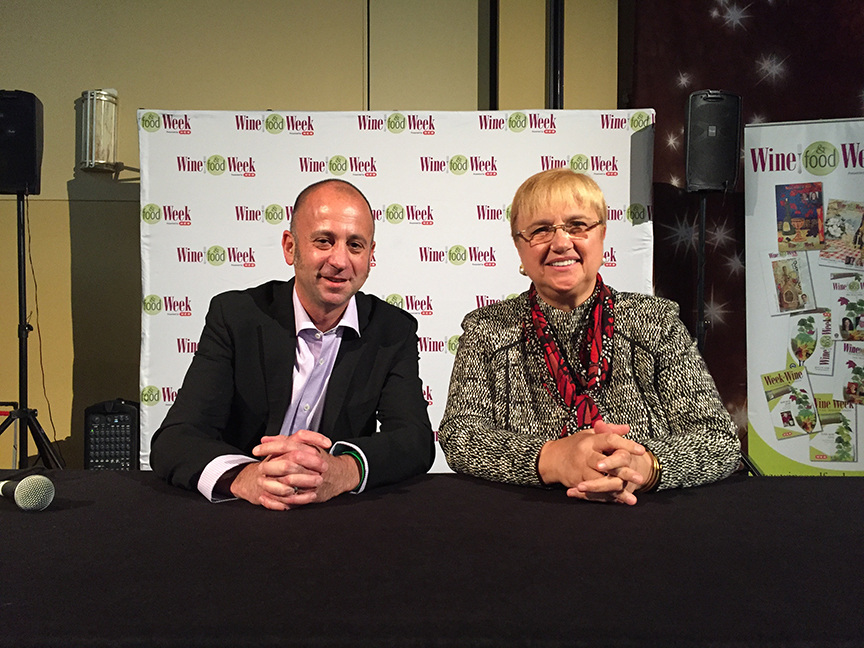
Given the current political climate, it was all the more moving to hear legacy restaurateur, chef, and author Lidia Bastianich talk about her own family’s experience as immigrants in this country last night at the Wine and Food Festival in the Woodlands, a swank northern suburb of Houston.

I had the great pleasure of introducing her and moderating her Q&A.

Festival-goers were eager to pose for selfies with an original American food celebrity who has reshaped the culinary landscape in this country and achieved unrivaled success without ever forgetting her humble origins and beginnings.

She also talked at length about the origins of Italian-American gastronomy and how it reflected the lives of early Italian immigrants in this country.

No reference to politics or policy was made. But her even, just slightly accented English spoke volumes.

Lidia, thank you for coming to Houston and your brilliant talk. You make our city an even better place when you join us here. I couldn’t have been more thrilled to be part of the evening.

Earlier in the day, I had been invited to join a fantastic blind tasting of domestic “true” (as opposed to saignée) rosés by the Drunken Cyclist, aka Jeff Kralik, an east coast emigré who recently immigrated to my adoptive city.

Our lively group of Houston-based bloggers romped through a flight of no fewer than 29 American rosés that had been culled together by Jeff especially for the occasion.

Gary Farrell and Rodney Strong were the top scorers but considering the brio and spirit of camaraderie, I’d say that the real winners were the tasters themselves.

Thank you, Jeff, for making me part of it (and for the rocking playlist). I can’t wait for the next time you and I sit down in front of a flight of great wines.

All in all, it was a pretty swell day our city, where we are enjoying unseasonably mild weather.

But the sweetest moment yesterday came together when Tracie P took a break from her skin care business to join me and the girls for our morning outing at our newly refurbished planetarium.

Our daughters love navigating space as much as I do. But there’s no other place that I want to be than Houston, Texas…

What scares me in #TrumpAmerica: white people…

The sky was beautiful in Houston last Sunday and the early summer heat and humidity not overly oppressive.

And so the Parzen family decided to take an hour-long drive from our home in the southwest of our beloved megalopolis up Interstate 45 to Huntsville to visit the 67-foot-tall statue of Sam Houston.

The weather was so nice that a walk in the woods seemed like a great idea. And anticipation of a two-patty cheeseburger at a friend’s food truck in nearby Magnolia only sweetened the recipe for a great Sunday morning spent with my wife and two daughters, ages three and five, in the Texas sunshine.

It had been one of those great mornings that families cherish until we walked out of the lovely visitors center there to discover the truck above, parked conspicuously and unavoidably right across the small lot from our Honda Odyssey mini-van.

Our daughters don’t know yet what a Confederate flag is or how it represents a legacy of hatred and racism borne out — falsely, blasphemously, and slanderously — in the name of Jesus Christ.

And what about the sweet, gentle young African men, also visiting the statue? They had handed us one of their phones and asked us to take a photo of them, arm in arm, standing beside the gigantic Sam Houston head below.

Their broken English betrayed their newness to our country. I could only wonder whether or not they know what that flag means and why someone would affix it to her/his truck as an expression of personal ethos.

As the father of children who share my Semitic heritage and a free citizen of the United States of America, I am compelled to speak out against such despicable and rancid displays of so-called white supremacy in public view.

And I will not stand for or beside those who claim that the flag is an innocuous anachronism embraced by re-enactors and celebrants of southern American culture and history. It’s not. It’s a symbol of institutionalized hatred and intolerance — plain and simple. And people who display it publicly do so to instill fear in those who don’t share their own heritage and color.

No, I’m not afraid of Muslims who live in my country or terrorism in Trump America. I’m not afraid of brown people taking way jobs from me or my children. I’m not afraid of black people who live, work, and raise their families side-by-side my wife and me in Texas.

No, none of those things scare me. It’s the white people in Trump America who scare me. The white people who propagate hatred, however subtly or bluntly, through their embrace of hateful icons. And I’m even more scared by the white people who don’t speak out and stand against their misguided sisters and brothers.

Waiter, waiter: please don’t put the cork on my table!

A restaurant professional recently told me that she had been instructed by a Master Sommelier (as in the Court of Master Sommeliers) to always place the cork on the guest’s table after extracting it from the bottle. She had been attending a seminar in the Society of Wine Educators “Certified Specialist of Wine” program.

I was really surprised to hear this. And so I looked up the Court of Master Sommeliers Service Standards wherein it is clearly states that the cork should be presented. But it also clearly states that the cork should be placed on an “under-liner” before being placed to the right of the guest on the table. In other words, it should be presented on a small tray.

The bottle is also supposed to be placed on an under-liner. And the last step of “standard service,” according to the document, is to ask the guest if the cork may be removed.

One of my pet peeves in casual wine service today is when servers: 1) smell the cork at the table before placing it on the table; 2) place the cork on the table without an under-liner; and 3) leave the cork on the table throughout the meal, sometimes accumulating more than one cork that can roll around precariously as the meal is served.

In casual wine service today, presentation of the cork is often an affectation of a practice that has little or no bearing on the guest’s enjoyment of the wine or confidence in the server’s ability and performance.

In another era, the cork was presented to the guest as evidence of the bottle’s provenance. Especially when serving older, rare, and expensive wines, authenticity is vital and the cork and the branding and/or printing on the cork are key elements in determining its provenance (I often get emails from auctioneers who ask me to review the text on corked pulled from rare bottles of Italian wine, for example; and btw, by branding I mean that the text is literally branded on the cork using a hot iron in some instances).

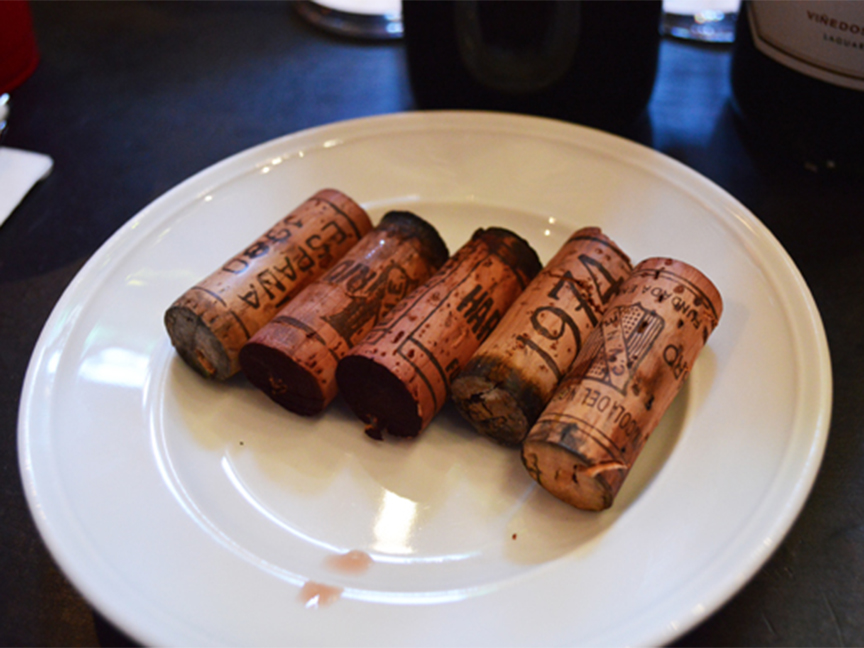
In the photo above, you can see the corks extracted from a flight of rare Italian wines at a lunch I attended in New York a few years ago. After the sommelier opened the bottles, he placed them on an under-liner and presented them to our party. After we examined them, he removed and reserved them in case we wanted to revisit them.

But when a sommelier is removing a cork from a bottle of young, fresh Cerasuolo di Vittoria or a current-release Bardolino, the question of provenance or authenticity is generally inconsequential. Over the course of a shift, a server or sommelier will remove a number of corks from youthful, inexpensive wines and the question of provenance should be resolved — in my view — before the bottle is presented to the table. When’s the last time you remember a guest in a casual restaurant inspecting a cork and saying, excuse me but this bottle of Pinot Grigio has a counterfeit cork in it?

The cork can tell you something about the fitness of the wine. But this generally only holds true when it comes to older wines.

More importantly, and this is one of the greatest misunderstandings about cork presentation in my experience, smelling the cork doesn’t reveal whether or not the wine is corked or otherwise defective or damaged. Just because a cork smells rotten doesn’t mean that the wine is corked. In fact, wine can be corked even when the cork is in perfect shape and vice versa, the wine can be in good health even when the cork is in bad shape. As I wrote yesterday, you determine the fitness of the wine by smelling the wine (and if needed, by tasting it). Not by smelling the cork.

I agree with the Court of Master Sommelier’s steps of standard service and I have the utmost respect for the court’s over-arching level of professionalism and the generally high caliber of its educational components.

But when it comes to wine service in casual restaurants and the presentation of young, fresh wines where the question of provenance and authenticity has little bearing, I believe that the cork shouldn’t be presented unless the guest expressly asks to examine it. And when it is presented, it should be presented exclusively on a small tray and the server should ask to remove it once the guest has inspected it.

The guest is always right, as the saying goes. And if a diner feels compelled to challenge the provenance of her/his current-vintage by-the-glass Pinot Grigio, then fair enough. But this anachronistic and — in my view — affected practice has no place when everyday wines are concerned.

Can a screw-cap wine be “corked”? Corkiness isn’t just cork taint.

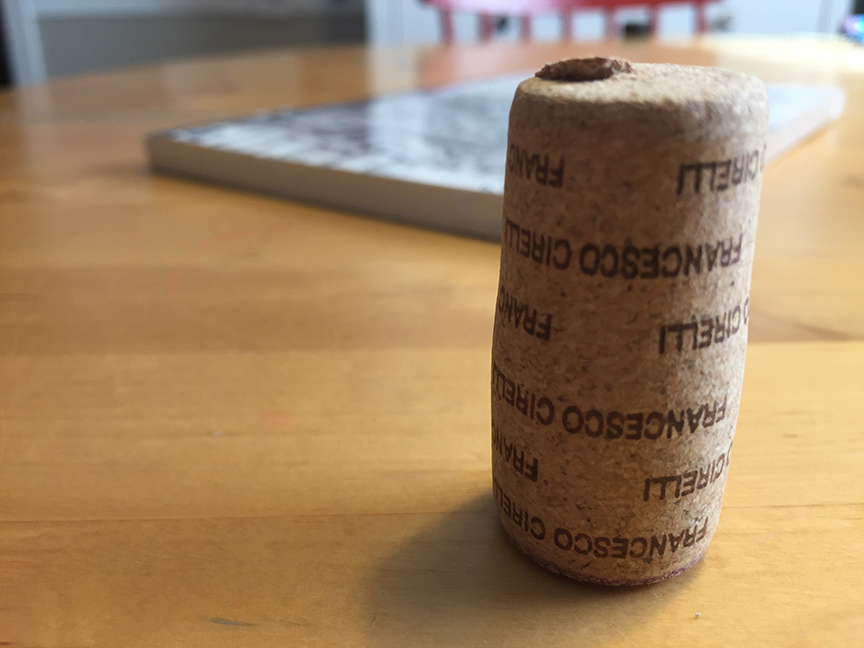
Francesco Cirelli’s entry-tier Trebbiano d’Abruzzo is one of our all-time favorite wines. Whenever the Texas allocation lands, the rep always jokes with our wine merchant: “Please let Jeremy and Tracie know. They’re thirsty!”

We buy it by the case and we serve and drink it as both an everyday wine and our Saturday night wine. That’s how much we love it. It’s varietally expressive and classic in style. And it’s one of the most wholesome wines you can drink in the under-$20 category.

But the other night we opened a bottle that was corked. We know this wine so well and drink it so often, that it’s easy for us to discern when it’s not right.

But how can a screw-cap wine like this be corked, when there is no cork involved?

Many years ago, one of my wine mentors and friends, Nicola Marzovilla, taught me that corkiness isn’t only about cork taint, in other words, the presence of the nefarious chemical compound TCA.

As Nicola put, corkiness can be about cork taint. But the more important telltale sign of a corked wine is the absence of fruit — even when there is no cork taint.

To borrow a line from another wine mentor and friend, Darrell Corti, wine is made from fruit and it should smell and taste of fruit. When it doesn’t, it’s likely that the wine is off.

The fruit aromas and flavors of a wine can be muted or even eclipsed entirely by cork taint. But there many other factors that can kill the fruit in a wine.

When I was first working in the wine trade in the early 2000s in New York, it was rare to see a bottled sealed with screw cap. Today, it’s commonplace. In some ways, you could say that it’s anachronistic to call a wine like this “corked.” But what would the contemporary wine lexicon be if not a metachronistic compendium of bygones?

One of the early problems facing winemakers who bottled their wines with screw-caps was that the seal would often break when the cases were stacked on top of one another. The weight and pressure of the bottles on top would compromise the seals on the bottles below. A lot of progress has been made in ensuring the sturdiness and integrity of screw-cap seals. But just a slight fissure, even invisible to the eye, can allow oxygen to be introduced into the bottle.

The same thing holds with cork because the tree bark used to make corks is a porous material that can allow small amounts of oxygen to be introduced into the bottle. And different types of taint — even TCA — can come into contact with the wine without affecting the cork itself. That’s why a cork-sealed bottle can be corked even when the cork doesn’t smell tainted.

Screw-caps have undeniably helped to deliver more robust fitness in wine today. But as I see it, opening a bottle of wine is always a gamble. It’s a wager that can reward the drinker with ineffable joy or disappoint with a broken and unfulfilled promise.

You win some and you lose some: this bottle is destined to donate its sugar for the sake of a salsa al pomodoro for pasta and to deglaze more than one sauté pan for chicken breasts and pork chops al vino bianco.

When food writing becomes a bully pulpit…

Last week, a prominent Houston food writer penned one of the most scurrilous posts I’ve ever read. In it, he upbraided a leading Houston legacy restaurateur with a venom generally reserved for the missives of jilted lovers.

In a world where content comes increasingly cheap and where even full-time food editors are paid barely livable wages, why is that the content creators employ such vitriol and stinging hostility in their writing? What’s to be gained other than clicks, ill will, and a degradation of the food community at large when a writer attacks a restaurateur or chef with such churlishness?

And why do the content creators have such little regard for the impact that their writing will have on the restaurateurs and their employees?

After all, it’s not a matter of defending or questioning President Trump’s wisdom in exiting the Paris Accord or imposing a travel ban on Muslims. Evidently, the stakes are higher.

The episode made me think back to my early years in New York when William Grimes — a writer I admire greatly — became the restaurant reviewer at the Times in the wake of Ruth Reichl’s departure in 1999.

In one of his earliest reviews, he panned the newly opened Colina at ABC Carpet, a high-concept and high-profile “rustic” Italian, giving it the paper’s lowest rating of “satisfactory” (“A Rural Italian Stage, a Complicated Script”).

A few short months later (and this was a few years before the Tragedy of the Twin Towers, when the New York restaurant scene was still booming and growing rapidly), the restaurant closed and all of its employees and investors were sent packing. Millions of dollars and years of planning down the drain.

By November 1999, Grimes had downgraded the rating for some of the city’s most beloved dining destinations.

“Mr. Grimes gave three stars to Daniel Boulud’s $10 million reincarnation of Restaurant Daniel,” wrote Frank DiGiacomo for the Observer at the time, “compared to the four stars that Mr. Boulud had been given by Mr. Grimes’ predecessor in the job, Ruth Reichl. On Oct. 20, Mr. Grimes demoted Charlie Palmer’s Aureole down to two stars from the three that The Times‘ Bryan Miller gave Mr. Palmer in 1991. In between, Mr. Grimes has awarded a flurry of one-star reviews — which have long represented mediocrity in this town — to such luminaries as restaurateur Drew Nieporent and Michael Lomonaco, chef of Wild Blue and Windows on the World.”

No one, it seemed, would be spared Grimes’ critical ire. And it was a watershed moment for food writing and restaurant reviews in the U.S.

Grimes told DiGiacomo:

    “Ruth hated the star system and was on record as not believing in it and therefore did an end run around it,” Mr. Grimes said of Ms. Reichl, now editor of Gourmet magazine. “Basically, one star had been abolished, and all sorts of restaurants were getting two stars, and the whole thing became sort of meaningless.”
    Mr. Grimes said one of his New Year’s resolutions was “to reinstate a valid star system in which the stars meant what they said and said what they meant. The one star’s purpose in life is to reward the good, solid neighborhood restaurant that’s operating at a high level, but is never going to be a Daniel.” At one point in the conversation, he characterized himself as “administering tough love.”

Grimes’ “tough love” ushered in an era of the self-righteous and morally puckered food critic in our country, when writers seemed to feel charged with and empowered by an ethical responsibility to unmask mediocrity to readers who couldn’t recognize it on their own.

But the waning of print media and the rise of the blogosphere and user-generated content in the years that followed the financial crisis marked the onset of winter for such high-handed arbiters of culinary excellence.

Scarcely a decade after Grimes’ review of Colina, Adam Martin wrote for The Atlantic: “the role of food critic has morphed from the kind of job one holds for decades, with increasing local power and seniority, to the kind of job one holds for a few years, before going off and doing something else.”

(I highly recommend Martin’s piece, “The End of the Career Food Critic,” to any aspiring food writer. It gives much needed historical perspective on the rapid evolution of food writing over the last two decades.)

In a world where there is no career for the “career food critic” as Martin put it, why do content creators still cling to such self-righteousness and self-fulfilling and self-propelled pseudo-moral authority?

What was there to gain when the Houston writer so aggressively assailed the restaurateur with little regard for journalistic standards or integrity? What purpose does food writing as a bully pulpit serve?

The answer beats me — literally and figuratively. And it’s one of the topics I’ll be covering for my seminars on food writing across the web at the University of Gastronomic Sciences next month in Piedmont.
There’ll always be an England while there’s a busy street…

Our souls shudder, our hearts ache, and our prayers go out today for our beloved sisters and brothers in England…

I give you a toast Ladies and gentlemen
May this fair land we love so well
In dignity and freedom dwell
While worlds may change and go awry
There’ll always be an England
While there’s a country lane
Wherever there’s a cottage small
Beside a field of grain
There’ll always be an England
While there’s a busy street
Wherever there’s a turning wheel
A million marching feet
Red, white and blue
What does it mean to you?
Surely you’re proud
Shout it loud
Britons awake!
The Empire too
We can depend on you
Freedom remains
These are the chains
Nothing can break
There’ll always be an England
And England shall be free
If England means as much to you
As England means to me

“There’ll always be an England,” song by Ross Parker and Hughie Charles.

Image via Michael Jeffries’ Facebook.

California wine on my mind: a study in two extremes…

Last week, over the course of 24 hours on the ground in Southern California (my dolce natio loco), it felt like I spanned the extremes of viticulture there.

On Tuesday evening, I tasted some of the extraordinary Santa Barbara-grown wines of Scott Sampler, a show business veteran who has been buying and bottling fruit since the 2012 vintage there under the Central Coast Group Project label.

On Wednesday afternoon, I toured vineyards in Valley Center (not far from where I grew up in San Diego) with winemaker and grape grower Chris Broomell whose family has been farming there for five generations.

Chris’ family started growing grapes, he said, in the era after the Second World War when ongoing drought made viticulture more lucrative.

Scott abandoned a robust career in entertainment to become a full-time winemaker.

Chris vinifies delicious, moreish, and highly affordable monovarietal wines for his family’s Triple B Ranches winery. I especially loved his gorgeous Vermentino.

Scott employs extended maceration times to make brilliant, jaw-droppingly beautiful expressions of Rhône Valley grape varieties that cost more than I can afford and sell out as soon as he releases them. I was blown away by his 2013 Grenache, Mourvèdre, and Syrah blend below and its ballerino’s balance despite its muscular alcohol.

Meeting and tasting with both winemakers was an exhilarating and eye-opening experience for me. In part because they each represent distinct and powerful voices in the new wave of California winemaking and in part because they share a vision of transparency in winemaking. And by transparency, I mean clarity and sincerity of fruit in their wines.

Chris and I talked a lot about the historic disconnect between California grape growers and winemakers. California is a great place to grow fine wine grapes, he explained (and we all know this to be true), but until the current generation, Californian winemakers have focused more on their work in the cellar than in the vineyards. When he returned from a year working in vineyards and wineries in Australia early on in his career, he said, he was nonplussed by the way California winemakers interpreted the fruit delivered to their cellar doors by local farmers.

Similarly, Scott seems to belong to a growing number of California winemakers who see their role as custodians or guardians of their fruit. He works with growers who deliver superb grapes to his cellar door and like Renaissance master Pietro Bembo meticulously transcribing the idiograph Italian poems of Petrarch, he appears (at least to me) more as a protector and defender of the berries than their interpreter or manipulator.

Both winemakers have looked abroad for inspiration. And both are making delicious and — in my view — thought-provoking wines, both for their historical perspective and their wholesome deliciousness.

And both of them have me thinking big thoughts. I’ll have a lot more California on my mind this month and the months to follow. Thanks fo reading and stay tuned…

The best tortellini west of Bologna: scenes from the new Rossoblu in LA (where I’m writing the wine list)

Perhaps the greatest compliment came from my friend Barbara in Emilia-Romagna, the region that inspired the menu at Chef Steve Samson’s new downtown LA restaurant, Rossoblu where I am writing the wine list.

When she saw that I had posted this image of the Rossoblu salumi board on my social media, she commented, “are you in Modena?”

I’m biased, of course: not only has Chef Steve been my friend for nearly 30 years (we met on our junior year abroad in Italy), but he’s also the chef/owner of the popular LA restaurant and pizzeria Sotto, where I’ve also been writing the wine list for the last six years.

I couldn’t have been more geeked to try the new restaurant and menu, which is based on recipes from his mother, who’s from Bologna, and the summers he spent their as a kid.

The recipe for the eggplant above comes from the kitchen of signora Valbruna, who still lives down the street from where Steve’s mom’s family lived in San Donnino in Bologna. I’ve sat at Valbruna’s table many times over the years! I even took Tracie P to eat with their family on our honeymoon: that’s how good her cooking is…

And that’s the big secret about Emilian cookery. There are many great restaurants in Emilia and most of the best ones are in the countryside. But nothing comes close to the home cooking. That’s where the real deal culinary magic happens.

I’ll never forget an evening from a couple of years ago when Steve previewed some dishes from the future Rossoblu menu at Sotto. His mother was in attendance, of course. She said she liked the tortellini but “mine are better,” she said (cue Jewish mother/Italian mother jokes here).

Steve’s tortellini were incredible last week. I’ve never had tortellini that good outside of Emilia. It was a sort of litmus test for him and he passed with rosso and blu flying colors, the red and blue of his beloved Bologna soccer club. Complimenti, Steve!

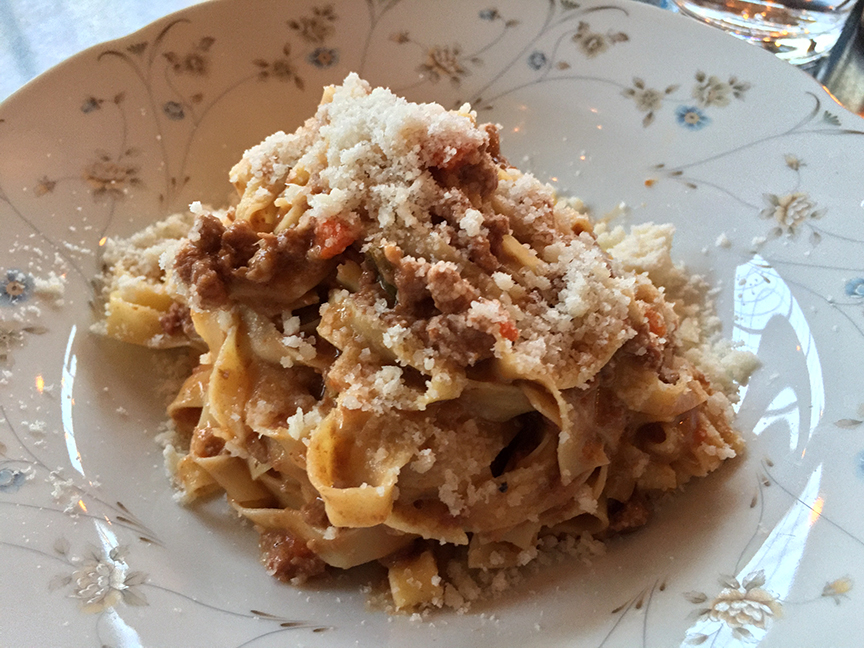
But as much as I was impressed with the tortellini, it was the tagliatelle al ragù that really wowed me.

The dish is the non plus ultra of great Emilian food and I have never — never ever — had tagliatelle this good outside of homes where I’ve eaten in Parma, Reggio Emilia, Modena, and Bologna.

What a great night and great meal at the new Rossoblu, which is still in the “friends and family” phase of opening. The official launch will happen next week.

Need a reservation? I know a guy who knows a guy…

The website is still a holding page but check out the Instagram and Facebook for updates and images.