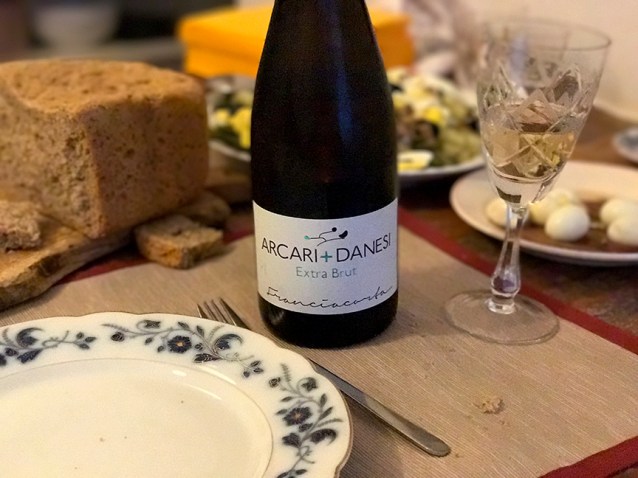
Arcari + Danesi 2011 Franciacorta Extra Brut 100 percent Pinot Noir disgorged May 2015

Just had to share a tasting note for this wine by my bromance Giovanni Arcari and his partner, another one of my best friends in Italy, Nico Danesi.

Giovanni and I were still a little blurry on Sunday after an epic day partying lakeside near Salò on Lake Garda the day before. But a late-morning start didn’t stop us from a quick visit to Giovanni and Nico’s cellar in Coccaglio (on the southern border of the Franciacorta appellation, below).

Giovanni generously hooked me up with a bottle of their 2011 Franciacorta Extra Brut for me to take to dinner on my last night in Italy. I was heading to Milan to meet one of my best friends from my University of Padua days, Stefano Spigariol, who’s also celebrating a milestone birthday this weekend. Our mutual friend Gavino Falchi, a Milan based architect and designer, was in charge of the menu.

The wine was made from 100 percent Pinot Noir grapes and was disgorged in May 2015.

Gavino was worried that the wine wouldn’t have the weight to stand up to the richly flavored Guinea hen that he had braised with porcini essence, olives, and nutmeg (note the vintage Richard Ginori plate he brought to serve this superb dish, below).

But, man, the chewy ripe red fruit character of the wine sang with the earthiness and fattiness of the fowl. We were all blown away by how the delicate fruit notes on the nose were transformed into such robust flavor in the mouth. And all the while, the wine’s freshness hadn’t been diminished a bit by the more than 24 months that had passed since being disgorged.

Giovanni and Nico have shared so many memorable bottles of their wine with me and my friends. But this was one of the most remarkable in terms of its glowing, brilliant fruit character. What a wine!

I’m so proud to count Giovanni and Nico among my closest friends: I’ve been giving them a hand this year marketing their wines in the U.S. and they should be coming to Texas by the fall.

I’m also blessed to have found such a great friend in Stefano so many years ago (nearly 30!). He and I share so many interests in literature, music, and critical theory. And our discussions with Gavino are always lively and thought-provoking as we enjoy Gavino’s superb homey cooking.

All in all, between teaching all week at the university in Bra, a dreamy day of eating and drinking by the lake with my Franciacorta crew, and an excellent confabulatio spent with my Milanese comrades over Giovanni and Nico’s wine, it was a pretty swell trip.

And dulcis in fundo, Tracie P and the girls are coming to pick me up this afternoon at Bush airport back in Houston.

Thanks for being here and see you on the other side…
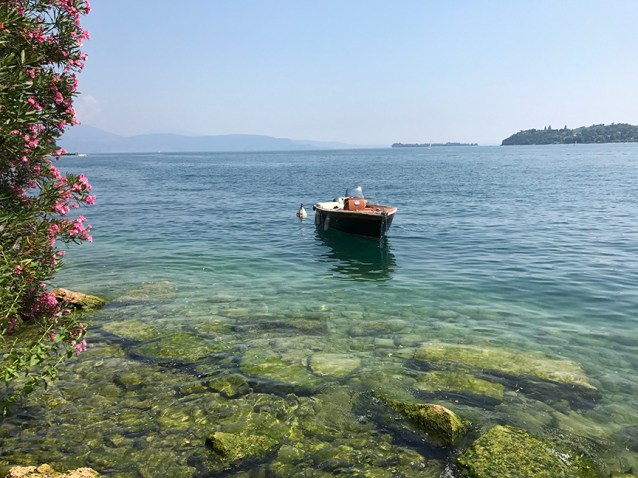
Partying with Tony on Lake Garda, catering by the AMAZING Gianni Briarava

I rarely indulge in what Tracie P and I call “day drinking.”
But yesterday, after my first morning dip into the chiare, fresche, e dolci acque (clear, fresh, and sweet waters) of Lake Garda, I couldn’t refuse the gin & tonic offered me by my lovely host Tony (see below) whom I’ve known almost as long as I’ve loved my Brescian bromance, Giovanni. It all went downhill from there.

A lot of Facebook folks have been asking me where I was partying on the lake yesterday: we were at Tony’s private rental house just outside the village of Salò, not far from the Palazzo Martinengo, where Mussolini’s secretary once ran the Italian Socialist Republic — the Fascist state established after the Armistice of Cassibile in 1943.
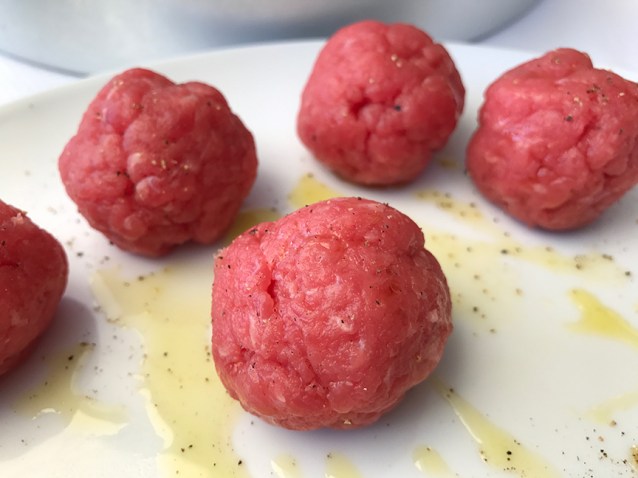
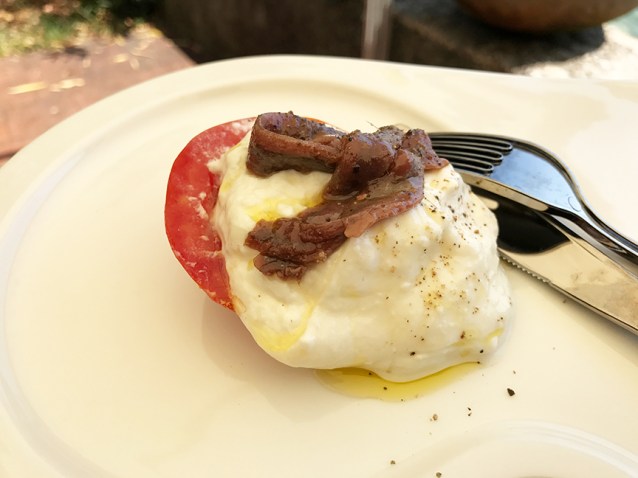
The catering was by the amazing Gianni Briarava, our friend and a Lake Garda legacy chef, winner of Michelin stars but now at the helm of the more toned-down Locanda del Benaco, a lakeside hotel and restaurant. I highly recommend it (it has a jaw-dropping 4.9-star rating on Google, btw; I can’t seem to find a website for the venue but that’s a good sign if you ask me).

Gianni is so rad: that’s his burrata with salt-cured anchovies and summer tomato. Let me tell you, folks, that was a game-changer dish on my palate.

Those are his battuto di fassona (Fassone [or Fassona] beef tartare) “meatballs.” Ridiculous, right?
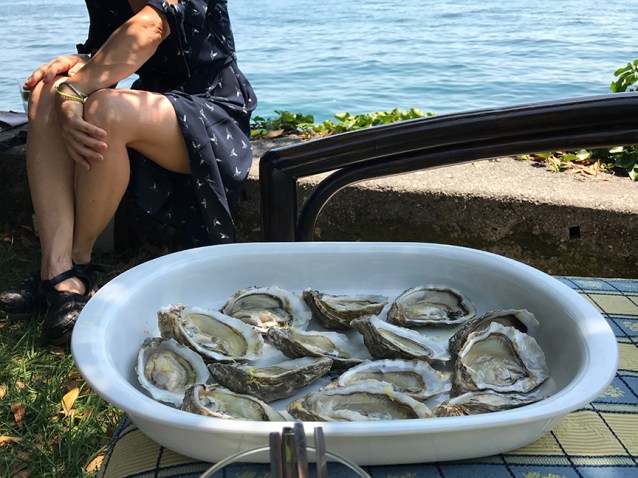
Brittany oysters paired brilliantly with Pasini Lugana metodo classico (“Trebbiano with a small amount of Chardonnay,” said the consulting enologist, who happened to be on hand).
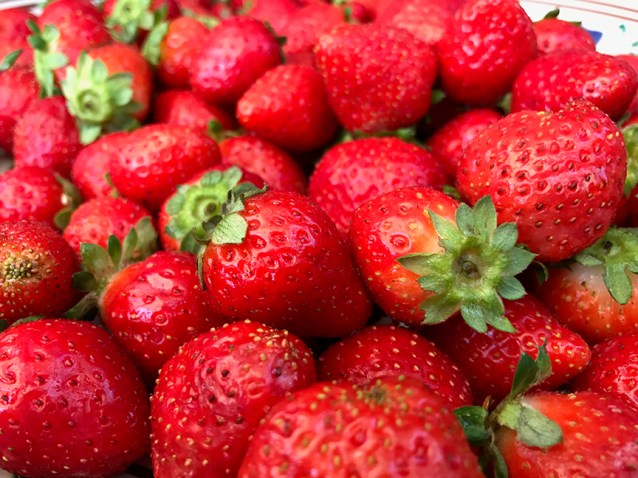
Locally harvested strawberries for dessert, among many other delights (I only wish I would have taken more photos, Gianni, but the party was too good!).
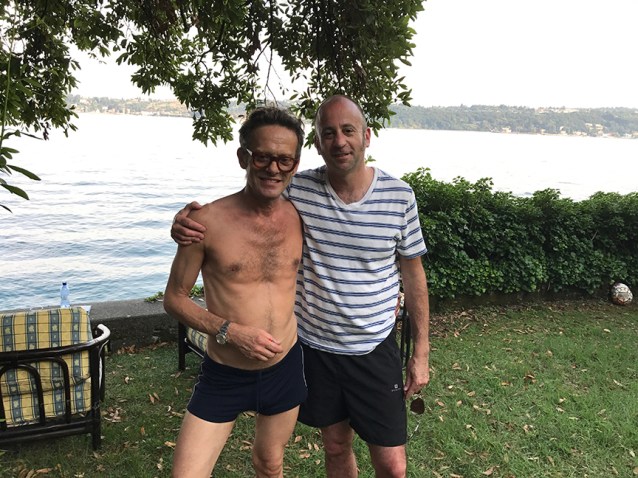
Tony, my friend, thanks for letting me tag along for your excellent birthday party. I can’t think of better way to get my own birthday week kicked off right. That gin & tonic was the best I ever had and I’m now heading home with the perfect tan…
See you on the other side…

The best school cafeteria? You’ll find it at Slow Food’s University of Gastronomic Sciences @UniSG

As much I as cherish my memories from my university days in California and Italy, I realize now that the cafeteria food really sucked back then.

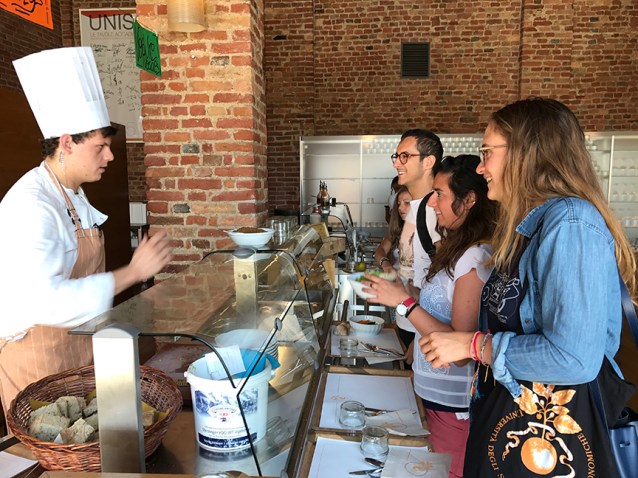
The grub at the University of Padua was, hands down, a lot better than U.C.L.A.’s. And getting the small plastic cup of wine that was served with your meal on Via San Francesco — red or white, optional — was pretty nifty. But it was still a far cry from the daily bread offered up in the chow line at the University of Gastronomic Sciences in Piedmont where I’m teaching this week.

Those are some of “Digital Age Food Writing” students yesterday, above. And the tray below was my own.

That’s tartrà on the right, a savory pudding made with eggs, onions, and herbs, a classic dish of Piedmontese country cooking.
And I know that my wife Tracie P will be glad to see that I got my daily allotment of freshly picked leafy greens! (Well, she already knows because we are constantly messaging each other throughout our days on either continent, but just the same a picture is worth a thousand words…)

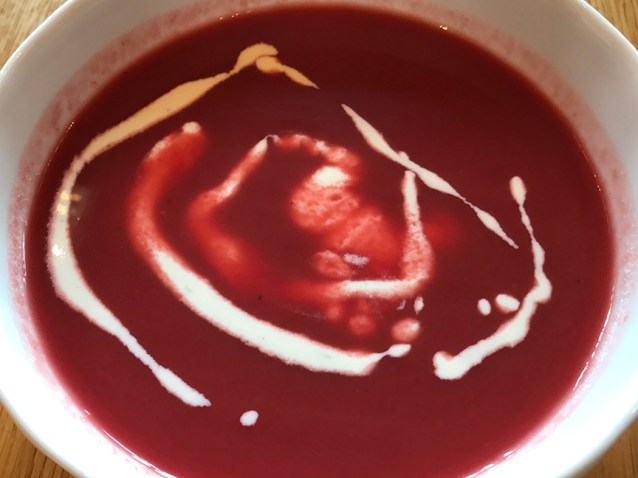
Our one Russian classmate and I bonded over the beet soup that was also on the menu yesterday.

She remarked that it reminded her of the borscht that she ate as a kid. She was surprised to learn that it was one of my childhood standbys as well, a staple of Russian-Jewish immigrants like my grandparents (oops, did I just say immigrants?).

We are halfway through our culinary writing class and this afternoon, following our morning session on food blogging and social media trends, I’ll lead my first seminar on “Wine in Boccaccio’s Decameron.”

Pane per i miei denti, as they say in Italian! Something [bread] I can really sink my teeth into!

Every day this week, I’m doing back-to-back three-hour seminars with a one-hour break in between. It’s only Wednesday and I’m already fried but nothing could be more exhilarating for me than to find myself back on campus, the habitat where I feel most at home and fulfilled.

And as if I didn’t have a teaching load heavy enough, I’ll be playing a set of music tomorrow night at L’Alfieri on the edge of downtown Bra, a township that lives and breathes the Slow Food ethos. The restaurant/bar is run by a Belgian alumnus of the university who serves a international menu, including great Indian food, together with craft beers and natty wines. Come and join us if you happen to be in this neck of the woods!

A new Italian wine online resource, Alice Feiring’s dirty little secret, and Italy’s first blind sommelier

That’s Italian wine legend Giorgio Grai (above, right) with leading Italian wine retailer and former winemaker Francesco Bonfio, co-founder of the newly launched Association of Italian Wine Shop Professionals, known as AEPI (Associazione Enotecari Professionisti Italiani). They convened last month for the group’s first seminar for its members in the Colli Euganei (they are posing in front of Italian humanist Francis Petrarch’s house in Arquà Petrarca, in the heart of the appellation, where the poet spent his final years).

I wanted to bring their new site to your attention because it also includes a blog that Francesco and his colleagues intend to populate with Italian wine news and stories. For example, they just published a video interview with Gianni Bortolotti, farmer, gourmet, and food and wine connoisseur who was widely recognized as one of the world’s leading experts on enogastronomy in the Valle d’Aosta. The interview was published on the seventh anniversary of his passing.

They also recently posted a video interview with Mr. Grai (filmed on the occasion of his seminar for the group), one of Italy’s most renowned winemakers and blenders and one of the wine world’s most fascinating and colorful characters.

I’m looking forward to following their feed and I imagine you will find it as useful and interesting as I do.

(Full disclosure: Francesco is one of my best friends in Italy and I am a huge fan of both him and Mr. Grai. Image courtesy of AEPI.)

The other new wine (and Italian wine) resource I’m really excited about is Alice Feiring’s newly released book The Dirty Guide to Wine: Following Flavor from Ground to Glass (Countryman Press 2017).

Diversity in soil type and how it impacts the aroma and flavor profile of wines from around the world is arguably the most controversial and often the most exciting component of wine education and connoisseurship today. And this new entry by Alice, written with Master Sommelier Pascaline Lepeltier, is (to my knowledge) the first stand-alone work on the topic, digging deep(er) perhaps than any wine writer’s efforts before her.

I’ve only had a chance to leaf sift through the review copy sent to me by the publisher but it’s what I’ll be reading tonight on my flight to Europe on my way to lecture at the University of Gastronomic Sciences in Piedmont next week. I can’t imagine I won’t be including it in my syllabus for the wine writing seminars I’ll be leading there later this year. And I’ll report back with my notes once I till my way through…

(Full disclosure: Alice is one of my dearest and most cherished friends, she’s the owner of New York City’s most famous toilet and bathtub, and she makes the best salad in Manhattan.)

And lastly, from the department of “all the news that’s fit to blog about,” I was catching up on my Feedly this week when I read that the Association of Italian Sommeliers (AIS) recently certified its first blind member, Antonio Tramacere, age 49, a resident of Lecce province in Puglia (that’s the Santa Croce Basilica in the historic center of Lecce above).

“Today, I’m a sommelier, finally,” said Tramacere in a press release issued by the association, “even though I was not able to complete the visual test [required] in the exam.”

“As Giacomo Tachis used to say, ‘our sense of smell is how the soul and our emotions see.’ This phrase is my North Star.”

(Image via CanteleUSA.com, a blog I run for my client Cantele.)

Wine in Boccaccio’s Decameron: one of the lecture series I’m delivering next week at the University of Gastronomic Sciences in Piedmont

From the department of “those who drink and don’t drink again don’t know what drinking is”…

Above: “Bacchanal of the Andrians” by Titian (1490-1576) in the Prado Museum (image via Wikipedia Creative Commons). See this label entry on the Museo del Prado website. Click the image for higher resolution version.

“I strive to make the world a better place to eat in.”

That’s the closing line of one of the bios of one of my students at the University of Gastronomic Sciences in Pollenzo (Piedmont), where I will be delivering two lecture series next week for the Master’s programs.

The university was founded in 2004, the organic outgrowth of the historic Slow Food Movement.

I can still remember like it was yesterday: during my first year at university in Italy (Padua) in 1987, I made my first trip to Rome where I saw the mega-sized McDonald’s at the foot of the Spanish Steps (Trinità dei Monti), opened the previous year. To a 19-year-old wide-eyed kid in Italy for the first time, it seemed as incongruous as obscene, a non sequitur in its surroundings and an oxymoron in its cultural setting.

According to legend, the Slow Food movement was inspired, informed, and shaped by a desire to counter the fast-foodization of Italy. And the opening of the McDonald’s in Rome’s historic center became its battle cry. Today, some 30 years later, the Slow Food ethos continues to drive more than one generation’s desire to achieve culinary self-awareness and gastronomic sustainability. Strive to make the world a better place to eat in: it could very well be the Slow Food university’s motto.

The seminar I’m the most excited about is my “Wine in Boccaccio” series of talks.

Wine plays a more important role in the Decameron than you might imagine. And in many ways, Boccaccio’s work represents a bridge that leads to the “new” wine culture of the Renaissance.

Of the “three crowns” of Italian literature in the Middle Ages, most point to (my beloved) Petrarch as the “first humanist.” Some even call his predecessor Dante a “proto-humanist.” But both Petrarch and Dante are wary of wine and reluctant to even discuss it.

It’s in Boccaccio’s work that enogastronomy is distilled (or rather fermented) into a new science, a new knowledge, and a new self-awareness absent in Dante and Petrarch. And wine in the Decameron sets the stage for a new and heightened interest in wine in the coming renewal of learning — the Renaissance. In many ways, Titian’s painting above would not have been possible without the Decameron and a new conception of what wine is and what role it plays in the human experience and condition.

Isn’t that painting above incredible? It depicts a Bacchanal on the island of Andros, where a river of wine flowed (click this link to read Philostratus’ description of the island [the link only works once in preview mode before you have to subscribe fyi]).

The lyrics of the music in the foreground are: qui boyt et ne reboyt il ne seet que boyre soit (those who drink and don’t drink again don’t know what drinking is).

The score and the painting were both composed at the height of the Renaissance at the court of Ferrara. The painter, composer, and courtiers were all intimately familiar with Boccaccio, whose works had been propelled to greater fame and fortune thanks to the advent of the printing press.

Next week, we will read and we will read again… and we might just taste some wine as well. I can’t wait…

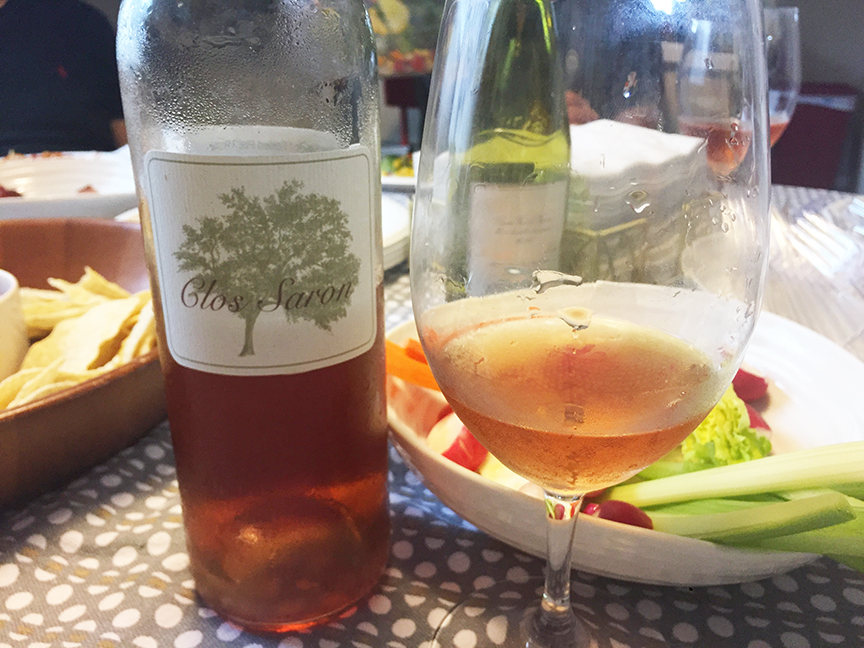
Natural done right: Clos Saron rosé from Sierra Nevada Foothills, lip-smackingly delicious

With increasing audacity, more and more independent California winemakers are finding their way to the once enologically challenged state of Texas, where market demand for wholesome wines is increasingly fueled by unfettered access to information on the internets. Myriad wine buyers in my adoptive state have told me that they read about a given wine on a blog authored beyond our borders or they saw the wine in an email offering or post by a metropolitan wine monger on a coast other than the Gulf. And then they just have to have it.

I first read about the excellent wines of Clos Saron and winemaker Gideon Bienstock on my friend Alice Feiring’s blog (maybe you’ve heard of her, America’s leading advocate for natural wine?). And I was overjoyed to find that a few bottles recently landed on the shelves of my favorite Houston wine retailer.

There’s been so much talk in recent years about the pitfalls of “natural” wine, in other words, wine farmed without the use of chemicals; fermented solely with naturally occurring “ambient” yeast; and stabilized with as little winemaker intervention and sulfur as possible. The natural wine detractors are often right to point out that “natural” and even “organic” are labels sometimes (mis)used to market wines with defective character. They point out that the wines can be “mousy” or “cidery” and that they often show volatile acidity, that vinegar or nail polish smell that usually blows off when the wines are otherwise good. The natural wine label shouldn’t be an excuse for faulty winemaking, they assert.

Now is not the time, place, or space to enter into the labyrinth of semiosis that often accompanies these discussions. But the bottomline is that it’s never counterproductive to maintain a genuinely critical approach to tasting any wine. And as much as I may admire the winemaker for their devotion to her/his laudable mission of making wines without chemicals or additives, I don’t refrain from expressing my opinion as the quality of natural wine — or any wine, for that matter. I don’t like natural wines simply because they are labeled as such. And similarly, I don’t shun wines that don’t claim to be natural (the real issue, in my mind, isn’t whether or not wines are natural or not but rather whether or not we penalize wines that don’t claim to be natural).

I don’t know that winemaker Gideon claims his wines are natural, although I believe the trade generally considers him one of the leading natural winemakers in the U.S. today. I do know, now that I’ve tasted one of his wines for the first time, that his rosé (above) is one of the best wines I’ve tasted this year. It’s made mostly from Syrah with a balance of field blend of red and some white grapes grown in Lodi, he writes on his website.

This wine had the verve and electricity that you often find in the best natural wines. And its fresh ripe red fruit aromas only became more succulent and delicious in the mouth, with just enough savory character to give that yin-yang balance. Man, it didn’t take long for the Parzen-Levy mishpucha to drink it down last Friday evening: the best indication of how lip-smackingly good it was.

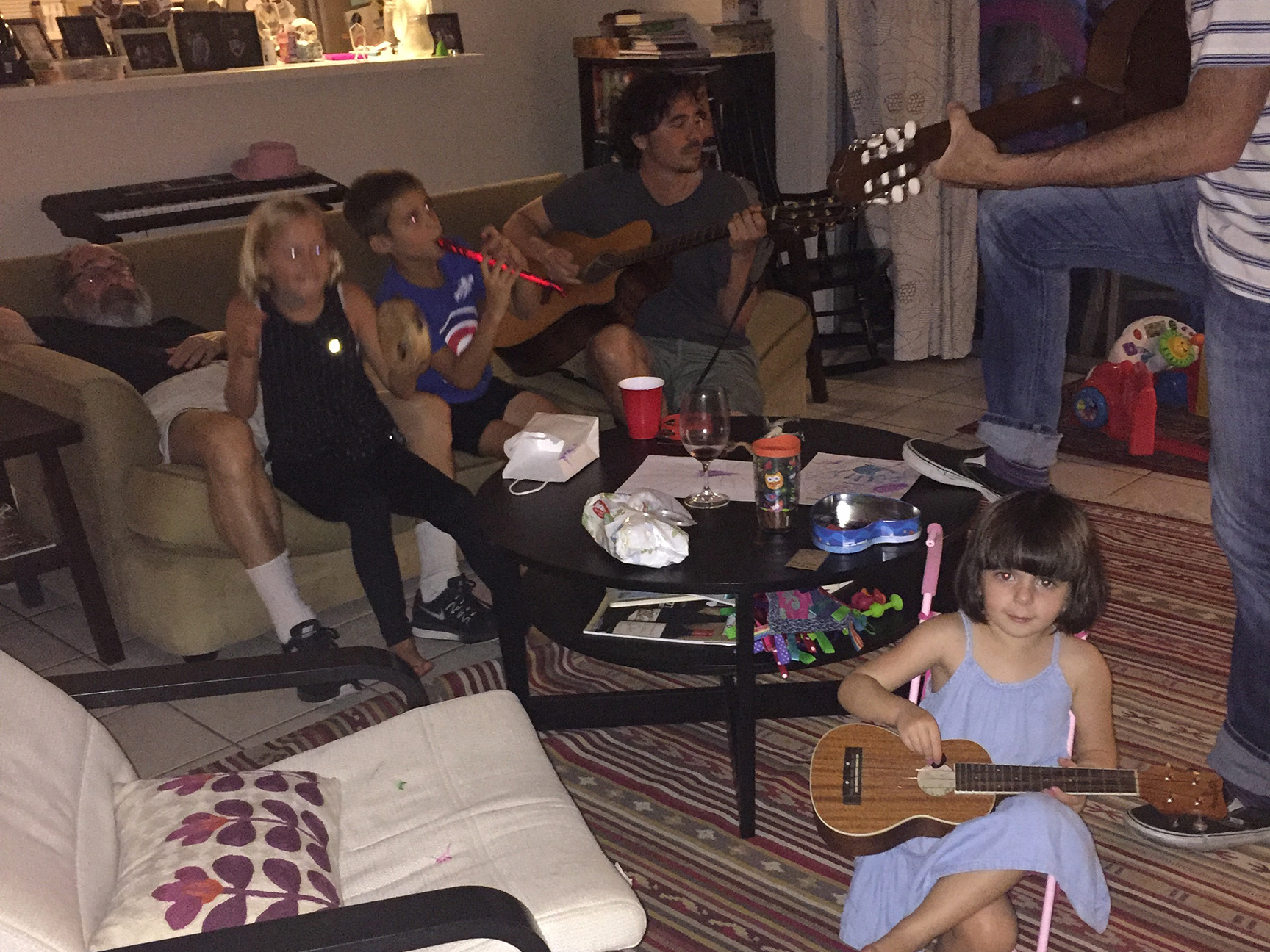
What a great wine and what a great night with our families… Natural wine done right and a family jamboree to boot!

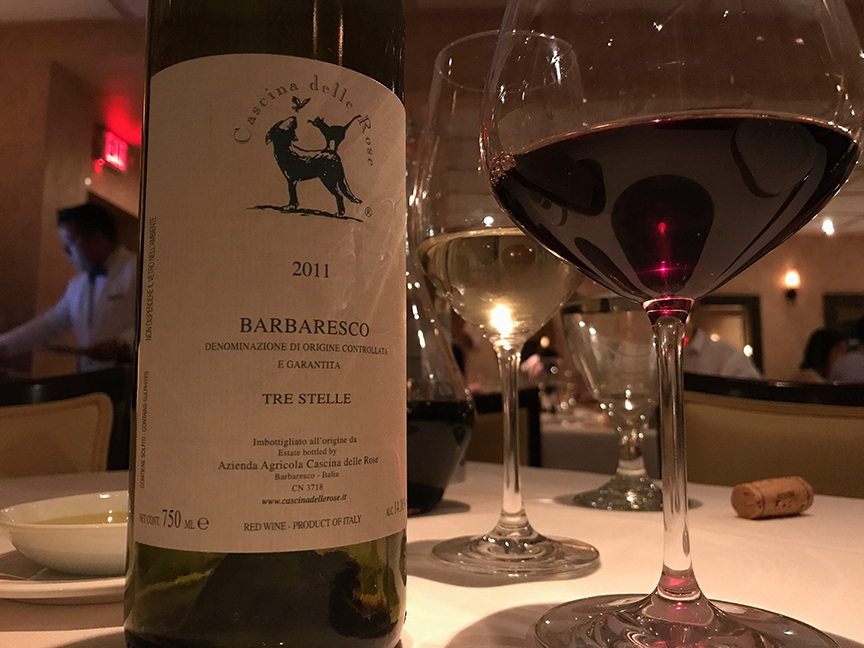
Cascine delle Rose 2011 Barbaresco Tre Stelle drinking great at Da Marco in Houston

Opening a bottle of wine is always a wager, a gamble that can pay dividends of pleasure or a bet that can end in a broken promise of delight unfulfilled.

And every bottle of wine is like a dance partner: you can ask him/her to the dance floor but he/she may or may not accept your invitation; and once/if he/she accepts and the dance begins, you and he/she may or may not align in step and rhythm. Sometimes, when the stars align just so, you can make beautiful music together.

When one of my best friends in Houston and I asked our waiter to open a bottle of Giovanna Rizzolio’s 2011 Cascine delle Rose Barbaresco Tre Stelle the other night at Da Marco, it felt like we were dancing with the stars. Three stars, to be exact: Tre Stelle, the name of the hamlet where Giovanna and her family grow, vinify, and bottle their excellent wines (one of the menzioni geografiche aggiuntive or additional geographic designations allowed in labeling Barbaresco).

Man, what a wine! Zinging acidity with a wonderful balance of dark red fruit, subtle anise, ripe tannin, and an earthiness that imparts a savory character to these long-lived wines.

At six years out from its harvest, I imagine that this wine will “shut down,” as they say in the trade, at some point in future.

But right now it’s going through a state of graceful expression of its fruit, with tannin that doesn’t overwhelm its fruit and umami character.

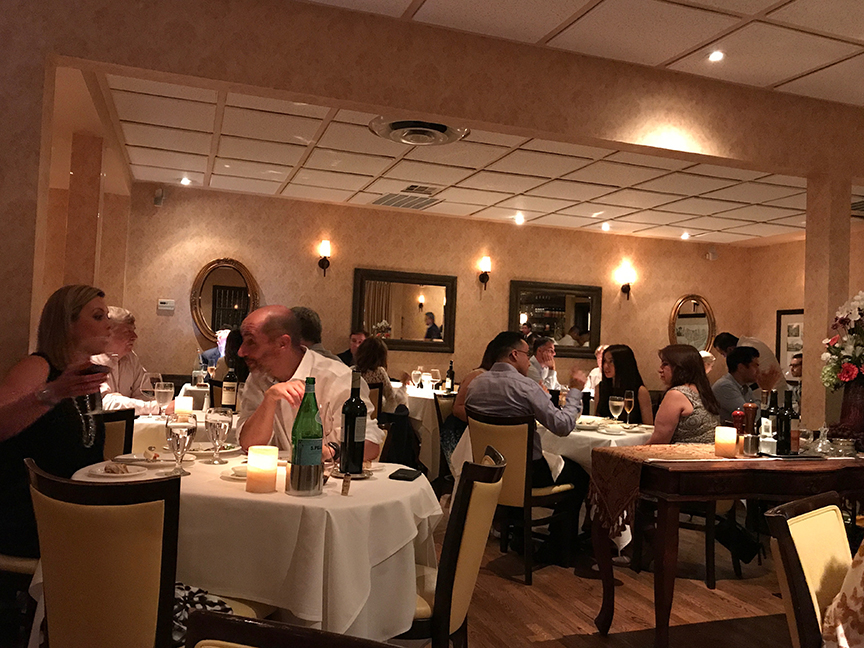
It was also great to experience Da Marco, one of Houston’s leading and storied Italian fine dining destinations, where legacy chef Marco Wiles takes his inspiration from classic Italian cuisine.

I’d never eaten there before and I was really impressed with the general service and the wine service in particular. Seafood is the restaurant’s speciality, I was told, but that night we opted for the housemade tagliatelle with fresh porcini and prosciutto — a SUPER pairing for the Barbaresco, mirroring the sweetness of the Nebbiolo’s fruit and its savory earth.

The restaurant was packed on a Tuesday night and the vibe was right. I wouldn’t call it a cheap date but our servers, the kitchen, and the wine delivered every last penny worth of our bill.

I really enjoyed it a lot.

As I drank the last glass of the Nebbiolo and relaxed into the brio of the evening, I thought about those nights that Tracie P and I spent at Giovanna’s farmhouse on our honeymoon in 2010 — seven and a half years ago now. Looking out from the hamlet of Tre Stelle across the small valley, you could see the most famous vineyards of Barbaresco — Asili, Martinenga, and Rabajà — covered in snow.

Since Tracie and I came together and got married, our lives have been filled with too many blessings to count — big and small. Giovanna’s wines are one of them.

Thanks to everyone who commented on and shared my post this week “Waiter, waiter: please don’t tell me my wine ISN’T corked!” Honestly, I never imagined that it would strike such a nerve. In case you missed the Facebook thread, check it out here. Buon weekend a tutti! Have a great weekend, everyone!

Waiter, waiter: please don’t tell me my wine ISN’T corked!

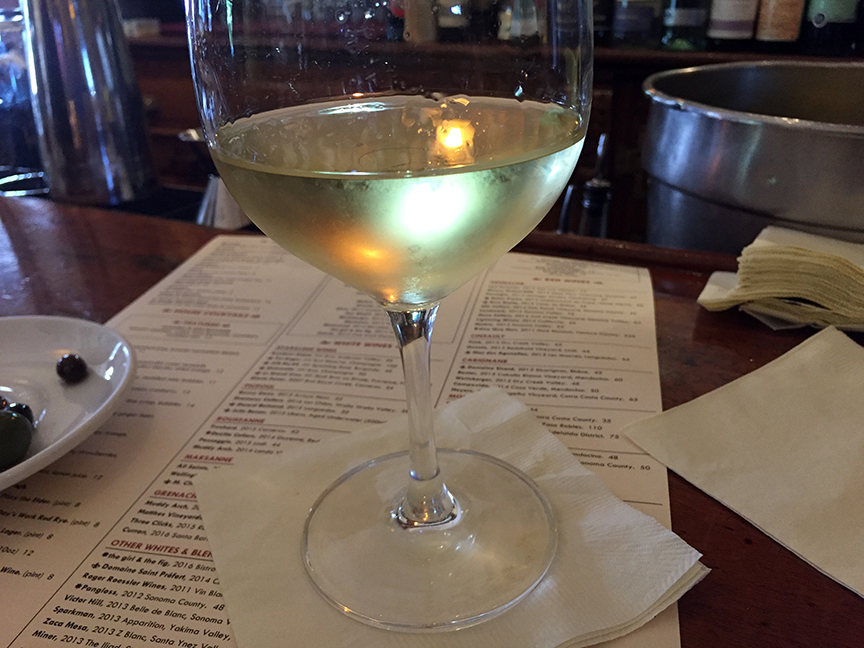
Last week, while touring vineyards and tasting with winemakers in northern California, I stopped into a popular restaurant for a before-dinner glass of wine in one of the area’s trendy tourist districts.

After I took a seat at the bar, the bartender walked me through a couple of by-the-glass rosé selections. They all sounded good, even though I didn’t know any of the producers. I asked her to pour me one of her favorites. Her ability to rattle off all the grape varieties in each wine and describe the style of each was impressive. It was clear that she was familiar with all of the restaurant’s by-the-glass offerings and I was confident that I was in good hands.

The wine was icy cold and it took it a few minutes to warm up in the glass. It had some good fruit in the mouth but the nose was still very muted because of the temperature. I took a few sips and by the time I had drunk about half of the glass, I realized that it was corked.

I’m sure that this has happened to many of you: when the wine is too cold, it can be hard to determine its fitness or “correctness.” Even some of the best tasters I know don’t catch corkiness at the first sniff, especially when it’s subtle. It’s even more challenging when the wine is too cold.

The restaurant and its bar were both really busy on a Thursday night in the early weeks of the prime wine tourism season. And it took a moment before the bartender checked back in with me.

When I mentioned that the wine was corked, she looked puzzled. She then promptly grabbed the bottle from the tub of ice behind the bar and poured herself a taste. She swirled and sniffed and unequivocally declared that “the wine definitely isn’t corked but I’ll be happy to pour you something else.”

It’s possible that I was wrong and I appreciated her offer to pour me something else.

But what is the point of challenging the guest regarding the corkiness or fitness of a wine?

I was alone that evening but what if I was out with my significant other or with a colleague or client? It made me feel crummy enough that she felt it necessary to belittle my ability as a taster. But what if I had been on a special-occasion date with my wife on our trip to California wine country? The awkwardness that her insistence created would have only put a crinkle into what would have otherwise been a seamlessly lovely evening.

There’s no doubt that servers, sommeliers, and bartenders who work in wine country often encounter citizen wine lovers who don’t have a lot of experience in tasting and determining wine fitness. But in my view, that’s all the more reason not to challenge the guest’s take on the wine.

Many years ago, while dining at a three-Michelin-star restaurant in the U.S., I told a sommelier that I believed a wine was corked. He tasted it and said it wasn’t and didn’t even offer to bring me something else. Was his pride as a taster more important to him than his mission to provide a great dining experience? (Never mind that he had a huge steel plug pierced into his tongue, easy to spot when he opened his mouth it was so large.)

My server ended up pouring me a fine glass of Anthony Truchard’s Chardonnay and didn’t charge me for my first glass. I really appreciated that. But what was the point of challenging my assessment of the wine when the restaurant (or at least the bar) has a policy of substituting wines by-the-glass (and not charging for them) when the guest questions the wine’s fitness?

She could have easily replaced the wine and then discreetly tasted the questionable wine (not in front of me).

I can’t imagine that she didn’t pour the rest of that bottle for other guests that evening. Too bad for them…

As the crow flies: the new Slow Wine Guide to the Wines of California is forthcoming.

Slow Wine will publish its first-ever guide to the wines of California in early 2018.

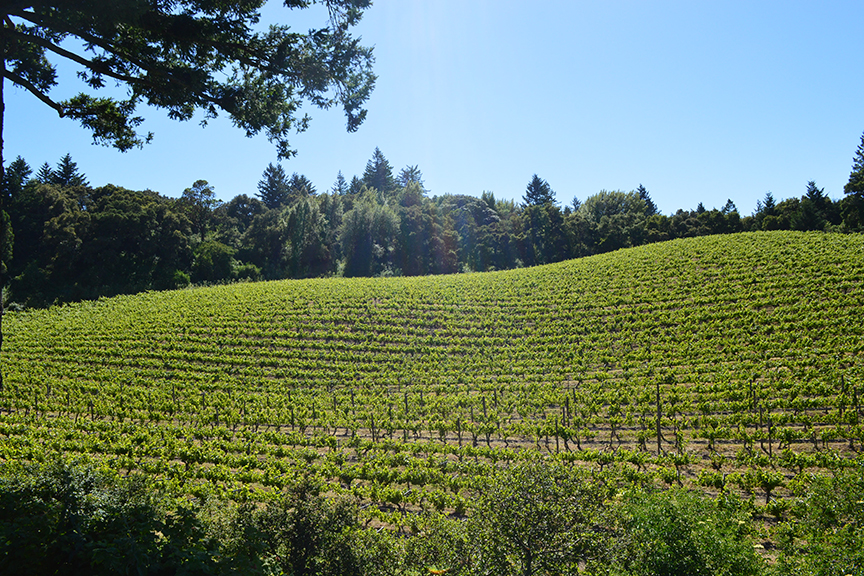
Above: vineyards in the Sonoma Coast American Viticultural Area (AVA). Note the Pacific Ocean horizon in the background.

It was in late 2016, on the eve of the American presidential election, that Slow Wine Guide editor Giancarlo Gariglio and I first sat down in Piedmont, Italy and talked about the possibility of creating a Slow guide to the wines of California.

By the spring of 2017 our plans had began to come into focus: he and I would co-edit the English-language by the end of the year, for publication in early 2018.

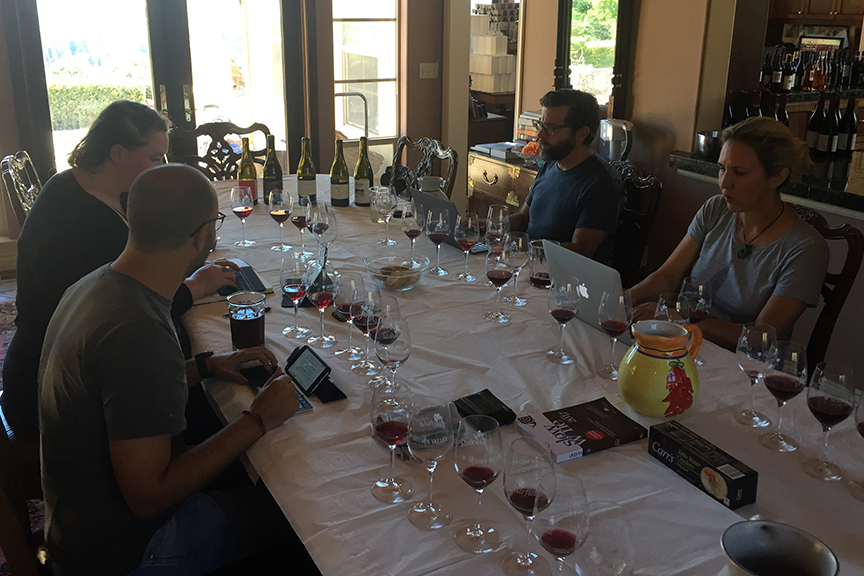
Above: vineyards in the Santa Cruz Mountains AVA. I spent the better part of last week touring vineyards and meeting with growers in northern California before I sat down with our editorial panel to taste more than 250 wines submitted for consideration in the guide.

Giancarlo and his Italian co-editor published the first bi-lingual Slow guide to the wines of Italy in 2011.

Its early success and the north American Slow Wine tastings that followed laid the groundwork for the new guide that began to take shape last week when we sat down to taste with our editorial panel.

Above: Giancarlo (foreground, left) and our tasting panel was impressed by the caliber and breadth of the wines submitted. He was tasting a lot of the estates for the first time.

It was a no-brainer for me to reach out to my dear friend Elaine Brown and ask her to join us. She is the author of Hawk Wakawaka Wine Reviews and a contributor to Jancis Robinson: in recent years, she has become the country’s leading authority on the new (and old) wave of sustainable fine wine grape growers in California.

I also invited my long-time friend David Lynch, a top wine writer and leading American sommelier, to join our panel: his finely honed abilities as taster and his vast experience in California wine were just what was needed to complete our tasting and editorial panel.

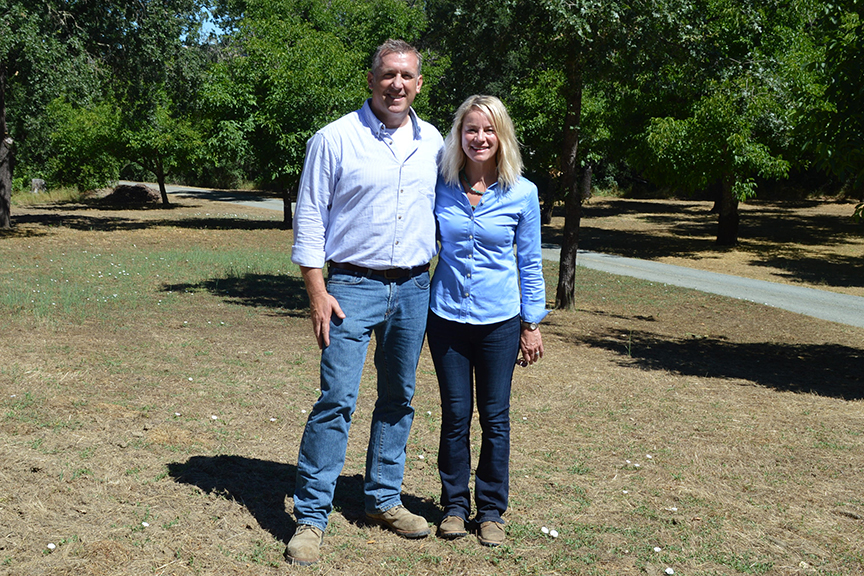
Above: Alexander and Catherine Eisele of Volker Eisele were some of the growers I met with last week. The embodiment of the Slow ethos, their family has organically farmed its Napa estate for two generations and the couple supports their budding family through grape growing and winemaking.

Not only will Slow Food be publishing the guide in early 2018 but Giancarlo and I will also be presenting a group of select California growers that will accompany the Slow Wine tour of Italian grape growers in the early new year.

Dates are tentatively planned for New York, Seattle, San Francisco, and Houston (to be confirmed).

Slow Food Editore will be making an official announcement soon and I’ll be posting updates on our progress and previews here on my own blog in coming months.

I couldn’t be more proud to share the news: the new Slow Wine Guide to the Wines of California will be coming to a town near you soon!

Heartfelt thanks to Giancarlo for coming to me with this project and to Elaine and David for believing in this crazy endeavor (going where no wine writer has ever gone before!). And warm thanks also to intern Elisabeth Fiorello-Sievers whose lovely family hosted and fed our panel.

Whoa California wine! Skyline Ridge, Santa Cruz Mountains…

What a revelation for me to tour and taste through Skyline Ridge in the Santa Cruz Mountains yesterday!

So much of California wine is known for its manicured character. But up on the ridge that looks down to the east on Silicon Valley and to the west out to the Pacific Ocean (about 15 miles away), the landscape is wild and untamed.

It blew me away to find such robust mountain viticulture here. It certainly wasn’t what I was expecting.

It was also really interesting to see the San Andreas fault here and learn how the collision of the tectonic plates brought ancient marine bed to the surface.

I’m spending the next few days between Sonoma and Napa working on a new project that I am really exited about. It’s a little too early to reveal it yet but stay tuned.

Thanks to everyone who tasted with me and showed me around yesterday. There is a soulfulness to the place and the people here and it definitely comes through in the wines.

That’s all I have time for today. Now it’s time to hit the road again, taste, and tread through some more vineyards…