California Fire Relief Efforts: Where and what to donate (via @Biondivino)

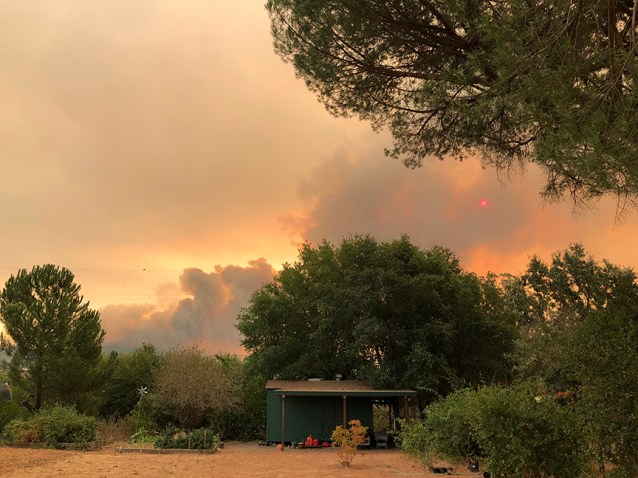
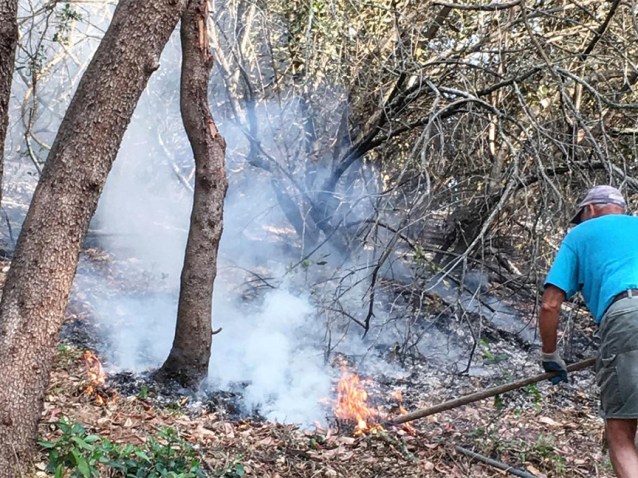
Images via Vino Girl’s Instagram (Napa).

The stories of devastation and loss are as gut-wrenching as they are heartbreaking.

“The ferocious fires in the Wine Country and beyond,” wrote the editors of the San Francisco Chronicle yesterday, “destroyed new territory on multiple fronts Wednesday, threatening communities untouched by the previous onslaught — including the cities of Sonoma, Napa, Calistoga and Fairfield — and prompting evacuations of thousands more people.”

“Fires raked across the state, but the primary battlefields were in Napa, Sonoma and Solano counties where wind gusts topping 30 mph were giving out-of-control fires new life and sending firefighters from across California and Nevada scrambling to save lives and property.”

Below, I’ve copied and pasted an email blast by Ceri Smith, owner of the Biondivino wine shops in San Francisco and Palo Alto. Both locations are accepting donated items (the list of suggested items follows). Relief supplies can also be shipped to either location and Ceri has also included other resources for donations and recovery efforts.

Tracie and I are praying this morning for our sisters and brothers in California. G-d bless the Golden State.

Fire Relief
Donation Drop Location
Biondivino San Francisco & Biondivino Palo Alto

There are no words that can ever express the impact and devastating sorrow we feel
for the tragedies and insurmountable losses our Northern California neighbors,
friends and colleagues are going through daily.

Many basic items are needed as so many have lost so much.

From what I understand these are the most immediate needs:

  • Face Masks (3M 8511 N95 – needs to be able to filter out smoke/gasses, please, not the light weight basic model
  • Individual or Small Eye Drops – Eye Rinse
  • Pillows & Pillow Cases /Air mattresses/Blankets
  • Flashlights/Batteries/Chargers
  • Diapers – Children & Adult – Feminine products
  • OTC Medicines: Advil, Tylenol, Antihistamines, DripDrop etc…
  • Wetwipes, sanitizers, toothbrushes, hair combs etc
  • Baby food – Pet food/Supplies
  • New Undergarments: Men, Women, Children of all sizes
*Consider anything you would need if you had to leave at a moments notice (or any person young or elderly would need)

Many out of town people have asked how they can help/contribute – please feel free to ship anything to either of our locations.

**Please address the receiver as FIRE RELIEF c/o Biondivino

EASY LINKS:

Bay Area residents – Cole Hardware: Mask Link | Sanitizer Link | Batteries | Emergency Supplies
or Amazon (prime if you have it).

Biondivino SF:
1415 Green Street (between Polk/VanNess)
any time Tues – Sat 11am-8pm – Sun 12pm-7pm – closed Mon

South Bay Biondivino Palo Alto:
Town & Country Palo Alto
855 El Camino Real #160 (Next to Belcampo & The Sushi House)
any time Mon – Sat 10am-7pm – Sun 11am-5pm

*NO CASH DONATIONS ACCEPTED – THANK YOU

More Links to Help:
Petaluma Volunteer/Evacuee/Donation
NBC-Fire Relief Links
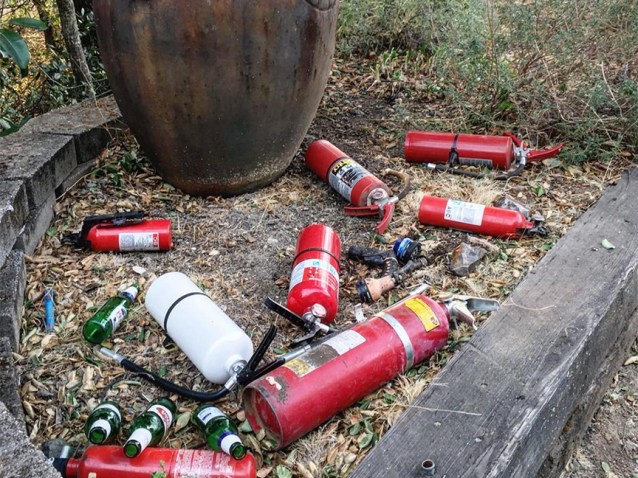
Fires threaten iconic California wineries: A Dispatch from Sonoma by Slow Wine senior editor Elaine Brown

The North Coast of California was hit last night by a rash of wildfires. Most of the fires were sparked by gusting winds taking down trees hitting above-ground power lines. Fires spread quickly with one of the largest, the Tubbs Fire in Santa Rosa, spreading to over 25,000 acres in a matter of hours. The Tubbs Fire has burned portions of the northern part of the city of Santa Rosa and forced the evacuation of two area hospitals and thousands of people…
Click here to continue reading a dispatch from Sonoma this morning by Slow Wine senior editor Elaine Brown.

Could this be Freisa’s moment in the sun?

Scrolling through the 499 winery’s Facebook this morning, I was reminded of Carlo Petrini’s August 2016 article in the Turin edition of La Repubblica (the Italian national daily): “The hegemony of Barolo is putting other Langhe wines at risk” (translation mine).

The piece echoed something that I’ve been hearing Langhe growers say for a long time.

Over the last two decades, the lucrative nature of the Barolo trade has prompted many producers to plant Nebbiolo in vineyards where grapes of a lesser god were once traditionally grown.

“Nebbiolo used to be planted only [in parcels] where the snow melted first,” Maria Teresa Mascarello said to me some years ago when I visited with her at her family’s historic cellar.

It’s always a revelatory experience to drive around Langhe during the winter and see how the sun melts away the flakes in the top crus before it shifts its efforts to the surrounding blocks. And this tradition is reflected in the Piedmontese dialectal term sorì, used to denote the best hilltops for raising Nebbiolo. It comes from (and is akin to) sol or sole in Italian. It means well-exposed [to the sun] or sun-bathed.

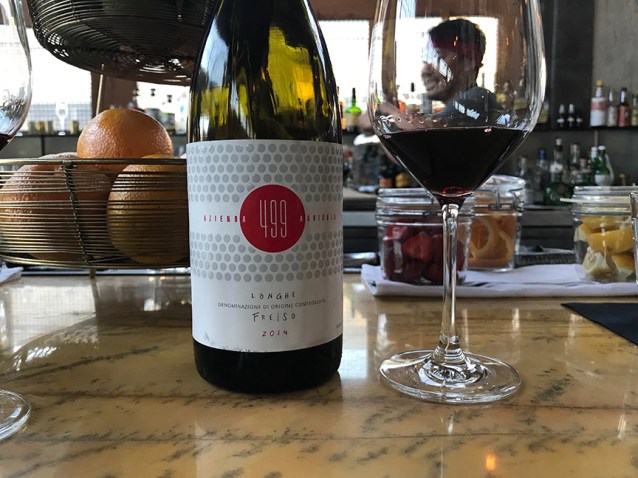
When I finally had the opportunity to taste 499’s Freisa a few weeks ago in Los Angeles, I couldn’t help but think to myself: is this Freisa’s moment in the sun?

This delicious wine, grown at 499 meters a.s.l. in the township of Camo, is the brainchild of two Barolo veterans: Mario Andrion (Castello di Verduno) and Gabriele Saffirio (Brovia), who have both had a hand in producing some of my favorite expressions of Langhe viticulture. It was fresh and bright, with nuanced floral notes that really impressed and surprised me. But it still had that tannic character that you expect from Fresia. A really original and utterly delicious wine.

With Barolo setting records in release prices these days (thank you, 2010!) and Moscato d’Asti (which they also grow) becoming more and more alluring thanks to the growing interest in sparkling wines, it’s hard not to think of Mario and Gabriele as Don Quixotes.

It’s great to see the interest in Langhe growing among wine collectors across the world. But it’s also wonderful to see these young Langhe growers not allowing their viticultural heritage to be eclipsed by Barolo’s bright star.

Slow Wine Snail winners announced today on California Guide blog

When he founded the movement in the late 1980s, one of Carlo Petrini’s most brilliant moves was to call it “Slow Food” — the natural antidote to fast-food.
The disyllabic moniker immediately became an international battle cry for those defending traditional foodways. And it still resonates just as powerfully with the movement’s current generation.

And what better emblem than the snail to represent the nascent group? Not only is the gastropod the emblem of slow pace and slowed change, but it’s also an indicator of healthy soils. Grape growers will often point to the vineyard presence of snails and other small creatures as a sign that the site is free of pesticide.

Of course, the snail is also something delicious to eat.

Today, Giancarlo Gariglio, editor-in-chief of the new Slow Wine guide to the Wines of California, has announced the winners of the guide’s Snail award, the top honor conferred by the guide.

Click here to view the winners and to read about the significance of the prize.

I’m the coordinating editor of the guide. Elaine Brown and David Lynch are our senior editors. We congratulate the winners!

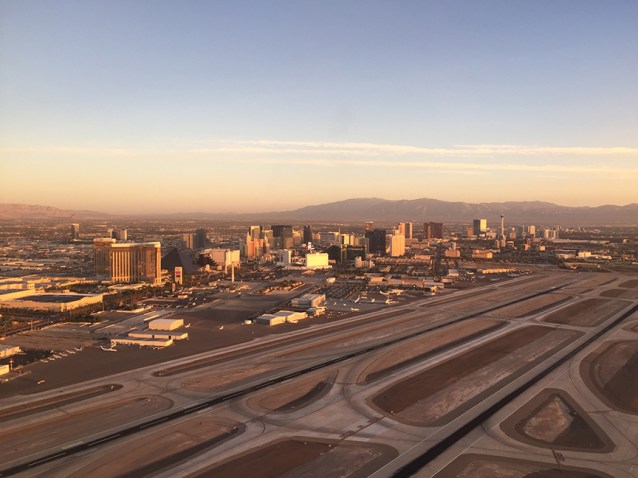
Praying today for Las Vegas, America…

Any American who’s ever been to Las Vegas knows that it is the all-American city.

Americans from all walks of life travel there each year, for all kinds of reasons.

As one of our nation’s business and entertainment hubs, it embodies our industriousness, our entrepreneurship, our contradictions, our hopes, and our dreams. In so many ways, no city in America is more American than this glittering city in the desert.

It’s also one of the leading American destinations for the high-end wine trade. I know so many top wine professionals — some of the nicest people in our business — who work there.

Today, Tracie and I are praying for Las Vegas, America.

Like all of our fellow Americans, we are overwhelmed by the news from Nevada this morning. G-d bless our sisters and brothers in Las Vegas. G-d bless America.

Italy’s most expensive wine? Monfortino current release reaches new heights…

“Roberto Conterno’s 2010 Monfortino has been released,” wrote Italian wine blogger Alessandro Morichetti today on the popular site Intravino. “And nothing will ever be the same.”
His Lampedusian wail is making sound waves across social media this morning as observers of the Italian wine trade reckon with the reported 800 to 1,000 euro current-release price for the blue chip wine. This figure marks the first time that an Italian wine makes a market appearance on par with the wines of Bordeaux and Burgundy, observed Morichetti.

“Our fate is sealed,” commented revered Italian wine writer Armando Castagno on Facebook.

“These properties will end up in the hands of multi-national corporations… It’s obvious that one by one… the best Langa wineries will end up in hands that aren’t Italian, just as their wines do,” he wrote.

He was referring the Langhe Hills of northwestern Italy, also known colloquially as Langa, where the highly coveted and collectible wines Barolo and Barbaresco are produced.

“The narrative of farm life and [agricultural] tradition in Langa inspired by [the novels of] Fenoglio and Pavese CAN BE KISSED GOOD-BYE,” he noted [sic], alluding to the great post-war writers of the once impoverished Langhe Hills.

“It’s the market, baby.”

In his post, Morichetti quotes from a dinner-table conversation “from a few years ago” with winemaker Beppe Rinaldi, one of the Langhe Hills’ most zealous defenders of Barolo’s cultural purity and socio-economic independence.

“There are a number of reasons I would never do it,” Rinaldi said referring to the skyrocketing prices of wines and land in Barolo country. “But it would be good for everyone if someone did do it.”

With Conterno’s new benchmark price for Barolo, it would seem that Rinaldi got his wish.

Image via Intravino.com.

Slow Wine California now online, prizes and producer profiles coming soon…

The following is a preview of one of my posts this week for the new Slow Wine Guide to the Wines of California. Our site came online this morning. The Slow Wine prizes will be announced shortly. Producer profiles will follow.

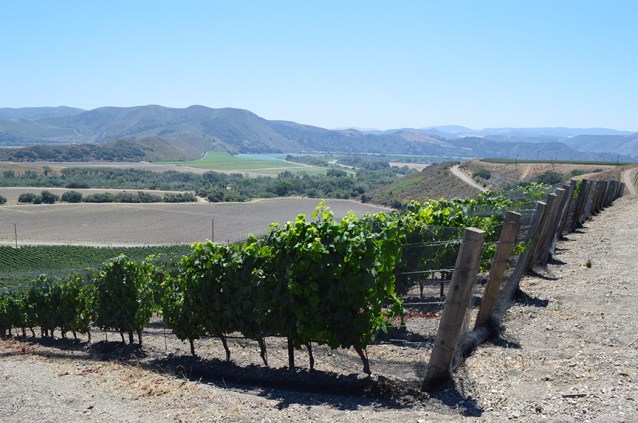
Above: The western edge of the Santa Ynez American Viticultural Area. The Pacific coast lies just a stone’s throw away.
The time is right for the Slow Wine California.

Perceptions of gastronomy’s cultural value have changed radically since the Slow Food international movement was founded in the late 1980s in Piedmont, Italy as a champion of traditional foodways threatened by Italy’s growing appetite for fast-food. As a wide-eyed undergraduate student in Italy on my junior year abroad in 1987, I was keenly aware of the controversy sparked by the newly opened McDonald’s at the foot of Rome’s Spanish Steps. It was that year that I first heard the name Carlo Petrini, the essayist and political activist who had founded Slow Food the previous year. In 1989 he would publish the Slow Food Manifesto, a battle cry for an emerging generation of Europeans who saw their culinary traditions being eclipsed by the march of industrialism and the growing popularity of Coca Cola and assembly-line pseudo-sustenance.

“Speed became our shackles,” he wrote. “We fell prey to the same virus: ‘The fast life’ that fractures our customs and assails us even in our own homes, forcing us to ingest ‘fast-food’… In the name of productivity, the ‘fast life’ has changed our lifestyle and now threatens our environment and our land (and city) scapes [sic]. Slow Food is the alternative, the avant-garde’s riposte.

(Click here for the complete manifesto and click here for a Slow Food timeline.)

Borrowing from the fencer’s lexicon (with his “riposte,” the sport’s return thrust, made after parrying a lunge), he underlined the urgency of his cause and mission.

Click here to continue reading my post today for the Slow Wine California blog…

Italy’s Blade Runner vintage 2017: “I’ve seen things you people wouldn’t believe.”

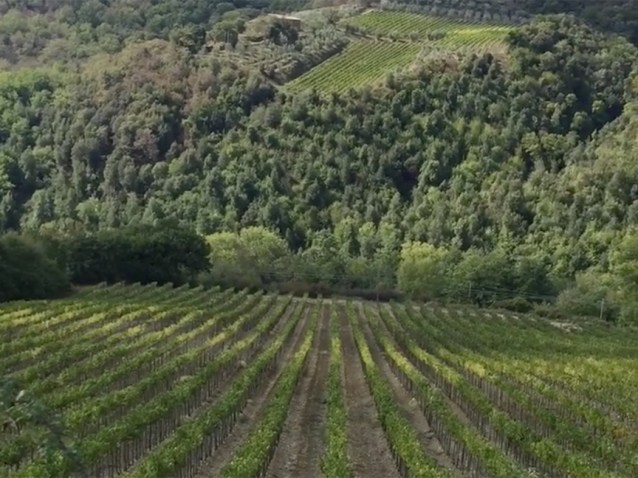
That’s an image captured this week in Montalcino where the grower completed harvest last Friday.

To the layperson, it may just seem like a picturesque Tuscan vineyard. But to the trained eye, it’s a truly bizarre image, the type that belongs to the “never seen anything like it” category, as one Montalcino farmer put it. The vines should be beginning to shut down now, the natural progression of the vines’ yearly rhythm. Instead, the vines are actually producing more vegetation (the opposite of what typically happens after harvest, wrote the author of the image).

Many Italian growers have remained silent on social media about the immense challenges they face with the 2017 harvest. But privately, I’ve been receiving emails from across the Italic peninsula recounting the pervasive effects of one of the strangest vegetative cycles in recent memory.

“It’s been a Blade Runner vintage,” wrote my friend and client Stefano Cinelli Colombini, who runs his family’s historic farm in Montalcino. “I’ve seen things you people wouldn’t believe.” (He’s referring to the legendary “Tears in Rain” monologue from the movie.)

Stefano’s been one of the few winemakers I know who has openly chronicled this unparalleled and uniquely odd vintage (and I’ve been translating his notes regularly for the winery’s blog).

There’s a famous adage in Italian viticultural apocrypha: there are no bad vintages, there are just vintages where we make less wine. Stefano’s still optimistic about the Brunello his vineyards will deliver this year, even though the yields are extremely low.

Between the early onset of spring and then the disastrous late spring frosts, between the crushing heat of the summer and the late end-of-days rainfall (not to mention that hailstorms that plagued many parts of Italy), one thing is for certain: no one will forget the otherwise unimaginable 2017 vintage.

Slow Wine Guide to the Wines of California: prizes to be announced next week

As strange as it seems, it was on a chilly November night in Piedmont — as voting in the 2016 U.S. presidential election was already well under way — that Slow Wine editor-in-chief Giancarlo Gariglio first suggested we create a Slow Wine guide to the wine of California. We sipped sustainably farmed Timorasso, dipped organic torilla chips into organic salsa (just to add a layer of surreality), and by the time we said goodbye, we knew we were on the verge of having a new U.S. president and a new vade-mecum to California viticulture.

That’s San Diego winegrower Chris Broomell, above, in June of this year. Together with his wife Alysha Stehly, also a winemaker, he produces some of the most compelling wines that I’ve tasted in 2017. Not just delicious but also thrilling (at least to my palate) for the new direction that he’s driving grape farming and vinification practices in an often overlooked and undervalued American Viticultural Area, San Pasqual Valley.

Next week, Giancarlo (our editor-in-chief) and I will begin posting the winery and wine prizes, winery profiles, and tasting notes on a new blog we are launching for the guide, which will be released as print media early next year. We’ll also be posting about our methodology, the rationale behind the guide and the prizes, and the overarching ethos of Slow Food and Slow Wine and why we felt the time was right for a Slow Wine Guide to the Wines of California.

Thanks to everyone who’s been so supportive of this new adventure and challenge. And special thanks to my daughters and wife Tracie who have seen a little less of me in recent weeks as I’ve been holed up in my office editing, writing, editing, writing, editing, and writing and editing some more.

It’s a very exciting project and I can’t wait to begin sharing it with you next week. Stay tuned!

Want to help Houston restaurant workers displaced by Harvey? Please come and see us! (Thank you Michael Madrigale and Planet Bordeaux.)

“Everyone’s been affected by the hurricane… everyone,” said Master Sommelier Guy Stout, a wine educator for Southern Glazer’s, when I saw him last night at a Bordeaux event at LeNôtre Culinary Institute in Houston’s Northline neighborhood.
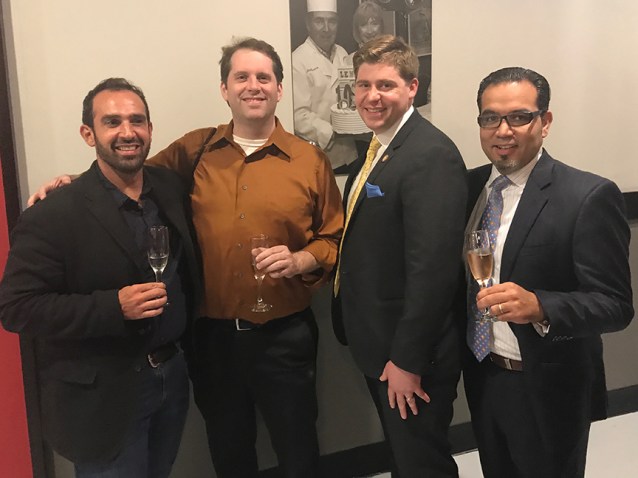
After I attended the Bordeaux tasting, which included a guided tasting with celebrity sommelier Michale Madrigale from New York (below), I spent yesterday evening bouncing around wine bars in my adoptive city, talking to sommeliers about the status of the Houston wine community.

That’s the sign outside Underbelly (above) in our Montrose neighborhood, one of Houston’s most popular restaurants and wine destinations and a regular draw for out-of-town guests. Its owners have partnered with a local wine collector to present Wine Above Water, a wine-focused benefit for Houston-area wine trade members who have been displaced or otherwise affected by Harvey. As Guy rightly pointed out, we’ve all been affected — in one way or another.

Please read about the event and click through to the organizers’ website here (my post today for the Houston Press).

“No hesitation at all,” said Michael when I asked him if he had any reluctance in coming to our city so soon after the storm. “I was just glad when I found out we could get in.”

That’s Michael (above, left) with leading Houston sommeliers (from left) Sean Beck, Jack Mason, and Christian Varas.

Colleagues and peers from across the world have been writing me asking me how they can help with recovery efforts. Every dollar donated counts, I tell them, and donating to Wine Above Water will directly aid wine professionals who are facing mounting challenges as the restaurant industry and its patrons get back online.

But more than anything else, we need you to come here and see (and share the news) that we are open for business. Nearly everyone I talked to last night told me that their wine bars and wine-focused restaurants were up and running the day after the hurricane. In some cases, they unshuttered while the storm was still dropping up to 50 inches of rain across the greater Houston metro area.

My recommended foundations for donating are the Hurricane Harvey Relief Fund
(established by Mayor Sylvester Turner)
and the Houston Food Bank.

Please add Wine Above Water to that list.

But if you really want to help our community — and not just the wine and food community — please come here and spend money in our restaurants and shops. Please post a photo from Houston on your social media to let the world know that we are back on our feet. Come shake someone’s hand and share a glass of wine with one of the many displaced wine and restaurant professionals who are struggling to get by as our city rebuilds.

Thank you, Planet Bordeaux (organizer of last night’s event at LeNôtre), and thank you Michael Madrigale for not by-passing our city. That’s the type of spirit that will make #HoustonStrong even stronger.

Please check out my Houston Press post on Wine Above Water here.