
 Anyone who’s ever been to visit the historic Poderi Colla estate in Piedmont’s Langhe Hills will tell you the same story.
As we were tasting the wines with Tino Colla and enjoying a delicious luncheon of classic homemade Piedmont dishes, there was an older man sitting quietly outside the farmhouse. He didn’t utter a word beyond “buongiorno” and so we just assumed he was a retired farm hand or a beloved uncle. Only later did we learn that he was the legendary Beppe Colla…
This week, the world of Italian wine mourns the loss of one of its greatest pioneers, Beppe Colla, who — together with Nebbiolo icons like Bartolo Mascarello and Bruno Giacosa — reshaped the legacy of Piedmont viticulture in the 20th century. Few beyond Langa’s inner circle of cognoscenti were aware of his immense and immeasurable contribution to Barolo and Barbaresco’s rise as two of the world’s greatest appellations. But the soft-spoken hero of Piedmont viticulture left an indelible mark on the world of fine wine — in and beyond Italy.
The following passage appeared in his obituary, published this week by the Italian daily La Stampa (translation mine):
- The Langhe Hills bid adieu to Beppe Colla, a visionary and innovator among grape growers, one of the few winemakers you could call a “patriarch.”
- He was 88 years old and he would have celebrated his 70th vintage this year.
- After finishing his degree at the Umberto I school of Enology, he was asked to become the director of what was the biggest Alba-area winery at the time: Bonardi. He was just 19 years old.
- In 1956 he purchased another historic Alba property, Prunotto, which he sold to the Antinori family in 1990 when he and his brother Tino founded the Poderi Colla winery. Located in Bricco del Drago in San Rocco Seno d’Elvia hamlet, their estate also includes important vineyards in Roncaglie (Barbaresco) and Bussia di Monforte (Barolo).
I highly recommend watching the excellent video in this post by Intravino (with English subtitles).
And be sure not to miss this insuperable 2005 post by my friend and blogger colleague Craig Camp, who writes (ubi major minor cessat):
- For over fifty years Beppe Colla has made wine in the Langhe and has seen the transition of this zone from a region on the edge of disaster to the home of some of the worlds most expensive and sought after wines. From his first vintage in 1948 ( a disastrous vintage) and his just completed 56th vintage in 2004 (which looks to be an excellent vintage) he has seen it all and possesses an encyclopedic knowledge of every aspect of the climate and vineyards of the Langhe zone and has personally experienced every vintage of the modern era of Barolo and Barbaresco. It is this incredible range of experience that he brings to winemaking at Poderi Colla.
My 2016 tasting at Poderi Colla was one of the most inspiring winery visits of my career.
Thanks to generous Italian collectors, I’ve also had the chance to drink some of Beppe Colla’s pre-Antinori Prunotto bottlings stretching back to the 1970s, some of the most compelling expressions of Nebbiolo I’ve ever tasted.
Sit tibi terra levis Iosephe.
Image via Intravino.
 After we posted our
  To be totally honest, Roberto Girelli’s extraordinary white wines had not come to my attention until Decanter called his 2015 single-vineyard Lugana Orestilla a “best white single varietal” in its
  What can I say? I’m now obsessed with this wine and only wish I had the dough to put down cases and cases in my wine cellar.
  For more than four years, I’ve been working as a media consultant for the
  Alejandro Escovedo (above, third from left) is one of America’s most iconic songwriters and performers. His new album,
  Happy new year, everyone!
  5. Italian winemakers, both large- and small-scale, will face expanding difficulties in getting their wines to the U.S. market.
 In early December, I had the remarkable opportunity to sit down with Giancarlo Moretti Polegato (above), CEO and legacy owner of his family’s Villa Sandi estate in Valdobbiadene, one of Prosecco’s greatest pioneers and one of its enduring cultural icons.
 Above: Biodiversity Friend certification reflects the growers commitment to sustainable vineyard and winery practices.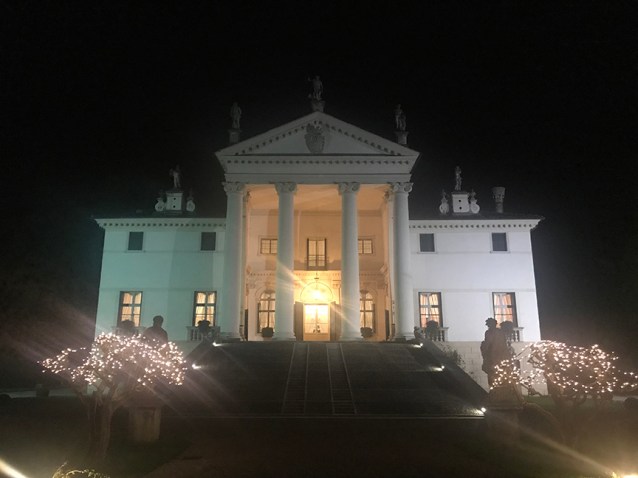
 A trip to the land of Prosecco in early December was an opportunity to taste at a couple of my favorite houses.
  It was such a thrill for me to get to taste with Francesco Drusian, a legacy producer and appellation pioneer. His insights into the evolution of Prosecco and its extraordinary arc — literally from rags to riches — were fascinating to hear.
  The Ruggeri Vecchie Viti was another highlight.
  One of the biggest thrills of my year in wine was my first taste of the newly released 2015 Produttori del Barbaresco (classic) Barbaresco with one of Barbaresco’s coolest homeboys, Luca Cravanzola.
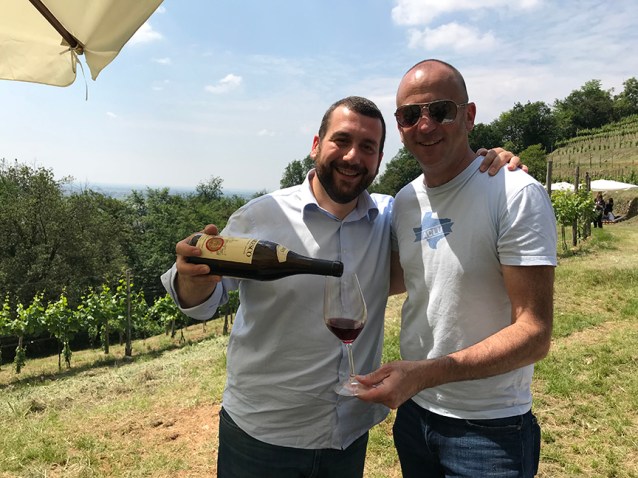 People who work in the wine business get asked the same question by laypeople all the time: what’s your favorite wine?
 Do Bianchi