Shanah tovah (שנה טובה). May your new year be filled with sweetness…

Shanah tovah u’metuka. May you have a good and sweet year ahead.

Like we do every year, Parzen family sliced apples and dipped them in honey this week to celebrate the sweetness in our lives and the year to come.

Georgia (below, left), age seven, will be turning eight in December. She’s really been enjoying her violin lessons and had her first solo recital on the big stage earlier this month. She decided not to do ballet this year and is doing karate instead! She’s also been working on her own compositions on violin and keyboard — something that fills her daddy’s heart with immense joy.

Lila Jane (right) turned six this summer and is having a great time in first grade. Her cello playing is really coming together in terms of her intonation and tone. She’s also experimenting with different melodies and has started to sound out chords on the keyboard. And this summer, she and I wrote and recorded a song for her cousin Emilee. I’ll never forget her putting on her headphones and tracking her vocals in our little studio — a memory I’ll cherish for a lifetime.

Both of them are bright, happy, and healthy little girls and we all have so much fun together.

Tracie has continued to grow her skin care business this year and her cookie business has also been humming along nicely. Between the girls and our two little crazy chihuahuas, she has her hands full. The girls and I (and our doggies) couldn’t be more blessed to have such a great and loving mommy, already ready to kiss a boo boo and share a “snuggie.” In January, she and I will be celebrating our 10th wedding anniversary!

Me? I’ve had an extremely rewarding but exhausting year professionally. I wish I didn’t have to travel so much for my work but I’m not complaining. We made some real progress on our financial goals this year and I still manage to find time to write and record music and play out occasionally with my cover band. I even wrote a critical essay about a young Italian poet whose work I translated (poetry is something I have missed a lot since I turned to wine).

Happy, happy new year, everyone. May your year ahead be a sweet one.

Slow Food celebrates 10 years of the Slow Wine Guide (and U.S. Slow Wine tour dates 2020)

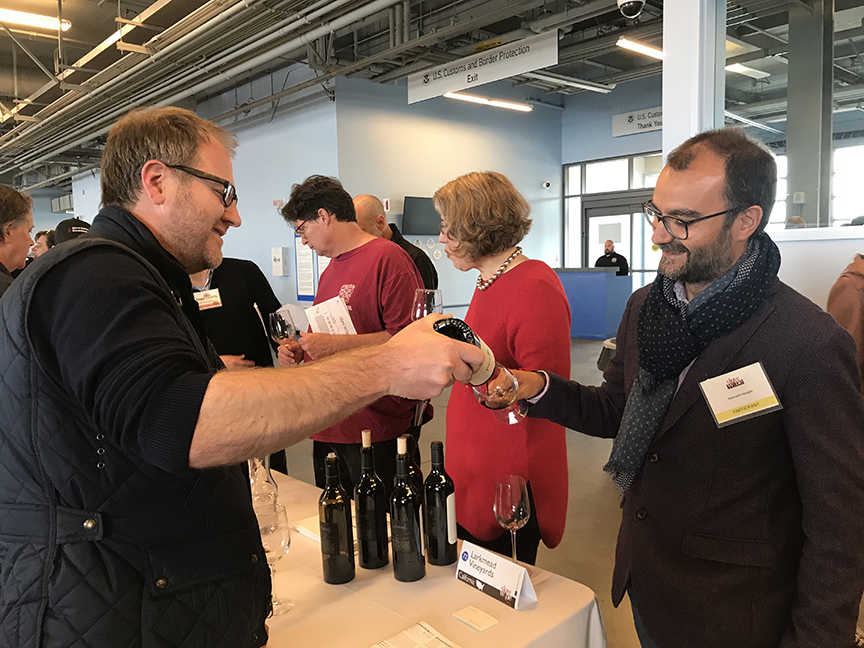
Above: winemaker Dan Petroski pours for Slow Wine editor-in-chief Giancarlo Gariglio at last year’s Slow Wine tasting in San Francisco.

On Saturday, October 12, at their annual walk-around tasting in Montecatini (Tuscany), the editors of Slow Wine will be presenting the 10th edition of the Slow Wine Guide to the Wines of Italy.

The event marks a milestone for the Slow Food movement and the many women and men who have worked assiduously to put the guide together for a decade now. But it also represents a landmark moment for wine writing in Italy.

Before the guide was first published in Italy in 2010, guides devoted to the country’s viticulture focused primarily on scores and tasting notes — a model borrowed from the U.S. Until the appearance of the first edition, Italy lacked a publication that gave voice to the growers and winemakers themselves. And for the vast majority of Italian wine writers and editors at the time, soil and viticulture were a mere afterthought.

“Quality” is just one of the elements that Slow Wine addresses, wrote Slow Food founder Carlo Petrini in the preface to the first edition of the guide. “It also focuses on the people who make them and how they are produced, the vineyards and the soils, their naturality and the farming practices employed, the grape varieties and the winemakers’ growing methods, and the wines’ future sustainability.”

Ten years after its initial printing, Slow Wine has firmly established itself as a leading resource for wine lovers and wine professionals who want to tap into the ethos of the wines and the stories behind them. It has become the guide for those who seek out wines and wineries that align with their own values — enogastronomic and otherwise.

This year, Slow Wine will also be publishing the third edition of its guide to the wines of California and the second edition of its guide to the wines of Oregon (I’m the coordinating editor for both). And perhaps the biggest news is that a Slow Wine guide to the wines of New York State is also in the works (a team based in New York City is putting it together).

Congratulations to editors-in-chief Giancarlo Gariglio and Fabio Giavedoni on their accomplishment! They’ve been there since day one and it’s thanks primarily to their efforts that this labor amoris continues to thrive.

The North American editions of the guide (in English) will be presented early next year at the Slow Wine tastings to be held across the country. Cities and dates follow below.

San Francisco: February 17
Seattle: February 18
Denver: February 20
New York: February 24
Boston: February 25

From Barolo to the bayou, climate change is reshaping our lives (all our yesterdays for a single tomorrow)

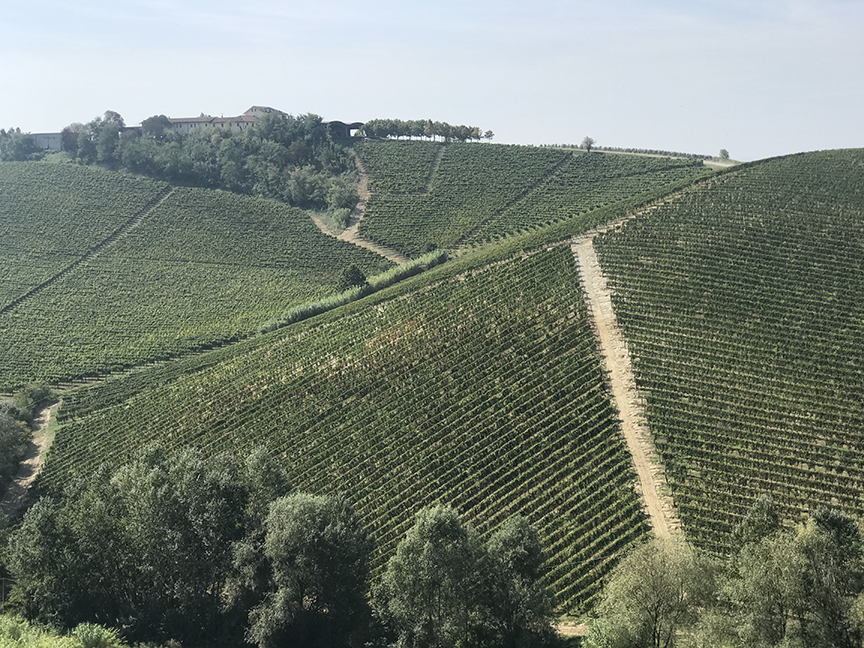
Above: a vineyard in the Barolo appellation where warmer temperatures and more intense weather events have reshaped viticulture — uncannily, for the better.

It seemed like yesterday — well, actually it was ten days ago or so — that an octogenarian winemaker was telling me how climate change has reshaped his vineyards in Piedmont in ways he never imagined possible.

As we walked down the dirt road that forms the crest of his two top growing sites, he explained to me that his most prized grapes used to not ripen properly on one side of the hill. Today, he said, they ripen perfectly.

He then shrugged his shoulders and grimaced tragicomically: “It’s because of climate change,” he said plaintively. “It’s been great for our winery,” where he has worked for more than five decades, “but not for the earth.”

It brought to mind a conversation with one of Barolo’s highest-profile growers, from nearly 20 years ago when a newly-turned-30 writer was just getting his career in wine started.

“The greenhouse effect is making me a very rich man,” he bellowed using one of the early euphemisms for global warming. He was referring to a string of Piedmont vintages, beginning in 1995, when regularly warmer temperatures began to deliver more consistent and balanced ripening. A generation ago, the Piedmontese were lucky if they got one good vintage in a decade. That was true through the 60s, 70s, and 80s. But in the mid-90s, it began to change.

That same winemaker might be crying today. Early this month, a number of Barolo producers were affected by a severe hailstorm that caused extensive damage. The Barolisti were extremely tight-lipped about the episode during my visit last week but some told me, off the record, that they had never seen hail like that. It was rice-shaped, they said, and it sliced right through the skins of the grapes.

The way climate change — global warming or the green house effect, depending on your generation — is reshaping the vineyards of Europe and even California is no news to anyone in the wine trade. Italian winemakers have been talking about it for two decades now.

Just this week, the New York Times published an article on climate change and its impact on wine growing: “The Future of Wine: Very, Very Dry.”

And earlier this year, the paper’s editors published “‘Disgusting to Say, but It’s the Truth’: German Winemakers See Boon in Climate Change.”

It is disgusting to say, isn’t it? But the humble words by a self-aware grower during my recent visit in Piedmont rang in my ears as our children and I hunkered down for the third round of major flooding this year in Houston, the city where we’ve lived for more than five years.

Our oldest is seven going on eight. She and her younger sister, age six, have already lived through two of the wettest storms in U.S. history. See this Wikipedia list for Overall wettest in the contiguous United States. Harvey is number one. Imelda is number five.

Leaders from around the world are meeting today at the United Nations to discuss climate change and the challenges of combatting it.

They surely (or hopefully) realize, as Elizabeth Kolbert wrote in her breathtaking New Yorker article “The Sixth Extinction” in 2009 (2009, people!), climate change isn’t something we can turn on and off like a light switch. There’s no way to replace the melted ice in the Antarctic or reverse the acidification of the oceans.

I’ve been fortunate to benefit from trends in Italian wine over the last two decades. But, to borrow a line from Kris Kristofferson, I’d trade all of my yesterdays, for a single tomorrow…

Parzen family ok, not directly affected by Imelda, but it’s a mess down here.

That’s what the radar looked like yesterday at around 1:30 p.m. when we were seeing some of the heaviest rain here in Houston. That blue dot is where we live in southwest Houston.

Our neighborhood was extremely lucky and we didn’t get any major flooding. But it’s a mess down here in Houston today.

Tracie is actually away at a convention this week and I’m home alone with the girls. We are all fine and so is everyone from our school.

The Levys here in Houston (my cousins) and Tracie’s parents and her sister’s family are fine as well.

Some of the worst flooding and damage happened between Houston and Orange, Texas (on the Louisiana border where Tracie’s family lives).

Interstate 10 connects Houston and Orange: it’s closed today on the east side of Houston because of barges, possibly carrying dangerous chemicals, that have been lodged underneath a bridge that spans one of Houston’s major rivers.

The good news is we are all fine and our neighborhood is relatively clear today. School is closed and we’ll stay close to home and the girls are getting a “TV” morning while I work (they are super stoked about that).

Please stay safe and thanks to everyone from who checked in to make sure we were okay. It really means a lot to me.

8 days on the road and one of the most amazing wine weeks of my life

Working in the wine trade has its ups and downs. But, man, last week was one for the books.

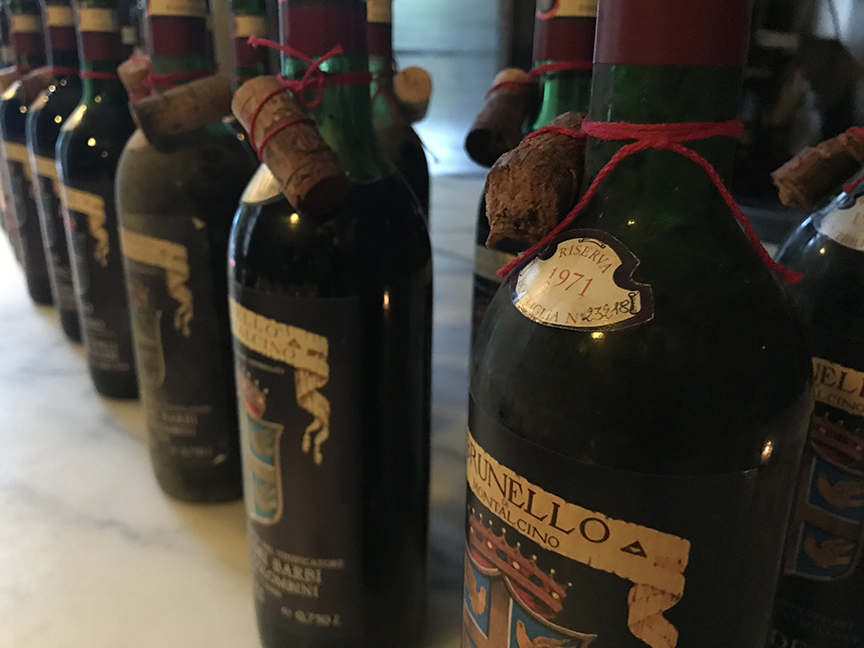
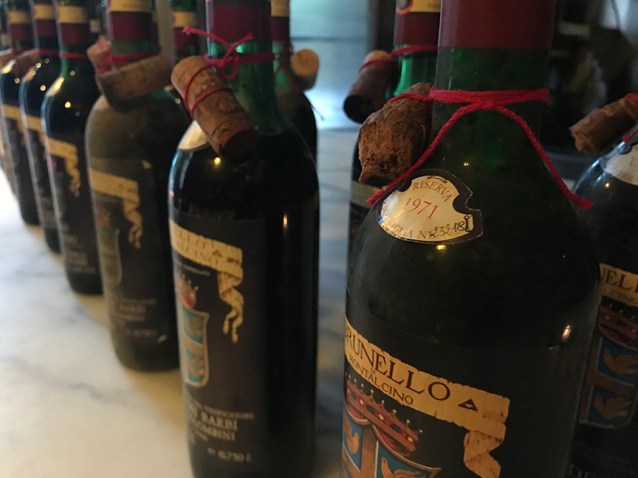
It started on Monday in Midtown Manhattan where I sat down with Raffaella Federzoni from Fattoria dei Barbi and a group of wine writers and trade member for a vertical tasting of the estate’s Brunello stretching back to 1971 (above). The 89 and 81 (especially) where my highlights, with so much freshness and vibrant fruit that you would have thought the wines much younger. An incredible experience and tasting, on so many levels. What amazing wines.

Raffaella’s insights into Brunello and its legacy are always so compelling. She’s such a cool and massively well read person and great writer. I love her and I love working with her.
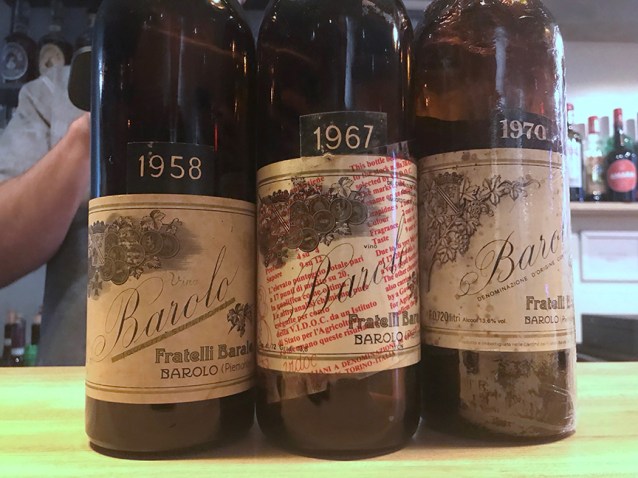
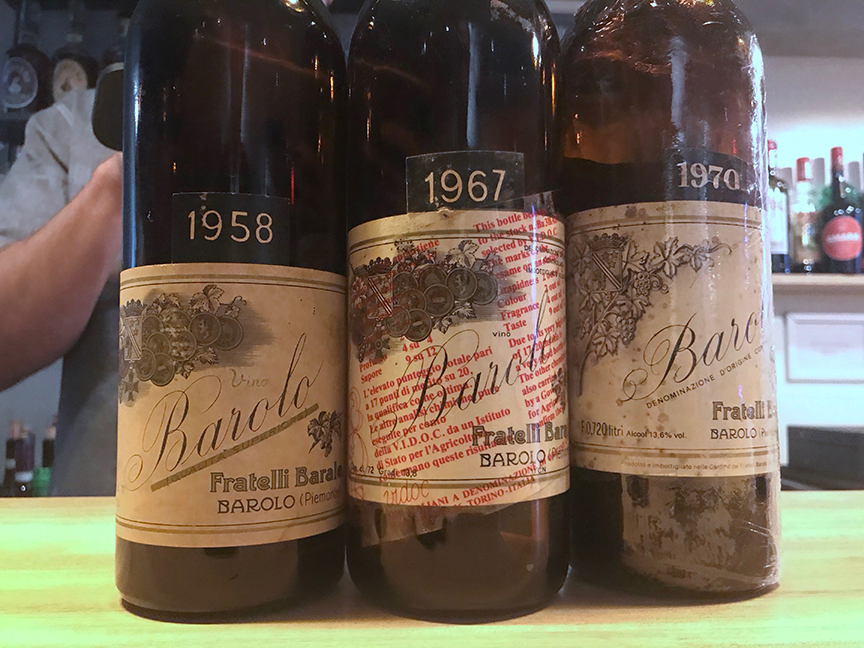
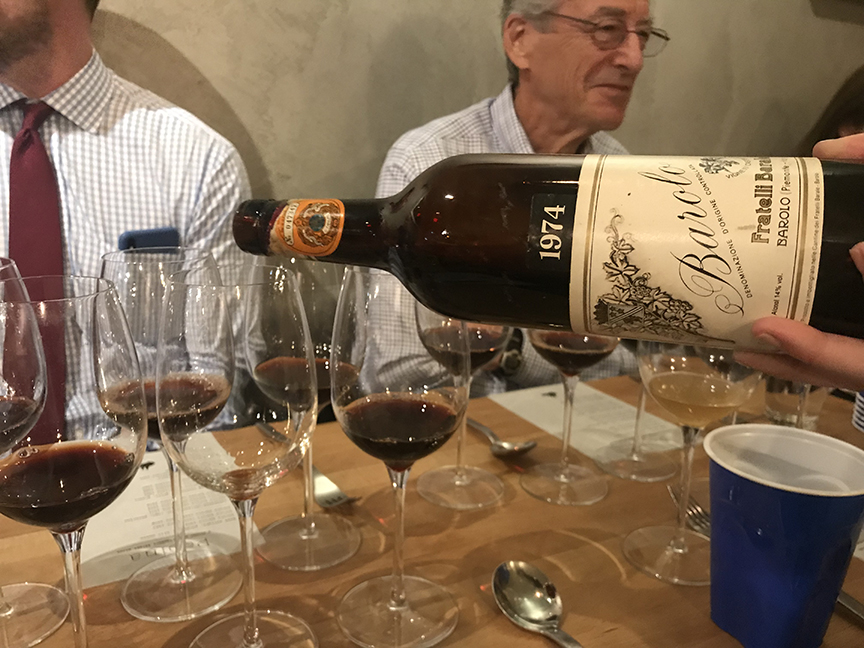
On Tuesday, my wonderful and generous friend Jamie Wolff saved me a seat at a dinner featuring Barale Barolo stretching back to 1958 (above). The 89 (wow!!!) and the 78 (gorgeous, a wine at its peak) were the highlights. I loved the aromatic fil rouge of eucalyptus and sage that ran through these wines, playing against their earth, fruit, and tannin. Another breathtaking tasting.

The setting was Popina in Cobble Hill, Brooklyn, which I loved.

Jamie is such a remarkable taster and Nebbiolo intenditore. His laugh is as warm as his embrace and I could spend a lifetime hearing him speak about the New York art scene in the 90s.
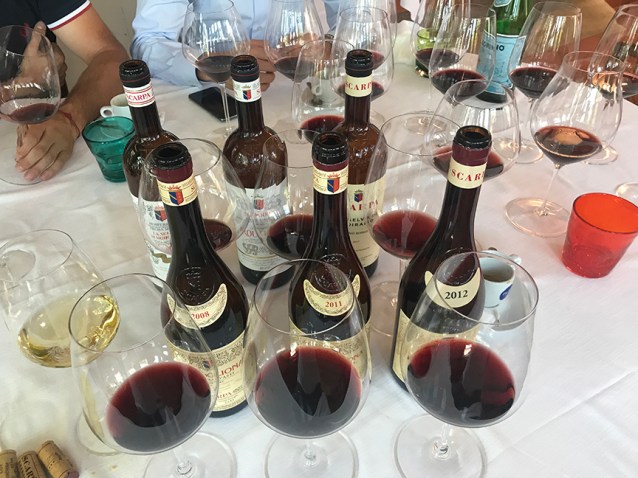
By Friday I was tasting in Piedmont at Scarpa, a new winery I’m helping out. Well, new for me but also one of Monferrato and Langa’s oldest and most beloved legacy producers.

Lunch at the legendary Del Belbo da Bardon included a mini vertical of the winery’s flagship Barbera d’Asti La Bogliona (above). The 08 and the 12 were equally delicious but the 2011 was showing the best that day imho. The Rouchet (Ruché, I’ll explain later) was INSANE with the Gorgonzola at the end of the meal.
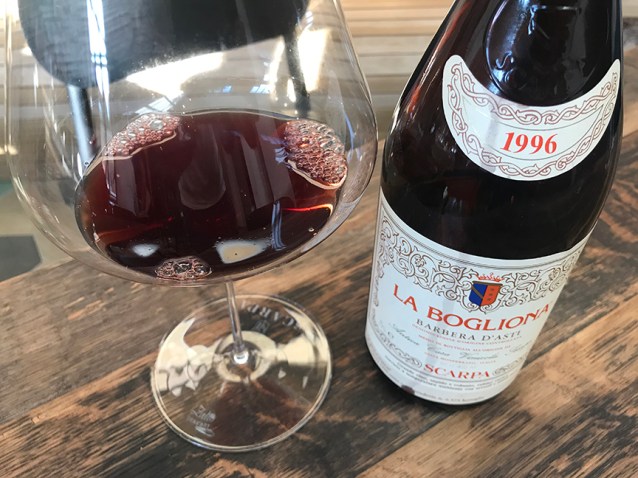
Back at the winery, this 1996 Barbera d’Asti La Bogliona (above) was one of the best wines of the week… one of the best of the year, really. So fresh and so in focus, with such clarity in the fruit.

I couple of my ex-students, two of my best, are working at the winery and it was so much fun to reconnect with them.
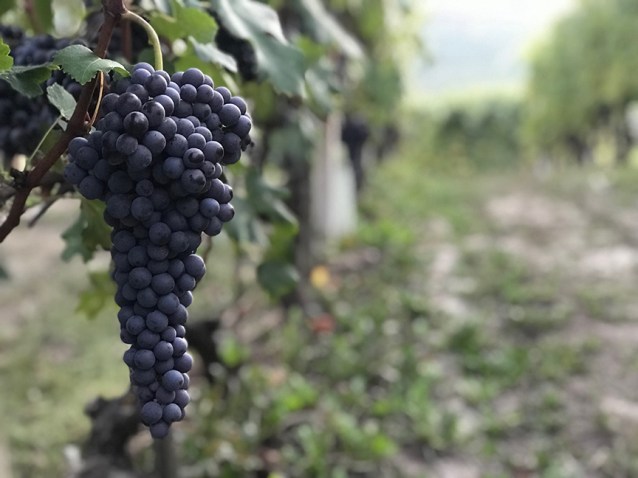
Nebbiolo, just before sundown, in their rows in Monvigliero, a Barolo cru in Verduno village (above).

The whole vibe of Scarpa is super cool. From the old chain-smoking cellar master Carlo to the brilliant woman, Riika (another alumna of the Master’s Program at Slow Food U. although she graduated before I started teaching there), who keeps it all together.
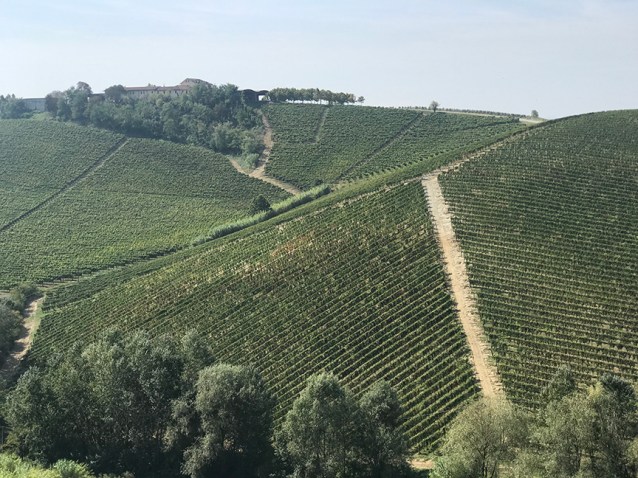
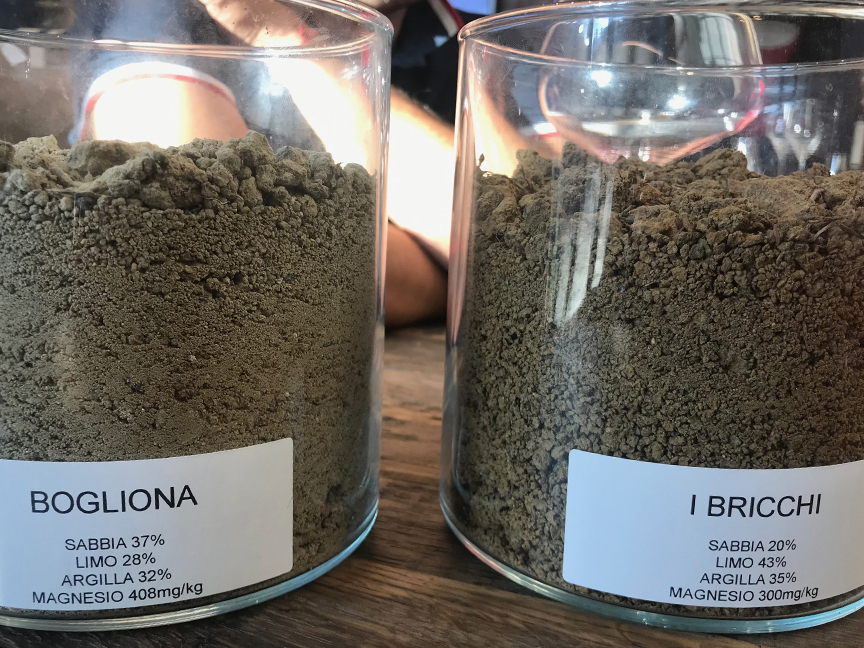
That’s their I Bricchi cru in Barbera d’Asti (above). La Bogliona is on the other side of the road at the top of the hill.

And the end of our tour, we sat in the shade of the trees by the abandoned farm house and talked about Cesare Pavese as Gregorio, my ex-student, picked juicy ripe figs from the edge of the vineyards and Caro smoked. I took this photo not far from the house.
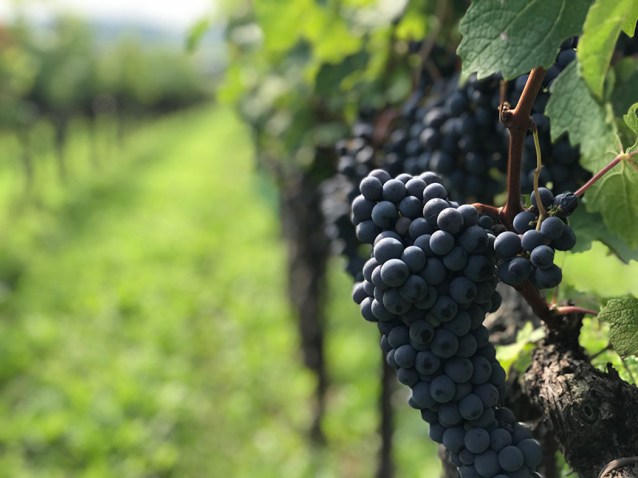
On Sunday morning, I was walking through Nadia Zenato’s beautiful organic Sansonina estate (above), a stone’s throw from Lake Garda, where her family’s been growing Merlot and Cabernet for a couple of decades now.

Nadia is so hip and glamorous and her family is engaged in so many cool charitable, community, and cultural projects in Verona province. I always knew their wines but didn’t know the people until she reached out and asked me to give her a hand with some translations and content this year. Super cool family and business leaders with a lot of soul.

That evening I tasted her Sansonina 2016 Merlot. The acidity and balance in this wine were spot on, with great freshness and texture. I really dug it and dig the whole crazy Zenato gusto for life and doing things that really matter.

I’m posting right now from the flight back across the Atlantic. It’s been an incredible week of tasting, learning, and hanging with people who really love what they do and who do what they do really well.

All in all, it’s nice work if you can get it… Thanks for letting me share one of the most amazing wine weeks of my life.

Popina is my new favorite Italian restaurant in New York

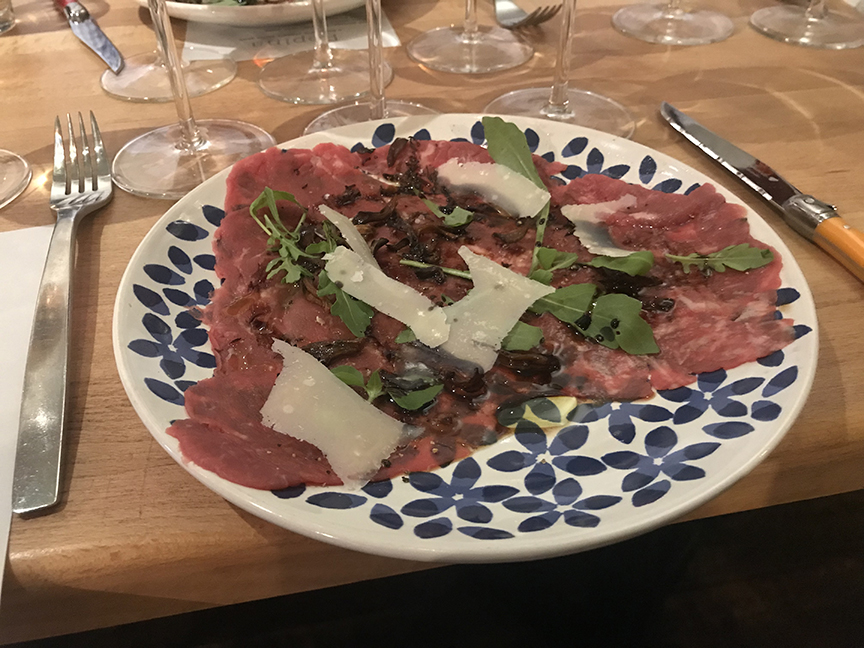
Above: “beef maitake parmesan olio nuovo” at Popina in Brooklyn.

Earlier this week, I had a chance to sit down for coffee with two of my best friends in the New York food and wine scene, a couple — she’s a famous Italian food writer, he’s a beloved Italian wine maven — who have lived and eaten Italian food in Manhattan and Brooklyn since they were children.

While they have a new favorite Sicilian and one of their old favorites has recently enjoyed a rush of celebrity thanks to its resident “pasta granny,” my fellow foodie chums both bemoaned the lack of great Italian gastronomic options in the city where America’s current Italian culinary renaissance was launched nearly two decades ago.

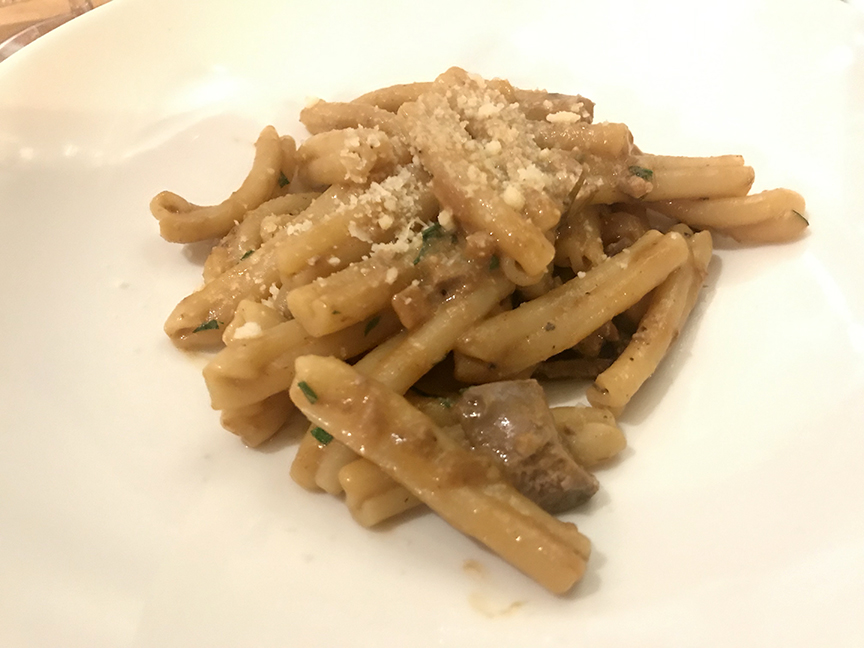
Above: “casarecce, chicken liver ragu, pecorino.”

As the super rich crowd has flocked to Manhattan and Brooklyn, they noted, real estate prices are simply too high to sustain the city’s once vibrant and thriving Italian restaurant community.

Well, I’m happy to report that there is still hope: I discovered my new favorite Italian in New York on Tuesday night when I attended a wine dinner at Popina on Columbia St. in Cobble Hill, Brooklyn.

The food was so simple and the flavors so pure that our meal reminded me of some of the best I’ve ever had in Italy.

In true Italian style, the richness of the chicken liver ragù (above) didn’t overwhelm the homey flavor of the handmade pasta. It’s so easy for a dish like this to turn out gooey and heavy and get out of whack. but Popina’s version was balanced and elegant. Man, I loved this dish!

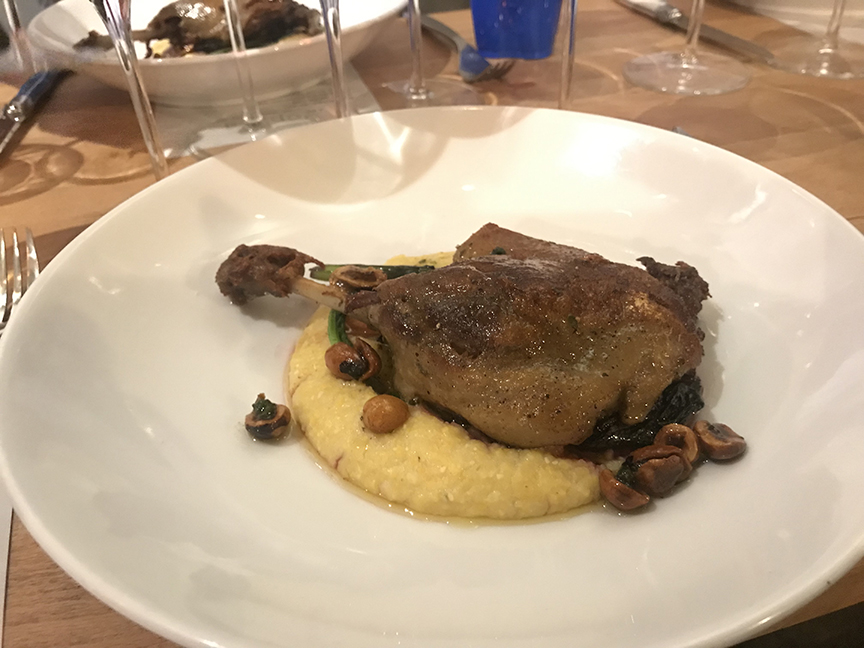
Above: “duck leg hazelnuts, grits, greens.”

Likewise, the duck leg, despite the fattiness and high protein content of the materia prima, had just the right combination of flavor and texture, making it delicate and light on the palate — the kind of delightful deception only the best chefs can attain.

It reminded me of some of the best roast goose legs I’ve had in Italy in terms of how it was prepared. The roast hazelnuts made for a decisive Piedmontese touch and their crunchiness worked wonderfully against the fall-off-the-bone meat. And I loved that the chef served it over grits.

What a great restaurant! And the nicest folks! I can’t wait to get back.

And the wine?

We tasted a flight of Barale Barolo going back to the 50s. But more on that later.

In the meantime, book yourself a table at Popina (but make sure to check the website because the restaurant has recently updated its hours).

The name Popina, btw, is after an ancient Roman dialectal term meaning kitchen or tavern. In Latina literature, it appears in reference to communal, low-brow dining establishments (the kind we like!). The owner told me that all the cool kid wine people in Manhattan hang out there these days and the wine list is amazing. (Marguet, anyone? They have a really cool selection of the wines and other best-kept-secrets.)

“Slow Wine is opening up the conversation about climate change.” Sophia McDonald’s excellent write-up for Oregon Wine Press.

Please check out Sophia McDonald’s excellent write-up of the Slow Wine Guide project for Oregon Wine Press.

“For me, Slow Wine is opening up the conversation about how winegrowers and winemakers can help mitigate climate change,” said Barbara Gross of Cooper Mountain Vineyards in an interview with the writer. “We certainly have literal skin the game. The more conversations we have, the more people are educated about these nuances in the way we grow and produce wines.”

Sophia really gets it and her reporting is spot on.

The Slow Wine Guide to the Wines of Oregon is now in its second year and the reception in the state couldn’t have been warmer.

Thank you, Sophia!

In other news…

I’m about to head off to NYC where I’ll be tasting some (very) old Brunello di Montalcino and Barolo. And then it’s off to Italy for a short trip to taste more old wine.

When I think of all the stuff I’m missing in our girls’ lives this week (first music lessons of the school year, first gymnastics, first karate class, and first Girls Scouts meeting), my heart just sinks.

But hey, it’s a living!

Please wish me luck and wish me speed. And please stay tuned for my posts and tasting notes. Thanks for being here.

Dorian relief: where to donate

Tracie, our girls, and I have been following Hurricane Dorian closely. After all, it was just two years ago, this time of year, that we hunkered down for Hurricane Harvey here in Southeast Texas and the memories (and the fear) are still very present in our minds.

We’ve also been Googling resources for relief and donations. The best list we’ve found so far is this one published by the Miami Herald (updated about 2 hours ago as of this posting).

Please donate if you can.

As my cousin Jeff in Boca Raton wrote on his Facebook yesterday, “Do not return your unused hurricane supplies. Instead, send them to the Bahamas. They’re going to need all the help they can get. Please share…”

G-d bless all of our sisters and brothers in the Bahamas and along the southeastern coast of the U.S. We’ve been praying for them and will continue to do so.

Image via Wikipedia (Creative Commons).

Slow Wine Guide 2020 to feature 200+ California wineries.

Above: Rhys Vineyards in the Santa Cruz Mountains. One of the things that has amazed me about California viticulture is how so many of the top growing sites are located in heavily wooded, wild areas.

The first edition (2018) of the Slow Wine Guide to the Wines of California featured 70 wineries.

With the second (2019), that number grew to roughly 120.

With the third (2020), it’s looking likely that the guide will include more than 200 estates.

(As in years past, the guide will be published in the spring and hard copies will be available for purchase at each of the events along the Slow Wine tasting tour across the U.S. It will also be made available for download.)

These last three years of working on the guide have been an eye-opening — or should I say palate-expanding — experience for me.

There’s so much great wine in California, I’ve discovered, that never seems to get the media coverage it deserves. As I’ve written here on the blog, I believe that’s partly due to the fact that a lot of California’s greatest wines are sold nearly exclusively to mailing lists and high-end restaurants. The iconic wines of Philip Togni, a Napa benchmark, are a great example.

Above: Mark Pisoni showing me his garden insectary at the family’s Pisoni Ranch. There’s a waiting list for those who want to buy the estate’s top wines.

It’s also due to the fact that there’s a relatively small group of “new wave” producers who have received the lion’s share of the media’s attention over the last 10 years or so. The new kids on the block, most of them négociant labels, make great wines, too (and I’ve tasted a lot of them over these last three years as well).

But I’ve also met a myriad of legacy growers who have quietly gone about their business of growing and raising great wines for decades, often without the media attention they merit (especially among the new generation of wine writers who’ve emerged since the advent of the enoblogosphere).

The expansion of coverage for this year’s guide is thanks in great part to our new senior editor Pam Strayer, a former environmental and health journalist who now writes passionately and expertly about organic and biodynamic viticulture.

Thanks to her extensive contacts on the ground and her impressive experience tasting wines across the state, our team has managed to nearly double the number of wineries we covered last year.

The energy and commitment that she brings to our work have been an inspiration for me.

From Pam’s About page:

    A leading specialist on American wines from organic and biodynamic vineyards, Pam Strayer is the author and publisher of 7 apps as well as forthcoming new web sites and books for the wine industry and consumers. She also consults to organic and biodynamic producers and organizations on marketing, strategy and communications.
    She is currently organizing a webinar for Women of the Vine & Spirits that will be held on Oct. 18 on the organic and Biodynamic sector of the wine industry (open to WOTVS members as well as the public) and writing an article for Beverage Media called “Green Wine: Where Are We Now.” She is also working on new books, Organically Napa, and Organically Sonoma, to be published along with a new newsletter.

Her wonderful blog is a great resource for those who follow organic and biodynamic grape farming in the state. I highly recommend it to you. She also leads consumer tours.

Apotheosis: Napa Valley finds one of its greatest expressions in Philip Togni

Above: “mountain” Cabernet Sauvignon Napa has become all the rage over the last decade or so. Togni planted at 2,000 ft. in 1981.

A most remarkable thing happened during my August visit to Philip Togni Vineyard on Spring Mountain Rd. not far from the western border of Napa County.

“Buona sera!” exclaimed dottor Togni when a Slow Wine editor stepped out of his truck.

“Buona sera,” replied said editor. “Come sta?”

“Bene, grazie. Benvenuto!” answered the iconic St. Helena grape grower and winemaker, whose family produces one of Napa Valley’s most coveted wines.

Above: the soils of the Togni vineyard are primarily volcanic in origin.

It should have come as no surprise: before settling with his family in the mountains to the west of St. Helena, the polyglot Philip Togni studied winemaking and made wine all over the world, including France, Chile, and Algeria. He had already mastered many languages before reaching California in the 1970s. But it was his Ticinese heritage that prompted him to study the language of Dante at Napa Valley College, he told the editor — in impeccable, seamless Italian.

(See Frank Prial’s wonderful 1990 profile of Togni for the Times.)

Above: the rocky soils and their drainage are ideal for the classic Bordeaux blend favored by the Togni family.

Over the course of our late afternoon visit, dottor Togni and I spoke almost exclusively in Italian.

But when it was time for a walk around the vineyard and tasting, his daughter Lisa, the current winemaker, switched to English as our lingua franca.

After three seasons of working with the Slow Wine guide, I’ve had the chance to experience their extraordinary wines on a number of occasions. And I have to say, they entirely reshaped my understanding of what Napa Valley can be.

They only make two Philip Togni wines: an “ageworthy Margaux-type” blend of Cabernet Sauvignon, Merlot, Cabernet Franc and Petit Verdot, their flagship; and a sweet wine made from Black Hamburgh, a rare table grape evidently not found elsewhere in Napa. Wines not deemed worthy of their top label are sold under a separate label.

Above: the Togni family crest in their barrique room.

There are few wines from Napa that achieve the elegance, balance, and clarity of the Philip Togni blend, made from the same vineyard each year. As for many Napa icons, Bordeaux is clearly the model, as they acknowledge. But the freshness and the vibrant acidity of the wines make them stand apart from the crowded field of predictable valley floor offerings.

Some would ascribe the brilliance and deliciousness of the wine to the altitude and exposure of the site. But when you stroll through the vines, planted on rocky volcanic-origin soils and surrounded by forest and wildlife (not far from the Bothe-Napa Valley State Park, where some of California’s most inland redwoods breathe), you begin to wrap your mind around what an exceptional site this is.

Above: the Togni family — figlia e padre — feel that their wines should be drunk only after a decade out from the vintage. 20 years, said Lisa, was when they really start to hit their prime.

The gently spicy oak was present but very much in balance on the 2016 Philip Togni poured me in their cellar. It had been open for two days, she said, and the slightly underripe red and black fruit was showing gorgeously.

In another era, a less experienced taster might have dismissed this wine because of the presence of oak. After all, many young wine trade observers still believe — wrongly — that oak is by its very nature “bad.” In fact, oak aging, in the classic French style, is what gives this wine its extreme finesse without compromising its lean character.

Sadly for me, the wines land above my price ceiling and I’ll probably only ever get to taste a properly aged Togni wine when and if a generous collector takes pity on me.

In the meantime, I’ll feel glad that the Togni family has shown me the true potential of Napa Valley viticulture — the appellation’s apotheosis.

La ringrazio, dottor Togni, per la visita, davvero eccezionale. Arrivederci.