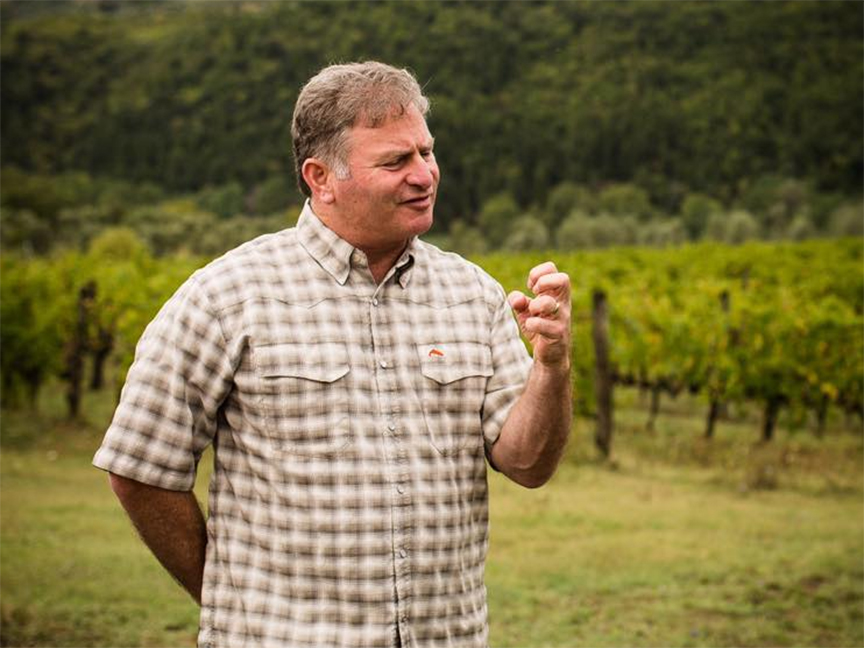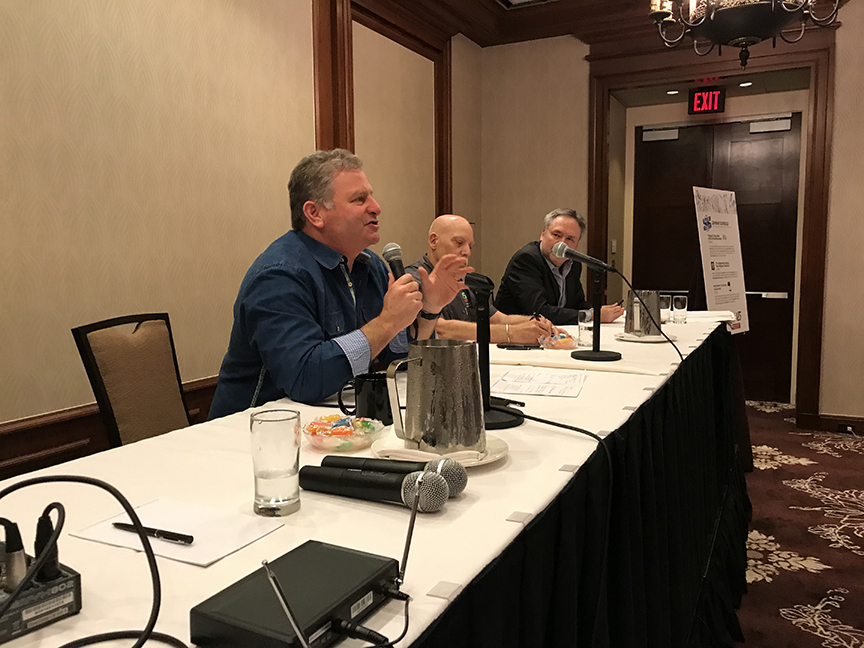
A virtual dinner with one of my Italian wine heroes: Brian Larky, industry pioneer and apotheosis of all that’s great about the wine trade.

Please read “California Wildfires and the Wine Community – What You Need to Know,” Beck Hopkins’ post from last week. We are praying for all of our sisters and brothers in my home state.

And here in Houston, we are all holding our breath as we wait for Hurricane Laura to develop. See updates on the excellent Space City Weather blog. Hoping for the best but expecting the worst.

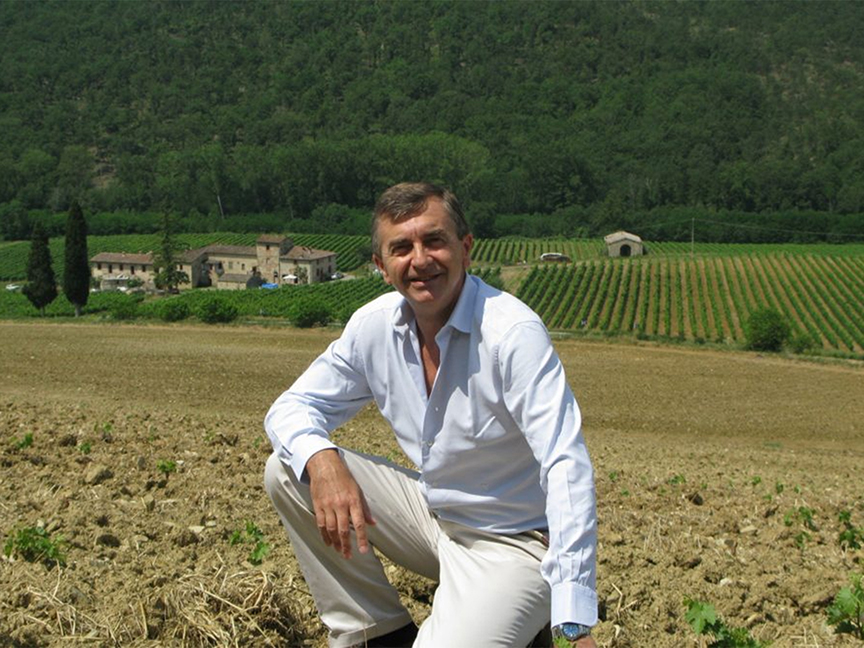
On Thursday, August 27, one of my all-time wine heroes, Brian Larky (above), will be joining me for the weekly virtual wine dinner that I host for Roma here in Houston.

Brian created a new model for Italian wine imports here in the U.S. when he launched his Napa-based company Dalla Terra three decades ago. Since that time, countless wines selected by him have become Italian wine standbys and favorites across our country.

On Thursday, he and I will be pouring and discussing three of those, including the Selvapiana Chianti Rufina, one of our family’s go-to red wines.

In many ways, Brian is the “Steve Jobs” of our industry. For many of the wineries he works with, he has created a “market” where previously there was none. Like Jobs, he introduced American wine lovers to wines they didn’t know they “needed.”

He’s also a winemaker (a Franciacorta alumnus with an enology degree from UC Davis), a brilliant speaker (we’ve presented seminars together in the past), a wonderful dinner companion (I speak from personal experience!), and the apotheosis of everything that’s good about the wine business.

I hope you can join us. Stay tuned for details. And feel free to email me if you’d like me to save you a spot.

A new book from Montalcino is going to change the way you think of Brunello.

Grape grower, winemaker, and author Stefano Cinelli Colombini.

In 1550, another Tuscan writer made (art) history when he wrote The Lives of the Most Excellent Painters, Sculptors, and Architects.

Not only did Giorgio Vasari single-handedly invent “art history” with his book, but he also opened a window on to a previously cloistered world: the lives of the people who were changing the meaning of art and the way we, even today, perceive works of art and the role they play in culture and human experience.

It’s important to remember that artists and artisans were considered second-class citizens at the time. They served their aristocratic patrons. But with Vasari’s work, they came to vivid three-dimensional life on the page for the first time.

In many ways, Vasari also created (or at least opened the path for) the “celebrity artist” by giving us gossipy, juicy details about their personal histories and intrigues. The parallels with modern-day food and wine writing and the rise of celebrity chefs, celebrity sommeliers, and celebrity winemakers are myriad.

I’ve teased legacy Montalcino winemaker Stefano Cinelli Colombini that the title of his wonderful book Brunello, ritratti a memoria (Brunello, Portraits from Memory, Fattoria dei Barbi Edizioni, Montalcino, February, 2020) should have been The Lives of the Most Excellent Brunello Growers and Winemakers. Currently available in Italian (see link), it’s a roman d’aventure that brings to life the people who made Brunello di Montalcino what it is today.

I know that when Anglophone wine insiders pick up the translation I’m working on, they’ll skip directly to the handful of household and tableside names we know here in the U.S. But those who want something deeper than workaday hagiography will find that Brunello’s arc is a synecdoche for post-war Italy and the heroic women and men who built it and who came before it. I believe that even the most savvy among the Brunellisti will be surprised and thrilled by Stefano’s Melvillian pastiche of characters, their sacrifice, ingenuity, and achievement.

With acute clarity, Stefano’s work shows that the history of Montalcino is an epoch story of tragedy, resilience, and ultimate triumph.

My translation will be published by Fattoria dei Barbi Edizioni this fall. Stay tuned for previews.

Taste bradyseism (yes, bradyseism) with me and Alessio Inama this Thursday in Houston.

Image via the Inama Facebook.

One of the cool things about doing wine dinners in Houston, the world’s petroleum capital, is that there will always be an abundance of geologists among the guests. And these women and men LOVE to talk about rocks and soil!

This Thursday, I’ll be leading a virtual wine dinner with a bunch of rock-friendly folks and the current generation of one our favorite wineries, Inama. And so it’s only natural that geology will be part of the conversation. The event is hosted by my client Roma, a local go-to Italian.

Among the wines we’ll be pouring is the Inama “Bradisismo.” The word is akin to the English bradyseism, menaing a “slow vertical movements of the earth’s crust, caused by volcanic action” (Geological Nomenclature, ed. A.A.G. Schieferdecker, 1959). It comes from the Greek βραδύς meaning slow and σεισμός, movement.

The phenomenon causes volcanic material (like the mixture of basalt with limestone in the image above) to rise to the surface. And it’s part of what gives the wines of the Soave appellation their unique mineral character.

I feel a deep connection to Soave and its wines because of the many years I spent living, studying, and working in Italy’s Veneto region in the northeast (where the Soave, Gambellara, and Valpolicella appellations are located).

Tracie and I are particularly fond of the Inama white wines. But when we drink the reds (like the Bardisismo we’ll be pouring on Thursday), I am reminded of how Veneto is one of the greatest places on earth to grow grapes like Carménère, Merlot, and Cabernet Sauvignon. These are not wines that were created “especially” for the U.S. market, although many enjoy them here. They are expressions of Bordeaux grapes that been part of Veneto’s enogastronomic culture since the years following the Second World War when this war-ravaged part of the country was rebuilt and replanted.

I’m super stoked to “sit down” virtually with Alessio Inama (below) who will be joining us via Zoom. I hope you can join us, too, for what is sure to be a great evening of eating and drinking (and not having to drive home!).

Chef Angelo is even making a bacalà mantecà (baccalà mantecato, creamed salt cod), one of my all-time favorites to pair with the Soave and gnocchi di Malga, the classic Alpine dumplings, to pair with the Carménère. What could be better than that?

I can’t wait! Check out the restaurant’s site for menu (not up yet as of this post but it will be there soon).

As Italy shows us, retail is future for wine sales.

The Angolo Divino wine shop in Ruvo di Puglia. “I am Vinarius,” the Association of Italian Wine Shops, reads the sign they are holding.

Retail sales of wine in Italy grew by 20 percent in June 2020 with respect to the same month in 2019. In July, they grew by 40 percent compared with the same month in the previous year.

These data come via Vinarius, the Association of Italian Wine Shops.

This growth in sales, wrote in an email Francesco Bonfio, president of the Association of Italian Wine Shop Professionals (AEPI), comes on the heels of a 50 percent drop in March (following Italy’s national shelter-in-place order) and a 30 percent drop in April.

La Capannina Più, Capri.

Francesco (a close friend of mine) ascribed the growth to the fact that Italian wine shop owners have embraced new sales models, including online sales and delivery services. He also noted that wines sales in supermarkets and big box outlets saw an initial boom in the period immediately following the lock down. But this trend was followed by a drop in wine retail revenue as independent and chain wine shops adapted to the new needs of the market.

The numbers from June and July are also a reflection of new consumption trends, as Francesco noted in his email. People in Italy, he wrote, have a “sort of subliminal apprehension” about dining in restaurants. He didn’t have any hard data on the number of people dining out. But he has observed anecdotally that Italians who frequently went out to eat before the pandemic now have rediscovered the joy of eating at home with friends and family.

Enoteca l’Etichetta, Bastia Umbra (Umbria).

These figures and observations came to mind yesterday when I spoke to a top sales manager for a top U.S. importer specialized in Italian wine. She told me that her company is working closely with their Italian partners to re-package their wines in order to make them more retail friendly.

With so many restaurants closing or doing significantly less business in the U.S., she said, her company is being forced to pivot toward retail.

Enoteca de Candia, Bari.

I’ve spoken to a number of retailers here in Texas and across the U.S. who tell me that their sales are booming right now, especially those who have shifted to online sales. My observations are anecdotal, of course, but I’m convinced that retail is where the potential for future growth lies right now. And in order to be part of this new wave, importers, distributors, retailers and the Italian wineries they work with need to focus on streamlining, repositioning, repackaging, and even rebranding products to work within this new paradigm.

As I wrote last month, wine shop workers are essential workers. They and the winemakers whose wines they sell need to work together to create new win-win opportunities as the wine trade continues to navigate the uncharted waters — the nec plus ultra — of wines sales in the time of the pandemic.

Enoteca Collovà, Capo d’Orlando (Sicily).

Thanks for reading. And thank you to Vinarius, AEPI, and my dear friend Francesco Bonfio for providing the data and images.

In the time of the pandemic, the three-tier system needs to go the way of the dinosaurs.

Above: a wine shop in California, a state where wineries have the option to work within the three-tier system or without. As a result, Californians can drink whatever their hearts desire. Here in Texas, it’s a lot better than it used to be, but the three-tier system still controls what wines we have access to.

About a year or so after I moved to Texas and had made friends in the wine business here, I ran into a couple of top wine professionals at the Austin airport (Tracie and I were living in in the state’s capital at the time).

“Where you guys heading?” I asked them.

“San Francisco,” they answered.

“Oh, cool! What’s going on in SF?” I inquired.

“We’re going there to study for our exam,” they said.

Why on earth, I wondered, would they have to fly to California to taste wine when they could simply have the wines shipped here? It turns out they couldn’t.

Both were candidates for the Court of Sommeliers pin and the reason they were traveling to the west coast, they explained, was because some of the wines they needed to taste (Burgundian, if I remember correctly) simply weren’t available in their home state. Not only could they not find them in the Texas three-tier system, they couldn’t have them shipped here because of the state’s highly restrictive and exclusionary shipping laws — a sine qua non element of the three-tier system in the state.

Nonplussed by the fact that the Texas government was practically forbidding them from accessing wines they needed to taste in order to further their careers (and as result, forcing them to travel out of state), I began reading up on and writing about the history of the three-tier system in Texas, the wholesale lobby that essentially wrote the laws making it illegal to enjoy certain wines here, and the people who have aggressively supported the status quo.

Last week I sat down to talk about the relevance of the three-tier system with one of the most brilliant people I know in the wine trade, Ron Prashker, MBA and attorney, startup guru, and owner of the Salcheto winery in Tuscany. On a previous webinar that I moderated (on a new startup that will help small wineries work in the U.S. outside of the three-tier system), Ron had shared some compelling insights regarding the current system for wine shipping and sales in our country. I was eager to dig deeper and he graciously accepted my invitation to chat. We even tasted one of his delicious wines together.

I hope you’ll find our conversation as interesting as I did. Thanks for watching.

Italian sisters and brothers, you are my heroes! This is what a life in wine can be like in the time of the pandemic.

My good friend Flavio Geretto, a top Italian wine professional, post this photo yesterday with the following caption: “Lunch and Prosecco blind tasting with the export team before the summer holiday break. During this difficult year we never stopped… and our aim is to continue in the same way!!!!”

Dinner was over, the kitchen was clean, and our daughters were in bed last night when Tracie and I turned on some music and sat down on the coach to catch up on news and social media.

One of the first images that appeared in my feed was the one above: my good friend Flavio Geretto (second from right) with the export team at the Villa Sandi winery in Valdobbiadene (I do media consulting for Flavio).

I turned to show it to Tracie.

“That’s what life in wine could be like,” I said, “if our country had the leadership and moral fiber to fight the virus. Italians are my heroes.”

Through their sheer resilience and deep sense of civic duty, the Italians have shown the world how we can learn to live with COVID.

Here in Texas where we “live,” our infection rates are high, countless people are suffering, and many are dying, and yet our state leaders continue to tie the hands of our local government despite our mayor and crisis manager’s pleas to let them lock our city down. It’s so plain to see: the Italians were quick to lock down their country once the scope of the pandemic became clear; they banded together — apart — to stop COVID’s spread; they wore their masks and maintained social distance; and now, across Italy, a normal life has resumed.

It’s a life where people can work and socialize without fear, as in the photo above of Flavio with his colleagues.

What the Italians have down is nothing short of heroic.

I’ll never forget texting with one of my single friends in northern Italy at the height of the health crisis there. He was holed up alone in his condo in the country end and we were extremely worried about his physical and mental health. He had no contact with anyone — anyone at all, not even his parents or sister — for weeks on end. Today, he goes out to lunch and dinner, sees his friends, and regularly receives tasters at his winery.

Wine professionals in America could be doing the same if it weren’t for the shortsightedness of our leaders and our utter lack of civic responsibility. We could be doing the same if our worldview didn’t boil down to why should I wear a mask to protect your health, why should I change my lifestyle so that others don’t suffer, why should I care that members of my community are dying at an alarming rate?

Where Tracie and I live, there’s no end to the crisis in sight. We are among the fortunate who work at home and have the means to live a decent life even while sheltering in place. But our community — our country — will never get back on track until our citizens embrace a sense of belonging and selflessness in the place of the egoism and myopia that continue to paralyze us.

Italians, you are heroes! How I envy you! How I weep and long for my America!

Luigi Coppo, one of the coolest Piedmont winemakers I know, joins us this week in Houston (and heartfelt thanks to everyone who took part in the Ricasoli event).

We don’t drink a ton of red wine at our house. We mostly pour lean, fresh or oxidative, white wines, especially during the warm Houston summer.

But earlier this year, when I brought home a bottle of my friend Luigi Coppo’s Barbera d’Asti L’Avvocata, Tracie completely freaked over it (meaning, she LOVED it).

Barbera is generally known for its high levels of acidity and this wine is no exception. But Luigi’s deft hand as winemaker delivers extraordinary balance in this single-vineyard designate that still lands at a more than affordable price. It’s one of our favorite reds of 2020.

Luigi (above), who’s become a good friend over the last few years, will be joining us this week for the weekly virtual wine dinner I present at Roma restaurant here in our adoptive southeast Texas city.

I knew his dad back in the day when he used to come into one of the restaurants where I used to work back in the day. The family’s flagship cru Barbera d’Asti is one of the Barbera trinity of all-time greats imho (Braida and Scarpa make my other two favorites).

Because I’ve spent so much time in Piedmont in recent years teaching at Slow Food U., Luigi and I have had the opportunity to hang and taste on multiple occasions. We were even planning to write some songs together (before the pandemic took shape).

He’s one of the coolest people I know in Monferrato wine and I’m super stoked to be hosting him this week.

Click here for menu, wines, and details.

I also have to give a shout-out this morning to Francesco Ricasoli, who was featured last week, and to everyone who joined the call. We had more than 70 people on the Zoom and it was one of the most memorable in the series.

The news from the world outside these days is just bad, bad, and worse. And so many of us, like our family, are sheltering in place and isolating — alone, together — in a collective effort to stop the spread of COVID. It’s nothing short of depressing, especially when we think of the countless people in our state and country who are suffering right now.

But our Thursday night supper club has become a retreat, a respite, and a salve for the constant din of dreary headlines, soundbites, and tweets.

Francesco, thanks for helping make last week’s “gathering” one of the most magical so far. And thanks to all of our guests: it wouldn’t be possible without you.

If you’re in Houston this week, I hope you can join us. You won’t regret it (AND CHEF ANGELO IS MAKING VITELLO TONNATO FOR THIS ONE!).

Thanks for your support.

The original Chianti “formula” (“recipe”) translated.

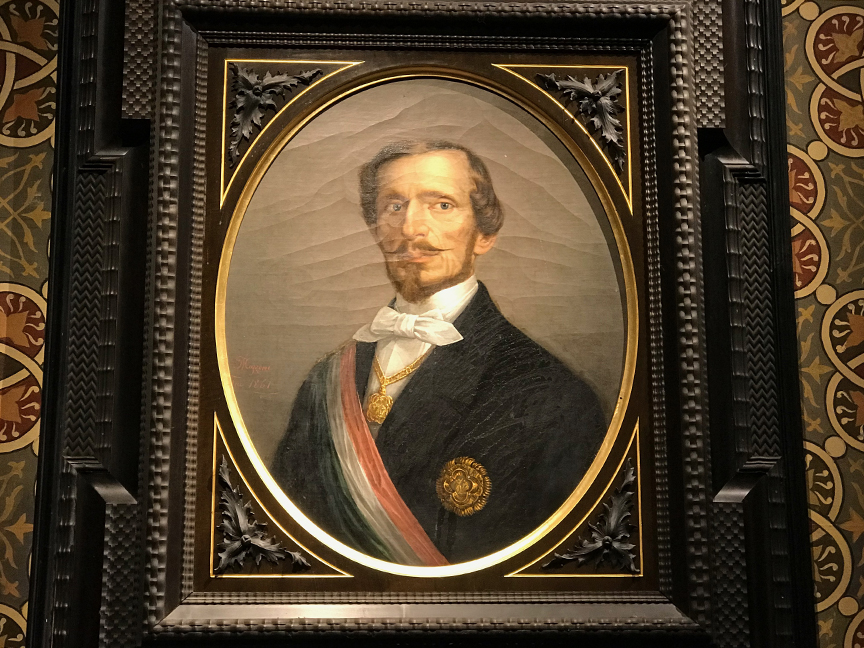
Above: Bettino Ricasoli, the “Iron Baron” (1809-1880), united Italy’s second prime minister, grape grower, winemaker, architect of the Sangiovese renaissance, and creator of the Chianti appellation. Photo of his portrait at Brolio Castle in Gaiole in Chianti, taken in January 2020.

Tomorrow night, I’ll be presenting Francesco Ricasoli, descendent of Bettino Ricasoli, the creator of Chianti, at a virtual wine dinner here in Houston. To celebrate the occasion, I wanted to share my translation of the famous letter in which the “Iron Baron” Bettino scribed what has come to be known as the Chianti formula.

The letter was republished last year by Olschki Editore, one of Italy’s most prestigious academic publishers, in a wonderful critical edition of the Baron’s epistolary correspondence with Professor Cesare Studiati of the University of Pisa: Alla ricerca del “vino perfetto”. Il Chianti del Barone di Brolio (In Search of the Perfect Wine: the Baron of Brolio’s Chianti).

Many years ago, when the letter was not readily available, I traveled to Chianti to meet with Francesco and his father (also named Bettino) who pointed me to a source where I could find the original text. Not long thereafter, I published the translation here on my blog and I’m happy to post it again today for the occasion of Francesco’s visit with us tomorrow night (Francesco is such a great guy, btw).

Above: a photograph of a page from the famed letter (right) and the Baron’s writing desk (from Alla ricerca del “vino perfetto”).

It’s true that the formula does include Malvasia as one of the grapes the Baron used to produce his “ideal” of Chianti. Many continue to focus on that detail.

It’s important to note how he specifies that Malvasia works well for producing wines for daily consumption whereas it’s excluded for the wines intended for aging — what we would call “fine wine” today.

Even more important in my view is that the Baron writes about the results of his research on native Tuscan grapes. At a time when Gamay was the most widely planted grape variety in Tuscany (yes, Gamay, but more on that later), his findings led him to reaffirm the extreme potential of native grape varieties there.

During the late 1880, it was practically unthinkable that fine wines from Italy would one day be shipped beyond it borders. But the Baron’s vision that Italy could produce world-class wines was ultimately proved right. Chianti today is arguably one of the world’s most widely known appellations, rivaled only by designations like Bordeaux in terms of its recognizability.

The Baron’s findings led grape growers across Tuscany to grub up the French grape varieties they favored and replant with native grapes, and in particular, Sangiovese (known as Sangioveto at the time). Singlehandedly (and I can’t emphasize this enough), he had launched the native grape renaissance and revolution, a watershed moment that still shapes our perceptions and love of Italian wines.

My translation of the letter follows.

Above: the Ricasoli family’s private chapel at Brolio Castle. I visited the estate in January on my last trip to Italy. I highly recommend the castle tour, even for veteran wine professionals. It’s really fantastic.

Bettino Ricasoli “the Iron Baron” to Cesare Studiati
September 26, 1872

As early as 1840, I began experimenting with every grape variety. I cultivated each one in significant quantities on my Brolio estate. Our goal was to test the quality and taste of the wines produced from each grape.

Following this comparative study, I restricted the number of grapes at Brolio and began growing Sangioveto, Canaiolo, and Malvasia almost exclusively. In 1867, I decided once again to make wine using these three grapes. I made a relatively large vat of each one and then I blended the three in another vat using exact proportions.

In March of last year, the experiment was finished and I was satisfied with the results. The wines were subsequently shipped.

Later I verified the results of the early experiments: the Sangioveto gave the wine its primary aroma (something I aim for in particular) and a certain vigor in taste; the Canaiolo gave it a sweetness that balanced the harshness of the former but did not take away from the aroma, even though it has an aroma of its own; the Malvasia, a grape that can be excluded for wines intended for aging, tends to dilute the resulting wine created by the former two, it increases the flavor but also makes the wine lighter and thus more suitable for daily consumption.

Taste with Chianti Classico pioneer Francesco Ricasoli and me next Thursday at Roma’s virtual wine dinner in Houston.

Next Thursday, August 6, I’ll be presenting a virtual wine dinner and guided tasting with Chianti Classico producer Francesco Ricasoli (above).

The event is part of an ongoing weekly series hosted by Roma in Houston (one of my clients). Check out this Houston Chronicle write-up on the dinners, which appeared yesterday on the paper’s website.

Last night, our featured guest was my good friend Paolo Cantele who joined from Lecce, Puglia. Francesco will be joining from his offices at Brolio Castle in the heart of Chianti Classico.

I first met Francesco more than a decade ago when I was searching for a letter written by his ancestor, the “Iron Baron” Bettino Ricasoli, united Italy’s second prime minister and the architect of the Tuscan wine renaissance in the second half of the 19th century.

The celebrated letter in question included Baron Ricasoli’s historic “recipe” for Chianti Classico (more on that later; there are a lot of misconceptions about what he actually wrote). But more importantly, his reflections on Sangiovese firmly established the variety as the quintessential Tuscan red grape. In more ways than one, it created the model — the marriage of Tuscan soil and grape — for Sangiovese wines like Brunello di Montalcino, among others. And today, as the new wave of Chianti Classico comes into focus, Francesco has continued his family’s legacy as Tuscan viticultural pioneers with his groundbreaking work on Chiantigiana subsoils and cru designations.

Francesco and I have stayed in touch over the years and I had the great fortune of meeting and tasting with him in January during my last trip to Italy before the pandemic. He is one of Italy’s most fascinating winemakers imho and his work is as compelling as his wines are delicious.

I couldn’t be more thrilled to be presenting him and his wines next week here in Houston. I hope you can join us.

Next week, I’ll share the story of the letter (which has now been republished), its legacy, and my fascination with it.

As wine, food, and lifestyle writer Emma Balter wrote for the Houston Chronicle this week, these virtual dinners are a lifeline for the restaurant and all the families it helps to support, including my own. The events are a lot of fun and provide a much needed respite from the pressures and stress of life in the U.S. right now. Thank you for your continued support. Click here for a preview of next week’s dinner.

Racism, yesterday and today, in the Italian wine industry.

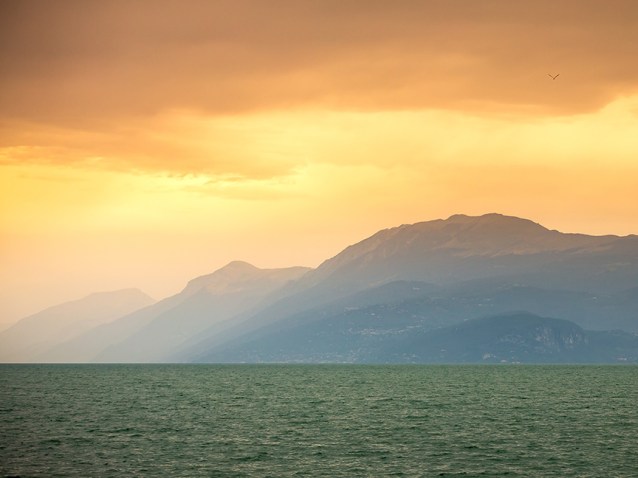
Above: Lake Garda as seen from Desenzano, Lombardy (image via Adobe Stock).

In 2008, not long after Barack Obama had been elected as the 44th President of the United States, one of Italy’s highest-profile wine guides televised its annual wine awards gala on national television.

During the course of the broadcast, one of the presenters mused that the newly elected U.S. president’s favorite wine must be Brunello or Nero d’Avola. Translated literally, the former means brownish while the latter could be rendered as black [grape] from [the town of] Avola.

It was around the same time that Italy’s prime minister told reporters that he liked Obama because he was “young, handsome, and tanned.”

Can you imagine the outcry if an Italian winemaker or wine writer were to make similar comments today? What would happen if a public figure from France were to speculate that Obama’s favorite wine must be Pinot Noir (black Pinot)?

Above: a screenshot taken from the landing page of a prominent Italian winemaker’s website. It’s a modified stock photo to which the designer added the text on the protest sign.

Over the last few months, I’ve heard from a number of American wine writers and wine professionals who have expressed concerns about racism in the Italian wine trade. One of them sent me the link to the website of a high-profile Italian winemaker.

The screenshot above comes from the landing page. The image was created using a rights-free stock photo to which the designer added the text on the cardboard sign the woman is holding (in the original photo, the text read: “the future is female”).

“Is this winemaker a racist?” he asked me.

Honestly, I don’t have an answer. But it’s clear that they are tone-deaf to what’s happening across the world today in terms of anti-racist reckoning.

As Americans passionate about Italian wine, we often tend to buy into the superficial and sometimes feigned progressive attitudes of Italian winemakers. Who can forget the notorious case in 2013 when a celebrated Italian natural wine producer posted repulsive and egregiously racist comments about Italy’s then minister of integration? (Few recall the blowback against American wine professionals who publicly declared that they wouldn’t sell said winemaker’s wines anymore and against American wine writers who wrote about the affaire.)

Part of the problem — the disconnect — is the language barrier. But the overarching issue, in my view, is that we tend to consider the wine without taking a broader look at the culture that produced it. Viticulture, after all, is also a reflection of culture.

There’s no doubt in my mind that the overwhelming majority — and let me just repeat that — the overwhelming majority of Italian winemakers I know personally is on the right side of the racism and anti-racism dialectic. They, like us, are reckoning with their personal and national attitudes on race as they, like us, continue to evolve as anti-racists.

But sadly, if we dig a little bit deeper and scratch below the surface, we often discover that the wines we love are raised by people whose attitudes on race may diverge significantly from our own. And of course, there are also racists among us who continue to embrace those wines and the winemakers who produce them.

Over the last few weeks, a number of prominent natural wine advocates have distanced themselves from a young and outwardly progressive winemaker whose family has been implicated in a human exploitation investigation. Everyone I’ve spoken to in that region of Italy tells me that most people “on the ground” suspected that the family engaged in questionable employment policies. But in their own statement on the ongoing inquiry, the young winemaker and family member insinuates that they themself had no knowledge of any wrongdoing.

Where does the answer lie? Those are the hard questions we need to be asking.

In the 1920s, when the American poet Langston Hughes visited Italy for the first time with his friend Romeo, the townsfolk of Desenszano offered him vino neroblack wine.

“Later that night,” wrote Hughes in his autobiography, “Romeo explained to me that never in Desenzano, so far as he knew, had there been a Negro before, so naturally everybody wanted to look at me at close hand, and touch me, and treat me to a glass of vino nero. Romeo said they were all his friends, but hardly would the whole theater have rushed into the street between reels had it not been for me, a Negro, being with him.”

Can you imagine how a black wine lover would feel today if something similar happened to them? Can you imagine how a black woman feels when they land on the website of Italian winemaker and see an image like the one above?

Let me just say it once more, those are the hard questions we need to be asking if we want to be anti-racists in wine — and life.