Merry Christmas from the Parzen Family

 The last MLK Day parade was held in Orange in January 2018. We will be reviving that beloved and long-standing tradition next month.
Please join my family on January 18, 2021 as we take part in the Martin Luther King Day Parade in Orange, Texas where Tracie grew up.
Continue reading
 Tracie and I have joined forces with our friend MaQuettia Ledet, founder of Impact Orange, to organize the 2021 Martin Luther King Day parade in Orange, Texas where Tracie grew up.
Continue reading
Please consider giving to our GoFundMe to raise funds for the MLK Day 2021 parade in Orange, Texas where Tracie grew up and where we’ve been protesting a newly constructed neo-Confederate monument since 2017. Thank you for your support.
 Giving a heartfelt shout-out today to Sunday Vinyl, the new Denver wine bar by the Boulder-based Frasca restaurant group.
I had the opportunity to visit early this year before the pandemic lockdowns while on a business/fun road trip with Paolo Cantele, one of my best friends.
That’s the venue’s signature turntable, above. Pretty friggin’ cool, right?
 The folks at the Frasca group just know how to do it right.
That’s the lobster pasta, above, at their (newish) Tavernetta restaurant, adjacent to the wine bar.
Continue reading
Please consider giving to our GoFundMe to raise funds for the MLK Day 2021 parade in Orange, Texas where Tracie grew up and where we’ve been protesting a newly constructed neo-Confederate monument since 2017. Thank you for your support!
 Normally at this time of year, I’d be leafing through my photographs and notes from the last 12 months and picking out favorite shots from my top visits, tastings, and meals.
As far as 2020 is concerned, the pickings are slim but not without some wonderful memories.
In late February, Paolo Cantele, one of my best friends in the business, and I made our last road trip for the entire year to promote his family’s wines. We started in Houston with a great event at Vinology. Next was Dallas with a sold-out dinner at the legendary Jimmy’s. And since we were on our way to Boulder for another packed wine tasting at Boulder Wine Merchant, we decided that we should try to organize an event in Tulsa, a city where I’d never been but where, I had heard, there was (and is) a vibrant progressive wine scene.
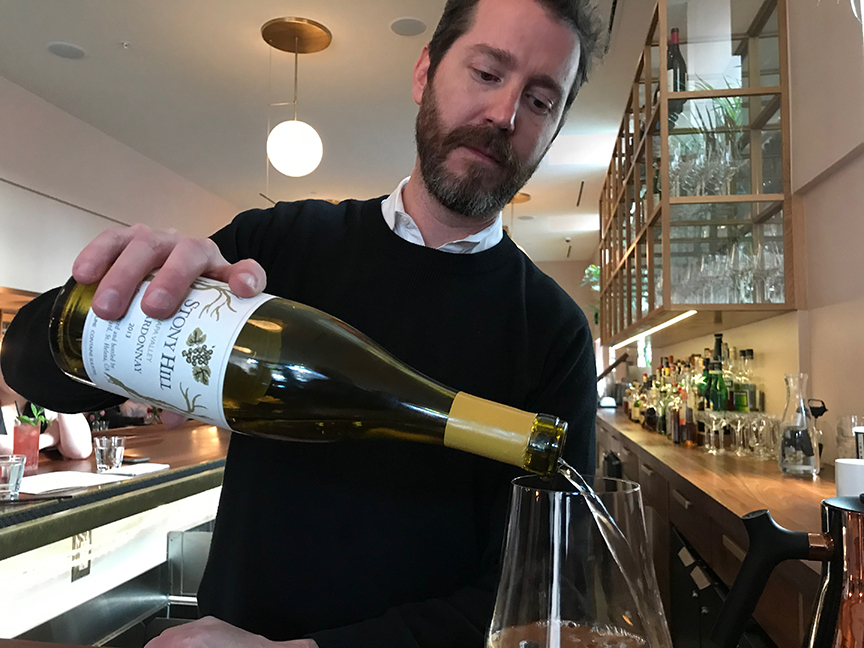
After researching possible venues, I cold-called Matt Sanders (above) owner of the fantastic Tulsa wine destination Vintage Wine Bar.
After a roughly 10-minute conversation, he agreed that he would let us host a tasting of Paolo’s wines there.
There’s not really anything so remarkable about that other than the fact that Matt, such a gracious and massively talented wine professional, took a chance on a couple of complete strangers.
Paolo and I ended up hanging out all night after our event (no surprise there), drinking mostly high-end California Chardonnay (one of Paolo and me’s shared loves).
The offerings at Vintage Wine Bar would have been right at home in Oakland or Brooklyn. And meeting and interacting with Matt reminded us of how wine and the global wine community never fail to bring us together — even when on a first date with a new city. We had such a blast that night.
Matt, if you’re reading this, please take it for what it’s worth: a love letter to one of my favorite wine bars in the country and one of the coolest wine people I’ve met in a long time.
I know Matt and co. are doing well thanks to their Instagram. And I can’t wait to get back there when Paolo and I make our next trip. It’s one of the first things he and I are planning to do once we can connect in person again.
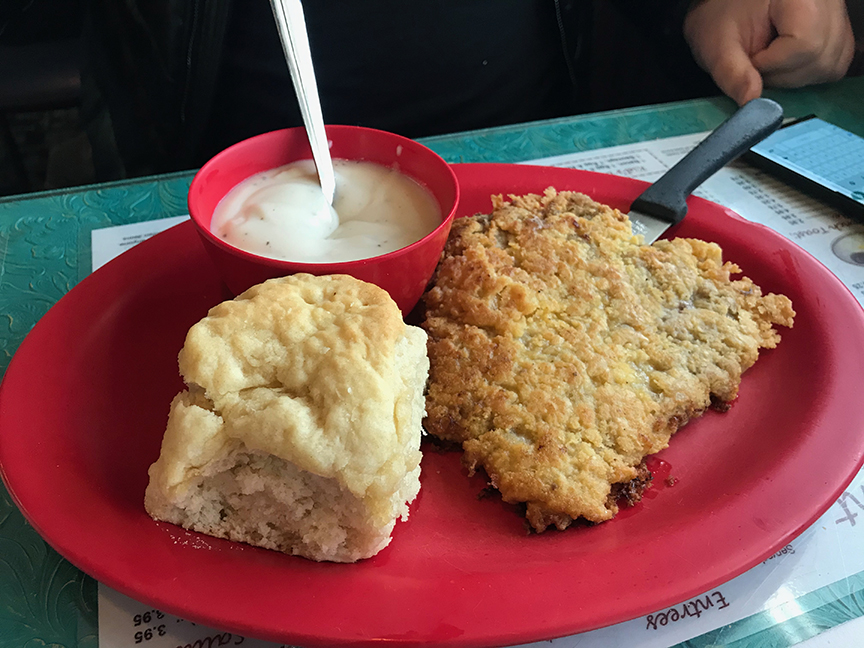 Earlier in the day, Paolo and stopped to eat chicken fried steak at Marilyn’s in McAlester, Oklahoma.
It was everything we dreamed it would be: a cozy, homey all-American dinner serving biscuits and gravy at all hours of the day.
We even got trolled by a very large and farty Trump supporter who took us for a gay couple (Paolo’s leather may have been the trigger). It was right around the time that Rush Limbaugh was huffing and puffing about Pete Buttigieg being gay. So I can understand our fellow diner’s concern.
The lady behind the counter (below) seemed to feel bad about it. And she even gave me an ice tea (unsweetened) to go.
Man, I love America. And I miss it even more.
Thanks for being here and be sure to check out Matt Sanders’ super wine program in Tulsa! I can’t wait to make it back!

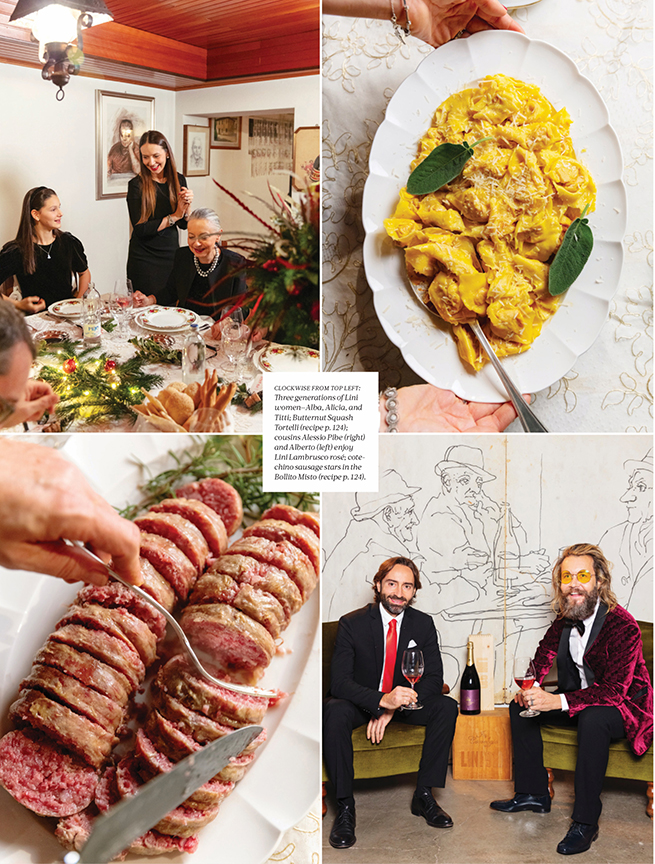
 Above: winemaker Fabio Lini, one of the greatest sparkling winemakers I know, pours the wine, center. And that’s Alicia Lini, his daughter and my cherished friend on the right.
In January 2007, my then employer sent one of my colleagues and me to Italy as a bonus for a successful year in the New York City food and wine scene. I was working for an Italian restaurant and importing group at the time. And while my boss gave us a budget and simply told us to have a great time, I was determined to source a classic method Lambrusco for the company.
Nice work if you can get it… My colleague Jim and I ate at all the great restaurants in Emilia that were on our list. And at each meal, we asked what the owner’s favorite classic method Lambrusco was. The name that kept coming up, over and over again, was Lini.
(At the time, nearly all Lambrusco was produced using the tank method, whereby both fermentations were carried out in a stainless steel tank, the first not pressurized, the second pressurized. Classic method or “bottle fermented” Lambrusco is made using a technique lifted from Champagne whereby the second fermentation is carried out in bottle and the wines are disgorged before the final bottling.)
In April of that year, our boss tasted the wines with us at Vinitaly and it was decided: we would import Lini and make the wines the centerpiece of our fall campaign at the restaurants, including a swanky new downtown location we were opening.
It was my first “up at bat” as a wine trade marketing specialist. And it was Alicia’s as well. By the end of the year, we had landed coverage in the Times, Men’s Vogue, Food & Wine, and on WNYC. By the end of the season, Lini had been christened the sparkling toast of the town — literally as well as figuratively!
 It was also the beginning of my deep bond and cherished friendship with Alicia and her family.
The events of that year indelibly shaped both of our lives as professionals. For Alicia, they showed how her family’s soulful wines could reach the greatest heights. And to me they gave the blueprint for a career in wine and food marketing.
I couldn’t be more thrilled to see Alicia, her family, and her family’s wines featured in the December 2020 issue of Food & Wine. Ray Isle, executive wine editor for the masthead, visited the Lini family last December for their Saint Lucy’s Day celebration. His wonderful dispatch includes the Lini family’s personal recipes for their traditional Christmas meal.
I wish I could share the entire article with you here but I can’t, of course. I do encourage you to check it out. It’s worth the price of admission and more.
Warmest congratulations to Alicia and her family! They are some of the nicest people in the wine trade and I love how Ray captured the joy they put into their wines and everything they do.
Dulcis in fundo: Alicia will be joining us on Thursday, December 17 for my final virtual wine dinner of the year here in Houston at Roma restaurant, my client, where I’ve been hosting the events every week since the late spring.
Just let me know if you’d like me to save you a spot for an evening of bubbles and great food.
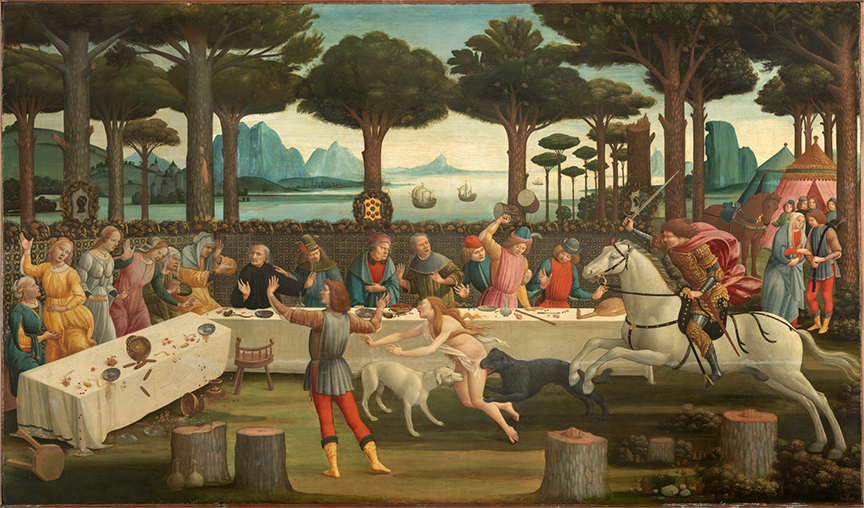 Above: Sandro Botticelli’s “Banquet in the Pine Forest” (1482-83), the third painting in his series “The Story of Nastagio degli Onesti,” a depiction of the eight novella of the fifth day in Boccaccio’s Decameron (image via Wikipedia Creative Commons).
When esteemed wine educator Karen MacNeil upbraided me last year for writing about a wine and its effect on my metabolism, it only reminded me of what a soulless wine writer she is. And her pungent words came to mind this week when I delivered a virtual lecture on wine as an expression of Western culture for the Georgetown University Humanities Initiative.
One of the topics covered in my talk was wine as portrayed in Giovanni Boccaccio’s Decameron. For those unfamiliar with the work (one of the pillars of the Western canon), the backdrop of the 100 tales told by the young Florentine nobles is the Black Death (Plague) of the mid-14th century. The pandemic reached his city around 1348.
In the introduction to the collection of novellas, Boccaccio describes wine consumption habits of Florentine citizens during the health crisis, their excesses and their moderation, and the role that wine plays in achieving good health.
In the work’s afterword, he returns to the subject of wine and moderate consumption.
“Like everything else,” he writes, “these stories, such as they are, may be harmful or helpful, depending on the listener.”
(The Decameron by Giovanni Boccaccio, translated by Wayne A. Rebhorn, Norton, New York, 2013.)
As evidenced in the passage above, Boccaccio and his contemporaries believed that wine, like fire, was “downright necessary” for humankind.
In Medieval Europe, wine was prized for its ability to balance the “hot” and “cold” of foods and dishes. “Hot” wines were ideally served with “cold” foods and inversely, “cold” wines were best paired with “hot” dishes. These were not gradations of temperature, spiciness, or alcohol content, but rather indicators of humoral composition.
The humors of the drinker, and the place and time of consumption, also came into play.
“Once the nature of a given wine was determined,” writes Medieval scholar Allen J. Grieco, “it still remained necessary for a consumer to respect at least four other conditions.”
(“Medieval and Renaissance Wines: Taste, Dietary Theory, and How to Choose the ‘Right’ Wine [14th-16th centuries],” by Allen J. Grieco, Mediaevalia, vol. 30, 2009, The Center of Medieval and Renaissance Studies, Binghamton University, The State University of New York.)
Boccaccio’s belief that wine was necessary for humankind is widely reflected in the 15-century treatise “On Right Pleasure and Good Health” by Renaissance writer Bartolomeo Sacchi “Il Platina” (see Platina. On Right Pleasure and Good Health, a critical edition and translation of De honesta voluptate et valetudine by Mary Ella Milham, Medieval and Renaissance Texts and Studies, Tempe, 1998).
Pairing the right wine with the right food (and at the right time and in the right place) was one of the keys, he writes throughout the work, to good metabolism and healthy living — echoes of Boccaccio.
Today, wine scribblers like MacNeil embrace only aesthetic, hedonistic, and commercial values in their reviews and “educational” materials. Nearly universally, they fall short of embracing the human and humanistic currency of wine. They ask only how is this wine made?, how does this wine taste? and what’s its commercial value? without ever addressing the role that wine may play in metabolism and more generally in achieving balanced, good health. They write of lifestyle while ignoring life and living itself.
I can’t imagine a more soulless wine culture. With so many wonderful examples of wine writing over the ages where wine is viewed as vital to human experience, it’s a wonder that the current generation of wine mediators have failed us so grossly.
Maybe if MacNeil and her followers would drink a more human wine, they wouldn’t have such a prickly stick up their arses.
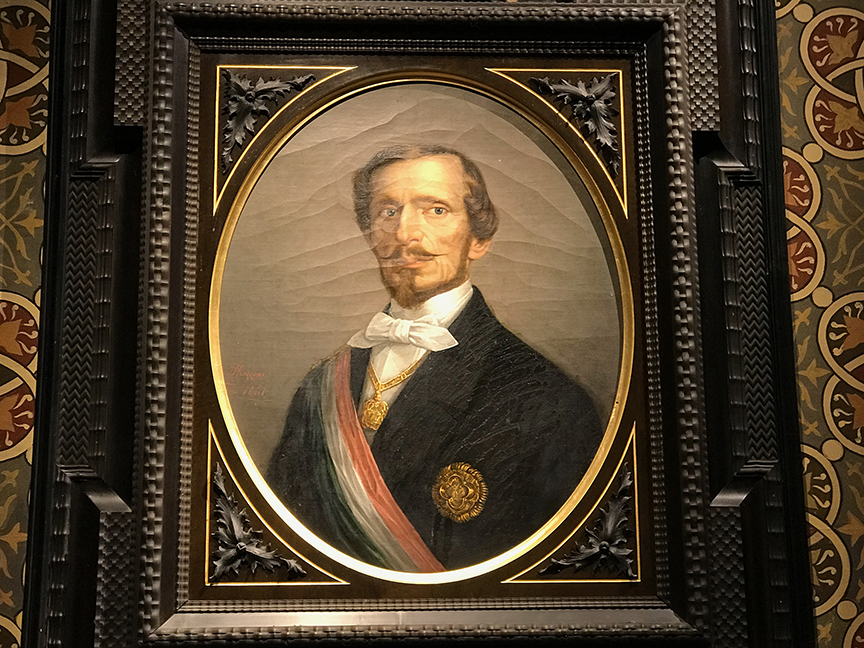 In January of this year, before the lockdowns began, I made my last trip to Italy (on behalf of my client Ethica Wines, an importer). My visit to the Castello di Brolio and the Ricasoli winery and tasting room in the heart of Chianti Classico was one of the highlights.
That’s a portrait of Bettino Ricasoli (1809-80) above: the “Iron Baron,” the second prime minister of united Italy (1866-67), and historic champion of Sangioveto (Sangiovese). Not only did he transform and elevate Sangiovese into Italy’s quintessential red wine, but he was also one of the earliest Italian growers to favor native grape varieties. He was arguably Italy’s most influential winemaker and the impact of his studies and experimentation still shapes Italian wine today.
The Ricasoli family and winery hold a special place in my heart. More than a decade ago, Francesco Ricasoli (the current generation) and his father Bettino received me at their Castello di Brolio to discuss my then ongoing research into their namesake’s famous “Chianti recipe.”
Francesco’s father pointed me to an archive where I could find a transcription of the “recipe,” a letter published in the late 19th century. See my translation, the only English-language version of the “recipe,” here.
He also treated me to a wonderful tour of the castle and estate.
At one point, he recounted how he was embedded with British soldiers as they tried to re-take the castle from the occupying German forces toward the end of the Second World War. It was incredible to retrace his movements with him as he described the final battle: because of his intimate knowledge of the castle’s design (he was born within its walls, after all), he was able to provide the British with a layout of the structure’s battlements. Amazing!
I’ll never forget that day and visit. I felt like a 12-year-old kid watching his favorite movie. We ate tripe and drank Sangiovese at lunch.
Here are some photos from my visit. I’ll be hosting Francesco Ricasoli at Roma restaurant, my client, this Thursday for our weekly virtual wine dinner. Francesco is one of the most magnetic and engaging winemakers you’ll ever taste with. We’re expecting this event to sell out. See menu and details here. I hope you can join us!
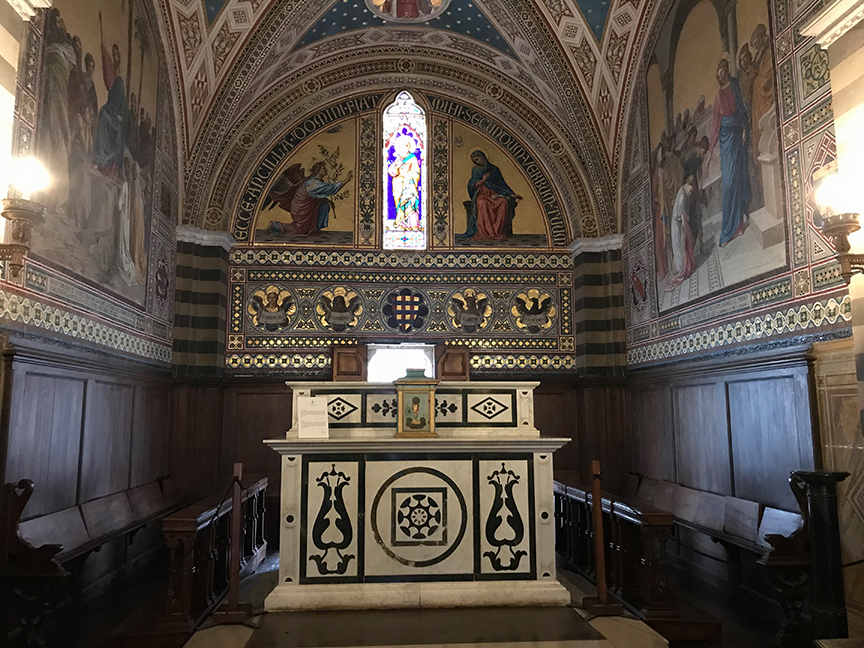 The Ricasoli family chapel. Magical.
 A view from the castle. It’s hard to take a bad photo in Tuscany.
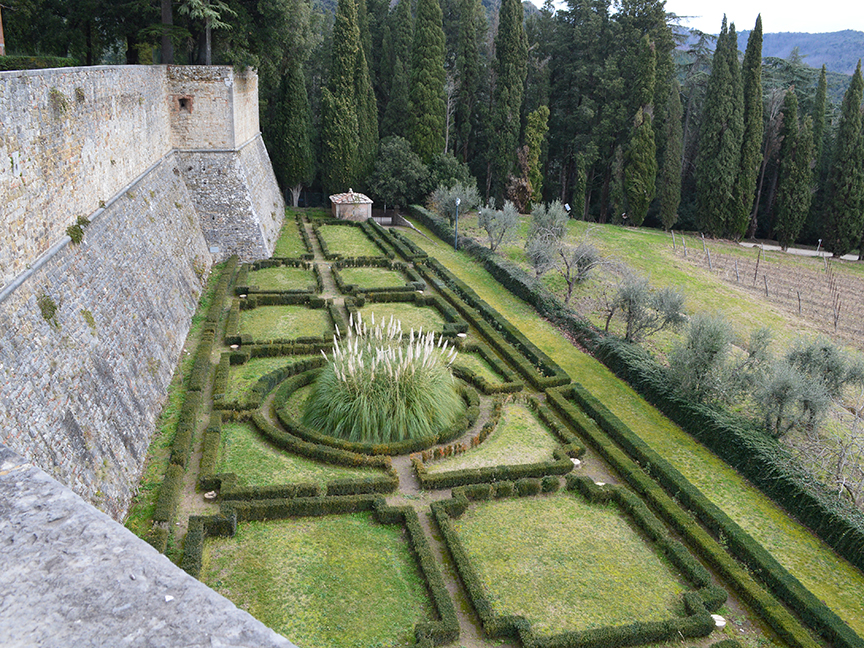 Renaissance garden. Note the vineyards that practically touch the castle’s walls to the right in the image.
 Francesco’s studies of Chianti Classico soil types are astounding and extremely useful. Note the ancient sea shell, a trace of ancient seabed, a red thread in many of the world’s greatest appellations.
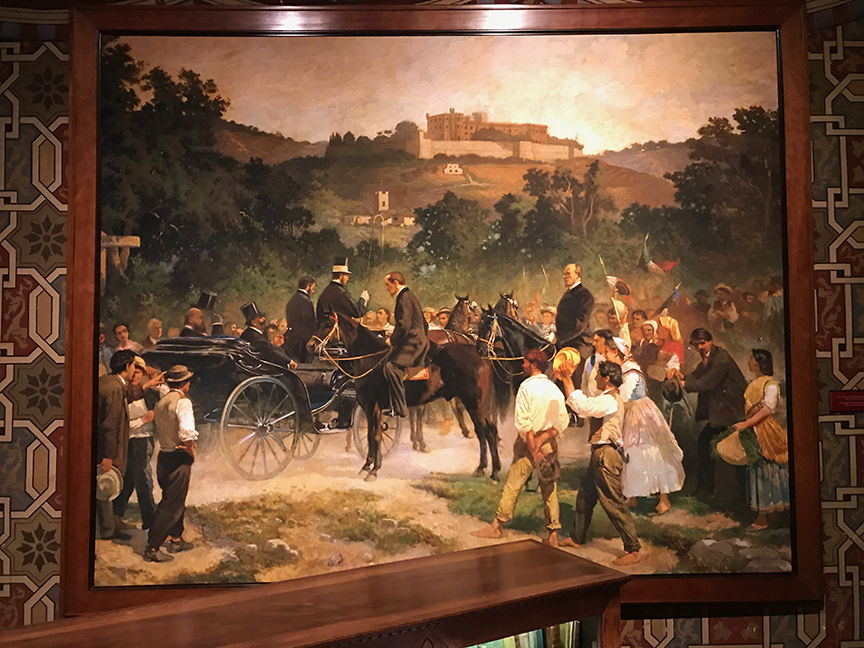 The Iron Baron greets King Victor Emmanuel II at the Castello di Brolio. The two statesmen were eager to compare notes on their viticultural studies and findings.
 The night before my winery visit, I drank the Ricasoli 2012 Chianti Classico Gran Selezione Colledilà (single-vineyard designate) paired with creamy veal spleen and chicken liver crostini at a forgettable trattoria in Greve in Chianti. It was one of the best wines I drank this year. Highly recommended.
 Above: not only could a new round of wine tariffs raise the cost of wines at your favorite Italian restaurant, it would also impact countless Italian wine-focused small businesses and their employees across the country (photo taken at Misi in Brooklyn in January 2019).
According to a report published yesterday by Bloomberg, “the U.S. will soon issue the results of probes into Austria, Italy and India’s decisions to tax local revenue of Internet companies such as Facebook Inc., which could pave the way for retaliatory tariffs.”
The news comes on the heels of the EU’s recent announcement that it “plans to impose $4 billion in tariffs on U.S. goods, continuing a trade war fanned by the Trump administration” (Washington Post).
Both moves are part of ongoing World Trade Organization litigation between the U.S. and the EU over airline industry subsidies.
In October of 2019, the Office of the United States Trade Representative (USTR) imposed a tariff of 25 percent on French wines and Italian cheeses among other European products.
Those tariffs are still in place despite herculean efforts by the United States Wine Trade Alliance, an association formed last year in response to the continuing trade war.
The duties have gravely impacted not only French wine growers and Italian cheese makers but also thousands of small business in the U.S. including retailers, restaurants, distributors, and importers. Their tariff pain has only been exacerbated by the health crisis this year.
While Italian winemakers have been spared (so far) from the fallout of the trade wars, the new EU digital tax investigation and the newly imposed EU tariffs on U.S. goods could prompt the USTR to impose new duties on imported Italian wines.
“Biden has the ability to abolish these tariffs on day one of his administration,” said USTWA president Ben Aneff on a Zoom call with hundreds of American wine professionals yesterday afternoon.
Aneff and the USWTA are asking wine trade members to sign a petition asking the Biden administration to “End the Restaurant Tariffs!” Currently focused on the “on premise” sector, the campaign is part of a broader effort to raise awareness in the new administration about how these tariffs are affecting small businesses and their employees across the country.
I highly encourage all U.S. wine trade members to read and sign the petition. And please share it with your networks. The presidential transition, as Ben noted yesterday, represents a unique opportunity to have these duties lifted with one bold pen stroke.
Click here to read and sign the petition.
Please see also this USWTA Facebook post where Ben addresses strategies on raising awareness of the campaign among restaurant owners and employees.
Thank you for your support and solidarity.
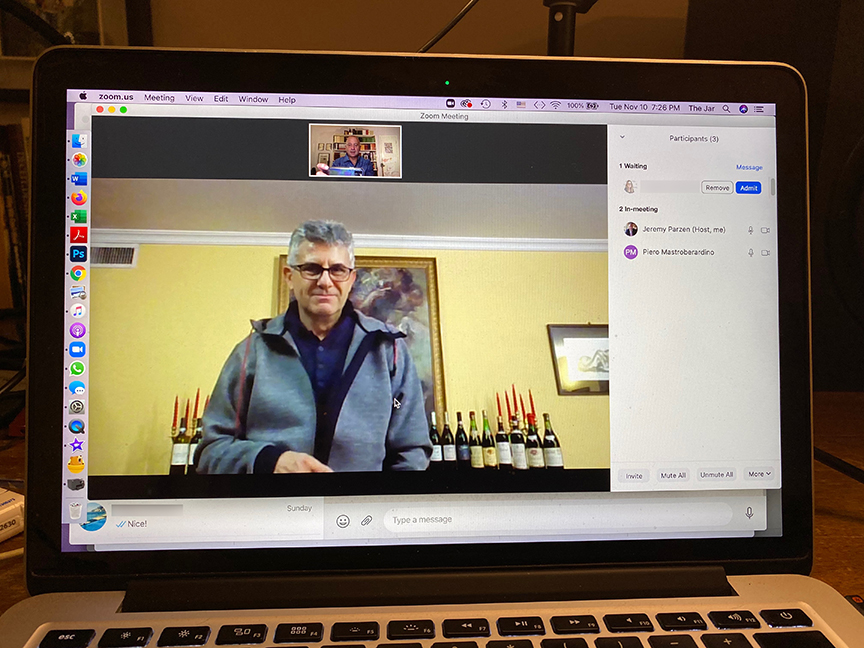 Above: grape grower and winemaker Piero Mastroberardino joined us last night for a virtual tasting in Houston.
What an incredible night of virtual tasting last night with Piero Mastroberardino!
Piero was our guest yesterday at the fortnightly Zoom event that I host for Roma restaurant in Houston, my client.
Over the course of tasting current vintages of his Greco di Tufo NovaSerra, Lacryma Christi, and Taurasi Radici, Piero talked about something truly remarkable in the world of wine today: A wine-growing region not affected by climate change, Irpinia.
That’s not to say that Piero is a climate change denier. By no means.
He, too, remarked on the remarkableness of the climatic situation in Irpinia, an ancient volcanic plateau east of Naples where some of Italy’s most famous wines are raised.
It’s hard to explain Irpinia’s stunning landscape without actually being there.
As you drive up the highway toward the mountains from Naples, your ears begin to pop because of the rapid change of altitude. Once you make to Irpinia’s edge, you are greeted by a view of a green valley in the sky surrounded by mostly extinct volcanoes.
 Above: Irpinia, a photo from my 2016 trip there.
There’s really not much reason to go there except for the extraordinary wine growing. No Michelin-starred restaurants or resorts, no industry besides winemaking. Just ancient hilltop towns and vineyards and vineyards as far as the eye can see.
And as Piero explained yesterday evening, it’s perhaps the only place on earth where grape harvest times still align with the rhythms of his parents’ and grandparents’ generations and even beyond.
Regardless of the causes of climate change (and I, for one, believe that the scientists are right in their thesis that human industry is the primary motor), grape harvests have been accelerated across the world in recent decades.
“I harvest much earlier than my parents did” is something that you hear European growers nearly without exception.
Most famously in Italy, Piedmont growers point to the string of vintages that began to take shape in the early 1990s as an example of this. More than a decade ago, a famous Rhône grower echoed a Piedmont grower when he told me that “climate change has made me a very wealthy man.” He was referring to the fact that he, like his Italian counterparts, no longer have trouble attaining higher alcohol volumes in their wines now that rising temperatures deliver the necessary sugar levels in the fruit. In another not-so-long-ago era, European growers — both continental and Mediterranean — considered themselves fortunate if they had one vintage per decade where they could achieve the desired alcohol.
 Above: all the wines showed beautifully last night and the Taurasi was spectacular. But the show-stopper for Tracie and me was the Greco di Tufo NovaSerra. What a fantastic wine!
As guests asked Piero about the elegant minerality and balance in his wines, he ascribed the savory character and freshness to the fact that he, like the generations that came before him, can ripen their grapes over longer spans of time, in other words, more slowly than winemakers in other parts of the world.
Just ask a grower in Torrenieri or Verduno if they still pick in the same month as their parents or grandparents did. They will both tell you that where their parents harvested in October, they now gather their grapes in September. Piero picks his fruit as late as November — because he can.
Wine knowledge is truly encyclopedic in its breadth. Last night was an example of how just when you think you know everything about wine, you realize that you’ve just scratched the surface of its wondrous and boundless mosaic.
Thank you, Piero, for sharing these super wines with us (at 2:30 a.m. your time!). And thank you Shanon, Roma’s owner, for believing in our campaign to bring Italian winemakers into the homes of wine lovers!
 Do Bianchi
