
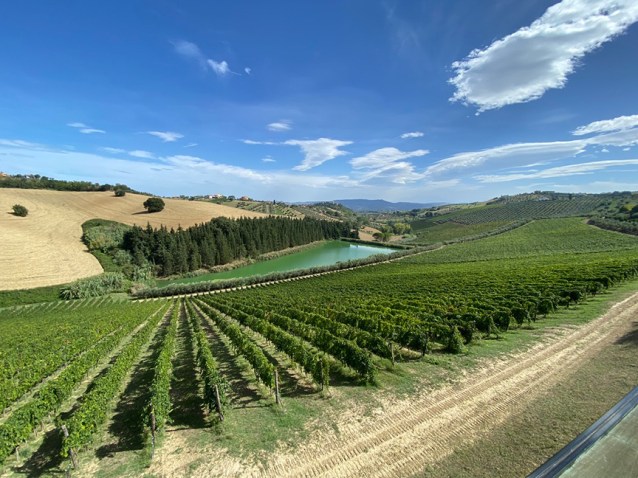
 When I finally found my way to the Nicodemi winery in Colline Teramane in Abruzzo in September, I cautiously descended the steep driveway in my rented 500L to discover a paradise revealed behind the bushes that obscured the view from the road.
For those who have traveled for wine, it’s rare to come upon some place as breathtaking as this.
I was reminded of something Tracie once wrote on her blog: if I were a grape I would want to grow here.
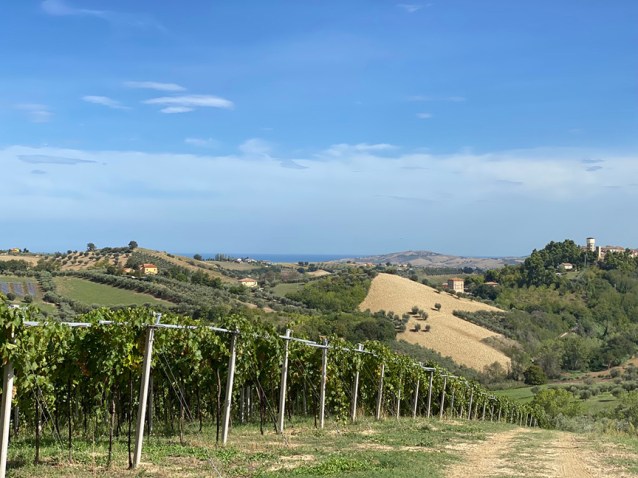 As you can see in the photo above, in the Colline Teramane, the vineyards are literally located a stone’s throw from the Adriatic. It’s where some of the region’s best wines are raised.
It’s one of the magical things about Abruzzo in general: you’re close enough to the sea to reap the benefits of maritime influence (great ventilation, wider diurnal shifts, and cooler temperatures during summer); But thanks to the rapid rise in elevation as you head inland, you’re just far enough away to avoid the excessive early morning humidity that could cause mildew or rot.
 The beauty and viticultural significance of the Colline Teramane were no surprise to me, of course.
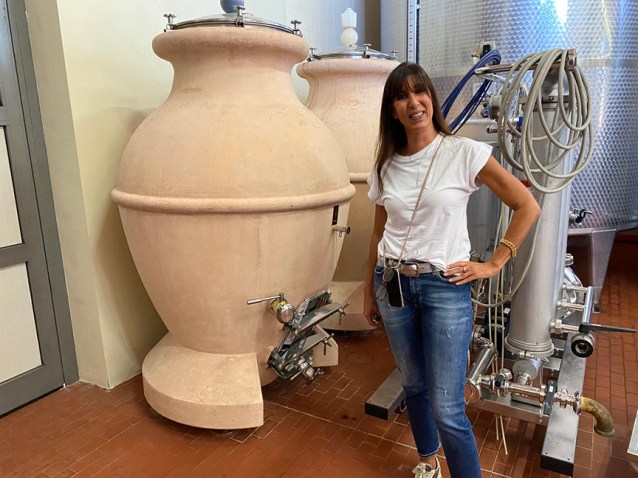
And it should have come as no surprise that Elena Nicodemi (who is super cool btw) would introduce me to a new type of amphora that she and her brother have been using to make one of their top wines.
The material used to make these winemaking vessels is not the classic terracotta used by most potters. Instead, cocciopesto is used. Students of Roman architecture and interior design will recognize cocciopesto as opus signium, a material made of recycled tiles mixed with silt and mortar. If you’ve ever visited the Vatican, you’ve walked over cocciopesto floors.
From what I’ve been able to read online about these amphoras, their walls are actually more dense and less porous than their conventional terracotta counterparts. As a result, the process of micro-oxygenation is made even slower. This can make for wines that are even richer and more focused in aroma and flavor.
Some producers have found find that even during early usage, cocciopesto amphoras don’t impart any of its own “flavor” to the wines (some believe that brand new or newly used terracotta amphoras can impart their own flavor to the wine, although there doesn’t seem to be much consensus on this).
Potter Drunk Turtle first released its cocciopesto amphoras back in 2016. But this was the first time that I had seen one in use.
My visit with Elena was my last during my September harvest trip to Italy. As I wrote previously, it was another example of how everything I thought I knew about Abruzzo was wrong. Gloriously wrong.
Elena’s wines are superb and I highly recommend them to you. Especially her new Trebbiano Cocciopesto.
But more than anything else, I highly encourage you to go visit winemakers in Abruzzo. In each of my three visits, I learned something new and tasted compelling wines that thrilled and surprised me. I hope to get back there soon. Thanks for letting me share my journey with you here.
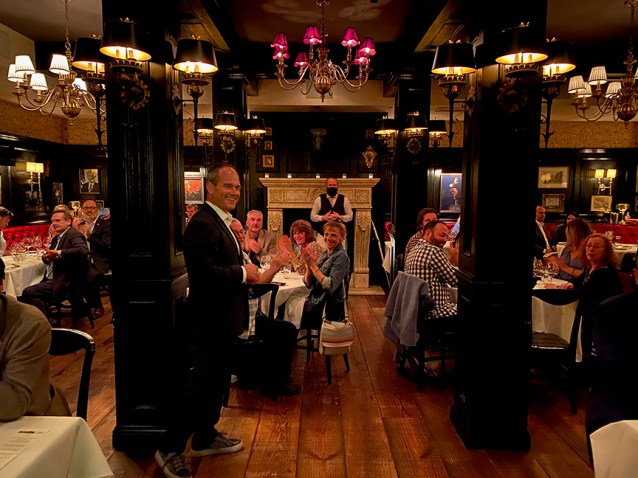 Festival founder Brett Zimmerman presents one of the marquee dinners at last year’s Boulder Burgundy Festival at Steakhouse Number 316 in Boulder. The wines, the food, and the people at all of the festival’s events are as compelling as they are welcoming and inspiring.
 The notion that tendone and pergola training systems could represent one of the grand solutions for winemakers facing the wrathful challenges of climate change was first suggested to me many years ago by the writer, publisher, and in-demand vineyard manager Maurizio Gily.
 Where pergola is a patchwork of small square structures that support the vines, tendone is a continuous and seamless series of pergolas, as it were. (To better get a sense of the system, keep in mind that a tendone in Italian means big tent.)
 The wines tasted at Caivolich were among the best during my early September harvest tour of central and northern Italy.
 It was such a treat for me to meet Chiara and Guerino. And it didn’t take long before my conversation with Chiara veered into 20th-century and contemporary literature (my kind of winemaker!). I highly recommend her wines and if you ever get the chance to taste and interact with her, take the opportunity. I really enjoyed visiting with her and came away inspired by our chat.
 According to the
  Some folks will remember that I used to run a wine club in California where I would sell mixed six-packs from my warehouse in San Diego.
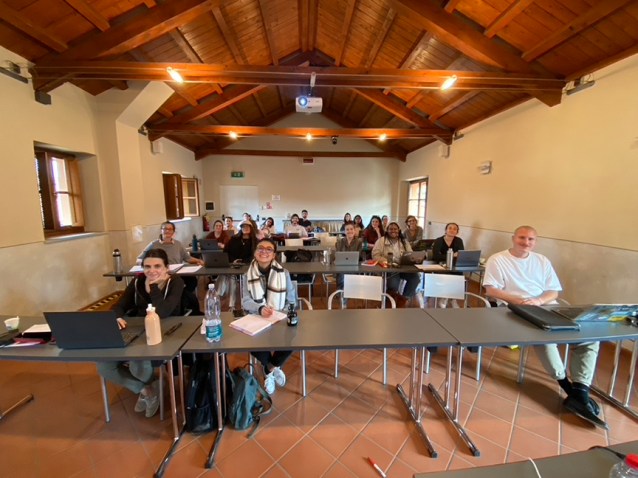
  Above: my graduate student class at the Slow Food University of Gastronomic Sciences in Piedmont, Italy, on the last day of our seminars earlier this month.
 Just over the course of the last month, I’ve had the great fortune to interact with a half dozen wine professionals with whom I worked (and/or drank) during the late 1990s and early aughts in New York City.
 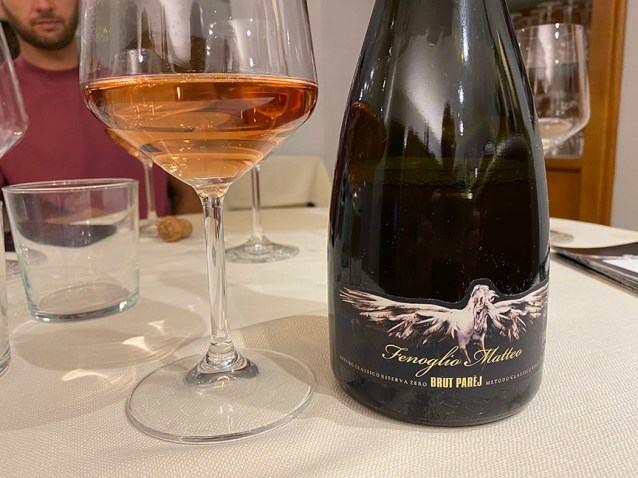 It’s not every day that you get an Instagram message from someone named Fenoglio.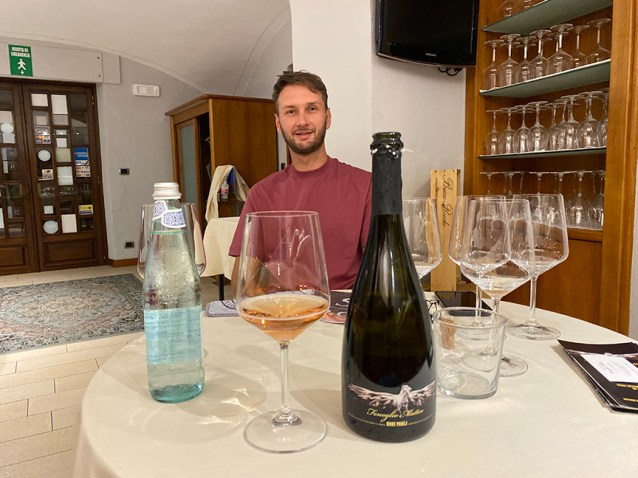
 It’s been a whirlwind.
  Happy birthday Tracie! The girls and I love you! Our doggies love you, too!
 Do Bianchi