Is (Oltrepò) Pavese the next big thing?

One of the things that impressed me most during a visit to Pavia wine country a few years ago was the abundance of hazels.

When asked about it, one producer told me that Piedmontese hazelnut processors had been disappointed in foreign-farmed trees. In search of land suitable for growing the fruit, they had expanded their orchards to Pavia province.

The reason? The soils and growing conditions are similar to those found in Langa where Barolo and Barbaresco are raised.

Pavia wine country lies just south of the Po River in Lombardy, just a stone’s throw from southeastern Piedmont. Its limestone and marl-rich soils are nearly identical to those found in Nebbiolo’s spiritual homeland.

Oltrepò Pavese (rendered in English, the toponym means beyond the Po River) is considered by many to be the top Italian growing region for Pinot Noir. And while many know it for the appellation’s classic method wines, some would argue that still Pinot Noir is what really puts it in world class.
According to at least one soil study I found (commissioned by the Regione Lombardia), Pavia province has a higher concentration of surface area planted to vine than any other place in Lombardy (Franciacorta, I’m looking at you!).

Oltrepò Pavese and the Pavese IGP have been on my mind this week because my friends at Vinarius, the Italian association of wine retailers, just named Pavese as their biennial wine region to watch (here I’ve slavishly translated it as the “Vinarius Territory Prize,” the ninth time the body has recognized an Italian wine-growing district).

According to their press release, more than 13,000 hectares are planted to vine between Oltrepò Pavese and the Provincia di Pavia IGT (Pavia Province). Of those, more than 11,000 are used to make appellation-designated wines.

Oltrepò Pavese has also been on my mind over the last year thanks to the excellent educational campaign run by my friend, colleague, and fellow italophone Susannah Gold.

I’ve also heard chatter that a handful of prominent winemakers from other regions are looking at buying vineyard land there.

Are Oltrepò Pavese and Provincia di Pavese going to be the next big thing? No one can say for certain. But it sure is going to be fun to follow along as we find out.

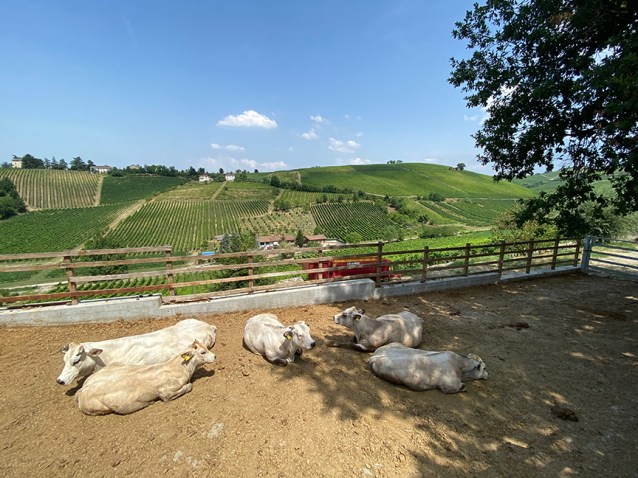
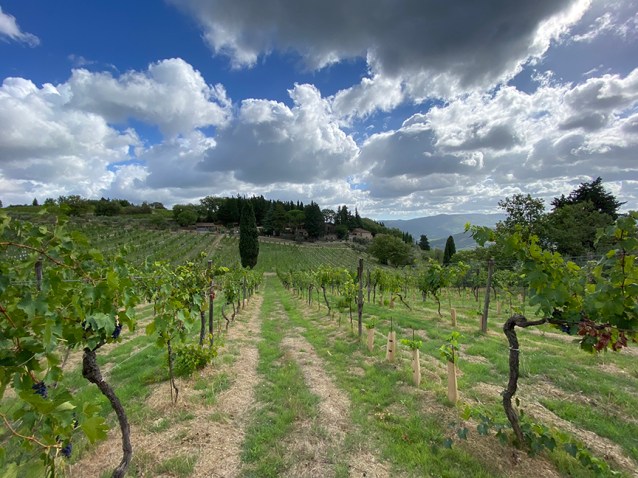
Images snapped in 2021 at the Frecciarossa farm in Casteggio.
Explore, discover, and taste Abruzzo (and much more) with me in Dallas at Eataly February 8.

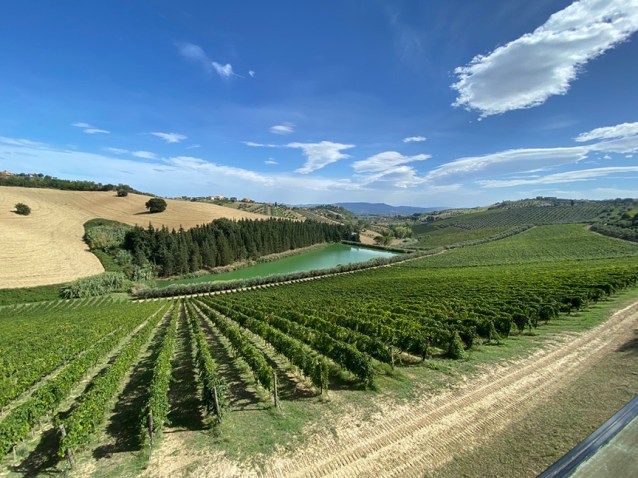
Above: the Nicodemi farm and winery in Abruzzo was one of my most compelling visits of 2022. The region is so much more than so many in our industry imagine.
There’s a good reason that wine appeals to the intellectually insatiable: no matter how many wines you’ve tasted, no matter how many appellations you’ve visited, and no matter how many winemakers you’ve interacted with, there is always something new to explore and discover.

That adage was foremost in my mind during my harvest tour of Abruzzo in early September 2022, one of my most compelling central Italian swings of the year.

A deep dive into the dynamics of pergola vs. tendone training and solar radiation in a time of climate change. A discovery of a new but ancient aging vessel for age-worthy wines. Discussing the highly cadenced world of Cerasuolo. Tasting a skin-contact lees-aged Pecorino (that blew my mind).

Perhaps more than any other Italian wine region, Abruzzo is often brushed off as a land of sprawling cooperatives and cheap plonk. Nothing could be farther from the truth.

I couldn’t be more thrilled to be presenting an Abruzzo seminar at one of the first major walk-around tastings of 2023 in Texas.

On Wednesday, February 8, I will be leading three seminars at Eataly Dallas: Moscato d’Asti, Pinot Grigio delle Venezie, and Montepulciano d’Abruzzo.

What a way to start the year off!

Click here to register.

There are also travel funds available for importers, both Texas-based and out-of-state, to help out with gas, airfare, and hotels. Please DM me if you want me to put you in touch with the organizers.

Thank you for the support and hoping to see you next month in Dallas!

Necessary trouble: protest Neo-Confederates with us on MLK Day.

“Get in good trouble, necessary trouble, and redeem the soul of America.”
These are the words of the great civil rights activist John Lewis, who died in July 2020 after a lifelong and historic effort to power change in this country.

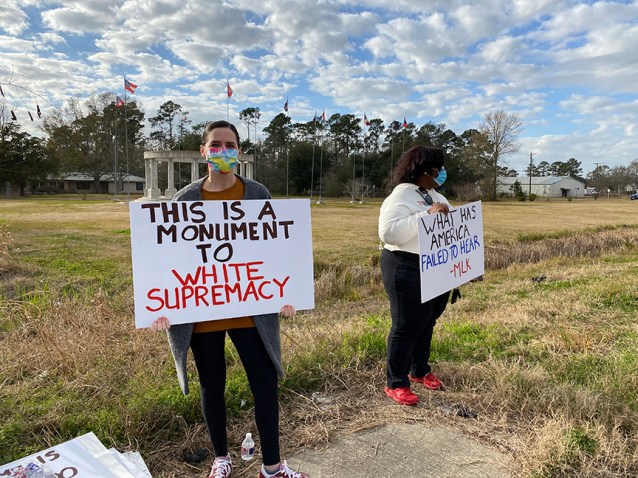
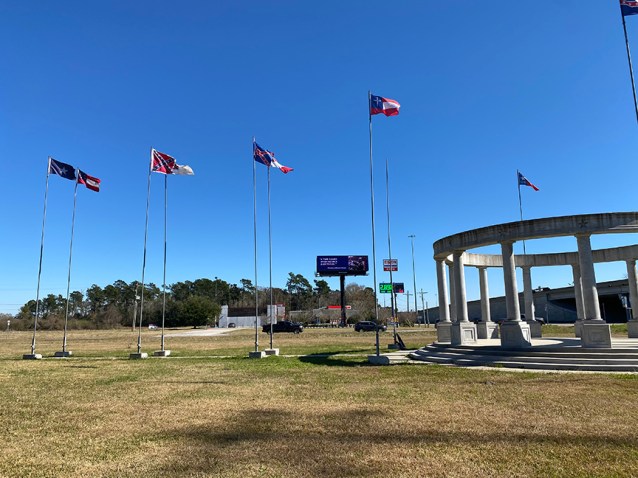
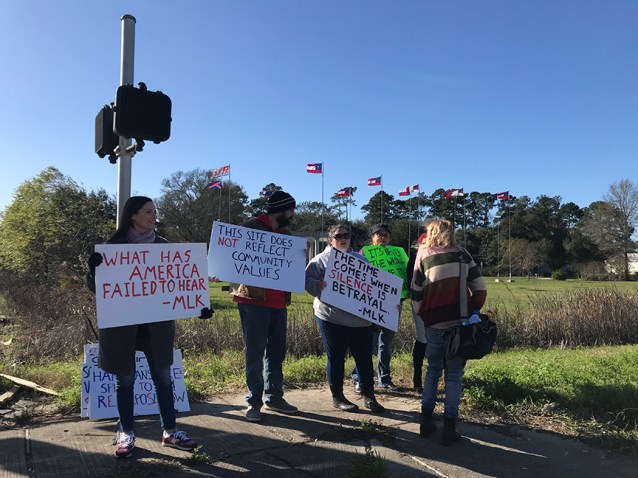
People often ask me and Tracie why we continue to protest the Neo-Confederate memorial in Orange, Texas where she grew up. It was erected in 2017 along Martin Luther King Dr., one of the city’s main arteries, where it intersects with Interstate 10 not far from the Louisiana border. (Click the link to see it.)

After all, they say, the Sons of Confederate Veterans built on private land and there’s nothing that can be done to remove it.

I don’t want to point you to the Sons’ website (every click helps them). But I would like you to take a look at the bibliography by the Kennedy brothers, the pseudo-intellectuals who run these scumbags’ “media and public relations.”

They include titles like Myths of American Slavery, Was Jefferson Davis Right?, and The South Was Right!. Don’t believe me? Check out the Amazon thread. I can only imagine who Lincoln’s Marxists were.

Some people claim that the Sons are just a bunch of loser re-enactors who get a thrill out of racist cosplay. But it only takes a little bit of digging to discover that the driving force of their organization is white supremacy.

On Monday, January 16, Martin Luther King Day, 2023, Tracie and I will be protesting their “Memorial of the Wind” in Orange from 1-3 p.m. Please join us if you can. We’ll have plenty of signs and water to share.

We’ve been protesting the site since it first was erected. We’ve chronicled our efforts on our site RepurposeMemorial.com.

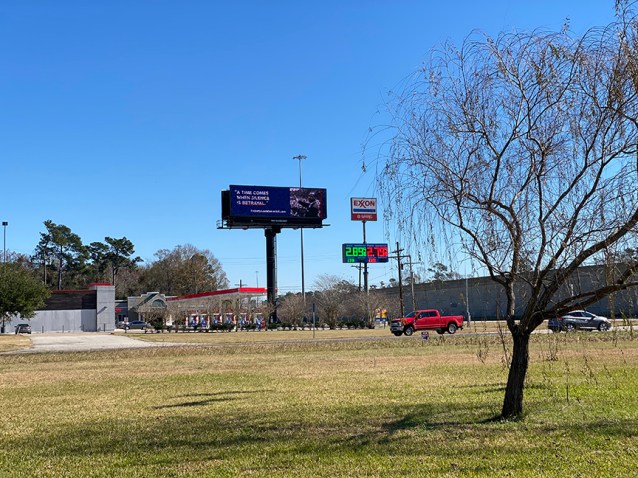
And every year, we raise a MLK billboard across the road from this racist, white supremacist eyesore (see below). Thank you to everyone who donated to this year’s GoFundMe. We raised enough money to keep the billboard up throughout Black History Month. Surplus funds will be applied to next year’s campaign.

As a celebrated Italian winemaker once said, sometimes the battles you know you are going to lose are the most important ones to fight.

The Sons once sent a menacing anonymous letter to a family member of ours. One of them, their local asshole in chief, Granvel Block, even showed up at the church where my father-in-law served as pastor. People yell nasty things at us and throw cigarette butts when we protest. They burn rubber and “roll coal” to intimidate us. One asshole famously told us to “get the f*ck across the border… Jesus f*cking hates you.”

These women and men are cowards who hide behind their cosplay and Neo-Confederate pageantry.

Please join us if you can. Please share this post if you can’t. And please take the day off on Monday, January 16, the day we celebrate the life and words of Dr. Martin Luther King, Jr., and get into the good kind of trouble — necessary trouble.

Email me at jparzen@gmail.com for more info on the protest.

The Sporty Wine Guy podcast with sports writing legend Dale Robertson keeps on keepin on.

One of the coolest things about working in wine is the awesome people you get to meet. After all, famous and otherwise super groovy people love wine just like the rest of us.

One of the biggest rewards of my career in wine has been getting to spend time with Dale Robertson, Houston’s legendary sports writer.

Legendary, you ask? Just ask him about the time that Oilers quarterback Dan Pastorini punched him out. Don’t believe me? Dale has the goods and the bruises to prove it.

The funny thing about our friendship is that I’m not into sports at all. I know, that’s weird. But beyond the Olympics and the occasional soccer game, it’s just not my thing.

The thing we do have in common is great food and wine.

Dale always says that he first got into haute dining when he covered the Tour de France. Back then, when print media was still queen, sports writers had fat cat expense accounts that allowed them to hobnob with the rich and famous. For a kid from El Paso with a degree in journalism from the University of Houston, it was like Dorothy stumbling upon the Golden Brick Road.

Somewhere along the way, he also became the wine writer for Houston’s paper of record.

And the tales he tells from those years, both gastronomic and Pindaric (how’s that for a 75-cent word?), are ripe with some damn good eating and drinking and some bigger-than-life colorful characters. I’ll never forget a crestfallen Dale eulogizing Bum Phillips over a bottle of 2006 Quintarelli Amarone after the football great passed away in 2013.

It must have been in late 2019 that he and I first started talking about launching a podcast. But it wasn’t until January of last year that we finally took the plunge.

We’re now in the second “season” of our show, with more than 20 episodes in the can.

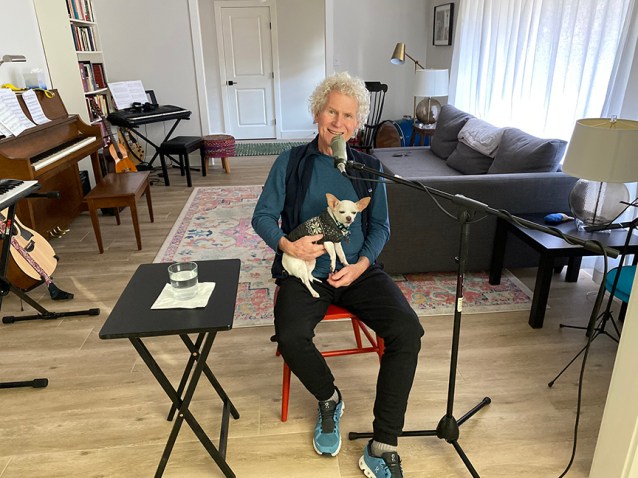
It’s always a thrill when someone comes up to us a trade tasting and mentions that they’ve been listening. But I think that Dale would agree when I say that we really just keep doing it because we like hanging out and chewing the proverbial fat. It could also be that he loves our little Chihuahua, Paco. That’s Paco in his lap during a recent session.

Check out our podcast, “The Sport Wine Guy,” here. Thanks for listening!

A natural wine list grows in my hometown. Great Italian wine and food at Marisi in La Jolla.

Among the La Jolla High School graduating class of 1985, many of my fellow alumni have had brilliant careers in the restaurant and wine business.

Most notable among them are the fisherpeople who stopped selling their catch to the big San Diego canneries and launched fresh fish-focused restaurants.

But I think it’s fair to say that none of us would have ever expected a great Italian restaurant to rise in our hometown. And if you added a great natural wine list to that mix, they would have told you to go cash in your marbles.

There has never been anything like that in La Jolla, a sleepy beachfront town known for its preppy look and its insular culture (I’ll just leave it at that). Until now…

Not only is Marisi, the newish Italian concept that’s located right in the heart of downtown La Jolla, one of the most beautiful restaurants you’ll find in southern California. It’s also one of the best Italian menus I’ve tasted over the last 12 months — hands down.

That’s the rigatoni with spicy tomato above. The richly flavored homemade pasta was cooked perfectly al dente and I loved how the kitchen went for bold heat in this dish.

When’s the last time you had a pesto trapanese outside of Sicily?

In Trapani township in the western part of the island, pesto is made with fresh basil and almonds (instead of the classic Ligurian pesto with pine nuts).

The word trottola means spinning top. It’s a shape similar to what we know today as fusilli (or as my daughters would say, curlicue pasta). I loved the way the pesto dripped from the twisty noodles. And the gently pickled cherry tomatoes gave this wine a creative pop that we all swooned over.

My friend Tony Vallone, the great Italian-American restaurateur who took Italian cooking to new heights in Houston, used to say that for Italian cuisine to be truly authentic, it has to be creative.

The above interpretation of carpaccio really blew both Tracie and me away. Italian purists would have scoffed at this dish. The concept is to feature the quality of the thinly sliced beef, they would say, with minimal adornment. But we were practically licking the plate as we fought for who would get the last bite. Here heat was robust but it didn’t eclipse the flavor of the well-marbled beef. Not traditional by any means. But 1,000 percent delicious.

Or should I say radical, to borrow a phrase from my youth.

The most radical thing about Marisi is its natural-focused wine list by Chris Plaia of Bay Area fame.
I can’t imagine that any of my foodie high school friends would disagree: La Jolla is still an unabashed “Cab” and “Chardonnay” town where “oakiness,” unbridled alcohol levels, fruit-driven, acidity-poor wines still shape the viticultural hegemony. “Natural wine” is not exactly the first thing that comes to mind when you mention dining in La Jolla (which was once famous for the bar where Raymond Chandler drank himself to death, no joke).

Chris has done an extraordinary job in putting together a list that you would be more likely to find in San Francisco or Silverlake.

Tracie and I went for Giovanna Maccario’s Rossese, a longtime favorite of mine (and Giovanna is one of the coolest winemakers I have met, bold in her support for the emarginated). But there were so many other lots we could have picked.

Before 2009 you could have been hard-pressed (excuse the pun) to find a list like this beyond SF or LA. But Chris has broken the glass ceiling in the most unlikely of places.

We were there on a chilly Wednesday night in January (not exactly the “on” season) and the restaurant was packed. It was a great time and it’s great to know that my hometown, once dissed by Tom Wolfe, has grown into a true fine dining destination.

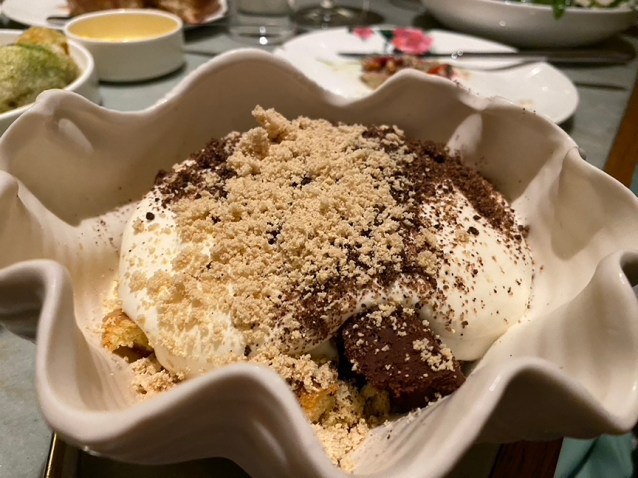
I highly recommend it. Dulcis in fundo, that’s the tiramisu below.

Chianti 101: galestro and alberese soils.

Back in early September as the red grape harvest was just about to begin in central Italy, I visited the Montefili farm and winery in Panzano in the heart of Chianti Classico. It was a glorious and highly photogenic time to be in the vineyards. But the thing I was most interested in photographing was the rocks.
Disclosure: the estate is owned by my friend and former employer Nicola Marzovilla.

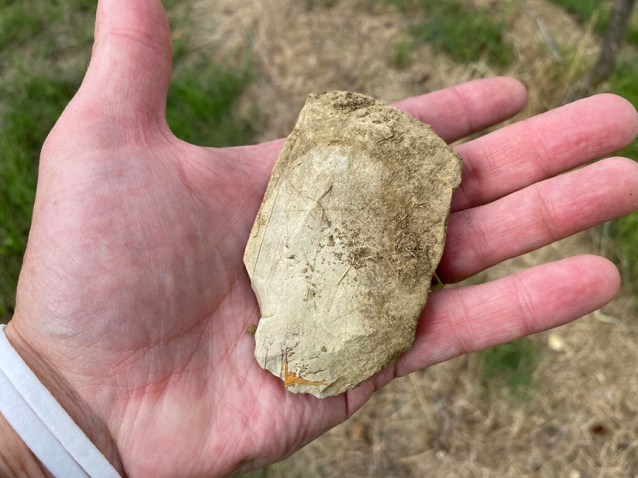
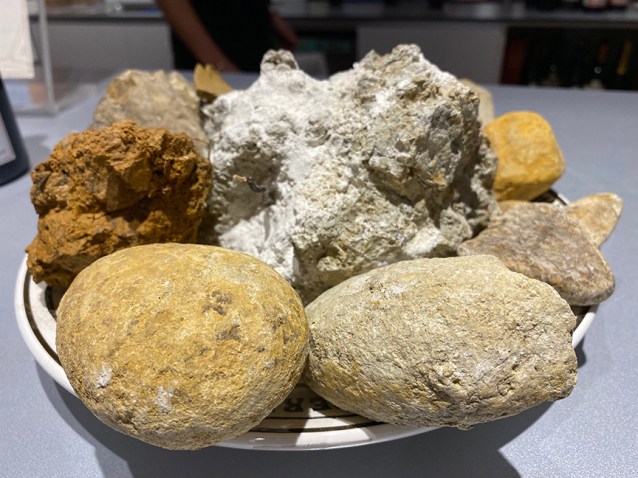
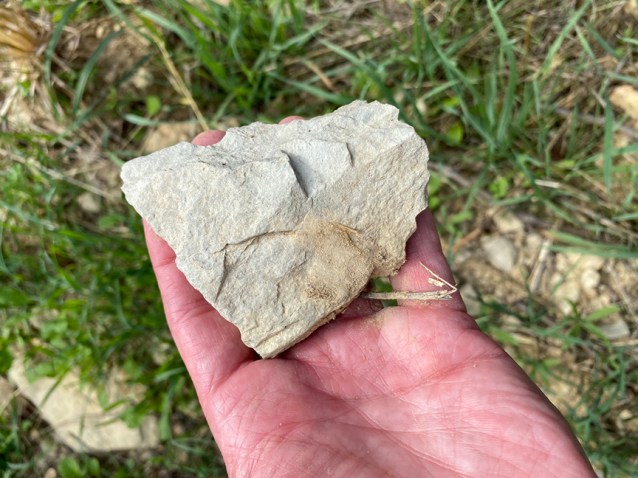
Those are classic examples of galestro above and alberese below.

Note how the galestro is almost yellow in color while the alberese is nearly white.

Philologists don’t entirely agree on the origins of the term galestro but some believe it comes from the French glaise meaning clay.

The word alberese, most agree, comes from the Latin alba meaning white.

Although these types of rocks can be found in other parts of Tuscany, Chiantigiana is where you’ll find their highest concentration. And while rocks similar to alberese are found in other parts of Europe, galestro seems to be unique to the Tuscany.
Alberese is generally defined as limestone, in other words, calcareous deposits formed in ancient seabeds.

The best definition I can find for galestro is that penned by wine writer and Tuscan wine expert Monty Waldin as “a rock formation of stone (mudstone or clay but not compact clay) and sand which will become clay, but has not yet reached the full clay stage.”

As the great Chianti-focused vineyard manager Ruggero Mazzilli writes, galestro is typically found at the highest altitudes in Chianti while alberese is found closer to the valley floors.

I highly recommend his excellent post “How changes in vineyard altitude within the Chianti Classico region affect climate and soil factors” where he discusses these and other Chianti soil types in great detail. (Scroll down for the English translation.)

In my experience, galestro soils tend to deliver wines with a more robust fruit character while wines made from fruit grown in alberese soils can be more mineral and savory.
One thing however is certain, as Mazzilli writes, “Sangiovese, as a varietal, has an enormous capacity to adapt its behavior based on the environment in which it is grown.” And as he notes, these soil types (and others present in Chianti) are an important element in shaping their unique qualities.

I still don’t have all the details but I will be leading a Chianti seminar at Vinology in Houston on Thursday, February 2. We’ll be tasting wines from different parts of Chiantigiana and talking soil types and growing conditions. It’s going to be a fun time for sure. Please save the date!

A visit to Smith-Madrone on Napa’s Spring Mountain felt like coming home.

Happy new year!

Sometimes wine is work. Sometimes it’s fun. When the two overlap, it’s always a joy. But when it’s pure fun, the experience can be truly transcendent.

That’s what it felt like when I visited the Smith-Madrone winery on Napa’s Spring Mountain in late December.

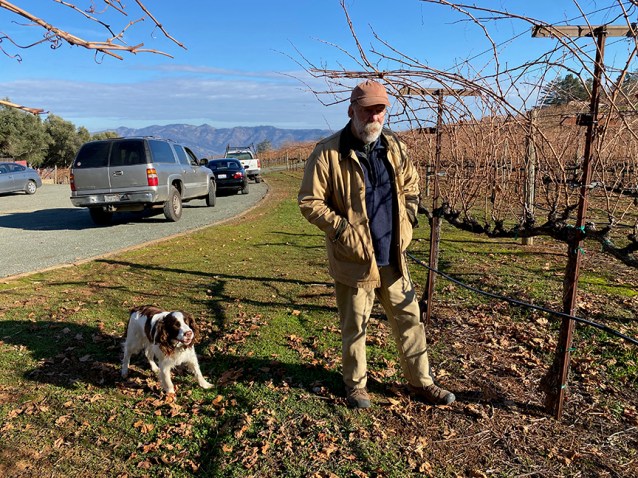
That’s Stu Smith, one of the founders, in the image above, with his new dog Tucker (both are sweethearts).

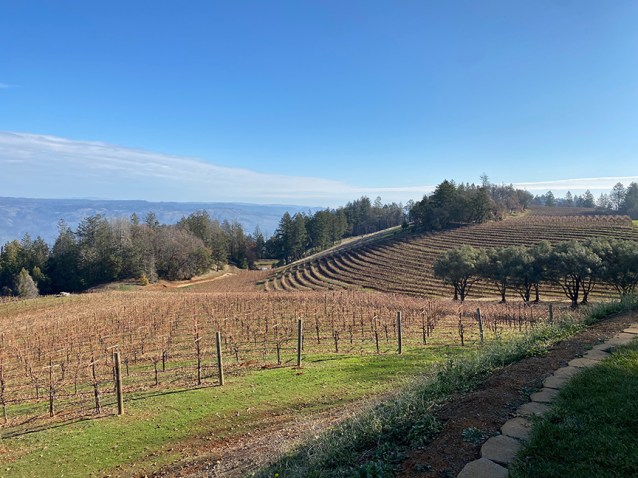
That’s a view of the northern tip of the Napa Valley as seen from Stu and his brother Charles’ property. They first planted grapes their in 1972. Today, their wines are one of California’s top wines. Think of that! 1972! Think how the world was different then and how different our perceptions of wine.
I was actually in wine country for an Italian client of mine, believe it or not (that’s another story for another time).
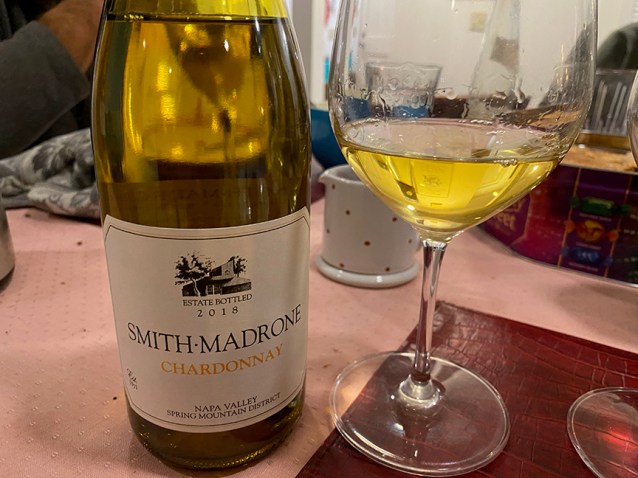
But I was long overdue to visit one of my childhood friends. And she happens to be married to Stu. When they learned I’d be in the “neighborhood,” they invited me over for delicious lasagne and Hanukkah candles. Julie Ann, who’s just a few years older than me, was my babysitter when we were children. Back then, we lived just a block away from each other in La Jolla where we grew up. Our parents were close friends.

I’ve always been a huge fan of the wines and I was stoked to get to spend some extended time with them when I worked on the Slow Wine Guide.
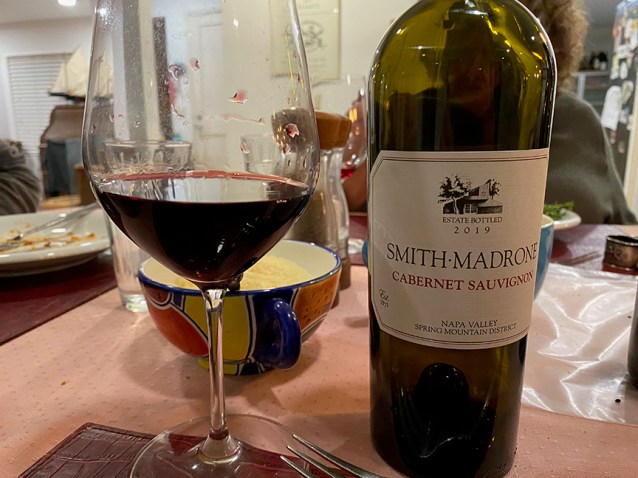
When you taste these expressions of Chardonnay, Riesling, and Cabernet Sauvignon (“86.5% Cabernet Sauvignon, 6% Merlot, 7.5% Cabernet Franc” in 2018, to give you an idea), the first words that come to mind are clarity of fruit, focus, balance, and that unbearable lightness of power that the Spring Mountain District and winemakers like Stu and his brother seem to capture more nimbly than farms and winemakers in other subzones of California wine country.

During our vineyard tour, we talked about training methods (he likes cordon for his Cabernet Franc), about row orientation (he’s done some interesting things with contour vs. non-contour planting), and fire prevention.
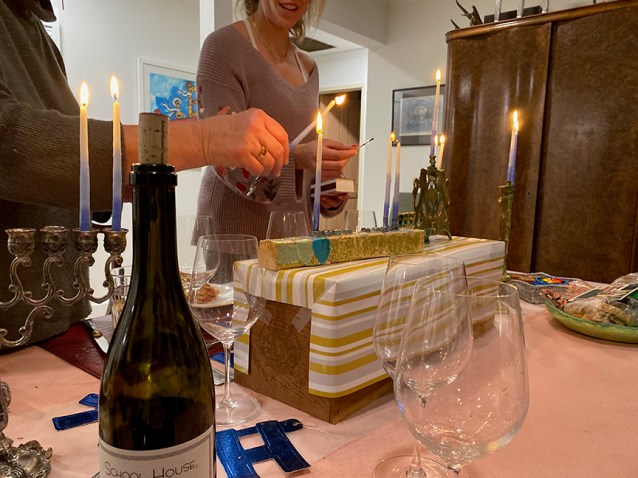
Stu and his brother have managed to avoid the worst of recent megafires thanks to their work to protect their farm. But it’s a constant struggle, he told me. And the worst part, he said, is their literally Herculean efforts “do nothing to improve the wine,” he said. They just keep the grapes and the people safe.

After dinner, I said to Julie Ann, “wow, that was like getting to have dinner with Bruce Springsteen!” It’s not every day that you are invited to sit at the table of one of the winemakers you admire most.

But then again, I had to remind myself, I’m just a lucky son of a… well… gun, who happened to grow up on the same block as Julie Ann.

It was a night I’ll never forget. And man, the lasagne and the Cabernet Sauvignon… off the charts good. Tasting the Riesling with Stu and his brother the next morning at the winery was one of the most magical experiences of my life in wine. It was just pure fun.

The world of Italian wine mourns the passing of Francesca Cinelli Colombini, “Lady of Brunello,” cultural icon and viticultural pioneer.

Image via the Fattoria dei Barbi blog.

Francesca Cinelli Colombini, grape grower, winemaker, and matriarch of one of Italy’s most iconic families in wine, has died. She was 91 years old.

After the passing of her father Giovanni in 1976, she took the reins as director of her family’s historic Fattoria dei Barbi winery and farm in Montalcino.

Under her leadership, the property became one of the first major Italian producers of fine wines to ship their wines beyond Italy’s borders.

In a time in the U.S. before the current Italian wine renaissance began to take shape, she envisioned an international future for the Sangiovese of Montalcino. She guided her family’s estate through a major shift in how Tuscan wine was produced and how it was perceived throughout the world. The early commercial success of her family’s wines in north America was a reflection of her talents as a winemaker. But it was also the fruit of her acumen as an entrepreneur.

By the time she stepped down from her position as director in 1990, Brunello di Montalcino was already well on its way to becoming one of the most coveted and collected wines in the world today. She is widely known — in Montalcino and across the globe — as the “signora del Brunello,” the “Lady of Brunello” (with a capital “L”).

News of her passing was reported by the Italian mainstream media. She was also remembered in a blog post by the Fattoria dei Barbi, today led by her son Stefano, and a Facebook post by her daughter, Donatella, owner of the Donatella Cinelli Colombini winery, also in Montalcino.

After stepping down from her role as director of the family’s estate, she authored a number of highly acclaimed books on her own life and times in Tuscany.

I only had the opportunity to meet her once (when, disclosure, I worked as a media consultant for her son Stefano). She was a truly “larger-than-life” character. My brief encounter with her reminded me of times I met Hollywood stars during my years as a student in Los Angeles. Anyone who ever met her would agree: she was one of Italy’s first “celebrity winemakers.” Her high profile was another way she revolutionized the Italian wine world. And she did it in a time when the trade was still rife with chauvinism — a trailblazer and a genuine original.

Sit tibi terra levis Francisca.

You are an inspiration to generations of Italian grape growers and winemakers.

Help us raise an MLK billboard over a newly built Confederate memorial in Orange, Texas.

CLICK HERE TO DONATE.

Since 2018, Tracie and I have been organizing protests of the newly built Confederate memorial in Orange, Texas, where she grew up and where her family and much of her extended family still lives.

We will be at the site protesting on Martin Luther King Day, Monday, January 16, 2023 (please stay tuned for event details).

Every year since the site’s completion in 2017, we have raised billboards across the road that feature Dr. King and a quote from his writings and speeches. The image literally looks down over the memorial.

The monument was conceived and built by the Orange, Texas chapter of the Sons of Confederate Veterans. It sits at the intersection of Martin Luther King, Jr. Drive and Interstate 10, just a few exits west of the Louisiana border.

Click here to see their flier promoting fundraising for construction (note that it contains offensive material).

There is no doubt in anyone’s mind that the people who built it intended for it to be an affront to the Black community in city that has a sordid legacy of racism and racist violence (just ask any Black Texan of a certain age and they will tell you how their parents told them to avoid Orange as they drove to or from New Orleans).
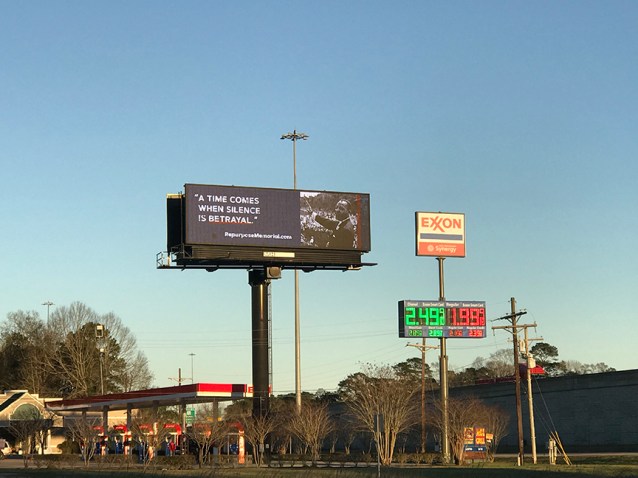
As in previous years, the billboard will begin to appear in the days leading up to MLK Day and throughout Black History Month (February).

We over-raised $910 in last year’s campaign and we have already applied that money to this year’s. The more money we can raise (in $1,000 increments), the longer the billboard will appear (it costs roughly $1,000 for four weeks). Currently, we are shooting for a total of $2,000 to reach our goal for this year. Right now, we only have $900 to go!

Any amount, no matter how small, matters. Even if you’re not able to donate, you can help to further our cause by sharing with friends and posting on social media.
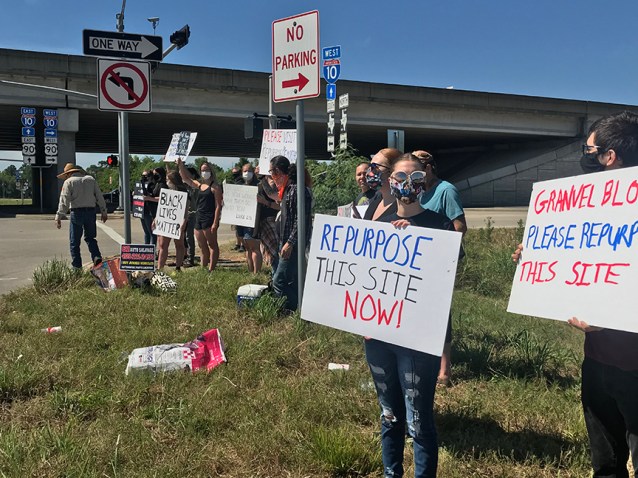
There’s no legal means for us to get the Sons to repurpose the site. We can’t even get them to dialog with us. The site sits on private property and is protected by free speech standards.

But we have no intention of giving up our fight: at the very least, we will continue to show solidarity with the Black community in Orange and we will continue to remind the White supremacists that it’s no longer socially acceptable to display symbols of racism and racist violence. Their “Memorial of the Wind” is especially egregious because of how conspicuously it is displayed.

Please help us in our campaign by donating to our GoFundMe here. And please share with your networks. Every dollar, every share counts!

Thank you for your support and solidarity. We hope to see you on MLK Day in Orange!

Love letter to Brescia, Italian “Capital of Culture” 2023 and city of heroes.

Many will remember a dark period in spring 2020 when the Ospedale Civile in Brescia — the Brescia City Hospital — repeatedly appeared in the New York Times, often on the paper’s landing page. A Brescian nurse even appeared on the cover of the Times Magazine.
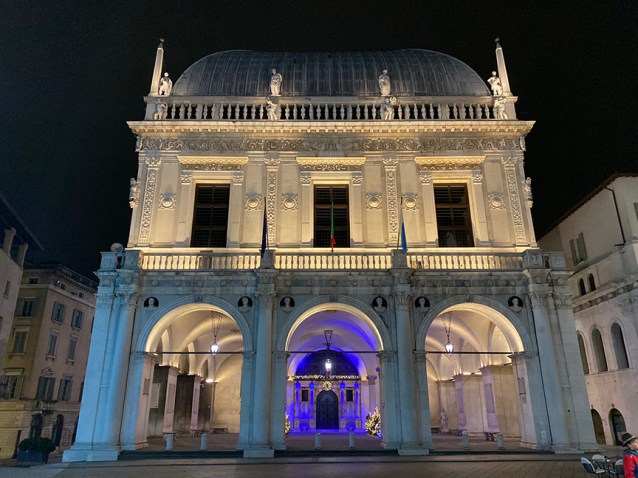
Brescia, a working-class city with Renaissance and ancient Roman origins in the northern Italian region of Lombardy, was among the earliest and hardest hit in the early pandemic. And it’s widely recognized today that it was the first Western city to bear the full weight of the health crisis.

“At one point that spring,” wrote Elisabetta Provoledo for the Times, “Brescia’s hospitals had more coronavirus patients than any other place in Europe.”

Today, I’m happy to report from my own experiences there, Brescia is experiencing a genuine renaissance — a rebirth. Its piazzas are packed with tourists who come to admire the Roman ruins and Longobard works of art and artifacts. And its restaurants, wine bars, beer joints are brimming with exuberant and joyful citizens who rarely remark on those dark times. They do, however, talk proudly and rightly about their resilience and courage in the face of ultimate tragedy.

In 2023, Brescia, together with its sister city Bergamo, also hard hit in the early days of the pandemic, will be the “Italian Capital of Culture.” It’s a program that the Italian government launched in 2014 to highlight the cultural legacies of the nation’s urban centers.

In the words of the organizers,

    The Bergamo Brescia Italian Capital of Culture 2023 project came into being as a sign of hope, pride and renewal. A necessary moment of beauty after the dramatic experience of the pandemic. The strong determination of the mayors of the two municipalities, together with all the institutions of their respective areas, embraced by the rest of the country. A high-profile project that serves to indicate possible answers to the great challenges of our time, which Bergamo and Brescia have identified and developed drawing from a shared cultural vitality. Bergamo Brescia Italian Capital of Culture 2023 bears witness to a possible renaissance through the conscious choice of culture as a central element for civil education, creating skills, employment and social and economic resilience.

My experiences on the ground there in recent months have been wonderful. The sense of freedom and joy there is deliciously palpable.

It’s one of those cities that few Americans visited in the years leading up to 2020 — an undiscovered country, to use a cliché. I can’t recommend it enough to you and I hope you will join me in following along as the Italian nation celebrates this culturally rich landscape and its people.

Thanks for checking it out.