Taste with me in Long Beach (6/16), Miami (6/21) & Houston (6/26).

Labor ipse voluptas.

As I get ready to leave for my teaching gig at the Slow Food University of Gastronomic Sciences in Piedmont, I feel truly blessed to get to do what I do for a living.

Please join me for any or all of the following tastings and events in the U.S. and if you happen to be in the Langhe or Roero week after next, let’s grab a glass at Enoteca Zero in Bra, the home of Slow Food (where I stay during my seminars)!

Friday, June 16
The Wine Country
Long Beach

register here

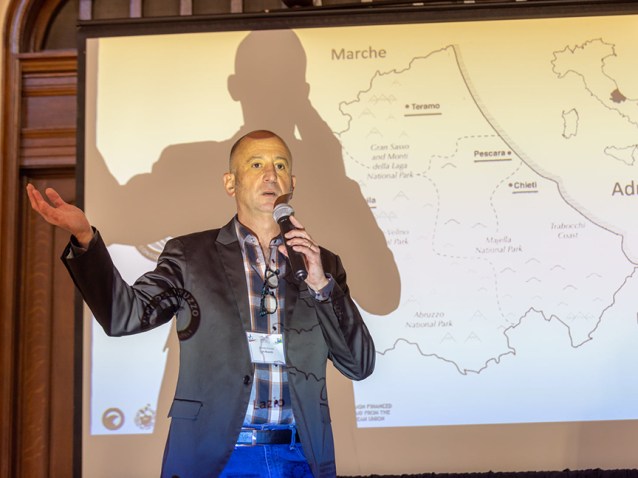
I’m so geeked to be joining my bestie Jeremy Dugan and his family at the Wine Country in Long Beach for an evening where we’ll be pouring, tasting, and talking about a number of Italian wines. The Wine Country is one of the best wine shops in the U.S. imho, even though it’s still not on many people’s radar beyond southern California. The sparkling wine selection there is amazing, too.

Wednesday, June 21
Vinya
Miami (Key Biscayne)

Man, if only we could clone the amazing Allegra Angelo, founder and owner of Vinya in Key Biscayne and Coral Gables. She’s got the energy, the vibe, and the business acumen that make for a great wine shop, wine bar, and wine program. I’m so excited that she has asked me to present a flight of Barbera, including wines from my client Amistà. I don’t have a link yet for this one but it’s going to be awesome. Space be will limited and it will be a night to remember!

Monday, June 26
Davanti
Houston

I’m doing my first official gig as an ambassador for the Abruzzo consortium in my adoptive hometown. So psyched about this! It’s just the first event in a series of dinners, seminars (in the U.S. and in Abruzzo), and tastings that I’ll be leading. I’ve been so impressed with the compelling wines I’ve tasted and amazing winery visits I’ve made over the last six months. I’m stoked to finally get this program going. This event is open only to trade and media but I know it’s going to be a great show. Please save the date. Details forthcoming.

Thank you to everyone for the support and solidarity. I wouldn’t be here if it weren’t for you. I love the community and the wines that we share. Happy Memorial Day! I’ll see you on the other side of the Atlantic next week.

Ye olde “controspalliera” and a better translation of Nizza DOCG appellation regulations.

After searching in vain for a decent translation of the Nizza DOCG appellation regulations, I finally rolled up my sleeves and rendered the text into English myself.

You’ll find the Italian version on the Nizza DOCG consortium website, which includes a — let’s just say — loose English translation.

My new translation appears on my client Amistà’s site here.

One of the things that kept popping up in the less than adequate translations was the archaic and increasingly anachronistic term controspalliera. No one seems to know how to translate it (until now).

By the early 20th century, it was already used to denote vines that were trained using a vertical trellis system as opposed to a wall or a pergola. And the terms controspalliera and spalliera were used and are still used today interchangeably.

This morning I rang up my good friend, Maurizio Gily, one of Italy’s most in-demand vineyard managers, and widely read author and editor, publisher of Mille Vigne.

He told me that today the term is used to distinguish the systems Guyot and cordon (mainly although not exclusively) from pergola or tendone training.

The terms controspalliera and spalliera have (false) cognate in espalier, a term borrowed from French. But as Maurizio pointed out, the Italian terms denote a vine trained using a vertical trellis. Not a “free” trellis where the shoots can point down. That’s the key point.

As always, I’m open to suggestions that can improve my work so far. So please feel free to reach out if you have thoughts, questions, or comments.

Check out my translation here.

Thanks for being here and thanks for speaking and loving Italian wine!

A sommelier who is “identical to their ideas” at Chambers in NYC.

As my buddy Doug and I enjoyed one of the best meals of my 2023 at Chambers in lower Manhattan earlier this month, I couldn’t help but be reminded of what Susan Sontag once wrote of the 20th-century critical theorist and activist Simone Weil.

In an essay that Sontag devoted to the philosopher, she wrote that Weil was “excruciatingly identical with her ideas.”

As at least one critic has written, Sontag “yearned to be identical to her ideas, to display the punishing consistency of Weil, but her ideas jostled and sparked, exploding her sense of what she was, or wanted to be.”
So much of what we do in life is compromised by the jostling, sparking, and exploding of our ideas. Personally, being identical to my ideas is something that I have always aspired to, even though, inevitably and invariably, that train is often derailed and rerouted by the vicissitudes of life.

If there were one person in the wine trade who has made a career of being identical to her ideas, it must be Pascaline Lepeltier.

In my view of the world, the art of hospitality has evolved and transcended to a new zenith through her work.

Over the course of a career where she has created an entirely new and profoundly impactful role in the world of wine, she is at once a sommelier and activist, a restaurateur and a philosopher. But she hasn’t achieved this through high-browed essays, articles, books, or speeches. No, she has accomplished this feat through her sheer indomitable will to be identical to her ideas.

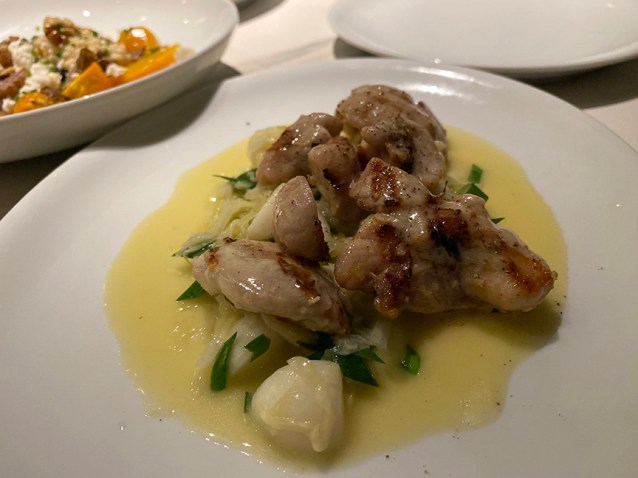
As strange as it may sound, I could sense this ethos in the menu and wine list of her excellent restaurant on Chambers St. (a stone’s throw from city hall).

I could feel it in the way that the servers interacted with our party.
I could feel it in the way that my dining partner and our fellow diners reacted to the dishes and wines.

The whole experience was infused with an acute aspiration for human dignity. I know that sounds extreme or excessive. But I genuinely believe and I honestly sensed that the entire operation ultimately revolves around the ideas and ideals that Pascaline holds dear.

I could even taste it in the food and wine…

Don’t miss Chambers on your next trip to the city. It was one of the most rewarding meals of my year so far.

“Unprecedented” flooding in northern Italy leaves 9 dead and thousands without power.

Catastrophic, “unprecedented” rains and flooding in the northern Italian region of Emilia-Romagna have forced tens of thousands to abandon their homes. Major roadways and train lines have been closed and, as of this posting, nine have been killed.

Click here for the Times coverage (last updated yesterday).

Click here for a Wikipedia entry on catastrophic torrential rain and flooding in Italy from 2000 to 2023, including recent events.

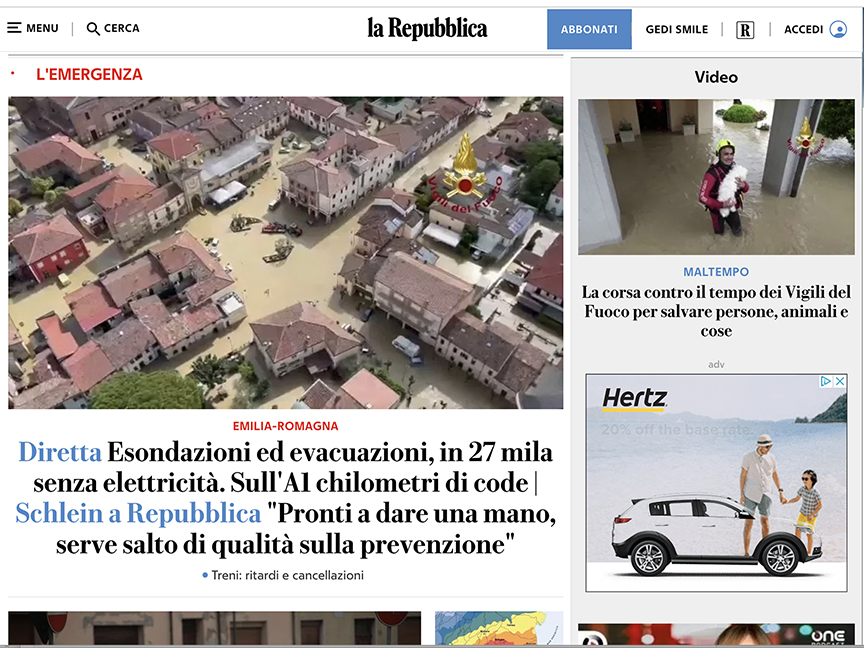
A translation of the headline, above, from today’s online edition of La Repubblica, one of Italy’s major national dailies: “Flooding and evacuations, 27, 000 without power. Traffic jams stretching miles on the A1,” Italy’s main freeway, which serves travelers between Rome and Milan, including Bologna, Emilia-Romagna’s capital.

Flooding and landslides caused by torrential rain are not uncommon in Italy. But the events of this week are being called “unprecedented” by meteorologists and commentators. It’s rare that extreme weather events like this affect major urban areas.

“The bill for climate change,” wrote the author of one headline this morning, “has come due.”

Grape growers in Italy have been deeply concerned over the lack of rainfall in this year’s vegetative cycle. Last year’s harvest was nearly decimated by drought and there has been scarce precipitation in 2023 — until now. As many winemakers will point out, the increasing number of extreme weather events like this can damage the vines, whether through their often violent impact or by virtue of the fact that the rainfall is concentrated in a brief period of time. Ideally, there is a balance of precipitation throughout the winter, spring, and summer. The winter and spring have been relatively dry and many are expecting another summer drought.

As residents of southeast Texas, our family has experienced catastrophic flooding a number of times over the years. But we’ve never seen anything like this in Emilia-Romagna. We know exactly what it feels like to be cut off from the world because of extreme weather. Our hearts and prayers go out to our Italian sisters and brothers.

Is Lucciola in NYC the best new Italian restaurant in the U.S.?

Frasca in Boulder and Vetri in Philadelphia have long been at the top of many informed gourmets’ list of best destination Italian restaurants in the U.S.
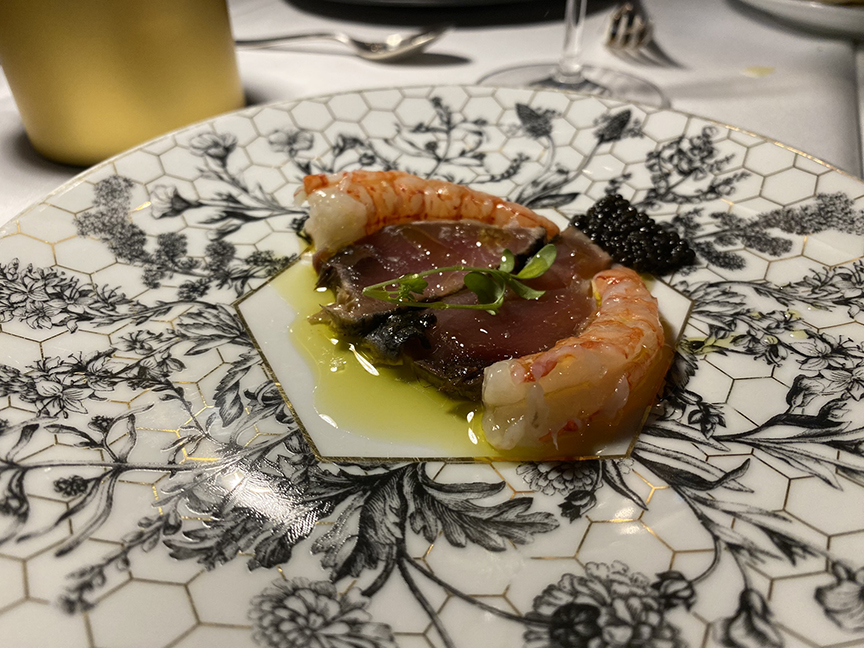
At both venues, the executive chefs have embraced traditional, regionally inflected Italian cuisine and as their gastronomic vision and mission. But exploration, experimentation, and creative verve are also important elements in their aesthetic and ethos.

Last week, a dining experience in New York City changed my view of that status quo.

Lucciola, on the Upper West Side (in the heart of my old neighborhood), seemed the embodiment of the future of Italian culinary arts: maniacal attention in selecting the materia prima; extreme precision in execution; respect and passion for tradition balanced by an insatiable hunger for creativity; and a wine program that celebrates the greatness of Italian viticulture while including icons of international winemaking.

The word lucciola means firefly in Italian. It’s pronounced with the emphasis on the first syllable: LOO-choh-lah.
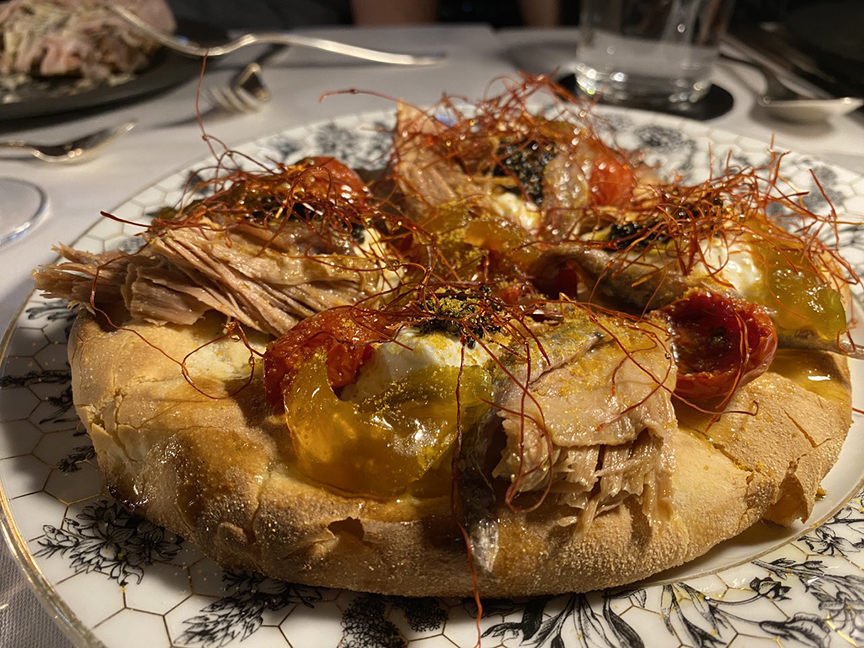
Owner and chef Michele Massari and co-owner and wine director Alberto Ghezzi both hail from Emilia.

You are going to hear a lot more about them this year. Chef wasn’t there the night that I ate there. But Alberto, the nicest guy btw, told me about a new project that will bring the pair national exposure. It’s not my place to reveal their new partnership but it’s safe to say that it’s going to be a big one, with broad reach.

Alberto also told me about an upcoming sold-out dinner that will feature the winemaker and a vertical flight of wines from the storied Champagne house Billecart-Salmon.

Billecart-Salmon isn’t the type of winery that you simply call and invite to your establishment. No, they choose the restaurants that align with their standards of excellence. I guess that Le Bernardin just wasn’t good enough.

It’s just another example of how chef Michele and Alberto have taken Italian cuisine to a new level.

During my decade in the city, a number of then newly opened restaurants helped to redefine the Italian culinary dialectic in the U.S.
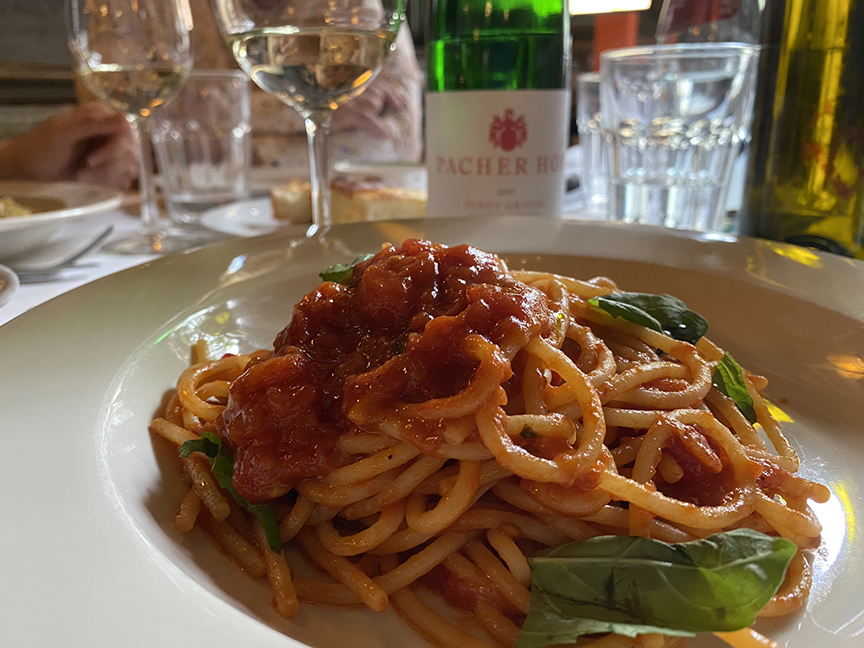
As I travel across the country these days, I see the ripple effect from those years.

There’s no doubt in my mind that Lucciola will have a profound impact on the way we conceive and perceive Italian cookery in years to come.

In the meantime, I’m just going to enjoy — to joyfully inhale — the gastronomic symphony that Michele and Alberto conduct nightly in a neighborhood once known solely for its smoked fish and the occasionally good Kosher steak.

Lunch at Ballato’s in Nolita blew me away.

All those years I lived in New York, I never made it to the legendary’s Ballato’s on East Houston.

I always just assumed that they’d never let me into such a celebrity-driven restaurant.

But when my colleague took me there for lunch the other day, I found that it’s actually pretty easy to snag a table (as long as you go early; I hear that dinner is still impossible to get in).

But the thing that surprised me the most was, damn, the food is insanely good there.

Very pure, wholesome flavors, and just classic Neapolitan-style cookery. I was hooked from the very first spaghetto, which had a perfect Italian cottura (cooking time).

I had some incredible meals while in the city. And I tasted with some extremely talented people (I’m doing a “work with” for my client Amistà, whom I adore).
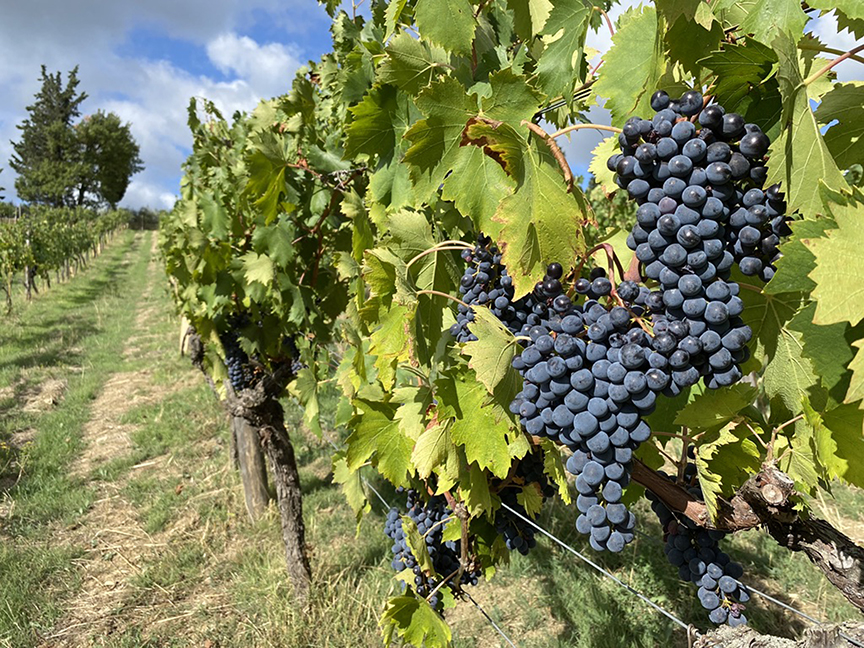
So much to tell but it’s going to have to wait. I flew late last night to Boston where I’ll be working all day today.

Nice work if you can get it, as the saying goes. As fried as I am right now, I feel truly blessed to get to work with such awesome people in the trade. Super thanks, again, to all my colleagues at Ethica Wines, who have made this trip so wonderful and productive.

And thank you, Gianluca, for turning me on to Ballato’s! Amazing!

Thanks for being here and stay tuned…

Glorious Sangiovese! Taste Chianti Consorzio with me, Wednesday, May 17, in Houston.

Miami, Los Angeles… Houston.

It seems like just yesterday that you wouldn’t see those three toponyms paired together in the greater Italian wine world.

Only a few short years ago, the only hitching post that anyone knew in Texas was the capital. Yes, that’s Austin, the Groover’s Paradise, where the music flows and the guacamole and beer are still cheap.

But today, it’s Houston, my adoptive city, where all the European winemakers want to pour and sell their wines.

I couldn’t be more thrilled that the Chianti Consortium is coming back to my big small home town on Wednesday, May 17.

Please join me at 11:30 at the swank Hotel ZaZa for a seminar and walk-around tasting. Here’s the link to register.

I’ve done a tasting for them before. One of the most amazing and wonderful things about these events is the oohs and aahs that emanate from the tasters when they realize how much glorious Sangiovese is out there.

I hope you can join us! Thanks for the solidarity and support.

Robert Camuto’s wonderful profile of Darrell Corti for Wine Spectator, in case you missed it.

More than any others, two people have been the inspiration for my career: my dissertation advisor Luigi Ballerini and Darrell Corti.
While Luigi gave me the academic skills and rigor to fulfill my scholarly curiosity, Darrell showed me how that passion for inquiry could be balanced with making a living in the food and wine world.

Every time I’ve had the opportunity to interact with Darrell, it’s been nothing less than a wholly exhilarating gastronomic and intellectual experience.

That’s Darrell last year when he came to speak at the Taste of Italy trade fair in Houston.

In case you missed it, be sure to check out Robert Camuto’s profile of Darrell for Wine Spectator, “The Wizard of All,” published earlier this week and free to all.

Have a great weekend! Thanks for being here.

A winery outside Rome quietly nurtures the legacy of one of Italy’s natural wine pioneers.

New Yorkers of a certain age will remember the moment that the “Prince’s wines” came to town.

It was an auspicious moment for Italian wine.

The Italian wine renaissance in full swing by that point. But few Italian wines could command the prices that these new arrivals could. Even more impressive was the fact that these were white wines with considerable age on them: Sémillon and Malvasia from the 1970s and 80s.

Eric Asimov, writing for the Times, noted that at least one of the wines he tasted in situ seemed “impossibly young.” That’s how fresh and vibrant they were. He compared another to white Burgundy.

By all accounts (both anecdotal and authoritative), Alberico Boncompagni Ludovisi, prince of Venosa, was a pioneer of organic farming and spontaneous fermentation in Italy. He was perhaps the first Italian grower who purposefully made “natural” wines, however ante litteram.

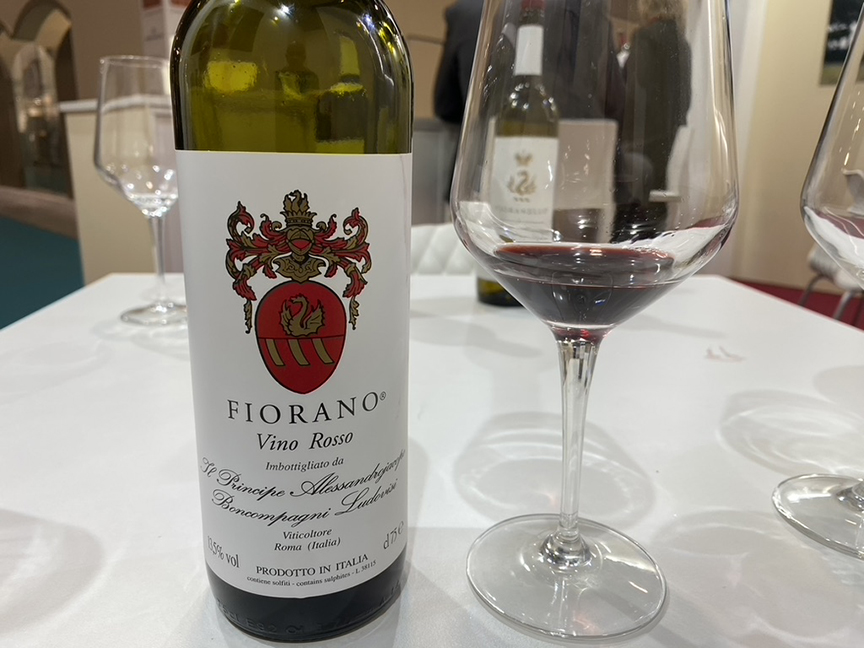
Today, that legacy is quietly and brilliantly nurtured by his nephew Alessandrojacopo Boncompagni Ludovisi at Fiorano, his uncle’s farm outside Rome.

What only a handful of New Yorkers, current and lapsed, will remember is that in an era before the new wave of Italian wine, Fiorano was also renowned and perhaps even more famous for its red wines made from Cabernet Sauvignon and Merlot grown in Lazio’s volcanic soils.

On day 3 of my Vinitaly, the current prince received me for a tasting of the new vintages of his wines.

This is Italian Cabernet Sauvignon in one of its greatest expressions imho. The wine was fresh and lithe in the glass with elegant notes of tar and earth balanced by restrained but deliciously present red and slightly underripe red and black fruits.

These wines don’t evoke Bordeaux, however facile the analogy would be. Instead, they are extremely Italian, or should I say Latian, in their nature.

If any allusion can be made, they call to mind the great Spring Mountain District Cabernet Sauvignon made by its more judicious purveyors.

My favorite story to tell about the prince came about when he and I presented a flight of older wines from his cellar at a dinner in Los Angeles many years ago now. He had flown in especially for our event. When I asked what he planned to do with his free time in the city, he told me he was heading to the Getty to view a portrait of one of his ancestors — a pope. For us it’s history. For him, it’s like looking at an old family album.

Check out the wines. They are fantastic.

Miami, mon amour, you made this polyglot feel right at home. What a great Italian food and wine city!

Anyone who speaks more than one language will tell you the same thing.
Every time you encounter another bilingual interlocutor, a small but usually polite dance begins: which speaker has a better command of which language will determine what language you will use to converse.

Especially for young second language learners, it’s always a point of pride when the conversant allows the dialog to continue in a “destination” language.

Here’s what was revealed to me on my trip to Miami last week: Spanish, Italian, Portuguese, English, Neapolitan, Venetian… It doesn’t matter to Miamians as long as you like great food and wine!

Miami is a genuine linguistic paradise where no one seems to care where you came from or what language you speak. Restaurant and wine professionals are constantly switching between the many tongues spoken there.
As weird as this sounds, it made me feel like I was linguistically free. And I loved the whole vibe.

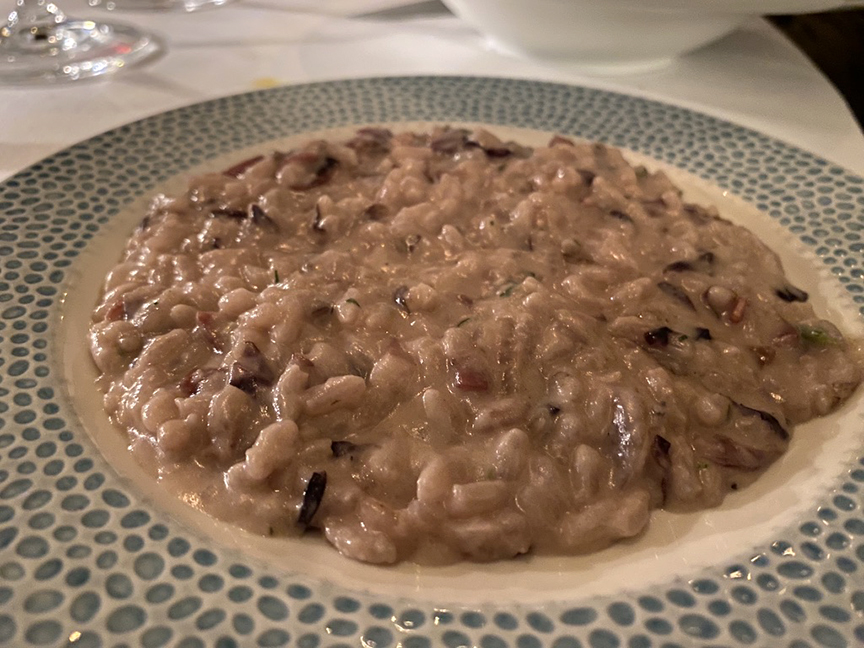
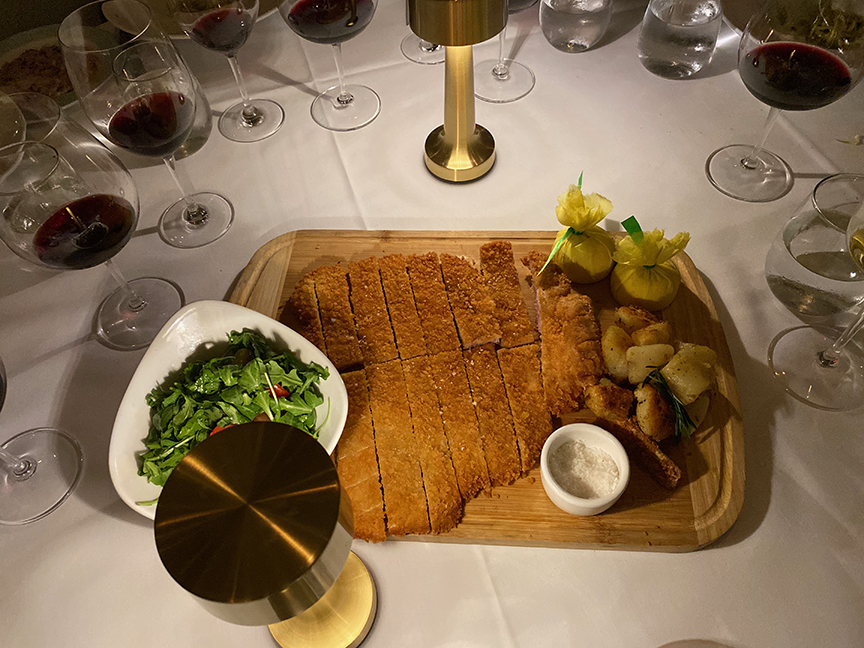
My last night in the city, my ride withs took me to eat at the swank and wonderful Portosole in Coral Gables where the food was fantastic and the banter was a medley of English, Italian, and Spanish with some Neapolitan thrown in for good measure.

Have to give a shoutout to sommelier Alfredo who share his last bottle of Ca’ del Bosco 2013 Dosaggio Zero with us. What a wine!

I also have to give a shoutout to Graziano’s Market in Coral Gables where we hosted a supplier meeting earlier in the day. This place is like a dream come true for me: a Cuban-focused menu in a casual, self-serve setting with a broad offering of Italian wines — from Borgogno to Emidio Pepe. Nebbiolo and croquetas de jamón? I’m in!

I also LOVED Macchialina in South Beach. Great pastas and a wine list with broad strokes that make bold statements.

Mosaico in Key Biscayne served me a super vitello tonnato.

And one last place not to miss was River Oyster Bar. Get the ceviche.

There are so many other places I didn’t get to check out. But I’m supposed to be headed back next month.

I can’t wait. Non vedo l’ora. No aguanto las ganas…