Gregoletto, from sharecropper to biodynamic farmer

gregoletto prosecco

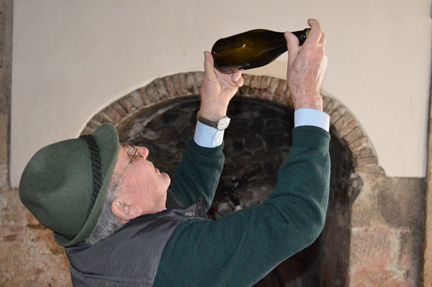
The only winery visit I’ve made this week was to Gregoletto, one of the oldest producers of commercial Prosecco.

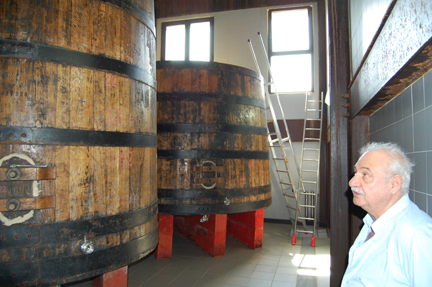
That’s Luigi Gregoletto, above, now in his mid-80s.

Amazing to hear him talk about a time when Prosecco was only planted where wheat and other grain wouldn’t grow (now planted on every square inch of the the lucrative vineyard real estate of Proseccoland).

Also incredible to hear him recall the 1950s when he traveled the Veneto in his little Bianchina, selling his wine door-to-door.

More… much more to come…

Proseccoland, our favorite restaurant: Osteria al Cacciatore

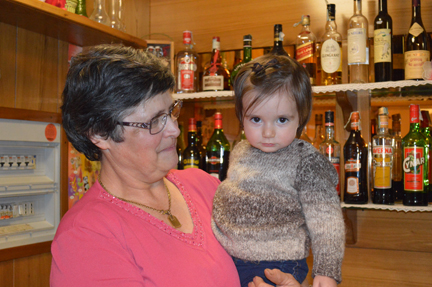
baby girl italy

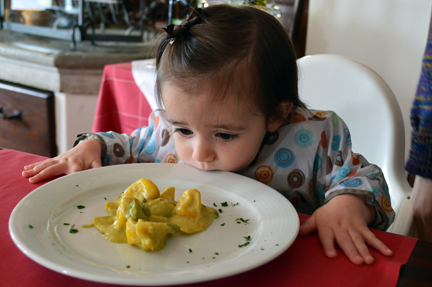
Above: Georgia P was the star of the dining room last night at the Osteria al Cacciatore.

The Italian expression alla cacciatora is actually a relatively ancient one.

Many would have you believe that it denotes as per the hunter’s custom.
wine caraffe

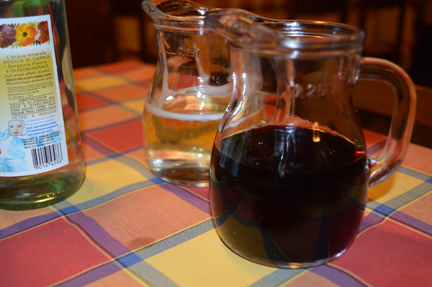
Above: 1/4 liter of gently sparkling white, most likely Verdiso; 1/4 liter of red, mostly likely Raboso, traditional table wines in the province of Treviso.

In fact, it means roughly or coarsely [dressed] (it begins to appear in Italian as an adverbial phrase by the mid-eighteenth century).

There’s no doubt that it comes from the word caccia meaning hunt (from the Latin capere, to seize), akin to the English chase.
antipasti affettati

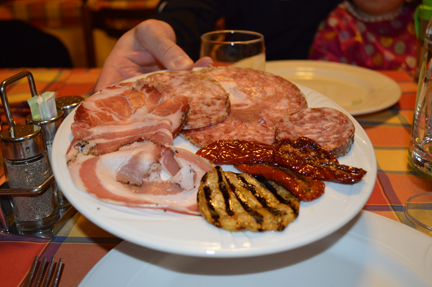
Above: Housemade salumi, so rich in flavor (and fat) but not overbearing on the palate.

But when Artusi canonized the recipe pollo alla cacciatora (chicken stewed with red wine and tomatoes) toward the end of the nineteenth century, he surely perceived the meaning of its designation as roughly dressed (and not in the style of the hunter; like a hunter is a more apt translation).
pasticcio

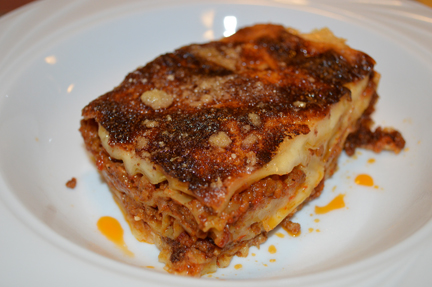
Above: The pasticcio (layered pasta and ragù pie) was one of the dishes I most looked forward to. It didn’t disappoint.

When you make your way to the Osteria al Cacciatore in the village of Zuel di Qua (literally, the hill over here, as opposed to the Zuel di Là, the hill over there, in the township of Cison di Valmarino in the heart of Proseccoland), there’s just a small sign to alert you the presence of a restaurant in the house on the side of the wine country road. You’d think it were just a private home if not for the cars parked outside.
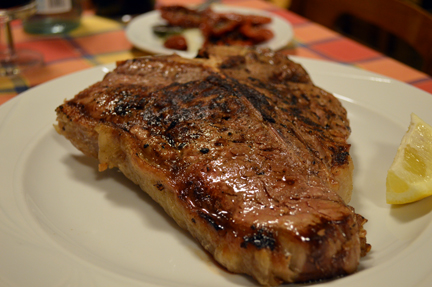
best steak italy

Above: Tracie P craved steak last night. Beef in the Veneto is excellent and the meat had a wonderful sweetness that balanced its savory char.

There’s no menu. And there’s no wine list.

Owner Maria Gusatto’s daughter simply comes over to the table and asks what would you like tonight?
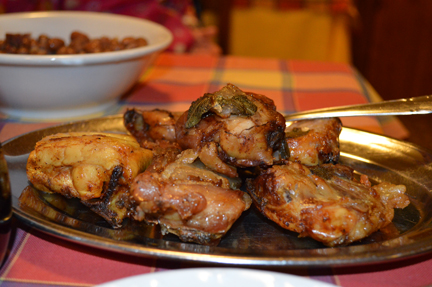
skewered rabbit

Above: Spit-roasted rabbit and chicken. This was my splurge meal of the trip. The sage leaves were seared into the skin of the rabbit and the bones were so juicy you could crunch them between your teeth.

Georgia P put on quite a floor show: she’s just begun walking and insisted on marching around the restaurant like a drunken sailor.

When I apologized to one lovely older couple for the nuisance, the lady said, non sono i piccoli che danno fastidio… sono i grandi (it’s not the little ones that are bothersome… it’s the big ones).
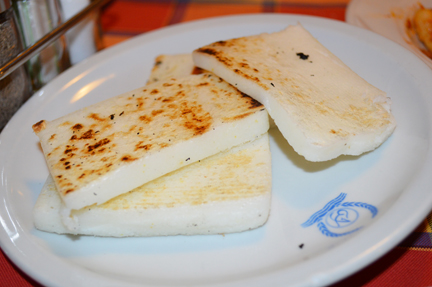
white polenta

Above: The white polenta was so tender and light but firm to the bite.

The chef added: when they’re little you wish you could eat them up… when they grow up, you regret not having eaten them.

Osteria al Cacciatore is the type of place where people speak in proverbs.
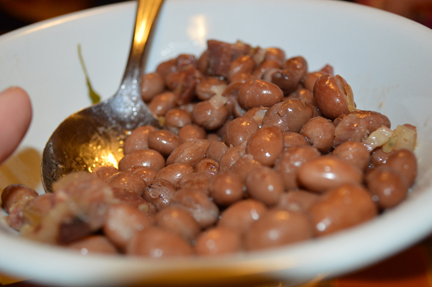
beans veneto

Above: The beans are cooked gently with white onions. We had to take them away from Georgia P… she couldn’t stop eating them and neither could we.

Our bill? €51.

I handed Mrs. Gusatto a 50-Euro bill and a 1-Euro coin. She said, “50 Euros are plenty. May I offer you a coffee or a digestif?”

Thanks, again, to Riccardo Zanotto, who first brought us here. I can’t recommend it highly enough…

The most brilliant wine blog post ever… period… by @hawk_wakawaka

morlacco

Above: Today, for lunch, Georgia P had tortelli stuffed with stinky Morlacco (cow’s milk cheese) and seasonal asparagus in the village of Rolle (in the heart of Proseccoland). She loved them.

Among the blogs I follow, there were a number of stand-out April’s fools day posts.

Pope Alfonso shared a vision of a harmonious world where some of the most litigious among us actually get along.

King Franco revealed that he’s closing up shop and going to work for Frescobaldi (and I actually fell for it; blame it on the sleep deprivation caused by traveling with a fifteen-month old and a mommy who is twenty-five weeks pregnant).

But… it was Hawk Wakawaka who wrote the best one. Indeed, she delivered what I consider the most brilliant — absolutely and of all times — wine blog post ever.

In it she recounts her visit to the winery of Jean-Luc Picard (former captain of the Federation Starship Enterprise).

It’s sci-fi meets wine blogging, Bradbury meets 1 Wine Dude. And it gives us a glimpse (just as Gene Rodenberry did) of a future just beyond our reach…

(For a little background on wine vs. synthehol, see here and here.)

most beautiful baby girl prosecco

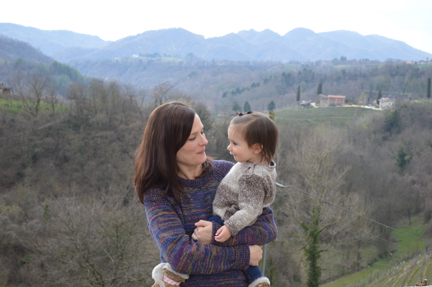
Above: Remember the last time Tracie P and I were in Rolle? The view of the vineyards was gorgeous today (as well).

I can’t recommend Hawk Wakawaka’s post highly enough!

Buona lettura (happy reading)!

Coolest bar in Franciacorta, Andata e Ritorno (Provaglio d’Iseo)

giovanni arcari

After I put the girls to bed at the hotel in Erbusco (Franciacorta) last night, Giovanni (above) took me to the coolest pub in Franciacorta, Andata e Ritorno Stazione di Provaglio d’Iseo, a functioning regionale train station (see video below, shot right outside the pub). Great selection of local, artisanal beers, super cool crowd, and awesome metal and classic rock playlist.

andata e ritorno

The place has the feel of train station circa 1965 (andata e ritorno means round trip in Italian).

piadina

Piadina with prosciutto, mozzarella, and salsa rosa.

claudio bertazzoli

I really dug owner Claudio Bertazzoli’s playlist of virtuoso metal: Satriani, Steve Vai, Pantera… This dude knows his shit and digs the shredding!

Soldera & Brunello consortium spar

soldera montalcino consortium

Above: Gianfranco Soldera with his fermentation casks (I took this photo in 2008). Every time I’ve visited and tasted with him, he’s spoken of the importance of fermenting in wood, “a breathing” vessel, he said repeatedly.

Adding yet another unsavory wrinkle to the sad tale of the now infamous act of vandalism (or “sabotage,” as the Italian media has called it) that took place in December 2012 at the Case Basse winery in Montalcino (more than 60,000 liters of wine destroyed), the estate’s winemaker Gianfranco Soldera and Brunello consortium vicepresident Donatella Cinelli Colombini publicly traded barbs yesterday.

In an interview entitled “Why I am leaving the consortium,” posted online yesterday by the Italian daily Corriere della Sera, Soldera told editor Luciano Ferraro that the consortium had “wanted to donate wine to me. I was supposed to bottle it as if it were mine, without knowing where it came from. [This was] an unacceptable and offensive proposal, a swindling of the consumer. I asked them [instead] to finance studies in Montalcino. But nothing came of it.”

In a post on her family’s winery’s website entitled “What on earth is Soldera saying?”, Colombini swiftly returned the volley.

“The meanest thing,” she wrote yesterday, “is the accusation that the consortium ‘proposed a swindling [of the consumer].’ How could it be that the producers give him a gift [by donating] a part of their production to help him in a difficult moment, thus creating a ‘solidarity Brunello,’ and he responds in this manner? Isn’t he ashamed of himself?”

In a press release issued by the winery on Friday of last week, Soldera announced — without explanation — that he was leaving the consortium.

He also revealed that he was able to recover a considerable quantity of wine “at the time of the damage.” The winery will resume sales, he wrote (after news of the vandalism spread in December 2012, prices for his wine skyrocketed and he stopped selling and shipping wine from his estate).

Bartolo Mascarello imported by Rare Wine Co. GREAT NEWS!

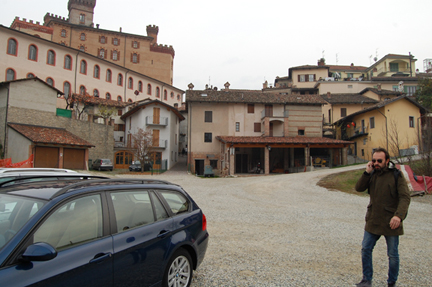
barolo town bartolo mascarello

Above: In November of last year, Giovanni and I visited the village of Barolo and had lunch with Maria Teresa Mascarello, Bartolo Mascarello’s daughter and winemaker at Cantina Bartolo Mascarello.

Doug Polaner actually tweeted about this about a month ago but it’s now official: Rare Wine Co. in Sonoma has become Bartolo Mascarello’s U.S. importer. (I’m a trade wine buyer in California and so I receive price lists and today, I received a pre-offer for B. Mascarello.)

This is SUCH great news.

Historically, Bartolo Mascarello was imported by a wine trade dinosaur, who, by employing a form of racketeering, withheld the wine from scores and scores of honest buyers. You couldn’t just buy Bartolo Mascarello from him: you had to buy other lots that he selected himself. And in many cases, he blacklisted buyers. As a result, it became nearly impossible to obtain the wine in certain markets. Sadly, it would take me more than two hands to count the number of leading wine professionals in Texas who have never tasted these iconic bottlings.

The unmentionable importer was also notorious for trying to get journalists not to talk to winemakers he represented.

One of our country’s highest-profile wine writers recently wrote me that she was “one (of the many) constantly confounded by” him.

When I ate lunch at Maria Teresa Mascarello’s house in November, she still hadn’t decided who the new importer was going to be and I’m thrilled to learn that it will be Rare Wine Co., a liberal, forward-thinking company that treats its clients respectfully and caringly.

And I’m overjoyed that the wine – however expensive — will be readily available to the current generation of Italian wine lovers in our country.

This is great news.

Here’s a thread of my most recent posts on Bartolo Mascarello.

And that’s Maria Teresa below, posing for my camera in her home and “speaking” Barolo.

Piè franco, origins of the designation (more fascinating than expected @finewinegeek)

pie franco meaning

One of the Italian wine bloggers I admire most, Ken Vastola, wrote me this morning asking about the meaning and origins of the Italian expression piè franco.

The designation can be confusing, especially to the non-Italophone among us.

Here’s what he wrote to me:

    I have read in my places that Franco in “Pie Franco” means French. Thus implying European root stock. But Keith Levenberg wrote to me “a correction to the pages for the Pie Franco, “Franco” actually doesn’t mean “French” as is usually assumed — it means “free,” so, free feet as distinguished from feet that got cut off and tied up, I guess.”

    Can you clarify this for me? I know linguistic and Italian in particular is your specialty. I thought Franco was Piemontese, not Italian.

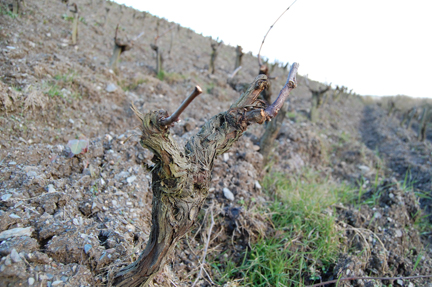
Piè franco is used in Italian wine parlance to denote ungrafted rootstock and is often employed to designate wines made from ungrafted, pre-phylloxera vines, like the Cappellano Barolo Piè Franco. It is akin, although not derived from, the French franc de pied.

The word franco means free or independent in Italian (not French). Lexicographers point to the Franks, third-century Germanic invaders of the Italic peninsula, as its etymology. They were “free,” unrestricted by Roman law.

By the time of the Renaissance, the term campo franco (free field) denoted an open field where a duel could be held.

By the end of the seventeenth century, the term lingua franca (free language or tongue) denoted a means of communication between speakers who did not share a common language.

Here’s where it gets interesting…

Piè appears for the first time in Italian in the fifteenth century, as a truncated form of piede (foot). One of the earliest instances is found in humanist poet Politian (Poliziano, who was from Montepulciano, btw). The wonderfully maleable Italian language is ideal for poets and prosodists: syllables can seamlessly be elided and vowels can mellifluously be fused in the name of versification (my dissertation was devoted to Italian Renaissance prosody).

The expression piè franco (literally, free footed or free standing) begins to appear in the eighteenth century, the age of the Italian enlightenment (Parini, for example) meaning with unclouded thought. It’s borrowed from religious parlance, where it meant free willed.

Camminare a piè franco meant to walk with a free gait, as in the English expression to go one’s own gait, in other words, to pursue one’s own course (OED). (It’s interesting to note that Manzoni changed piè franco to passo libero or free passage in his 1840 edition of The Betrothed. But that’s a longer conversation!)

By the mid-nineteenth century, agronomists had begun to employ the term to denote free-standing trees. Many note how lower planting density in orchards can produce higher quality fruit. (The Bindoccis wrote about this recently on their blog in regard to olive grooves.)

Only later, toward the end of the century, does its usage as ungrafted begin to appear and by the end of the century, we see the first instances where it is used to apply to vines.

This makes perfect sense because the evolution of the meaning mirrors the emergence of the phylloxera plague of the 1800s.

So there! Thanks, Ken, for setting me down this path and nudging me to walk with my own gait!

The subtitle of my blog is: “Negotiating the Epistemologic Implications of Oenophilia.”

This little philological romp is just the type of thing that gets me going: using wine as a lens to see and better understand the world around us.

Thanks for reading.