Wine culture stymied by Pennsylvania monopoly, a sommelier speaks out

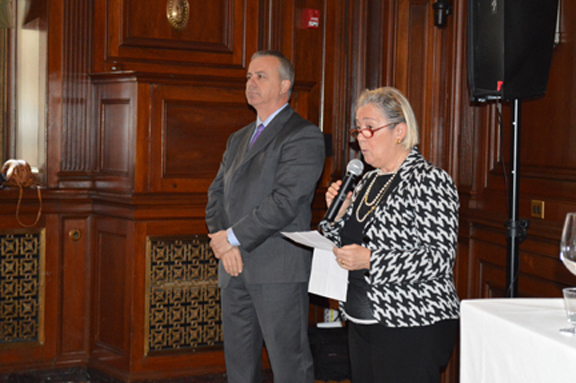
steven wildy wine list vetriAbove: Steve Wildy (left), wine director for the Vetri restaurant group in Philadelphia. The group’s flagship restaurant, Vetri, is considered one of the best Italian restaurants in the U.S. Steve has to pay retail prices (not wholesale) to maintain its superb wine list (image via McDuff’s Food & Wine Trail).

The following Facebook note, by my friend and colleague Steve Wildy, one of our country’s leading wine professionals, appeared week before last. I’m reposting it here in its entirety.

Others (notably Joe Roberts, author of 1WineDude) have written about the dismal situation in Pennsylvania, where the state monopoly on wine and spirits requires restaurant wine buyers to pay retail prices for their wines.

After reading Steve’s note, I felt it was important to share it here. (See also “The PA State Monopoly on Wine & Spirits: A Systemic Failure” by Joseph M. Norton, professor of history, SUNY Dutchess, Poughkeepsie.)

If we are to grow as a nation of fine wine lovers, we need to fight arcane, anachronistic, fascist-era regulation of wine sales in states like Pennsylvania, where young wine professionals are stymied by egregiously restrictive and counterproductive oversight (Texas is another major offender).

*****

I recently received wind of online comments made by Jason Malumed, a wine distributor, in response to Philly Mag food writer Trey Popp’s review of Petruce et al. These comments elicited a response from the critic called “A Second Look At Petruce et al: The State of the Markup.” (You should read it – http://www.phillymag.com/foobooz/2014/05/27/second-look-petruce-et-al-state-markup/#comment-1410210035) Malumed’s comments sought to point out many factual inaccuracies and outright untruths. Unfortunately, Popp’s second look doesn’t apologize to Petruce co-owner and wine director Tim Kweeder for misquoting his average markups as 3x instead of 2.6x as much as it takes the opportunity to further rail against restaurant wine pricing in general.

Popp may not be alone in his opinions on the matter, but as a journalist whose readers regard him as an authority on the subject, I’d like him to take another look. There are several serious issues with his critique that show a fundamental lack of understanding of the wine business, and in fact how restaurants operate in general.

It’s this lack of knowledge—given Popp’s wide platform and long reach—that has the potential to irrevocably harm a slew of honest and hardworking small businesses. Why? Because his misinformation, even if it’s un-willful, potentially discourages a large swath of people from dining at a restaurant for fear they’re being ripped off.
Continue reading
Will Valpolicella Classico cease to exist? Popularity of Ripasso threatens tradition

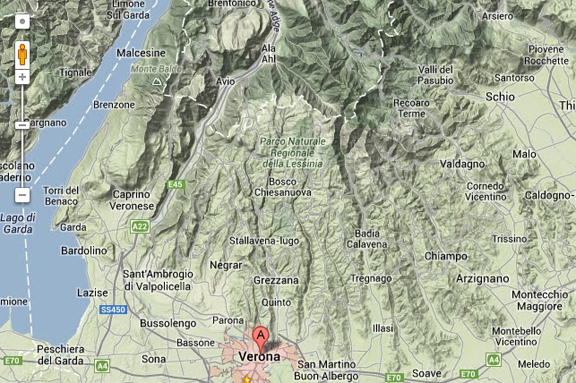
valpolicella map vineyards crusAbove: the wrinkled topography of Valpolicella, the “valley of alluvial deposits,” was formed by five ancient river beds. Please click here for my post on the origins of the toponym Valpolicella.

An old friend and colleague from my years in New York, Lars Leicht (now of Cru Artisan Wines), asked me to present a vertical tasting of Amarone this week here in Houston with Andrea Sartori of Sartori and Christian Scrinzi of Bolla.

The flight, stretching back to the mid-90s, was compelling (the 1999 Corte Bra by Sartori was the highlight for me). But the frank dialog with the participants — both of whom sit on the Valpolicella consortium advisory board — was what really sticks in my mind this morning.

“It’s possible that Valpolicella Classico could cease to exist,” said Sartori when I asked him about where the majority of Valpolicella wines are sold in the world (Canada and the nordic countries, he noted, are the biggest markets for the appellation, one of Italy’s most successful wine “brands”).

The problem, he explained, is that the number of bottles of Ripasso — the most lucrative category — are limited by the number of bottles of Amarone and Recioto produced.

Article 5 of the Ripasso DOC regulations (as amended in 2010) states:

    In volume, the quantity of “Valpolicella ripasso” designation of controlled origin wines can not exceed twice the volume of wine obtained from the lees from the categories “Recioto della Valpolicella” and/or “Amarone della Valpolicella” employed in the operations of refermentation/ripasso [ripasso, which can be rendered in English as second passage or second fermentation, refers to the traditional Valpolicella vinification technique whereby wines are aged on the lees from previously vinified Amarone or Recioto; translation mine].

In other words, a given producer may only produce two bottles of Ripasso for every bottle of Amarone and/or Recioto she/he makes.

Ripasso has become such a successful category that more and more growers and bottlers are using their fruit to produce Amarone instead of Valpolicella Classico. Greater volume in Amarone production allows them to bottle more Ripasso.

The issue, said Sartori, will be one of the discussion points at a Valpolicella consortium advisory board meeting to be held next Tuesday in Verona (both he and Scrinzi will be in attendance, he noted).

As a bona fide Venetophile and Italian wine lover, it’s my sincere hope that the board and the appellation in general will work together to protect Valpolicella Classico. It’s a proletariat wine that aligns in tradition and in ethos with Veneto enogastronomy. When vinified in a traditional manner, it’s fresh, food-friendly, and delicious. In terms of price-quality ratio, it can represent one of Italy’s greatest wine values and it’s a sine qua non of Veneto culture.

In other news…steve samsonMy good friend chef Steve Samson (above), whom I’ve known since our junior year abroad in Italy together, appeared yesterday on the morning talk show “The Talk.”

Here’s the link to the clip.

Steve is such a great guy — dad to two beautiful children and a super talented chef — and he is the owner/chef at Sotto in Los Angeles, where I co-author the (nearly) all-southern Italian wine list.

In other other news…

This week, my Italian wine writing colleague Jacopo Cossater launched a crowd-funding project for a new English-language magazine devoted exclusively to Italian wines.

It’s an ambitious project and if successful, it would give the world a much-needed English-language resource — authored by Italians.

You can watch an English-language video describing the initiative here.

Jacopo is a good guy and I have a lot of respect for him and his work.

And lastly for your consideration…

I was profiled this week in the San José Mercury News. Wine blogging has been so rewarding for me, both personally and professionally. But above all, it’s given me a means to express my passion for Italy, Italian literature and culture, and Italian enogastronomy.

As the author of the piece notes, when I realized I couldn’t make a living by writing about Italian poetry, I turned to viticulture…

Here’s the link.

Buon weekend, yall!

Hail wipes out 2014 Maule/Biancara vintage, tragedy for Garganega lovers

angiolino mauleAbove: a few years ago, Tracie P, Alfonso, and I visited Angiolino Maule (right) on his Biancara estate in Gambellara. He is the founder of the natural wine association VinNatur and his extraordinary wines are dear to my heart.

In Italy they call it a “leopard-spot hailstorm,” in other words, a hail storm that capriciously hits small, delimited areas while sparing adjacent vineyards.

On Friday of last week, such a storm violently ripped through parts of northern Italy, striking some of the Veneto’s most prized Garganega vineyards in Gambellara (Vicenza province).

The story was reported yesterday by the popular Italian wine blog Intravino.

“Four hectares were hit hard,” Alessandro and Francesco Maule (Angiolino’s sons) are quoted as saying in the report.

The damaged sites represent roughly a third of the winery’s vineyards.

“There are no grapes left here and in the other two parcels [Monte di Mezzo and Taibane], we lost 80% of the bunches,” said the brothers. “We’re talking about our best growing sites. We are the masters of nothing! There will be no [vineyard-designated] Pico from the 2014 vintage although there will probably be some Recioto. It’s a disaster.”

“We lost at least half of the harvest,” said Claudio Zambon the local delegate for Coldiretti (the Italian agricultural union) in an interview published this week by VicenzaReport. “The damage was so bad that many plants will have to be moved.” Next year’s harvest, he noted, will probably be affected as well.

The storms will cost the appellation “hundreds of thousands of Euros,” he said.

Faenza province (Emilia-Romagna) was also hard hit by the storm. The image below was posted this week by Agronominvigna on its Facebook.

“Even the grass is gone,” wrote an Intravino reader who shared the Facebook link.

faenza hail storm

America’s favorite busboy & a great illustration by @Hawk_Wakawaka

bobby stuckey busboy“I’m just the head busboy at Frasca,” says Bobby Stuckey whenever he pours wine for trade or consumers. He’s referring to one of our favorite restaurants in the country, Frasca in Boulder, inspired by the enogastronomy of Friuli.

He and his business partner Chef Lachlan Patterson, founders and owners of Frasca, were in Houston last night pouring their Scarpetta wines and serving up a classic Friulian dinner.

Tracie P and I love Lachlan’s cooking so much and I was geeked to take her out for the evening (we have a great baby sitter and we’re finally settled into nursing and bedtime rhythms with the girls and we can occasionally treat ourselves to a night out these days).

We love the wines, too, and you’ll often find their sparkling rosé from Franconia in our fridge.

But the thing I love the most about Bobby is his easy-going nature and his snobbery-free approach to wine connoisseurship. There he was (above) bussing tables and serving food to guests, interacting with everyone.

I wrote about the marvelous dinner, held at the trendy seafood outfit Reef, for the Houston Press today.

An added treat was revisiting the fantastic illustration (below) by my good friend Hawk Wakawaka, wine blogger extraordinaire.

scarpetta wine stuckeyShe had done the drawing and tasting notes for Bobby and Lachlan a few years ago and now they use it as a placemat for their events. It’s simply brilliant. And the descriptors are spot-on.

Click here for a high-res scan of the original drawing.

One of the trade reps at the dinner got up and talked about how Hawk Wakawaka is “the voice of our generation,” as he put it.

It’s wonderful to see how her work has affected people’s lives and perceptions of wines. Invariably, when someone sees her illustrations for the first time, there are exclamations of “this is wonderful!” and “I’ve never seen anything like this before!”

She’s been such a good friend to me and I am a huge fan of her work (she wrote my all-time favorite wine blog post, btw).

Yesterday ended well with a lovely dinner date with my beautiful wife.

But otherwise, it had been a really dark day here at Do Bianchi. I really appreciate the many notes of solidarity that I received from wine writing colleagues from Italy and here in the U.S. They meant the world to me.

The one good thing that the awful morning delivered was a new motto: in vertitate vinum. In other words, you’ll find the wine in the truth and not the other way around.

Thanks for being here. It means the world to me. See you tomorrow. Now it’s time to hit the streets and keep the world safe for Italian wine…

Sensationalist reporting wrongly tarnishes Italian wine: Nadeau’s yellow journalism

We see through a bottle, darkly…

italian wine scandalI was dismayed to read Barbie Latza Nadeau’s most recent reporting on the Italian wine trade in a June 1 post on The Daily Beast.

The piece, which appears on one the world’s most popular English-language blogs (published by Newsweek), is laden with hyperbole and inaccuracy, not to mention spotty, yellow journalism.

I won’t speculate on what prompted Ms. Nadeau to write it. But I’d like to address some of the sweeping, sensationalist claims published by her and her editors.

The title reads: “Chateau Scam 2014: Italy’s Weird World of Wine Fraud.”

Is she aware that château is French? And is weird an appropriate descriptor for reporting of such egregious transgressions? In all fairness to Ms. Nadeau, it’s likely that her editors wrote the title.

The subtitle: “Italian police confiscated thousands of bottles of table wine masquerading as high-end appellations, some selling for as much as $25,000 each.”

A six-bottle lot of 1978 Giacomo Conterno sold for $14,400 and a single bottle of 1961 fetched $1,680 at Zachy’s in New York in 2009 (source: Blouin ArtInfo).

But these record-setting prices don’t come near the “$25,000 each” mark mentioned in Ms. Nadeau’s piece (again, it’s likely that the sub-title was written by her editor).

Most trade observers agree that G. Conterno’s Monfortino is one of Italy’s most expensive wines. French wines often sell for higher prices (in 2013, WineSearcher.com reported that “the average price of a bottle of Romanée-Conti [one of the world’s most expensive wines] sits at more than $13,000”).

But it’s highly improbable that the alleged bottles of counterfeit wine described in Ms. Nadeau’s piece would have been sold for “$25,000 each.”

“After a three-year investigation into suspected wine fraud in Italy,” writes Ms. Nadeau, “it appears increasingly likely that your vino tinto is actually vino finto, the Italian word for fake” [italics hers].

Is she aware that vino tinto is Spanish? I’d love to give her the benefit of the doubt but the pun is misinformed, misleading, and in bad taste (finto is an Italian word that can be translated as fake; vino is Italian for wine).

Ms. Nadeau reports: “Italian police confiscated 30,000 bottles of Brunello, Chianti Classico and Sagrantino di Montefalco from warehouses, wine merchants, grocery stores and restaurants after discovering that the bottles with the more expensive labels contained common table wine that is only worth about a dollar a liter.”

The amount of wine is substantial. But however serious the crime, it comes nowhere near the more than 9 million liters of wine reportedly confiscated in Italy in 2008 (see this post by Master of Wine and Oxford Companion to Wine editor Jancis Robinson and my excerpted translation of Italian news reports).

Yes, it’s true: wine adulteration is common throughout Europe and the U.S.

But 30,000 bottles represent a relatively small amount of wine when compared with the major counterfeiting scandals in recent memory. And Ms. Nadeau and her editors have greatly misrepresented the gravity of the allegations.

Italian authorities’ “wine fraud investigation, which began more than three years ago,” claims Ms. Nadeau, “was launched after wine importers in the United States complained that their expensive Italian reds tasted bitter.”

Beyond the fact that she gives no source for this claim, it’s hard to believe that U.S. importers would contact Italian officials lamenting that “their expensive Italian reds tasted bitter.”

“Bitterness” is hardly a criterion for the authenticity of wine. It’s simply laughable to think that a self-respecting U.S. importer would contact the Italian government with such a claim.

“The Italian scam,” notes Ms. Nadeau, “follows an even bigger case of fraud in the United States involving Rudy Kurniawan, a Chinese-Indonesian wine fraudster who reportedly netted more than $20 million selling counterfeit wine and defrauding several banks to take out loans to buy and sell his fake wines in exclusive auctions.”

The two scams are by no means related: based in the U.S., Rudy Kurniawan produced counterfeit bottles of coveted-vintage French wine that were sold to collectors at exorbitant prices; the Italian “scam” described by Ms. Nadeau appears to involve counterfeit bottles of current vintages of “high-end [Italian] appellations” produced in Italy and marketed to mid-tier consumers.

The fact that Italy and France continue to be plagued by wine counterfeiting schemes is newsworthy — no doubt.

Possibly prompted by the Daily Beast articles and a story published by the Telegraph last week, Decanter also reported the episode this morning.

But the Decanter writer seems to be more knowledgable about the context of the crime (and is thus more restrained and more accurate) and he also seems to be better versed in wine parlance (my favorite Nadeauism is “oaken barrels”).

(The story was originally reported by the Associated Press on May 29, 2014. It’s worth reading the original report: it gives you a sense of how this story evolved in Ms. Nadeau’s hands.)

The thing that irks me the most about Ms. Nadeau’s sloppy journalism is that she misses the point entirely. Failing to see the forest for the trees, she writes: “unless wine consumers have a sophisticated enough palate to discern whether their Brunello, Chianti or Sagrantino is the real deal, there is just no way to judge the bottle by its label.”

The true victim of this crime is not the unwitting consumer who doesn’t have a “sophisticated enough palate” (another fine example of Ms. Nadeau’s command of English). No, the real victims are the producers. The Italian and French appellations systems were conceived to protect them. And the good news is that the Italian authorities are working diligently to combat wine counterfeiting. Food and wine adulteration is one of the Italian government’s top priorities (pork, for example, is one of the most highly adulterated food products in Europe).

I feel bad for the consumer who cannot discern whether or not her/his Sagrantino is the “real deal.” No one wants to spend $80-100 on a counterfeit bottle of wine. But I feel even worse for Italian winemakers who have to pick up the pieces in the wake Ms. Nadeau’s irresponsible reporting.

After all, in veritate, vinum, not the other way around.

Donatella Cinelli Colombini knighted by Italian Republic

donatella colombini knight merit republic italyAbove: Donatella Cinelli Colombini (right) in New York in 2013 at Benvenuto Brunello.

Today in Siena, Brunello di Montalcino producer Donatella Cinelli Colombini was knighted by the Italian Republic. The ceremony was held in the historic tapestry room of the Siena prefecture on the occasion of Italian Republic Day, an annual national holiday celebrating the founding of the Italian Republic in 1946.

Colombini is now a knight of the Order of Merit of the Italian Republic, “the highest ranking honor of the Republic… awarded for ‘merit acquired by the nation’ in the fields of literature, the arts, economy, public service, and social, philanthropic and humanitarian activities and for long and conspicuous service in civilian and military careers” (Wikipedia).

She is the vice president of the Donne del Vino (Association of Italian Women in Wine), president of the Orcia bottlers consortium, and a member of the technical advisory committee of the Brunello di Montalcino bottlers consortium.

Known for her colorful character and her leadership during times of crisis within the Brunello consortium, she is one of Italy’s most beloved winemakers.

According to her winery’s blog, when she received her diploma today in Siena, she asked attendees “not to call her knight but knightess.”

Gaja open letter stirs controversy: “confusion [in the market] must be pruned back”

angelo gaja winery barbarescoAbove: a “functional” objet d’art in the foyer of the Gaja winery in Barbaresco. It’s one of the myriad works that punctuate the storied cellar.

It seems that everyone in Italy is talking about Angelo Gaja’s most recent open letter, posted yesterday on numerous blogs and Italian wine news sites.

“Angelo Gaja spares no one: journalists, wine guides, colleagues, ingredients in wine on the label…” That’s the title of Slow Wine’s post.

“Angelo Gaja spares no one in his letter: guides, colleagues, practices,” wrote leading Italian wine blogger Alessandro Morichetti on the popular Italian wine blog Intravino this morning. “Well, we have some news for Angelo Gaja.”

My translation of the letter follows. I hope you find it as interesting (and provocative) as I did.

*****

Analysis is a waste of time when it comes to understanding the unstoppable decline in wine consumption in Italy. The conversation ought to be about the CONFUSION [sic] that prospers and thrives as it drives young consumers away.

Wine’s function as a food product is slowly being replaced by its hedonistic role. People once drank “with their stomachs”; today they drink more and more “with their heads.” As a result, niche categories grow and consumers increasingly ask for wine that is natural, organic, biodynamic, sustainable, free, clean, fair…

And producers pander to the demand for these wines. They call for new controls and certifications. Good for them, as long as they do not resort to the use of public funds.

WINE LEGISLATION regulates the practices allowed in making wine and it gives producers license to do just about anything and then some. Just think what would happen if producers who employ the most invasive practices were forced to mention them on the back label of their wines.

Tragically, because of the dutiful movement to prevent the abuse of alcohol, wine ends up being associated and confused with spirits and soft drinks to which alcohol has been added. This occurs despite wine’s history, culture, and the radically different values it represents.

There are five times as many WINE GUIDES in Italy as there are in France. TOP 100 ITALIAN WINE LISTS are equally plentiful and each one is unavoidably different from the next. JOURNALISTIC WINE PRIZES, established to benefit those who write about wine, are more abundant in Italy than in all the other European countries combined.

Tourism promoters continue to drag WINE INTO THE PUBLIC SQUARE, even though the sale of alcoholic beverages should be authorized solely in properly licensed venues.

High-volume producers are accustomed to running their companies. So who would ever expect them to refrain from donning the garb of the GRAPE GROWER, despite the fact that Italian dictionaries define the grape grower as someone “who tends vines (by hand)”?

The same tired DEBATES on how to understand, produce, and sell wine continue to drag on, spurred by both producers and numerous external advisors.

To combat the decline in consumption, confusion needs to be pruned back. And in order to do so, we need respect and courage.

Angelo Gaja
May 28, 2014

baglio, an Italian winery designation rich with meaning

PLEASE CLICK HERE FOR THE UPDATED GLOSSARY (April 2018).

baglio sicily meaningAbove: the entrance to a classic Sicilian baglio (Image via gi+cri fargilli’s Flickr, Creative Commons License).

It was leading Italian wine blogger Alfonso who suggested that I add the term baglio to my Italian Winery Designations Explained project.

I’m so glad that he did: it’s been fascinating to research the origins and applications of the word. And it’s such a great example of how oeno-philology opens up a wonderful window on to Italy’s rich cultural history. I hope you enjoy the entry as much as I did researching and writing it.

*****

Please click here for the Italian Grape Name and Appellation Pronunciation Project; here for the Italian Wine Terms Translated index; and please see the Italian Winery Designations Explained glossary below.

baglio is the latest entry in my ever expanding Italian Winery Designations Project below. If you have a winery-related term that you’d like me to include, please let me know in the comment section.

baglio, literally courtyard and by extension a fortified country estate, possibly from the post-classical Latin ballium meaning outer rampart of a castle; possibly from the Arabic baha meaning open space, square, or courtyard.

The designation baglio is used widely in Sicily where it denotes a walled country estate and is often applied to contemporary wineries. It first began to appear during the seventeenth century, when Sicily’s Spanish rulers, who needed to expand wheat production for their growing empire, encouraged citizens to move from the major cities into the Sicilian hinterland, which, at the time was largely undeveloped. Widespread banditry prompted the newly licensed land owners to build walled country estates around a baglio or courtyard. Fortifications helped to secure agricultural products and they also provided safety for the farmhands and their families. Thanks to this new social model, many bagli grew into small towns during Spain’s domination of the island. Today, scores of bagli lie abandoned across inland Sicily although many have been transformed into agritursimi, farm house inns where locally sourced foods and wines are served to guests.

*****

azienda, landed property, estate, domestic work, from the Spanish hacienda, from the Latin facienda meaning things to be done from facere, to do.

The term azienda means business and is used to denote a company or firm in Italian. An azienda agricola is a farming business; an azienda vinicola is a winery (a wine business).

ca’, see entry for casa.
Continue reading

Italy’s natural beauty endangered

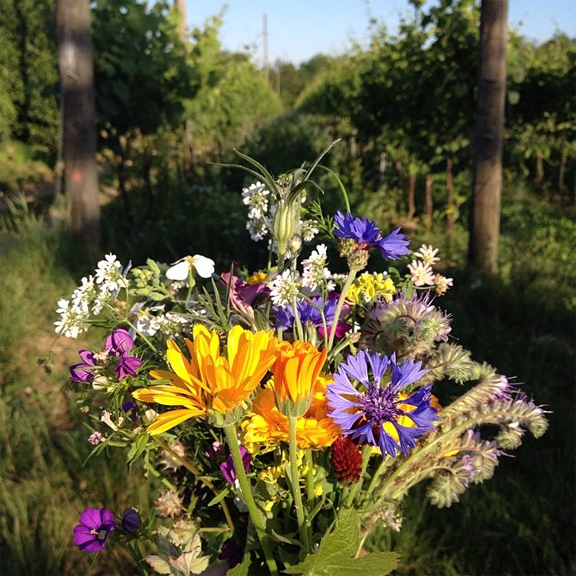
blue bottle flower corn Cyanus segetumAfter translating the passage below this morning for my client Bele Casel, I couldn’t help but do a little reading about the Italian blue cornflower, Centaurea cyanus (“commonly known as cornflower, bachelor’s button, bluebottle, boutonniere flower, hurtsickle or cyani flower… an annual flowering plant in the family Asteraceae, native to Europe”).

The cornflower, or fiordaliso as it is known in Italy, was once commonly found across Italy’s farm land. Today, it’s relatively rare.

Most agree — according to what I found on the internets this morning — that its disappearance is due to expansion of chemical-based commercial farming in Europe.

“It is now endangered,” reports the Wiki, “in its native habitat by agricultural intensification, particularly over-use of herbicides, destroying its habitat; in the United Kingdom it has declined from 264 sites to just 3 sites in the last 50 years.”

Here’s what a journalist in Piedmont had to say about the fiordaliso: “The advent of pesticides and seed breeding [please click this link to learn more about “seed breeding”] has certainly helped to increase agricultural production. But it has also denied our children the opportunity to enjoy this poetic sight in our wheat fields.”

The excerpted translation (mine) comes from a 2011 article about school programs that teach students how to grow cornflowers in the classroom.

I hope this background information will help to make Paola Ferraro’s note (below) more meaningful to readers.

I’ve always been impressed with the Ferraro family and Bele Casel’s commitment to chemical-free farming in their vineyards. They see it as a means to deliver a better product. There’s no doubt about that. But they also view it — first and foremost — as a civic duty and societal responsibility. If not them, I’m sure that grape grower Luca Ferraro and his sister Paola would agree, who will try to protect Italy’s natural beauty and its wondrous natural resources?

On a rainy, dreary day here in Houston, Paola’s note brought a ray of sunshine into our home… Buona lettura. I hope you enjoy her note as much as I did translating it.

*****

My mother has often told me about how she used to ride her bicycle through fields that were full of cornflowers when she was a little girl.

And whenever she remembers those days, she always gets a little sad because you really don’t see them in the fields anymore.

The other day, when we went to pick some flowers in our vineyard in Cornuda and she saw some cornflowers, the smile on her face made me so happy. It was one of those smiles that come from deep down in your heart.

Nature is a truly wondrous thing and it’s such a pity that so many — too many — people don’t understand that.

Paola Ferraro

Italian wine resources: winery designations, wine terms translated, grape name pronunciation

A ping today from friend and colleague Meg reminded me that I had neglected to create widgets on DoBianchi.com beta for my Italian wine terminology resources: please click here for the Italian Grape Name and Appellation Pronunciation Project; here for the Italian Wine Terms Translated index; and please see the Italian Winery Designations Explained glossary below. Thanks, Meg, for the nudge! And buon weekend yall… Thanks for being here.

italian wine terminologyMaso is the latest entry in my ever expanding Italian Winery Designations Project below. If you have a winery-related term that you’d like me to include, please let me know in the comment section.

maso, Alpine farm, estate, from the post-classical Latin mansus, mansum, mansa, meaning dwelling, house, homestead, or manor (from the Latin manere, to remain), akin to the French mas and the English manse.

The term maso (pronounced MAH-zoh) is used exclusively in Trentino-Alto Adige to denote a working farm and farm house. Traditionally, this term — which is shared by Italian and Ladin — referred to a ranch (i.e., a farm where animals were also raised).

*****

azienda, landed property, estate, domestic work, from the Spanish hacienda, from the Latin facienda meaning things to be done from facere, to do.

The term azienda means business and is used to denote a company or firm in Italian. An azienda agricola is a farming business; an azienda vinicola is a winery (a wine business).

ca’, see entry for casa.

cantina, literally cellar or cool place to store perishable goods and by extension tavern, probably from the Italian canto meaning angle or corner from the Greek kampthos, bend or angle.

The word cantina has a wide variety of applications in Italy (often used for restaurants and food stores, as well as wineries) and can be found across Italy to denote wine cellar.

casa, literally, a building, house, or habitation, from the Latin casa, a small house, cottage, hut, cabin, shed.

The term casa is used throughout Italy as a winery designation and is often abbreviated as ca’, as in Ca’ del Bosco (it’s important to note that it’s often erroneously abbreviated as Cà [using the accent grave diacritic], when in fact the inverted comma [‘] denotes the elision of the final two letters, often derived from a dialectal locution). A casa vinicola (pronounced KAH-sah vee-NEE-koh-lah) is a winery/négociant.

cascina, farm house or other structure used to house livestock or farm tools, from the late Latin capsia meaning case or receptacle.

It can also denote a structure used to store cheese and other dairy products. The term is used primarily northern Italy and especially in Piedmont to denote a farmhouse or winery or dairy farm.

fattoria, farm, from the Latin factore, literally maker, from facere meaning to do.

You find usage of fattoria generally in Tuscany where it can denote a winery or a farm, keeping in mind that most wine-producing estates in Tuscany also grow olives and other crops.

masseria, country house, estate, from the post-classical Latin mansus, mansum, mansa, meaning dwelling, house, homestead, or manor (from the Latin manere, to remain), akin to the French mas and the English manse.

The term masseria (pronounced mahs-seh-REE-ah) is used primarily in southern Italy and most widely in Puglia to denote a country estate.

podere, country estate with farm house (according to the Zingarelli dictionary), akin to the Italian potere, meaning can or to have the ability to do, from the late Latin, potere, from the Latin possum, meaning to be able, have power.

The term is used today primarily in Tuscany where it denotes, literally, a seat of [agricultural] power, hence the late Latin origin of the word, potere, literally power or possession (who also share kinship with the Latin etymon). According to the Cortelazzo etymological dictionary, the word first appears in the Middle Ages in northern Italy.

poggio, hill, from the Latin podium, meaning an elevated place, a height.

As Virgil wrote famously, Bacchus amat colles, Bacchus loves hills. The usage of poggio in Tuscany is documented dating back to the thirteenth century and the term appears in Dante. There are many related words like poggiolo, poggiuolo, and poggione.

ronco, literally a growing site on a hill used for farming, from the Latin runco, meaning to weed out, root up; to weed, clear of weeds, akin to the Friulian dialectal term ronc.

To my knowledge, ronco is used exclusively in Friuli. Akin to the Italian roncola or pruning hook, it probably comes from the past participle of the Friulian runcar (to clear of weeds, runcà, in other words, a site cleared for planting.

tenuta, a [land] holding or property, past participle of the Italian tenere, from the Latin teneo, meaning to hold, have, or keep.

Tenuta is a term that you see applied across northern and central Italy. Its relation to the pre-industrial age, when land ownership denoted nobility, is clear.

vignaiolo (plural vignaioli), vine tender or grape grower, derived from the Italian vigna, meaning vine, from the Latin vinea, vineyard, from the Latin vinum, wine.

Pronounced VEEN-y’eye-OH-loh (plural VEEN-y’eye-OH-lee), vignaiolo is used to denote a winery that uses estate-grown fruit in the production of its wines.