Through a glass but darkly: notes on the recent New Yorker post on how expectations shape impressions of wine

My July 18 for the Boulder Wine Merchant…
best wine photographyAbove: isn’t that a super groovy wine photo? It’s by one of my favorite Texas wine bloggers, OurSommLife.

Earlier this week, New Yorker magazine psychology and science blogger Maria Konnikova published a post devoted to “what we really taste when we taste wine.”

The post was inspired by a recent “live-action” experiment by Columbia University neuroscientist Daniel Salzman.

“His premise,” explains Konnikova, “is that no event or object is ever experienced in perfect, objective isolation. It is instead subject to our past experiences, our current mood, our expectations, and any number of incidental details—an annoying neighbor, a waiter who keeps banging your chair, a beautiful painting in your line of sight. With something like wine, all sorts of societal and personal complications come into play, as well. We worry, for example, about whether our taste is ‘good.'”

Early Christian philosopher Augustine of Hippo (354-430 C.E.) wrote extensively (and some would say definitively) about this very issue when he described the role of memory in human sensation. He arrived at Salzman’s same conclusion. But that’s neither here nor there.

“Expectations,” writes Konnikova:

    can influence our experience in two interrelated ways. There is the conscious influence, or those things we are knowingly aware of: I’ve had this wine before and liked or hated it; I’ve been to this vineyard; I love this grape; the color reminds me of a wine I had earlier that was delicious. As our experience grows, so do our expectations. Every time we have a wine, we taste everything we know about it and other related wines. Then there are the unconscious factors: the weather is getting on our nerves, or our dining companion is; we’ve loved or hated this restaurant before; I’m mad at my boss over something he said this morning; the music is too loud, and the room is too cold. These can all affect taste, too, even though they are unrelated to the wine itself.

(Please do read Konnikova’s insightful account of participating in the experiment.)

The blog post was widely read last week in the U.S. fine wine community and the link found its way to my inbox via more than one e-list and RSS feed.

As I read it, I couldn’t help but think about something that American visitors to Italy often tell me: the wine just tasted so much better when I was in Italy. That observation is almost always followed by inquiry: why is that? and do the Italians simply keep the good wines for themselves?

The answer to the first question, especially in the light of Konnikova’s experience, is simple. When you’re on vacation in Italy, you’re probably (and hopefully) more relaxed; ideally, you are more well rested; you’re likely sharing the experience with someone you care about and feel close to; you’re surrounded by Italy’s natural and human-made beauty; you might even be getting laid.

But there’s an even more important element. In Italy (or France or Spain, for that matter), you’re probably eating more wholesome foods that have been prepared as part of a more balanced diet. You’re also pairing foods and wines that have been paired together — organically and thoughtfully — for generations. And ultimately, you’re not having a breakfast burrito in the morning, Mongolian beef for lunch, and “Italian” for dinner: if you’re dining well in Europe, you ought to be enjoying meals inspired by local agriculture and local culinary tradition.

Now, don’t get me wrong. By no means am I saying that the one or other approach to daily dining is better or worse. Personally, I like it both ways.

But the more “holistic” approach that you find at your favorite agritursimo (farm house restaurant/tavern) in Italy does make the wine taste better because the wine is consumed in a more organic (and perhaps more restful) context and environment.

The answer to the second question (do the Italians keep the good wine for themselves?) is more complicated.

It’s not that they keep the good stuff for themselves (although the Italian wine trade, like that of any nation, including our own, is inevitably driven more by profit than by altruism). The fact of the matter is that Italians prefer wines with lower alcohol, lighter body, and higher acidity. In enogastronomic context, those wines simply tend to taste better to most people — especially when they are tasted with no pretense or social pressure.

Aaaaaaaa… social pressure. Wine is, after all, a social experience (unless you drink alone).

“After the impressions and scores on our cards had been tallied and analyzed,” writes Konnikova, “it was time to reveal the ratings. I was nervous, since I knew I would have to report back on my accuracy.”

If there’s one thing I’d like to impart to readers through my blogging (and I am confident that Master Sommelier and Boulder Wine Merchant owner Brett Zimmerman would agree with me 100 percent), it’s that we should evaluate and appreciate wine within the personal and idiosyncratic context when/where it is tasted. If poolside under the hot Louisiana sun (as I hope to be next weekend), I’d probably give a light bright, 11 percent alcohol Moschofilero from Greece a 90+ score. If celebrating my birthday in the middle of summer (as I always do and recently did do), I’m going to drink a better-suited-for-autumnal-temperatures Barolo (which I did) because by golly, it’s my birthday.

Salzman and Konnikova are telling us the same thing that Augustine revealed some 1,600 years ago. And it’s as relevant now as it was then.

As you ponder the wine that you will drink with someone you love this weekend, the important thing to remember is that wine is good if it tastes good to you.
@VinoRoma: someone you should follow if you’re into Italian wine & food (via @CanteleWines)

vino roma hande leimerAbove, from left: Paolo Cantele, Hande Leimer, and Theodor Leimer, outside the Cantele winery in Guagnano, Lecce province (image via Hande’s Facebook).

I had a lot of fun this morning writing this profile of Hande Leimer and her husband Theo for the CanteleUSA blog.

If you’re into Italian wine and food, I know you’ll find her posts to be as compelling as I do.

Here’s the link. Buona lettura!

A Napa that blew the Italians’ minds: Cornerstone

hurleys restaurant napa yountvilleAbove: after our tasting, team sparkling wine had lunch with winemaker Craig Camp at Hurley’s in Yountville across the street from the Cornerstone Cellars tasting room. Even at a toned-down Americana restaurant like Hurley’s, the food is so thoughtful, wholesome, and delicious. That’s the amuse bouche.

I’ll never forget the first time I poured a Napa wine for an Italian wine connoisseur.

The year was 1990 and my friend Riccardo Marcucci from Bagno Vignoni in Montalcino had come to visit me in Southern California.

I was just beginning to learn about fine wine. Italian poetry was my focus then. Riccardo was the wine director for his family’s restaurant, where -aia wines were his focus: Sassicaia, Solaia, Ornellaia etc. Of course, he had a great allocation of Brunello as well. He did his mandatory military service with Giacomo Neri of Casanova di Neri. They were good friends and Riccardo loved (and continues to love) Giacomo’s wines. You get the picture…

When he asked me to pour him a Californian wine, I reached for a bottle of Robert Mondavi Reserve Cabernet Sauvignon.

He tasted the wine and laughed.

“Caspita!” he exclaimed. “Wow, they actually make good wine in California. What a surprise!”

“Of course,” he observed, “it’s not as good as Italian wine. But that’s because they haven’t been making wine there for as long as us.”

There were so many layers of irony in his hubris, especially in the light of the California-style wines that he liked so much, that I simply ascribed it to his Tuscan machoism.

You get the picture…

cornerstone cellars best wineAbove: the 2011 Cornerstone Napa Valley Cabernet Franc is one of the best wines I’ve ever tasted from Napa. It had vibrant acidity, clarity of fruit, genuine varietal expression and lovely freshness and drinkability. I loved this wine and can actually afford it.

The last stop on my recent tour of California wineries with team sparkling wine from Italy was at the Cornerstone Cellars tasting room in Yountville, Napa, where we tasted a fantastic flight of wines with winemaker and blogger Craig Camp.

It gave me immense pleasure to watch the Italian winemakers ooo and aaa over these wines.

Craig, who’s been a wine blogging colleague and friend of mine for many years now, has such a deft hand in interpreting Californian fruit. The “red thread” of his style is high acidity and restrained alcohol — the hallmarks of food-friendliness. And the wines are moderately priced for their value and quality.

The standouts for me were the 2011 Napa Cabernet Franc and the 2010 Willamette Pinot Noir, which really knocked me off my feet. I also really loved the 2011 Napa Sauvignon Blanc. It had just the right amount of cat piss on the nose and its aromatic profile complemented the elegant white and tropical fruit on the palate. Delicious, happy wines, all around.

But the thing that gave me the greatest satisfaction was watching the Italians wrap their minds around a “Napa” they hadn’t dreamed could exist.

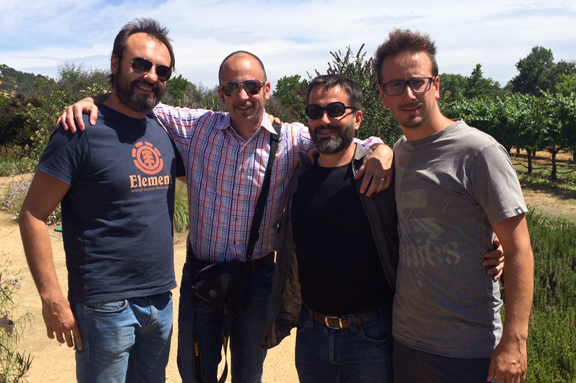
bromance definitionAbove: me (far left) with team sparkling wine, from left, Giovanni Arcari, Andrea Rudelli, and Nico Danesi (photo by VinoGirl).

“Lean and irresistibly delicious,” wrote team leader Giovanni Arcari on his blog, “with well integrated wood in the fruit and alcohol that was never excessive. Wines with grand identity. If I were to see these wines on a list at a restaurant in Italy, I’d order them for sure.”

For Italian readers, check out Giovanni’s post here. English speakers shouldn’t miss Alder Yarrow’s recent profile of Craig on Vinography. And I also recommend reading Craig’s recent post, Dancing with Wine. In his thoughtful reflections on trends in fine wine today, he reminds us that deliciousness trumps profundity when it comes to sitting down for dinner with friends and sharing a great bottle.

It’s never easy to take Italians to California wine country. As the saying goes, you can take Italians out of Italy but you can’t take the Italy out of Italians. We tasted scores of wines on our trip and they were impressed by some and not as much by others.

I’d like to think that on this last day of our trip, abbiamo finito in bellezza… we ended on a high note.

Thanks again, Craig, and thanks to everyone for following along…

Mosel Riesling and conch ceviche, simply brilliant

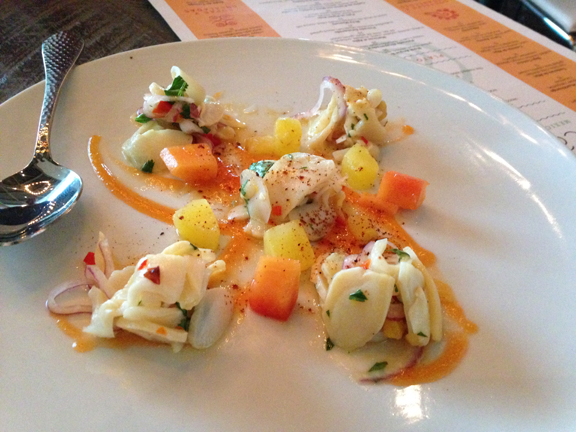
conch cevicheMention to nearly anyone in the wine business that you’re heading to Las Vegas and she/he will invariably tell you that you must visit the Lotus of Siam, an otherwise unassuming Thai restaurant with a phenomenal Riesling-heavy list.

I’m not a gambler but my band has played Vegas a handful of times. And each time I’ve visited, I’ve been thrilled by the pairing of Riesling and the spicy flavors of the restaurant’s menu (and it’s actually the only place in Vegas, in my experience, where I can afford to get an interesting and satisfying meal).

I couldn’t help but be reminded of the Lotus of Siam when I visited Caracol in Houston with a buddy on Thursday night.

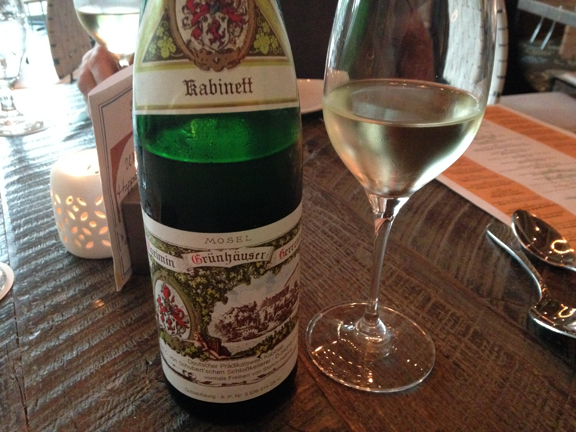
grunhauser kabinett priceThe match of conch ceviche (in the top photo; one of the restaurant’s de facto signature dishes) and the 2011 Grünhaus Herrenberg Kabinett was simply one of the most brilliant marriages of aroma, flavor, and texture that I’ve experienced this year.

The wine, however youthful, was so pure in its white fruit notes and its elegant sweetness and delicate unctuousness played counterpoint to the measured acidity and supple chewiness of the thinly sliced conch.

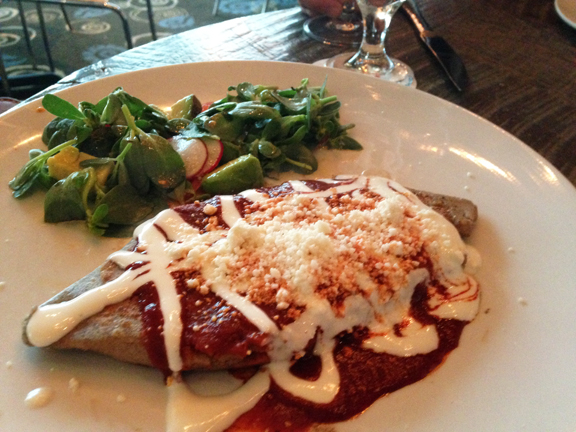
tlacoyo chick peaOf course, I can never resist the tlacoyo de alberjón (above), a blue masa de maíz flatbread stuffed with puréed chickpeas (and another of the restaurant’s signature dishes).

My friend and leading Houston sommelier Sean Beck has put together a superb list of German-speaking wines at this “Mexican seafood” concept by Houston legacy chef Hugo Ortega.

I love LOVE this restaurant and it’s a place where Spanish is spoken in a spectrum of cadences that stretch from South to Central America by guests and staff alike, a perfect example of Houston’s cosmopolitan vibe and one of the reasons I love living here.

Chapeau bas, Sean, and THANK YOU for this awesome list…

Happy Fourth, an All-American burger & our daughter the Incredible Hulk

From the department of “life could be worse”…

best hamburger houstonHappy Fourth of July, yall!

This July is such a special month for us: we will be celebrating Lila Jane’s first birthday!

She and I are planning to celebrate together because our birthdays are just eight days apart.

Yesterday, I took the girls to the newly opened Bernie’s Burger Bus here in Houston.

It’s one of the city’s most popular food trucks and has finally opened a stand-alone location.

It’s pretty cool: the open kitchen is in a life-size yellow school bus right in the middle of the restaurant. And it’s not far from our house so I imagine we’ll be spending a lot of time there this summer.

That’s “the Bully” in the photo above: “Two of our signature burger patties both topped with cheddar, mayonnaise, mustard, ketchup, pickle, thin sliced onions, shredded lettuce, and slow roasted garlic tomatoes.”

The girls loved it, especially the sweet potato fries, as you can see by Lila Jane’s impression of the Incredible Hulk.

Have a happy and safe Fourth of July!

Baci e abbracci (kisses and hugs)…

—Parzen Family

Prosecco crisis: “We must work to build awareness of the Prosecco DOCG.”

prosecco docg map docAbove: Valdobbiadene, Conegliano, and Asolo are the three historic townships of Prosecco. Today, it’s increasingly challenging for Prosecco DOCG growers to compete with the DOC growers and bottlers in the planes of the Veneto and Friuli, where growing costs are significantly lower.

“Unfortunately, the uniqueness of the Prosecco DOCG has gone unrecognized and there are just a few brands that consumers identify with it and that they ask for by name. When Prosecco is perceived as a generic wine — ‘unbranded’ as they say in English — it focuses the competition solely on price. As a result, the value of the product is put at risk. We must work to build awareness of the Prosecco DOCG.”

—Matteo Lunelli, Cantine Ferrari president and 50-percent stakeholder in the historic Prosecco house Bisol.

Please click here to read my Prosecco editorial for the Bele Casel blog.

Groth, a supreme expression of Napa (or bromance is never easy)

milkweed beetles insectaryAbove: milkweed beetles in the insectary at the Groth winery in Oakville (Napa).

From Randall Grahm’s Bonny Doon to Corison to Groth

As I led my bromance Giovanni Arcari and team sparkling wine on a tour of California wine country, we had visited the radical and the insider. And now it was time to visit one of California’s great legacy estates.

Why Groth? Because our friend and favorite Napa-based wine blogger, Joanne Farrell aka VinoGirl, author of Vinsanity, works there.

insectaryAbove: the winery’s insectary lies adjacent to the estate’s top vineyards.

As VinoGirl, one of the tasting room docents, led us on our tour, she told us that Groth was the first wine for which Robert Parker, Jr. awarded the elusive 100-point score, thus making Groth the Nadia Comăneci of Napa, as it were.

There is a tendency in the indy wine community to be distrustful and even disdainful of wines like Groth. And this is due in part to the way that the wine establishment (viz., Parker et alia) has embraced the wines.

Many among us assume that these wines are highly manipulated in the cellar and we often conjure images of lab-coat-donned technicians tinkering away, crafting gold-scoring wines like alchemists.

groth winery tourAbove: the Spanish-colonial-inspired architecture at Groth evokes power and opulence.

But as VinoGirl led us outside to walk through the winery’s top growing site, we learned that the winemaker’s focus is in the vineyard, where organic and conventional growing practices are applied in harmony.

VinoGirl holds a degree in viticulture from Napa Valley College and I was humbled as she and team sparkling wine compared notes on the finer points of grape growing.

groth oakville wineAbove: there is no official “reserve” designation in Napa, VinoGirl explained. But the term is often used to denote a winery’s flagship wine like the Groth Oakville Reserve.

When we sat down in the lovely tasting room, I was impressed, once again, by the caliber of the tasting room guides and their superb hospitality and congeniality. They seemed to make everyone, including us, feel like a rockstar.

VinoGirl was keen to pour us the 2004 Groth Oakville Reserve. And I have to say: I found the wine to be balanced and delicious. Its wood was well integrated and its red fruit evolved.

Even the hypercritical Italians liked it and they were not an easy crowd to please by any means.

italian winemakerAbove, from left: Giovanni, me, Nico, and Andrea in the Groth insectary. Photo by VinoGirl.

I must be honest: Groth isn’t exactly my speed in wine. The wines don’t align seamlessly with my personal taste.

But I was excited to learn more about this supreme expression of Napa and to share it with my fellow travelers.

In the wake of this experience, there’s no doubt in my mind that Napa is peerless when it comes to wine tourism. We were there as friends of VinoGirl, of course. But our tour, including the excellent presentation, was the same as that of other guests (including the jolly middle-aged lady who wished the Italians buon natale from across the room).

After the tour, VinoGirl led us to the Norman Rose Tavern in downtown Napa for beers, burgers, and fried pickles.

Referring to the prevalence of red wine production in Napa and citing a local aphorism, VinoGirl joked that “it takes a lot of good beer to make good wine in Napa.”

When we ordered, Giovanni asked me to get him a burger and to choose the type of cheese.

The burger arrived and when Giovanni took a bite and realized that I had ordered him blue cheese, he expressed his disappointment.

Bromance, I learned, isn’t always easy.

Thank you again, VinoGirl, for a wonderful tour of the winery-where-you-are-gainfully-employed and the delightful afternoon in your town.

Pinzimonio & grilled vegetables for summer supper

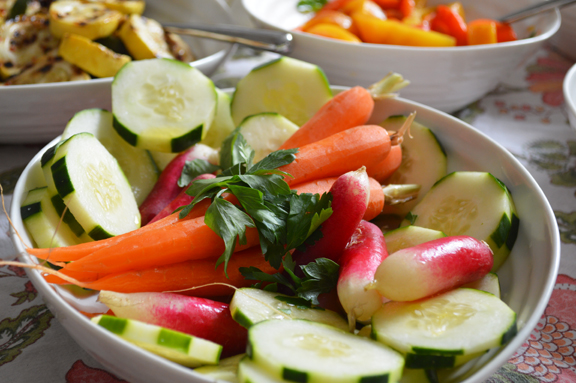
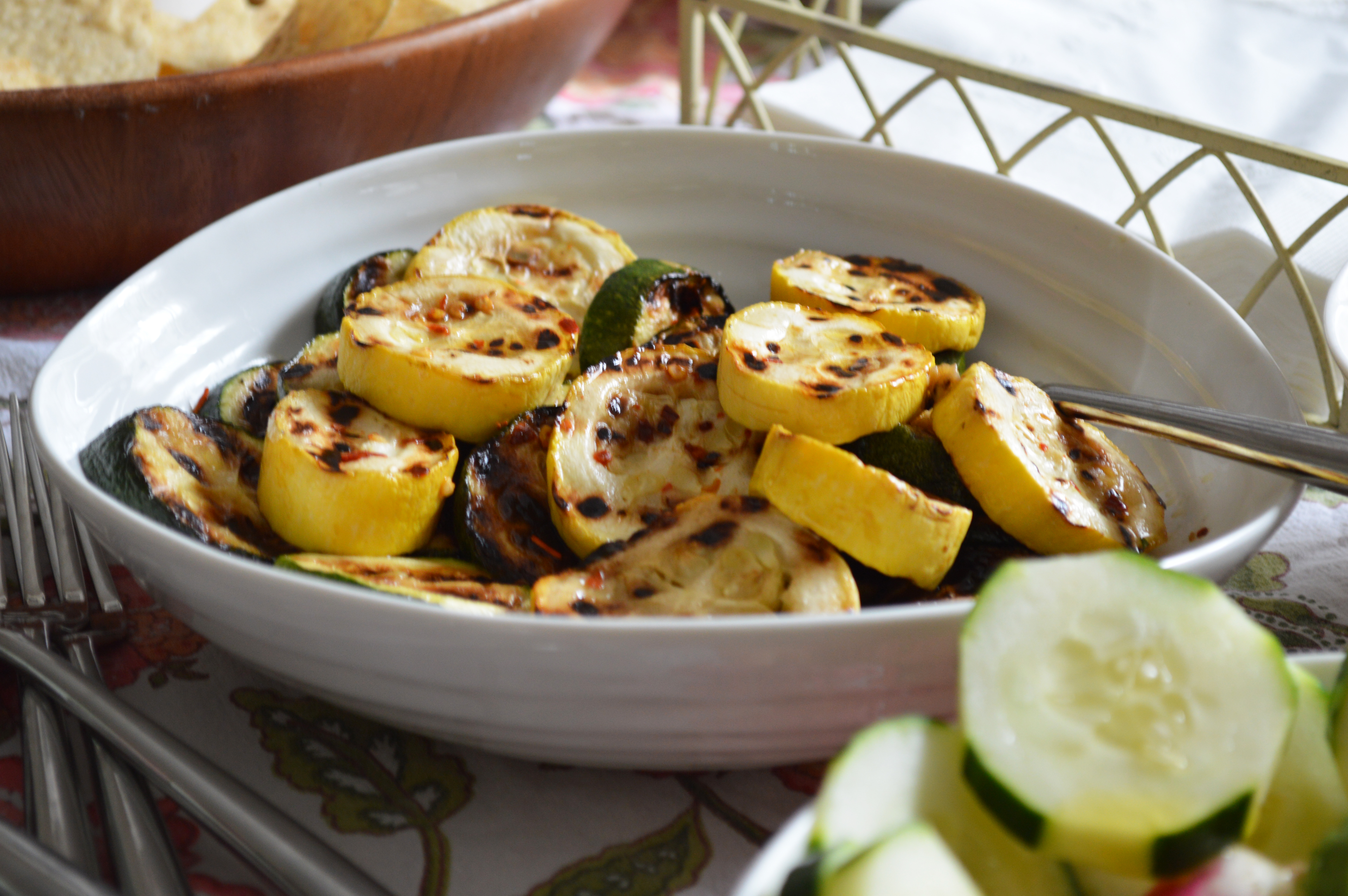
pinzimonio cruditesJust had to share these photos from last night’s supper chez Parzen.

The Levy cousins all came over for Prosecco Col Fondo and a vegetarian dinner (except for some grilled chicken breast that I made for the meat eaters).

grilled zucchini recipeGeorgia P had such a blast playing with her cousins.

And everyone took turns holding Lila Jane.

josie and georgiaThat’s Georgia, left, with her cousin Josie. They are so sweet.

Summer has arrived in Houston and the heat and humidity are finally here.

But man, life sure could be worse. It’s a really special time for me, Tracie P, and our girls.

Happy summer, everyone!

Pax Mahle in Houston, taking the town by storm

samantha_porter_sommelier_houstonToday, I’m taking a break from posting about last week’s California trip to share notes from my tasting yesterday in Houston with rockstar winemaker Pax Mahle from California (above, right).

The whole town was buzzing — literally and figuratively — with his visit.

I’ve posted this morning about my audience with him for the Houston Press.

It’s a whole new California and Pax is on the cutting-edge.

Thanks for reading and buon weekend yall!