Why social media strategy matters at LA’s grooviest wine shop

best wine shops los angelesAbove: DomaineLA on the edge of West Hollywood. Owner Jill Bernheimer has raised the profile for her shop and brand through a brilliant social media campaign.

There are a lot of cool wine shops in LA: Wine House and WineExpo on the westside, Silverlake Wine and Wine Hotel toward the east are among my favorites.

But the place I feel most at home is at Jill Bernheimer’s DomaineLA, where the focus is on the natural-leaning and old-world style.

I visited Jill earlier this year and we had a long talk about her business and her brilliant (imho) social media marketing strategy.

Launching an aggressive, high-design online e-commerce platform in 2013, she said, was expensive and time-consuming. And the hoped-for online sales boom hasn’t materialized, she conceded.

But the ambitious project has paid off marvelously for her, she told me. Her information-heavy site, she explained, has helped to get her on the radar of leading wine writers in the U.S.

“The fact that writers can see what I’m doing and the style of wines I like,” she said, “has led to great coverage in the media.”

This year, for example, she was quoted in a high-profile article by Eric Asimov in the New York Times and she was featured in Food & Wine as a guest “sommelier.”

And that has led to increased business.
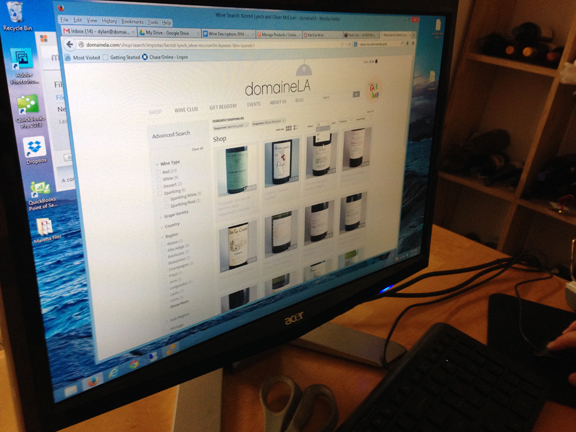
best wine shop websitesAbove: DomaineLA’s ambitious online commerce program hasn’t directly led to more sales. But it has landed owner Jill in the national media and raised her brand’s profile among consumers.

In my view of online wine marketing, Jill’s approach is a model and benchmark for wine retal anywhere.

Her investment in her site was risky, in terms of both cost and sweat equity. And it hasn’t delivered in the way she had expected.

But it has repositioned her brand and given her fantastic exposure in the national discourse in wine today.

And that, to me, is key: it’s not the direct correspondence of social media investment that drives sales but rather the indirect correlation of brand positioning that delivers the desired results.

By using social media, where she is very active, to express her brand’s ethos, she has connected with like-minded consumers across her market in a way that wouldn’t have been possible in the pre-social media era.

Jill is a super cool and very groovy lady — online and off — and I’m very proud to be pouring at her shop next week. I hope to see you there!

Details follow for my Bele Casel Prosecco Colfòndo tastings in Southern California next week, including my Tuesday evening tasting with Jill at DomaineLA. If you happen to be in that part of the world, please come out and taste with me!

domaineLA
Tuesday, Oct. 14
6-8 p.m.
$8
6801 Melrose Ave
Los Angeles, CA 90038
(323) 932-0280
Google map

Jaynes Gastropub
Saturday, Oct. 18
3:30-5:30 p.m.
$20 (includes passed bites by Jayne and team)
4677 30th St
San Diego, CA 92116
(619) 563-1011
Google map

Italy’s dismal harvest news: my report for @WineSearcher

From the department of “ne nuntium necare”…

best barolo monforte alba 2014Above: Ferdinando Prinicipiano in Barolo (Monforte d’Alba) remains optimistic about his harvest despite the extreme challenges of the rain-soaked, “bizarre” 2014 growing cycle.

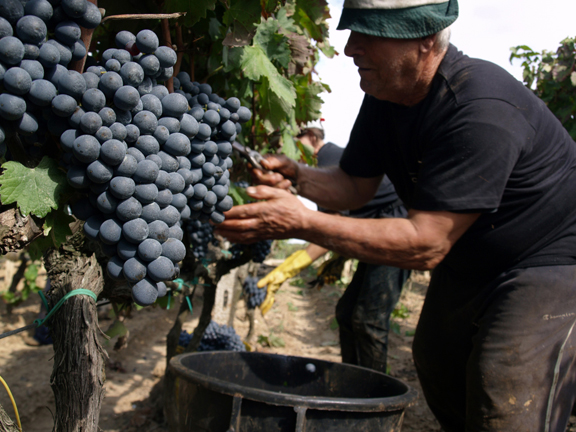
Even before I began contacting Italian winemakers for my 2014 harvest report for WineSearcher.com, I kept hearing the same refrain: the 2014 growing cycle has been “bizarre.”

A “non-existent” winter and a cool and extremely wet summer have made for a nail-biting roller coaster ride for Italian producers this year.

“Rain, rain, rain, and more rain,” said Ferdinando Principiano in Monforte d’Alba (in the Barolo appellation, above, left) when I spoke to him by phone on Tuesday. He still holds out hope for his 2014 Nebbiolo, including his single-vineyard wines. But he’s one of few growers who remain optimistic.

The good news is that there will be exceptions to the overall bleak outlook. Barbaresco, it appears, will have a good to great vintage and Chianti Classico also fared well.

Click here for my report for WineSearcher.com.

“It could be a ’72, which was horrible,” said Gaia Gaja in an interview that Antonio Galloni filmed in late August and posted on his site this month (I highly recommend it to you). “Or it could be a ’78,” which was one of the greatest vintages of the decade, she adds, citing her father, who worked both vintages.

She gives a great overview of the challenges faced by growers in Barolo and Barbaresco.

In other news: Houston, “Wine City USA”…

A confluence of prosperity, expanding wine education, and ambitious wine professionals is making Houston one of our nation’s leading wine destinations.

I wrote about new wine trends here this month for Houstonia magazine and the piece is now available online.

I’d already filed the article when I met with California winemaker Jasmine Hirsch in late September. But the fact that she and Rajat Parr are bringing their In Pursuit of Balance tasting to Houston in early 2015 is yet another sign of Houston’s growing allure in the U.S. wine scene.

From the oilman’s cafeterias to the hipster wine bars, it’s never been a better time to be a wine lover in the Bayou City.

Argentina surprised me with fresh, stainless-steel aged reds

This just in: check out this awesome write-up today of a recent New York Wine Writers Guild tasting of white wines from Campania by Italian wine maven Charles Scicolone.

expresion tanatAbove: I really loved the Finca Sierras Azules 2013 Tannat. It was fresh and bright in the glass, with great acidity and balanced alcohol. It would cost roughly or under $10 in the U.S. (although it’s not currently imported).

Fellow Houston wine blogger and good friend Sandra Crittenden, author of Wine Thoughts, had extended an invitation to a walk-around tasting of Argentine wines on Friday afternoon.

And so I went, inspired more by collegial respect than by the anticipation that I would taste wines that I’d like.

To my surprise, I found that many wineries in Argentina produce two separate and distinct lines of wines: the “important” label, more concentrated in flavor and aged in barrique; and an “everyday” label, vinified in a fresh, food-friendly style and aged generally (at least based on my experience on Friday) in stainless steel.

The 2013 Tannat Expresión by Finca Sierras Azules (above) was a revelation for me. It danced in the glass with bright, lip-smacking red fruit flavors. It had that zinging acidity that I crave at the dinner table and it had a wonderfully clean and refreshing finish. The rep at the table told me that none of Sierras Azules wines are aged in oak. I estimate that the wine would cost roughly or under $10 based on the ex cantina price that the rep quoted me.

tracia malbecAbove: the Tracia 2013 Malbec was another standout for me. Malbec from Argentina can be so delicious, I discovered, when it’s not doctored with cultured yeast and dominated by woody flavors.

“We’re not focused on the wood,” said Alejandro Isaias Brant, who showed his family’s Garbin wines at the tasting. “We are more focused on the typicity of the grape variety.”

The tasting reminded me of tasting in Barbera country, Italy, a few years ago. The producers had their “important” barriqued wines and then they had their fresh, stainless-steel or cement-aged wines that they drank themselves.

Aaaaaaa… the misguided power of the American palate and wine market!

The sparsely attended tasting seemed strangely geared more toward consumers than to trade (no proper spittoons, no stemware station, and overly chilled white and rosé wines were annoyances) and the winemakers were oddly startled by my many questions about aging regimens and winemaking styles.

But as I headed back to my desk, I couldn’t help but think about how Argentina could really break through in the American market if the producers would get hip to current wine trends in the U.S. today (acidity over alcohol, food-friendliness, lighter styles inspired by traditional European winemaking, etc.).

“We’re just behind Chile,” said Alejandro. “But we will reach them soon.”

Timorasso, Melon from California & other cool wines & things this week

Here’s the link for the Facebook event page for my Bele Casel Prosecco and Prosecco Colfòndo tasting in Los Angeles week after next. Angelinos, please come out and taste with me…

bubba stark zidarichMan, it’s been an insane week. It’s only October 3 and OND (October-November-December, the busiest time of year for restaurants and people who sell wine) is already in full swing.

One of the highlights of my wine week (although I actually tasted it last week) was the 2011 Zidarich Vitovska, which I shared with my friend Bubba Stark at Bufalina in Austin (yes, his name is really Bubba but I call him Moses for obvious reasons).

I’ve loved and followed Beniamino Zidarich’s wines for many years now and they consistently deliver vibrancy and wholesome, nuanced fruit flavors with just the right amount of oxidative character so as not to trump their balance. And these wines make you feel great the next day (if you know what I mean).

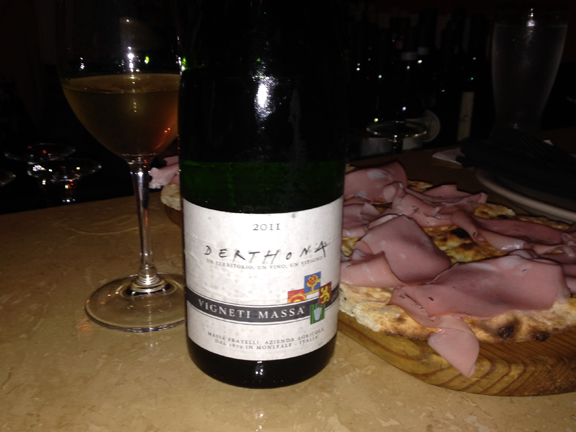
walter massa timorassoI was very stoked to taste the 2011 Timorasso by Walter Massa at my good buddy Nathan Smith at Dolce Vita in Houston where he runs a fantastic Italian wine program.

If you follow along here, you probably already know and love this profound expression of Timorasso, the white Piedmontese grape variety that Massa singlehandedly and brilliantly revived. The wine showed great this week but it has many years ahead of it imho.

But the most exciting thing is that it’s yet another benchmark wine that’s finally found its way to Texas, where Italian wine lovers continue to thirst for thoughtful and meaningful expressions of Italian viticulture.

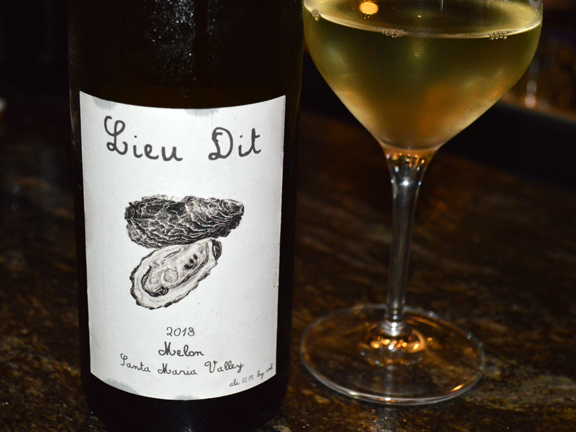
lieu dit melonHouston’s own celebrity sommelier Vanessa Treviño-Boyd turned me on to the Lieu Dit 2013 Melon from Santa Maria, California when I tasted with her and Jasmine Hirsch at 60 Degrees Mastercrafted, also here in Houston.

I would have never expected to taste such minerality from Santa Maria let alone see a bottling of Melon. A truly original wine that knocked me out with its freshness and varietal expression. Vanessa’s serving it by the glass at the swank restaurant where she manages a great list.

monteverro super tuscanAnother highlight of the week was taking part in my first Google hangout tasting with young French winemaker Matthieu Taunay who works with Michel Rolland to make the newest arrival in the crowded scene of French-grape wines in Tuscany, Monteverro.

I can’t say that the wines are “my speed.” But it’s always fascinating to interact with a top-flight winemaker like Matthieu and it was compelling to hear him speak about sophisticated temperature-control technology that allows him to provoke spontaneous fermentation during vinification.

About 40 minutes south of Bolgheri, Suvereto, where these wines are raised, is as-of-yet uncharted territory in the expansion of this category. It will be interesting to see where these high-priced wines land among the Super Tuscan set.

And the Google hangout was a great way to taste with Matthieu. The PR firm sent out the wines and then set up the hangout. I was one of six wine writers on the call and it proved to be a fantastic medium for tasting and interacting in realtime. I really enjoyed it.

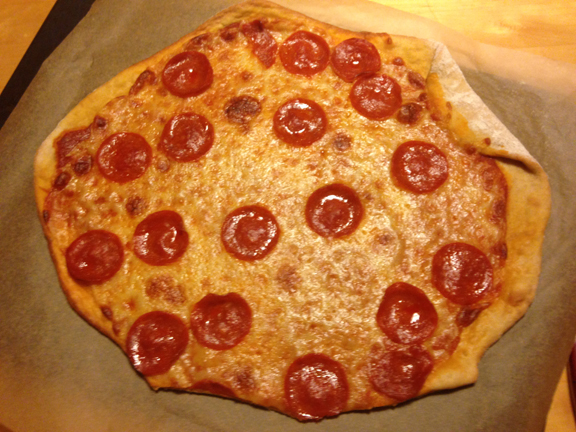
peperoni pizza recipe homemadeTracie P made us wholewheat pepperoni pizza this week. It was delicious.

lila janeAnd dulcis in fundo, it seems that Lila Jane could start walking any day now.

L’shanah tovah, yall! Erev Yom Kippur is tonight. I’ll see you on Monday. Thanks for being here…

Chianti Classico’s gallo nero (black rooster), a brief history

SONY DSCHave you ever wondered where the gallo nero or black rooster, the symbol of Chianti Classico, came from?

Today I posted a brief history of its origins for one of my new clients and a winery that I adore, La Porta di Vertine in Chianti Classico.

The post was inspired by recent changes in labeling requirements in the appellation.

But as soon as I started digging into the origins of the iconic rooster, I just couldn’t help myself (and I realized that the origin story is not readily available in English).

Please here for the post.

And check out the wines: they are super.

Thanks for reading…

Image via Jens Gyldenkærne Clausen’s Flickr.

Hirsch & Parr to bring In Pursuit of Balance to Houston in early 2015

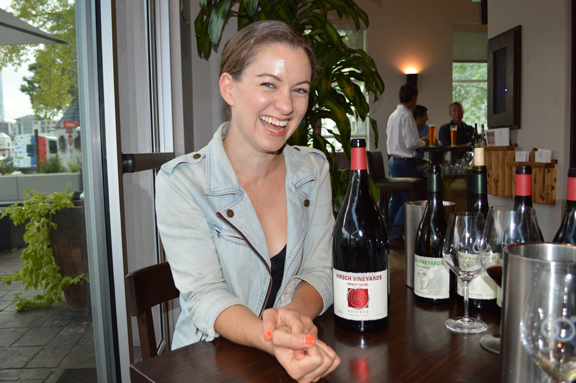
jasmine hirsch best pinot noirIt was really fun to sit down with Sonoma Coast producer Jasmine Hirsch yesterday at 60 Degrees Mastercrafted in Houston where she led a guided tasting of her wines for collectors.

In my view, hers is one of the most dynamic voices in American wine today.

She revealed to me that she and Raj Parr are bringing the controversial In Pursuit of Balance festival to Houston next year. It’s another sign that Houston is becoming one of the leading wine destinations in the U.S.

The festival and the new stop on its tour are the topics for my post today for the Houston Press.

The difference between how Italians & Americans view wine: poop

From the department of “reductive reasoning” (winemakers will get the joke)…

dario cecchini tuscan butcherAbove: pork salumi, rendered lard, and beef steaks in the meat case at Dario Cecchini’s famous butcher shop in Panzano in the heart of Chianti Classico. No Italian in their right mind would eat rendered lard without a glass of wine.

A lacuna in Eric Asimov’s brilliant article last week in the Times, “A Guide to Drinking Wine at Home,” reminded me of a hilarious anecdote from my time as a grad student in Italian at U.C.L.A.

Every year, when professors from Italy would visit for this or that conference, we would ferry them to dinner in LA’s downtown Asian-American neighborhood (often at ABC Seafood).

On the occasion of an Italian Futurism conference, I remember well, my dissertation advisor and I shuttled a small group of top scholars to one our favorite restaurants there. None of them had ever been to California and they were all excited about the feast that awaited them.

Please order for us, they implored, and we were happy to oblige.

And then, one of them, a professor from Bologna, asked, what wine will be drinking?

When we explained that the traditional accompaniment to most Asian cuisine was hot tea and that the only alcoholic option was beer, said professor (who shall remain nameless) stood up and proclaimed, I cannot eat dinner without wine!

As the Italian department’s de facto factotum (excuse the pun), I was enlisted to source a bottle of vino (and you can imagine the swill I delivered from a downtown LA liquor store).

Said professor was satisfied with the quality of the plonk and the dinner proceeded without further international incident.

Many years later, as I became a self-aware gourmet, it occurred to me that the episode illustrates a fundamental difference in how Americans and Italians perceive wine’s role at the dinner table.

Italians, like many current-generation Americans, view wine “as an ordinary part of their meals, like salt or bread,” as Eric wrote of the new American wine lover.

But they also see it as an elemental digestive aid, a mealtime component that will help them metabolize their food (in other words, ahem, as a tonic that will help them take a good shit the next day).

Some say that the Puritanical origins of proto-American culture continue to this day to make us squeamish about poop.

Italians generally espouse an antipodal attitude about defecation. Just the other day, for example, an Italian friend and colleague — a male in his forties like me — described his upcoming colonoscopy in great detail. And the conversation was part of a longer discourse on colitis and other gastroenteritis caused by eating heavy foods while selling wine to restaurateurs here in the U.S.

The bottom line (I can’t help myself, sorry) is that Italians enjoy an enlightened disposition in regard to digestion. After all, the earliest mention of the bidet in print is ascribed to an Italian. Although the French were the ones to popularize it with the rise of modern plumbing, the bidet is one of the Italians’ great gifts to humankind, on par with Marconi’s radio (at least in my view).

So please read Eric’s excellent article. His offers great advice for American wine lovers today on how to buy, collect, and drink wine. I highly recommend it to you.

But the next time you drink wine at dinner, please think about how the wine makes you feel the next day and how it helps you to digest your food.

The ultimate tasting note, nearly any Italian will tell you, is how you evacuate…

Taste a favorite Prosecco (Colfòndo) with me in So. Cal. in October

jeremy parzenAbove: no, thankfully, I won’t be performing any Air Guitar at the tastings. There will be groovy musique however! Hope to see you at one or the other or both…

I’m geeked to share the news that I’ll be pouring wines by my client Bele Casel in Los Angeles and San Diego in October, including their Prosecco Colfòndo, one of me and Tracie P’s all-time favorite wines.

If you happen to be out that way, please come and taste with me.

Details follow.

domaineLA
Tuesday, Oct. 14
6-8 p.m.
$8
6801 Melrose Ave
Los Angeles, CA 90038
(323) 932-0280
Google map

Jaynes Gastropub
Saturday, Oct. 18
3:30-5:30 p.m.
$20 (includes passed bites by Jayne and team)
4677 30th St
San Diego, CA 92116
(619) 563-1011
Google map

terraviva degustazione

Date night Houston with Tracie P, fantastic conch ceviche & groovy Bourgogne blanc

best ceviche recipe houstonIt’s not easy finding “alone” time for parents with small children like us.

But now that we’re settled into our new lives in Houston, the stars occasionally align for a baby sitter and a date night.

On Saturday, I took Tracie P to Caracol, a chic and smart Mexican seafood restaurant here in Houston and one of my favorite restaurants in the U.S. right now.

Chef Hugo Ortega’s cooking is always fantastic but the thing that takes it over the top is wine director Sean Beck’s excellent, value-driven wine list.

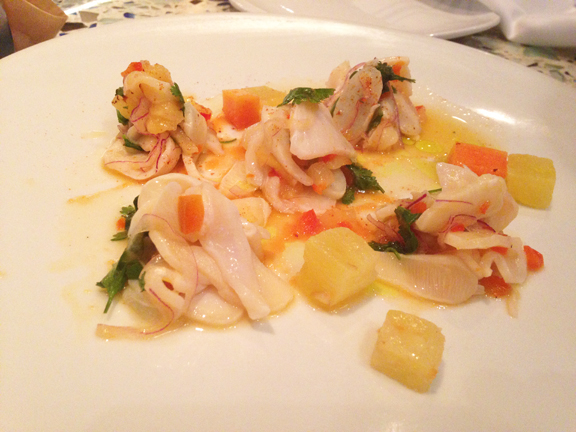
We drank a delightful Oregon Pinot Gris by the glass with the tender conch ceviche above.

camerones en escabeche recetta houstonThe camarones en escabeche were also great.

The escabeche was delicately seasoned and not overly sour, the shrimp perfect salted and grilled.

One of the things I love about Caracol is how cosmopolitan the crowd is there. You always see lots of sharply dressed young south American professionals at the bar (where we love to eat).

But that night, I only had eyes for Tracie P.

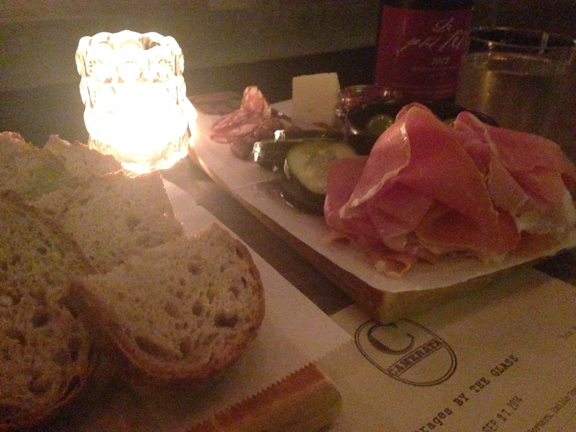
correct way to slice prosciuttoNext we headed over the Camerata, the city’s hippest wine bar these days (and the place where all the visiting international wine celebs hang).

We love chef Felipe Riccio’s affettati and cheese selection.

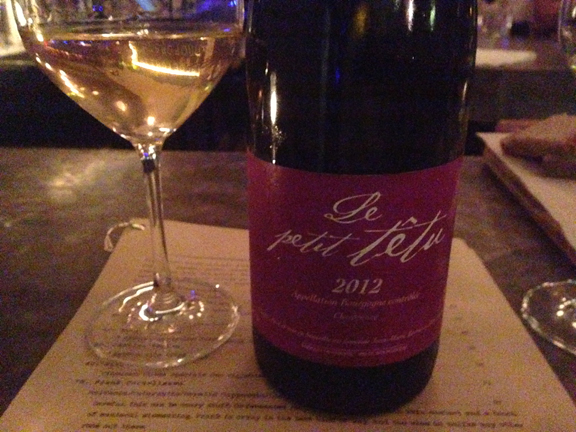
Not just one but two orders were placed for his expertly sliced prosciutto, which accompanied a super tasty bottle of Bourgogne Blanc Le Petit Têtu 2012 by négociant Jean-Marie Berrux.

petit tetu burgundy chardonnayWhen the wine opened with some apple cider notes, I was worried that it might go south.

But it quickly snapped into focus and white and white stone fruit aromas and flavors emerged along with good balance in alcohol and acidity.

I didn’t know the wine but Monday morning googling revealed that it’s pretty hard to come by. The fact that you can drink it here is another example of how Houston, in my view, is swiftly becoming one of America’s top wine cities (more on that later).

By the time we left to turn back into pumpkins (around 9:30), we were surrounded by young blue bloods, finance and energy managers who swirled and sniffed their glasses with an earnestness that would rival that of their counterparts in lower Manhattan.

Tracie P and I have been married now for nearly five years. With two little girls now and a move to Houston earlier this year, our lives have changed a lot since we first drank beer and danced at the Continental Club in Austin back in 2008.

But “eating at the bar” is still our favorite thing to do together. And we’re happy to live in a city that always seems to have a spot and a bottle to accommodate us.

I love sipping with you, beautiful Tracie P… What a fun night! I love you.

Children of a lesser Brett: in defense of Negroamaro @GianniCantele @WineSurf @CanteleWines

best negroamaro harvest 2014Please check out my post today for my client Cantele.

In response to a plaintive op-ed about overly wooded and dense Negroamaro by Tuscan wine writer Carlo Macchi, Cantele winemaker Gianni Cantele delivers a heart-felt and brutally honest, soul-bearing letter.

Click here to read my excerpted translation of Carlo’s post and complete translation of Gianni’s response.