Artificial lakes once served solely to bolster biodiversity. Now they are a vital water resource.

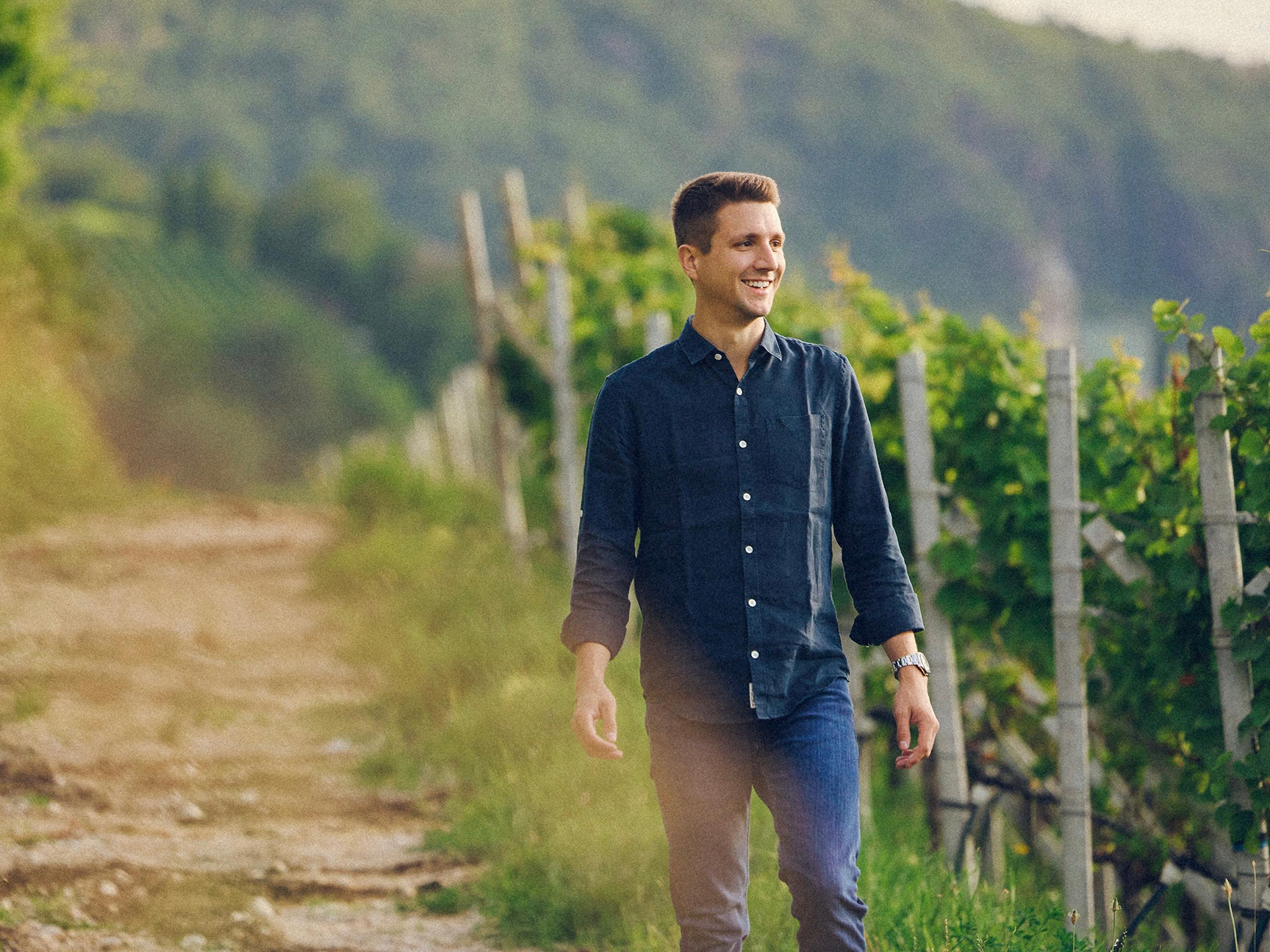
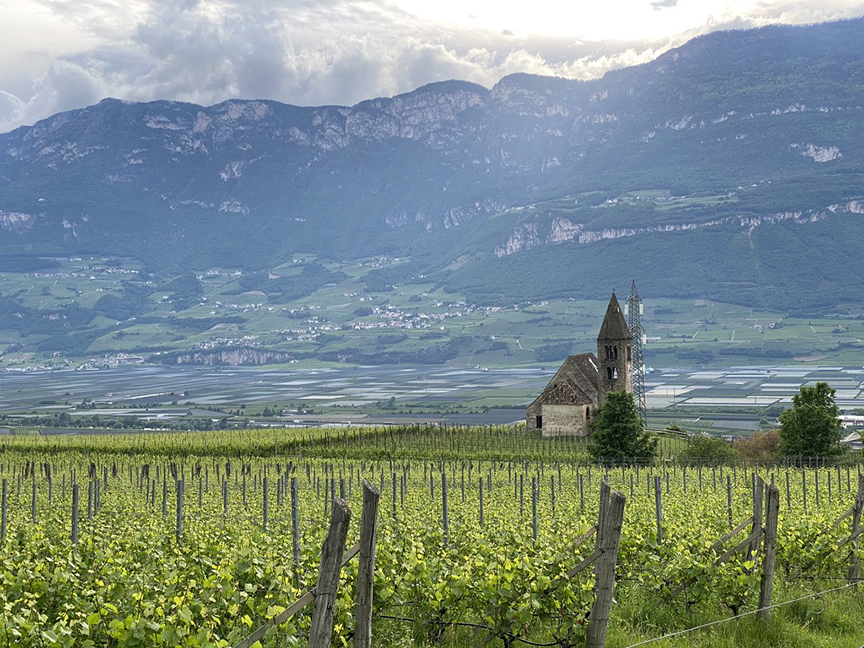
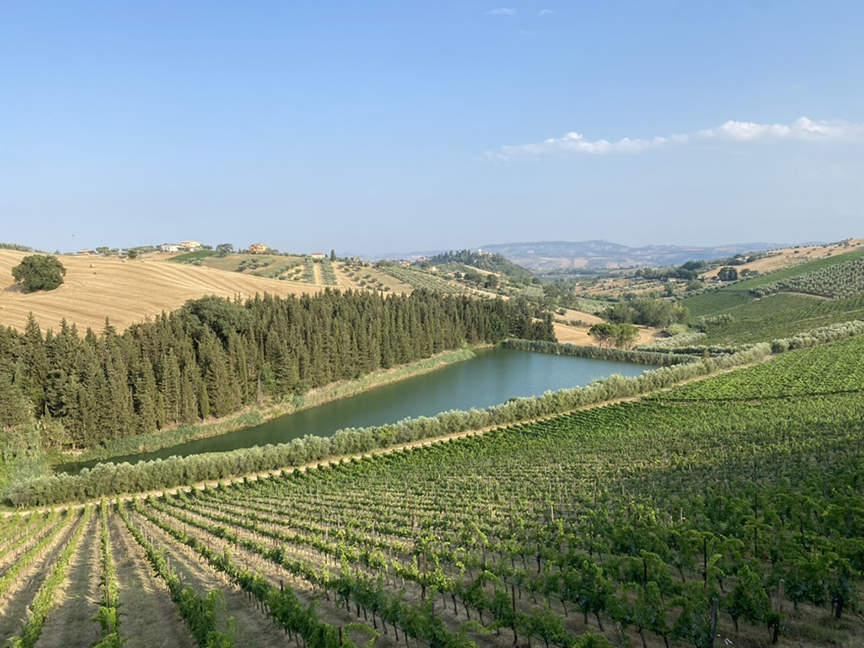
Every time I visit the Nicodemi farm in Colline Teramane, Abruzzo (above), I am reminded of the first time I stopped at one of Montalcino’s most famous wineries.

Look at my flower garden! The owner would say before taking you to see the vineyards or the winery. Look at my pond!

The vineyards’ proximity to bodies of water and wild woods, he would explain, is a fundamental element in creating biodiversity, one of the keys — we know today — to making wines that transcend good and obtain great.

Back in the 1970s, when some of Italy’s most high-profile estates were just getting started, a few visionary winemakers understood the importance of bodies of water and woods on their properties (or adjacent to their properties).

But today that clairvoyance is paying off in ways that no one expected at the time: prolonged and widespread drought in Italy is prompting some eno- and agri-politicians to call for mandatory reservoirs at all wineries. Some of the more enlightened among them are advocating for consortia to create reservoir systems that will collect and provide water.

When a dream team of U.S. sommeliers and I visited Nicodemi in July, Elena Nicodemi explained how her father built the lake when he purchased the property back in the 1970s. Note the woods on the other side of the water. It would seem her father knew what he was doing.

The wines of Nicodemi are pure in their aromas and flavors, elegant in their body and texture, and transcendent in their balance. When you visit their farm, it’s easy to understand why — and how.

Meticulous organic farming and maniacal attention to vineyard management are the driving forces behind their beautiful wines. And their pond bolsters biodiversity while also providing the precious water the grapes may need in drought conditions.

Over the course of my work as the Abruzzo consortium U.S. ambassador, I’ve been impressed with Elena and her brother Alessandro’s thoughtful approach to viticulture and winemaking. Their farm and their wines — and they — are the apotheosis of what makes Abruzzo wine great.

Why do people live in the shadow of an active volcano? A hurricane corridor? Bracing for Francine.

Do you remember Rossellini’s 1950 classic “Stromboli”? When the volcano erupts on the Sicilian island of Stromboli, the characters, who all live in the shadow of Mt. Stromboli, are forced to flee in terror.

Why do people live in the shadow of active volcanoes? If you dig deeply enough in to volcanologist chatrooms, you’ll discover the deceivingly simple answer: it’s the dirt.

“Why do people live on dangerous volcanoes?” asks Richard Fisher at the department of geological sciences at U.C. Santa Barbara “The main reason is the rich volcanic soil. People are willing to take high-risk gambles for the most basic things of life — especially food.”

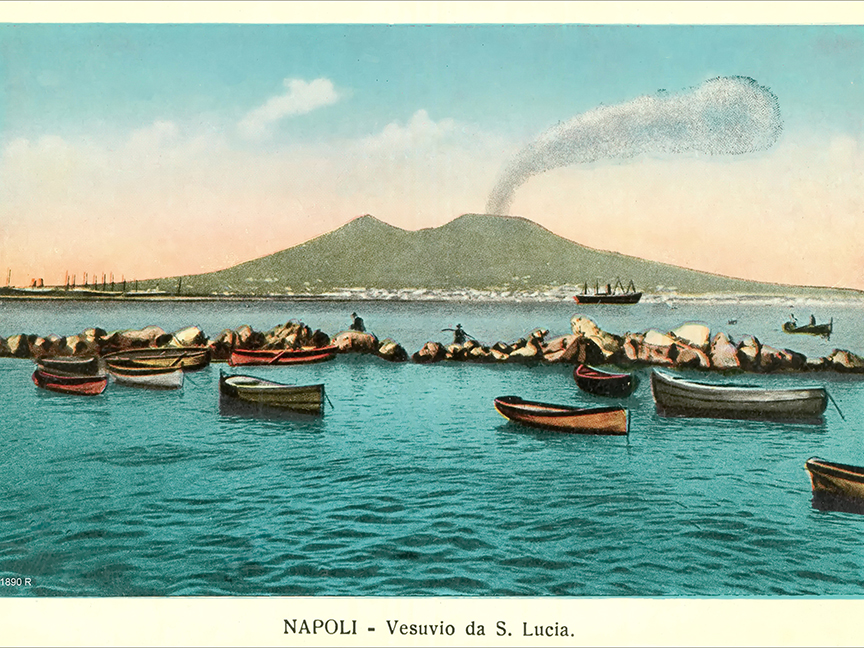
    One example of the effect of volcanoes on agricultural lands is in Italy. Except for the volcanic region around Naples, farming in southern Italy is exceedingly difficult because limestone forms the basement rock and the soil is generally quite poor. But the region around Naples, which includes Mount Vesuvius, is very rich mainly because of two large eruptions 35,000 and 12000 years ago that left the region blanketed with very thick deposits of tephra which has since weathered to rich soils. Part of this area includes Mount Vesuvius.

When I visited the Phlegraean Fields near Mt. Vesuvius earlier this year, there had just been a series of earthquakes there. It’s also an area where bradyseism (the “slow rise and fall of the earth’s crust” [OED]) is a daily hazard.

But the people remain.

As Tracie, the girls, and I brace for Francine together with our Southeast Texas community, I’ve been thinking about my friends in the Phlegraean Fields.

I’ve been thinking about my friends, colleagues, and family who remain in California’s fire and earthquake corridors.

Why do people continue to live in dangerous places? It’s because those places are where they feel a sense of community and belonging. The richness — like the richness of volcanic Phlegraean soil — outweighs the risk.

As of this morning, it seems that Francine will mostly bypass Houston and Orange, Texas where my in-laws and extended Texas family live. Thanks to all the folks who have called to wish us well. Now it’s time to hunker down and pray for the best and then help those in need.

Stay safe.

Music and tasting updates. Houston, Boston, Dallas, El Paso, LA, Boulder, New York (just added), Atlanta, Tulsa. Come rock out with me!

From the department of “shameless self-promotion”…

Above: me with little Paco and Lila Jane who is now a middle-schooler and plays cello in the top orchestra in her school’s magnet program.

Wednesday, September 18 – Los Angeles

This event got cancelled because of internal scheduling issues. But the October dates below are confirmed.

Sunday, September 22 – Houston

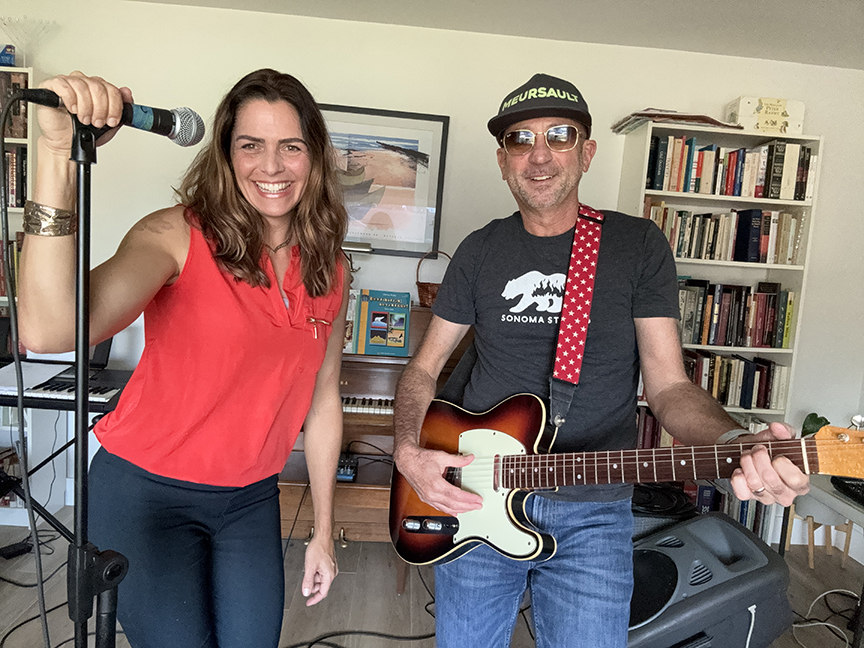
Please join me and Katie White at 4 p.m. for a set featuring her on vox. I can’t believe she roped me into singing a Michael Stipes song (there is personal history there btw). No cover.

Wednesday, October 2 – Boston

Presenting an Abruzzo seminar at City Winery. Trade event. Register.

Tuesday, October 8 – Dallas

Presenting seminars on Umbrian and Lombard wines. Register.

Thursday, October 10 – El Paso

Leading a seminar on Abruzzo. Register. El Paso is such a great town btw. Really looking forward to this.

Tuesday, October 15 – Los Angeles

Presenting an Abruzzo dinner for trade at Rossoblu.

Wednesday, October 16 – Los Angeles

Presenting an Abruzzo dinner for wine and food lovers at Rossoblu.

Friday-Sunday, October 18-20 – Boulder

Boulder Burgundy Festival. I’m not presenting this year but will be there blogging about the event. Awesome event btw. Register.

Monday-Thursday, October 21-24 — New York

I’ll be in New York leading at least one event and possibly more. Exciting news to come. Stay tuned for details.

Monday, November 11 — Houston

A very special new winery client of mine will be coming to southeast Texas. So geeked for this. Stay tuned.

Tuesday, November 12 — Atlanta

I’ll be returning to one of my favorite cities in America with the same client. Trade and wine lover events.

Monday, November 18 – Tulsa

TBD but I’ll be presenting a seminar on vermouth. I’m super geeked to get back to Tulsa. Love that city.

Thank you for your support and solidarity! Buon weekend a tutti.

The wonderful high-altitude wines of Pasetti in Abruzzo are driven by the life force of family.

Rolling up to Pasetti just south of where Pescara commune melts into Francavilla al Mare (Francavilla by the Sea), a wine professional may be struck by low-key profile of the winemaking facility.

But then, once the pleasantries are out of the way, you meet that tour-de-force of life otherwise known as Laura Pasetti, the family’s matriarch.

Where I grew up, they called it chutzpah. In the Bronx, they call it moxy. Whatever you call it, Ms. Laura has a contagious energy and warmth that inextricably draw you into her universe.

I wish you could see and hear me trying to keep up with her as I interpreted for her and our dream team group of sommeliers led by James Tidwell. They don’t prepare you at the UN for that much dynamism and drive! (I worked for a year as a UN interpreter way back in the day.)

More than two decades ago, the Pasetti family made the decision to sell their vineyards near the sea in Francavilla and buy inland vineyard sites at high altitudes in the shadow of the Maiella and Gran Sasso massifs.

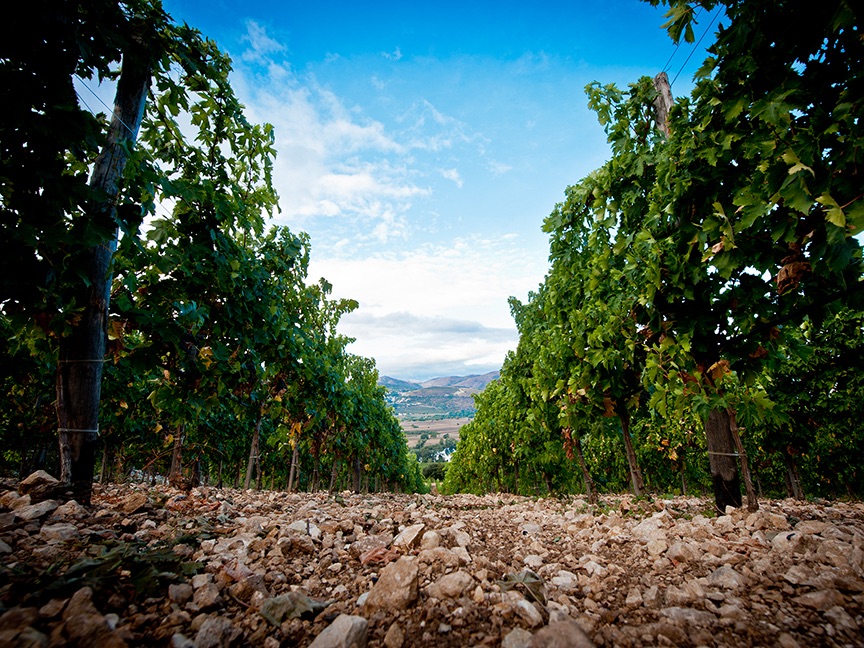
If you look carefully at the photo above, the cloud line in the distance gives you a sense of how high this site lies. And just look at the limestone in that vineyard!

As Ms. Laura recounts it, the Pasetti family recognized the challenges of climate change early on and made a conscious decision to head to the hills, so to speak. Today, that gamble has paid off in ways that no one could imagine.

Their wines — especially their flagship Testarossa line — are among the best I’ve tasted from Abruzzo. The Montepulciano in particular has a freshness and drinkability that dance over the wine’s richness.

Ms. Laura’s son Davide is the family’s winemaker and there is perhaps no one better in explaining how Montepulciano’s high levels of malvidin (one of the five main anthocyanins) make it unique among red grapes. Its rich color gives the Abruzzo winemaker a broad palette, he explained. And you can achieve even dark color without over-extracting the wine.

I loved the family and the wines. And I highly recommend them to you. Fyi Ms. Laura is looking for a new importer in the U.S. after her longtime importer retired.

The person who inspired me to devote my adult life to Italophilia.

It was my junior year in high school when my mother told me that I would not be going to school the next day.

At the time, she was a programmer at U.C.S.D. Extension, the university’s community education department. She needed me to drive her and a visiting lecturer to Tijuana for lunch.

By the time I was 17, I spoke Spanish fluently because I had fallen in with a clique of Mexican schoolmates. I had also traveled with them in Mexico and spent my 16th summer at one of their homes in Mexico City. I knew Tijuana well, including some of the best spots to eat where my friends had taken me.

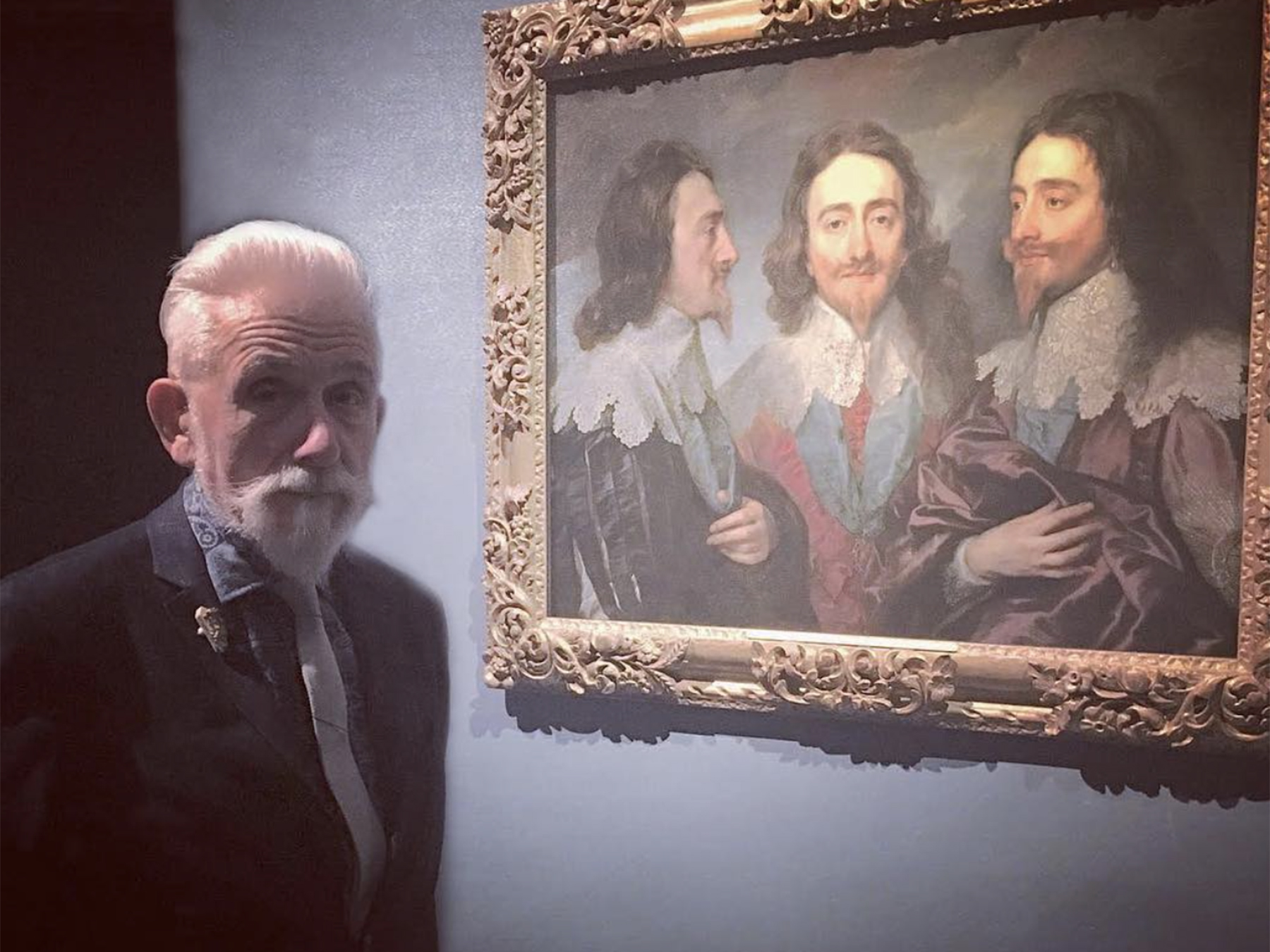
The visiting lecturer was none other than the then recently knighted Sir Roy Strong, art historian and then director of the Victoria and Albert Museum. He had come to San Diego to give a talk on campus organized by my mother. When she asked him what he’d like to do after his lecture, he said that he’d like to have lunch and go shopping in Tijuana.

I was the kid for the job.

After we had eaten lobster at a seaside restaurant in Rosarito in Baja California, my mother and her friend who had joined us excused themselves to use the restroom.

Alone at the table he told me that he was impressed with my language skills and my hungry quest to learn more about another culture.

“You should go to Italy and study Italian,” he declared before my mother and her friend returned to the table.

I had never met anyone like Sir Roy. And the meeting had a profound effect on me.

Four years later, I was on my junior year abroad in Padua and I never looked back.

Looking back on it now, it was as if Sir Roy was an image, an apparition sent to show me my path. It was one of the defining moments of my life and man, am I glad I listened to him.

Image via Sir Roy’s short-lived and long-abandoned Instagram.

Taste with me, jam with me this fall. Save-the-dates for the fall.

From the department of “too much time on my hands and too little to do”…

Back when I got my first job in commercial publishing in New York, I used to work with this Russian dude named Slava. Every time I would show up at the office in a good mood, with a smile on my face, he would say the same thing: “Jeremy, suck a lime!” When I would ask him why, he would tell me: “the minute you start smiling, something is bound to go wrong.”

The Parzen family carries on that spirit in the form of our own personal apotropaism (how’s that for a 75-cent word!): poo, poo, poo! It’s our familial way of saying we have too many blessings to count.

I’ve had a great month at home with the family but now it’s time to roll up my sleeves and hit the road again (soon).

Here are all my current save-the-dates. I feel so blessed to have work that I find rewarding. Tracie’s work is picking up, too. Poo poo poo!

I hope you can join me for any and all of the below. Happy Labor Day, everyone! Enjoy the long weekend. Thanks for the support and solidarity.

Wednesday, September 18 – Los Angeles

Presenting a Puglia wine dinner at Rossoblu. Registration link coming soon.

Sunday, September 22 – Houston

Playing a set of Pat Benatar covers with Katie White at Vinsanto (planning to do lots more music this fall and there will probably be a blow-out/everyone-is-welcome music party at our house… maybe…).

Wednesday, October 2 – Boston

Presenting an Abruzzo seminar (not sure where yet).

Tuesday, October 8 – Dallas

Presenting I don’t even know how many seminars at Taste of Italy.

Thursday, October 10 – El Paso

The show moves to El Paso. Great trade fair btw.

Tuesday, October 15 – Los Angeles

Presenting an Abruzzo dinner for trade at Rossoblu.

Wednesday, October 16 – Los Angeles

Presenting an Abruzzo dinner for wine and food lovers at Rossoblu.

Friday-Sunday, October 18-20 – Boulder

Boulder Burgundy Festival. I’m not presenting this year but will be there blogging about the event. Awesome event btw.

November 18 – Tulsa

TBD but I’ll be presenting a seminar on vermouth. I’m super geeked to get back to Tulsa. Love that city.

A new book and a new language for Montalcino: The Magpie’s Guide.

The first the thing that came to mind as I scrolled the pages of The Magpie’s Guide to Montalcino (Constellations 2024) was Natalia Ginzburg’s autobiography Lessico famigliare — Family Sayings, as it has been translated into English.

A more slavish of the title could be our family’s [secret] language, in other words, the intimate code that a family uses for internal communication and affection. Like the nicknames I have for my daughters or the pseudo-idiolectal terms we use for foods, dogs, restaurants, experiences, etc., and anything that makes our family unalike from any other.

Laura Gray’s new book on Montalcino and its idiosyncrasies offers a sort of ABCs — that great Britannic genre — a legend by which the legendary city and wine capital may be decoded and interpreted.

Her almanackic writing broadly reflects her unique experience in the city of the holm oak. Laura — disclosure: a close friend of ours — is perfectly bilingual and has lived in Sangiovese city for the better part of her life. She’s also a wine industry insider. She ran one of Brunello’s most high-profile wineries for many years.

But what’s most remarkable about this new book is its dissection of Montalcino’s idiosyncratic lexicon. Words there often have meanings that stand at least a few degrees apart from the constitution of peninsular Italian.

Take her entry for Prato, where the Italian word for meadow takes on a special toponymic value in the context of the Montalcino-verse.

Or her entry for “VIP” where she shares some of the impossible celebrity that makes its way to this erstwhile Tuscan backwater. It reminds me of the time that I sat down for a serendipitous chat with the great Italian publisher Valentino Bompiani who just happened to be vacationing there.

Space doesn’t allow me to share the scores among 300 entries that had me grinning and often falling out of my seat with laughter and wonder. Even the most jaded wine professionals will find her more technical entries fascinating because of the insights they reveal.

Montalcino is a genuine singularity, I would even say, a hyperobject that fascinates and often enchants us. The Magpie’s Guide offers a new syntax to drink in the magical mystery of that timeless city on the hill.

A bottle from a special vintage and vineyard reminds me of why I love wine and how I love Tracie.

The 2008 harvest is a very special vintage for me and Tracie.

We had followed each other’s blogs for more than a year and there had been a few emails.

But it was during the summer of 2008 that I first traveled to the state capital to meet her in person. And by the end of the year, I had rented an apartment and moved to the Live Music Capital of the World.

The rest is… well, you know the rest… Let’s just say it turned out to be a good move.

In 2013, when we had been married for nearly three years, Georgia had been born, and Lila Jane was on the way, we decided to invest in our wine cellar with a purchase of crus from Produttori del Barbaresco — from the 2008 vintage.

We’ve kept the wines in a locker in San Diego where we visit often. We generally open them during the summer or in January when we travel to California. Pulling the corks with friends makes them all the more special.

But at least once a year, I smuggle a few bottles back to Texas (don’t tell the TABC!).

Last week, to celebrate Kamala’s nomination (YES!!!), we opened the Barbaresco Rio Sordo 2008.

The cru is even more meaningful to us because we slept on the crest above Rio Sordo on our honeymoon in 2010, at Giovanna Rizzolio’s place, Cascina delle Rose.

The wine was still young in the bottle with restless energy expressed through brilliant red and berry fruit. The integration and cohesiveness in this wine were extraordinary and we agreed that our investment had paid off.

What a great wine and what a great experience and memory to drink it with the love of my life. Our renewed hope in the Democratic party only made the feeling more sweet.

The fall is almost here and I’m looking forward to all the crazy projects I have lined up for the season. Thanks for being here and letting me share this. Stay tuned and VOTE KAMALA!

A visit to Abruzzo’s new paradigm for success: Francesco Cirelli’s anforaia.

Visiting the Francesco Cirelli winery with our dream team group of sommeliers last month was like a homecoming for me.

Francesco’s wines first came to my attention many Vinitalys ago when a mutual friend took me to taste with him.

At his stand, a clique of über-hipster winemakers awaited. They were there for the vibrant wines, the salami and bread, and the super cool conversation that seemed to take ethereal shape around him.

The next year, his amphora-aged wines were stars on my list at Sotto in Los Angeles where people enjoyed them as much as Tracie and I dug them at home.

That’s a sign, above, that leads you to his “amphora room” (anforaia is a compound word formed by the Italian anfora meaning amphora and the suffix -aia, which comes from the Latin area; just like a sassicaia is a place full of stones, from sassi, and a lupaia is a den of wolves, anforaia is a place where you will find amphorae).

Many years ago now, when Francesco planted his grapes along the side of a valley not known for viticulture, his neighbors must have thought him crazy. But he already had a solid business plan in his pocket and a vision in his mind.

Even before the new wave of new and old Abruzzo growers reshaped the way we think about these wines, Francesco’s wines were a breakout success in a region that most American wine professionals knew for just a handful of mainstay estates.

He accomplished this by making great wines, of course, wines that appealed to a youthful sensibility. But perhaps more importantly, he created a new “vibe” and model for the Abruzzo wine business: cool user-friendly packaging, screw top bottles, a glamping destination (yes, you can glamp there!), aggressive pricing, and an ecumenical attitude toward his customers.

I couldn’t have been more proud to lead our group to one of our favorite wineries, producer of the amphora-aged Cerasuolo that Tracie and I drink on special occasions.

To Francesco and all the wine pros (Justin and Nathan!) who have believed in and shared his vision, I share a thanks for giving us a new paradigm for great Abruzzo wines.

For great wines in Abruzzo, look (also) beyond the marquee names.

One of the issues that the greater community of Abruzzo growers has to address is that the wines are too good.

By that, I mean that some of the wines are so coveted that tradesfolk and laypeople tend to focus only on certain producers while eliding the rest.

It reminds me of something a famous U.C.L.A. communications professor said in class one day: when you highlight one line in your readings with a highlighting pen, it’s as if you’re erasing all the rest of the writing as inconsequential.

That nugget of wisdom came to mind when our dream team of American wine professionals stopped to taste at Buccicatino in Abruzzo’s Foro river valley, where the soils are rich in clay, the climate is arid, and there is a nearly constant breeze that runs from the sea through the valley.

The story is a familiar one in Abruzzo. In the 1990s, the family decided to stop selling its grapes to the cooperatives and make its own wine. Many years of sacrifice followed as they focused on quality and the often-outsized investment of resources and time that a wine brand requires. Today, more than two decades later, they have firmly established their brand in Italy and northern Europe.

And while the wines were great across the board, the labels that really stood out for me were the Montepulciano d’Abruzzo. These wines had that freshness that I look for in rich-style red wine. The wines’ acidity made them mouth-watering and wonderfully food friendly. I thought they were fantastic.

As we tasted, it occurred to me how well these wines would work in an emerging American market. By that I mean places beyond New York and California (and even Texas now) where, frankly, people are jaded by the mythologies that a lack of healthy marketing has created in Abruzzo.

As Nietzsche once wrote, the philologist’s mission is to look beyond the sacred texts.

For would-be importers of wines from Abruzzo — where arid climate, clay- and limestone-rich soils, and maritime influence create the ideal conditions for organic wine growing — I encourage you to look beyond the marquee names and discover the region’s seemingly unending viticultural treasures.

Buccicatino and the indomitable family behind the wines are worth seeking out.