Pinot and fig porn and still some grapes in dem der hills

pinot noir pornWhen I finally reached Franciacorta on Sunday morning, I was disappointed to discover that I had missed the grape photo ops that I had so longed for.

But yesterday, my crew and I made our way up to the hamlet of Favento in the northwestern zone of the appellation where, at 200+ meters a.s.l., some growers have been holding out.

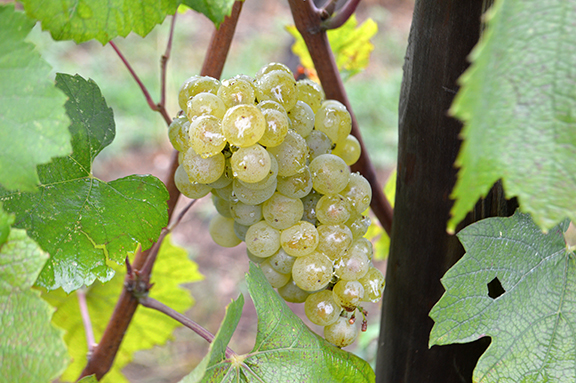
Feast your eyes on those Pinot Noir babes!

chardonnay pornThe appellation has been harvested for the most part. A hot July and early August prompted most to start picking on the earlier side of the norm (roughly mid-August).

But those growers who waited were rewarded this week by abundant rain on Tuesday and Wednesday.

How about that Pinot Chardonnay (as it once was called in this neck of the woods), dripping with morning rain water???!!!

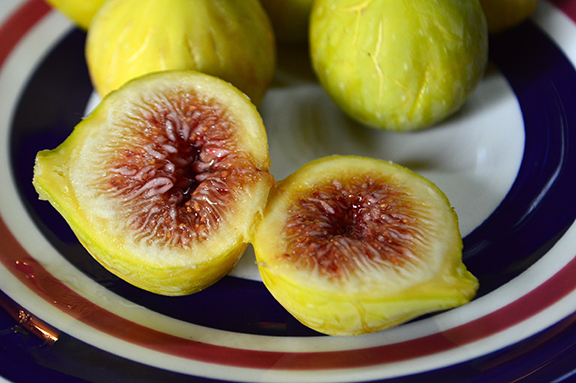
fig pussy pornAnd in other fruit porn news, I just had to share these fig shots, taken yesterday in the southernmost zone of the appellation in Cologne township on the south side of Monte Orfano.

Growers there began picking in early August. Wineries on the south-facing side of the mountain are always the first to harvest in Franciacorta because it’s the warmest part of the appellation.

fig pornThese figs might very well have been the best I’ve ever had.

They were so tender and rich in flavor, sweet and fragrant on the palate.

I’m posting in a hurry this morning as my colleague and I head out for another day of Franciacorta tastings and winery visits… stay tuned!

Still some fruit to harvest in Franciacorta and a wild beast on the loose

ca del bosco chardonnay franciacortaDuring my first full day in Franciacorta today, I spoke to a handful of growers who made a point of pointing out that harvest isn’t over quite yet.

Yes, most have harvested the majority of their fruit and nearly all the Pinot Noir has already been picked.

But there is still a considerable amount of Chardonnay in the vineyards, some noted, like the parcel in the image below, in Passirano township.

harvesting grapes in franciacorta whenThere are a few holdouts, I’ve been told.

Ripeness is a sensitive subject among winemakers here and the topic is particularly delicate in a warm vintage like this one.

But across the board, everyone I’ve spoken with says that it’s a good if not great vintage for them, with less fruit that they would have hoped for but healthy fruit nonetheless with good acidity.

The alarming news is that there is a panther on the loose in Franciacorta. Yes, a panther.

On Thursday, a group of roughly 40 officials — police and firepersons — is planning to hunt down the beast, which was first spotted on July 31.

Some have doubted its existence but it’s believed to have been “caught” on a video surveillance tape.

Panthers are not indigenous to Franciacorta and if it does exist, it probably escaped from an illegal trafficker or an eccentric collector of illegally trafficked animals.

The subject came up today when I told my hosts about how I went jogging at dawn near the Franciacorta marshes on Sunday morning.

Evidently, the whole area is on lockdown, especially during nighttime and early morning.

Wouldn’t that have made for a fantastic blog post? “American wine blogger attacked by panther in northern Italian wine country!”

Well, on second thought, probably not worth the clicks…

Click here for notes from our tasting today at Il Mosnel. Thanks again, Lucia and Giulio! Great tasting and tour!

Should winemakers order their own wines when they go out to dinner?

andrea goriAbove: “Tuscan producers who order their own wines at restaurants never drink them at home,” notes celebrity sommelier Andrea Gori. Is it good or poor form for winemakers to order their own wines when they go out to eat?

Sunday evening, my friend and client Luca Ferraro, who produces Prosecco DOCG and Prosecco Col Fondo DOCG in Asolo, asked the following question on his Facebook: What prompts winemakers to go to a restaurant and order their own wines?

At last count, the post had generated nearly 70 comments and had even inspired a humorous post on one of Italy’s most popular wine blogs, Intravino, “Six Good Reasons that Winemakers go to Restaurants and Order Their Own Wine.”

Reason number 6? “Because they secretly hope the sommelier will tell them, ‘I’m sorry, we’ve run out of it,’ and multiple orgasms will ensue.”

Author and celebrity sommelier Adua Villa chimed into the Facebook thread with the following explanations: “A unbridled ego; B insecurity; and C (and above all) a lack of curiosity. And this last reason is the worst.”

Noted consulting enologist, publisher, and author Maurizio Gily weighed in, writing that “the only justification is that it’s a horrible wine list. But in that case, the producers have to ask themselves why their wines are the list.”

I love how he echoes the Marxist paradox: “I don’t care to belong to any club that will have me as a member.”

But he added, however, that “obviously, if the producer is with clients, it’s a normal thing to do.”

With classically acerbic Tuscan wit, celebrity sommelier and blogger Andrea Gori quipped: “Tuscan producers who order their own wines at restaurants never drink them at home.”

In scrolling through the comments on Facebook (hilarious for the most part), it occurred to me that there is a sizable disconnect between Italian and American attitudes on this topic.

In the U.S., it’s common to see winemakers who order their own wines when they go out to eat.

In my experience, there are a number of reasons for this.

Click here to continue reading…

Rain tempers Italy’s heat wave as Franciacorta harvest is completed

best hotel lake garda italyAbove: a view from the Brescia (Lombardy) side of Lake Garda yesterday. Click for a panoramic view.

When I arrived in Italy on Saturday, I expected the weather to be hot.

From August 5 until August 14 (the day I departed from the U.S.), the highs in Franciacorta (Lombardy, northern Italy) were in the mid-90s; the lows in the mid-80s.

But on August 15 — Ferragosto, a national holiday in Italy (Italian speakers, see this tragically comic video post by Diego Abantantuono that trended on Saturday) — temperatures began to drop and it began to rain.

Yesterday (Sunday), nearly .5 inches of rain fell in Erbusco (in the heart of Franciacorta) and the actual high was 76°. It’s currently (as of 9:40 a.m.) 66° in Erbusco and nearly an inch of rain is forecast for tomorrow and Wednesday.

When I went jogging in Franciacorta early yesterday morning, there were just a handful of pickers harvesting. Nearly everyone in Franciacorta had finished picking by Friday of last week.

Last night, when I sat down to a dinner of homemade pizza and Franciacorta on the banks of Lake Garda, one of the dinner guests asked rhetorically, didn’t they use to harvest in September in Franciacorta? I’ll let the reader draw her/his own conclusion.

During the summer’s prolonged heatwave, some growers were forced to resort to emergency irrigation in Franciacorta and the markedly early harvest is owed to an extremely warm summer in Italy.

I’ve read reports of emergency irrigation in Tuscany and Proseccoland as well.

You can see stormclouds in the photo from Lake Garda above. Shortly after I took a swim, it began to rain there. And rain is forecast for Tuesday and Wednesday in Franciacorta.

Yesterday in Siena, it rained enough that the Palio dell’Assunta was canceled (it’s been rescheduled for today) and rain is forecast in Montalcino this week.

It’s not clear how this harvest is going to turn out. But there will be a mixed bag of results across Italy.

I’m spending this week in Franciacorta tasting with and talking to growers. And next week, I’ll be in Montalcino, Chianti Classico, and later in Proseccoland where I’ll be checking in with winemakers there as well.

Stay tuned. And in the meantime…

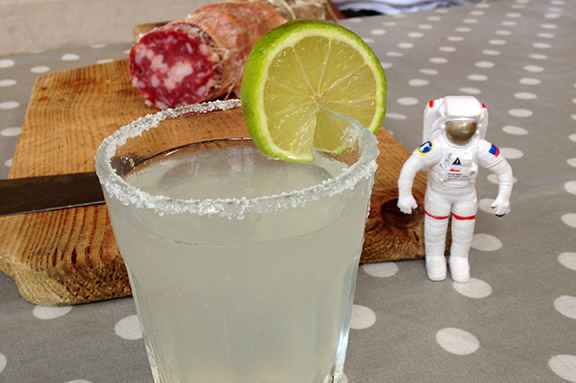
italian astronautAbove: Billy the Astronaut was a stowaway in my computer bag.

A lot of people have been asking me and commenting about the little astronaut that keeps appearing on my Instagram.

His name is “Billy the Astronaut” and he comes from NASA in Houston. We still have no idea why Georgia P called him “Billy” and I’m not sure how he found his way into my computer bag before I left the house on Friday.

But I am missing my girls terribly and I’m glad to have some company and a souvenir of the place where I long to be.

Historic Barbaresco Tower and appellation viewing station now open to public

The landscape of Barbaresco is a viticultural text. The newly opened viewing station atop Barbaresco Tower is a tool for reading it.

torre tower barbaresco reopeningAbove: the new viewing station atop the historic Torre di Barbaresco, the iconic tower of Barbaresco village (image by Barbaresco producer Giovanna Rizzolio).

The view from atop the newly restored Barbaresco Tower “is spectacular,” writes leading Italian wine blogger Alessandro Morichetti in a post for Intravino this week.

“It gives you a 360° panorama and if you really want to look really cool when you visit, be sure to bring your Enogea map” (the meticulously detailed Barbaresco atlas by celebrated enocartographer Alessandro Masnaghetti).

He is referring to the fact that the now-open-to-the-public tower offers visitors an unparalleled tool for studying the viticultural landscape of one of the world’s greatest appellations and its highly coveted wines.

Visit Alessandro’s post for a breathtaking video on the restoration (in Italian).

Once a medieval fortification, the former ruin is now a destination for wine lovers and visitors to the UNESCO Heritage site known as the Vineyard Landscape of Piedmont: Langhe-Roero and Monferrato.

It includes a tasting room, a wine cellar, a multi-media “history of Barbaresco” exhibit, and the viewing station (above), which is accessible via elevator.

It was opened to the public for the first time earlier this month.

As of the publication of this post, a Google search did not reveal hours and visiting information. Contact information for the offices of Barbaresco township, which manages the site, can be found here.

Image below via the Barbaresco township website.

tower barbaresco tasting room

Bat mitzvah wines and a gorgeous La Jolla sunset

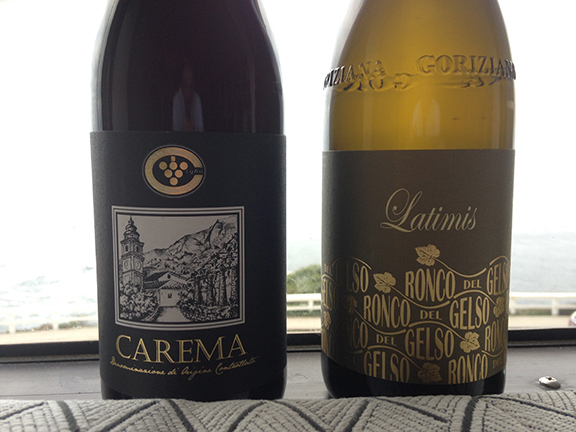
ronco del gelso produttori di caremaToday I am a fountain pen…

Cousin Amalia (my niece, brother Tad’s daughter) sang her Torah portion and Haftarah brilliantly on Saturday at Temple Beth El in La Jolla (where I was bar mitzvah, too). And she gave a wonderful speech about commitment and faith.

It was really lovely to see her on the bimah with her parents (her mom Diane also sang a Torah portion!).

A lot of people asked me about the wines that we selected for the party that evening.

The white was the Bianco Latimis Isonzo del Friuli by Ronco del Gelso (in the Italian region of Friuli, for those who are not familiar with Italian geography, in northeastern Italy). It’s a blend of Friulano, Pinot Blanc, and Riesling Italico grapes. It showed beautifully on Saturday evening. Great freshness, nice fruit and acidity, and great value.

The red was Carema by Produttori di Carema cooperative. It’s made from 100 percent Nebbiolo grown in Italy’s western Alps in the region of Piedmont. Even though it has nice tannic structure, it was lithe in the glass on Saturday and again, its freshness and acidity made it pair wonderfully with the Neapolitan-style pizzas that were churned out of an onsite mobile pizza oven.

Great party and I’m so glad people enjoyed the wines.

Whenever I attend a Jewish event, I am invariably and inevitably asked what I think of Manischewitz “wines.” Most are disappointed when I tell them that it’s not exactly the most wholesome “grape product” that you can put into your body.

In southern California, where healthy eating and living are practically imperative, it’s easy to find organic produce, cage-free chicken, heirloom beef, and “housemade” ketchup.

But the nostalgia of Manischewitz is so powerful that it was served on Saturday for Kiddush after services only to be followed by organically farmed microlettuces later that evening.

I wrote about Manischewitz a few years ago here for the Houston Press (for those curious, you might be surprised by what goes into Manischewitz).

All in all, this has been wonderful trip and visit for me and the girls.

They’ve loved grandma’s house with its many treasures.

They’ve loved getting to know their cousins Amalia, Abner, Oscar, and Eli.

Everyone has been so welcoming and sweet and the girls have had a blast.

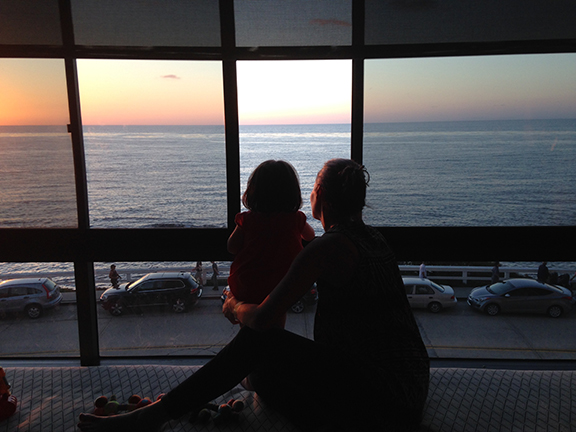
That’s Tracie P and Lila Jane, below, watching the sunset yesterday evening from grandma Judy’s apartment at Seal Rock (La Jolla Cove).

Sadly, our short family vacation comes to an end tomorrow. I’ll see you on Wednesday…

best place to watch sunset la jolla

Angelo Gaja tasted by Victor Hazan circa 1982 and one of the most moving passages of wine writing I’ve ever read

victor hazan wine writerIn another chapter in my life, I was gravely afflicted by bibliophilia.

And while today my financial situation precludes me from pursuing my bibliophilous desires (the Aldine octavo is my greatest weakness), I do regularly indulge in low-wager purchases, generally $10-20 online and in used bookstores.

It’s remarkable how many great wine books that you can pick up, like the ones above. I recently bought the Hazan through Amazon for $4 and the Ray for $15 at a shop in San Francisco.

Leafing through Italian Wine (Knopf 1982), I was blown away by Hazan’s prescient description of the wines of Angelo Gaja.

“One cannot mention Barbaresco producers,” he wrote,

    without bringing up Angelo Gaja, the largest and best known. His wines, especially the ones from single vineyards, Sorì Tildin [sic] and Sorì San Lorenzo, enjoy the most extravagant praise and prices They are wines made with intense care and with the single-minded objective of making them as big and full and ripe as possible. I cannot deny that he succeeds, but, though mine may be the lone dissenting voice, I cannot bring myself to admire them wholeheartedly. Gaja’s wine does not seem to me to give what one most looks for in Barbaresco. It attempts to outmuscle Barolo, but fails to achieve the gracefulness that makes Barbaresco’s natural endowment of flavor and body stylish rather than pushy.

Today, we think of Hazan as Marcella’s scribe. But in 1982, he was also one of the pioneering voices of Italian wine writing.

And, man, what a passage! It’s even more powerful knowing that in the decades that followed, Gaja went on to become one of the world’s most famous and successful winemakers and one of the trade’s most brilliant marketers.

I love how he so eloquently and delicately expresses his “dissent” without the slightest hint of antipathy.

As I enjoyed the book last night after dinner, I marveled at how au courant it reads (save for the fact that his vintage ratings stop at 1981). The appellation maps, including excellent topographical renderings, are also superb.

As for his take on the new style of Barbaresco created by Gaja, I’ll let the reader arrive at her/his own conclusions.

Hazan’s book was trumped this week only by Cyril Ray’s, in which I stumbled across the one of the most the most moving example of wine writing I’ve ever read.

“It is salutary for an Englishman to live for a while in a wine-growing country,” wrote Ray in Ray on Wine (Dent 1979), “where wine is neither a symbol by which snobs can demonstrate their wealth or their taste, nor a means of fuddlement, but as natural and as necessary as bread.”

Now this is a powerful illustration of wine writing at its finest, where the author reveals so much about himself, his times, and the society in which he lives and works.

It’s even more powerful considering that the experience refers back to his time as correspondent during World War II in Italy (I wrote about the passage yesterday for the CanteleUSA blog because the account comes from Ray’s time spent with British troops in Puglia).

Not that I could ever achieve it, but this is the wine writing to which I aspire, where wine (the object) becomes a window onto the human experience and where a bourgeoisie can at once acknowledge his and his fellows middle-class shortcomings while using them as synecdoche for society at large.

For my fellow bibliophiles, my autographed copy of Ray on Wine is set in Bembo typeface (just to bring it back to my predilection for Aldine incunabula).

Thank you for letting me share my enobibliophily with you!

What do weed flamer and grapevine yellows have in common?

weed torch flamer vineyardAbove: a weed flamer or weed torch. Increasingly, organic grape growers in Italy are using weed flamers for grass management between rows (image via BeleCasel.it).

Here are the most recent entries in my Italian Wine Terms Glossary:

flasvescenza dorata grapevine yellows (flavescence dorée)
diserbante termico weed torch/weed flamer
pirodiserbatore weed torch/weed flamer
pirodiserbo weed torching

Grapevine yellows, aka flavescence dorée, is a bacterial disease that affects many growers in northern Italy. Its vector is the Scaphoideus titanus or leafhopper.

Weed torches or weed flamers are currently gaining favor among organic grape growers in Italy who have found weed torching to be an effective approach to herbicide-free grass management.

The updated glossary follows. I hope you find the index useful. Thanks for speaking Italian wine!

ITALIAN ENGLISH
a giropoggio east-west row orientation
a ritocchino north-south row orientation
acciaio [inossidabile] stainless-steel [vat/tank]
affinamento aging
alberello head-trained [vines]
allegagione fruit set
allevamento training
argilla clay
arresto di fermentazione stuck fermentation
assemblaggio blend
azoto nitrogen
barbatella grafted cutting
barrique barrique [small French oak cask]
bâtonnage stirring on the lees
biodinamica biodynamics/biodynamic
biologico organic
botte traditional large cask
bucce skins
Cabernet [Sauvignon] Cabernet Sauvignon
Cabernet Franc Cabernet Franc
calcare/calcareo limestone/calcareous [limestone-rich]
cappello sommerso submerged cap maceration
chioma canopy
cordone speronato cordon-trained spur-pruned [vines]
cru vineyard designation/single vineyard
cuvée blend
délestage rack and return
deraspare/deraspatrice de-stemm/de-stemmer
diradamento pruning/thinning grapes/dropping fruit
diserbante termico weed torch/weed flamer
DOC DOC [designation of controlled origin]
DOCG DOCG [designation of controlled and guaranteed origin]
DOP PDO [Protected Designation of Origin]
doppio capovolto double-arched cane [training]
esca esca [alt.: black dead arm or black measles]
escursione termica [diurnal] temperature variation
fementazione arrestata stuck fermentation
femminella lateral shoot
flasvescenza dorata grapevine yellows (flavescence dorée)
follatura punching down
galestro galestro [a marl- and limestone-rich subsoil unique to Tuscany]
giropoggio east-west row orientation
grappa grappa
grappolo cluster/bunch
Guyot Guyot
IGP PGI [Protected Geographical Indication]
IGT IGT [typical geographical indication]
leccio holm oak
lievito naturale native/ambient/indigenous/wild yeast
lievito selezionato cultured yeast
limo silt
macchia mediterranea Mediterranean maquis [shrubland]
maestrale (vento di maestrale) north-westerly wind
malolattica malolactic fermentation
marna/marne marl
millerandage millerandage [alt.: shot berrieshens and chicks, or pumpkins and peas]
monovitigno single-grape variety [wine]
mosto must
oidio oidium [powdery mildew]
peronospora peronospora [downy mildew]
pied de cuve pied de cuve [native yeast starter]
pigiatura pressing
pirodiserbatore weed torch/weed flamer
pirodiserbo weed torching
portinnesto rootstock
quercia oak
rimontaggio pumping over
ritocchino north-south row orientation
sabbia/sabbioso sand/sandy [sandy soil]
Sauvignon [Blanc] Sauvignon Blanc
scacchiatura disbudding
siccità/stress idrico hydric stress
sistema di allevamento training
sottosuolo subsoil
sovescio cover crop/green manure
spollonatura disbudding
stralciatura deshooting
stress idrico/siccità hydric stress
sulle bucce skin contact [macerated on the skins]
sulle fecce nobili lees aged [aged on its lees]
sur lie lees aged [aged on its lees]
terreno/terreni soil
tignola della vite vine moth [Eupoecilia ambiguella]
tralcio shoot/cane
tramoggia hopper/feeder
tufo tufaceous subsoil [porous limestone]
vasca vat/tank
vento di maestrale north-westerly wind
vigna/vigne vine/vineyards
vigneto vineyard
vinaccia/vinacce pomace
vite vine
vitigno grape variety

Here’s the rub: a best wine to pair with Texas bbq imho

bbq lamb chops barbecueFrom what I’ve been told, I ruffled more than a few feathers with my post from last month on the incongruous nature of pairing big bold (Californian-style) red wine and Texas bbq.

It seems that I had transgressed an absolute held dear by many a Texan: if the pairing is to be wine, it must be a high-alcohol, low-acidity, oaky, concentrated, “fruit bomb” red wine, a style described this week by Master of Wine and widely read wine expert and journalist Jancis Robinson as “California’s late-20th-century love affair with alcohol, oak, sweetness and mass.”

It’s important to keep in mind that “Texas” bbq is unique in the panorama of American bbq because its foundation is smoked meats (mostly beef and primarily brisket) that have been seasoned with dry rub.

In “Memphis” bbq, for example, sweet and tangy vinegar-based sauce is used instead to baste and flavor pork during smoking. In my view, it’s nearly impossible to pair wine with this style of bbq because the sweetness and acidity in the basting sauce, which is often applied liberally after the meat is cooked, overwhelm nearly any wine (in Texas bbq, sauce is an afterthought if applied at all). It’s similar to the oxymoronic pairing of chocolate and red wine, however popular it may be.

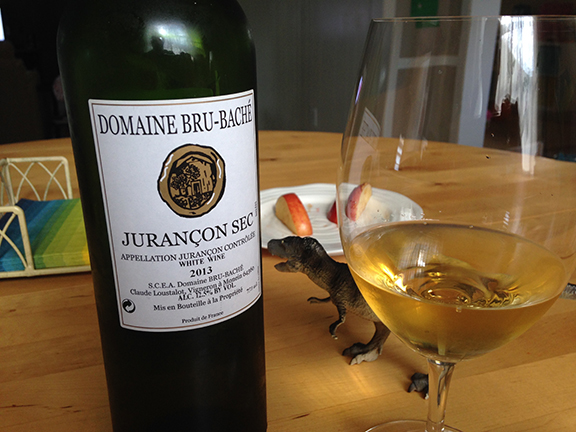
jurancon grapes french wineI recently returned to the same Houston bbq joint where I offended my comrades, Roegel’s BBQ, for a mandate with a (male) food writer friend.

The 2013 Jurançon Sec by Bru-Baché (made from Gros Manseng in the French Pyrénées, above) was the wine I brought.

In my view and on my palate, this is the style of wine that pairs best with Texas bbq, where the intense smokiness of the meats dominates the flavors.

The rich white and stone fruit and gentle citrus character of this wine, its freshness despite a slightly oxidative note, and — most importantly — its low alcohol at 12.5 percent, make it ideal for pairing with dry rub bbq.

It may be counterintuitive for some but the greatest pairings are based not on resemblance but rather contrast.

Consider how deliciously lemon juice tastes works in fish prepared à la meunière where the fat of the butter and the lean acidity of the citrus accentuate the flavor the fish.

Where the savory flavors and earthiness of my beloved Nebbiolo would be eclipsed by smoky Texas bbq, the Jurançcon delivers brilliantly — just like the lemon in the meunière.

roegels bbq houstonAnd here’s the rub (excuse the pun!). The greatest incongruence lies in the fact that many of my fellow Texans insist on matching higher-end red wines with bbq. I’ve seen this countless times.

Not only are the wines technically mismatched, but they are also misaligned from a socio-economic perspective.

As bbq authority J.C. Reid (a good friend) wrote in a recent column for the Houston Chronicle, “an ice, cold Lone Star Beer paired with great Texas barbecue is a Houston tradition for a reason: they just go together from both a flavor and a cultural point of view.”

When people cross into the “final frontier,” as Reid has called it, of pairing wine and bbq, they tend to reach for extremes, like the $50 bottle of 15.6 percent alcohol Syrah that someone poured me during my previous meal at the bbq joint. There is nothing delicate about Texas bbq and people tend to love a show-stopping “wow” factor when pairing with wine.

At under $20 a bottle, even the Jurançon could be considered extravagant. But since it’s become the Parzen family’s house wine for the summer of 2015 (hence the dinosaur and apple wedges in the photo above), it seemed just the right choice for my bbq experience the other night. It was perfect…

A history of Montalcino that I’m translating into English, a new and cherished project

stefano cinelli colombini barbi montalcinoAbove: I’ve always admired Stefano Cinelli Colombini’s writing and the “voice” that he has given to Montalcino and its wines.

Ever since I realized that I was never going to make a decent living by translating and writing about Italian poetry (one of the great passions of my intellectual life), I’ve tried to find ways to incorporate my academic interests into my work as a wine blogger for hire.

From Roman times to the current day, Italy’s cultural patrimony has continued to fascinate and inform the western world and its ars poetica, as it were, its aesthetic sensibilities. Nearly every art and literary movement today, from naturalism to the avant-garde, can trace its origins back to Italian intellectual life. Where would be today without Michelangelo… or Marinetti, for that matter?

Over the arc of my adult life and career, wine and food history has taken the place of prosody as a window that offers a humanist perspective into Italy and its many wonders, natural and crafted. Whether the etymology of a term like sovescio (cover crop) or my reflections on a Pasolini poem inspired by an Italian wine merchant in Mexico City, viticulture — the culture of wine and the vine – has become a pretext and conceit for writing about a cultural legacy that continues to bewilder me.

Legacy winemaker Stefano Cinelli Colombini’s writing first came to my attention via his posts for the popular Italian wine blog Intravino.

On more than one occasion, I found myself translating his work for posts on my blog or blogs where I have contributed as a reporter/journalist.

He is a superb writer and his posts made a deep impression on me because he is virtually the only member of the Montalcino community who speaks out regularly (and eloquently) on cultural and political issues that affect the wines, wineries, and people there.

We met and tasted at Vinitaly this year. And then we met again in May at his winery in Montalcino. When I proposed that we work together to produce a blog devoted to Montalcino, its history, its people, and its wines, he was enthusiastic. He had already launched a similar project, in Italian, years ago.

The result of our delightful conversations is MontalcinoBlog.com, a new online journal devoted to the history, life, and times of Montalcino — the appellation where I first discovered an interest and passion for viticulture as a student in Italy.

Currently, I’m translating Stefano’s excellent History of Montalcino from the Italian and I’m loving every minute of it.

Yesterday’s post — Montalcino History: Montalcino fends off the Medici’s troops and becomes Italy’s last free city — was a study of numismatics. Stefano’s notes on coins forged by Montalcino during the 1550s became a rabbit hole that had me researching Latin inscriptions during the Renaissance.

There’s an expression in Italian: pane per i miei denti, literally bread for my teeth or something I can really sink my teeth into.

Call me a kid in a candy store. It’s a dream job for me and I’ve been having a blast reading and corresponding with Stefano, whose erudition and knowledge of Italian history (not to mention his classic Tuscan wit) are as entertaining as they are thrilling.

Once I complete my translation of his history of Montalcino, we’ll move on to myriad subjects he’s covered in his writings and work. There’s much more groovy stuff to come.

Please check it out here and thanks for reading…